


Traveler Channel
Subscribed: 2Played: 59
Subscribe
Description
Welcome to channel for travelers . Giving more information for your strips . Good luck.
RIVER
RIVER
25 Episodes
Reverse

---
---

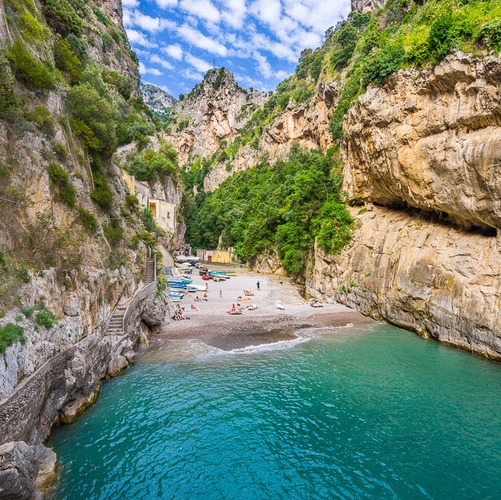
Okinawa - Japan
In the past known as the Ryukyu Kingdom, an independent state until the Meiji Era in the late 19th century, the islands that make up Japan’s current Okinawa Prefecture are the result of a turbulent history which continues to this day. A unique cultural hybrid, Okinawa is also a tropical paradise of beaches and jungles, now easier than ever to access from mainland Japan.
Long a tributary of China, the design and cuisine of Okinawa combine Chinese and Japanese influences, and while its use is dwindling, the Okinawan language is in fact its own separate language, rather than just a dialect of Japanese. In more recent history, Okinawa suffered horrible losses in World War II, and one can learn about the dark legacy of the Battle of Okinawa through a number of monuments and historical sites. After the war, Okinawa was under the control of the American government until 1972, at which time it was returned to the administration of Japan, but to this day many Americans especially know Okinawa for its many American military bases.
However, Okinawa’s attraction as a superb tourist destination is still underappreciated both. To broadly sum up what Okinawa has to offer, one can expect to enjoy:
Beautiful nature and perfect beaches. Whether you’re looking for an expedition into the jungle, a place to laze on the beach before, during or after the rest of your Japan trip, or appreciation of unique vegetation and geological formations, Okinawa is worth a trip.
Also worth mentioning, although Japan’s treasured Sakura blossoms typically bloom from March and April on the mainland, in Okinawa winter travelers can enjoy the blossoms months earlier than in the rest of the country, in January and February.
In Okinawa the vestiges of many eras and influences mingle, allowing visitors to experience a still evolving history. Palaces, temples, shrines and villages of the Ryukyu kingdom still linger and are open for exploration. Okinawa is also the birthplace of karate, and a pilgrimage to the source is a must for fans and practitioners of the art. Those with an interest in war history also can learn about the violent battles that took place on the island, and their shadow that extends to the present day.
What To Eat
Okinawan cuisine, said by some to be the world’s healthiest, is also not to be missed, with a number of specialties such as Goya Chanpuru, Okinawa Soba, Kokuto, and the local alcohol, Awamori.
Malta
Malta, island country located in the central Mediterranean Sea. A small but strategically important group of islands, the archipelago has through its long and turbulent history played a vital role in the struggles of a succession of powers for domination of the Mediterranean and in the interplay between emerging Europe and the older cultures of Africa and the Middle East. As a result, Maltese society has been molded by centuries of foreign rule by various powers, including the Phoenicians, Romans, Greeks, Arabs, Normans, Sicilians, Swabians, Aragonese, Hospitallers, French, and British.
The island of Malta specifically played a vital strategic role in World War II as a base for the Allied Powers. It was heavily bombarded by German and Italian aircraft, and by the end of the war Malta was devastated. In 1942 the island of Malta was presented with the George Cross, a British award for great gallantry, in recognition of the wartime bravery of the Maltese people. After the war, the movement for self-governance became stronger. The country of Malta became independent from Britain and joined the Commonwealth in 1964 and was declared a republic on December 13, 1974. It was admitted to the European Union (EU) in 2004. A European atmosphere predominates in Malta as a result of close association with the Continent, particularly with southern Europe. The Maltese are renowned for their warmth, hospitality, and generosity to strangers, a trait that was noted in the Acts of the Apostles, with respect to the experience of St. Paul, the Apostle, who was said to have been shipwrecked off Malta in 60 CE.
Roman Catholicism is a major influence on Maltese culture. Various traditions have evolved around religious celebrations, notably those honouring the patron saints of towns and villages. The eight-pointed, or Maltese, cross, adopted by the Hospitallers of St. John of Jerusalem in 1126, is commonly linked with Malta’s identity and is printed on the country’s euro coin. Valletta is the capital city.
Land
The country comprises five islandsùMalta (the largest), Gozo, Comino, and the uninhabited islets of Kemmunett (Comminotto) and Filflaùlying some 58 miles (93 km) south of Sicily, 180 miles (290 km) north of Libya, and about 180 miles (290 km) east of Tunisia, at the eastern end of the constricted portion of the Mediterranean Sea separating Italy from the African coast.
Relief
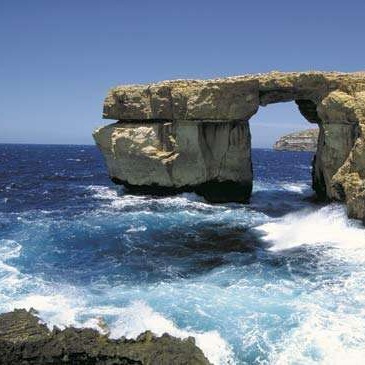
The islands of Malta are dominated by limestone formations, and much of their coastlines consist of steep or vertical limestone cliffs indented by bays, inlets, and coves. They lie on the submerged Malta-Hyblean Platform, a wide undersea shelf bridge that connects the Ragusa Platform of southern Sicily with the Tripolitana Platform of southern Libya.
The main physical characteristic of the island of Malta is a well-defined escarpment that bisects it along the Victoria Lines Fault running along the whole breadth of the island from Point ir-Raħeb near Fomm ir-Riħ Bay to the coast northeast of Għargħur at Madliena Fort. The highest areas are coralline limestone uplands that constitute a triangular plateau; Ta’ Żuta, which rises to 830 feet (253 metres) in the southwest, is the highest point. The uplands are separated from the surrounding areas by blue clay slopes, while an undercliff area is found where the coralline plateau has fallen and forms a subordinate surface between the sea and the original shore. The total shoreline of Malta is about 136 miles (219 km).
In northern Malta the escarpment is occasionally abrupt and broken by deep embayments. To the south, however, the plateau gradually descends from about 600 to 830 feet (180 to 250 metres) into undulating areas of globigerina (derived from marine protozoa) limestone less than 300 feet (90 metres) in elevation. The western area is characterized by deeply incised valleys and undercliff areas, while to the east there are several valley systems that descend to the central plains.
The west coast of Malta presents a high, bold, and generally harbourless face. On the east, however, a tongue of high ground known as Mount Sceberras, on which the capital city, Valletta, is built, separates Marsamxett Harbour and Grand Harbour. Because of tectonic activity, Malta has been tilted in a northerly direction, producing cliffs of up to about 800 feet (250 metres) high on the south and southwestern coasts, while slopes descend to low cliffs and rocky shores on the northern and eastern coasts.
The landscape of the island of Gozo is characterized by broken upper coralline mesas, with the highest point being Ta’ Dbiegi Hill (636 feet [194 metres]). Gozo has a gentle easterly dip, so the lower coralline limestone, which forms high cliffs on the west coast, declines to below sea level but reappears on the east coast at Qala Point. Semicircular bays have formed on coastal cliffs where sinkholes have been invaded by the sea. The rounded bays at Xlendi and Dwejra on the west coast of Gozo originated as underground caverns with roofs that have collapsed.
Drainage
The island of Malta possesses favourable conditions for the percolation and underground storage of water. The impermeable blue clays provide two distinct water tables between the limestone formationsùthe perched and the mean sea-level aquifer. The principal source for the public supply of water has for several centuries been the main sea-level water table. The absence of permanent streams or lakes and a considerable runoff into the sea, however, have made water supply a problem, which has been addressed with an intensive reverse-osmosis desalination program. About half of Malta’s daily water needs are supplied by desalination plants throughout the islands.
Soils
Mainly young or immature and thin, Maltese soils generally lack humus, and a high carbonate content gives them alkaline properties. Human settlement and construction developments have altered the distribution and composition of soils. The Fertile Soil (Preservation) Act of 1973 requires that, when soils are removed from construction sites, they be taken to agricultural areas, and level stretches in quarries are often covered with carted soil.
Climate
The climate of Malta is typically Mediterranean, with hot, dry summers, warm and sporadically wet autumns, and short, cool winters with adequate rainfall. More than three-fourths of the total annual rainfall of about 22 inches (550 mm) falls between October and March; June, July, and August are normally quite dry.
The temperature is very stable, with the annual mean in the mid-60s F (about 19 °C) and monthly averages ranging from the mid-50s F (about 12 °C) to the mid-80s F (about 29 °C). Winds can be strong and frequent; the most prevalent are the cool northwesterly (the majjistral), the dry northeasterly (the grigal), and the hot and humid southeasterly (the xlokk, or sirocco). The relative humidity rarely falls below 40 percent.
Plant and animal life
Malta’s flora and fauna are typical of the low-lying coastal regions of the Mediterranean. Excessive exploitation of the forests for timber and the clearance of land for construction and agriculture have destroyed much of Malta’s woodlands, though a few stands of holm oak remain. Aleppo pine has been successfully reintroduced. Maquis, a scrubby underbrush, is found along valleys and below escarpments and consists of lentisk, carob, olive, bay laurel, and in some places the sandarac gum tree (Malta’s national tree). Garigue, a low-growing Mediterranean scrub, is the most common vegetation in Malta and covers much of the country’s limestone plateau. The steppe in Malta is dominated by various grasses, thistles, and leguminous and bulbous plants. Reed beds occur wherever there is abundant freshwater, and club mosses, sedges and grasses are found in wetlands. Glassworts, rushes, and seablites are native to the salt marshlands. Sand couch, sea kale, and sea daffodils are found on Malta’s few remaining coastal dunes, while golden samphire, rock samphire, and sea lavenders (several of which are endemic) are characteristic of low-lying rocky coasts. Cliffs and coastal screes support many of Malta’s native species, which include monotypic genera such as the Maltese cliff-orache (Cremnophyton lanfrancoi) and the Maltese rock-centaury (Palaeocyanus crassifolius), the latter of which is the national plant.
The native mammals in Malta include a subspecies of the Sicilian shrew and several types of bats. Most of the country’s other mammals, including the Algerian hedgehog, Mediterranean chameleon, Etruscan shrew, rabbit, and weasel, have been introduced. Native reptiles include the Maltese wall lizard, the ocellated skink, the Moorish and the Turkish gecko, the western whip snake, and the leopard snake. The only amphibian in Malta is the painted frog, a species endemic to Sicily and Malta. Invertebrates, including insects, arachnids, and snails, are abundant.
Although there are relatively few breeding birds, migrating species are plentiful. Sea birds include the storm petrel and the Mediterranean and Cory’s shearwaters. Among the most notable birds are the Spanish sparrow, which is the most common bird in Malta, and the blue rock thrush, Malta’s national bird.
People
Ethnic groups
Malta’s population is composed almost entirely of ethnic Maltese, the descendants of ancient Carthaginians and Phoenicians as well as of Italians and other Mediterranean peoples. Attempts to form a unifying and homogenizing Maltese ethnicity can be traced back to the late 13th century; these efforts were consolidated in the nationalistic discourses of the late 19th and early 20th centuries. Aside from the Maltese population, there are small communities of British nationals, Sindhis, Palestinians, and Greeks on the islands. Since the 1990s, influxes of more transient but no less significant groups have arrived from North Africa and the Balkans and, in the early 2000s, from countries of sub-Saharan Africa.
Language
Maltese and Engli

---

Comments

Download from Google Play

Download from App Store
 United States