



The Tech Trek
Subscribed: 10Played: 1,015
Subscribe

© Elevano
Description
The Tech Trek is a podcast about how modern technology companies are actually built, with a focus on AI, data, platform, and engineering leadership. Host Amir Bormand talks with founders, CTOs, and technical operators about building products, scaling teams, and making the decisions that shape fast-growing companies.
651 Episodes
Reverse
Spencer Penn, Co founder and CEO of LightSource, joins The Tech Trek for a sharp conversation on AI native procurement, agentic workflows, and what actually happens to knowledge work as automation gets better. This episode is worth your time because it moves past lazy takes about AI replacing jobs and gets into something more useful, how work changes, where human value holds, and why procurement may be more strategic than most companies treat it.This conversation starts with procurement, but it quickly expands into a bigger discussion about role design, change management, and the pace of AI adoption inside real companies. Spencer breaks down why some jobs get redesigned while others disappear, how AI can elevate overlooked functions, and what people should do right now if their company is behind.In this episodeWhy procurement is a strong fit for AI, especially where teams are buried in tedious process workThe difference between job automation and job eliminationSpencer’s idea of role plasticity, and why it matters more than most AI debatesWhy procurement teams may become more valuable, not less, as AI improvesPractical ways professionals can start using AI before their company rolls out a formal strategyTimestamped highlights00:37 What LightSource does and why direct material sourcing is a high stakes AI use case01:51 Why procurement teams spend too much time on transactional work06:47 Which jobs get enhanced by AI, which ones get eliminated, and Spencer’s framework for role plasticity13:44 What the next few years could look like for procurement professionals26:18 Where to start if your company has not adopted an AI native workflow yet30:07 How to learn more about LightSource and connect with Spencer“AI will not replace your job. Someone who knows how to use AI will.”A practical thread running through this episode is simple. Start using the tools now. Use foundation models for secondary work, reporting, summaries, and internal communication. Build familiarity before the workflow shift gets forced on you.If you are interested in AI, procurement, operations, supply chain, or the future of knowledge work, follow The Tech Trek for more conversations like this.
Michael Fanning, CISO at Splunk, joins The Tech Trek for a grounded conversation on how the security leader role is changing in the AI era. This episode gets into the real tension facing modern CISOs, balancing risk without slowing the business down, hiring for technical depth over narrow credentials, and defining success in a field where perfection is not a realistic metric.This is a practical conversation for security leaders, engineering leaders, founders, and operators trying to make sense of AI adoption inside the enterprise. Mike breaks down why security has to move from fear based messaging to business enablement, why many teams may be overlooking strong security talent hiding in adjacent technical roles, and where AI can either reduce burnout or make it worse.In this episodeWhy the CISO role is becoming more engineering driven and more tightly tied to business outcomesWhere AI creates real leverage for security teams, and where it introduces new operational riskWhy the security talent gap may be as much a hiring mindset problem as a supply problemWhat actually causes burnout in security teams, beyond the usual talking pointsHow to think about success in security when zero incidents is not a serious metricHighlights1:44, The CISO role is shifting from pure protection to business enablement7:11, AI creates leverage for defenders, but it is also accelerating the attacker playbook9:31, The biggest AI security risks, from developer copilots to agent driven decision making14:15, Why security teams need room to experiment with AI or risk falling behind16:58, Only 1 percent of CISOs surveyed prioritized technology to close the skills gap22:16, AI can reduce burnout, but only if it cuts noise instead of creating more of itSecurity is about assessing risk and finding a way to say yes in a way that is responsible.A practical idea worth taking back to your teamLook beyond candidates with formal security titles. Mike makes the case that strong engineers, SREs, and cloud practitioners often already understand the systems, access models, and infrastructure realities that matter most. Security can be taught on top of that foundation.Link to report: https://www.splunk.com/en_us/form/ciso-report.htmlFollow The Tech Trek for more conversations with leaders shaping how technology actually gets built, secured, and scaled.
What does it really take to go from engineer to CEO?In this Tech Trek Brief, Michael White, Co founder and CEO of Multiply, shares a few of the ideas that matter most from a broader conversation on founder growth, leadership, and the shift from building things to building a company.What stood out most is that this is not really a story about title progression. It is a story about learning to operate with more uncertainty, taking on bigger challenges before you feel ready, and realizing that leadership at the highest level starts to look a lot more like influence than execution.What we get into• Why growth often starts before you feel ready• Why strong founders are pulled by a real problem• Why founder timing matters more than people think• Why leadership becomes influence, alignment, and convictionTimestamped highlights00:00 The real shift from engineer to CEO00:18 Growth starts before readiness00:56 Leadership changes when execution is no longer enough01:50 The best founders are pulled by a problem02:35 The three ideas that tie it all togetherFollow The Tech Trek for more conversations on leadership, company building, and the people shaping what comes next. The full Michael White episode is also available.
Raj Koo, CTO at DTEX, joins The Tech Trek for a sharp conversation on insider risk, shadow AI, and why security teams need a more modern way to think about intent. This episode is worth your time if you are trying to understand how AI is changing cyber risk, why non malicious behavior can still create major exposure, and what it takes to protect the business without slowing down innovation. Raj explains why the old approach of blocking known bad behavior is no longer enough. As employees bring personal AI tools into the workplace, security teams are dealing with a new reality, one where productivity gains, agentic workflows, and data exposure are all colliding at once. In this episodeWhy DTEX focuses on inferring intent, not just catching exfiltrationWhy shadow AI is different from shadow IT, and harder to controlHow non malicious employee behavior can become the biggest insider risk categoryWhy agentic AI raises the stakes for visibility and governanceHow mature insider risk programs are shrinking response times even as costs rise Timestamped highlights00:00 Raj Koo on inferring intent in cybersecurity01:59 Why early warning signals matter more than the exfiltration point04:38 The rising cost of insider risk06:25 How shadow AI became a major non malicious risk08:13 Why shadow AI is more complex than shadow IT17:53 Detection times are improving, but the cost problem is getting worse Standout lineSecurity has a chance to stop being seen as the function that blocks productivity and start being seen as the function that helps the business adopt better tools safely. Practical takeawayIf your team is dealing with AI adoption in the wild, start with visibility before judgment. Understand which tools people are using, what they are using them for, and where the real risk sits before defaulting to blanket restrictions. Link to 2026 Cost of Insider Risks Global Report: https://ponemon.dtex.ai/Follow The Tech Trek for more conversations with builders, operators, and technology leaders shaping how modern companies work.
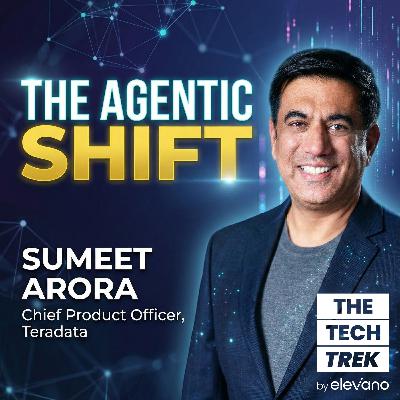
Sumeet Arora, Chief Product Officer at Teradata, joins The Tech Trek for a sharp conversation on the shift from human driven SaaS to agentic software. This episode digs into what changes when software stops just supporting human workflows and starts driving outcomes alongside people, why trust and governance matter more as AI systems take on more responsibility, and what serious companies need to do now to prepare.This is a practical discussion about where the market actually is, what gets overhyped, and what leaders should focus on beneath the noise. Sumeet lays out a clear view of the emerging enterprise stack, from knowledge and context to agents, governance, and outcomes. He also explains why the winners may not be the loudest companies in AI, but the ones that get their data, knowledge, and operating model right.In this episode• Why agentic software is a real shift, but still in its early stages• What trust, governance, and explainability need to look like in an AI first enterprise• How software companies should rethink product strategy for agents as well as humans• Why every employee may need to become a manager of AI agents• Why knowledge infrastructure could matter more than the agent layer itselfTimestamped highlights• 00:45 Teradata’s role in helping enterprises become autonomous• 02:34 Where we really are in the agentic AI maturity curve• 10:16 How software shifts from workflow centric to outcome centric• 16:17 Why every employee may need an AI workforce• 21:57 The skill gap between enterprise users and agentic adoption• 24:48 Why knowledge, not just agents, will define the winnersStandout line“The fundamental winners will be ones who get the knowledge fabric correct.”Practical takeawayIf you are building for an AI driven future, do not start with agents alone. Start with trusted knowledge, usable context, clear policies, and systems that can explain decisions. The companies that treat agentic AI as a stack, not a feature, will be in a much stronger position.Follow The Tech Trek for more conversations with leaders shaping the future of technology, product, AI, and enterprise transformation.

Victor Fang, CEO and Founder of Anchain AI, joins The Tech Trek for a timely conversation on crypto crime, AI driven fraud, and what financial institutions need to understand as digital assets move closer to the mainstream. This episode is worth your time if you care about cybersecurity, compliance, crypto risk, anti money laundering, or where agentic AI is starting to reshape investigation work.This conversation goes beyond headlines. Victor breaks down how bad actors are using generative AI for phishing, identity fraud, exploit development, and ransomware, then explains how defenders are using AI, graph intelligence, and agent workflows to fight back. It is a sharp look at the collision of crypto, cybersecurity, regulation, and AI infrastructure.In this episodeWhat crypto crime actually looks like today, from exchange hacks to romance scams and ransomwareWhy crypto risk now extends well beyond crypto native usersHow financial institutions, regulators, and compliance teams are adaptingWhere AI is helping attackers move faster, and where it is giving defenders an edgeWhy agentic workflows and MCP powered investigation tools could change this category fastTimestamped highlights00:00 Victor Fang on crypto crime, AI versus AI, and agentic AML00:53 What Anchain AI does and why blockchain investigation is becoming more important01:56 How generative AI is already being used in crypto crime and phishing06:30 What banks, regulators, and AML teams need to understand about crypto adoption10:44 Why Victor believes AI can give defenders the advantage16:17 How Anchain uses blockchain data, graph intelligence, and agent workflows to investigate faster22:04 Why the company’s MCP server could extend beyond crypto into KYC and financial applications25:21 What the next wave of agent driven security and investigation might look likeOne standout idea from the conversation, crypto is much closer to you than you think.Practical takeawaysCrypto risk is no longer a niche issue, it is increasingly tied to broader fraud, ransomware, and financial crimeAI is accelerating both offense and defense, which raises the bar for security and compliance teamsAgentic investigation workflows could dramatically reduce manual work in AML, fraud, and cyber operationsCompanies building in regulated spaces need infrastructure that can handle both speed and scrutinyFollow The Tech Trek for more conversations with builders, operators, and technical leaders shaping what comes next.
Cam Crow, Director of Data and Analytics at Vacatia, joins The Tech Trek to unpack what happens when a startup outgrows informal ways of working. This episode looks at how data teams can introduce project management frameworks without killing speed, how to manage stakeholder demand as complexity rises, and why the right operating model matters even more as AI begins to reshape analytics work.Cam shares a practical view from the middle of real growth, from startup scrappiness to acquisitions, migrations, and a much wider stakeholder base. He explains when process becomes necessary, how to build trust during that shift, and where AI is starting to change both delivery workflows and the future of business insights.In this episode• Why early stage teams should add process cautiously, not by default• The moment speed and quality start breaking under too many competing requests• How public communication and domain based stakeholder channels reduce friction• Why planning routines matter as much for stakeholders as they do for the data team• Where AI fits today, from faster delivery to semantic layers that support better answersHighlights00:00 Cam Crowe joins the show to discuss project management frameworks through the lens of data, startup growth, and stakeholder alignment01:58 Why Cam resisted formal sprint planning in the startup phase and why that made sense at the time05:58 The tipping point where too many priorities start hurting both velocity and quality11:49 How moving conversations out of direct messages and into domain channels changed team operations15:03 Inside the two week development cycle and the planning week that keeps stakeholders engaged21:08 How Cam is thinking about AI, semantic layers, and the future of on demand analyticsA standout idea from this conversation, process should be added conservatively, only when the business truly needs it.Practical takeaways• Do not formalize too early, but do not wait until the system is already breaking• Make prioritization visible once demand exceeds capacity• Use shared channels instead of one to one communication to reduce bottlenecks• Build stakeholder rituals into the operating model, not just team rituals• Treat AI readiness as an infrastructure challenge, not just a tooling decisionFollow The Tech Trek for more conversations with operators, builders, and technology leaders shaping how modern teams work and scale.
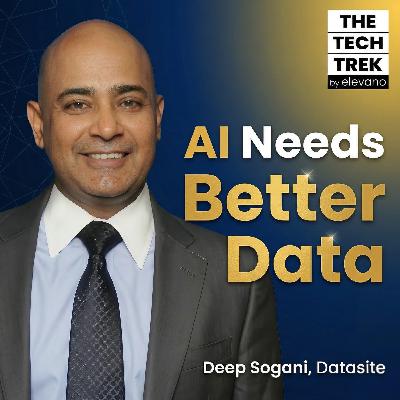
Deep Sogani, SVP and Group Data Management Officer at Datasite, joins The Tech Trek to unpack why data governance, lineage, and business process design have become mission critical in the age of AI. This conversation gets past the surface level AI hype and into the operational reality, how companies actually build trustworthy systems, where AI initiatives break down, and why strong data foundations now shape business outcomes in real time.This episode explores the shift from downstream analytics to data that actively drives live decisions, workflows, and automation. Deep explains why many AI projects fail before the model even matters, how business architecture should lead technical design, and why human oversight still matters in high stakes environments.In this episodeWhy AI has made data governance and data lineage far more operationalWhy business process clarity matters before data architecture or tooling decisionsHow real time AI changes the demands on data quality and system designWhere agentic AI fits, from workflow automation to more advanced decision supportWhy human judgment still matters in AI systems shaped by risk, ethics, and securityTimestamped highlights01:47 Why AI raises the stakes for governance, lineage, and trust in data04:57 Why business architecture has to lead before technical design09:11 The progression from predictive models to agentic AI workflows17:55 Why the human in the loop is still essential21:16 What makes an AI project worth prioritizing26:06 What has changed, and what has not, in AI related change managementStandout line“Business architecture and business thinking should dictate the what and the why, and the data architecture is the how part which needs to follow.”Practical takeawayIf you are evaluating AI inside the enterprise, do not start with the tool. Start with the business problem, the workflow, the decision risk, and the quality of the data behind it. Strong models on the wrong problem still fail.Follow The Tech Trek for more conversations with leaders shaping technology, data, AI, and the future of modern business.
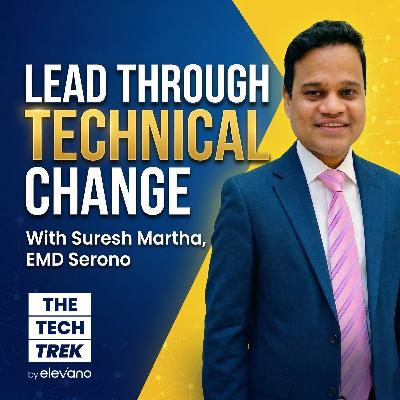
Suresh Martha, Head of Data Driven Innovation and Analytics at EMD Serono, joins The Tech Trek for a practical conversation on what leadership looks like when your team is asked to take on new technical capabilities. This episode is about extending team impact, evaluating new tools, building credibility with stakeholders, and leading through change without pretending to be the deepest expert in every domain.For data leaders, analytics managers, technology executives, and operators, this conversation gets into the real work behind capability building. Suresh breaks down how to assess whether a new technology is worth pursuing, when to start with a pilot, how to upskill internal talent, and how to hire for skills your team does not yet have.In this episode• How to evaluate whether a new tool or technology actually adds business value• Why small pilots help leaders build trust before asking for larger investment• What it takes to lead technical work you have not personally done yourself• How to hire for capabilities your team does not yet have• Why business context and data knowledge still matter as much as technical depthTimestamped highlights00:04 Extending technical impact as a leader when new capabilities land on your team03:37 A simple framework for evaluating new tools, investment, and fit05:28 Hiring for skills your team does not yet have07:44 Upskilling as a leader so you can guide the work with confidence12:06 Managing experts whose technical depth goes beyond your own15:21 Making room for learning and experimentation while still deliveringStandout lineAs long as I understand the intricacies and can explain that, that is what matters, especially for a leader.A practical takeawayStart small. Pick a real business problem. Run a focused pilot. Measure the outcome. Earn the right to scale.Follow The Tech Trek for more conversations with leaders building teams, systems, and technical capability inside modern businesses.
Sourish Samanta, Director AI and ML at Advance Auto Parts, joins The Tech Trek for a grounded conversation on where machine learning still creates the most business value, where generative AI fits, and why many teams are chasing the wrong solution. This episode is worth your time if you want a clearer view of how serious operators think about AI strategy, product delivery, and practical use cases that can ship now. This conversation cuts through the noise around AI and gets back to first principles. Sourish explains why machine learning remains the foundation behind today’s AI wave, how to choose between deterministic and creative systems, and what it actually takes to build production ready products that solve real business problems.In this episode:Why machine learning is still the core layer behind modern AIWhen to use machine learning, when to use generative AI, and when simple analytics is enoughWhat a real product mindset looks like for AI and ML teamsHow pod based teams can ship faster with better cross functional alignmentWhy AI and ML talent need to spend time continuously reskillingTimestamped highlights:00:00 Why machine learning remains the foundation of today’s AI stack01:57 The difference between ML teams, AI teams, and agent focused workflows05:56 Choosing the right solve, from forecasting and inventory to creative content generation10:09 The product mindset required to turn AI ideas into working systems13:51 Why some business problems need analytics, not AI15:52 Why AI teams need to spend part of their time learning, testing, and staying currentStandout line:AI is not the strategy. Solving the right problem is.Practical takeaway:If you are leading an AI initiative, start by classifying the problem. If the outcome needs consistency, prediction, or forecasting, machine learning may be the better path. If the outcome needs creativity or flexible generation, generative AI may be a better fit. And in some cases, the best answer is still a clean dashboard and strong analytics.Follow The Tech Trek for more conversations on AI, data, engineering, and how technology actually gets applied inside real businesses.
Shamoon Siddiqui, CEO and Founder of Human Friendly Robotics, joins The Tech Trek to break down what it really takes to bring robotics into construction. This is not a futuristic thought experiment. It is a grounded conversation about where robots can create value now, why construction has lagged so badly on productivity, and how focused automation could reshape one of the world’s biggest industries.At the center of the discussion is Tyler, a tile laying robot built as a practical entry point into construction automation. Shamoon explains why repeatable workflows matter, where human skill still wins, and how robotics can improve speed, safety, and job site economics without needing to look like a science fiction demo.In this episode• Why construction productivity has moved backward while other industries have surged ahead• Why tiling is the right entry point for construction robotics• How Human Friendly Robotics thinks about deployment, rentals, and product iteration• Where robots can reduce hidden job site injuries tied to repetitive strain• Why the long game is much bigger than tile, with plumbing, electrical, and HVAC in sightTimestamped highlights00:35 Why construction is the right market for robotics right now03:56 The bigger shift from humans moving atoms to machines handling more physical work08:29 Why the business model is built around rentals, not one time equipment sales10:24 The wedge strategy today and the larger vision across licensed trades12:12 The overlooked safety problem of repetitive strain in construction20:44 Why useful robots matter more than robots built for flashy demos“Version one is not going to be as good as version five, but if you continue to rent it from us, we can make sure you get version five when it’s ready.”Practical takeawayThe smartest automation wedge is not the flashiest one. Start with repetitive, measurable work, prove productivity gains in the real world, and expand from there.Follow The Tech Trek for more conversations on robotics, AI, startups, and the technologies changing how real work gets done.#ConstructionTech #Robotics #Automation #ai #FutureOfWork
Mary Elizabeth Porray, Global Vice Chair Client Technology and COO, Growth and Innovation at EY, joins The Tech Trek for a grounded conversation about what it actually takes to operationalize emerging technologies inside a global enterprise. This episode goes past the AI hype cycle and into the real work of adoption, change management, process redesign, workforce trust, and leadership in ambiguity. A lot of companies are asking what AI can do. Fewer are asking what needs to change for AI to actually work. Mary Elizabeth shares how EY is thinking about experimentation, employee experience, guardrails, internal adoption, and the cultural shifts required to move from curiosity to real impact.In this episodeWhy culture, not technology, is often the biggest blocker to emerging tech adoptionWhy AI is not a magic wand, but can help teams solve problems in a different wayHow leaders can identify the right starting points by listening for real pain pointsWhy productivity gains have to create psychological space, not just more workHow affinity groups, storytelling, and visible leadership help drive adoptionTimestamped highlights01:58 Why cultural norms often slow down emerging technology adoption03:25 AI hype, false expectations, and what the technology can realistically change05:55 The mental load of AI at work, and why EY created Thrive Time11:20 Why AI pilots need to go deeper than surface level experimentation15:19 How AI is creating a shared language between business and technology teams29:29 How storytelling, affinity groups, and positive momentum help people lean inOne line that sticks: AI is not something you dabble in.A practical takeawayThe best place to start is not with the flashiest use case. It is with a real pain point. If a process should take one week and actually takes eight, that is a signal worth following.Follow The Tech Trek for more conversations with leaders building through change, scaling technology, and shaping how modern work actually gets done.

Michael White, Co founder and CEO of Multiply, joins the show to talk about the path from engineering leadership to the CEO seat, and what it really takes to build in a high trust, high complexity market. If you are thinking about founder readiness, leadership growth, or where AI creates real value in fintech, this episode gets into the parts that matter.Michael shares how early entrepreneurial instincts showed up long before Multiply, what changed as he moved from builder to company leader, and why some of the most important skills in leadership have less to do with code and more to do with communication, conviction, and influence. He also breaks down how Multiply is using AI to improve the mortgage experience without removing the human element people still need in a major financial decision. In this episode:• The mindset shift from engineer to CEO• Why leadership becomes a form of sales• How founder timing can be an advantage, not a delay• Where AI fits in the mortgage process, and where it does not• Why startups can move faster than legacy players in AI adoption Timestamped highlights00:43 What Multiply is building, and why an AI native mortgage company sees a better path to homeownership01:47 The childhood business story that hinted at an entrepreneurial future06:20 What changed in the move from engineering leadership to founder and CEO08:45 Why so much of leadership comes down to influence, alignment, and selling the vision17:19 Why mortgages are such a strong use case for AI, and why the back office is the real opportunity22:39 The startup advantage in AI, speed, focus, and freedom from legacy systems Follow the show for more conversations with founders, operators, and technology leaders building what comes next.
Susan Liu, Partner at Uncork Capital, joins Amir to break down what actually matters when backing early stage AI companies. From founder market fit to product wedge to the reality of churn, this conversation gets past the hype and into how strong companies separate themselves in a crowded market.If you are building, funding, or evaluating AI startups, this episode gives you a sharper lens on where the market is heading, what Series A investors now expect, and why real ROI is becoming the line between momentum and fallout.What stood out• The best early stage founders usually have earned insight, meaning they have lived the problem before building the solution• In crowded AI markets, the goal is not to be interesting, it is to become one of the few companies that actually wins• AI buyers still care about the same core question, does this drive revenue or cut cost in a measurable way• The Series A bar has moved up fast, and strong growth alone is not enough if retention is weak• Some of today’s biggest AI winners may still face painful churn if they are not truly essential to the customerTimestamped Highlights00:37 Susan breaks down how Uncork Capital invests at seed and what it takes to get real conviction early02:00 The three-part framework she uses to evaluate companies, team, market, and product wedge with traction09:42 Why crowded AI markets are not necessarily a red flag, and how winners still pull away from the pack17:04 The ROI test every AI startup has to pass if it wants to survive renewals19:05 Susan’s honest take on 2026, cautious optimism, bigger impact, and a likely wave of churn24:33 What founders need now to raise a strong Series A in a market where the bar is higher than everOne line that stuck“If you cannot prove one of these two, it is going to be a tough sell. Companies are not going to renew.”Practical takeaways for operators and founders• If your product cannot clearly tie to revenue growth or cost savings, buyers will eventually cut it• Founder credibility matters more when the market gets noisy, especially in AI• A compelling wedge wins attention, but retention is what keeps the story alive• Happy customers who will speak for you can be one of the strongest assets in a fundraiseStay connectedIf this episode gave you a better lens on AI startups, venture, and what actually drives durable value, follow the show, share it with a founder or operator in your network, and keep up with Amir on LinkedIn for more conversations like this.

What happens to e commerce when AI agents start shopping instead of humans?Maju Kuruvilla, Founder and CEO of Spangle, joins the show to unpack a shift most companies are not prepared for. If AI agents become buyers, the entire digital shopping experience must change. Websites today are designed for human psychology, not machines making decisions.In this conversation, Maju explains why context is becoming the most important layer in commerce. From marketing clicks to storefront visits, most companies lose the context that originally inspired a purchase. The future belongs to systems that can capture, carry, and act on that context across every channel. The discussion explores agent driven shopping, the limits of traditional customer data systems, and how AI can reshape both online and physical retail experiences.Key Takeaways• Context matters more than identity. Knowing what someone is trying to do right now is often more valuable than knowing who they are.• Most e commerce experiences reset the customer journey. When someone clicks from an ad to a site, the original inspiration is usually lost.• AI agents will shop differently than humans. They are not influenced by visual design or marketing psychology the same way people are.• Commerce will not become fully agent driven. Instead, brands must design experiences that work for humans, agents, and hybrid interactions.• Physical retail may benefit the most from AI driven context because stores can blend digital signals with real world behavior.Timestamped Highlights00:00 Why the next generation of e commerce will be built for AI agents, not just human shoppers.02:08 The hidden problem in online shopping today. Most websites lose the context that brought the customer there.06:11 Buyer agents and seller agents. How commerce may evolve into AI systems negotiating purchases.11:38 Why a simple request like “buy a red sweater” is actually a complex problem of interpretation and context.16:30 How AI could transform physical stores through dynamic recommendations and real time shopping guidance.22:30 Why collecting endless customer data might be the wrong approach to personalization.27:59 The future of autonomous shopping and why personal AI agents may eventually handle everyday purchases.A Moment That Sticks“Context is what matters. The fact that I bought a TV before is interesting, but not important. What matters is what I am trying to do right now.”Practical Insight for BuildersIf you are building AI driven commerce tools, start with the product layer.According to Maju, the foundation is making your product catalog intelligent. AI systems need rich product understanding so they can match intent with inventory. Once the catalog becomes machine readable and context aware, everything else becomes easier to automate.Call to ActionIf you enjoyed this conversation, follow the show and share this episode with someone working at the intersection of AI, commerce, or product development.New conversations every week with the builders shaping the future of technology.

Most people never think about the technology behind construction equipment rentals. But behind every crane, excavator, and lift is an industry still running on paper, spreadsheets, and manual workflows.In this episode, Andy Feis, CEO and Co-Founder of Renterra, joins Amir to explain how a hundred billion dollar equipment rental market is finally entering the modern software era. The conversation explores how operational software, telematics data, and AI are reshaping one of the most overlooked parts of the industrial economy. Andy shares how rental companies manage fleets of expensive machines, why legacy workflows still dominate the industry, and how platforms like Renterra are bringing cloud software and automation to a sector that has largely been left behind by the tech revolution.This episode also explores the intersection of operational data, AI automation, and real world infrastructure. From fleet optimization to automated maintenance insights, the future of equipment rental may look very different than it does today.Key Takeaways• The equipment rental industry is a massive but overlooked market where over half of construction equipment is rented rather than owned.• Many rental businesses still run critical operations using pen and paper, manual inspections, and outdated spreadsheets.• Operational software is the first step toward modernization, helping companies manage inventory, dispatch, pricing, and maintenance.• Telematics data from machines unlocks powerful insights around maintenance timing, asset valuation, and fleet utilization.• AI will not replace the physical work in industrial sectors, but it can automate low value operational tasks and dramatically improve decision making.Timestamped Highlights00:00 Introducing the hidden technology opportunity inside the equipment rental industry02:00 Why many rental companies still rely on paper, binders, and manual equipment checks06:20 How Andy Feis discovered a massive opportunity inside industrial operations09:00The low hanging fruit in modernizing equipment rental workflows11:14 What kind of data heavy machines actually generate and how it can be used13:03 Where AI actually helps blue collar industries today20:18 The roadmap for modernizing the industry and what comes nextA Moment That Stuck“The industrial sector is an enormous part of the economy, but it has been one of the last places to feel the impact of the broader tech revolution.” Pro TipsIf you are building technology for legacy industries, start with operational efficiency before advanced analytics.Modernization works best when it removes friction from existing workflows. Once companies see time savings and operational improvements, they become far more open to deeper data and AI driven insights.Call to ActionIf you enjoy conversations about technology transforming real world industries, follow the show and share this episode with someone building in construction, logistics, or industrial software.
Luke Fischer, cofounder and CEO of SkyFi, breaks down how earth intelligence is becoming searchable, and why that changes decision making across defense, energy, logistics, and agriculture.You will hear how his path from Army special operations aviation to Head of Flight Ops at Uber shaped SkyFi’s product mindset, plus a practical look at what geospatial imagery and analytics can actually answer today.Key Takeaways• Networks are not nice to have, they are the fastest path to trust, hiring, and deals, especially in government and high stakes markets• SkyFi’s core unlock is access, making it possible to task satellites, pull history, and ask questions of the data, not just look at images• Going commercial first can create a faster iteration loop, then government adoption follows once the product is battle tested• The real product future is answers, not imagery, using natural language queries that return decisions grade insight• Privacy is not only about resolution, it is also about who can buy data, screening, and compliance, because access is the real leverage pointTimestamped Highlights00:47 Earth intelligence in plain English, task satellites, pull decades of history, ask questions like vessel detection or soil moisture06:32 Why veteran resumes miss the mark, and how to translate leadership without goofy title inflation10:44 The origin story, a broken buying experience in satellite imagery turns into SkyFi’s wedge16:42 Selling into government, people game first, acquisition reality, and why patience is a feature19:46 Use cases you will not expect, livestock behavior, barge counting, palm heights, mineral detection, and more28:10 Where this is headed, ask a question about the world, get an answer, then move toward proactive intelligenceA line worth repeating“Startups are the same thing, you are finding the right people with the right traits to solve these undefined problems in being comfortable with risk.”Practical moves you can stealIf you are hiring, screen for comfort with ambiguity, not just pedigree, undefined problems are the job in high growth workIf you are selling, build your network before you need it, warm paths beat cold volume every timeIf you are building product, shorten the feedback loop, commercial iteration can harden the product before slower cycle buyers adoptCall to ActionIf this episode sparked ideas for how data, defense, or AI driven analytics will reshape markets, follow the show and turn on notifications so you do not miss the next one. Also share it with one operator who makes high stakes decisions and would appreciate a clearer view of what is happening on the ground.
Anish Agarwal went from MIT PhD researcher to founding Traversal, an AI company building intelligent site reliability engineering agents for the enterprise. In this episode, he breaks down what it actually takes to lead an AI first company when your entire career was built inside a lab.This is not your typical founder story. Anish never planned to start a company. He was on track to be a professor at Columbia when generative AI hit and rewired his trajectory. Now he is two years into the CEO seat, recruiting top talent away from high paying jobs, and building a product at the intersection of causal machine learning and agentic systems.We get into the mechanics of that transition. How do you go from publishing papers to pitching investors? What does storytelling look like when you are convincing engineers to leave comfortable roles and bet on your vision? And what happens when you start a company without even having an idea?Anish also tackles a question the AI space is wrestling with right now. Is a PhD becoming table stakes for building an AI first company? His answer is more nuanced than you might expect. It is not the degree. It is the training. Reading the landscape, navigating uncertainty, and evaluating models with scientific rigor. Those skills separate builders from everyone else.Key TakeawaysThe best AI founders are not chasing credentials. They are leveraging research instincts to read where models and architectures are heading, and that foresight creates real competitive edges.Starting a company without an idea is not reckless if you have the right co founders. Anish and his team showed up to a WeWork every day and treated idea exploration like a research problem until the right opportunity clicked.Storytelling is the most underrated leadership skill in technical companies. Whether you are recruiting, raising capital, or explaining your product to nontechnical buyers, packaging complexity into a clear narrative is what moves people.Every decision as a founder is a bet, including the decision to do nothing. Viewing inaction as a strategic choice changes how you prioritize and how fast you move.As AI writes more code, someone has to make sure it works in production. That gap between code generation and reliability is where Traversal lives, and it is only getting wider.Timestamped Highlights(00:36) What Traversal does and why AI powered site reliability engineering is a massive unsolved problem in enterprise software(02:00) The moment generative AI changed everything and why Anish walked away from a career he loved(08:43) How Traversal found its problem without starting with an idea, and the co founder dynamic that made it work(14:29) The real advantage of a PhD in AI and why it has nothing to do with the letters after your name(19:49) Advice for PhDs entering the job market on how to position research experience so hiring managers actually get it(20:29) Two years into the CEO role, what Anish wishes he had known and the skills that matter most for early stage foundersWords That Stuck"If AI is writing your code, it has to fix it too. And right now it is only writing the code."Founder PlaybookPick a problem that sustains you for decades. Anish looks for problems that keep getting more complicated because that is where long term value compounds. If the problem has a ceiling, your company does too.Treat recruiting like a core product skill. Painting a compelling picture of the mission is not a nice to have. It is the engine that pulls exceptional talent away from safe, well paying jobs.Think of everything as a series of bets. Fundraising, hiring, product decisions, even waiting. Inaction is a bet too. Once you see it that way, you stop overthinking and start moving with intention.Subscribe to The Tech Trek wherever you listen. If this one hit home, share it with a founder or tech leader navigating their own leap. Follow the show on LinkedIn for more.
Harry Gestetner built a creator economy platform in college, sold it, and walked away. Then he did the one thing nobody expected. He jumped back in and started building hardware.In this episode, the founder and CEO of Orion (a sleep tech company making smart mattress covers) sits down to talk about what really happens after an exit, why most founders can't stay away from building, and what changes when you go from software to physical products.Harry shares what surprised him about the acquisition process, how he thinks about evaluating new startup ideas, and why he believes hardware is "life on hard mode." He also gets into the mental side of founding, from managing stress to staying sharp when everything feels uncertain.What You'll Walk Away WithGoing through an exit sounds like the finish line, but Harry explains why it's actually a reset. You trade ownership and freedom for financial security, and at some point, most founders start craving the creative control they gave up.Not every idea deserves your time. Harry talks about running new concepts through a "disqualification period" where you actively try to poke holes before committing. The ones that survive that process are worth going all in on.Hardware changes the game. Software lets you pivot fast. Hardware gives you 18 month product cycles, inventory headaches, and supply chain complexity. Conviction has to be higher before you start.The best startup ideas come from problems you and your friends actually have. If enough people share that problem, you've got a market.Knowledge compounds across startups. Harry compares the founder journey to an elastic band. Once you've been stretched, you never go back to your original form. Every challenge you survive makes the next one more manageable.Timestamped Highlights[00:34] What Orion actually does and how it makes six hours of sleep feel like ten[03:01] The emotional arc of an exit that nobody talks about, from relief to restlessness[05:34] How Harry evaluates startup ideas and why he uses a disqualification process[09:30] Why building hardware is "life on hard mode" and what made him take it on anyway[10:39] The elastic band theory of founder growth and why learning compounds over time[15:49] His advice for early career founders: pick one thing and go all inWords That Stuck"As a founder, you're sort of like an elastic band. The more you get stretched, you never go back to the original form."Tactical TakeawaysRun every new idea through a disqualification period. Actively look for reasons it won't work before you commit. The ideas that survive that scrutiny are the ones worth building.Build around problems you personally experience. If your friends share the same frustration, there's a good chance others do too. That's your market signal.If you're going to start something, go all in. Stop hedging across multiple projects. Pick one idea and dedicate yourself to it completely until it works.Keep Up With The ShowIf this episode hit home, share it with a founder or someone thinking about taking the leap. Subscribe wherever you listen so you never miss an episode. And connect with us on LinkedIn for more conversations like this one.
Behnam Bastani, CEO and cofounder of OpenInfer, breaks down why the last two years of AI feel explosive, and why the next wave is not chat, it is action at the edge.We get into always on inference, what actually forces compute to move closer to the data, and the missing layer that makes edge AI scale: the Android like infrastructure that lets devices collaborate instead of living in silos.Key takeaways• The hype spike is real, but the runway is decades, it took compute, sensors, and communication protocols maturing over generations to unlock this moment• AI is shifting from conversational to actionable, which means continuous, always on inference becomes the norm• Edge wins when cost, reliability, and data sovereignty matter, cloud and edge will coexist, but the workload placement changes• The biggest bottleneck is not just silicon, it is the infrastructure layer that makes building and deploying across devices easy, plus a shared fabric so devices can cooperate• Adoption is as much a human story as a technical one, this shift lands faster and broader than previous tech transitions, so anxiety is predictable and needs real attentionTimestamped highlights00:38 OpenInfer’s mission, intelligence on every physical surface, and why collaboration matters02:07 Electricity as the earlier revolution, intelligence as the next kind of power, and the control problem05:54 Where we really are on the maturity curve, early products are here, mass adoption and safety take time08:31 When the device boundary disappears, it stops being you versus the agent, it becomes one system11:04 Always on inference, and the three forces pushing compute to the edge: cost, reliability, data sovereignty14:40 The Android moment for edge AI, why the operating system layer unlocks developers, apps, and adoptionA line worth replayingThose are going to be the three pillars that really enforces that edge and cloud are going to live together.Pro tips for builders• If your product needs real time decisions, design for intermittent networks from day one, reliability is not optional• Treat data sovereignty as a product feature, not a compliance afterthought, it is becoming the moat• Push for interoperability early, the fabric that lets devices share the right data is what makes edge feel seamlessCall to actionIf this episode helped you rethink where AI should run and what it takes to ship it in the real world, follow the show and share it with one builder who is working on edge, robotics, devices, or applied AI.

Comments

Download from Google Play

Download from App Store
 United States