


The Good Mood Podcast
Subscribed: 55Played: 722
Subscribe


© Talia Marcheggiani
Description
The Good Mood Podcast is a series of conversations led by Dr. Talia Marcheggiani, ND, about mental health, hormones and gut health.
On this podcast, we discuss topics surrounding: nutrition, body image, psychedelic medicines, herbal medicine, social justice, digestion, Polyvagal Theory, relationships and Attachment Theory, trauma, frontiers in counselling and psychotherapy, ADHD, OCD, addictions, depression, hormones, digestion, nutritional psychiatry and nutrition, supplementation, herbal medicine, and more.
drtaliand.substack.com
On this podcast, we discuss topics surrounding: nutrition, body image, psychedelic medicines, herbal medicine, social justice, digestion, Polyvagal Theory, relationships and Attachment Theory, trauma, frontiers in counselling and psychotherapy, ADHD, OCD, addictions, depression, hormones, digestion, nutritional psychiatry and nutrition, supplementation, herbal medicine, and more.
drtaliand.substack.com
101 Episodes
Reverse
Dr. Jessica Eastman, a naturopathic doctor and psychedelic-assisted therapist, shares her integrative approach to trauma recovery and mental health. She emphasizes the significance of preparation and integration in psychedelic therapy, highlighting that healing occurs during the integration of insights gained. Dr. Eastman discusses the need for emotional readiness and a curious mindset and addresses the risks of poorly guided experiences. She advocates for a holistic, patient-centred approach and stresses the importance of foundational health and patient autonomy. She also announces her upcoming online trauma recovery program and offers ongoing support and education resources.Find her at: https://www.drjessicaeastman.com/https://www.instagram.com/drjessicaeastman/Chapters0:34Introduction to Psychedelics and Mental Health1:23Niche of Trauma Recovery Coaching2:45Exploring Safe Psychedelic Practices6:55The Importance of Preparation8:37Understanding Psychedelic Experiences11:33The Power of Perspective Shifts14:06Emotions and Connection15:10The Healing Process20:11Risks of Untrained Guidance22:01Managing Post-Psychedelic Dysregulation25:12The Complexity of Memory and Trauma27:08Navigating Expectations in Therapy28:19Organizing the Mental Closet30:03Gaining Control Over Emotions32:29Foundations of Healing36:00Integration of Psychedelic Experiences40:23Balancing Medication and Self-Care43:47Building a Therapeutic Relationship46:01The Role of Nutrition in Mental Health48:58Empowering Patient Agency54:28The Dynamics of Patient-Provider Relationships57:29Understanding Resistance in Healing1:03:17The Importance of Curiosity1:06:34Medication Misconceptions1:10:56The Art of Prescribing1:13:32The Role of SSRIs in Treatment1:16:35The Process of Learning1:19:31Alternatives to Medication1:24:01The Evolution of Medical Practice1:29:52Humility in Healthcare1:33:39Accessibility in Mental Health ServicesTranscript[0:01] All right welcome dr jessica eastman a fellow ccnm colleague and so we recently connected over um yeah well i guess like topics around psychedelics and mental health and uh some cult psychology and spiritual bypassing and um but i think what we want to talk about today is like mental health and maybe some psychedelics and trauma and because that's a big part of what you do and what your practice is in BC.[0:34] And yeah, maybe you could introduce yourself and tell me a little and tell the audience a little bit about your practice. Yeah, for sure. Yeah. So I am a naturopathic doctor licensed in British Columbia. I've been practicing there for almost 10 years.[0:49] And I also am a psychedelic assisted therapist and as I call it, a trauma recovery coach. Um, so I kind of mashed together, uh, integrative psychiatry and, um, integrative mental health work with trauma-informed primary care and, uh, some psychedelic, um, assisted therapy, like prep and integration work. I don't do the actual medicine sessions because it's not in my scope of practice, um, but. I could do that if I was like working[1:19] under another like field trip or a numinous or something like that. But I get a ton of value in doing like harm reduction discussion and prep and integration. And I have a little niche of people who come to see me when they've gone to do psychedelic assisted therapy, usually with an underground therapist who wasn't super well trained and they had a bad experience.[1:38] And then they are looking for somebody to like help them sort that out. Also because a lot of psychiatrists and psychotherapists and psychologists and medical doctors don't have a whole lot of training or understanding about psychedelics and so these people sometimes come to me they're like in inpatient psych and their psychiatrist is saying like you've broken your brain and there's nothing we can do to help you and then they call me kind of like as a last-ditch effort to be like hey is my brain really broken and I get to say like no it isn't actually we can heal this and we can work through this so that's a really fun little niche that um is is developing there's like more and more need for that um and then i do some trauma recovery coaching specifically both in my practice and separately um so i get to kind of weave a whole lot of mental stuff together that's really cool that's really really really interesting i know bc has a more expanded scope than ontario when it comes to um like i think i Dr.[2:37] Ray St. Arnall about ketamine therapy and like that's in scope or like legal for therapeutic use. But yeah, how did you get into the and what maybe you can describe some really interested kind of like what the prep would be like in a in a responsibly administered sort of psychedelic session, like what kind of prep is usually involved and what's the integration like afterwards if someone's really going about it in like a.[3:04] Yeah, totally. Yeah, safe way. Yeah, so the prep work is actually done from, you know, anywhere from one to multiple, like three or four, you know, up to like six months worth of sessions before you do the actual medicine sessions.[3:25] And what's involved in prep work is really variable from person to person. The kind of universal things that are involved in prep work is having a discussion with the client or the patient about what they are expecting. And a big part of the prep work is helping them to get clear on what their goals are and helping to work away from a bunch of expectations and toward like intentions and an opening to the possibility of whatever the medicine is going to take you into. Um as a lot of people go into these sessions understandably like hoping that they're gonna you know be a cure-all because they've been struggling with you know depression or PTSD or OCD or whatever it is for a long time and um, psychedelic medicine is a unpredictable in certain ways and so it doesn't it's not linear in the way that like when you give this dose of a of an ssri we generally have this response and when we increase the dose we have an increased response and so psychedelics are a more unpredictable, world they kind of um work often by teaching you how to surrender and and exposing you to, feelings and or stuff that you want to work through or that you maybe need to work through.[4:47] But going in the most likely things that are going to create a bad time or a bad trip is if you go in with a whole bunch of expectations or you go in with the expectation that you're going to be able to control the experience. And so like a classic example is like people who come And they say, OK, I want to go into this session to heal my relationship with my father. And that sets you up for a challenging session, potentially, because there's a whole bunch of expectations built into that concept. And so what we often work that into is something more open ended is like I my intention for this session is to be curious and to understand more about my relationship with my father because we don't put expectations on like healing or outcome necessarily because a the medicine doesn't do that for you. It illuminates things and helps you to do that work on your own and be surrendering or being able to like relinquish control to the experience is a big part of how the medicine works and how it helps you to allow for neuroplastic change and perspective updating.[6:01] So, yeah, that's a big part of kind of like universal prep work with anybody who's doing it well. And then there are some other things that some people need more support in than others. Like some of the things that I personally would, you know, like more or less require would say like this is a prerequisite to being able to do this work is... Decent amount of experience and tools in being able to manage uncomfortable emotion and knowing that you understand like how to know where your edge is in terms of like I can handle this and this is where my overwhelmed edge is and when I need to ask for help and then also having the skill set of being able to ask for help when you need it because like I said sometimes these sessions are unpredictable and sometimes they're very chill and gentle and like lovely and warm and you you know feel love for the whole time and other times they like you know open doors to old emotions[6:51] or memories or stuff that like can be a flood of discomfort. And it's important that people are not going to be super dysregulated after and not then know how to handle that or get the support that they need.[7:06] So that's a component of it. And so, you know, if people come with years of psychotherapy experience, then they're probably full up on all of those tools. And if they've never done any of that work before, then we do some of that work first. Yeah, that's really useful. It's like, what are your intentions that are kind of reasonable? And then, yeah, maybe looking at, because one of the things it does, it kind of drops defenses. And sometimes those defenses are there for very important reasons that once they're gone, you know, what do you, you know, how might you respond or, you know, how might you find stability?[7:50] Yeah. Like, you know, if there's some things that have been compartmentalized for good reason and now they're blasting open or you're in touch with them or, you know. Yeah. Yeah, exactly. Exactly. And I think that's probably the most misunderstood part of psychedelic-assisted therapy and all that kind of work is that people think that the medicine is the thing that heals them or is that the thing that fixes their brain, so to speak. And it's actually like it reveals a bunch of stuff to you and it puts your brain into a particularly like flexible and malleable state where you have the potential to have neuroplastic change and build new neural[8:34] connections in the like, you know, a few days and weeks right after your session. So you are more changeable in that period, but the change comes from you and the work that you do a little bit during the sessi
In this episode, I reconnect with couples therapist Melissa Johari, MSW, RSW, to discuss the power of healthy relationships and the Gottman Method. We explore how nurturing connections enhance individual well-being and family dynamics, and she shares insights from her recent couples retreat focused on communication and conflict resolution. Listeners will gain practical tools, including Melissa's ILEAAD communication framework, to strengthen their partnerships and navigate challenging conversations with empathy.Connect with Melissa at: https://thecouplewellnessexperts.com/https://www.instagram.com/couplewellness/ Get full access to This Might Help at drtaliand.substack.com/subscribe
Welcome to episode 100 of the Good Mood Podcast! I'm excited to present to you an interview on muscle health and mental and emotional strength with Dr. Staz, naturopathic doctor! Dr. Nastasia Irons, ND is a fellow naturopathic doctor and CCNM class of 2014 graduate. She also completed a 2-year residency program, furthering her training in acupuncture and Traditional Chinese Medicine, cosmetic acupuncture, and herbal medicine. She has a special interest in hormones, skin, and digestion, but has a passion for fitness and movement and is a prominent fitness advocate within our naturopathic community. She is a spin instructor and inspires everyone (particularly) women to build mental, emotional and physical resilience through building muscle by lifting weights. Staz shares her story of recovery from a hip injury and traumatic break-up through embarking on a journey of getting stronger. We talk about the importance of building muscle and the benefits of fitness as well as some tips on how to get started and how to stay motivated through the process. https://www.instagram.com/healwithstahttps://www.ellisparkmedical.com/naturopathshttps://sweatandtonic.com/pages/teammember/nastasia-irons Get full access to This Might Help at drtaliand.substack.com/subscribe
Dr. Talia Marcheggiani, naturopathic doctor and registered psychotherapist explains the science behind insulin resistance, the plague of our modern times that affects 88 to 94% of adults. We talk about what foods impact insulin and lifestyle strategies, including the Low Insulin Lifestyle, for supporting metabolic health, a health revolution in our day and age. taliand.comconnect@taliand.com Get full access to This Might Help at drtaliand.substack.com/subscribe
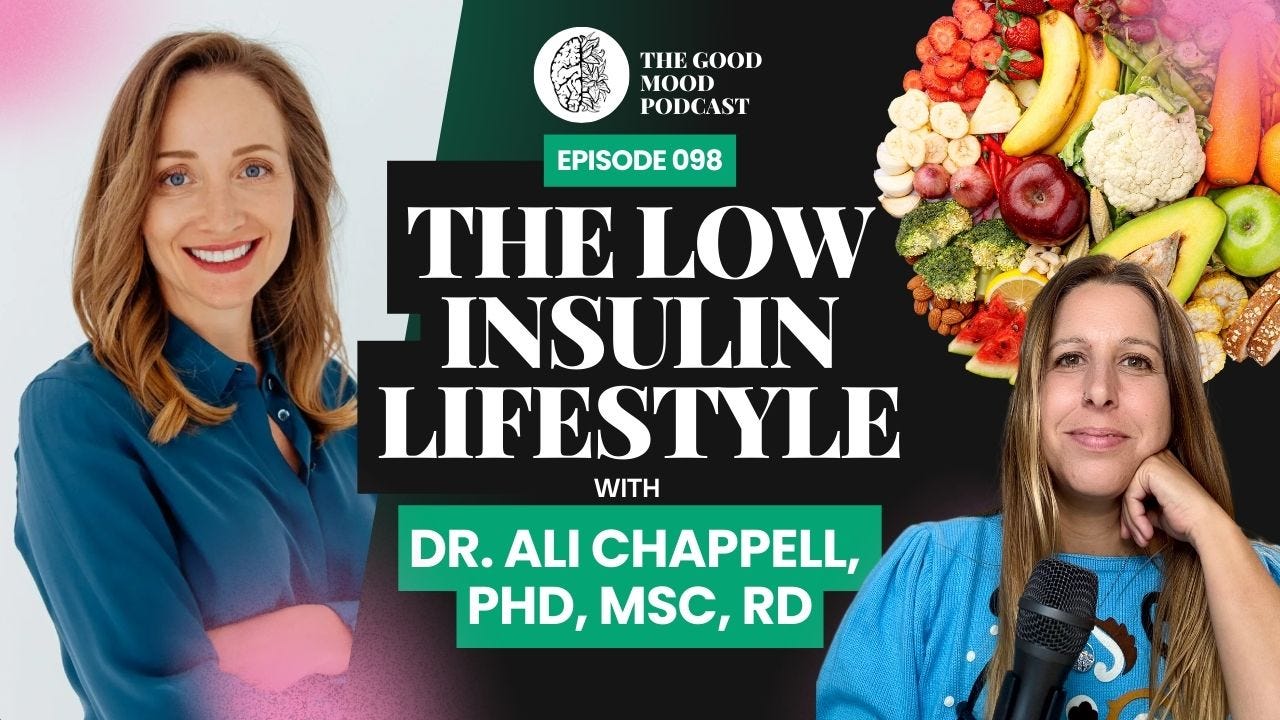
Dr. Ali Chappell is a Registered Dietitian with an MS and PhD in Nutrition and Reproductive Endocrinology. After earning her doctorate, she completed a postdoctoral research fellowship funded by the National Institutes of Health (NIH) to advance her work in nutrition, insulin resistance, and PCOS.Her PhD doctorate examines the role of diet on reducing symptoms in PCOS, an insulin-resistant condition- the most common cause of infertility in women. Our current medical paradigm is glucose-centric, but 90% of the population has insulin resistance, and most have normal glucose levels. Dr. Ali explains why we need to shift the focus from glucose to insulin and focus on a diet (or lifestyle rather) that lowers insulin, rather than just regulating blood glucose. In 2021, Dr. Ali received a grant from the National Science Foundation to launch Lilli Health, which turned years of research into actionable solutions for patients. In this podcast, she discusses her research results and the science behind them. Find Dr. Ali ChappellOn Instagram: https://www.instagram.com/dr.alichappell/On her website: https://lillihealth.com/ Get full access to This Might Help at drtaliand.substack.com/subscribe
In this episode of the Good Mood Podcast, I discuss the vital role of muscle health in metabolic function and overall well-being, especially in the context of rising metabolic disorders in North America. I explore how hormonal changes post-menopause can exacerbate these issues and highlight creatine's benefits for both physical and cognitive performance, particularly for women in this demographic. I also tackle societal pressures around body image, advocating for a focus on muscle preservation and metabolic health. The conversation includes practical tips for maintaining muscle through diet and exercise, fostering a community centred on health and informed choices. Show notes Losing 1/3 lb per week to lose only fat, not muscle: https://pubmed.ncbi.nlm.nih.gov/18347690/Creatine and IQ for seniors: https://www.frontiersin.org/journals/nutrition/articles/10.3389/fnut.2024.1424972/fullEnergy pamphlet https://d1fdloi71mui9q.cloudfront.net/iMxRx0kQoSbcMsYD9kEB_Energy-interview%20with%20Dr%20Paul%20Eck.pdfLearn more: taliand.com thrivecart.com/goodmood Get full access to This Might Help at drtaliand.substack.com/subscribe
In this episode of the Good Mood Podcast, Dr. Talia, ND, reflects on Sonnenberg's study showing how gut microbiota-targeted diets can influence human immune status. The study involved two dietary intervention groups, high-fibre and high-fermented foods, with the latter showing decreased inflammatory cytokines. The podcast stresses the importance of microbiota-accessible carbohydrates (MACs) found in fibres and fermented foods for gut health. It offers insights on probiotics, fermenting foods at home, and gut health testing methods. Encouraging the inclusion of fibres, antimicrobial herbs, and fermented foods in one's diet, Dr. Talia invites listeners to explore ways to enhance gut health and overall well-being through dietary choices. Chapters0:01A New Beginning in Psychotherapy and Educational Projects2:08Exciting Future Plans for the Good Mood Project3:27The Impact of Diet on Gut Microbiota9:07Study Results: High Fiber vs. High Fermented Food Diets19:55Challenges of Adding Fiber to an Unhealthy Gut20:59Implications of the Sonnenberg Trial on Health21:39Reflections on Gut Health Research and Dietary Changes26:11Utilizing Fermented Foods and Probiotics for Gut Healthlearn more at taliand.com Good Mood Project: goodmood.thrivecart.com Get full access to This Might Help at drtaliand.substack.com/subscribe
Brandie is a recovering wellness nano-influencer working towards becoming a Registered Psychotherapist. Brandie used to be an obedient follower and team leader. Still, today, she’s writing a Substack and a memoir on the topic of cult awareness and her experience inside a commercial cult. Brandie speaks out about abuses of power and coercion perpetrated by MLM scams because she firmly believes that every mind deserves to be free.Instagram: https://www.instagram.com/brandiehadfield/Substack: https://brandiehadfield.substack.com/p/boss-babe-no-more?utm_campaign=post&utm_medium=web Get full access to This Might Help at drtaliand.substack.com/subscribe
Dr. Talia Marcheggiani, naturopathic doctor and registered psychotherapist (qualifying), talks about the importance of sleep and how to treat chronic insomnia with Cognitive Behaviour Therapy, the gold standard for supporting insomnia and improving sleep.Learn more: taliand.com Get full access to This Might Help at drtaliand.substack.com/subscribe
Dr. Talia Marcheggiani, naturopathic doctor discusses neurotransmitters, neuromodulators, amino acids and their role in mental health. learn.goodmoodproject.cataliand.comInsta: @drtaliandThis video is for educational purposes only and should not be construed as medical advice. No 1:1 doctor-patient relationship is formed through this process, a proper intake and assessment has not been performed, and no advice-giving will be undertaken. Please run any changes to your healthcare regime past your naturopathic doctor or functional medicine provider to ensure these principles are right for you. Get full access to This Might Help at drtaliand.substack.com/subscribe
Parasites are gross, and despite our desire to avoid them, they may be necessary to talk about. Dr. Michelle Pobega aka the "Poop and Parasite Princess" and I talk poop... and parasites. What they are, how they live, what they want with your life, health and well-being, how to uncover their slimy ways, and how to rid yourself of them. This may be a disgusting episode, but it's our episode. And hopefully, it's also your episode. Dr. Michelle Pobega is a naturopathic doctor with over 12 years in private practice. She has a clinical focus on optimizing digestive health after she herself struggled for years with what is often termed “IBS.” She learned how to unpack and address the layers of imbalance behind her digestive symptoms, regained control and resiliency in her health, and is now focused on helping her patients do the same.You will often find her discussing mind-body medicine, healthy poops, parasites and their effects on health, optimizing liver health and detoxification and supporting the gall bladder.Find Dr. Michelle at https://drmichellend.ca/ Instagram https://www.instagram.com/dr.michelle_nd/Listen to That Naturopathic Podcast https://www.tnpodcast.com/Instagram https://www.instagram.com/thatnaturopathicpodcast/ Get full access to This Might Help at drtaliand.substack.com/subscribe
In 2021, I started hearing about a weight loss program patients were doing via Facebook. Patients are always telling me about weight loss programs. However, these patients were motivated, losing weight, regularly eating, enjoying protein for breakfast and hydrating. They were engaging in better self-care. They were also following our work together with more inspiration and motivation and noticed many healthy changes and better metabolic health. I hate treating weight loss, and I'm happy when patients find something I can't offer them: daily support, motivation, and a community. So, I joined the Livy Method myself to see what all the fuss was about. Gina Livy is the founder and CEO of Weight Loss by Gina Inc. and the creator of the Livy Method. She started her process as a personal trainer, going through her own interesting weight loss journey (following the old calories in, calories out) model resulting in more weight gain. It wasn't until she started dating a chef and eating more that she saw her body composition shift. Inspired by this, Gina turned to the research and started implementing what she was learning with clients 1 to 1. In December 2020, she took this method to a few hundred customers via Facebook, offering her program for free. Her program now has 28,000 members in this Spring/summer of 2023 (its 19th iteration), with 165,000 members in total, she has a bestselling book on Amazon, and her company grosses almost 8 figures in revenue. Researchers at the University of Ottawa are currently studying her work. In total, her program has resulted in over 250,000 pounds lost. Weight loss can be a sensitive topic. We talk about the Healthy At Any Size and Body Positivity Movement with the conclusion that you can be healthy and love yourself at any size, and weight shouldn't factor into whether or not you are worthy or loveable. However, as my hero Carl Rogers says, “The curious paradox is that when I accept myself just as I am, then I can change.” Perhaps when we embrace the totality of ourselves as we are, weight, warts and all, we are inspired to care for ourselves in a new way, free of the hangups we have accumulated about our bodies, diet and food, and we're ready to feel more energy, experience less pain and learn how to rewrite the old narratives around nourishing ourselves. Find Gina at: https://www.ginalivy.com/Buy her latest book: https://a.co/d/1FllRaO Get full access to This Might Help at drtaliand.substack.com/subscribe

I talk about neurodivergence in Canada and considerations for counselling and naturopathic medicine, including support for executive functioning skills, therapeutic relationship-building, and nutritional support. Learn more: taliand.com learn.goodmoodproject.ca Get full access to This Might Help at drtaliand.substack.com/subscribe
Dr. Martha Sharpe, ND is back on the Good Mood Podcast to talk about cancer survivorship, nourishing our bodies and supporting mental health, as well as the healing philosophy of naturopathic medicine, an additive approach to dietary and lifestyle changes and how to support your whole body after cancer. Find Martha here: https://marthasharpend.com/podcastpromo Promo code: PODCAST100 Get full access to This Might Help at drtaliand.substack.com/subscribe
What is the truth about cholesterol, this devilish and dreaded molecule that must be headed off at the pass with cholesterol-lowering medications? Is it a heart attack in a box, or fuel for the brain? Learn the truth about this molecule including how to interpret your blood tests, what cholesterol's many roles are in the body, how to balance your body for optimal health and cardiovascular disease prevention and more! I am interviewed by Tracy Seider of the Reshape Method https://tracyseidercoaching.com/the-reshape-methodGet in touch: website: taliand.comInstagram: @drtaliand Get full access to This Might Help at drtaliand.substack.com/subscribe
I talk with Tracy Seider about hair loss. Do you dread washing or brushing your hair for fear of seeing clumps falling out in the shower? Listen to or watch this presentation on diagnosing and uncovering the cause of hair loss and learning how to treat it. First appeared on Tracy's Facebook group: https://www.facebook.com/groups/142386369718570Website:taliand.comlearn.goodmoodproject.ca Get full access to This Might Help at drtaliand.substack.com/subscribe
I finally have Dr. Shayla Garland, ND on my podcast, after much deliberation and convincing. Shayla graduated a year ahead of me at CCNM but after we both graduated we became friends. She is a wonderful ND and very talented artist and skilled world traveller and expert free spirit. On this pod she will share her epic story that changed it all for her and gave her that secret zing of unbridled trust in the universe. You see, we all want freedom and happiness. We want to be free of our hangups and lack of self-consciounsess and self-doubt. We want to silence the inner critic and feel good physically, mentally and emotionally. But true freedom comes not from having the right things or having the right things happen to us--not from having control or having our stuff together, but from riding the waves of life and living with an open receptive spirit and being grateful for the gifts the life delivers. And Dr. Shayla is a mindset master (although she doesn't necessarily know it). She lives free of fear, need for control, criticism and doubt (for the most part, of course). So in the pod we hear her story and I psychoanalyze her so that we can learn her secrets and we give you a some tools to access that. We understand that sometimes life hands us a set of early experiences that set us up with a baseline of distrust in other humans and in the benevolence of life. We feel anxious and fearful. We have bottled up unprocessed grief or trauma. But how can we start fresh and move through life with the lightness of being that Dr. Shayla Garland possesses? Listen to find out. Shayla is a naturopathic doctor with a licence in Ontario (and soon to be licence in British Columbia). You can find her at:Her website: https://www.shaylagarlandnd.comInstagram: https://www.instagram.com/dr.shaylagarland/For more:learn.goodmoodproject.cataliand.com Get full access to This Might Help at drtaliand.substack.com/subscribe
In this episode Victor Cirone joins us for a third time, this time to talk about homeopathy. We cover the who, why, what and where--the history, details and definition of homeopathic medicine as well as discuss healing philosophy, resistance to healing and fear of death (and dolphin's milk). Victor Cirone is a Registered Homeopath with The College of Homeopaths of Ontario as well as a Registered Clinical Herbalist with the Ontario Herbalists Association. He graduated with honours from the Canadian College of Homeopathic Medicine, and before that from Diane Kent’s program in clinical herbal medicine. He is a founding member of, and chief contributor to, Everything Herbal (www.everythingherbal.ca), a project dedicated to fostering the practice of herbal medicine and related branches of natural healing. In addition to his medical studies, he has a Master’s degree in Communication and Culture from York/Toronto Metropolitan University, and a Bachelor’s degree in Philosophy from the University of Toronto. He has also completed The Essentials of Psychoanalytic Therapy program offered by the Toronto Institute for Contemporary Psychoanalysis, and has an extensive background in Jungian/Archetypal psychology and dreamwork. He is a published author, and lectures both nationally and internationally. Victor practices Homeopathy and Herbal medicine because of the immense transformative powers that these modalities contain – both on individual and collective levels of experience. He values direct experience, careful and attentive observation, and always strives to engage with his patients in a way that is authentic and deeply healing. He employs a range of medicines in his practice to suit the needs of the individual in their journey toward wholeness and wellness. Find Victor at: victorcirone.com @victorcirone (Instagram) Learn more: taliand.com learn.goodmoodproject.ca taliand.com Get full access to This Might Help at drtaliand.substack.com/subscribe
Dr. Talia Marcheggiani, ND review (Cu)Re Your Fatigue by Morley Robbins, and explains the complex dynamic between iron metabolism, copper and magnesium and how they play a role in our energy production in the body and reduction of oxidative stress that leads to chronic disease. Energy is everything and a lack of energy and increase in oxidative stress may contribute to the rise in health conditions we see today. Learn how iron, copper and magnesium harness the energy from oxygen in the mitochondria to optimize our mental, emotional and physical health and keep us free from disease. Learn more: taliand.com learn.goodmoodproject.ca taliand.com Get full access to This Might Help at drtaliand.substack.com/subscribe
On the Good Mood Podcast we've spoken before of fascia. We've even mentioned lymph, but this interview with Nicole takes it to a whole new level. Nicole is a registered massage therapist with certifications in Fascial Stretch Therapy, Massage Therapy Body Mechanics, Reiki, Lymph, Performance Stretch Systems and Lifestretch. Her focus is on fascial stretch therapy and moving lymph. In this podcast we talk about fascia and its relationship to pain, trauma, fatigue and chronic health conditions and the lymphatic system. We speak about the mind-body connection and how somatic psychotherapy is the new talk therapy--trauma and memory is stored in the body: the lymph and fascia. In working with the body we often liberate these stuck emotions, stories and memories for processing. Listen to the podcast for more! Find Nicole at: https://www.embodiwork.com/Instagram: https://www.instagram.com/embodiwork/The Good Mood Project: learn.goodmoodproject.ca Naturopathic medicine: taliand.com Get full access to This Might Help at drtaliand.substack.com/subscribe


Download from Google Play

Download from App Store
 United States
z