


 Claim Ownership
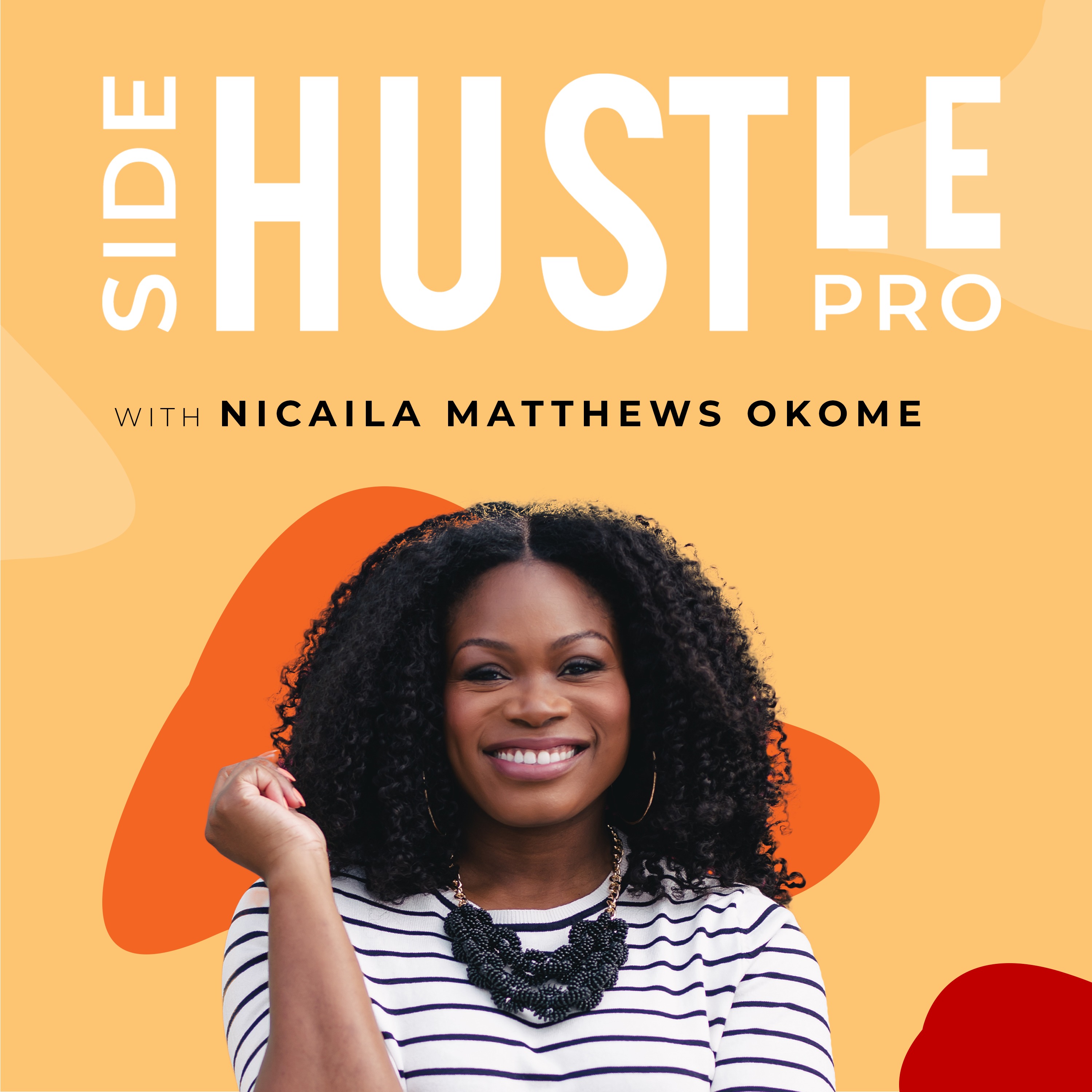
Side Hustle Pro
Subscribed: 7,017Played: 247,040
Subscribe


© 2026 SIDE HUSTLE PRO
Description
Side Hustle Pro spotlights bold black women entrepreneurs who have scaled from side hustle to profitable business. Join Chief Side Hustler turned full-time entrepreneur Nicaila Matthews Okome for your weekly installment of Side Hustle Pro and learn actionable strategies to start small and get going–wherever and whoever you are. Side Hustle Pro features interviews with inspiring Black women entrepreneurs who started out as side hustlers, including interviews with Myleik Teele, Morgan DeBaun, Tiffany "The Budgetnista" Aliche, and more!
Hosted on Acast. See acast.com/privacy for more information.
547 Episodes
Reverse
I would start a side hustle even if I loved my job, and even if I was making multiple six figures. In this solo episode, I explain why I think everyone should have a backup, and why that backup starts with low-pressure exploration rather than a plan to replace your salary.I walk through the experiments I ran early in my career, from signing up to volunteer on film sets to starting my own boutique PR firm with friends as my first clients, and how each one helped me cross options off my list. I also share how Side Hustle Pro started while I was working at NPR, and how it grew out of my own period of unemployment after business school.We talk about how a side hustle creates options and protection if you are laid off, why you do not need to become a content creator to side hustle, and how to get started this week with one hour a day.Main TakeawaysExploration means actually doing the thing, even if no one sees it yet.Small experiments bring clarity, whether you love the work or rule it out.A side hustle gives you options, protection, and a head start if your job changes.Start with one hour a day and one small task you can finish.Highlights Include00:00] Why I would start a side hustle even if I loved my job[00:46] What a backup really means: exploration with no pressure[02:22] Starting Side Hustle Pro while working at NPR[03:44] Using a side hustle to test a skill you use at work in a new setting[04:33] How to run a low-lift Saturday workshop for friends and family[06:07] My early experiments at MTV Networks and volunteering on film sets[07:34] Starting a boutique PR firm and what it taught me about client service[10:33] Why you do not have to become a content creator to side hustle[12:28] How Simone Austin turned her YouTube side hustle into income after a layoff[15:52] How Side Hustle Pro began during my own unemployment after business school[20:46] Your assignment this week and the one-hour-a-day strategyLinks Mentioned in This EpisodeShe Got Laid Off Then Built a YouTube Income to Pay Her Bills (Side Hustle Pro episode with Simone Austin) : https://youtu.be/uRBR3KM24TE Hosted on Acast. See acast.com/privacy for more information.

When I started Side Hustle Pro, I believed there would be one big decision followed by a lifetime of certainty. Ten years in, I've learned that entrepreneurship is the chance to keep making decisions.In this solo episode, I reflect on what I got right about side hustling and what I got wrong about working for myself. I talk about building the show while working in social media at NPR, my confusing first quarter as a full-time business owner, why I sometimes dread the core work of my business, and how motherhood changed my reasons for wanting this life.I also share why I now think every business owner should consider a side hustle to their main hustle, why protecting cash flow comes first, and what the 2024 shifts in podcasting taught me about learning to pivot.Main TakeawaysEntrepreneurship is not one big decision; it is a continuous series of decisions.Protect cash flow first, even if that means adding a side hustle to your main business.Watch for busy work that feels productive but does not move the business forward.Treat pivoting as a skill and study market shifts as soon as you notice them.Highlights Include00:00 What I got wrong about entrepreneurship 10 years ago02:11 Why I'd still start Side Hustle Pro the same way03:48 Side hustling while working in social media at NPR05:57 Why you should start with one thing before building every vertical09:56 The goodbye email I drafted in my head for months12:11 My first quarter as a full-time business owner15:38 Dreading the core work of your business17:46 Busy work versus the work that actually builds a business19:09 Why your business might need its own side hustle22:31 How motherhood changed my reasons for working for myself26:04 Why the growth phase may not be the time to quit your job30:53 Apple's 2024 download changes and learning to pivot32:30 Video podcasting and why you can't ignore YouTubeWatch & ListenSpotify: https://open.spotify.com/show/13qDj08lBR4ymzGhXIKy8tApple Podcasts: https://podcasts.apple.com/us/podcast/side-hustle-pro/id1126021323YouTube: Side Hustle ProSocial MediaInstagram: @sidehustlepro Hosted on Acast. See acast.com/privacy for more information.
Extra income does not have to mean a whole new life. In this solo episode, I walk through five side hustles people are doing right now, each one simple enough that you can picture the customer, the work, and why someone would pay for it.We cover flipping items from Facebook Marketplace and offering pickup or delivery, online resale on sites like Poshmark, a resale concierge service for people who want their things sold without the hassle, junk and donation hauling, and setting up one AI workflow for one type of small business. I also share where I have paid for similar services myself, including an after-hours AI assistant at my dentist's office.To close, I break down how to choose the idea that fits your time, money, storage, and transportation, how to find your first customers, and the four-step plan I would follow in the first month.Main TakeawaysPick categories you already know when flipping, and check that the margin covers your time and transport.Selling on someone else's behalf requires permission, platform rules, and a clear agreement on the split.Hauling needs a plan for items donation centers will not accept, plus the right vehicle and insurance.For AI services, master one workflow for one business type before offering anything broader.Highlights Include[00:03] Why these ideas are built for extra income, not a new life[01:54] Idea 1: Flipping Facebook Marketplace finds[04:13] Why a $20 item is not automatically a deal[06:44] Adding a Marketplace pickup and delivery service[07:31] Idea 2: Online resale on Poshmark and similar sites[09:53] Idea 3: Positioning a resale concierge service and building a site with Lovable[13:26] Idea 4: Junk and donation hauling[15:32] What to do when a donation center says no[16:15] Idea 5: Setting up one AI workflow for one small business[18:29] What I learned from my dentist's after-hours AI assistant[23:09] How to choose the idea that fits your time, money, and space[24:59] Finding customers and the first-month planLinks Mentioned in This EpisodeLovable: https://lovable.devWatch & ListenSpotify: https://open.spotify.com/show/13qDj08lBR4ymzGhXIKy8tApple Podcasts: https://podcasts.apple.com/us/podcast/side-hustle-pro/id1126021323 Hosted on Acast. See acast.com/privacy for more information.
People told you they would be the first to sign up. Then you launched, and they were nowhere to be found. In this solo episode, I break down why interest and buying are two different decisions, and what an underperforming launch can and can't tell you.I walk through the four signals to separate: what people praise, what they ask for, what they spend time with, and what they pay for. I also cover how to ask about past behavior instead of hypotheticals, how to figure out who actually saw your offer, and the five places a sale can break down: the audience, the problem, the offer, trust, and the invitation.Then I share what I do after a launch that misses my expectations, from talking to buyers and non-buyers to the webinar time test I'm running right now. I close with five questions to answer about the offer you've been sitting on so you can run your next small test.Main TakeawaysPraise, requests, attention, and payment each answer a different question about your offer.Ask people about the last time they dealt with the problem, not whether they would buy.Measure who actually saw the offer before deciding nobody wants it.Change one or two things per launch so you know what made the difference.Highlights Include[00:00] When people say they'd buy it, then disappear at launch[02:20] Why your audience isn't necessarily lying to you[04:47] You and your customer are picturing two different offers[05:30] The four signals: praise, requests, attention, and payment[09:33] The meal planning example: asking about real experiences[11:54] What "I can't afford it" really means, and painkillers vs. vitamins[14:08] Start with the people who actually saw the offer[18:22] The five places a sale can break down[25:32] Did you actually ask people to buy?[30:33] Why a small paid pilot can teach you more than a big launch[34:00] What I do after a launch that misses my expectations[38:47] My webinar time test and changing one variable at a time[41:08] Setting a budget and a stopping point for your experiments[45:15] How my Instagram challenge became the Master the Gram courseWatch & ListenSpotify: https://open.spotify.com/show/13qDj08lBR4ymzGhXIKy8tApple Podcasts: https://podcasts.apple.com/us/podcast/side-hustle-pro/id1126021323 Hosted on Acast. See acast.com/privacy for more information.

You don't need a huge following or constant access to your private life to build a profitable business. You need to be known for solving a specific problem. In this solo episode, I break down the difference between influence and authority, and between visibility and exposure. I share the questions I ask clients before we talk about anything they don't want to do, starting with what they actually want to be known for. I walk through the three layers of sharing, how I decide what stays private, including how I've approached sharing my journey as an autism mom, and a simple boundary exercise you can use before you post. Then I cover four ways to build authority without becoming a lifestyle influencer: the teacher, the curator, the practitioner, and the connector. We close with how to pick one discovery channel and one owned channel, what consistency really looks like, and how to connect your content to a paid offer you can test.Highlights Include[00:00] Why a profitable brand doesn't require a huge following[01:40] The difference between an influencer and a business owner[02:20] Why my business keeps earning when I step away from Instagram[05:55] Being famous vs. being findable[08:15] The first question to answer: what do you actually want to be known for?[13:15] Visibility vs. exposure, and how I handle sharing my autism mom journey[18:00] The three layers of sharing: expertise, experience, and personal access[22:10] A boundary exercise and the question "What will this yield?"[26:15] The four ways to build authority: teacher, curator, practitioner, and connector[36:00] Discovery channels vs. owned channels, and why social media is rented attention[41:05] The three jobs every piece of business content should do[44:30] Why you should launch before you feel ready, even if you launch to crickets[49:30] Five questions to answer this weekLinks Mentioned in This EpisodePodcast Moguls coaching program: https://sidehustlepro.co/podcastmoguls Hosted on Acast. See acast.com/privacy for more information.

Comments

Download from Google Play

Download from App Store
 United States