


The HotFish Podcasts
Subscribed: 2Played: 15
Subscribe

© University of Stirling
Description
A series of conversations around the implications of climate change in different aquaculture and aquatic food contexts. These particularly feature early-career researchers tackling issues in different parts of the world. They have been produced with financial support from the Belmont Forum and Natural Environment Research Council and we hope they will be a useful contribution to the upcoming COP26.
13 Episodes
Reverse
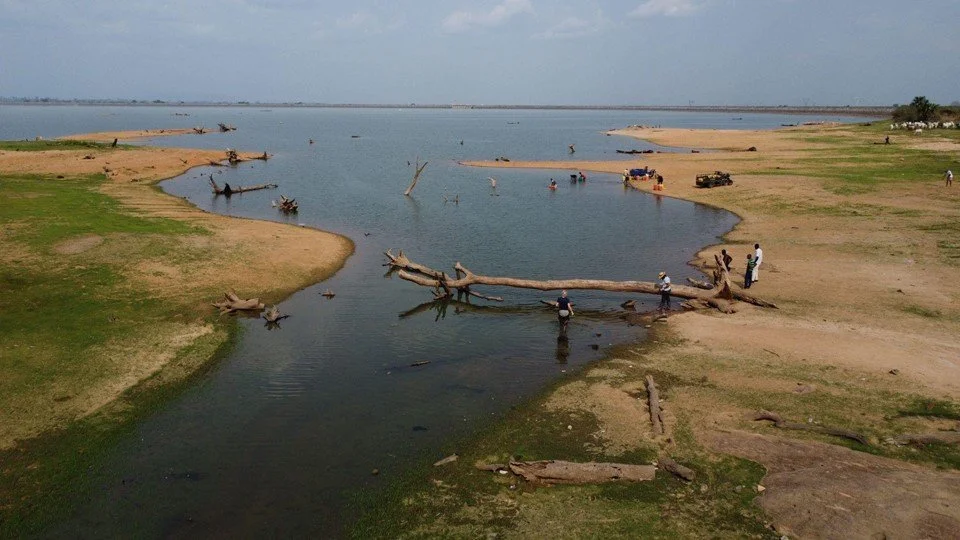
In this episode, Dave Little talks with Reed Ozretich who specialises in a One Health approach to aquaculture in the context of a changing climate. He's been working on a Belmont-funded project in Brazil and Ivory Coast coordinated by Giulio de Leo, at Stanford University, but working with local partners focusing on understanding the dynamics of snails as vectors for schistosomiasis; what, if any, is the role of farmed fish in controlling them? Reed talks here about his recent work in Ivory Coast with Professor Eliezer N’Goran. at UFHB in Abidjan.

Researchers discuss a comparative production trial between mixed-sex and conventional all-male stocks of tilapia farmed in cages in Thailand. This showed that males can perform as well in mixed-sex culture and that smaller females can boost total cage production. Financial analysis demonstrated why this is not current practice, but indicated that if a market premium could be obtained for non-sex-reversed fish, and/or smaller fish sold into markets where these command a higher price, this could become a more attractive strategy with wider social benefits.

In this podcast, Professor David Little talks with Associate Professor Abdullah-Al Mamun from the Department of Fisheries and Marine Science at Noakhali Science and technology University, Bangladesh, about the findings of his research among shrimp farming communities in South West Bangladesh which was carried out in collaboration with the Universities of Stirling and Aberdeen. This large-scale study found that the export-driven culture of shrimp supports local livelihoods with positive contributions to public health and prosperity, whilst being climate-resilient, contrary to its reputation. The study was conducted over four years, collecting quantitative and qualitative data from 240 households and 160 shrimp-prawn farms in four different communities.The study found that a relatively small amount of the total production was exported and that local sales of shrimp as well as co-production of other species provided important income for communities, had a low impact on the environment, whilst providing crucial nutrition.The research found that only 20-40 per cent of all the fish produced – the shrimp and prawn - was destined for export, with a high diversity of other fish being produced, sold and consumed locally in mainly small-scale enterprises.

Freshwater aquaculture dominates global aquaculture production, but its importance is often overlooked in global food-policy agenda and research. In a new study published in Nature, Dave Little and Richard Newton at the Institute of Aquaculture, University of Stirling and external colleagues led by Dr Wenbo Zhang of Shanghai Ocean University argue that recent research underestimates the production potential for freshwater aquaculture and inflates the importance of mariculture, or saltwater aquaculture. In this podcast, Professor David Little talks with Dr Wenbo Zhang about the study and the paper that prompted it.

In this episode Dave Little is interviewing Dr. Richard Newton, who discusses his work on the idea of ecologically responsible intensification of fish farming through improvements in farming efficiency and the reuse or repurposing of waste products throughout our supply chains.Intensification in aquaculture generally means producing more from a specific limited or expensive resource - e.g. land area or tank space. However, this approach can too easily have negative consequences when viewed through a broader lens of sustainability. The EU GAIN Project therefore adopted the concept of “eco-intensification”, to indicate that intensification would be more multi-dimensional in terms of parameters considered and solutions developed. A key approach was to consider not just the aquaculture production activity, but the whole value chain, particularly opportunities for integrating elements into circular economies. This essentially means finding ways of utilising and generating value from waste or by-products either into or out of the aquaculture value chain. This for instance includes better utilisation of fish processing waste e.g. by transforming them into a material that can be used as a feed ingredient for another species, or for fine chemical extraction or input to new biomaterials.

Comments

Download from Google Play

Download from App Store
 United States