


SAGIT
Subscribed: 2Played: 29
Subscribe


© SAGIT
Description
SAGIT invests more than $2 million each year to support research crucial to advancing South Australia’s $4.6 billion grain industry. These projects deliver real improvements in grain growing, farming systems, soil management, harvesting, storage, processing and marketing. SAGIT gives South Australian grain growers a stake and a voice in research projects that deliver relevant local benefits.
Now we're giving the researchers a voice too - through the SAGIT podcast! Have a listen to how your levy funds have been invested and how you can use the research to improve your own farm outcomes.
Now we're giving the researchers a voice too - through the SAGIT podcast! Have a listen to how your levy funds have been invested and how you can use the research to improve your own farm outcomes.
23 Episodes
Reverse
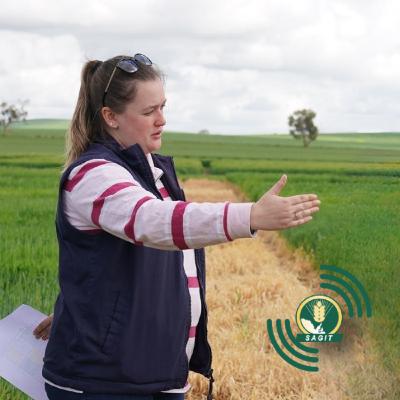
Agronomic information and support for growing vetch is currently limited, yet interest in it as a break crop is increasing.In this episode of the SAGIT Podcast, Stuart Nagel and Melissa McCallum from SARDI share findings from their project, which consolidated vetch agronomic knowledge, identified gaps in hay production and mixed farming systems, and improved recommendations for growers. They also discuss how Rapid Generation Cycling accelerated the development of new vetch varieties, highlight practical resources produced for growers, and outline future research priorities aimed at boosting vetch productivity, quality, and profitability.----------On average, SAGIT invests $2 million a year in supporting research crucial to advancing South Australia’s $4.6 billion grain industry. These projects deliver real improvements in countless areas of grain growing, farming systems, soil management, harvesting, storage, processing and marketing, and they also provide technical information to growers.
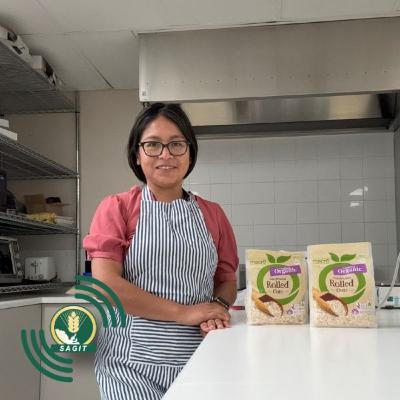
There is growing opportunity for oats to move beyond traditional breakfast cereals and baked goods into emerging consumer markets for plant-based, healthy, fibre-enrichedfermented spoonable snacksIn this podcast episode, Guisella Yarasca from SARDI shares her work developing clean-label, dairy-free fermented oat snacks. She discusses product development, sensory testing and optimisation, and explains how this innovation could create new opportunities for Australian oat growers, while meeting the rising consumer demand for convenient, nutritious and gut-friendly plant-based foods.----------On average, SAGIT invests $2 million a year in supporting research crucial to advancing South Australia’s $4.6 billion grain industry.These projects deliver real improvements in countless areas of grain growing, farming systems, soil management, harvesting, storage, processing and marketing, and they also provide technical information to growers.
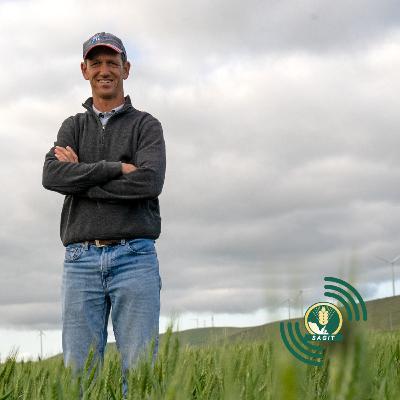
Controlling crop weeds effectively requires a strategic and integrated weed management program, and harvest weed seed control is a key component. With a growing range of harvester weed seed mills now on the market, it is important for growers to understand how they perform before making a significant investment. In this episode of the SAGIT podcast, Sam Trengove from Trengove Consulting shares insights from a recent study evaluating the efficacy of various commercial harvest weed seed mills. The research examined how well the mills controlled seed from a range of weed species, helping to inform growers decisions around harvest weed seed mill investment and reduce reliance on herbicides.----------On average, SAGIT invests $2 million a year in supporting research crucial to advancing South Australia’s $4.6 billion grain industry. These projects deliver real improvements in countless areas of grain growing, farming systems, soil management, harvesting, storage, processing and marketing, and they also provide technical information to growers.
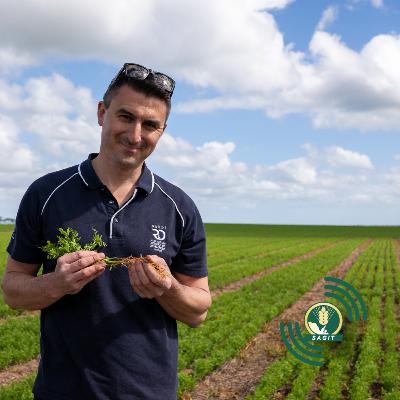
Pulse crops have become an increasingly important part of farming rotations across South Australia. But while plantings have increased, one crucial area has remained a mystery – root diseases. These hidden threats can devastate crops, yet knowledge had been relatively limited.In this episode of the SAGIT podcast, SARDI research scientist Blake Gontar speaks about the work being done to uncover the pathogens affecting pulses. From the first reports of crop failure in 2017 through to national-scale investment, this research is laying the foundation for management strategies that will help growers protect yields and plan with confidence.----------On average, SAGIT invests $2 million a year in supporting research crucial to advancing South Australia’s $4.6 billion grain industry.These projects deliver real improvements in countless areas of grain growing, farming systems, soil management, harvesting, storage, processing and marketing, and they also provide technical information to growers.
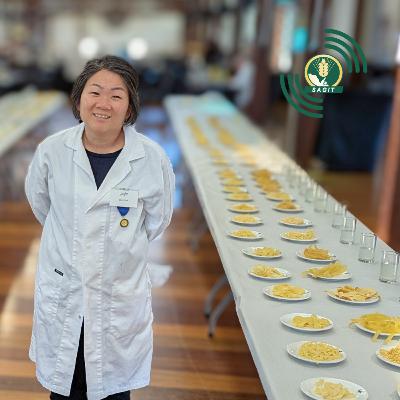
Hard wheat from South Australian growers could soon be consumed by millions across East Asia as a SAGIT and GRDC funded project looks to open up new noodle wheat markets. This project is looking to position SA as a supplier of high-value noodle wheat to Taiwan, South Korea and Japan, where demand is increasing. In this podcast episode, AEGIC senior research scientist Dr Siem Siah explains the process of working with flour manufacturers in those countries to test the performance of Australian Hard wheat varieties, and what this could mean for South Australian wheat growers. ---------- On average, SAGIT invests $2 million a year in supporting research crucial to advancing South Australia’s $4.6 billion grain industry. These projects deliver real improvements in countless areas of grain growing, farming systems, soil management, harvesting, storage, processing and marketing, and they alsoprovide technical information to growers.
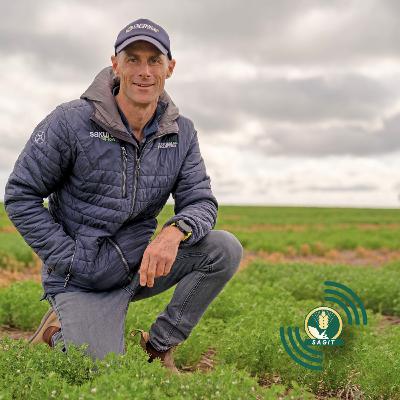
A simple change in seeding technique and sowing crops directly on-row can significantly improve yields in barley and lentils, particularly in saline soils. With gains of up to one tonne per hectare and gross margin benefits exceeding $800/ha, the practice offers a low-cost solution for improving crop performance in coastal regions.In this podcast episode, agronomist Sam Holmes from Central Ag Solutions shares insights into the trial process, what role salinity plays in the observed benefits, and what further research is underway to fine-tune the practice to improve productivity for other growers facing saline soils. ---------- On average, SAGIT invests $2 million a year in supporting research crucial to advancing South Australia’s $4.6 billion grain industry. These projects deliver real improvements in countless areas of grain growing, farming systems, soil management, harvesting, storage, processing and marketing, and they also provide technical information to growers.

When the moratorium to grow genetically modified canola was lifted in 2020, one of the new opportunities for South Australian growers was access to herbicide-tolerant varieties and a new chemistry mode of action.
As herbicide resistance increases, particularly with
glyphosate and clethodim, this SAGIT-funded project run by the Hart Field-Site Group looked at maximising the efficacy of glufosinate-ammonium (Liberty) for annual ryegrass control in LibertyLink® herbicide-tolerant canola.
In this podcast episode, Hart Research and Extension
Manager Rebekah Allen talks about the trials and pot experiments exploring the effects of temperature and humidity on the herbicide’s efficacy.
----------
On average, SAGIT invests $2 million a year in supporting research crucial to advancing South Australia’s
$4.6 billion grain industry.
These projects deliver real improvements in countless areas of grain growing, farming systems, soil
management, harvesting, storage, processing and marketing, and they also provide technical information to growers.

Wheat and barley yields depend upon many variables. But understanding the optimal time for flowering to maximise harvest is important, particularly as timeframes vary regionally.
SAGIT recently funded a study into the optimal flowering period for the Murray Plains region, led by Brendan Kupke, Senior Research Officer in Agronomy and Crop Sciences with the South Australian Research and Development Institute (SARDI: the research division of the Department of Primary Industries and Regions SA).
In this podcast episode, Brendan talks about the combination of field trial data and crop modelling using APSIM used to develop and validate the optimal flowering period for the Murray Plains.
----------
On average, SAGIT invests $2 million a year in supporting research crucial to advancing South Australia’s $4.6 billion grain industry.
These projects deliver real improvements in countless areas of grain growing, farming systems, soil management, harvesting, storage, processing and marketing, and they also provide technical information to growers.

Crown rot can cause up to 50 per cent yield loss and grain quality downgrades. It’s a disease that all producers want to a solution to. A potential new option to combat it is a fungicide seed treatment called Victrato. While it is not yet registered, it is under evaluation by the Australian Pesticides and Veterinary Medicines Authority.
In this podcast episode, agricultural scientist Dr Margaret Evans talks about her research exploring Victrato's efficacy in drier cropping regions.
For more information on Victrato, visit the Syngenta website: VICTRATO® | Seed treatment (syngenta.com.au)
----------
On average, SAGIT invests $2 million a year in supporting research crucial to advancing South Australia’s $4.6 billion grain industry.
These projects deliver real improvements in countless areas of grain growing, farming systems, soil management, harvesting, storage, processing and marketing, and they also provide technical information to growers.

With larger farm sizes and variable autumn rainfall, many grain growers are increasingly reliant on early dry sowing of crops in order manage timely seeding across their cropping programs. On the Upper EP, dry spring weather and challenging soil types has increased the need for guidance on dry sowing strategies.
In this podcast episode, Amanda Cook from the SARDI Minnipa Ag Centre details her research project which assessed the effects of soil type, sowing depth, herbicide, seed dressing, fertiliser placement and time of sowing on the germination and establishment of dry sown cereals in the region. (Full details of the treatments are available in the project report at sagit.com.au)
--------
On average, SAGIT invests $2 million a year in supporting research crucial to advancing South Australia’s $4.6 billion grain industry.
These projects deliver real improvements in countless areas of grain growing, farming systems, soil management, harvesting, storage, processing and marketing, and they also provide technical information to growers.

Soil salinity is a billion dollar constraint on wheat production across Australia, and changes to climate, land use and water quality threaten to make the issue worse. Now researchers at the University of Adelaide, with long -term support from SA grain growers through SAGIT, are close to developing new wheat breeds that can deliver benchmark yields on saline soils.
In this podcast episode, University of Adelaide's Associate Professor Stuart Roy describes how his team has been working to isolate phenotypic and genotypic traits for salt tolerance, then breed these into elite Australian varieties to develop a salt tolerant wheat for South Australian conditions.
--------
On average, SAGIT invests $2 million a year in supporting research crucial to advancing South Australia’s $4.6 billion grain industry.
These projects deliver real improvements in countless areas of grain growing, farming systems, soil management, harvesting, storage, processing and marketing, and they also provide technical information to growers.

Saline and sodic soils are relatively widespread in South Australia, leaving many growers unable to take advantage of canola as a lucrative oilseed rotation. However, new super-high oleic acid (SHO) safflower varieties may offer an alternative crop with
suitably high oil yields.
In this podcast episode, Associate Professor Rhiannon Schilling from SARDI talks about her SAGIT-supported research which investigated the ability of these new SHO safflower lines to perform on soils that are unsuitable for canola. She outlines the potential for SHO safflower to become another significant oilseed crop for SA grain growers in the near future.
----------
On average, SAGIT invests $2 million a year in supporting research crucial to advancing South Australia’s $4.6 billion grain industry.
These projects deliver real improvements in countless areas of grain growing, farming systems, soil management, harvesting, storage, processing and marketing, and they also provide technical information to growers.

With five jobs for every graduate in the agriculture sector, the importance of educating the next generation of agricultural workers about career opportunities is critical. To help meet this demand, SAGIT has invested in the state’s first ever Lead Agriculture Teacher, Sue Pratt.
In this podcast episode, AgCommunicators’ Sue Pratt talks about her role supporting existing teachers and helping develop new ones. She’s travelled across the state providing individual support to teams to confidently deliver high quality, engaging food and fibre content.
----------
On average, SAGIT invests $2 million a year in supporting research crucial to advancing South Australia’s $4.6 billion grain industry.
These projects deliver real improvements in countless areas of grain growing, farming systems, soil management, harvesting, storage, processing and marketing, and they also provide technical information to growers.

Soilborne diseases are a significant issue for South Australian farmers. Diseases such as cereal cyst nematode, take-all and rhizoctonia can cause significant yield losses. It is estimated cereal root diseases cost grain growers in excess of $200 million annually in lost production. Much of this can be prevented, but unfortunately often goes undiagnosed and untreated.
In this podcast episode, Dr Katherine Linsell from the South Australian Research and Development Institute, a division of the SA Department of Primary Industries and Regions, talks about a series of workshops designed to give growers and advisers the skills to help them identify root disease issues in their paddocks.
----------
On average, SAGIT invests $2 million a year in supporting research crucial to advancing South Australia’s $4.6 billion grain industry.
These projects deliver real improvements in countless areas of grain growing, farming systems, soil management, harvesting, storage, processing and marketing, and they also provide technical information to growers.

Recent research on Yorke Peninsula has shown significant yield gains for cereals and lentils if you sow within a centimetre of last year’s row.
In this podcast episode, Dr Sean Mason from Agronomy Solutions, talks about various projects he has been involved with, including an ongoing project with Sam Holmes on the Yorke Peninsula looking at inter-row cropping.
One project with Glenn McDonald looked at time of sowing and the influence on phosphorus requirements, and another collaboration with Liz Farquharson looked at optimising P nutrition in pulses to maximise nitrogen fixation.
----------
On average, SAGIT invests $2 million a year in supporting research crucial to advancing South Australia’s $4.6 billion grain industry.
These projects deliver real improvements in countless areas of grain growing, farming systems, soil management, harvesting, storage, processing and marketing, and they also provide technical information to growers.

Awned wheat delivers high quality grain, but the downside is, if it’s damaged by frost, it can’t be cut for feed because the spiky awns can damage animals’ throats.
In this podcast episode, Dr Bertus Jacobs from Longreach Plant Breeders, talks about the development of high quality awnless varieties currently undergoing classification for release in 2025.
Not only do these new varieties have attractive frost management qualities, but their grain yield are equal to the best varieties currently available. As Australia’s climate changes and we experience more extreme weather conditions, these varieties will play an important role.
----------
On average, SAGIT invests $2 million a year in supporting research crucial to advancing South Australia’s $4.6 billion grain industry.
These projects deliver real improvements in countless areas of grain growing, farming systems, soil management, harvesting, storage, processing and marketing, and they also provide technical information to growers.

Canola yields have improved significantly in recent years, thanks to new varieties and research into how to grow them in Australian conditions.
In this podcast episode, Andrew Ware, an independent agronomist with EPAG Research, talks about the deep-dive he’s taken into canola profitability research, looking at what the limits are in terms of yields and how far to push the economic viability of adding nutrients.
He also talks about his involvement with AIR EP and SAGIT and the importance of engaging interns and providing them a hands-on experience in applied field research.
----------
On average, SAGIT invests $2 million a year in supporting research crucial to advancing South Australia’s $4.6 billion grain industry.
These projects deliver real improvements in countless areas of grain growing, farming systems, soil management, harvesting, storage, processing and marketing, and they also provide technical information to growers.

Faba beans are one of the most commonly planted crops in the South East region of South Australia. However, there are many competing thoughts on what nutrients and fertilisers should be applied to deliver the highest yields.
In this podcast episode, Adam Hancock from Elders talks about his SAGIT funded research designed to quantify nutrient and fertiliser responses, particularly of the less commonly applied nutrients, as well as the validation of tissue testing results.
----------
On average, SAGIT invests $2 million a year in supporting research crucial to advancing South Australia’s $4.6 billion grain industry.
These projects deliver real improvements in countless areas of grain growing, farming systems, soil management, harvesting, storage, processing and marketing, and they also provide technical information to growers.

Huge areas of cropping land in SA are planted to lentils annually, however, issues such as weed control, herbicide damage, establishment, soil toxicity, frost, moisture stress, harvestability have slowed their uptake in low rainfall and sandy soil environments.
In this podcast episode, Dr Larn McMurray from Global Grain Genetics talks about his SAGIT funded research which has led to the development of germplasm with improved traits, and now, the release of two new varieties suited to these difficult areas.
----------
On average, SAGIT invests $2 million a year in supporting research crucial to advancing South Australia’s $4.6 billion grain industry.
These projects deliver real improvements in countless areas of grain growing, farming systems, soil management, harvesting, storage, processing and marketing, and they also provide technical information to growers.

The risk of head-loss in barley crops is often enough of a deterrent for growers not to plant it. Finding a solution to this problem has been the focus of work undertaken by Associate Professor Matthew Tucker from the University of Adelaide.
In this podcast episode, Matthew talks about a couple of SAGIT-funded projects exploring a combination of agronomy, genetics and engineering principles to try and reduce the yield losses associated with head-loss.
----------
On average, SAGIT invests $2 million a year in supporting research crucial to advancing South Australia’s $4.6 billion grain industry.
These projects deliver real improvements in countless areas of grain growing, farming systems, soil management, harvesting, storage, processing and marketing, and they also provide technical information to growers.

Comments

Download from Google Play

Download from App Store
 United States