


Question Everything (Except This Podcast!)
Subscribed: 1Played: 0
Subscribe

© Chirag Shah, Sunay Shah
Description
Tired of accepting things at face value? Join Chirag Shah & Sunay Shah in "Question Everything (Except This Podcast!)". We dive into life's big questions (free will, meaning, etc.) with humor & lively debate. Prepare to have your mind gently nudged (or blown!). New episodes every week! #philosophy #podcasts
28 Episodes
Reverse
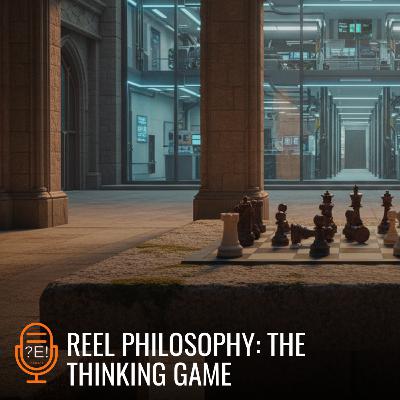
Who do you trust to build the future, and does their character actually matter?Chirag and Sunay unpack "The Thinking Game," a documentary following Google DeepMind founder Demis Hassabis from chess prodigy to Nobel Prize winner. The film raises a question it doesn't fully answer: when the people building the most powerful technology in history are also deciding how it gets used, what safeguards actually work? The conversation covers ethics officers, regulation vs. innovation, and why social media already disproved the "let the public self-correct" theory.Key Takeaways:The character of AI's builders matters, but character alone has never been enough to protect society from powerful technologySocial media already proved that public transparency doesn't automatically lead to self-correctionRegulation and innovation aren't the zero-sum trade-off the industry claims — healthcare manages bothEthics officers exist in Canadian banks since 2008 but are largely absent from American tech companiesDemis Hassabis solved protein folding and open-sourced it, showing what happens when purpose drives the builderChapters:0:00 Intro: The Thinking Game2:24 The Leaders Behind Our AI Tools4:35 Can Public Scrutiny Keep AI Safe?7:16 Why Self-Regulation Isn't Enough9:29 The Case for Ethics Officers (and Resident Philosophers)13:21 Does Regulation Kill Innovation?18:14 What AI Can Learn from Healthcare22:31 Can Government Keep Up?24:36 Demis Hassabis: A Life Built on Purpose27:20 "Solve All of Them" — Then Give It Away30:17 From AlphaGo to AlphaZero: Learning from Scratch34:16 The Gap Between Using AI and Understanding It36:17 When No One Knows How the Machines Work39:57 Energy, Compute, and the Rate Limiter42:25 Humanity Is Getting Worse at Coordination46:23 Manhattan Project Parallels48:59 Does the Builder Matter?Resources & Links:The Thinking Game (documentary) — directed by Greg KohsGoogle DeepMindAlphaFold — the protein structure prediction tool discussed in the episodeSuperagency by Reid Hoffman — the book Chirag references on AI optimismAmanda Askell, Anthropic's Resident Philosopher — the philosopher role discussed in the episodeDwarkesh Podcast: Elon Musk Interview — the interview Chirag references on data centers in spaceListen & subscribe: Apple Podcasts | Spotify | YouTube
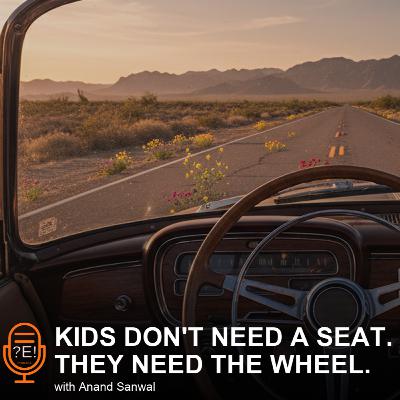
Before school, kids ask 60 questions an hour. By fifth grade, it drops to 0.5. Anand Sanwal built CB Insights for 14 years, then "fired himself" to become a middle school teacher. From the "Sunday night test" to why grades kill the desire to learn, we explore what it would take to build schools that create problem-solvers, not compliant ladder-climbers.

What does a town of 50 people know about community that a city of 8 million has forgotten? From bartering Crown Royal for a truck to surviving weeks in a rock pit on ramen and spam, geologist Ian Fox-Minnock takes us to the edge of Alaska—and the heart of what holds us together.
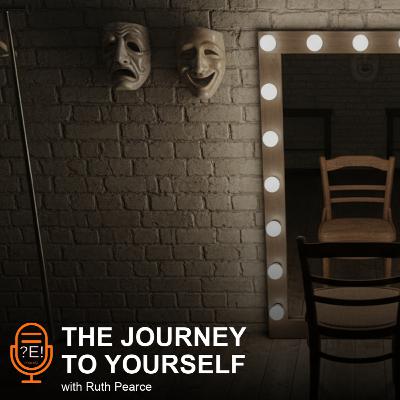
What does it take to finally stop wearing masks and start living authentically? Executive coach Ruth Pearce shares her spectacular burnout story—and the philosophy of hope, strength, bravery, and curiosity that emerged from it. From trying on different identities in our 20s and 30s to the unmasking that happens around 40, we explore how we learn who we really are.
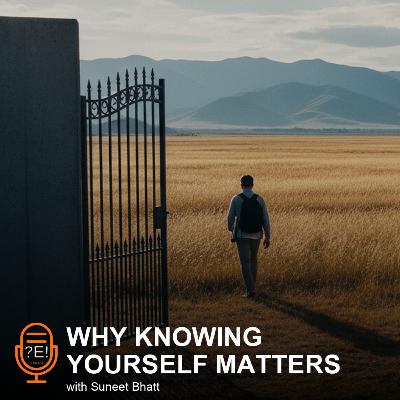
Suneet Bhatt—executive coach, Rutgers professor, and former corporate leader—spent 25 years climbing the ladder before realizing he was on the wrong wall. Now he helps everyone from high schoolers to retirees answer the question "Why am I here?" We explore why following the playbook leaves so many unfulfilled, his frameworks for building self-awareness, and what it actually takes to find purpose in a world that tells us to keep moving faster.
Social media, political tribalism, and clickbait culture are reshaping our democracy—and what we can do about it. From chocolate cake metaphors to deep debates on free speech, capitalism, and civic life, Chirag and Sunay explore why civil discourse feels broken, and how long-form conversations (like this one) might just be the antidote.

Welcome to Rapid Riffs, a recurring mini-series of Question Everything (Except This Podcast!) where Sunay and Chirag swap links, pick the juiciest ones, and riff.This week Sunay and Chirag riff on four hits from their link-exchange: Scott Galloway’s take on friendship and the loneliness crisis among men; the Alpha School in Austin and whether AI can compress learning into two-hour days; Kyla Scanlon’s argument about zero-sum thinking in today’s labor market; and Cal Newport’s riff on the “reverse Flynn effect” and why reading and deep work still matter. Expect empathy, skepticism, and a few practical takeaways.
In this conversation, Sunay and Chirag discuss insights from the AI4 conference, focusing on the contrasting perspectives of keynotes by Dr. Fei-Fei Li and Dr. Jeffrey Hinton regarding the future of AI. They explore the implications of AI agents in the workforce, the complexities of societal systems, and the need for responsible AI development. The discussion also touches on the nostalgia for analog experiences in a tech-driven world and the paradox of productivity in the age of AI.
In this episode, we unpack Mountainhead — a sharp satire about tech billionaires, buzzwords, and just how far we’ll justify progress when guardrails disappear. From net worth contests on snowy peaks to AI’s breakneck pace, we ask: can we keep our humanity when the race to build never slows down? With a nod to Reid Hoffman’s Super Agency and a detour through The Lord of the Rings, we wonder if the answer is simpler than we think — maybe the secret to surviving the AI age is to stay a little more like hobbits in the Shire: grounded, connected, and a lot less impressed by our own power.
Who is Satoshi Nakamoto, really? In this episode, we dive into the mystery behind the elusive creator of Bitcoin — spurred by HBO’s provocative documentary Money Electric. Chirag and Sunay explore the origins of cryptocurrency, its utopian promise, and its ethical quandaries, while unpacking what decentralization really means and where digital currencies might take us next. Is crypto the future of finance… or just the latest digital tulip bubble?

As technology reshapes education, what happens to the human side of learning? In this episode, Rachel Guerrero shares her journey through the quiet challenges of teaching today — and why preserving empathy, connection, and character in the classroom is the true work of education’s future.
Join us with educator and youth coach Jared Posey as we explore the powerful concept: "Don't steal the revelation." In this thought-provoking conversation, we discuss how parents and educators can create environments where kids experience their own moments of discovery rather than receiving pre-packaged wisdom. Jared shares insights on reimagining education beyond its industrial-era roots, the healing power of nature, and the importance of community involvement in nurturing the next generation. From classroom structures to the potential of AI, this episode challenges us all to consider our responsibility in fostering environments where students can find their own path to what Martin Luther King Jr. called "intelligence plus character" - the true goal of education.

Is life just one long, repetitive loop? Or do we have the power to break free and change? In this episode of our brand new series,Reel Philosophy, we dive into the time-looping, mind-bending, and surprisingly deep world ofGroundhog Day.🔹 What makesGroundhog Day such a philosophical film?🔹 Is Phil stuck in fate or shaping his own reality?🔹 The existential dread of repetition—why does life sometimes feel like a loop?🔹 Hedonism vs. purpose: How do we find meaning in the mundane?🔹 Lessons from the film: Can we learn to live in the moment and truly evolve?Join us as we analyze this classic through the lenses of free will, personal transformation, and the meaning of life—all with our signature mix of humor and deep thought.
In this thought-provoking episode, we team up with NYC teacher Lauren Escobar-Phani to tackle one of the most critical questions of our time: What is the true purpose of education in the age of AI? From the challenges of teaching at-risk youth to the profound ways technology is reshaping classrooms, this conversation dives deep into the intersection of education, personalization, and values.
Lauren shares her journey of nearly two decades in teaching, the shifts she’s seen in student engagement, and how tools like ChatGPT are both an opportunity and a challenge. Is it enough to prepare students for the workforce, or should schools focus more on creativity, empathy, and critical thinking? As the world races toward technological advancement, this episode examines what we should hold onto—and what we should let go—in the classroom of the future.
Grab your coffee, pull up a chair, and join the debate. Education’s future depends on it.
What happens when societal frustration meets corporate responsibility? In this episode, we explore the tragic assassination of United Health CEO Brian Thompson and its deep implications for healthcare, morality, and the power of political rhetoric. We examine public outrage, corporate ethics, and how social media escalates real-world consequences. Join us as we discuss systemic change, Stoic philosophy, and finding a path toward a more compassionate society.
In this episode, Chirag and Sunay tackle the complex intersection of healthcare, ethics, and innovation. From the commercialization of medicine to the delicate balance between profit and public good, they question the moral responsibilities of the pharmaceutical industry. With deep insights and healthy debate, they explore whether progress in medicine can coexist with ethical accountability.
In a world seemingly split between extremes, is there still hope for democracy to bring us together? This episode dives into the forces pushing us apart—and the potential for compromise to bring us back to common ground. From the rise of AI and universal basic income to the widening wealth gap, we explore how America's future depends on balancing individual freedoms with social responsibility. Can democracy, with all its imperfections, evolve to meet these challenges? Join us as we discuss why progress requires both patience and compromise—and why there’s still hope in the cycle.

In this episode of Question Everything (Except This Podcast!), hosts Sunay and Chirag unpack the downsides of our “control culture,” where over-curating life can strip away its spontaneity and joy. They share stories of missed experiences due to over-planning, chat about the beauty of embracing “beta mode,” and launch the #NoSoNovember challenge: a month-long experiment to reduce social media use and live more freely.
In this conversation, Sunay and Chirag discuss the rapid development of artificial intelligence and the ethical implications surrounding it. They explore the balance between advancing AI technology and ensuring it is developed responsibly, emphasizing the need for a moral framework and international cooperation. The conversation also touches on the importance of human oversight in AI development and the potential risks of AI operating without human intervention.
In this conversation, Sunay and Chirag explore the pervasive issue of loneliness in modern society, discussing its implications and the paradox of increased connectivity through technology. They share personal experiences and insights on building meaningful connections, navigating social anxiety, and the importance of community involvement. The discussion highlights the need for proactive efforts to combat loneliness and foster genuine relationships, emphasizing that small interactions can lead to significant friendships.

Comments

Download from Google Play

Download from App Store
 United States