


 Claim Ownership
The John Batchelor Show
Subscribed: 4,384Played: 2,621,985
Subscribe


Description
The John Batchelor Show is a hard news-analysis radio program on current events, world history, global politics and natural sciences. Based in New York City for two decades, the show has travelled widely to report, from the Middle East to the South Caucasus to the Arabian Peninsula and East Asia.
5000 Episodes
Reverse

4. The COVID-19 pandemic and severe lockdowns shattered public trust, triggering economic deflation and a burst real estate bubble. Municipalities now face extreme debt distress, leaving them unable to pay workers. Xi Jinping has prioritized surveillance and national security over economic restoration, signaling the dream's retreat. (4)1903
3. The 21st century saw massive cash infusions creating “ghost cities” and excessive infrastructure. China’s cement consumption and loan volume surpassed historic US benchmarks while billionaires like Jack Ma were suppressed. The Belt and Road Initiative then attempted to export this excess capital into international markets. (3)1903

2. Post-Tiananmen, China embraced “red capitalism,” where “princelings”—children of political leaders—controlled investment nodes and equity. The party launched “golden projects” for surveillance while managing the 1998 crisis by recapitalizing banks through asset management companies to hide bad debt that was never truly resolved. (2)1903

1. Anne Stevenson-Yang recounts China’s transition from a poverty-stricken Maoist culture to an export-driven economy. Deng Xiaoping initiated this shift to acquire hard currency, establishing Special Economic Zones like Shenzhen. This era birthed an elite class of well-connected officials who began separating capital from traditional ministries. (1)1903

4. Guest Author: Eric J. Dolin. After their eventual rescue, Barnard regretfully leaves his dog, Scent, with a Britishcaptain for a better life. Returning to New York bankrupt, Barnard and the ship’s owners successfully appeal the seizure of the *Nanina*. Barnard later published his memoirs in 1829, documenting his incredible ordeal. (4)1914 FALKLANDS
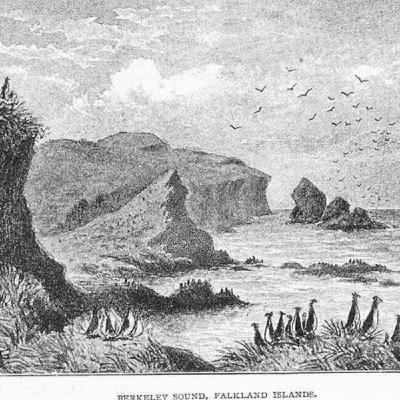
3. Guest Author: Eric J. Dolin. Charles Barnard rescues the *Isabella* castaways, but British Lieutenant D'Aranda betrays him, seizing the *Nanina* as a prize of war. D'Aranda abandons Barnard's hunting party, who survive 534 days in wretched conditions. Their survival is largely credited to Barnard’s heroic dog, Scent, who hunted wild hogs. (3)1890 FALKLANDS
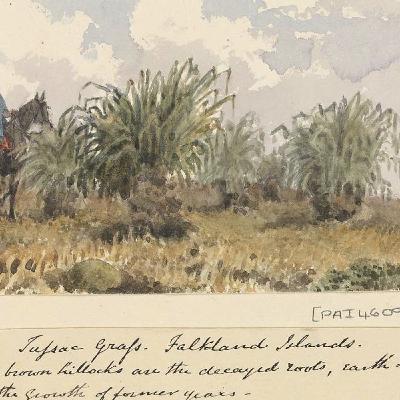
2. Guest Author: Eric J. Dolin. This segment explores the harsh Falkland Islands environment and the varieties of seals hunted for skins and oil. It also details the shipwreck of the *Isabella*, a vessel carrying British convicts and Marines. Captain George Higton’s negligence led the ship to crash, leaving fifty-four people stranded. (2)1849 FALKLANDS
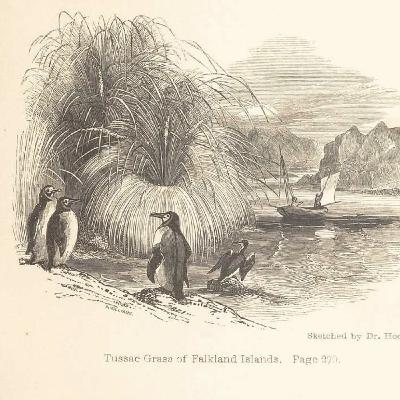
Left for Dead: Shipwreck and Treachery in 1812 5 sources·11 April, 2026These sources detail a harrowing historical account from Eric J. Dolan’s book, Left for Dead, which recounts a true story of shipwreck and betrayal in the Falkland Islands during the War of 1812. The narrative centers on Charles Barnard, an American sealing captain who attempted to rescue the survivors of the wrecked British ship Isabella, only to be betrayed by the Britishdue to the maritime prize system. Despite Barnard's humanitarian efforts, a British officer named Lieutenant D’Aranda seized Barnard’s ship as a prize of war, subsequently marooning a small hunting party on the desolate islands for over 500 days. The texts highlight the extreme survival tactics employed by the abandoned men and emphasize the critical role played by Barnard’s dog, Scent, in their hunt for food. Following their eventual rescue, the story concludes with a lengthy legal battle over the captured vessel and the publication of Barnard’s personal memoirs. Overall, the sources examine the collision of international conflict and personal greed against the backdrop of an unforgiving wilderness.1. Guest Author: Eric J. Dolin. Dolin discusses his book *Left for Dead*, detailing the lucrative 19th-century sealing industry and the *Nanina's* high-risk 1812 voyage. Captain Charles Barnard and his veteran father, Valentine, led a crew from New York to the Falkland Islands, gambling on high demand for skins despite the looming war. (1)1839 Falklands
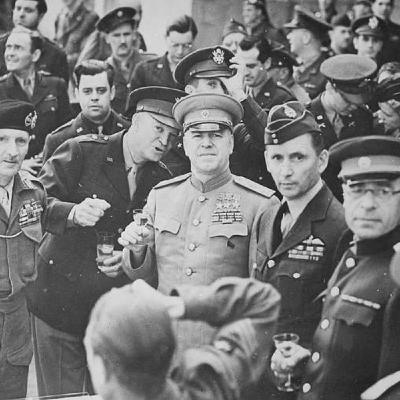
8. Lloyd examines the "twinned" battles of Verdun and the Somme in 1916. He contrasts Falkenhayn’s ruthless attritional goals with Haig’s optimistic breakthrough attempts. The source concludes with the failure of Nivelle’s 1917 offensive, which pushed the French army toward mutiny before Americanintervention changed the war's momentum. (8)1945 BERLIN
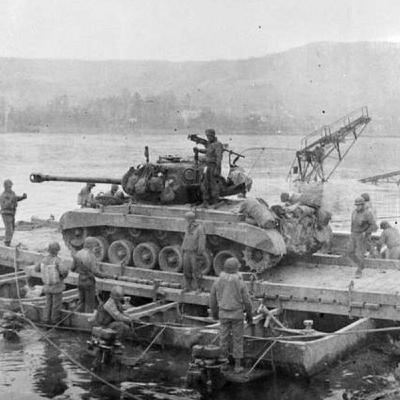
7. In this summary of the 1915 Second Battle of Champagne, Lloyd explores the realization that breaking through entrenched lines was nearly impossible. He provides humanizing portraits of generals like Castelnau, emphasizing the personal grief and professional difficulties they faced while navigating the evolving, lethal landscape of attrition. (7)1945 RHINE
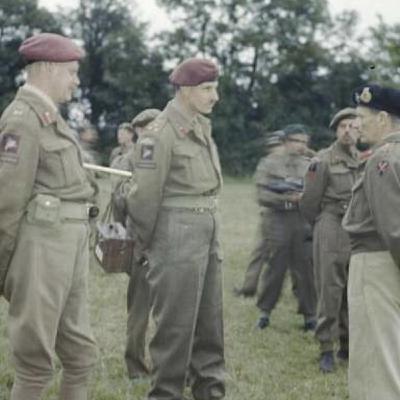
6. Focusing on the 1914 Battle of the Marne, Lloyd explains how Joffre’s nerve and strategic troop movements halted the Germanadvance. He details the breakdown of German command between Moltke and Kluck, which forced an "inward wheel" and prevented the encirclement of Paris, leading to the trench stalemate. (6)1944 MONTGOMERY

5. This file examines Frenchleadership, specifically Joffre’s steadiness during the 1914 invasion and the subsequent rise of commanders like Nivelle and Pétain. Lloyd describes Ferdinand Foch as a "Supreme Allied Commander" whose charisma and understanding of modern warfare successfully coordinated multinational forces for victory in 1918. (5)1944 SWORD BEACH
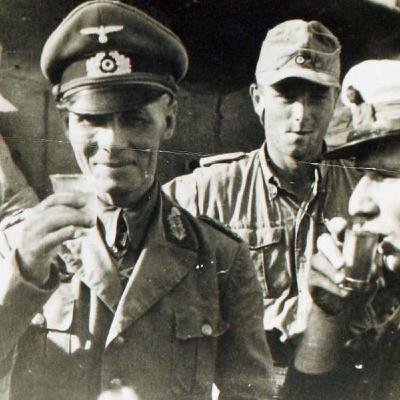
4. Lloyd analyzes the Germanhigh command, specifically Moltke’s failure to execute the Schlieffen Plan due to personal insecurity and logistical breakdowns. He also explores Kaiser Wilhelm II’s shifting influence and Falkenhayn’s attritional strategy at Verdun, which prioritized killing Frenchsoldiers over achieving traditional territorial breakthroughs. (4)1943 ROMMEL
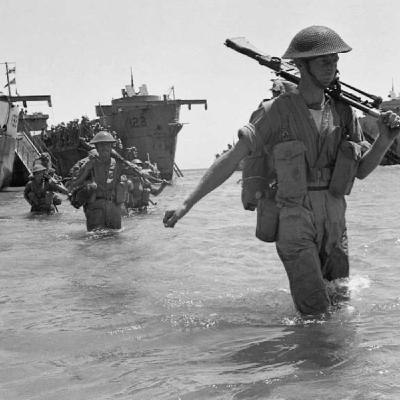
3. Nick Lloyd details his scholarly goal of providing a comprehensive narrative of the Western Front from 1914 to 1918. By focusing on senior commanders' operational perspectives, he seeks to challenge "donkeys" and "butchers" myths, offering a more nuanced assessment of the immense pressures these individuals faced. (3)1943 SICILY
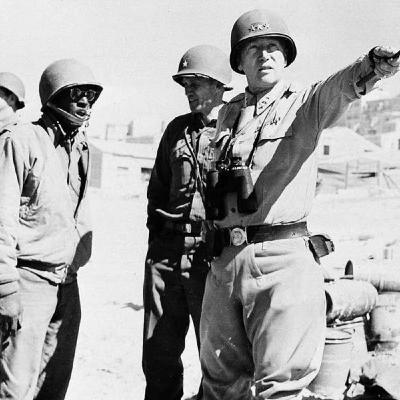
2. This source focuses on Americanintervention under General Pershing, who resisted amalgamating U.S. troops into French units. Lloyd examines how Germanforces were physically defeated in 1918 despite later "stab in the back" myths, noting that the Allies were too exhausted to pursue them into Germany. (2)1943 PATTON
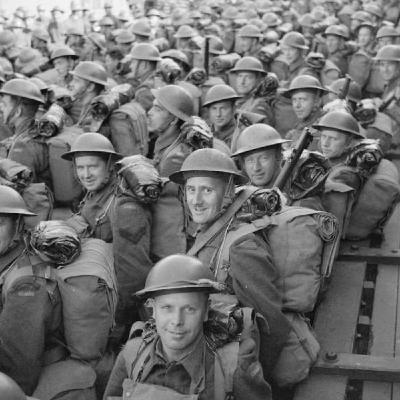
The Western Front: Commanders and the Great War 9 sources·APRIL 11, 2026These sources primarily consist of interview transcripts with historian Nick Lloyd, who discusses his comprehensive research on the Western Front during the Great War. He highlights the complex coalition warfare between the Allied powers and the evolving military strategies used to combat the German army's maneuvers. The text examines the distinct personalities and high-stakes decisions of key figures like Joffre, Petain, and Pershing as they navigated the transition from mobile conflict to trench warfare. Additional segments focus on the logistical challenges of manpower, the friction between political and military leaders, and the arrival of American forces in 1917. Interspersed throughout are brief faith-based testimonials from Walnut Hill Community Church regarding personal recovery and community support. Together, the materials provide a multifaceted look at the military history of World War I and the lasting impact of its unresolved tensions.1. Nick Lloyd discusses the complex dynamics of early British leadership, including Prime Minister Asquith, Lord Kitchener, and Sir John French. He highlights the British Army’s massive expansion from a small expeditionary force to 60 divisions and the eventual rise of David Lloyd George as a wartime leader. (1)1942
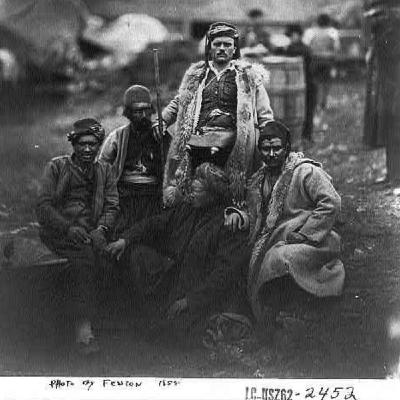
8. Plokhy describes the 2008 NATO split and Putin’s subsequent military intervention in Georgia. He outlines the pressure placed on Yanukovich to reject the European Union, which sparked the Maidan revolution. The author emphasizes that these events were stepping stones toward the eventual annexation of Crimea and full-scale war. (8)1855 CROAT LABORERS
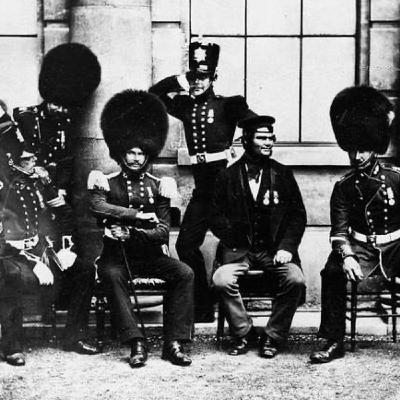
7. Returning to the night of February 23, 2014, Plokhy highlights the undemocratic nature of Putin’s decision-making process. He addresses stereotypes of Ukrainianinternal divisions, arguing that while Russiaexploited these differences to seize Crimea, the invasion ultimately forged a stronger, more unified national identity under Zelenskyy. (7)1855 CRIMEA ROYAL ARTILLERY, GRENADIER GUARDS
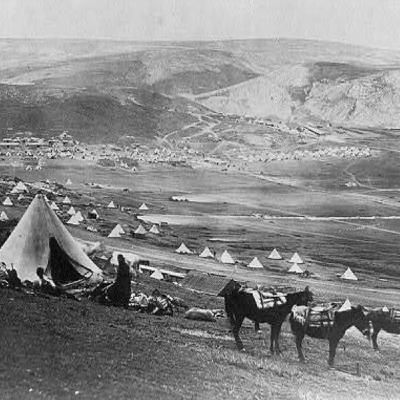
6. Examining the 2021-2022 buildup, Plokhy notes the U.S. intelligence success in predicting the invasion but critiques the lack of preemptive military aid. He details Putin’s imperial ideology regarding the "historical unity" of Russians and Ukrainians and explains why negotiations with President Zelenskyy failed, leading to war. (6)1855 CRIMEA BRITISH CAMP
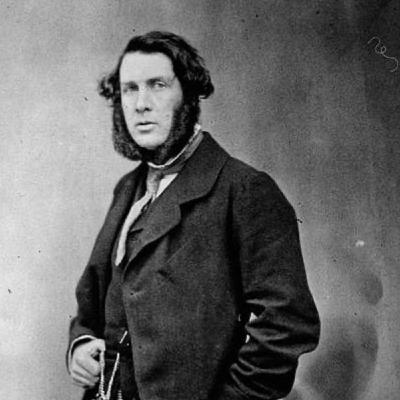
5. Plokhy compares the 2014 annexation of Crimea to the 1930s policy of appeasement, criticizing the West’s inadequate response. He discusses the Minsk agreements as a Russiantool to destabilize Ukraine and explains how NATO’s fear of escalation allowed Putin to solidify control over Crimea and Eastern Ukraine. (5)1855 COLONEL DALRYMPLE SCOTS FUSILIERS GUARDS


Download from Google Play

Download from App Store
 United States
The antisemitic police commercial is a huge insult to commonsense. Enforcing the law drops crime. It worked during the 90's. Why not now.
vvpljl6ooo 9jy656uyyyyyy7
The John Batchelor Show offers insightful analysis on global events and history. Highly recommended for anyone interested in in-depth news coverage! Check it out: スプランキー https://play-sprunki.org
The title has nothing to do with the actual podcast. This is sadly an annoying habit that has somehow been taken up. This happens quite often.
hqr1
has nothing g to do with Ukraine. this is a retelling of the Cuban missle crisis.
what impact they will have on international space endeavors. If relevant resources or documentation are intended to accompany the commit, you might want to include a reference like https://mywguportal.com/ to direct users to a related portal or resource. Would you like help editing the commit message or improving documentation next?
The subject matter dosen't match the title. This seems to happen with many episodes.
have you seen the movie "The Castle". it's a great movie about exactly this legal issues.
I love how you incorporate https://misidegameonline.com examples and real-life situations to make your points. This article is a great blend of information and approachability, and I’m sure many will benefit from the knowledge you’re sharing.
there’s a cultural aspect at play; traditional https://mapquestrouteplanner.org values often emphasize saving over spending, particularly in uncertain times.
It would be interesting to see how these plans evolve https://polytrack.org/ and what impact they will have on international space endeavors.
Chang's insights suggest that Xi's leadership https://papaspizzeria2.org/ prioritizes a strict adherence to party doctrine and control over public discourse, contrasting sharply with Gorbachev's attempts at political openness and reform.
In a bold leap of innovation, Test Group engineers embarked on a daring venture: crafting a Frankenstein commercial airplane. Incorporating cutting-edge technologies and components sourced globally, this aviation marvel promises unparalleled efficiency and safety. From the fuselage to the avionics, each element synergizes seamlessly to redefine flight standards. Visit https://www.testgroup.com/ to witness the evolution of air travel, where pioneering meets reliability. Embodying resilience and ingenuity, this Frankenstein creation signifies a new era in aerospace engineering, bridging dreams with reality. Experience the future of flight with Test Group's visionary aircraft, where every journey begins with boundless imagination and precision engineering.
Thecepisodevhad nothing to do with WW2 but Italy's covid response from 2022. Someone is not checking.
ehelp
Who pays this woman?
⦁ This article contains very valuable information for beginners. This is a very informative blog for me, thank you for sharing this blog. . PDS International is also Best Digital Freight Forwarder PDS INTERNATIONAL PVT. LTD
like the news is not control in usa
john you keep pushing the war . Nazy state of Ukraine you're in the wrong side of history.