


 Claim Ownership
Storied: San Francisco
Subscribed: 65Played: 2,243
Subscribe

© Copyright 2024 Storied: San Francisco
Description
A weekly podcast about the artists, activists, and small businesses that make San Francisco so special.
581 Episodes
Reverse

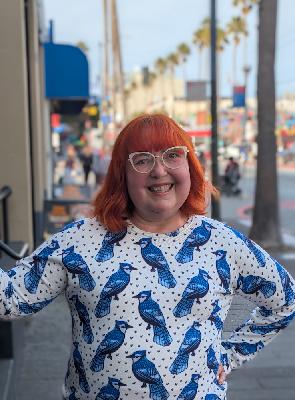
Part 3 picks up right where we left off in Part 2. While she was still working that real estate job, Sonia was treating dating like a part-time job. She signed up on several dating sites (this was before swipe apps like Bumble). She went on many awkward coffee dates. Then a friend introduced her to a guy, and the two hit it off right away. They were inseparable from the moment they met, in 2008. They moved in a couple months later. In 2010, they got married, and had a kid shortly after that. But in the middle of all this amazing life shit, Sonia was smacked with a breast cancer diagnosis. She was 38. Sonia had never necessarily wanted to be a mom. She was always happy for friends when they started having kids, but figured it just wasn't in her stars because she wanted a different kind of life. But her new partner and eventual husband told her it was a deal-breaker, and she figured, Why not? They moved from Dogpatch to Glen Park around this time, because they wanted to raise their kid in The City but needed more space to do that, and the options weren't great. Their son was born and they began raising him, eventually getting him into SF public schools. When the kid was about two-and-a-half, Sonia and her husband started to wonder whether he was on the autism spectrum. A positive diagnosis was made eventually. Sonia praises The City and its programs for kids with special needs. And, like some kids on the spectrum, he's obsessed with public transportation, so he's in the right place. (If you listen all the way through to the end of this episode, you'll hear his recording of a BART announcement.) Like most of us, the pandemic did a number on Sonia's little family. Their version went like this: The marriage did not survive. Ed note: We had Sonia and her then-husband on for our Valentine's 2019 episode. After the break-up, at Sonia's request, we took that episode down. She says that before the pandemic, she imagined that the relationship was as good as it gets. In hindsight, she thinks maybe her second breast cancer diagnosis, after her son was born, broke her husband. Up to that point, he'd been a great partner and excellent dad and solid caretaker for his wife through her first bout. The second diagnosis, coupled with a worldwide pandemic, inspired him to do not great things. Sonia tried to save the marriage, but some of her girlfriends took her down to the Madonna Inn and, as she puts it, "shook the shit out of" her. Her new reality meant figuring out what to do every other weekend when she didn't have her son. It was a lot of going to movies solo and doing 1,000-piece jigsaw puzzles while listening to podcasts. The road to healing involved early stints on dating apps, but usually only to wake up the next morning and immediately pull back. She's really learned to love her alone time. We rewind back to 2015 to talk about the origins of a big part of Sonia's life today—podcasting. She and her now-ex-husband launched Old Movies, New Beer, a show where they'd drink a beer that was new to them while chatting about some film from the past. She enjoyed it, but he fell off quickly. A friend from her movie theater days hit her up to do a show about movies, and so Dorking Out was born. It also didn't last long, but in that time, Sonia started discovering podcasts she liked. There was F This Movie and Book vs. Movie. One of the Book vs. Movie hosts was Margo Donahue, and Sonia was a fan. She reached out and the two started following each other. The love was mutual. Dorking Out had Margo on as a guest and she and Sonia gelled so well, her co-host essentially became a third wheel. When he left for unrelated reasons, she kept having Margo come back on the show. Margo slid in to become the show's new co-host. The two became as close as you can living across the continent from each other. One day, Margo shared an idea she had for a new show. She wanted to call it Seriously, Fuck That Guy. It was amid the Me Too Movement, and they'd talk about whatever piece of shit man they wanted (think: Kevin Spacey or Harvey Weinstein). But every episode would end with someone who's not an asshole. Sonia was in, no question, but she thought maybe they needed a different name. It was early 2017, and What a Creep was born. Early episode creeps included Lance Armstrong and Newt Gingrich, someone Sonia considers an OG creep. When Sonia and her ex split up, Margo was her main support. They continued doing What a Creep until 2025, when Margo suddenly passed away. They were supposed to record one day last year and Margo didn't show up. Sonia called and texted mutual friends and eventually called NYC police. Sonia had to decide whether to keep What a Creep going. She settled on having rotating guest hosts on (Erin of Bitch Talk Podcast was on recently to talk about Dick Cheney; we're in talks to have me on soon as well, which I'd be stoked to do). She appreciates the community that has developed over the years around the show. She loves it so much that it's what keeps up her presence on Facebook. I ask Sonia whether there are any San Francisco creeps we might hear more about in the future. She mentions our mayor and our governor while saying that the show leaves space for so-called roads to redemption. I like that. But I also suggest doing episodes on AI or the stupid-ass billboards all over The City. In contrast to that, we end the episode with Sonia talking about the kind of tech we do want. We recorded this episode at Rosamunde in The Mission in January 2026. Photography by Jeff Hunt
In Part 2, we pick up where we left off in Part 1, with Sonia's life right after her stint at community college. She left the Bay Area to attend college up north at Chico State. Widely known as a party school (perhaps rightly so?), they also had a reputable journalism department and an award-winning newspaper. This attracted Sonia, of course. But some friends also attended, and that didn't hurt. Once in Chico, Sonia joined said college paper and got a job (where else?) at a movie theater. It was her first time to move out of her parents' house. She lived with a couple of roommates in Chico. That was one culture shock. Another was that, well, Chico isn't The Bay. And then there's those foothills winters. It also gets hotter in the summer there than it does in Concord. Sonia wrote for every section of the school paper, and even did some online writing, thanks to Chico State's early adoption of the internet. She even developed a little campus fan base. Sometimes walking around, she'd get shout-outs. There was even a Sonia character in one of the local comic strips. It was another phase of finding her people. She thinks that because all her roommates in Chico were men, she got really exciting to hang out with young women. She graduated after three years, in 1996. That Bay Area magnet snatched her back after that, and she moved in with her parents again in Concord. That gave way to an apartment she shared with her sister. Sonia got a job at the Martinez News-Gazette around this time, a three-day-a-week paper where she earned $213 per week. Anywhere she could find free food, she pounced. At the newspaper, she more or less did it all—cops, local and community news, school board meetings, and, of course, a humor column. I ask Sonia who her humor influences and inspirations are, and she immediately cites George Carlin (this is probably a big part of why we're friends). Her dad loved Carlin, too, and Sonia says the old man also has a wicked sense of humor that rubbed off on her. Another source of jokes was none other than Bugs Bunny. And lastly, Alan Alda's Hawkeye in M•A•S•H is another humor muse. That newspaper job led to her time at the San Francisco Independent, a paper owned by the Fang family. Sonia did a neighborhood beat on that job, reporting on school board, planning commission, and other community meetings. We rewind for a minute so Sonia can share early memories and impressions of San Francisco, having grown up across The Bay. When she was a kid, her grandma would take her to see The Nutcracker. She'd visit on other special occasions, but it wasn't until she was an adult that The City really grabbed hold of her heart. There's a hilarious story about showing up to dance at The Palladium wearing a "Ross Perot for President" T-shirt. Years later, with that job at the Independent, Sonia found herself in San Francisco most days. Though she had to write only three stories, the money was better and the circulation bigger than her previous job in Martinez. The beat was familiar—school board and planning commission meetings. She and her sister had bought a house for themselves in Concord, where they lived with her young niece. Eventually, the paper transferred Sonia to its Burlingame office, but it was to start writing movie reviews. Eventually, she even convinced the Independent to let her write TV show reviews. When the Fangs bought the San Francisco Examiner, they kept Sonia on to be their TV critic and moved her back to The City, to an office above the Warfield. She'll be the first to admit that when you're getting paid to watch TV, it's not so fun anymore. The paper cut Sonia, but brought her back three weeks later, this time to be the A&E editor. The Examiner was a slimmed-down, tabloid version of its former self. That's how it was a few years later when, fresh out of journalism school at SF State, I got a job there as a copy editor. I distinctly remember one of my favorite daily tasks was editing Sonia's celebrity gossip column—Scoop, which happened early in my shifts, around 4 p.m. or so. In the episode, I riff about how much I loved reading Scoop every day, even though I've never been good at or cared much for celebrity news. I also let Sonia know that I also appreciated her presence off the page, in the newsroom. She describes her time at The Examiner as something she loved, but it was also hard. She shares that, after working long days for little pay, she'd go home and play The Sims. Once, around 3 a.m., playing the game, her character was going to a party. And it clicked: Sonia couldn't remember the last time she went to a party. She needed to make some changes, and one was leaving The Examiner. First up was an HR temp job where her mom worked, in Vallejo. Next was a job writing press releases for a real estate company. Then she found work at a printing company in Oakland called PS Print. (Our lives intersected again around this time, but that's another story.) She helped them create a social media presence. Outside of work, Sonia had a blog (which she still has) called The Sonia Show. Check back tomorrow for Part 3 with Sonia. We recorded this episode at Rosamunde in The Mission in January 2026. Photography by Jeff Hunt
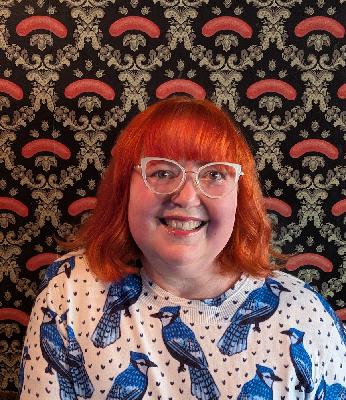
The story of Sonia Mansfield has roots in The Bay. In this episode, we meet and get to know my friend Sonia. She and I worked together at the Fangs' Examiner back in the mid-2000s, and have been friends since. I loved her presence in the newsroom. I'd often listen to her make us all laugh from her A&E desk across the room. We've been through weddings, births, illness, divorces, and many, many beers together. These days, she hosts the What a Creep podcast, and I'm so glad you get to meet her now. We begin Part 1 with the story of Sonia's parents. Her dad is from Richmond, California, and her mom is from Concord. Her dad eventually moved to Concord, where he went to Mt. Diablo High and dated a girl who turned out to be Sonia's mom's best friend. After her dad got his heart broken by that friend, Sonia's mom jumped right in. They were high school sweethearts who got married right after graduation, and have been together ever since. The young couple had their first kid—Sonia—a couple years later, when they were 21. Another girl came around about three years later, followed by a boy five years after that. Sonia was born and grew up in Concord. She recalls the East Bay town before BART, with plenty of wide-open fields and other undeveloped spaces. She rollerskated a lot (hey, it was the Seventies, after all) at local roller rinks. The Concord Pavilion (now known as Toyota Pavilion at Concord—barf) was where big touring acts played, and Sonia went to her share of concerts there. Her childhood and early adulthood were, in her words, "so Gen X." She and her siblings and their neighborhood friends ran wild, like feral animals. Anyone from this generation, including me, can relate. Looking back as an adult with a kid now, Sonia figures her parents just wanted them out of the house. What's the worst that could happen? The only "surveillance" would be: If the family dog, a Dachshund named Oscar, was sitting outside a nearby house, you could bet that Sonia was inside. He got there by chasing his favorite person while she rode her bike. No leash. Why would you? It was so laissez-faire, in fact, that Sonia says she would walk into strangers' houses. "You're watching cartoons. I like cartoons." Cool. Her sister was always part of her crew, her and other kids from the neighborhood. They also had hella cousins. Sonia's mom is one of eight kids in her family. We go on a little sidebar about all the crazy, dangerous shit we all did as kids. In Texas, there was a certain kind of injury, where some part of your body scraped across cement or asphalt. We called it "getting skinned," and it hurt like hell. But it was just part of the game. The conversation turns to Sonia's earliest days loving TV and movies. She's loved them as long as she remembers, thanks to her dad. He used to love going to theaters to watch movies. Now, he prefers seeing them from the comfort of his own home, but it speaks to his love of the medium. And Sonia says she got that from her old man. Her mom also loves movies, and kept going to theaters longer than her husband. She took her eldest daughter with her almost always. The movies they saw were never age-appropriate, but she got in because she was with her mom. Young Sonia also loved TV Guide, and would read the magazine from front-to-back, word-for-word. She says that before the internet, before Google, her dad would call Sonia and ask her about movies. The TV was always on, something else I relate to (my parents, both in their mid-eighties, still do this). Sonia was an early MTV adopter. Probably because her parents were younger than most, they liked cool music and Sonia heard a lot of it. That whole "walk into neighbors' houses, everyone's my friend" ran head-first into seventh grade, when Sonia learned the hard way that it just can't be true. One day, on the bus she rode every day, one kid started teasing her and then got other kids on the bus to join in. And it happened again the next day. And the next. The torture lasted for months. And it wasn't just the bus—the dude kept up the torment in the classroom. She says that the bullying changed her chemically. She went from open and outgoing to shy and afraid. She started spending more and more time in the school library during lunch. She didn't share her shame with anyone—not friends, not her parents. She internalized it. Part of turning inward for Sonia meant watching more and more TV. She'd go see movies alone. But it's not like she had zero friends. Sonia found her weirdos, the nerds and theater kids, and kept her circle small. She got even more into writing during this time in her life. In middle school, she'd write "really shitty short stories." She asked her parents for and they bought her an electric typewriter. In high school, she took a creative writing class and joined the school paper staff, for whom she wrote movie reviews (duh). Siskel and Ebert were huge influences, and she regularly read the Contra Costa Times' A&E section. When her family would go off on camping/hunting trips and leave Sonia behind because she wasn't into that kinda thing, she'd take the $20 they left her and go rent movies at her local indie video store. She'd browse the aisles and read the backs of every tape. She credits this with why she has so much useless knowledge around movies in her brain all these years later. After she graduated from high school, Sonia got a job at the local movie theater. And at that job, she started making friends with other movie nerds. Because her coworkers were new in her life and not privy to the BS she put up with in middle and high school, she could start fresh with them. And she was getting attention … from boys. Some of the folks she met at that theater job and another that followed have remained lifelong friends, in fact. Sonia was really finding herself as a young adult. We wrap up Part 1 with her decision to stay close to home and go to community college, vs. moving away and going to a four-year school. Check back tomorrow for Part 2. We recorded this episode at Rosamunde in The Mission in January 2026. Photography by Jeff Hunt
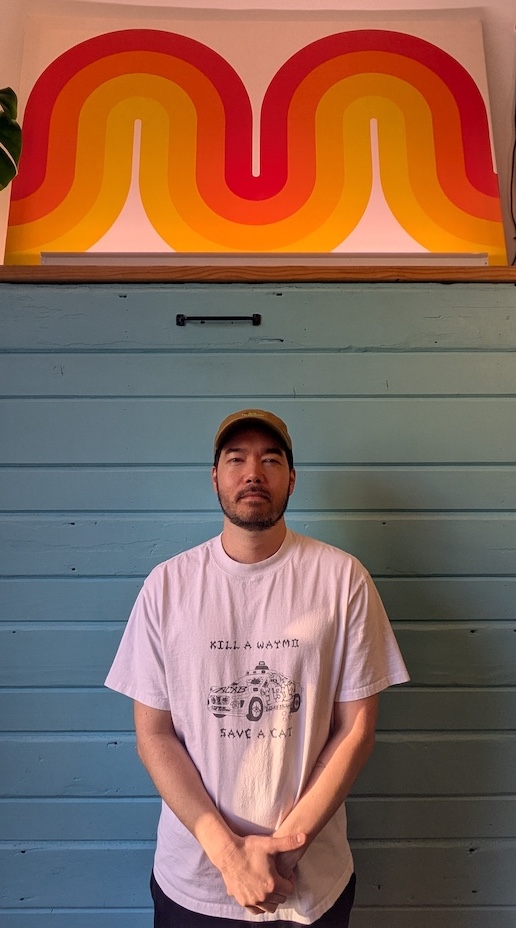
In Part 2, we pick up where we left off in Part 1. Toshio talks about those chess players at Powell and Market and other early impressions of The City before they moved here. Having grown up in Orange County, with its underfunded public transit system, Toshio always wanted to live somewhere that had a subway. Being able to walk was important, too, in contrast with SoCal, where you pretty much need a vehicle to get anywhere. SF and The Bay checked those boxes. Like Part 1, this episode is rife with sidebars. I guess that's just what happens when you get two people together who both like to talk. The first one in Part 2 is about running any sort of independent media within the larger framework of late-stage capitalism, especially when the content you create is inherently anti-capitalist. You know, light stuff. I try to get us back to Toshio's story of moving to San Francisco, then I can't help myself—another sidebar, this time about Craigslist, which of course Toshio used to help find a place to live in San Francisco. They were able to get work, as we've mentioned, but finding housing was much harder. Their first two places were in the Mission. They left the first one after only one month, thanks to a fire. Their next spot was at 24th and Bartlett, close to BART. Toshio splinters off to talk about some of the other spots they looked at and open houses they went to. "Oof," they say. In 2013, they were able to move into a below-market-rate apartment near Civic Center (the very home where we recorded this episode, in fact). Toshio is their own landlord, something I congratulate them on. Sometime after they moved in, they met their boyfriend. They also got exposed to more and more leftist politics in SF during this time. They talk about coming to terms with the fact that the world they want to see will probably not come about in their lifetime. That's a hard pill to swallow, but it's probably best to accept that and then fight like hell to overcome it. Toshio's light-green living magazine job afforded them the opportunity to write for further left-leaning publications like Truthout. When Al Jazeera opened its US office in The City, they got work there. They've also written for Them and Vice. It all served as background for Toshio to launch their own outlet—Sad Francisco. We go on a sidebar about the corporate takeover of the news, and how local outlets and indie operations like our own have stepped in to try to fill that void. Toshio mentions some newer publications that they're excited about, including Bay Area Current, The Phoenix Project, and Coyote Media. (Ed. note: Look for an upcoming episode with Coyote Collective founding member Soleil Ho.) Sad Francisco started (and continues) as an effort to fill the massive gaps left by said corporate media in the Bay Area. Toshio was curious about the podcast medium, and kicked things off reading and riffing on versions of 2,000-word pieces they had already written for traditional media. They mention that we're at a point now where every journalist, no matter the medium or the employer, should probably be diversifying the distribution of their work. I couldn't agree more. Sidenote: I've been witnessing Toshio's move to self-facing camera reels, with them laying out whatever issue is on their mind, then expounding on it. It's a delivery mechanism I see more and more of, in my limited social media consumption. My wife, Erin (of Bitch Talk Podcast), has begun doing more of these as well, and they seem to resonate with folks. I haven't yet decided whether or when to do them myself for Storied. But I digress … Toshio feels that in 2026, people are looking for authenticity. They don't care so much if your media product is polished. They're more interested in substance, which would be a gain for society, if true. When I ask them how folks can find, follow, and support Sad Francisco, Toshio mentions the podcast's Patreon page. Follow them on Instagram @sadfrancis.co. And check out their website, sadfrancis.co. They're also available on most podcast apps and YouTube. Another sidebar here about how much I used to love Twitter (RIP). We end the episode with my asking Toshio how they do it, how they report so well and so relentlessly on the vast amounts of sketchy shit going down in San Francisco and The Bay. Their answer involves their various journalistic jobs and gigs over the years, and how that work trained them to package up complex ideas and explain incredibly complicated scenarios in a simple, easy-to-understand way. Then Toshio and I indulge in a lovefest for 48Hills.org before wrapping.
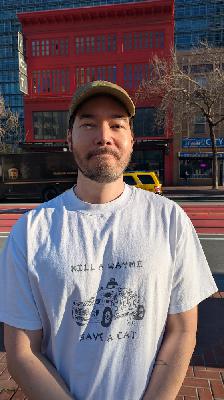
Toshio Meronek's parents met at a bar. In this episode, meet and get to know Toshio. Today, they do Sad Francisco, a really fucking amazing project that reports on and holds truth to power around here. I first became aware of Sad Francisco a few years ago and right away, I was struck by the deep reporting on and understanding of the many complex relationships and goings on in San Francisco and The Bay. And so I sat down with my fellow podcaster to get to know the human behind those efforts. Toshio's story starts with their parents. That bar where they met was in Los Angeles. Shortly after meeting, the couple moved to Germany, where Toshio's dad had found work at a major German tech company. But after getting pregnant with Toshio, the young couple came back to Southern California—Orange County to be exact, where Toshio was born. Some of Toshio's earliest memories involve not really digging that infamous SoCal heat. We'll get into this more later in Part 1, but Toshio picked Portland for college in part because of its more temperate, albeit wetter, climate. Born in 1982, Toshio did most of their growing up in the Nineties. When I ask them what kinds of things they were into as a kid, they immediately say, "zines." Making zines, collecting zines, living and breathing zines. We hop on a short sidebar about Riot Grrrl, a Nineties feminist punk-adjacent movement that seeped into both our lives at different points—mine early in the decade, and Toshio's toward the end of the Nineties. Riot Grrrl arrived in the typically and generally conservative Orange County later than a lot of other parts of the country and the world. But arrive it did, and it had an outsize impact on Toshio's young life. Zines were huge in that subculture, too. To expound on their interests as a kid, Toshio was generally into media, curious about how others live, and also sci-fi and fantasy (think D&D). Toshio was around 13 or 14 when they started writing their own zines. Here we go on a sidebar about one of my favorite pet topics—Kinko's (RIP). IYKYK. Eventually, Toshio eschewed the ubiquitous copy+print shop and had their zines printed on newsprint paper. It was part of a deliberate attempt to appear legitimate, more like "the establishment," something I find fascinating. They wanted people to take them seriously, and that just makes a lot of damn sense. Music was very much a part of the Riot Grrrl movement Punk rock music to be specific. And Toshio's early publications covered that. In fact, topics ran the gamut from music and politics to culture and community. We turn to the topic of Toshio's surroundings when they were a teenager. Record stores, zine shops, cafes that also had live music. They dabbled in the SoCal rave scene as well. They settled into the Candy Kids rave subculture and talk a little about that. There's another short sidebar where we talk about how amazing youth activism is, and how much we always need it. As much as young Toshio was part of these communities and subcultures, they also describe this time in terms of being a loner. They also experienced a lack of self-confidence, lots of acne, therapy to work through their being Japanese and white, or hafu (another term for "hapa"), being gay. Though Toshio has grown past those struggles, they consider them powerfully formative. Then came time to relocate and go to college. Besides Portland having more desirable weather, Toshio chose it in part because of the Northwest's grunge legacy. College life started right around 9/11, and they started going to protests. Lots of protests. College lasted four years, and after that, Toshio stayed behind in Portland. They got work at a magazine covering ecology for K–12 kids. They were also in bands (they play guitar, ish, sing, and play tambourine). "It felt like everybody was in an alt-country band," they say. And then, in 2006, they left Portland for … San Francisco. An editing job brought Toshio here. The publication was a so-called "light-green living" outfit, targeted, as it said, to yoga moms who drive their hybrid SUVs to Whole Foods. I ask Toshio if the job was editing words, and then mention that it's been my profession for a long-ass time. And we go on a sidebar about how important the work is. I'll add that everyone (including editors!) needs an editor. Sorry (not sorry), AI. That leads to yet another sidebar (can you tell we're both podcasters?)—this one from Toshio about the nature of the "yoga mom" publication. They grew disillusioned with their work there, suffice to say. We end Part 1 with Toshio's early memories of visiting San Francisco, before they moved here. They involve the older men who used to be found daily playing chess off Powell and Market. Check back Thursday for Part 2 with Toshio Meronek. We recorded this episode at Toshio's home at the confluence of The Transgender District, Tenderloin, UN Plaza, and Civic Center in January 2026. Photography by Jeff Hunt
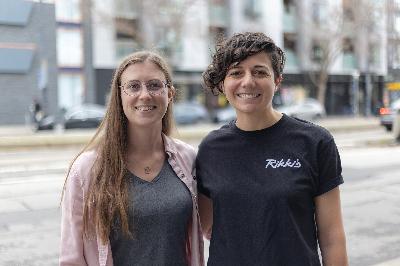
In Part 2, we hear the story of how Danielle and Sara met and eventually acted on the totally bananas (but shouldn't be) idea of opening a women's sports bar. Sara and her partner had just landed in San Francisco and fell right into a supportive community. Not that they didn't have that back in the UK. But their friends there were starting to settle down and have kids, and that life wasn't for them. Then we turn to the story of how Danielle and Sara met, on a soccer field, of course. An SF Spikes soccer field to be exact. Danielle was a leader in the queer nonprofit organization at the time, a role she fell into somewhat by accident, but she did manage to make some needed updates. One of those was to bring in more women and non-binary folks. And she considers her time in leadership successful in part because she was able to hand it off and step away. Shortly after their first meeting came the idea to open a women's sports bar. Danielle had been putting together watch parties for women's sports championship games for a few years. It involved calling around to see what bars would air the game in question. Not easy. Eventually, she mentioned to a friend the idea of opening her own place. Sara overheard this and chimed in, "I wanna do that!" Neither of the two had any experience opening and operating a place like Rikki's. They did both work service jobs when they were younger. But what they did have under their respective belts was important—building community. Danielle's time with the Spikes also served her well as far as things like budgets and taxes are concerned. The watch parties Danielle had organized became more and more of a thing, and started happening regularly at SF spots like Standard Deviant. In addition to offering space, folks from the brewery helped them with financial stuff. Getting wildly differing advice from various sources helped Sara and Danielle learn more about themselves and the two as a team. Opening Rikki's around the time that the Golden State Valkyries' inaugural season was starting didn't hurt matters. Danielle describes Rikki's early days, being at capacity. She'd walk the line of folks outside and let them know the situation. She even offered neighboring bars that might have Valkyries games on. She talks about being struck by the amount of people who stayed there anyway, watched the game on their phones, and eventually made their way into San Francisco's women's sports bar. We rewind a little to talk about Sara and Danielle's decision to name the bar Rikki's, after Rikki Streicher. Back in the day, Streicher owned lesbian bars such as Maude's and Amelia's. We sidebar to hear some of Sara and Danielle's name ideas that didn't make it. Diva Dribble Dive might be my favorite. But back to Rikki … They wanted a name that resounded with and was relevant to San Francisco. They went through lists of historic lesbian and women's bars, and kept seeing Rikki's name listed as an owner. They dug deeper on this mysterious character to find that Rikki had a very strong connection to local sports in addition to the bars she ran. She was one of the first sponsors of the Gay Games. The woman part was there. The sports part was there. And the queer part was there. Check, check, check. Then we go back to opening the bar. They announced the location on New Year's Day 2025 and opening day was … sometime in mid-June. Because they're still in their first year as a business, every holiday or event either is or feels brand-new. And because they got started amid the Valkyries' rise, they're finding new ways to utilize the space. That includes trivia nights, live music and DJs (eventually; it's all being applied for), other theme and game nights, and soon, the Olympics. We end the episode hearing what surprised Danielle and Sara about opening San Francisco's women's sports bar. Photography by Marcella Sanchez
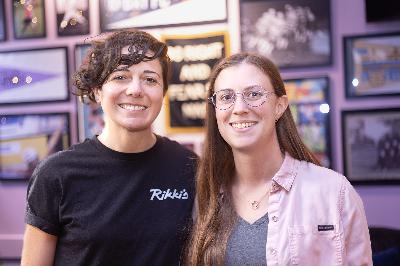
San Francisco has a women's sports bar! In this episode, meet Danielle Thoe and Sara Yergovich. Together, they own and operate Rikki's, a women's sports bar on Market in the Castro. We'll hear from Danielle and Sara about their early lives and how they made their way to San Francisco and became friends. We'll also hear the story of why and how they opened The City's first women's sports bar, as well as the incredible woman they named it for. Most importantly, both Sara and Danielle (and me, Jeff) are Libras 😉. We start with Danielle. She grew up in Plymouth, Michigan, a suburb of Detroit. Born in 1990, her earliest memories are mid-Nineties, and she was around 10 when Y2K happened. Soccer was huge in Danielle's life, starting around age 6. She sites the US Women's Team winning the World Cup in 1999 as a profound influence in her life. It was the first time she'd seen women's sports generate that level of excitement, and she was hooked. She continued playing into her high school years, and says that it was around this time that she started noticing how good some of the other players in her soccer club had gotten. Because Danielle's high school was so large (6,000 or so students), she set her sights on a "big" university. It was between Michigan and Indiana universities, and she choose Indiana, whose state college is in Bloomington. In her college years, Danielle didn't really play soccer. Instead, dorm life because a central focus. She landed in the Collins Living-Learning Center, which she describes as "a weird, niche, hippie place," and she loved it. There was space for many different kinds of people and activities, including pottery and bicycle racing, something Danielle took up in her time at college. I've never lived in a college dorm, and probably never will. But this place sounds rad. The dorm also allowed young Danielle a certain freedom she hadn't yet experienced. I'd call it freedom of expression today. Back then, it was the ability to be as weird as she wanted. There would always be someone nearby a little more "out there," no matter what. After Indiana, Danielle returned to her home state and went to grad school at the University of Michigan. While Ann Arbor, and through friends, she met and started dating someone from San Francisco. After Danielle got laid off from a job in Michigan, she decided to join her long-distance partner and move to The Bay. It was 2015. June 25 to be exact. We know this because the very next day was when the United States Supreme Court issued its Obergefell v. Hodges ruling, legalizing same-sex marriage throughout the country. We turn to Danielle's business partner, Sara, to hear her life story and how she got to San Francisco. Sara grew up in Benicia, across The Bay. Her parents met at the University of Kansas in Lawrence. After college, her dad joined the Navy and got stationed in Vallejo, where the young couple moved. Some years later, they settled in nearby Benicia and had five kids. Sara is their youngest. She's also her parents' only daughter. All her older siblings are boys. She owes getting into "all of the sports" to that fact. Her mom signed Sara up for soccer when she was three. Through some kind of odd accident, her mom also inadvertently became the coach. Sara also played volleyball, basketball, baseball, tennis, golf … she was a jack of all trades, master of none," as she puts it. But Sara's mom always put her on boys' teams to make her more competitive, or so the thinking went. When her mom tried to put young Sara on a football team, though, she drew a line. In her high school years, being the only girl on a team came with specific sexist challenges. But for all the jerks who gave her shit, she was able to find boys who were cool, who had her back. She also eventually got a taste of revenge. The coach's son was particularly nasty, but his dad was cool and paired Sara up with the kid for catch before a game. Sara wound up and threw the baseball so hard, the kid cried. We Libras strive for balance. Sara came to San Francisco regularly as a kid, especially when out of town family visited. Eventually, her oldest brother (16 years older) moved to The City and she came to see him a lot. Another brother moved in with him and they lived in several apartments all over town. Sara shares her earliest memory of visiting SF. She remembers a high-rise penthouse and going to Chinatown. We end Part 1 with the time Sara left The Bay—to go to college, first in Santa Barbara, then for her last semester in Kent in England. Check back Thursday for Part 2 with Sara and Danielle. We recorded this episode at Rikki's in The Castro in January 2026. Photography by Marcella Sanchez
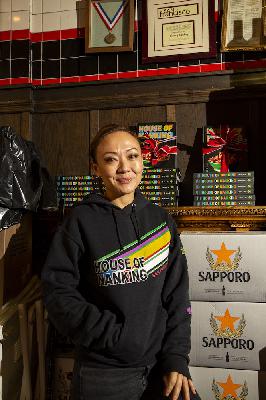
In Part 2, we pick up where we left off in Part 1. Kathy left her hometown of San Francisco for the first time to go to college at USC. Originally, she wanted to major in science. There was and perhaps still is a prevailing expectation in her culture to go into some sort of lucrative career. Surely, no one would want to go into the food business intentionally, so the trope goes. So Kathy set out to make her parents proud. Soon enough, though, she realized she doesn't like science, and switched to becoming a business major. She earned a bachelor's in entrepreneurship and operations and soon got a job in the corporate world at the stock brokerage Merrill Lynch. A short time later, not too happy, she moved to Johnson and Johnson, another job that ended up boring her. Despite this, she was getting more and more used to LA and wasn't thinking necessarily of coming back. Still in her Twenties, the idea of joining her parents at their restaurant started to grow on her, and she took the plunge. She moved back to San Francisco and lived with Lily and Peter for a time. She'd been bringing college friends to her hometown for a while, parading them around to ride cable cars or eat at places like Taddich Grill. They'd explore San Francisco neighborhoods and restaurants with Kathy as their guide. Her friends loved it here. Duh. Returning home felt good for Kathy. Her husband had lived in Hawaii and Georgia and would sometimes urge to go other places. But Kathy is a city girl, an SF girl. "It's always good to be back." Her first year back, she worked with Peter and Lily at House of Nanking every day. She aimed to prove to her dad that she was serious about restaurant work. After that year, Kathy went to culinary school. When she graduated, Peter lovingly let her know that three is a crowd at his eatery and asked his daughter what she wanted to do. "I kinda wanna open another restaurant," she told him. He'd resisted opening a second location for House of Nanking. The idea of Kathy branching out, however, offered an opportunity to do a second restaurant, but have it be unique and distinct from his own place. Because the new joint would be father/daughter (vs. the husband/wife structure at House of Nanking), it provided space for Kathy's dishes, Peter's dishes, and menu items featuring collaborations between the two. The scaffolding was there, and it was solid. But right away, Kathy found herself the victim of outdated stereotypes of what it means to be a chef. Some even felt that the operation was nepotistic, that Kathy was just riding her dad's coattails. They couldn't imagine that she'd because a great chef in her own right. People, amirite? I ask Kathy whether it's an apt metaphor to say that House of Nanking gave birth to Fang. She agrees. She uses this topic as a springboard to describe physical differences between the two restaurants. House of Nanking feels older, more disheveled, with dim lighting. Fang is newer, cleaner-feeling, brighter. I was sitting there that day at House of Nanking, talking with Kathy, and I couldn't help wonder whether Anthony Bourdain had eaten there. She wasn't sure on the spot that day, but I looked it up. I'm almost certain he did not, but I can't help but believe he eventually would've made it. House of Nanking is just "like that." Kathy seizes on the opportunity to share celebrities who have been to her parents' restaurant, and tells the story of a recent mention by comedian and writer John Mulaney. She was in London when Mulaney performed in SF. On stage in The City, he mentioned loving House of Nanking and wishing it was open after his show. Kathy made a few phone calls from across the Atlantic and had food delivered to him. The next night, Kathy Griffin basically said the same thing. And Kathy Fang once again came through, having food brought to the comic actor. Griffin let it be known that House of Nanking is on an unofficial "comedy circuit," meaning a group of comedians who share tips about various cities and what to do and eat there. We start to wind down the conversation by talking about the book that Kathy wrote. Along with her dad, Kathy's new book, The House of Nanking Cookbook, is something that's been in the works for a while. Folks kept asking them to share their recipes, and Peter resisted. But then the show Chef Dynasty: House of Fang came out on Food Network. After her dad saw the show (and he's in it, mind you), he changed his tune. He wanted there to be a record of everything they'd accomplished. Kathy convinced Peter that a book was the best way to do just that. The book is written in both Peter's and Kathy's voices. So it's got the story of opening and carrying on all those years. But it also has Kathy's perspective, growing up in the restaurant and eventually becoming a chef in her own right. After doing research and seeing a dearth of Chinese-American cookbooks, getting her family's recipes out there became even more important for Kathy. The House of Nanking Cookbook is available at local bookstores. House of Nanking, 919 Kearny Street, @houseofnankingsf Fang restaurant, 660 Howard Street, @fangrestaurantsf Find more about Kathy on her website, kathyfang.com.
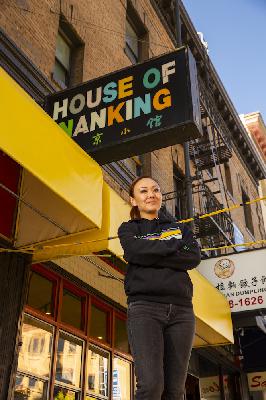
Kathy Fang was born in the Chinese Hospital in Chinatown in San Francisco. In this episode, meet and get to know Kathy. These days, she's the co-owner (with her dad) and chef at Fang restaurant in South of Market. She's also joined her parents in running their restaurant, the legendary House of Nanking. But her story starts with Lily and Peter (her mom and dad). We'll get to Lily and Peter's story, of course. But Kathy begins by talking about her unique position being born just up the hill from her parents' restaurant, and essentially growing up at House of Nanking. She sees herself as perfectly positioned not only to continue their story but also to share it widely. This podcast serves exactly that purpose. Prior to emigrating from China, neither Lily nor Peter had any professional kitchen experience. They came to the United States having been educated and were looking for good jobs and a better life. But they landed and reality hit. They needed money. Besides a lack of funds, there was the language barrier. Getting jobs in Chinatown restaurants proved the path of least resistence. Time spent behind the scenes in restaurants helped them learn English. Kathy describes her mom as the "risk-taker" of the pair. Lily started noticing that the folks who owned the places they worked in and ate at owned homes, had cars, sent their kids to private schools … that sort of thing. Opening a restuarant was her idea. After convincing her husband to pivot away from his plan to become a realtor, Lily's dad (Kathy's grandfather) found the location on Kearny Street, almost at Columbus, that became House of Nanking. With no experience running a business, let alone a restaurant, the Fangs opened in 1988. When they first welcomed diners, Peter was cooking traditional Shanghainese food, something fairly new to San Francisco at the time. Peter saw right away that they needed to make food for more than the 10 or so folks who knew their cuisine. He saw how incredible the locally grown and raised food in Northern California was, and soon sought to incorporate those ingredients into his dishes. One example was replacing the pork in a bun (bao) with fresh zucchinis and peas, to be accompanied by a side of peanut sauce. It was an instant hit. If Lily is the risk-taker of the couple, Peter is the creative force. From a young age, in a family with four kids total, he was always interested in food. He read cookbooks and watched his mom closely while she made food. She was always one to put her own spin on things, and that carried through to her son many years later. Though he obviously never fully pursued it, Peter did dabble in real estate. But between that and opening his restaurant, he had little time for administrative work. His young daughter, Kathy, started answering his calls when she was six. She repeated his requested message verbatim, doing her best to sound like an answering machine (remember those?). Kathy is pretty sure he never sold a single house. Success for House of Nanking wasn't immediate. After some time, Peter realized he needed to pivot away from Shanghainese food. But they needed some luck, too. And they got it when Peter Kaufman, the son of moviemaker Phillip Kaufman, showed up outside the restaurant with the daughter of famed Chinese actress Bai Yang, who lived in Shanghai. The daughter insisted that they try the restaurant because it smelled "like home." Peter Kaufman loved the food Peter Fang had made him so much that he told his dad, who soon came back with food critic Patty Unterman. Unterman's review of House of Nanking appeared in the Sunday paper—the Bible for folks in the days before the internet. That review appeared next to a column about a little place called French Laundry. Both restaurants got three stars—but their affordability dollar signs were dramatically different. The next day of service at House of Nanking saw the first of its now trademark long lines to get in. We turn at this point in the conversation to talk about Kathy and her life. From her earliest memories, she recalls just being in her parents' restaurant all the time. It was an exciting time in San Francisco—the late Eighties/early Nineties. Broadway and its liveliness were basically next door. Life was colorful for young Kathy. She knew her life was atypical. "Sometimes I wish I could (be like the other kids and) go to sleep at a decent time," she says looking back. She sometimes slept in the restaurant. But she also go to eat at North Beach restaurants with her parents after they closed up their own eatery for the night. I ask Kathy to name drop names of places they went—New City (the best Alfredo) and Basta Pasta (veal piccata) stand out. Kathy didn't do quote-unquote normal kid things until middle school. Up to that point, it was all restaurant, all the time. One notable exception was seeing Chinese movies at the Great Star Theater, another thing kids didn't normally do. At my prompting, Kathy rattles off the San Francisco schools she went to. It starts with Jefferson Elementary. Then she went to Convent of the Sacred Heart for middle school and high school. Around the time she started middle school, as noted earlier, her life changed. She spent less and less time at the restaurant and more time doing homework. She saw her parents much less in this era, too. But she did get to see her dad when he'd pick her up from school. They'd almost always go eat in Chinatown after that. Those meals formed the foundation of a strong father-daughter relationship for Kathy and Peter. We end Part 1 with Kathy sharing all the sports she played throughout her school days. In varsity volleyball, playing back row, she had a "killer serve that no one could return." Check back Thursday for Part 2 with Kathy Fang. We recorded this episode at House of Nanking in Chinatown in December 2025. Photography by Dan Hernandez
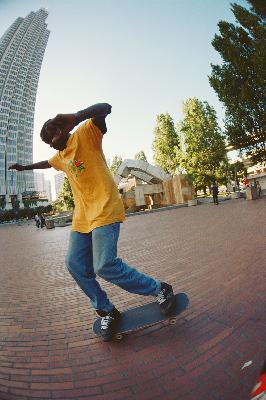
Listen in as I chat with return guest Jacob Rosenberg about his latest book, Epicenter. The photobook beautifully captures the skateboarding scene at the Embarcadero from 1990 to 1993. The accompanying IRL photo exhibit for Epicenter has been extended through Sunday, Jan. 25, at 201 Jackson St. More info here. Here's the last episode we did with Jake, all about his previous book, Right Before My Eyes: Jacob Rosenberg and the Bay Area Hip-Hop + Skateboarding Scenes of the Nineties We recorded this podcast over Zoom in December 2025. Photo of Jovantae Turner by Jacob Rosenberg

In Part 2, we pick up where we left off in Part 1. The "bootcamp" post-college and early career experience Hollis had at Creative Circus was interesting—she found herself seemingly taking it more seriously than many who'd come right out of a four-year program. She also balanced getting engaged and married in this time. Every year, Hollis's grad school organized portfolio reviews with advertising agencies in either New York or San Francisco. Luckily for all of us, the year it was her turn, Creative Circus took students to The City. Once here, they met folks from big firms, including one that offered her an internship. It was Hollis's first visit to San Francisco. And on that first time, I have to give her credit here—she went to North Beach, had drinks at Gino and Carlo's and pizza next door at Golden Boy. I may or may not have spent New Year's Day in a similar way last week. Just sayin'. Hollis's takeaway from that first impression? "This is a really beautiful town." We go on another sidebar at this point about the very San Francisco phenomenon of the sun blinding us (I call it "lasers"), probably because of the hills here, right? It was 2016. Her husband was working back in Georgia, but she called him up and told about the internship offer, which would last three months. He was in a meeting back East where he learned that his company's West Coast salesperson was about to quit, and he was tapped to take over. The Universe, again, spoke. The newlywed couple packed up their four-runner and headed west with their stuff and their dog. Ahead of the drive, which would end in her husband's first visit to SF, Greg's grandma told him he had an aunt in The Bay, in Walnut Creek. Aunt Suzy's house was their landing spot, from which they'd take BART into The City to look for a place of their own. Hollis had a friend from college who keyed her in on the Inner Richmond as a potential place to live. We go on yet another sidebar, this one about how Hollis grows actual vegetables at her Inner Richmond home. They found a studio on Seventh Avenue and Lake Street and moved in with their dog, Mamut. A couple years later, they moved on up to a one bedroom, where they live to this day. Hollis's internship got extended six months, which was fortunate. Her husband's job paid a Georgia salary. IYKYK. That internship became a job, and so they were able to stay, something the couple wanted to do. Her husband got a job based here, and it all worked out. I try my hardest to forget what chronology is and jump ahead, but Hollis brings us back to pre-pandemic times. Her design job was corporate-y, but she enjoyed it nonetheless. She got an animation put up in Times Square in this era. Still, owing to the buttoned-up, corporate nature of the job, she was burning out. The Creative Circus invited her back to talk to students. But yet again, Hollis ended up one-on-one with a recruiter from REI. She respected the company and gave in. A trip to Seattle, to REI HQ, later, the company offered Hollis a job on their brand team. She wasn't thrilled to be leaving her adopted home in San Francisco, but it was a good opportunity. It was January 2020. Fast-forward to March that year, and the movers were ready. Jobs were quit. Hollis and Greg had just returned to SF from a backpacking trip when REI told them that the movers were not coming, and that her job would start remotely a couple weeks out. Do y'all remember March 2020? How the lockdown was supposed to last "only" until April 1 (dude)? Yeah, so REI told Hollis that her job would be a little different than what they hired her to do. And then they told her, "Psych! JK. No job for you." (I'm paraphrasing.) Hollis did what any sane San Franciscan would do. She drove to Baker Beach, screamed at the Pacific Ocean, and came home and made a plan. She'd had a going-away party already, for fuck's sake. It was brutal. The world was upside-down. And it all turned out to be the kick in the pants she needed. Hollis started her own company. We then go into the story of the open call for art to adorn San Francisco's "I voted" stickers. The contest had come across her radar, and she filed it away for later. Then a relative sent it to her along with the suggestion that she give it a try. It turns out there were more than 600 applicants (in her estimation). The SF Department of Elections had a panel that narrowed that down to 10. And then it went to The People to decide. I remember all of this vividly. Needless to say, Hollis's design won. Hollis is also integral to the Clement Street Art Walk, which she runs with Fleetwood's Nico. The next one will be on March 19. Fall this year will see the next Clement Street Art Fair. As of our recording, she didn't have any art shows, but please browse Hollis's website of beautiful work and buy some (and sign up for her newsletter). Follow Hollis on Instagram. Or just walk down Clement Street on any given day and chances are high you'll see her. (I learned as we shot photos after our recording that Hollis designed the newly painted intersection crosswalk lines at Sixth and Clement.) We end the episode rather uniquely, for this show anyway. Hollis asks me if I have a favorite flower. You'll have to listen to find out. (#dahliatalk) Photography by Jeff Hunt
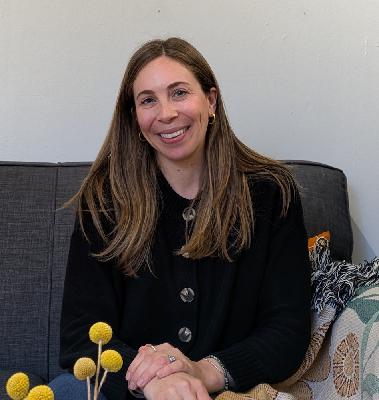
We're baaaaaaack! Happy New Year, y'all! In this first episode of 2026, meet and get to know San Francisco artist Hollis Callas. Hollis first came across my radar a few years ago when she won a contest to design our city's new "I voted" stickers. I soon learned that she's something of an artistic fixture in one of my adopted neighborhoods—The Inner Richmond. So I sat down with her one afternoon in November to learn more about her life. In Part 1, Hollis, an artist, illustrator, and designer, begins sharing her life story, which started in Atlanta. She grew up in the same Georgia house where her dad was also raised. Her grandpa lived there when Hollis was young, and her parents still live in the house today. Both of Hollis's parents are creatives. Her mom studied fabric design and textiles and weaves quilts these days. Her dad is a carpenter and "builds everything." Along with her crafty dad, Hollis often found herself making big changes in her house when she was little. Her parents met when they were both at the University of Georgia, in Athens. When the two moved in together, Hollis's mom was friends with members of the B-52s. That now well-known band played one of its early shows at her parents house, in fact. Hollis met the band when she was a kid, but doesn't really remember it. After they each graduated college, Hollis's parents moved back to Atlanta to that ancestral home we talked about earlier to take care of her dad's dad, who had fallen ill. First, her older sister was born. And then, in 1987, along came baby Hollis. Life in Atlanta in the Nineties for Hollis meant lots of time outdoors. There's an acre of land with the house she grew up in, space for lots of trees and a bird sanctuary. It was still a time of latch-key kids, and she was definitely one. Hollis roamed her parents' land, wading in creeks and running through the forest. Her parents eventually got a second home up in the Blue Ridge Mountains where she also spent a lot of time. Hollis went to public school the whole way. Her mom went back to school to become an elementary school librarian, and her dad taught at her high school what we used to call woodshop and coached the boys cross-country team (Hollis was part of the girls team). Kids at her high school loved Coach Griffith, she says. Art didn't necessarily "enter" Hollis' life. It was always just there. She answered that dreaded question some adults ask kids of "what do you wanna be when you grow up?" with "an artist or a vet." But then she stared getting good grades in art and didn't do so well in math. The Universe spoke, and Hollis listened. Sports remained a big part of Hollis's life up to and through college, where she played intramural soccer. There was an art school in a small North Carolina town she'd had her eye on, but she ended up getting a scholarship to stay in-state, and landed at UGA in Athens, where she studied art. UGA is one of those intense Greek life schools (I relate, having gone to UT Austin), and Hollis found out quickly that it wasn't for her. She found her art school homies right away. At this point in the recording, Hollis and I go on a sidebar about recurring end-of-semester nightmares. Hollis graduated from UGA with two degrees—ceramics and art education. She student taught one year and got out in five total. After that, she and her boyfriend (now husband) applied for teaching jobs in Spain. They heard back almost a year later, and found themselves living in Zamora and staying for two years. We chat about her time in Spain. They had such a good time the first year and got really embedded, making friends, working, learning Spanish, and joining a bicycling group that they decided to double-up and stay one more year. At the end of that run, though, pressures started to mount for them to return to the US. They came back to Atlanta and Hollis got a job teaching ceramics at a high school. Not even 30 yet herself, she found it difficult to lead a group of kids who weren't that much younger than she was. And they were going through their own hard times. After one year teaching, when colleges came to recruit the teenagers, The Creative Circus ended up picking Hollis. It was a two-year "bootcamp" type of learning environment, geared toward careers in advertising. But before her two years were up, Hollis got a job in San Francisco. Check back Thursday for Part 2 with artist Hollis Callas. We recorded this podcast at Hollis's studio inside of Chloe Jackman Photography in The Inner Richmond in November 2025. Photography by Jeff Hunt
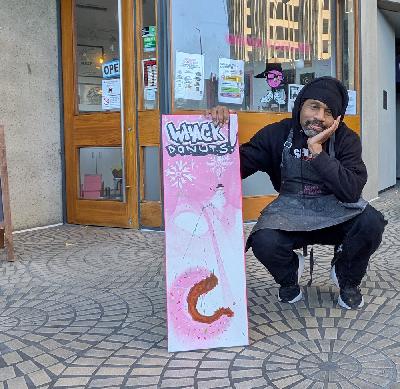
Listen in as my friend Vandor Hill and I wrap up his second year of Whack Donuts' brick-and-mortar location. This is Vandor's third appearance on Storied: SF. Here are the other two episode's we've done with him: Vandor Hill of Whack Donuts Whack Donuts' First Anniversary We recorded this podcast at Whack Donuts in Embarcadero 4 in December 2025. Photo by Jeff Hunt
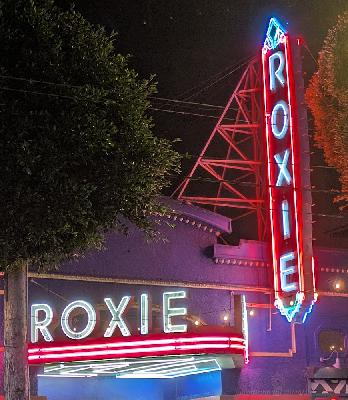
In Part 2, we pick up right where we left off in Part 1. Continuing her history of 3117 16th Street, Lex notes that "The Roxie has lived many lifetimes." She describes the Eighties and Nineties as busy times for the theater. They ran a series of Werner Hertzog films in that era. Akira Kurisawa visited for some of his movies. Many local films and film festivals took place at The Roxie. Frameline was set there. San Francisco and the greater Bay Area were becoming something of a cinema mecca. The aforementioned Roxie Releasing ended up helping the business in times when ticket sales weren't so hot. Even then, the theater went through some really rough patches financially. That persisted into the early 2000s. And then, The New College came along. The Roxie became the school's film center, in fact. Hope emerged … until The New College lost its accreditation and had to shutter. In 2009, with a still-uncertain future ahead of it, The Roxie officially became a nonprofit, one of the first of its kind. It was a huge turning point for the theater—but it didn't solve all their problems. There were numerous "Save The Roxie" campaigns, and about 10 years ago or so, the Board contemplated closing down for good. Obviously, that didn't happen. But in 2020, like every person and business on the planet, The Roxie fell victim to the pandemic. Lex walks us through how COVID and the ensuing shutdown impacted the theater. In the years leading up to 2020, the theater was finally thriving again. But they were the first movie theater in San Francisco to shut down, which they did so voluntarily before the mandate. The Roxie stayed shuttered for 434 consecutive days during COVID. In that time, employees sent postcards to Roxie members; they did pop-up drive-in cinemas; they did "Virtual Roxie," in which the theater curated movies folks could watch from home; and they held online panel discussions with filmmakers. Once they felt it was safe and they reopened The Roxie, it all felt worth the sacrifices. Instantly, the theater was full of people and life and joy. Despite all that, though, financial struggles resumed once again. Eventually, as many businesses were able to do, they got back to full capacity movie screenings. The conversation shifts to The Roxie's ongoing efforts to buy the building it's situated in. Henry describes the process, which began with a feasibility study. The study came back in the affirmative—they had a real shot at raising the money needed for such a huge endeavor. He describes the current board members as a cohesive bunch. No factions exist and they all are aligned with laser-sharp focus. The next step was convincing the landlords to sell to them, to prove that the non-profit was capable of raising the kind of money it would take to get the deal done. That took about a year of back-and-forth. But after that process of negotiating with the building's previous owner, they had an asking price. They could then raise money. The first donations came from Roxie Board members. In fact, within two weeks of launching the capital campaign, every member of the Board had donated. Then many of those Board members began pitching … and pitching … and pitching. This April, the efforts went public, and to great success. The lovefest began. The goal from the outset was to raise $7 million in three years. As The Roxie approaches the end of the second year of its fundraising (meaning nowadays), it's within striking distance. Because the total amount that they're raising includes money for way overdue maintenance and upgrades, they already have enough for the basic purchase. In fact, the building is already under the ownership of The Roxie Theater nonprofit organization. Now that the goal is in sight, they're aiming to close 2025 with a final push to make it to $7 million in two years instead of three. And that's where you and I come in. If you or anyone you know would like to help a San Francisco landmark further cement its legacy in our city by buying its building, find more info and make a donation, please visit the Forever Roxie page. For donations of $30 and above, you will receive a Forever Roxie enamel pin. Donations of $60 and above receive the pin and a specially-designed pair of Roxie socks. For a donation of $120 and above, you receive all of the above along with a long-sleeve Roxie tee shirt. Also, from now through December 31, the Walter and Elise Haas fund will match every gift to the campaign. We end this episode with Lex reminding folks about The Roxie's weekly newsletter, which goes out every Wednesday and is always a delight. Go to roxie.com and click the "newsletter" button at the top-right to sign up.
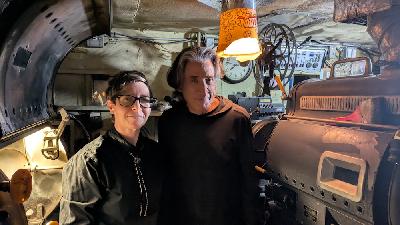
When you tell friends you're going to see a movie at The Roxie, there's an almost palpable envy that sets in for them. In this episode, meet Lex Sloan and Henry S. Rosenthal. Lex is The Roxie's executive director and Henry is on its Board of Directors and the chair of the theater's capital campaign, which we'll get to. In the meantime, if you'd like to help keep a bona fide San Francisco landmark in its rightful home until the end of time (they'd sure love you to, and so would I), donate to the Forever Roxie fund here. We start with Henry, who lets us know that the "S" in his name stands for Sigmund. Henry was born in Cincinnati and had what he describes as an "idyllic childhood" there. He started going to music shows when he was 13, seeing bands like Iggy and the Stooges and MC5. After graduating from high school, he moved to San Francisco in 1973 to attend school at The New College of California. He was an early subscriber to Rolling Stone magazine, where he had seen a New College ad. That ad captivated young Henry's imagination. He visited the campus, which was in Sausalito at the time, after a road trip from Ohio to the West Coast. The school tried to get him to enroll right then, but Henry decided to go back home and finish high school first. Henry produced cable TV shows while in college. In a sense, it's what he's been doing ever since. When Henry moved to San Francisco, there were still operating movie palaces on Market. Before really making friends here, he'd spend a lot of time inside those theaters. It was the era of movies like The Texas Chainsaw Massacre and Enter the Dragon. He says it's difficult to put into words (it is), but San Francisco just grabbed him and never let go. Then we turn to Lex Sloan. Lex went to college in Bellingham, Washington, at the type of school that allows you to design your own degree, which she did. Lex got a bachelor's in "social change media," which is so on the nose, it tickles. Post-graduation, she went to what she calls "the middle of nowhere, Arizona," but that lasted all of seven or eight months. Looking for where to land next and being a spreadsheet nerd (like me), Lex made a list. And lo and behold, San Francisco checked the most boxes. She got a job in Redwood City, not knowing that that Peninsula town wasn't exactly The City. No matter—she landed. The job involved teaching video production at a community center. At first, she stayed in a hostel on Mission Street before finding a place all her own on Craigslist. That was 2005, and Lex hasn't looked back. We go back to Henry to hear the story of how The Roxie drew him in. Perhaps jokingly, he says he laments not visiting when The Roxie was a porn theater. Henry doesn't recall his actual first visit, but says he's been a regular since first learning about the place. He knew Bill Banning, who created Roxie Releases, the organization's distribution operation. (Rivers and Tides, the documentary about artist Andy Goldsworthy, is among their releases.) Banning and he were friends for a while. Their kids went to school together. Their lives kept intertwining, including at film festivals. When The Roxie transitioned to a nonprofit and created a board, folks like Bill invited Henry to join it. He politely refused … until the theater was on firmer ground financially. And once it was, he was in. Henry's goal in joining The Roxie board was singular, he says: To help the organization buy the building where the theater sits. Lex does remember her first time at The Roxie. After she landed in The City, she sought work on local film crews. She found a crew and their film (Getting Off) premiered at The Roxie during Frameline. Because she was "only" a production assistant, she wasn't comped a ticket. Lex remembers showing up and seeing a rather long and daunting line to get in. But! That line was filled with her people. She calls that screening "magical" and "electrifying." Over the years, she came back time and again, for one-off movies as well as for film festivals. When Lex worked for Frameline, one of her jobs was carrying film prints into the projection booth at The Roxie and other theaters. Fast-forward to 10 years or so ago, when Lex became operations director at The Roxie. We then turn to the history of The Roxie, with Lex as our tour guide. The space where the theater sits today was built to be just that—a movie theater. It wasn't converted at any point from something else to become a place where folks watch movies. The folks who run the theater today have discovered and held onto the original blueprints from 1913. Its first name was The Poppy Theater. Then it was The 16th Street. Then The New 16th Street, The Gaiety, The Rex, and finally, in the early 1930s, The Roxie. That oh-so-recognizable marquee came to The Mission from an auto dealership in Oakland aboard a barge that traveled across The Bay. A lot of the history of The Roxie before the Seventies is not well-known. But, after becoming The Roxie, it was first a German-language cinema (concessions at the time were German candies). Thanks to some projectionist's notes they've found, they know that in the Fifties, it became a variety space of sorts. In the late Sixties/early Seventies, it was an XXX theater, as mentioned in Henry's story earlier. In those days, a turnstile out front kept underage folks and those who didn't pay out (or did it?). In 1976 or '77, a group of local artists took over. That group changed a lot of things. It became more of an arthouse cinema, as it remains to this day. The folks who ran the place put people before profits. Midnight movies became a thing The Roxie was known for. Check back Thursday for Part 2 with Lex and Henry. We recorded this podcast at The Roxie in The Mission in October 2025. Photography by Jeff Hunt
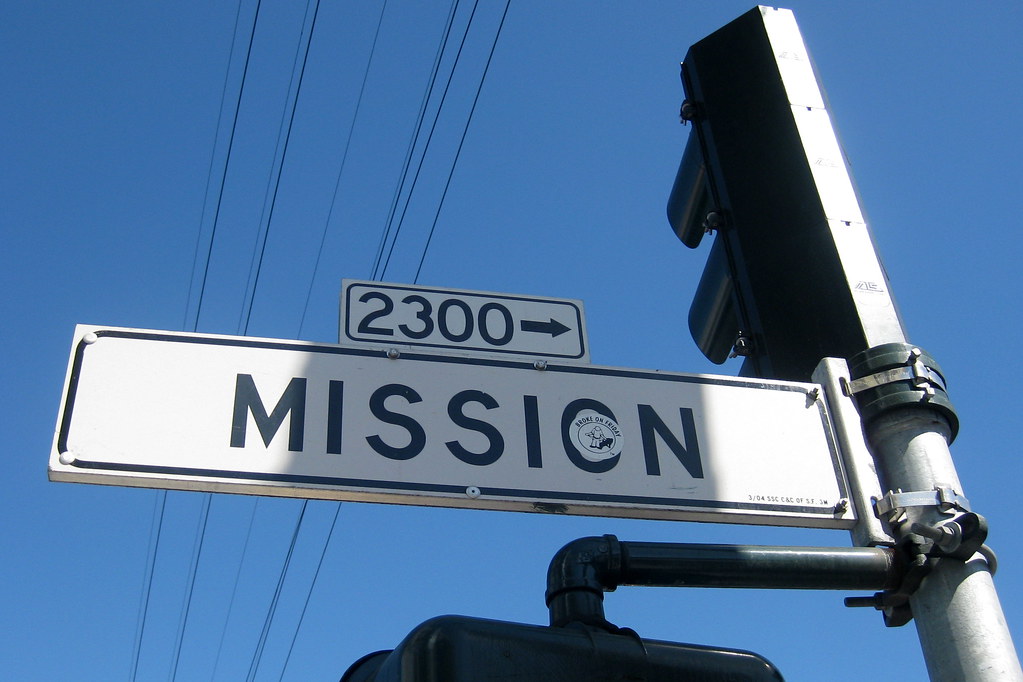
Listen in as I join Erin and Ange of Bitch Talk to chat with H.P. Mendoza about all things Mission District. We wax poetic about H.P.'s home hood, spinning yarns about the infamous neighborhoo'd's past, present, and future. We recorded this podcast at Zeitgeist in (duh) The Mission in November 2025. Photo by Wally Gobetz
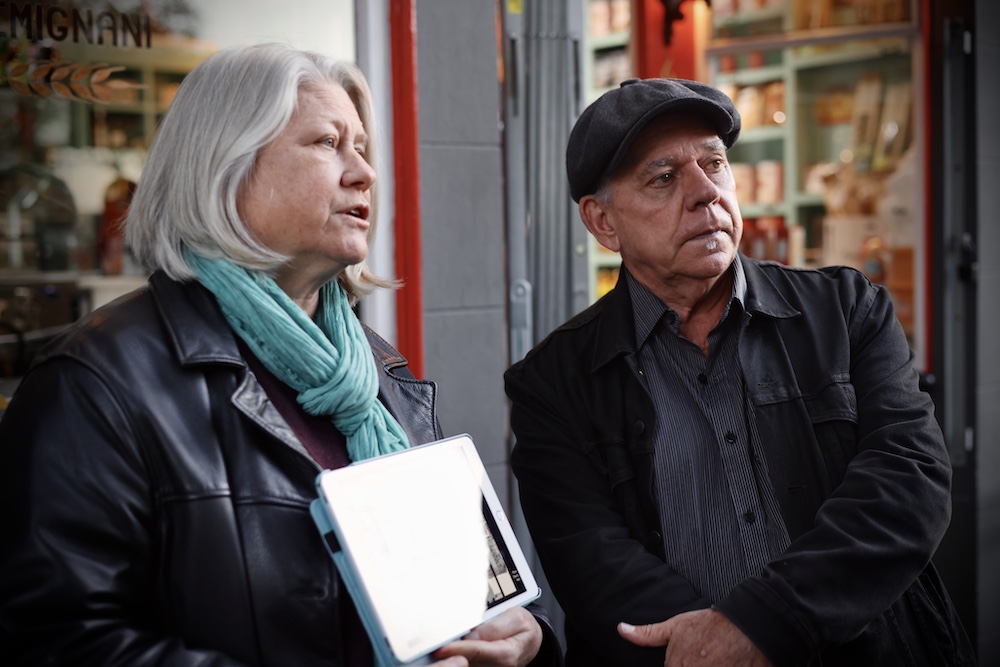
In Part 2, we pick up more or less where we left off in Part 1, hearing the story of how Randall and Al came to love all things neon. Their enthusiasm kicked into high gear when they started noticing neon signs coming down, and they decided to try to do something about it. That something started with documenting the signs. And with that came a bit of a learning curve, especially around photographing artificial lights at night. Over the next five years, they captured and captured and captured, getting as many extant signs as they could find. Randall had some book design experience under her belt, especially aspects like packaging and getting it to a printer. She also knew how to put a book proposal together, and so they did. But friends and people in the publishing industry warned them that it would difficult to find a publisher. Randall suggested to her partner that they publish the 200-page book themselves, and that's exactly what they did. They had the photos and the design down. All they needed was money. Kickstarter was still pretty new, and they chose that platform. Within two weeks, they had met and exceeded their goal. It was on. Donations came in from all over The City, the country, and the world. In addition to money to fund publication, Randall and Al were gifted a community of fellow neon enthusiasts. These days, many folks in that community attend symposiums that Al and Randall put on. I ask the couple to name other towns, besides San Francisco, that have what I'm calling "good neon." They rattle off a few—Denver; Portland, OR; Livingston, MT; Reno; Los Angeles. Randall plugged a site by Debra Jane Seltzer called RoadsideArchitecture.com that documents neon and other signage in all US states except Hawaii and Alaska. To help design the cover of their book, Randall and Al asked their Instagram followers. A photo of the Verdi Club and its neon won, easily. That venue quickly emerged as the obvious choice for where to host the book's launch party. Around 300 guests showed up that night in 2014. After launch, they realized they needed ideas to keep the book and The City's neon signage in people's minds. Tours were among the first of those ideas. But that started as a one-off in Chinatown. A few of the guests on that first tour were tube benders—folks who, among other things, bend the glass that goes into making a neon sign. In the end, the students taught the teachers that day. Those tube benders introduced Randall and Al to a guy in Oakland named Jim Rizzo who does neon restoration work at Neon Works. They've been working with Jim ever since. When I ask if that Chinatown tour in support of their book was what got them started doing tours in general, Randall turns back to The Society for Experiential Graphic Design (SEGD). The group was holding its convention in San Francisco and asked Randall and Al to take visitors on a tour of The City. They learned a lot from that, including how long to hold your tour before folks get tired or hungry. Fast-forward to after their book was published, when folks who bought the book reached out asking if Randall and Al could show them around San Francisco's various noteworthy neon signs. They didn't think they had it in them to do that on a regular basis. But then other San Francisco tour guides signed up wanting to be shown our city's neon. Little by little, those guides taught Randall and Al tools of the trade. In the beginning, they second-guessed themselves. "We're a photographer and a graphic designer. What are we doing giving tours?" But they soon learned the real value of neon walking tours—the chance to walk around San Francisco at twilight with people from all walks of life. The side hustle was its own reward (something very familiar to me, in my role hosting this podcast). If you'd like to take one (or all) of Randall and Al's tours, sign up on their website—SFneon.org. You'll also find other books about neon that they've published. One of those books is all about saving neon. They got in touch with folks they were meeting from all over the country who were doing that work in their own cities. The book is a good resource for anyone who, like Randall and Al in the Mission all those years ago, wants to preserve signs in their area. So, they published the book, started doing tours, launched an annual conference … but still, they wanted to do more. They talked with folks at SF Heritage, picking their brains for things like how to get grant money for neon sign preservation. They told them to talk with people at The Tenderloin Museum (TLM), and mentioned Katie Conry specifically. When Randall and Al talked with her, Katie just got it, immediately. TLM has been SF Neon's fiscal sponsor ever since. (Ed. note: This podcast was arranged with help with Katie at Tenderloin Museum. Thanks, Katie!) As you learned on this show back in April of this year, TLM is expanding. Part of that expansion will free up the museum's current space. Once they move all of their exhibits and artifacts into the new space, the current Tenderloin Museum will become a San Francisco neon gallery. Randall and Al are of course a huge part of that work. The first sign donated to the new gallery is from Tony's Cable Car, a spot near and dear to my heart and just blocks from my home. We end the podcast with Randall reminding folks that this time of year is best for the kinds of tours they do. It gets dark earlier, so there are more hours in the day to see neon signs in their glory, and the hours start around 4:30/5 p.m.

The story of how Randall Ann Homan got her name is a unique one. In this episode, meet and get to know Randall and her partner, in life and in neon, Al Barna. Today, the couple are all about all things San Francisco neon. But we'll get to that. When Randall's dad was a teenager, he saved a young girl named Randall from drowning. After saving the little girl, he taught her to swim. Years later, when he had his own daughter, he carried the name forward. Randall Homan grew up in Goodyear, Arizona, just outside of Phoenix. The town was named for the tire company, and it was where, back in the day, the eponymous blimp lived when not in use. Randall has a fun story about being brushed by the Goodyear blimp's ropes when she was a kid. She considered her hometown "Nowheresville" and left as soon as she could—at 17, after graduating from high school early. Randall came straight to San Francisco to attend Lone Mountain College (the University of San Francisco today). "It was wild," she says about her time in the Seventies in The City. Art school is what brought both Randall and Al to San Francisco. At her school, there was a dorm where all the art students, including Randall, lived. Views out the window of that dorm were always completely foggy except for one thing—the neon sign at the Bridge Theater on Geary pierced that blanket of gray. It left a strong impression on them both. Rewinding a bit, Randall says that there was a little neon in her hometown of Goodyear, and she was fascinated by it. She was interested in how it worked, but also was drawn to the beauty of the colored light. When I ask Randall whether she ever left San Francisco after her initial move here, she rewinds a little bit to talk about how young they both were when she and Al met. "Cupid hit us both square in the heart," she says. But they wanted to see the rest of the country. They both wanted to visit where the other is from (Al came here from Pennsylvania), but they compromised on New Orleans. They were drawn to NOLA by the music, and they sure did see a lot of that. But getting jobs was a different story. That didn't come easy in "the Big Easy," and so they came back. They've been in their San Francisco apartment for 30-plus years, and they're not going anywhere. As mentioned, Al comes from Pennsylvania, specifically the Scranton/Wilkes-Barre northeast area of the state. It was coal country, but young Al wanted to pursue art. And so he came to The City to go to the San Francisco Art Institute (RIP). It was 1976, and even though he was in college, Al never intended to stay longer than a year or two. The Beats influenced Al, and though San Francisco figures largely in their history, so does travel. But he and Randall were here during the so-called Season of the Witch—1978. Randall is quick to point out how much easier it was to move within The City back then, something they did every six months or so for a stretch. I ask them to rattle off the different neighborhoods, and they oblige me: Lower Nob Hill, North Beach, and The Mission figure prominently, among others. Al goes into a little more detail about how the two met. It was at a going-away party for a mutual friend. For him, that first meeting settled it. Randall was about to go to school in Los Angeles, and Al decided to join her down south. After a couple years at SFAI, Al left school to work for a film company, where he did a lot more learning. He was taking lots of photos, and it wasn't until Randall pointed out the abundance of neon signs in the backgrounds of his pictures that Al picked up on it. In addition to LA, they also spent some time in Flagstaff, Arizona, where they both got jobs at a silk screen company. Randall also got a job working for a sign painter whose hands were too shaky for his craft. The work she did painting signs left a big impression on Randall, and you can see it in her love of old neon signs today. Between the Eighties and early 2000s, they each worked in their respective crafts—photography for Al, and graphic design for Randall. Al worked for several decades for the Fine Arts Museums of San Francisco (the parent org for the de Young and Legion of Honor museums). He shares a story of helping prevent a bomb from exploding at the old de Young museum building, just before it was scheduled to be demolished anyway. Randall's graphic design work had her, among other jobs, designing album covers for bands. She did show posters, logos, and branding—work she still engages in to this day. In the Nineties, she designed the cover page for one of the Bay Guardian Best of The Bay issues. Eventually, the two decided to create a book all about neon. Putting together that first book—San Francisco Neon: Survivors and Lost Icons—took five years. We'll talk in more depth about that and their other, more recent projects in Part 2. We end Part 1 with the story of how neon became the central focus of both Al's and Randall's lives. It involved a sign in the Mission that was there one day and gone the next. Check back Thursday for Part 2 with Randall and Al. We recorded this podcast at Mario's Bohemian Cigar Store in North Beach in November 2025. Photography by Nate Oliveira
In Part 2, we pick up where we left off in Part 1, with that fateful visit Saikat took to The Mission. He and friends worked a lot, but didn't have a lot of money (sound familiar?). To learn The City and have some fun, they signed up for as many walking tours as they could find. After a few months living in Park Merced, Saikat relocated to The Mission—16th and Hoff, specifically. Esta Noche was nearby, and it's where he saw his first drag show. A buddy worked with Saikat to build a web wireframing tool (think the basics of web design, the skeleton of sites, so to speak). They knew some other folks in tech, naturally, and met the people who were launching Stripe, an e-payments then in startup mode. Stripe eventually hired Saikat and his friend. Saikat was the fledgling company's second engineer. He started to see tech as a force for social good, but that didn't really jell well with the work he did for Stripe. And so he quit a couple years in. The woman he was dating at the time (whom he later married) still lived in New York, and Saikat visited as often as he could. He didn't yet consider himself political, but he was thinking about issues, specifically income inequality, poverty, and climate change. In early 2015, Bernie Sanders announced his run for president in the 2016 election. Saikat hadn't heard of Sanders at that point, but he was addressing those very issues that had become important to Saikat. He signed up to be a Bernie volunteer and started on a sub-Reddit called "Coders for Sanders." But Saikat wanted "in" in. And so he got in touch with someone working on the campaign. That someone was Zack Exley, whose political biography runs deep. Exley's job with the Sanders campaign at the time Saikat got in touch was to organize all the volunteers wanting to work for Bernie but who didn't live in the first four primary states (Iowa, New Hampshire, Nevada, and South Carolina). That effort needed tech solutions, which Saikat brought. But they weren't hiring technologists at the time. Still, Exley "snuck" him on as an organizer. He expected the experience not to be a big deal. He'd work for about a year, maybe learn a thing or two. But the Bernie 2016 campaign had other ideas. "We were on the brink of actually doing these big, structural changes," he says of his time on the campaign. Coming out of that experience, he and other organizers decided to take what they had learned and start applying it to folks running for Congress, starting with the 2018 midterms. Initially, they called their effort "Brand-New Congress," and the goal was to recruit 400 people nationwide to run for office. They fell far short of that ambition, managing to get around a dozen folks to run. They wanted people from all walks of life, not just lawyers, which Congress was and is made up of primarily. And they got that, just not on the scale they had hoped. The group became Justice Democrats, which is still in existence today. They didn't have the money to spend heavily on most of their candidates, so they went all-in on someone named Alexandria Ocasio-Cortez out of The Bronx. Her brother had nominated her as part of Brand-New Congress, and Saikat had gotten to know her through the process. He saw early on what a powerful candidate she was. He moved to NYC to help run AOC's first bid for Congress as a co-campaign manager. She won, of course, and Saikat had a front-row seat for AOC's ascendancy to the national stage. He says she was her authentic self through it all. Saikat helped start a think tank coming out of the Sanders campaign as well, developing many policy positions and ideas, among them what came to be known as the Green New Deal. It was a policy platform as much as anything else. It called for a renewed and very much intensified effort to combat climate change while also creating and upgrading infrastructure. They approached every candidate running for president in 2020 asking them to sign on to a Green New Deal pledge. They all eventually did. (Biden's "Build Back Better" platform was essentially a version of the Green New Deal.) Around this same time, Saikat had signed on to be AOC's chief of staff. But Ocasio-Cortez wanted him to be her insider-type guy (I bring up Veep because, well, duh), and Saikat politely refused. He offered to help her staff up and get good people in place instead. By April 2019, having got the Green New Deal launched, so to speak, he let her know that he'd be leaving that summer, around the time his daughter was expected. That September, Saikat moved back to San Francisco. One of the first things he did was rejoin think tanks and work on filling out gaps in the Green New Deal. The pandemic hit and he dug his heels in on policy. By the time the 2024 election approached, they were ready to hand something to Kamala Harris if she were to win. Obviously, that didn't happen. He believed those who warned that a Trump victory had bad implications for democracy. But then he watched his own rep in DC, Nancy Pelosi, shrug the 2024 loss off in a "You win some, you lose some" way. He launched his campaign for that seat in Congress "by tweet" in February 2025. Turning from the national to the local, I ask Saikat what San Francisco issues are top of mind for him. He starts with the idea of meeting with and listening to San Franciscans, his would-be constituents: town halls, office hours, mass Zoom meetings … he's already doing a lot of that work. Saikat believes that to begin to effectively address issues at the local level—ICE kidnappings, healthcare, housing, transit—big changes are needed nationally. The California primary election takes place on June 2, 2026. The candidates who come in first and second place in that election will go on to compete in the Midterm election next November. To learn more and get involved, head to Saikat's website—saikat.us. Follow the campaign on Instagram and Threads.
The story of Saikat Chakrabarti begins in a time when his parents' and ancestors' country was being torn apart, almost literally. In this episode, meet and get to know Saikat. These days, he's busy knocking on doors and otherwise hitting the ground in a bid to represent San Francisco in the US Congress. As I write this, just last week, Speaker Emerita Nancy Pelosi announced that she would not run for a 20th term. Timing! Let's go back to mid-Nineteenth Century India. Because his dad's family is Hindu, they were forced to relocate after Indian/Pakistani partition, fleeing their home country of Bangladesh for Kolkata (Calcutta) in India. Folks had warned Saikat's grandfather, a school teacher, to leave, and they did. Once in Kolkata, his grandfather opened a school largely for the kids of other refugees living in the area. Owing to the school's success, he was able to secure a one-bedroom apartment for his family of 12—he, his wife (Saikat's grandmother), and 10 kids, including Saikat's father. Saikat has been back to that apartment. He says that, walking around that neighborhood all these years later, folks still recognize his dad, Samir, thanks to what his grandfather did for them and their family. His mom, Sima, had it better than his dad. But still, she went to a school with dirt floors. Saikat looks to his ancestors' struggles—the communities they were part of, and how those communities came together to address issues the government neglected—for inspiration today. When his dad was young, a friend took him to an office where he was pitched to come to the United States. There was a whole set-up. The sell was simply the so-called American Dream. Saikat's parents met in India through an arrangement. Their respective parents knew someone who set it all up. They met and got married about a week later in a field. The visa his dad had applied for at that office came through after he'd been married, making it a bigger decision than it would've been if he were still single. He was also the primary earner in his own family, and they didn't want him to leave. He decided to take that leap regardless. His dad showed up in the US with $8 in his pocket and no job yet secured. He slept on a friends' couch in Manhattan and hit the pavement, résumé in hand. And it worked. He got a job. Saikat's dad had studied civil engineering in college. His first job in his new country was with a company that built skyscrapers … NYC skyscrapers. It was 1979. Saikat's mom came to join her husband soon after, and they had their first kid, Saikat's older sister, Urmi, while living in Queens. His dad and his mom also experienced their first cold-weather winter that year. After a stint in New York, Samir moved his family to Pittsburgh. He had visited there in the summer, liked it, got a job offer, but relocated in the winter. Once again, the weather got the better of the young family. Seeking a warmer climate, they moved to Texas, first to Houston, and then to Fort Worth. At this point in the podcast, I decided to do something I've never done in the eight years since Storied: San Francisco began. And that's because I've never had any guests on the show who are from where I'm from. I chose to dork out with Saikat about my hometown. Thank you for indulging us (me, really). The first question I had for Saikat is: What hospital were you born in? Harris Methodist. Holy shit, same! He asked me my age (52), what schools I went to (Bruce Shulkey Elementary, Wedgwood Middle School [Saikat went there for one year], and Southwest High School). What a fun turn on this podcast, me rattling off the schools I went to like born-and-raised San Franciscans do. Heh. I digress into a sidebar about the race riot that happened at my high school during my junior year. You'll have to listen, or you can read a little more about it here. Then we get to hear about Saikat's experience growing up in the same city. His family lived in a suburb (apparently not far from where my parents still live), and he describes his early life as fairly standard—hanging out with friends, going to the mall (the same mall I was a regular at a decade or so before). But, being an Indian-American, Saikat experienced racism I was privileged enough to avoid. Saikat makes a distinction, though, between intentional, malicious racism and what I'd call accidental or unintentional racism. It's an important distinction, and he says most of what he experienced in Fort Worth was the less-harmful variety. He summarizes his childhood thusly—family, school, the Bengali-American community in Fort Worth. One member of that community, Saikat's best friend from childhood, lives downstairs from him in San Francisco today. His whole world in high school was, as Saikat puts it: hip-hop, basketball, and math. He got into Harvard, which he says he didn't expect. Many of his friends went to UT Austin (my alma mater), and he figured he'd go there, too. But he wasn't about to pass up the opportunity to attend one of the most highly regarded universities in the country. But Harvard was a culture shock for Saikat. The Fort Worth community he'd known all his life was working- and middle-class. The student body at Harvard was largely kids who came from money and had wildly different interests than he did. Saikat went into his shell his freshman year. As he emerged from that shell, he found his people at Harvard. In 2007, Saikat graduated from Harvard with a degree in computer science. He'd spent a summer in San Francisco between his junior and senior years, and loved it. All his life, The City had been presented as this place where "cool shit happened." Movies, music, TV shows, skateboarding, the LGBTQIA and civil rights movements … and of course, the fledgling internet. Tech and social justice—both existed in a cutting-edge environment here. He lived in New York City for one year immediately after he graduated. We riff on life in NYC vs. life here, agreeing on most aspects. When it was time for Saikat to find a new place to live, San Francisco was the obvious choice. The woman he was dating (his wife and mother of his child today) went to school at Cornell in Ithaca, New York, where he visited often. But even her friends told Saikat that he was much more a NorCal-type. Unable to find housing anywhere else in SF, Saikat first landed in Park Merced. He was happy to have a San Francisco address, but didn't feel like he was living in The City. A trip to The Mission changed that quickly. Check back Thursday for Part 2 with Saikat. We recorded this podcast at Duboce Park Cafe in October 2025. Photography by Jeff Hunt

Comments

Download from Google Play

Download from App Store
 United States