


 Claim Ownership
WholisticMatters Podcast powered by Standard Process
Subscribed: 88Played: 1,127
Subscribe

Description
Listen, Learn, and Thrive with the Wholistic Matters Podcast. Welcome to the Wholistic Matters Podcast designed for healthcare providers and health enthusiasts alike! Hosted by the Standard Process Clinical Education Team.
Join us as we explore the latest clinical trends, nutrition research, and best practices in health and wellness. Our expert guests—from renowned physicians to integrative practitioners—share valuable insights and practical tips that you can apply in your professional and personal life.
Whether you're looking to deepen your knowledge, stay updated on industry advancements, or simply enhance your well-being, the Wholistic Matters podcast is your trusted resource.
Tune in for lively discussions, thought-provoking topics, and a community dedicated to promoting health in all its forms.
Join us as we explore the latest clinical trends, nutrition research, and best practices in health and wellness. Our expert guests—from renowned physicians to integrative practitioners—share valuable insights and practical tips that you can apply in your professional and personal life.
Whether you're looking to deepen your knowledge, stay updated on industry advancements, or simply enhance your well-being, the Wholistic Matters podcast is your trusted resource.
Tune in for lively discussions, thought-provoking topics, and a community dedicated to promoting health in all its forms.
165 Episodes
Reverse
Why is it that women experience stress more intensely than men? Drs. Daina Parent and Annette Schippel discuss the connection between women's hormones and the effects of stress on the female body. Dr. Schippel shares her personal and professional experience navigating the stages of a woman's reproductive journey and how endocrine health plays a significant role in hormone balance. Drs. Parent and Schipple emphasize the importance of working with qualified healthcare providers trained in herbal medicine in order to find the right herbs for each person and symptom picture. Dr. Schippel offers invaluable clinical tools and takeaways to create a strong foundation for any woman to navigate stress management and optimal wellness with nutrition, herbs, lifestyle and more. Dr. Annette Schippel is a chiropractor and a graduate of Logan College of Chiropractic, she brings over 25 years of experience to her work. She owns two thriving family practices that focus on pediatrics, women's health, and clinical nutrition, and she regularly sees patients from across the United States and around the world. Known for her expertise in functional medicine and endocrinology, Dr. Schippel has become a respected educator, author, and speaker. She has written and co-authored numerous clinician manuals and lectures domestically and internationally on topics in nutrition and functional endocrinology. She has had the privilege of visiting Medi-Herb in Australia for 3 years to receive advanced training in phytotherapy. She also had the honor to speak on alternative approaches to Metabolic Syndrome at the 2014 International Health Management Forum in Bejing China. Show Summary 2:24 Female hormones and stress sensitivity 4:00 The HPA Axis and the stress response 5:35 The thyroid adrenal connection 7:57 Cortisol, DHEA and the adrenal cortex 9:15 Prolactin, dopamine and high prevalence of autoimmunity in women 11:30 Key differences in male and female hormones: estradiol, testosterone, and DHEA 15:27 Peri- and menopausal hormone shifts 16:33 Adrenal burnout and perimenopause: the resiliency of the stress response affects hormone balance 21:13 Clinical strategies for adrenal support to mitigate perimenopausal symptoms – diet, exercise, sleep, digestion, and mental health 25:42 Herbs for adrenal support and endocrine balance – rehmania, ashwagandha, chaste tree, schizandra and more 29:33 How herbs modulate and synergize with hormones 30:02 Social media trends – perspectives on ashwagandha 33:06 Why guidance from a healthcare provider with herbal knowledge matters – finding the right herbs for each person 35:35 Choosing the right herb – how patient health history and symptom picture inform herbal selection 44:39 Using blood chemistry to inform patient protocols 45:55 Personalizing herbal protocols for different stages of the lifespan 48:38 Nutrients and herbs for libido and vaginal dryness and how adrenal resilience plays a role in these symptoms 50:32 Circulation, sexual health, and blood-flow support 52:53 Improving vasodilation through nitric oxide; whole foods and herbs that support circulation (beets, mountain spinach, red algae, and more) 54:45 Herbs as modulators – herbs won't increase or decrease hormones too much 55:16 The truth about wild yam creams 58:54 The practitioner-patient journey - navigating better health together 1:01:51 Key clinical takeaway for supporting women's health and stress management – how to build a good foundation and never lose sight of what you're trying to build
Dr. Daina Parent, ND sits down with Dr. Karma James-Dulin to discuss managing blood sugar with a diet that includes complete proteins and important fibers. Dr. James-Dulin shares her personal journey with managing her own blood sugar during pregnancy, and her passion for developing foods that are healthy and taste great. Drs. Daina and Karma discuss a small clinical study that confirms the ability of complete plant-based proteins to balance blood sugar, and how ancient varieties of seeds provide higher protein and lower carbohydrates. They wrap the episode with clinical takeaways to help patients navigate the many high protein options in the marketplace. Dr. Karma James-Dulin is a food scientist with over 9 years of experience in the food and dietary supplements industry. She has a bachelor's degree in chemistry from Grambling State University and completed her Ph.D. in food science at Penn State University, where she investigated the effects of green tea on the liver. Dr. James-Dulin is passionate about food, flavor and nutrition, believing that healthy food should taste good. She enjoys cooking, dancing and spending time with family. She is currently a product development manager at Standard Process, Inc, having joined the company to establish the Food Science Team and Lab. In this capacity she oversees many aspects of the development of products from ideation, formulation and prototype development through to commercialization. During her tenure at Standard Process, Inc, she has led the development of serval products, most notably a one-of-a-kind nutrition bar for an adventure athlete on his quest to cross Antarctica. Additionally, she has led the development of the company's first food line comprising of protein powders and whole food nutrition bars. Blood Sugar Regulation 3:03 Dr. James-Dulin's personal connection to blood sugar management 4:51 Insulin resistance state in pregnancy 5:20 Why proteins and fats fare important for blood sugar regulation 7:02 Dressing up your carbs with proteins and fats 7:44 Developing a high-quality protein blend 11:08 Animal protein versus plant-based protein 12:58 Significance of ancient oats – phytonutrient and macronutrient profile 14:59 Nutrition in ancient seeds versus modern varieties 15:49 Ways to consume protein blends 16:36 Resistance starch fiber's ability to slow blood glucose release 17:12 Golden chlorella as a vegetarian source of B12, plant-based folate and protein 18:07 Small clinical study measures success of protein blend to minimize glucose spikes 20:02 Dr. James-Dulin's passion for Food Science and her focus on nutrition and flavor 22:35 Advice for practitioners to help patients find products to balance blood sugar levels 23:56 Types of fibers and how they affect blood sugar regulation 25:55 Complete protein blend plus fiber gives optimal blood sugar regulation
Dr. Sarah Clarke, DC, IFMCP, and Mimi Hernandez, MS, RH (AHG) take us on a tour of red superfood phytonutrients found in beets, algae, and mountain spinach. They discuss the far reaching benefits of betacyanins, nitrates, electrolytes and more. Learn how each of these phytonutrients impacts overall health and vitality, including increased energy and endurance, as well as cardiometabolic, eye, skin, and muscle health. Mimi also explains the fascinating concept of xenohormesis and how wild-crafted and organically-grown plants contain a higher phytonutrient content, and why that matters. Mimi Prunella Hernandez is a clinical herbalist with a passion for research-based applications and experience in the natural product industry. She has educated students and medical practitioners in herbal medicine through various platforms, integrating traditional knowledge with scientific insights. She is currently an Herbal Therapy Liaison and clinical educator for Standard Process. She is the author of the National Geographic Herbal and coauthor of the National Geographic Backyard Guide to Edible Wild Plants. Highlights of the episode include: Mimi's experience of visiting the mountain spinach field at the Standard Process Organic Farm Red beets – there's more to beets than just nitrates Synergy of mountain spinach and beets: connection to exercise endurance and recovery Astaxanthin – a green algae turns red when stressed Mimi as speaker at the Whole Systems Nutrition Symposium on October 24th – addressing soil health and modern nutrition challenges Podcast Summary 2:23 Mimi's experience of visiting the mountain spinach field at the Standard Process Organic Farm 6:54 Betacyanins found in mountain spinach, prickly pear fruit, dragon fruit, and beets 9:39 Mimi's passion for connecting tradition with science 10:25 Mountain spinach was one of the first cultivated leafy greens, an ancient staple crop 13:18 Differences between spinach and red mountain spinach; electrolyte and mineral content, including chromium 15:26 Protein content in mountain spinach 16:30 Red beets – there's more to beets than just nitrates 18:25 The significance of betalains and their influence on endurance and rehabilitation 19:39 Beets for postmenopausal women 20:30 Synergy of mountain spinach and beets: connection to exercise endurance and recovery 23:20 Whole beets grown to optimize nutrient density to create a low glycemic food 25:25 Optimal cardiometabolic health – an important study, and helpful tools to maintain healthy habits 31:20 Study on astaxanthin and it's affects on endurance and physical activity 33:24 Astaxanthin: the red advantage over the blue screen, relief for digital eye strain 36:53 Xenohormesis – wild-harvested and organically-grown plants that struggle more produce higher amounts of phytochemicals, therefore offer more benefits to those who consume them 39:35 Astaxanthin – a green algae turns red when stressed 42:54 When we consume astaxanthin, we may inherit the survival signals from this phytochemical that benefits salmon, algae and more 43:14 Astaxanthin trending antioxidant for skin health 48:05 The synergy of red foods like beets, astaxanthin, and mountain spinach for cardiometabolic, eye, skin and muscle health 49:40 Astaxanthin and it's affect on blood sugar management 52:00 Adding life to our years: Red food phytochemicals help to improve quality of life on all levels, including increased energy, endurance, and overall vitality. Mimi Hernandez, MS, RH (AHG) as speaker at Whole Systems Symposium Virtual Symposium on October 24th
Discover how eating the rainbow can support your brain, heart, and overall vitality in this delightful episode featuring Dr. Deanna Minich, an internationally-recognized teacher, author, scientist, speaker, and artist. Host Dr. Daina Parent, ND, guides an engaging conversation with Dr. Minich about the importance of phytochemicals in whole foods, especially those found in a spectrum of red and purple foods. The conversation explores the how, when, and why of eating a diverse, colorful diet, the importance of eating seasonally and locally, and the unique ways phytochemicals influence cardiovascular, neurological, and musculoskeletal health. Dr. Minich also shares insights from her latest book, The Rainbow Diet and previews her upcoming keynote at the Whole Systems Symposium. With more than 20 years of experience spanning clinical practice, product formulation, research, and education, Dr. Minich brings both scientific depth and a creative perspective to food as medicine. PODCAST SUMMARY 2:11 New edition of The Rainbow Diet book 3:43 What, Why, How and When to eat more whole foods 6:28 Colorful foods for colorful moods – beyond chronic disease prevention, phytochemicals support mental health 8:07 Purple and red foods with polyphenols to benefit the Gut-Brain Axis 11:20 Eating with the seasons 13:10 Health benefits of red food phytochemicals – polyphenols and nitrates 14:37 How color informs us - the world around us and within; the color red as connected to adrenals, stress response, blood, inflammatory immune response, and more 18:28 Red has two sides – certain red foods are high histamine or inflammatory (nightshades, strawberries, etc.); other red foods are less inflammatory and offer powerful phytochemicals 22:09 Spectrum of red foods – deep purple to pink phytonutrients 24:34 Health benefits of phytochemicals in beets when using the whole plant – beet greens, stalks and beetroot 28:01 Heart health – betalains and expansion of blood vessels 29:08 Beets as a top nitrate containing food 30:56 Gut health and it's impact on converting nitrates to nitric oxide; importance of nitric oxide in vasodilation and heart health 35:47 Bloodflow as it connects to parasympathetic and sympathetic nervous systems, and brain health 38:11 Red as connected to muscle, longevity, and vasculature 43:01 Incorporating a variety of red foods to benefit from a diverse group of phytochemicals 47:10 Dr. Deanna Minich as Keynote Speaker at Whole Systems Symposium Virtual Symposium on October 24th – Dr. Minich's talk is called Eating by Nature's Principles: Color, Creativity, Diversity, and Rhythm 52:30 Educational resources and Events from Dr. Minich
Alexis Schultz, a research scientist for Standard Process, focuses on agronomy research, plant breeding, and crop development on the Standard Process certified organic farm. Bridging the connection between healthy soils, resilient crops, and superior nutrition is at the heart of Alexis' work. With a deep understanding that our health begins with the soil and the food we grow from it, she's dedicated to research that strengthens the link between agriculture and well-being. Listen in as Alexis and Dr. Sarah Clarke engage in an educational and inspirational conversation about healthy soil – how to build it and why it's important for good health. 2:06 What constitutes healthy soil and how healthy soil affects our health 5:10 How the microbiome of each plant compare to the human microbiome 8:32 Keeping soil healthy with regenerative and organic farming practices 11:16 How cover cropping improves the diversity of the root system 14:16 Using compost to enrich soil 17:10 Organic farming practices used to maintain organic certification and prevalence of organic farming in the US 19:45 Plant breeding defined and how it differs from GMOs 22:53 Ancient Oats – history of cultivation and how the nutrient content has changed 25:40 Benefits of seed selection and variety trials 27:38 Growing mountain spinach – does the bright red color of this plant contain more phytonutrients than less vibrant varieties? 29:40 Emphasis on research at the Standard Process Farm 30:56 Alexis as a guest speaker at the Whole Systems Nutrition Virtual Symposium on October 24th
Our guest Jack DuBois – 4th Generation of Family Leadership at Standard Process – has a diverse background in organic and regenerative farming, soil and crop health, sales leadership, and whole food nutrition. He is passionate about educating healthcare practitioners on the benefits of regenerative agriculture, whole food philosophy, and how these approaches translate into improved patient outcomes. Join us as Jack shares his expertise on farming practices that encourage and preserve nutrient density in crops and how patients benefit from optimal nutrition intake from nutrient dense whole foods and whole food extracts. SHOW NOTES 2:30 What is regenerative agriculture? 3:47 Why soil is the foundation of nutritious crops 5:46 Regenerative agriculture vs. conventional agriculture 9:05 How regenerative agriculture compares to organic farming 11:50 The role of crop rotation and cover cropping in soil health 14:24 Soil nutrients and their impact on more nutritious foods 17:46 Soil depletion and it's effects on nutrient density 19:38 Avenanthramides: what they are and why they matter 21:40 Benefits of whole food nutrition and the importance of phytonutrients 22:27 Food nutrition labels don't list important phytonutrients 24:14 Farm technology innovations 27:19 Preserving nutrient content after harvest 30:15 Gentle drying processes to retain key phytonutrients 33:15 Highly concentrated extracts of whole plants compared to consumption of the whole food form 34:45 Transparency and education in farming – sharing regenerative and organic practices 36:13 Whole Systems Nutrition Symposium – October 24th – addressing soil health and modern nutrition challenges REGISTER FOR THE VIRTUAL SYMPOSIUM Whole Systems Nutrition: Harnessing Nature's Wisdom to Reclaim Our Nutritional Heritage
In this episode, Dr. Daina Parent, ND, sits down with Laurence Katsaras—Naturopath, Acupuncturist, and classically trained Western Herbalist—for a deep dive into incretin hormones, especially GLP-1's and their far-reaching effects on the body. They discuss the interconnected web of health in which all physiological pathways work together, and how GLP-1 medications can distort this web leading to unintended effects elsewhere. They highlight clinical takeaways for keeping the web strong through hormone balance, gut health, herbs, diet, and lifestyle. They explore the pros and cons of GLP-1 receptor agonist medications, herbal and lifestyle recommendations to help manage side effects, and natural approaches that support the body's own ability to regulate these pathways. Laurence also shares insights from his 20 years in the natural medicine industry as a clinician, researcher, and educator. A sought-after speaker in the naturopathic and complementary medicine field across Australia and New Zealand, he is known for translating emerging research into practical, actionable strategies for clinical practice. Don't forget to follow and like our podcast channel to stay up-to-date on upcoming podcast episodes. Highlights of the episode include: GLP-1 medication effects vs. the body's natural GLP-1 hormone activity Risks for women in perimenopause, menopause, and postmenopause: muscle loss and bone health impacts Herbal compounds that stimulate GLP-1 receptors naturally The complex web of health: restoring balance in interconnected physiological systems Broad benefits of bitter herbs on the gut microbiome as part of a holistic approach to metabolic health Podcast Summary 1:30 Defining incretin hormones, including GLP-1 (glucagon-like peptide-1) 5:06 Organs that are influenced by incretin hormones, and how are they affected 7:48 GLP-1 medication effects vs. the body's natural GLP-1 hormone activity 8:53 Side effects of GLP-1 receptor agonist medications 11:00 Concerns about weight loss, muscle loss and rebound weight gain after discontinuing medication 15:30 Importance of continuing holistic diet and lifestyle habits after going off medications 18:20 Risks for women in perimenopause, menopause, and postmenopause: muscle loss and bone health impacts 20:07 Herbal compounds that stimulate GLP-1 receptors naturally—gentle, holistic alternatives without dramatic or rapid changes 29:00 How bitter herbs and foods stimulate incretin hormone production naturally 30:30 Herbs with metabolic benefits and that support GLP-1 function 32:25 Is long-term GLP-1 medication use sustainable considering side effects and costs? Harnessing the body's innate ability to rebalance 33:30 The complex web of health: restoring balance in interconnected physiological systems 36:22 Discontinuation rates of GLP-1 medications: potential for combining herbal approaches with medication 39:00 Herbal safety: choosing the right herb for the right person, only when truly needed 41:14 Broad benefits of bitter herbs on the gut microbiome as part of a holistic approach to metabolic health 47:10 The "interconnected web of health"—how a single strand impacts the whole system 49:20 Clinical guidance for supporting patients considering or currently taking GLP-1 medications
Dr. Daina Parent, ND and Dr. Sarah Clarke, DC, IFMCP engage in an informative clinical conversation about all things folate. From whole food forms to folate's influence on epigenetics, they transform complex biochemistry into a clear, easy-to-follow, and engaging conversation with clinical gems. They discuss the relationship between folate, vitamin B12, and homocysteine on mental health, brain function, and cardiovascular health and cover biomarkers to help clinicians properly test patients for deficiencies. Drs Parent and Clarke highlight throughout the episode the importance of consuming a whole foods diet that emphasizes foods high in natural forms of folate to support whole body health. Podcast Summary 2:10 Folate (vitamin B9) overview – why is folate important and what is it's role in the body? 4:30 Methylation: a folate-dependent process – how is methylation connected to epigenetics and overall healthy functions of body systems 7:00 Foods that contain methyl donors for methylation - including turnip greens, collard greens and other leafy greens 9:00 Methylation and aging 10:00 Natural forms of folate vs. synthetic folic acid 15:10 Why folic acid isn't the ideal for everyone 17:45 Plant sources of folate when consumed in a whole foods diet 21:00 Dangers of the SAD Diet (Standard American Diet) and over consumption of fortified foods with folic acid 23:35 How malabsorption of nutrients due to GI conditions can impact levels of folate in the body 25:00 When we need more folate and lifestyle habits and medications that impact absorption of folate 27:58 Folate's role in mental health, mood and cognition – brain health, brain function, and aging 32:10 Folate and it's connection to cardiovascular health and the importance of B12 and folate in creating balanced homocysteine levels 35:27 Golden Chlorella – superfood with folate and vegetarian source of B12 35:58 How to measure homocysteine and other important biomarkers 41:52 The benefits of running a CBC to help determine folate or B12 deficiencies 44:20 Clinical case that demonstrates the need to find the right form of folate and B12 for each person 45:44 Benefits of whole food form of folate and B vitamins
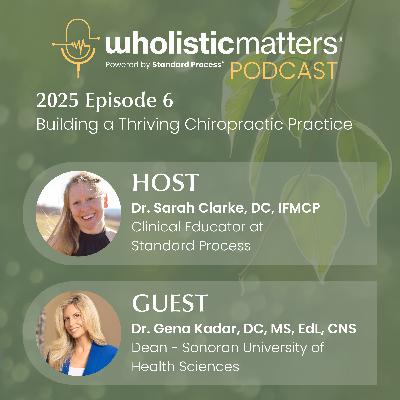
Dr. Sarah Clarke, DC, IFMCP, interviews Dr. Gena Kadar, Chiropractor, Certified Nutrition Specialist, Sonoran University of Health Sciences Associate VP of Program Innovation, and Dean - College of Nutrition and School of Mental Health https://www.sonoran.edu/faculty/gena-kadar/ Building a Thriving Chiropractic Practice: The Importance of Nutrition Coaching and Modeling a Healthy Lifestyle Dr. Sarah Clarke, DC, IFMCP, interviews Dr. Gena Kadar, Chiropractor, Certified Nutrition Specialist, Sonoran University of Health Sciences Associate VP of Program Innovation, and Dean - College of Nutrition and School of Mental Health (https://www.sonoran.edu/faculty/gena-kadar/) Join Chiropractors Dr. Sarah Clarke and Dr. Gena Kadar in this inspiring conversation about building a thriving practice. Dr. Kadar discusses incorporating nutrition with chiropractic work for improved patient outcomes, and the importance of practitioners modeling healthy lifestyles and practicing self-care. They wrap up the episode with a vision for the future of integrative medicine, and valuable advice for new practitioners building their practices. 1:30 Interest in healthy living from a young age 3:28 How Dr. Kadar came to chiropractic – drawn to the idea of being empowered and how you empower others with knowledge of how to lead healthy lifestyle 7:40 Imposter Syndrome – Challenges of shifting from student-mindset to practitioner-mindset – settling into professional clinical practice 12:30 Working for a cardiologist group and the profound experience that came from that work 14:30 Incorporating nutrition with chiropractic patients produced better outcomes 15:15 Tips for newly graduated chiropractors building their own business and how to incorporate nutrition into their practice – "How you approach nutrition care is very important" 19:20 Beauty of nutrition care and providing access to high quality supplements, in turn also helps to provide a passive income for the clinician 20:56 Motivation to move into the academic sector from private practice – life experience and how that transformed her trajectory 28:59 Milestones and Moments to Celebrate – writing her book A Manner of Living: An Evidence-Based, Realistic, and Sustainable Approach to the Art of Eating Well, Living Well, and Being Well for Life; launched Sonoran University's College of Nutrition; launched a virtual center for customized personal nutrition 34:05 What changes would you like to see in Healthcare? "Having a seat at the table regarding the future of healthcare"; as Integrative Practitioners we can "humbly acknowledge our limitations and proudly, boldly assert our strengths"; increased patient-centered care 38:30 Launching Sonoran University's School of Mental Health – inclusion of healthcare in mental health curriculum 40:40 The importance of teaching students how to manage a healthy lifestyle so they know firsthand the challenges to they can better help their patients; practitioners who practice what they preach have better results with patients; practitioners learning to implement and model self-care so that they can be role models for patients 44:00 The future of Nutrigenomics, personalized medicine, and personalized learning with adaptive learning technology 50:30 Parallels between clinical care and academia 51:25 Advice for new practitioners

Episode 5 – Strategies for Optimal Aging: Leveraging Nutrition and Fitness for Practitioner and Patient Dr. Sarah Clarke, DC interviews Dr. Kimberly Besuden, DC, CFMP In this lively conversation, Dr. Besuden, DC, CFMP, shares all of her tips, tricks and recommendations for aging optimally and gracefully. Drs. Sarah and Besuden discuss strategies for maintaining healthy habits and routines for practitioner and patient alike. This episode is full of gems including specific supplementation to fill nutrition gaps, easy-to-maintain exercise routines, and a deep dive into hormesis practices. Dr. Kimberly Besuden is a Chiropractor and Certified Functional Medicine Practitioner; owner of The Health Factor; and owner of Bay Street Wellness. She has a long history as a competitive athlete, extensive training in clinical nutrition, and many years working as a personal trainer and strength coach. · 1:30 Inspiration to become a Chiropractor · 3:30 Inspiration to pursue Functional Medicine and Detox and Purification · 5:00 Dr. Besuden's Clinical Practice · 5:45 Active Lifestyles for Aging Populations · 8:50 Strength Training for the Aging Population – key for optimal aging, and connection between strength training and naturally increased GLP-1 · 13:00 Tips for sticking with a strength training routine – for practitioners and patients · 16:15 Hormesis and it's role and optimal aging – HIIT, hot and cold therapy, intermittent fasting · 21:18 Intermittent Fasting · 26:10 Maintaining healthy diets and habits with busy schedules and traveling · 29:05 Hot and cold therapy · 30:50 The Modified Mediterranean Diet – low carb, healthy fats, moderate protein · 38:55 Super foods for training · 41:20 Biomarkers, body composition, and metrics – equipment, devices and best practice · 45:30 Bloodwork Panels and Supplementation for Nutritional Gaps · 48:00 Other Diet and Lifestyle Recs for optimal aging · 50:58 Final thoughts for practitioners – Practice what you preach
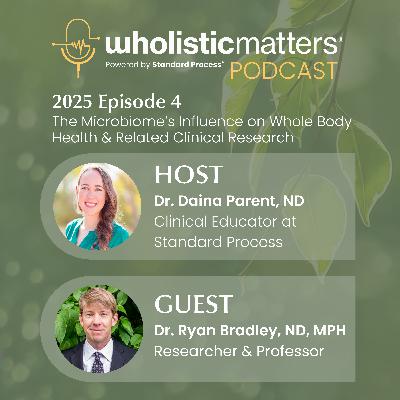
Drs. Daina Parent and Ryan Bradley take a deep dive into the microbiome and it's influence on whole body health, and cover highlights on clinical research focused on gut health. They also touch on soil health and environmental toxins and the impact on the microbiome. Dr. Ryan Bradley is a Naturopathic Physician with a Master's Degree in Public Health and Epidemiology. He is currently a professor and has completed 8 years of clinical research training. He leads research initiatives at the intersection between public health and integrative and complimentary medicine. 2:00 – Dr. Bradley's Journey towards current career and passion for research; his interest in mechanisms of natural products and clinical research; clinical practice was focused on cardiometabolic disease, Diabetes, and more 5:10 – New initiatives after closing clinical practice 5 years ago - now focuses on clinical research / clinical trials; also focuses on Mentorship through National Center for Complimentary and Integrative Health, branch of NIH for Complimentary Medicine 8:30 – Importance of research for clinicians – shifts the way practitioners practice, especially in Complimentary and Integrative Medicine which has a population of clinicians thirsty for evidence of effectiveness of Complimentary and Integrative strategies, philosophy, and frameworks/protocols 11:55 – Historical Knowledge of effectiveness of Naturopathic Medicine, "the science is finally catching up to our practices"; example – gut health, dysbiosis, leaky gut syndrome; "We finally have the scientific tools to explore these concepts in greater detail." 13:50 – Gut Health and Naturopathic Medicine – trends and changes in gut health practice; general public is paying more attention to their gut health; rapid innovation, especially with probiotics, postbiotics, prebiotics, and fibers; does the science support large doses of probiotics?; Is the practice outpacing the evidence?; What will the future of microbiome research and awareness look like? 20:40 – Gut Health as connected to global effects throughout the whole body – hormonal health, immune health, brain health; effects of environmental factors like air and water quality influence gut health 23:55 – Current research in the gut health space and how it translates into clinical practice 34:32 – NIH Grants for mentorship, gut health, mind-body practices and effects on anxiety, and more 40:40 – Mind Body Medicine and connection to Gut Health 42:15 – Will gut health continue to be at the forefront of medicine and medical research? Personalized probiotics and AI; potential natural GLP-1 agonists; increased public awareness to demand better foods, less environmental toxins in food, water, and air 49:55 – SOIL HEALTH: The hope for the near future: increased public understanding of soil health and connection to gut health and overall well-being; gut health linked to soil health, food quality, and farming practices; everything is interconnected 53:20 – Integrative Health and it's impact on public health
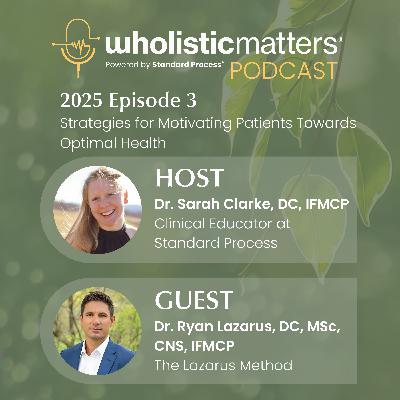
· In this enlightening episode, Dr. Sarah Clarke interviews Dr. Ryan Lazarus, author of The Essential Health Playbook and creator of The Lazarus Method. The conversation highlights Dr. Lazarus' personal health journey and how it shaped his career and the work he's developed over the past 20+ years. He offers inspiring and effective strategies for meeting patients where they are at; supporting their goals, values, and priorities; and offering tools to help them achieve optimal whole body health. · 1:20 Dr. Lazaraus describes his near death experience at 18 while playing indoor soccer that began his health journey and shaped the trajectory of his career · 4:00 Digestive issues and type 1 diabetes diagnosis following the accident that destroyed his pancreas · 5:30 10 years of frustration using conventional medicine to help with digestive issues and mental health support prompted him to take charge of his own health and find a better way to heal and live a healthy life · 7:30 How Dr. Lazarus' healing journey changed his career path and how he was drawn to Chiropractic Medicine · 11:10 Common obstacles people face in finding healthcare; Dr. Lazarus' role is to explain that there is a holistic evidence-based way to heal · 13:20 The Lazarus Method – people change in four different ways; finding what motivates each individual to make important health changes is the key to success · 19:00 Change takes time and Gamification is a useful tool– uses engaging athletic/sports language for motivational tools; sets fun micro challenges; individualized approach · 25:20 Meeting people where they're at - How to keep ourselves and patients motivated and engaged to continue to make positive changes towards better health and healthier overall lifestyle; defining priorities, values and goals · 28:05 Nutrition and Diet – Ryan describes his EAT Plan (Essentials, Amount, Timing) · 32:00 – Flow States, "in the zone" and the importance with long-term health · 36:15 – Finding your true purpose and how it affects one's health journey · 41:00 Transition from 20-year clinical practice to writing books and focusing on The Lazarus Method · 43:15 Dr. Lazaraus' passion for Human potential – realizing what one is capable of on all levels · 46:33 Supporting motivated people ready to unlock the next level of performance, achievement, and potential with Biohacking Strategies · 50:00 thelazarusmethod.com offers free wellness tools; The Essential Health Playbook is his latest book
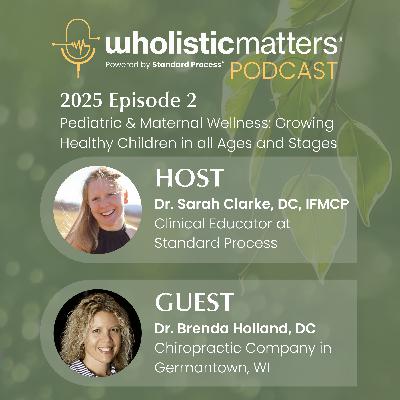
Host Dr. Sarah Clarke, DC, IFMCP, leads this informative episode, interviewing Dr. Brenda Holland, Chiropractic Physician who specializes in pediatric care and maternal wellness. Drs. Clarke and Holland take a deep dive into supporting mothers and children of all ages and stages from pre-conception through adolescence with nutrition, chiropractic care, and healthy movement. 1:00 Growing up on the family farm - learned about health of cows and how to increase healthy milk by providing cows with nutritious foods like alfalfa and fermented corn, and how soil health impacts crops and animals; this experience influenced her passion for caring for humans, especially mothers and children · 3:15 Whole Body Health – the connection between the Earth and what we put into our bodies · 5:30 Beginning a Chiropractic Practice and earning a Diplomate in Clinical Chiropractic Pediatrics through ICA · 7:00 Chiropractic companies and organizations for support network for practitioners just getting started · 10:10 Changes in the field of Chiropractic over past 20 years – more female chiropractors, and how it's changing the workplace to support working Chiropractic mothers; more emphasis on specialties – pediatrics, functional medicine, and nutrition · 17:45 Common conditions children come into the chiropractic office – sports injuries, back pain, obesity, skin conditions; when to refer out · 20:00 Nutrition recommendations for healthy growing children · 23:20 Risks of children becoming a one sport athlete at a young age, and the importance of a good nutritional foundation for young athletes · 28:20 Nutrition for infants, babies and toddlers – breastfeeding if possible, good quality formulas, vitamin D3, healthy fats, solid food introduction at the right time · 34:20 Making healthy foods look appealing for babies and toddlers – focus on eating colorful foods · 36:38 Establishing healthy habits with older children – take them shopping, parents lead activities on growing foods and learning about nutritional value of foods; the 80/20 rule · 38:48 Pre-conception, fertility and prenatal care nutrition recommendations – fertility is not just about female health, 30-50% of fertility issues are due to male health, including inadequate folate intake, CoQ10, and selenium; common pregnancy concern is back pain, 45-50% of females experience low back pain in pregnancy and 65+% experience low back pain within 12 months of delivery · 42:30 Fourth Trimester care – healthcare and society need to establish a foundational understanding of pelvic floor care prior to and after pregnancy; safe comfortable places to breastfeed; supporting the mother in the fourth trimester · 47:00 Chiropractic as patient-centered care · 49:44 – Simple changes to start with if patients are feeling overwhelmed on starting their wellness journey – adding good things in before taking away, healthy eating habits, and basic movement
· 1:45 What is Naturopathic Medicine? The Six Principles and the Therapeutic Order is what guides their treatment, including diet, lifestyle, natural therapies, supporting natural ability to heal, seeking the root cause and treating the whole person; patient-centered focus · 6:15 What interested Dr. Simon in becoming a Naturopathic Physician · 8:30 How the field of Naturopathic Medicine continuously evolves · 9:30 The art of the profession – the personalization of the treatment plan, meet the patient where they are at · 11:45 The role of nutrition and diet in therapies · 13:45 What Dr. Simon looks for in supplement companies in order to feel comfortable using them in patient protocols · 17:45 How Naturopathic Medicine fits into our current medical system and with other healthcare practitioners · 23:20 Institute for Natural Medicine focuses on public education about natural medicine options · 28:00 Food as Medicine Research – health benefits of whole foods · 29:15 Kids Naturally Well Program – teaching 4th grade children how to understand health and identifying healthy foods · 30:25 How to educate patients on how to read nutrition labels on food and supplements · 32:30 Dr. Simon's research at INM, Food as Medicine in partnership with Bastyr · 34:45 2020 Case Study that highlights the power of the Naturopathic Medicine approach; 25-year-old male with history of anxiety, poor limited diet, low glutathione, and low B vitamins due to MTHFR gene lead to inability to handle intense viral infection; diet, lifestyle and proper supplementation helped him to fully recover · 43:05 Naturopathic Medicine is the engineering of whole health and the ability to connect with patients on a deep level
About this Episode Women's Hormones from Menarch to Menopause In this episode Dr. Daina Parent, Clinical Educator at Standard Process, interviews Dr. Jaqueline Smeaton, Naturopathic Physician and founder of Hello Fertility. Highlights of the episode include: Herbs and supplements for perimenopause and menopause Common conditions in Women's Health by stage of reproductive years Strategies for connecting with teen patients How diet and lifestyle influence cycle regularity Cycle Charting for Fertility Diet and Lifestyle recommendations for pre-conception The links between fertility and gut dysbiosis, liver health, and oral health Podcast Summary 2:00 Phases of Reproductive Cycle 3:40 Where Should clinicians start when working with new client – Cycle Charting and Symptom Picture; Basal Body Temperature and Cervical Mucus Tracking for Fertility Cues, Follicular and Luteal Phases 8:00 Diet to support hormone balance, fertility and women's health, Eat the Rainbow Chart for fun way to track eating a variety of colored foods each week; diverse plant based diet; important vitamins and micronutrients for women – calcium, vitamin D, Mg, B6, B12, folic acid 11:40 Common Conditions in Women's Health by stage of reproductive years – tracking estrogen and progesterone 14:40 Symptoms of imbalance of estrogen and progesterone and associated conditions; gut dysbiosis and the liver connected to hormone balance 19:40 Strategies for Supporting Patients in balancing reproductive hormones – toxins (plastics, phalates, fragrances, lotions, packaged foods, etc.), lifestyle (sleep, stress, supporting circadian rhythms, etc.) 22:40 Lab Tests – what kind and when to use to support patients 27:40 Preconception Counseling – supplements and lifestyle recommendations 180 days prior to conception for optimal egg and sperm health 29:40 Detox for Fertility and IVF – is it recommended? If so, what's safe? 31:20 Fertility and Periodontal Disease and Oral Health; Microbiome of Placenta and Womb tied to mother's oral health 32:00 Favorite Herbs for Hormone Balance and preferred delivery of herbal remedies 35:00 Puberty for Females – normal fluctuations; how diet and lifestyle influence cycle regularity; introducing cycle charting; recommended supplementation; strategies for connecting with teen patients 39:40 Perimenopause and Menopause – commons symptoms associated with hormone fluctuations; common misconceptions and myths; commons condition that can arise 43:40 Lab Testing in Perimenopause and Menopause – nutrient testing, cycle mapping, and HRT 45:20 Supportive Herbs and Supplements for Perimenopause and Menopause Other WholisticMatters Women's Health Content Fenugreek for glucose management and breastfeeding Male and Female Fertility: Botanicals for Better Endocrine Health This podcast is sponsored by Standard Process About Standard Process – Only at SP

This summer, two world record-holders will embark on unique adventures across the Pacific Ocean, from California to Hawaii. Cyril Derreumaux will be in a one-of-a-kind kayak, while Carlo Facchino will be rowing. Cyril and Carlo are friends from a record-breaking row back in 2016, and now Carlo is coaching Cyril in preparation for his expedition in addition to making an ocean crossing of his own.
In the sixth and final episode of Plant Power, the fourth season of the WholisticMatters Podcast Series, hosts Sara Le Brun Blashka, MS, Meghan Hamrock, MS, MPH, and Kara Credle discuss the realistic application of plant power in practice and in life. Paired with a final clinical commentary from Dave Hogsed, DOM, AP, this episode ties together the concepts of the whole food matrix, nutrient availability, plant genetics, organic farming, phytonutrients and the colors of food to deliver a message vital for practitioners and nutrition enthusiasts alike: a diverse diet of colorful, plant-based foods supports a healthy life.
In the fifth episode of Plant Power, the fourth season of the WholisticMatters Podcast Series, our topic is nutrient bioavailability and bioaccessibility. Food processing affects how the body utilizes nutrients consumed through food, and bioavailability and bioaccessibility are two terms that describe the nature of nutrient utilization in the body.
In the fourth episode of Plant Power, the fourth season of the WholisticMatters Podcast Series, our topic is phytonutrients and the valuable relationship between food and color. Our guest this episode is nutrition scientist Weston Bussler, PhD. Listen all the way to end for clinical insights from practitioner Dave Hogsed, DOM, AP.
In the third episode of Plant Power, the fourth season of the WholisticMatters Podcast Series, our topic is organic farming. Our guest on this episode is organic farm director Christine Mason. Listen all the way to end for clinical insights from practitioner Dave Hogsed, DOM, AP.


Download from Google Play

Download from App Store
 United States
60% EPA and 40% DPA. A minimum of 2000 mg per day for sick patients. Probably more, 4000 mg or more for hyperinflammatory conditions. #omega3 #inflammation #chronicInflammation #traumaticBrainInjury #concussion #lymeDisease #mold #turmeric