


 Claim Ownership
L'Anglais, c'est Fou ! ®
Subscribed: 97Played: 1,446
Subscribe

© L'Art et La Plume ®
Description
« L'Anglais, c'est Fou ! ® » est une série spécialement conçue pour les francophones ayant pour but d’apprendre l'anglais et de le parler sans complexes !
Inspirée par le vécu de l'école d’anglais « Planet English ® Saint-Maurice », cette série
est très pratique à écouter en boucles jusqu'à ce que le principe exposé soit acquis.
Inspirée par le vécu de l'école d’anglais « Planet English ® Saint-Maurice », cette série
est très pratique à écouter en boucles jusqu'à ce que le principe exposé soit acquis.
16 Episodes
Reverse
"If you please" est une expression courante que vous connaissez certainement mais que vous découvrirez peut-être sous un angle enrichi suite à l'écoute de cet épisode.Avec "If you will" nous évoquons une autre formule de politesse. Tout cela sur fond de rappels du conditionnel étudié dans les épisodes précédents.Pour finir, nous vous rappellerons la signification de l'expression "As it were". Rapide, pratique voici le programme de cette session !AI Rights Reservation Notice:All audio recordings, narration, voice performances, music, and associated content contained in this podcast are protected by copyright and related rights owned or controlled by the creator. The rights holder expressly prohibits and reserves all rights against any form of text or data mining, web scraping, machine learning, artificial intelligence training, voice synthesis, cloning, simulation, or generative model development using this content, in whole or in part, unless prior written authorization is granted through a direct license from the rights holder. This reservation of rights applies to all existing and future podcast recordings, in all media and formats, worldwide, to the fullest extent permitted by applicable law, and is intended to constitute an explicit opt-out from any statutory or regulatory exception that might otherwise permit such uses without authorization. Unauthorized use of this content for artificial intelligence or machine-learning purposes may constitute copyright infringement and violation of related rights. © ℗ L'Art et La Plume ®. All rights reserved.
Comment poser une question qui a trait à une personne ? Devons-nous utiliser « Who » ou « Whom » ? La réponse est assez simple. Dans cet épisode nous décryptons la règle de façon pratique et synthétique afin qu’aucun doute ne subsiste dans vos esprits lors de l’utilisation de l’un ou l’autre de ces deux pronoms, tant à l’oral, qu’à l’écrit.AI Rights Reservation Notice:All audio recordings, narration, voice performances, music, and associated content contained in this podcast are protected by copyright and related rights owned or controlled by the creator. The rights holder expressly prohibits and reserves all rights against any form of text or data mining, web scraping, machine learning, artificial intelligence training, voice synthesis, cloning, simulation, or generative model development using this content, in whole or in part, unless prior written authorization is granted through a direct license from the rights holder. This reservation of rights applies to all existing and future podcast recordings, in all media and formats, worldwide, to the fullest extent permitted by applicable law, and is intended to constitute an explicit opt-out from any statutory or regulatory exception that might otherwise permit such uses without authorization. Unauthorized use of this content for artificial intelligence or machine-learning purposes may constitute copyright infringement and violation of related rights. © ℗ L'Art et La Plume ®. All rights reserved.
« To Awake » ou « to Awaken » ?En anglais, il est fréquent de rencontrer des mots presque similaires qui peuvent prêter à confusion. C'est entre autre, le cas des verbes "to awake" et "to awaken" qui peuvent nous réserver quelques surprises, et tout particuliairement leur conjugaison. Cependant, pas de panique, après avoir écouté cet épisode tout s’éclaircira!AI Rights Reservation Notice:All audio recordings, narration, voice performances, music, and associated content contained in this podcast are protected by copyright and related rights owned or controlled by the creator. The rights holder expressly prohibits and reserves all rights against any form of text or data mining, web scraping, machine learning, artificial intelligence training, voice synthesis, cloning, simulation, or generative model development using this content, in whole or in part, unless prior written authorization is granted through a direct license from the rights holder. This reservation of rights applies to all existing and future podcast recordings, in all media and formats, worldwide, to the fullest extent permitted by applicable law, and is intended to constitute an explicit opt-out from any statutory or regulatory exception that might otherwise permit such uses without authorization. Unauthorized use of this content for artificial intelligence or machine-learning purposes may constitute copyright infringement and violation of related rights. © ℗ L'Art et La Plume ®. All rights reserved.
Dans cet épisode, nous résumons deux façons d’exprimer le fait que l’on apprécie une action, une chose, un évènement ou une personne. Deux nuances sont à distinguer selon que l’on apprécie « l’action » ou le fait que cela soit une (ou des) personne(s) spécifique(s) qui aient réalisé cette action. Nous finirons sur un point de prononciation de « Toward »/« Towards ».AI Rights Reservation Notice:All audio recordings, narration, voice performances, music, and associated content contained in this podcast are protected by copyright and related rights owned or controlled by the creator. The rights holder expressly prohibits and reserves all rights against any form of text or data mining, web scraping, machine learning, artificial intelligence training, voice synthesis, cloning, simulation, or generative model development using this content, in whole or in part, unless prior written authorization is granted through a direct license from the rights holder. This reservation of rights applies to all existing and future podcast recordings, in all media and formats, worldwide, to the fullest extent permitted by applicable law, and is intended to constitute an explicit opt-out from any statutory or regulatory exception that might otherwise permit such uses without authorization. Unauthorized use of this content for artificial intelligence or machine-learning purposes may constitute copyright infringement and violation of related rights. © ℗ L'Art et La Plume ®. All rights reserved.
Le thème abordé dans cet épisode est l’idiome « Have got » qui n’est pas à confondre avec le verbe « To get » conjugué au Present Perfect. Nous exposerons les différences entre l’anglais Britannique et l’anglais Américain ce permettra d’éclairer tout particulièrement les auditeurs Français fréquemment formés à l’anglais Britannique.AI Rights Reservation Notice:All audio recordings, narration, voice performances, music, and associated content contained in this podcast are protected by copyright and related rights owned or controlled by the creator. The rights holder expressly prohibits and reserves all rights against any form of text or data mining, web scraping, machine learning, artificial intelligence training, voice synthesis, cloning, simulation, or generative model development using this content, in whole or in part, unless prior written authorization is granted through a direct license from the rights holder. This reservation of rights applies to all existing and future podcast recordings, in all media and formats, worldwide, to the fullest extent permitted by applicable law, and is intended to constitute an explicit opt-out from any statutory or regulatory exception that might otherwise permit such uses without authorization. Unauthorized use of this content for artificial intelligence or machine-learning purposes may constitute copyright infringement and violation of related rights. © ℗ L'Art et La Plume ®. All rights reserved.
Pour cet épisode de « L’Anglais, c’est Fou ! », nous avons choisi de partager avec vous les extravagances de deux verbes irréguliers : To lie (lie/lay/lain) et To lay (lay/laid/laid), qui sont souvent confondus l’un avec l’autre. Nous éclaircirons tout cela car il y a franchement de quoi s’y perdre, et même les anglophones (et pas des moindres, comme vous le découvrirez) font cette confusion.Si vous aviez le moindre soupçon que l’anglais était fou, cet épisode vous prouvera que « L’Anglais, c’est Dingue ! ».AI Rights Reservation Notice:All audio recordings, narration, voice performances, music, and associated content contained in this podcast are protected by copyright and related rights owned or controlled by the creator. The rights holder expressly prohibits and reserves all rights against any form of text or data mining, web scraping, machine learning, artificial intelligence training, voice synthesis, cloning, simulation, or generative model development using this content, in whole or in part, unless prior written authorization is granted through a direct license from the rights holder. This reservation of rights applies to all existing and future podcast recordings, in all media and formats, worldwide, to the fullest extent permitted by applicable law, and is intended to constitute an explicit opt-out from any statutory or regulatory exception that might otherwise permit such uses without authorization. Unauthorized use of this content for artificial intelligence or machine-learning purposes may constitute copyright infringement and violation of related rights. © ℗ L'Art et La Plume ®. All rights reserved.
 1
1« Ce n’est pas pour rien » que vous allez écouter cet épisode. Dans la série « Les petites pochettes-surprises » de « L’Anglais, c’est Fou ! », vous découvrirez les différentes significations de l’expression « It’s not for nothing ». Couramment utilisée en anglais, elle revêt une connotation toute particulière pour les New Yorkais, autant être prévenus ! Beaucoup d’autres petits conseils vous attendent !AI Rights Reservation Notice:All audio recordings, narration, voice performances, music, and associated content contained in this podcast are protected by copyright and related rights owned or controlled by the creator. The rights holder expressly prohibits and reserves all rights against any form of text or data mining, web scraping, machine learning, artificial intelligence training, voice synthesis, cloning, simulation, or generative model development using this content, in whole or in part, unless prior written authorization is granted through a direct license from the rights holder. This reservation of rights applies to all existing and future podcast recordings, in all media and formats, worldwide, to the fullest extent permitted by applicable law, and is intended to constitute an explicit opt-out from any statutory or regulatory exception that might otherwise permit such uses without authorization. Unauthorized use of this content for artificial intelligence or machine-learning purposes may constitute copyright infringement and violation of related rights. © ℗ L'Art et La Plume ®. All rights reserved.
Le sujet de cet épisode est « Le Subjonctif », qui est un mode en anglais ! Il est parfois difficile à reconnaître — voire même à utiliser — puisque sa construction est atypique. En effet, le subjonctif présent, ou passé, sonnent comme des erreurs à l’oreille du néophyte. Il n’en est rien, et nous allons faire une synthèse de ces différents points en vous expliquant la façon dont on forme le subjonctif, ainsi que les cas bien précis où il convient de l’employer.AI Rights Reservation Notice:All audio recordings, narration, voice performances, music, and associated content contained in this podcast are protected by copyright and related rights owned or controlled by the creator. The rights holder expressly prohibits and reserves all rights against any form of text or data mining, web scraping, machine learning, artificial intelligence training, voice synthesis, cloning, simulation, or generative model development using this content, in whole or in part, unless prior written authorization is granted through a direct license from the rights holder. This reservation of rights applies to all existing and future podcast recordings, in all media and formats, worldwide, to the fullest extent permitted by applicable law, and is intended to constitute an explicit opt-out from any statutory or regulatory exception that might otherwise permit such uses without authorization. Unauthorized use of this content for artificial intelligence or machine-learning purposes may constitute copyright infringement and violation of related rights. © ℗ L'Art et La Plume ®. All rights reserved.
Comment bien prononcer la terminaison en « ED » des verbes réguliers au prétérit et au participe passé ? Dans cet épisode, nous passons en revue les trois prononciations possibles, et nous vous donnons un algorithme très facile à suivre pour déterminer laquelle adopter en fonction du verbe racine !AI Rights Reservation Notice:All audio recordings, narration, voice performances, music, and associated content contained in this podcast are protected by copyright and related rights owned or controlled by the creator. The rights holder expressly prohibits and reserves all rights against any form of text or data mining, web scraping, machine learning, artificial intelligence training, voice synthesis, cloning, simulation, or generative model development using this content, in whole or in part, unless prior written authorization is granted through a direct license from the rights holder. This reservation of rights applies to all existing and future podcast recordings, in all media and formats, worldwide, to the fullest extent permitted by applicable law, and is intended to constitute an explicit opt-out from any statutory or regulatory exception that might otherwise permit such uses without authorization. Unauthorized use of this content for artificial intelligence or machine-learning purposes may constitute copyright infringement and violation of related rights. © ℗ L'Art et La Plume ®. All rights reserved.
Qui aurait cru qu’un sujet d’apparence si insignifiant nécessiterait tout un exposé. De petits mots simples et courts : « a/an » ou « the » pour un si long discours. Articles indéfinis ou définis, un lien étroit les unis; nous allons lever le voile sur ce secret !AI Rights Reservation Notice:All audio recordings, narration, voice performances, music, and associated content contained in this podcast are protected by copyright and related rights owned or controlled by the creator. The rights holder expressly prohibits and reserves all rights against any form of text or data mining, web scraping, machine learning, artificial intelligence training, voice synthesis, cloning, simulation, or generative model development using this content, in whole or in part, unless prior written authorization is granted through a direct license from the rights holder. This reservation of rights applies to all existing and future podcast recordings, in all media and formats, worldwide, to the fullest extent permitted by applicable law, and is intended to constitute an explicit opt-out from any statutory or regulatory exception that might otherwise permit such uses without authorization. Unauthorized use of this content for artificial intelligence or machine-learning purposes may constitute copyright infringement and violation of related rights. © ℗ L'Art et La Plume ®. All rights reserved.
Vaste et mythique sujet de la langue anglaise que nous allons reprendre point par point. Et oui, il y a tant de verbes modaux en anglais, certains même que l’on ne soupçonnerait pas. Ce 6ème chapitre de « L’Anglais, c’est Fou ! » est le dernier dans la série des « Incontournables », ces grands thème de base qu’il était indispensable de couvrir avant de pouvoir aborder des sujets plus légers.Ce podcast est donc une revue détaillée et analytique d’un sujet crucial. Vous réviserez l’ensemble des concepts, nous vous donnerons de petites astuces pratiques, et vous aurez même quelques surprises lorsque vous découvrirez que certains verbes que vous pensiez être de simples verbes, revêtent finalement le qualificatif de « verbe modal ».Plus une minute à perdre, passons à la pratique, et comme toujours, sortez vos carnets pour prendre des notes au fur et à mesure de l’exposé que vous êtes sur le point d’aborder.Enjoy!AI Rights Reservation Notice:All audio recordings, narration, voice performances, music, and associated content contained in this podcast are protected by copyright and related rights owned or controlled by the creator. The rights holder expressly prohibits and reserves all rights against any form of text or data mining, web scraping, machine learning, artificial intelligence training, voice synthesis, cloning, simulation, or generative model development using this content, in whole or in part, unless prior written authorization is granted through a direct license from the rights holder. This reservation of rights applies to all existing and future podcast recordings, in all media and formats, worldwide, to the fullest extent permitted by applicable law, and is intended to constitute an explicit opt-out from any statutory or regulatory exception that might otherwise permit such uses without authorization. Unauthorized use of this content for artificial intelligence or machine-learning purposes may constitute copyright infringement and violation of related rights. © ℗ L'Art et La Plume ®. All rights reserved.
Dans ce cinquième épisode nous abordons les quatre formes du conditionnel. Soit vous n’avez jamais entendu parler du conditionnel en anglais - voire même en français - soit vous n’avez jamais compris ce que c’était vraiment, soit vous avez compris mais ne savez pas comment le mettre en pratique ! Quelle que soit votre situation, nous avons décidé de vous présenter une synthèse de ces notions afin de remettre un peu d’ordre dans tout cela, car il est vrai que certaines particularités peuvent sembler complexes. Faisons donc ensemble la découverte de ce thème !AI Rights Reservation Notice:All audio recordings, narration, voice performances, music, and associated content contained in this podcast are protected by copyright and related rights owned or controlled by the creator. The rights holder expressly prohibits and reserves all rights against any form of text or data mining, web scraping, machine learning, artificial intelligence training, voice synthesis, cloning, simulation, or generative model development using this content, in whole or in part, unless prior written authorization is granted through a direct license from the rights holder. This reservation of rights applies to all existing and future podcast recordings, in all media and formats, worldwide, to the fullest extent permitted by applicable law, and is intended to constitute an explicit opt-out from any statutory or regulatory exception that might otherwise permit such uses without authorization. Unauthorized use of this content for artificial intelligence or machine-learning purposes may constitute copyright infringement and violation of related rights. © ℗ L'Art et La Plume ®. All rights reserved.
Le sujet du jour est un temps souvent mal aimé car mal compris par les français qui l’ont mal appris à l’école ; alors est-ce « Je méprise le Present Perfect. » ou « Je maîtrise le Present Perfect. » ?Après avoir écouté cet épisode, il n’y aura plus aucune hésitation, car tout s’éclaircira. La confusion qui s’opère souvent entre le « Present Perfect » et « Present Perfect Continuous » sera définitivement oubliée ! Un épisode qui prolonge l’explication du Present Perfect que vous pourrez retrouver sur notre chaîne YouTube « ArtetPlume », vidéo « Je maîtrise le Present Perfect, 1ère Partie » : https://youtu.be/J5arvTTc0iUAI Rights Reservation Notice:All audio recordings, narration, voice performances, music, and associated content contained in this podcast are protected by copyright and related rights owned or controlled by the creator. The rights holder expressly prohibits and reserves all rights against any form of text or data mining, web scraping, machine learning, artificial intelligence training, voice synthesis, cloning, simulation, or generative model development using this content, in whole or in part, unless prior written authorization is granted through a direct license from the rights holder. This reservation of rights applies to all existing and future podcast recordings, in all media and formats, worldwide, to the fullest extent permitted by applicable law, and is intended to constitute an explicit opt-out from any statutory or regulatory exception that might otherwise permit such uses without authorization. Unauthorized use of this content for artificial intelligence or machine-learning purposes may constitute copyright infringement and violation of related rights. © ℗ L'Art et La Plume ®. All rights reserved.
Une mise au point rapide et essentielle sur la forme interrogative anglaise. Vous souhaitez revoir les différentes façons de poser des questions en anglais ? Voici une profusion de bons conseils qui pourront peut-être un jour vous sauver la vie. En effet, une innocente question peut très facilement être interprétée comme une accusation selon le ton utilisé. La maîtrise de la modulation de la voix, si cruciale en anglais, prend ici à nouveau tout son sens. Après avoir écouté cet épisode, il est hors de question que vous hésitiez lorsqu'il s'agira d'en poser !AI Rights Reservation Notice:All audio recordings, narration, voice performances, music, and associated content contained in this podcast are protected by copyright and related rights owned or controlled by the creator. The rights holder expressly prohibits and reserves all rights against any form of text or data mining, web scraping, machine learning, artificial intelligence training, voice synthesis, cloning, simulation, or generative model development using this content, in whole or in part, unless prior written authorization is granted through a direct license from the rights holder. This reservation of rights applies to all existing and future podcast recordings, in all media and formats, worldwide, to the fullest extent permitted by applicable law, and is intended to constitute an explicit opt-out from any statutory or regulatory exception that might otherwise permit such uses without authorization. Unauthorized use of this content for artificial intelligence or machine-learning purposes may constitute copyright infringement and violation of related rights. © ℗ L'Art et La Plume ®. All rights reserved.
Cet épisode « Express » de la Série « L'Anglais, c'est Fou ! ® » passe en revue la prononciation de certains mots souvent mal prononcés par les francophones. Réussir à les prononcer favorisera la maîtrise de certains sons spécifiques à la langue anglaise et permettra de prendre conscience d’erreurs rarement corrigées durant les années d’apprentissage de l’anglais.Des petits réglages indispensables pour en finir avec les « épaves » qui font grincer les dents des interlocuteurs anglophones !AI Rights Reservation Notice:All audio recordings, narration, voice performances, music, and associated content contained in this podcast are protected by copyright and related rights owned or controlled by the creator. The rights holder expressly prohibits and reserves all rights against any form of text or data mining, web scraping, machine learning, artificial intelligence training, voice synthesis, cloning, simulation, or generative model development using this content, in whole or in part, unless prior written authorization is granted through a direct license from the rights holder. This reservation of rights applies to all existing and future podcast recordings, in all media and formats, worldwide, to the fullest extent permitted by applicable law, and is intended to constitute an explicit opt-out from any statutory or regulatory exception that might otherwise permit such uses without authorization. Unauthorized use of this content for artificial intelligence or machine-learning purposes may constitute copyright infringement and violation of related rights. © ℗ L'Art et La Plume ®. All rights reserved.
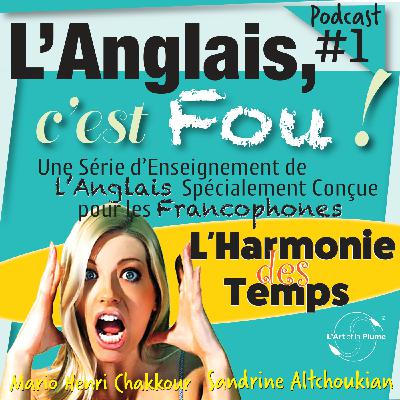
« Excusez-moi, avez-vous le temps ? » Mais oui et je dirais même plus, nous avons tous les temps en anglais ! Cette discussion franche et ouverte couvre l'étendue complète des temps en vigueur pour s'exprimer au présent, passé, futur et tout ce qu'il y a entre. Un podcast, hum, historique !AI Rights Reservation Notice:All audio recordings, narration, voice performances, music, and associated content contained in this podcast are protected by copyright and related rights owned or controlled by the creator. The rights holder expressly prohibits and reserves all rights against any form of text or data mining, web scraping, machine learning, artificial intelligence training, voice synthesis, cloning, simulation, or generative model development using this content, in whole or in part, unless prior written authorization is granted through a direct license from the rights holder. This reservation of rights applies to all existing and future podcast recordings, in all media and formats, worldwide, to the fullest extent permitted by applicable law, and is intended to constitute an explicit opt-out from any statutory or regulatory exception that might otherwise permit such uses without authorization. Unauthorized use of this content for artificial intelligence or machine-learning purposes may constitute copyright infringement and violation of related rights. © ℗ L'Art et La Plume ®. All rights reserved.
Comments


Download from Google Play

Download from App Store
 United States