DiscoverFeel Better, Live More with Dr Rangan Chatterjee
Feel Better, Live More with Dr Rangan Chatterjee
Claim Ownership

Feel Better, Live More with Dr Rangan Chatterjee

Author: Dr Rangan Chatterjee: GP & Author

Subscribed: 108,889Played: 4,564,107
Share

Description

“Health has become overcomplicated. I aim to simplify it” In this podcast, we hear stories from leading health experts and exciting personalities who offer easy health life-hacks, expert advice and debunk common health myths giving you the tools to revolutionise how you eat, sleep, move and relax. Hosted by Dr Chatterjee - one of the most influential GPs in the country with nearly 20 years experience, star of BBC 1’s Doctor In the House, and author of 6 internationally best-selling books, including ‘The 4 Pillar Plan’ – Feel Better, Live More aims to inspire, empower and transform the way we feel. When we are healthier, we are happier because when we feel better, we live more.


Support the podcast and enjoy Ad-Free episodes. Try FREE for 7 days on Apple Podcasts https://apple.co/feelbetterlivemore. For other podcast platforms go to https://fblm.supercast.com.


https://www.drchatterjee.com/podcast

https://www.instagram.com/drchatterjee

https://www.twitter.com/drchatterjeeuk

https://www.facebook.com/DrChatterjee

629 Episodes
Reverse
We are living in the middle of a stress epidemic – the World Health Organization calls stress ‘the health epidemic of the twenty-first century’. Chronic stress can have a huge impact on physical and emotional health. In fact, 80-90% of what a doctor sees on any given day is somehow related to stress. But what can we do about it? Feel Better Live More Bitesize is my weekly podcast for your mind, body, and heart. Each week I’ll be featuring inspirational stories and practical tips from some of my former guests. Today’s clip is from episode 416 of the podcast with Dr Tara Swart – neuroscientist, former medical doctor & psychiatrist, lecturer at MIT, executive coach, and author of the best-selling book ‘The Source’. Many of us don’t realise the profound impact that chronic unmanaged stress can have on our physical health, even if we’re eating well and getting plenty of movement each day. In this clip, Tara shares some of the most effective ways to manage stress, and some of the simple practices she implements herself. Thanks to our sponsor ⁠⁠⁠https://drinkag1.com/livemore Show notes and the full podcast are available at drchatterjee.com/416 Support the podcast and enjoy Ad-Free episodes. Try FREE for 7 days on Apple Podcasts ⁠⁠https://apple.co/feelbetterlivemore⁠⁠ For other podcast platforms go to ⁠⁠https://fblm.supercast.com. DISCLAIMER: The content in the podcast and on this webpage is not intended to constitute or be a substitute for professional medical advice, diagnosis, or treatment. Always seek the advice of your doctor or other qualified health care provider with any questions you may have regarding a medical condition. Never disregard professional medical advice or delay in seeking it because of something you have heard on the podcast or on my website.
In a world of constant noise, stimulation and busyness, meditation is often framed as another self-improvement tool – something to calm us down, make us more productive or fix what feels broken. But this week’s returning guest believes that this way of thinking completely misses the point. Henry Shukman is an authorised Zen Master and Director of the Mountain Cloud Zen Center in Santa Fe, New Mexico. Over the years, Henry has taught meditation at organisations including Google, Harvard Business School and the Esalen Institute, and is the co-founder of ‘The Way’ meditation app. Henry and I had the most beautiful conversation when he first appeared on my podcast on Episode 590 and his app ‘The Way’ has had such a profound impact on me, that I wanted to have a second conversation with him to explore deeper the benefits and misconceptions about meditation and the powerful role it can play in our busy, 21st century lives. I have also partnered with The Way for a free March meditation challenges - you can see all details at thewayapp.com/livemore Henry sees meditation not as a technique for becoming a better version of ourselves, but as a way of reconnecting with something far more fundamental. Beneath all the striving, planning and doing, he says, there is already a deep sense of aliveness and meaning. Meditation simply helps us notice it again. In our conversation, we explore:  Why having a busy, restless mind does not mean you’re “bad” at meditation – and why that restlessness is actually the very reason the practice exists How modern life keeps our attention relentlessly outward, and why daily stillness can help us reconnect with our inner world Why meditation works best when it’s not treated as another task on the to-do list, but as a place of rest from constant doing Why five minutes a day is often more powerful than occasional long meditation sessions How meditation can subtly change our experience of time, helping life feel richer and fuller Simple, practical guidance on when to meditate, how often - and why comfort matters far more than posture or “doing it right” What stayed with me most from this conversation is Henry’s reminder of how rarely we’re encouraged to turn inward. In a world that constantly pulls our attention outside ourselves, meditation becomes a way of rebuilding that inner relationship – one that many of us didn’t realise we’d lost.  Just a few minutes, practised regularly, can change how we relate to our thoughts, our time and our lives.   Support the podcast and enjoy Ad-Free episodes. Try FREE for 7 days on Apple Podcasts https://apple.co/feelbetterlivemore. For other podcast platforms go to https://fblm.supercast.com.   Thanks to our sponsors: https://onepeloton.co.uk https://heights.com/livemore https://drinkage.com/livemore   Show notes https://drchatterjee.com/632   DISCLAIMER: The content in the podcast and on this webpage is not intended to be a substitute for professional medical advice, diagnosis, or treatment. Always seek the advice of your doctor or qualified healthcare provider. Never disregard professional medical advice or delay in seeking it because of something you have heard on the podcast or on my website.
I am a big believer in the transformative power of meditation. I also know how hard it can be to start and stick to a daily practice in our busy, modern world. In this special episode of my Feel Better, Live More podcast, I’m inviting you to join me for something that has truly transformed my own life. I’ve teamed up with Zen master Henry Shukman and his meditation app The Way for a 30-day meditation challenge this March to help inspire more of us to build a consistent meditation practice. I’ve tried many meditation apps over the years, but I’ve never found one as effective as The Way. I’ve been using it most mornings for months now, and it has genuinely helped me feel calmer, more relaxed and more present. I love it so much that I recently invested in the company because I truly believe that if more of us meditated regularly, we’d create a calmer, happier and more compassionate world. There’s now a wealth of research showing that meditation can reduce stress, improve focus and even lead to positive structural changes in the brain over time. But we only experience those benefits if we actually practise. In this episode, Henry shares a beautiful guided body scan meditation, reminding us that meditation isn’t another task on the to-do list, but a return to ourselves. Just a few minutes each day can make a profound difference. So, if you are ready to join Henry and me on this 30-day challenge, for free, all you need to do is visit: thewayapp.com/livemore.  Download the app and join a group of likeminded people, meditating our way through March.   Show notes https://drchatterjee.com/631   DISCLAIMER: The content in the podcast and on this webpage is not intended to be a substitute for professional medical advice, diagnosis, or treatment. Always seek the advice of your doctor or qualified healthcare provider. Never disregard professional medical advice or delay in seeking it because of something you have heard on the podcast or on my website.
Why has nutrition – something that should be so simple – become so complicated? With 70% of our diet now consisting of ultra-processed foods and conflicting advice everywhere we look, is it any wonder we’re confused about what to eat? Feel Better Live More Bitesize is my weekly podcast for your mind, body, and heart. Each week I’ll be featuring inspirational stories and practical tips from some of my former guests. Today’s clip is from episode 520 of the podcast with medical doctor and nutritionist, my good friend Dr Rupy Aujla. In this clip, Rupy explains why ultra-processed foods often lead to overconsumption, and we discuss the power of single-ingredient foods to transform our health. Thanks to our sponsor ⁠⁠⁠https://thewayapp.com/livemore  Show notes and the full podcast are available at https://drchatterjee.com/520 Support the podcast and enjoy Ad-Free episodes. Try FREE for 7 days on Apple Podcasts ⁠⁠https://apple.co/feelbetterlivemore⁠⁠ For other podcast platforms go to ⁠⁠https://fblm.supercast.com. DISCLAIMER: The content in the podcast and on this webpage is not intended to constitute or be a substitute for professional medical advice, diagnosis, or treatment. Always seek the advice of your doctor or other qualified health care provider with any questions you may have regarding a medical condition. Never disregard professional medical advice or delay in seeking it because of something you have heard on the podcast or on my website.
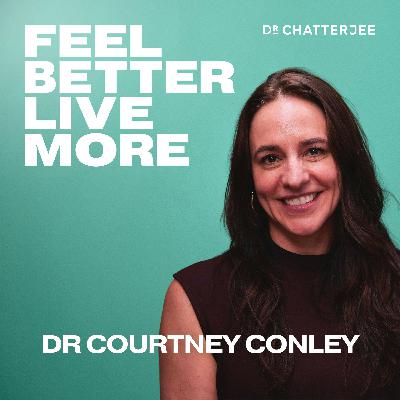
Walking is something most of us take for granted. We do it to get from A to B, we track our steps on our phones, we might even use it as a bit of exercise. But what if walking is far more than that? What if, quite literally, your life depends on it? Dr Courtney Conley is an internationally recognised authority on foot mechanics and gait dynamics and the founder and creator of Gait Happens, which provides evidence-based foot education for athletes, movement professionals, and regular humans like you and me. She has over 25 years’ worth of clinical experience, and has worked with a wide variety of organisations, including New York Yankees, New York Giants and The San Francisco 49ers. Her first book Walk: Your Life Depends On It is a fantastic read, officially comes out on May 5th, 2026 and is available for pre-order right now. In our conversation, we discuss why walking should be considered a physiological necessity, potentially on a par with sleeping and breathing, why Courtney believes that our feet are the most neglected part of our bodies and how modern footwear has put fashion ahead of function, with some serious unintended consequences. We also discuss why our big toe might be the most important joint in our body, how our walking speed can predict our future health, and why even a small increase in daily steps can dramatically reduce your risk of cancer, dementia and depression. Throughout our conversation, Courtney shares plenty of practical advice, such as simple foot assessments you can do at home, easy exercises to build strength and mobility, and a clear framework for choosing better footwear for yourself and your children. Courtney wants to help as many people as possible reclaim the true function of their feet. Her message is one of hope and empowerment and I am quite sure that this conversation will give you a different perspective about the importance of walking and inspire you to start taking a bit more care of your feet. Support the podcast and enjoy Ad-Free episodes. Try FREE for 7 days on Apple Podcasts https://apple.co/feelbetterlivemore. For other podcast platforms go to https://fblm.supercast.com. Thanks to our sponsors: https://vivobarefoot.com/livemore https://onepeloton.co.uk https://thewayapp.com/livemore   Show notes https://drchatterjee.com/629   DISCLAIMER: The content in the podcast and on this webpage is not intended to be a substitute for professional medical advice, diagnosis, or treatment. Always seek the advice of your doctor or qualified healthcare provider. Never disregard professional medical advice or delay in seeking it because of something you have heard on the podcast or on my website.
What’s holding you back in life at the moment? Is there a problem – be it practical or emotional, to do with your health, relationships, work, finance or anything else – that seems insurmountable? Whatever your struggle, my guest on this week’s Feel Better Live More podcast believes that the solution is already within you – that you have what it takes to transform or transcend any challenge you face. She’s Marie Forleo, a US entrepreneur, writer, philanthropist and, above all, an unshakeable optimist. I caught up with Marie on the London leg of a promotional tour for her new self-help book, Everything Is Figureoutable. The title is quite a promise but after listening to what she has to say, I think you’ll be inspired to think the same way. We discuss perfectionism and why comparing ourselves unfavourably to others – so common in this age of social media – can really threaten our creativity. We also discuss the truth about excuses, the liberating difference between ‘can’t’ and ‘won’t’, and why a growth mindset is preferable to a fixed mindset if we want to make changes in our lives. Whatever it is that you want from life, I think Marie’s strategies will shift you into a more positive mindset and help you take action. This is a really energising and inspiring conversation – I hope you enjoy it!   Support the podcast and enjoy Ad-Free episodes. Try FREE for 7 days on Apple Podcasts https://apple.co/feelbetterlivemore. For other podcast platforms go to https://fblm.supercast.com.   Thanks to our sponsors: https://ag1.com/livemore https://thewayapp.com/livemore   Show notes https://drchatterjee.com/628   DISCLAIMER: The content in the podcast and on this webpage is not intended to be a substitute for professional medical advice, diagnosis, or treatment. Always seek the advice of your doctor or qualified healthcare provider. Never disregard professional medical advice or delay in seeking it because of something you have heard on the podcast or on my website.
Most of us spend our lives in conversation – yet very few of us are ever taught how to communicate well. Whether it’s with our partners, colleagues, family or friends, we often assume that being heard is the same as being understood. But true communication isn’t just about the words we use – it’s about the tone, timing and energy behind them. Feel Better Live More Bitesize is my weekly podcast for your mind, body, and heart. Each week I’ll be featuring inspirational stories and practical tips from some of my former guests. Today’s clip is from episode 571 with trial lawyer, sought after public speaker and author of the book, The Next Conversation: Argue Less, Talk More -  Jefferson Fisher Jefferson believes that better communication can transform not only our relationships, but our health and happiness as well. In this clip, he shares the three essential principles to better communication, and how to shift from reaction to reflection by making your first word your breath. Thanks to our sponsor ⁠⁠⁠https://heights.com/livemore Show notes and the full podcast are available at https://drchatterjee.com/571 Support the podcast and enjoy Ad-Free episodes. Try FREE for 7 days on Apple Podcasts ⁠⁠https://apple.co/feelbetterlivemore⁠⁠ For other podcast platforms go to ⁠⁠https://fblm.supercast.com. DISCLAIMER: The content in the podcast and on this webpage is not intended to constitute or be a substitute for professional medical advice, diagnosis, or treatment. Always seek the advice of your doctor or other qualified health care provider with any questions you may have regarding a medical condition. Never disregard professional medical advice or delay in seeking it because of something you have heard on the podcast or on my website
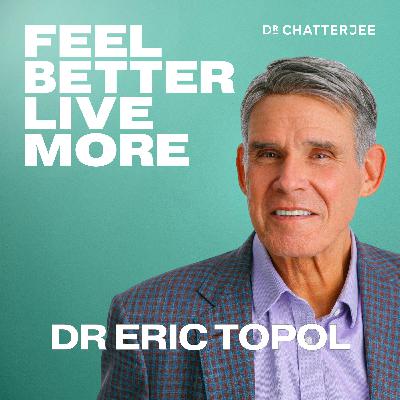
What if the secret to living well into your 80s and 90s is nothing to do with your DNA? What if the longevity hackers have got it wrong, and it’s actually far more simple than you think to become a ‘super ager’? We all want to live a long, happy and healthy life. But with the vast majority of US and UK people over 60 having at least one chronic disease, the odds are currently stacked against us. Or are they? In this enlightening episode, you’ll learn why healthspan matters more than lifespan – and why it’s never too late, or too early, to take action. My guest is Dr Eric Topol, a practising cardiologist, Professor of Molecular Medicine, and one of the top 10 most cited researchers in medicine. Eric has spent his career at the forefront of genomics and artificial intelligence. Yet in his new book Super Agers: An Evidence-Based Approach To Longevity, he sets out a surprisingly low-tech solution to ageing well. And it’s one that has nothing to do with your parents’ health. In this episode, Eric talks me through what his Wellderly Project – research on remarkably healthy people in their late 80s – revealed about the health metrics that matter. He explains his ‘lifestyle plus’ approach to health, which includes not just the basics like nutrition, exercise and sleep, but evidence-based influences such as environmental toxins, emotional outlook and social connections. His message is an empowering one: making the right choices today could add seven to 10 healthy years to your life, regardless of your family history. We tackle some thought-provoking topics, such as the idea that cancer screening isn’t working, and that forever chemicals and microplastics are far more dangerous than we’ve been led to believe. We discuss the personalisation of healthcare – how knowledge of your own data is the most effective way to drive behaviour change. And Eric shares his positive insights on how AI will be able to help us predict – and take control of – our future health. The ‘big three’ chronic diseases, cancer, heart disease and neurodegeneration, start developing 20 years before we see symptoms. So that’s a big window of time in which you can make a difference to your risk – and a truly empowering message you can start acting on today. Support the podcast and enjoy Ad-Free episodes. Try FREE for 7 days on Apple Podcasts https://apple.co/feelbetterlivemore. For other podcast platforms go to https://fblm.supercast.com.   Thanks to our sponsors: https://boncharge.com/livemore https://onepeloton.co.uk   Show notes https://drchatterjee.com/626   DISCLAIMER: The content in the podcast and on this webpage is not intended to be a substitute for professional medical advice, diagnosis, or treatment. Always seek the advice of your doctor or qualified healthcare provider. Never disregard professional medical advice or delay in seeking it because of something you have heard on the podcast or on my website.
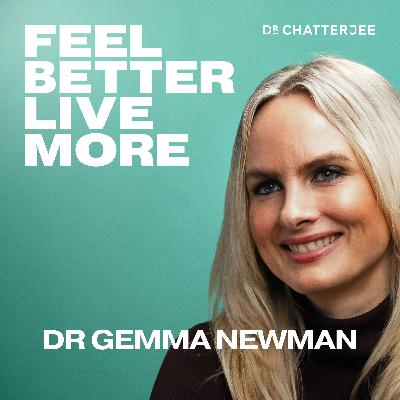
What is it that really makes us healthy? Is it regular trips to the doctor, a swift diagnosis, and medicine when we need it? Or do we need a more holistic approach? Today’s guest believes it is the latter.  Dr Gemma Newman has been a family doctor in the NHS for 20 years. She is regularly invited to speak and teach all over the world and is incredibly passionate about treating body, mind and spirit as one - and this forms the basis of her brand new book, Get Well Stay Well - The Six Healing Health Habits You Need To Know. Like me, Gemma increasingly found that her conventional medical training wasn’t yielding positive results for many of her patients - so she decided to take a more open-minded approach, studying nutrition, psychotherapy and a range of other holistic methods and combined them with her conventional medical practice. And, very soon, she began to see radical transformations in the health of her patients. It’s this holistic method that Gemma explains in our conversation today, using the acronym GLOVES - which points to six key areas of life we can address if we want to get well and stay well. They’re ways of thinking, being and doing that should be front and centre in our lifestyles, and, of course, we discuss them all during our conversation together.  Crucially, Gemma, believes the first step in any effective, lasting behaviour change is finding self-compassion, and her approach will help you trust your inner wisdom, feel more in control, and stop outsourcing your wellbeing to the doctor’s surgery. And in a world where ‘wellness’ often comes with a hefty price tag, her suggestions are all free.  Gemma writes and speaks from the heart and I think you will really enjoy this conversation.   Support the podcast and enjoy Ad-Free episodes. Try FREE for 7 days on Apple Podcasts https://apple.co/feelbetterlivemore. For other podcast platforms go to https://fblm.supercast.com. Thanks to our sponsors: https://thewayapp.com/livemore https://ag1.com/livemore   Show notes https://drchatterjee.com/625   DISCLAIMER: The content in the podcast and on this webpage is not intended to be a substitute for professional medical advice, diagnosis, or treatment. Always seek the advice of your doctor or qualified healthcare provider. Never disregard professional medical advice or delay in seeking it because of something you have heard on the podcast or on my website.
Why do we find it so hard to exercise despite knowing how good it is for us? Feel Better Live More Bitesize is my weekly podcast for your mind, body, and heart. Each week I’ll be featuring inspirational stories and practical tips from some of my former guests. Today’s clip is from episode 514 of the podcast with Professor of Biological Science and Professor in the Department of Human Evolutionary Biology at Harvard University, Daniel Lieberman. Daniel is the author of the brilliant book Exercised: Why Something We Never Evolved To Do is Healthy and Rewarding. In this clip, he reveals a fascinating truth: we didn’t evolve to exercise, but movement is key to living well. He challenges some common beliefs that exist around exercise and we discuss simple, practical ways of building sustainable movement habits into our daily lives. Thanks to our sponsor ⁠⁠⁠https://drinkag1.com/livemore Show notes and the full podcast are available at https://drchatterjee.com/514 Support the podcast and enjoy Ad-Free episodes. Try FREE for 7 days on Apple Podcasts ⁠⁠https://apple.co/feelbetterlivemore⁠⁠ For other podcast platforms go to ⁠⁠https://fblm.supercast.com. DISCLAIMER: The content in the podcast and on this webpage is not intended to constitute or be a substitute for professional medical advice, diagnosis, or treatment. Always seek the advice of your doctor or other qualified health care provider with any questions you may have regarding a medical condition. Never disregard professional medical advice or delay in seeking it because of something you have heard on the podcast or on my website.
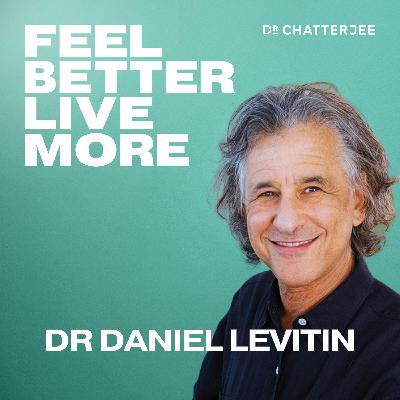
Music is medicine. It has the power to heal us. And today’s guest knows it’s something we can self-prescribe, for free, whenever we want to benefit. Dr Daniel Levitin is a neuroscientist, cognitive psychologist and bestselling author. He’s also a former record producer and an accomplished musician who’s brought all those skills together in his latest book, Music As Medicine: How We Can Harness Its Therapeutic Power. As soon as I heard about it, I had to ask Dan onto the podcast to share his wisdom. As a lifelong musician and music fan, I know certain tracks change how I feel. But talking to Dan has opened my mind to just how profound an effect music has on the brain. It doesn’t just shift our mood, it can affect our entire physiology. Dan has spent decades studying this, advising the US Government and working with the National Institutes of Health, to the point where his research is now influencing global health policy. We’ve all experienced the health-giving power of music, perhaps without realising. Now with that knowledge, and Dan’s insights, we can start to put it to therapeutic use. Here’s what fascinates me the most: music doesn’t just hit one part of your brain. Different types activate different regions, in much the same way as certain medications work. And Dan shares some astounding examples of this – from the people with Parkinson’s who relearn to walk, to the marathon runners who don’t feel pain, to the Alzheimer’s patients who can’t recognise loved ones, but can recall how to play an instrument perfectly. The brain regions that process music are deeper, older and more protected. It’s why music communicates emotion in ways that words can’t always match. Throughout our conversation, Dan makes this case that music is our birthright. And it can flood us with feelgood, bonding hormones. So it’s a tool we can turn to for overcoming trauma, processing difficult feelings, or connecting with others. But he doesn’t just want us to listen. Playing an instrument, singing and songwriting all do more than you might expect – and you don’t need to be an expert. The next time I’m strumming my guitar, I won’t just think of it as a hobby. I’ll know I’m doing something profoundly important for my health. And you can too. Whether it’s learning an instrument, having a family singalong in the car, or simply switching on the radio, I’m not sure there’s a simpler, more effective way to feel better.   Support the podcast and enjoy Ad-Free episodes. Try FREE for 7 days on Apple Podcasts https://apple.co/feelbetterlivemore. For other podcast platforms go to https://fblm.supercast.com.   Thanks to our sponsors: https://vivobarefoot.com/livemore https://onepeloton.co.uk https://thewayapp.com/livemore https://drinkag1.com/livemore   Show notes https://drchatterjee.com/623   DISCLAIMER: The content in the podcast and on this webpage is not intended to be a substitute for professional medical advice, diagnosis, or treatment. Always seek the advice of your doctor or qualified healthcare provider. Never disregard professional medical advice or delay in seeking it because of something you have heard on the podcast or on my website.
Mel Robbins is one of the most sort after motivational speakers in the world. Her TED talk has been viewed almost 27 million times and she's also the best-selling author of several books, including her latest one, The High Five Habit: Take Control of Your Life With One Simple Habit. In today's conversation, Mel explains that all of us know what we need to do for the best in any given situation but it’s acting on that knowledge that’s hard. It’s so easy to be impulsive or fall into old habits. And I think this is where Mel really comes into her own. Her approach is all about practical, real life advice that busy people with busy lives can easily implement. A prime example is something that Mel calls the five second rule. This is a rule that stops negative thinking in its tracks, and immediately breaks the feedback loop of procrastination and moves us into taking action. It changes a bias of thinking into a bias of action, giving you the confidence to try when you're full of doubt. In fact, it's so simple that my 11 year old son has already seen its benefits in his own life over the past few weeks. We also talk about The High Five Habit (which is the title of Mel’s new book) - this is the idea that by simply giving yourself a high five in the mirror each morning, you can experience transformative effects in your life. This simple exercise is about recognizing yourself and asking yourself what the person looking back at you in the mirror really needs and by doing so, Mel explains that you are retraining your brains neural pathways and convincing your subconscious that you are someone who is worthy of celebration. This really is a wide ranging and in-depth conversation. There is something quite unique about the connection that Mel has with her audience and the way she delivers her message. I think a lot of it comes down to her raw honesty, and the fact that all of her methods are borne out of her own lived experience. She's been there and she is very happy to share her struggles, her insecurities and her battles. I certainly got a lot out of this conversation and I think you will as well.   Support the podcast and enjoy Ad-Free episodes. Try FREE for 7 days on Apple Podcasts https://apple.co/feelbetterlivemore. For other podcast platforms go to https://fblm.supercast.com. Thanks to our sponsors: https://thewayapp.com/livemore https://ag1.com/livemore   Show notes https://drchatterjee.com/622   DISCLAIMER: The content in the podcast and on this webpage is not intended to be a substitute for professional medical advice, diagnosis, or treatment. Always seek the advice of your doctor or qualified healthcare provider. Never disregard professional medical advice or delay in seeking it because of something you have heard on the podcast or on my website.
Is your ‘healthy’ breakfast actually dessert in disguise? Why is it that so many of us are struggling these days with our metabolic health? Today’s clip is from episode 545 with medical doctor and best-selling author Dr Mark Hyman. For many years, Mark has been leading a global health revolution around using food as medicine -  to support longevity, energy, mood and happiness. In this clip, he shares practical, evidence-based ways to improve your metabolic health, starting with what’s on your plate. Mark is passionate about empowering people to take charge of their health and his accessible approach offers practical steps anyone can take.   Thanks to our sponsor ⁠⁠⁠https://thewayapp.com/livemore  Show notes and the full podcast are available at https://drchatterjee.com/545 Support the podcast and enjoy Ad-Free episodes. Try FREE for 7 days on Apple Podcasts ⁠⁠https://apple.co/feelbetterlivemore⁠⁠ For other podcast platforms go to ⁠⁠https://fblm.supercast.com. DISCLAIMER: The content in the podcast and on this webpage is not intended to constitute or be a substitute for professional medical advice, diagnosis, or treatment. Always seek the advice of your doctor or other qualified health care provider with any questions you may have regarding a medical condition. Never disregard professional medical advice or delay in seeking it because of something you have heard on the podcast or on my website.
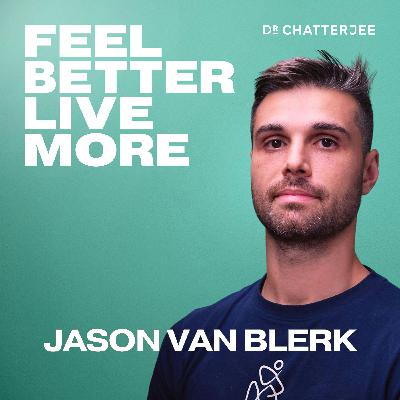
When it comes to feeling better, many of us instinctively start with our minds. We think about our thoughts, our beliefs, our stress levels. But what if a huge part of our emotional and psychological experience is actually being held in our bodies – quite literally – in a remarkable tissue called fascia? This week, I’m joined by Jason van Blerk, one of the co-founders of Human Garage - a global self-care movement that aims to inspire 1 billion people to heal themselves, through simple, accessible movement practices, that they call Fascial Manoeuvres. In our conversation, we explore what fascia actually is, why modern science is only just beginning to catch up with what many practitioners have observed for decades, and how emotions and past experiences may be stored in our physical structure. Jason also shares how different areas of the body seem to relate to different emotional patterns, why posture and mood are so tightly linked, and how changing one can often influence the other. We also talk about stress, and why so many of us feel tense, disconnected, and stuck in our own lives and Jason explains how simple rotational movements, combined with specific breathing patterns, can help “unwind” the body, reduce stress, and leave you feeling lighter, calmer, and grounded. The thing I love the most about Human Garage’s philosophy is that they want to empower people to heal themselves. This is not about needing lifelong treatment, or becoming dependent on a therapist or HCP - it’s about learning a set of practical moves that you can use anywhere, anytime AND with no equipment, to start healing your body and calming your mind. Support the podcast and enjoy Ad-Free episodes. Try FREE for 7 days on Apple Podcasts https://apple.co/feelbetterlivemore. For other podcast platforms go to https://fblm.supercast.com.   Thanks to our sponsors: Peloton https://onepeloton.co.uk Heights https://heights.com/livemore   Show notes https://drchatterjee.com/620   DISCLAIMER: The content in the podcast and on this webpage is not intended to be a substitute for professional medical advice, diagnosis, or treatment. Always seek the advice of your doctor or qualified healthcare provider. Never disregard professional medical advice or delay in seeking it because of something you have heard on the podcast or on my website.
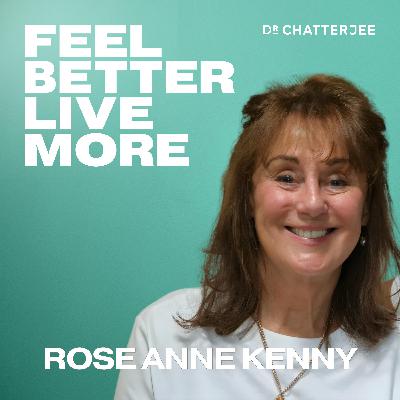
Longevity is a hot topic these days. We’re obsessed with anti-ageing, as if getting older should be avoided or even reversed at all costs! Of course, we can’t do that and I’m not sure we’d really want to. But today’s guest brings valuable insights about what we can do, to make sure we age healthily and happily.    Professor Rose Anne Kenny is a medical gerontologist and Regius Professor of Physic and Chair of Medical Gerontology at Trinity College Dublin. She’s the Founding Principal Investigator of Ireland’s largest population study of ageing (TILDA) and the author of the international bestseller Age Proof: The New Science of Living a Longer and Healthier Life.  In this conversation, Professor Kenny reveals that while 20 percent of ageing is genetic and can’t be changed, 80 percent is epigenetic – in other words, we have the power to influence how quickly or how slowly we age. Her number one recommendation is having good quality friendships and relationships throughout our lives. Then follows a healthy diet, plenty of exercise, and reducing stress. So nothing too surprising, perhaps. But what might surprise you is just how far reaching the effects of these relatively simple measures can be – and how much what you do in your 20s can impact your 80s. We talk about how to avoid metabolic syndrome and why it’s important to know key biological markers throughout life. We take a deep dive into the benefits of community, family, volunteering and inter-generational friendships, and discuss the undercurrent of ageism that prevails in society. Loneliness increased threefold during the pandemic, according to the TILDA study, and it’s left some people feeling afraid to reconnect. Yet isolation is known to cause inflammation, suppress immunity and speed ageing. Professor Kenny believes we should flip convenience on its head when it comes to exercise. Instead of taking the easy option that means moving less, we should look at the ‘harder’ options, such as taking the stairs or carrying heavy bags, as convenient ways to build activity and strength training into our lives. She also shares excellent advice on sex and intimacy, sleeping better, laughing more, and finding purpose all around you. This really is a wonderful and practical conversation that is going to give you a variety of simple ways to play the long game when it comes to ageing. And the empowering message is that it’s never too early and it’s never too late to start.    Support the podcast and enjoy Ad-Free episodes. Try FREE for 7 days on Apple Podcasts https://apple.co/feelbetterlivemore. For other podcast platforms go to https://fblm.supercast.com.   Thanks to our sponsors: https://ag1.com/livemore https://thewayapp.com/livemore   Show notes https://drchatterjee.com/619   DISCLAIMER: The content in the podcast and on this webpage is not intended to be a substitute for professional medical advice, diagnosis, or treatment. Always seek the advice of your doctor or qualified healthcare provider. Never disregard professional medical advice or delay in seeking it because of something you have heard on the podcast or on my website.
Why is it that 80% of New Year’s Resolutions fail? In my opinion, it is because many of us are taking the wrong approach. But, if you take the correct approach it is absolutely possible to make meaningful changes in your life that actually last. Feel Better Live More Bitesize is my weekly podcast for your mind, body, and heart. Each week I’ll be featuring inspirational stories and practical tips from some of my former guests. Today’s clip is from episode 506 of the podcast which was a solo episode I recorded to celebrate the launch of my sixth book ‘Make Change That Lasts: 9 Simple Ways To Break Free From The Habits That Hold You Back’.  In this clip, I share a powerful idea that could help you make meaningful changes that actually last. Thanks to our sponsor ⁠⁠⁠https://heights.com/livemore Show notes and the full podcast are available at https://drchatterjee.com/506 Support the podcast and enjoy Ad-Free episodes. Try FREE for 7 days on Apple Podcasts ⁠⁠https://apple.co/feelbetterlivemore⁠⁠ For other podcast platforms go to ⁠⁠https://fblm.supercast.com. DISCLAIMER: The content in the podcast and on this webpage is not intended to constitute or be a substitute for professional medical advice, diagnosis, or treatment. Always seek the advice of your doctor or other qualified health care provider with any questions you may have regarding a medical condition. Never disregard professional medical advice or delay in seeking it because of something you have heard on the podcast or on my website.
When it comes to improving our health and fitness, most of us have absorbed the same message: work harder, push more, sweat more – basically, that no pain means no gain. But what if that story is not only wrong, what if it is actually holding you back? This week, I sit down with elite endurance coach Alan Couzens to completely reframe how we think about movement, fitness, and fat loss. Alan is both an exercise physiologist and a performance coach. He has spent the past three decades working with a wide range of endurance athletes at all ends of the performance spectrum, from ‘off the couch’ fitness athletes to the very best athletes in all of endurance sport. He shares his incredible wisdom & insights on X and his Substack, ‘The Science of Maximal Athletic Development’ which I would highly recommend if you want to go deeper into the topics we discuss in this week’s episode. Over the past few years, Alan has helped me to understand the critical importance of low intensity movement for health, performance and longevity, and in our conversation, we discuss: Why the ability to burn fat at low intensities is one of the most important markers of true metabolic health Why so many people feel they need to eat every two to three hours How very easy movement  can transform your health, your energy, your mood, and even your performance, often more than the hard workouts you think you “should” be doing The need to balance out the stresses of modern life with activities like walking and yoga The importance of building a big aerobic “engine” How best to think about intensity, strength training, VO₂ max, and muscle mass Why it is never too late to start increasing how much you move and experiencing the incredible benefits Alan is someone who I have a huge amount of respect for. Not only is he extremely knowledgeable and up to date with the latest science, he is also someone who has a huge amount of real-world experience helping people to improve their athletic performance and their health. My hope is that this episode serves as a powerful reminder that the human body simply does not work as well as it could, without adequate amounts of movement and that it inspires you to bring more easy movement into your life, in a way that supports your health for many decades to come   Support the podcast and enjoy Ad-Free episodes. Try FREE for 7 days on Apple Podcasts https://apple.co/feelbetterlivemore. For other podcast platforms go to https://fblm.supercast.com.   Thanks to our sponsors: https://heights.com/livemore https://drinkage.com/livemore https://onepeloton.co.uk   Show notes https://drchatterjee.com/617   DISCLAIMER: The content in the podcast and on this webpage is not intended to be a substitute for professional medical advice, diagnosis, or treatment. Always seek the advice of your doctor or qualified healthcare provider. Never disregard professional medical advice or delay in seeking it because of something you have heard on the podcast or on my website.
My guest on this week’s Feel Better Live More podcast is Dr Robert Lustig, Professor of Paediatric Endocrinology at the University of California. He’s a leading public health expert who has long been exposing the myths of modern medicine and the food industry. His passion is communicating how sugar and ultra-processed food is fuelling the chronic disease epidemic that we are all facing today. Obesity, type 2 diabetes, metabolic syndrome, heart disease and so much more are caused, in Rob’s view, by the foods that we are eating. In his latest book, Metabolical: The Lure and the Lies of Processed Food, Nutrition and Modern Medicine, he outlines what he calls the ‘hateful eight’ – the eight root causes in our body that underlie all chronic disease. He explains how food and sugar impact on them and, most importantly, suggests strategies to counteract them. In this conversation, Rob explains why sugar is so damaging and explains that just like alcohol, our bodies can cope with sugar in small amounts. But in excess will end up in the liver and ultimately trigger us to get sick. Rob’s decades of clinical experience and research has led to his bold and compelling assertion that the answer to all chronic disease can be found in real food. His solution? To ‘protect the liver, feed the gut’. I think these 6 words are an elegant way of summarising the nutritional advice that all of us should consider taking on board in order to improve our health and wellbeing. We talk about what constitutes ‘real food’ and how different levels of food processing are classified. Rob explains why sugar-sweetened drinks are so disastrous for health, particularly in children – and why diet drinks do just as much damage, if not more.  We also talk about TOFI (thin on the outside, fat on the inside) and fascinatingly, Rob outlines the three types of fat gain that we can all experience: subcutaneous (which you can see); visceral (stress-related fat around the middle), and liver fat. It’s only the first of these that you’re likely to notice – but it’s the latter two which we really need to fix, especially as they’re already appearing in kids. This conversation is full of mind-blowing facts and insights but it’s also really empowering and contains simple, practical tips that all of us can use to improve our lives. I hope you enjoy listening.  Caution: contains mild swearing.   Support the podcast and enjoy Ad-Free episodes. Try FREE for 7 days on Apple Podcasts https://apple.co/feelbetterlivemore. For other podcast platforms go to https://fblm.supercast.com. Thanks to our sponsors: https://ag1.com/livemore https://thewayapp.com/livemore   Show notes https://drchatterjee.com/616   DISCLAIMER: The content in the podcast and on this webpage is not intended to be a substitute for professional medical advice, diagnosis, or treatment. Always seek the advice of your doctor or qualified healthcare provider. Never disregard professional medical advice or delay in seeking it because of something you have heard on the podcast or on my website.
Over the past five years, it’s been incredible to see how the alcohol-free landscape has changed. Pubs, restaurants and supermarkets boast a range of appealing 0% options. We’re seeing a rise in alcohol-free communities, influencers, bars and events. There has been a marked cultural shift towards acceptance of not drinking – and that’s in no small part down to today’s guest. Today’s clip is from episode 438 of the podcast with performance coach and best-selling author, Andy Ramage.  Andy is the co-founder of the One Year No Beer movement, and since his first appearance on this podcast back in 2019, countless listeners have written in to share how they’ve transformed their lives by giving up, or changing their relationship with alcohol. In this clip, Andy shares why he believes that removing alcohol could help you become the most productive, present and healthiest version of yourself. He explains his ‘ambivalence seesaw’ – a framework you can use to work out your current relationship with alcohol and start to shift it. And he shares some valuable advice on coping with social pressure to drink. Andy is motivated, passionate and full of positivity, and someone who describes a life without alcohol as a gift to yourself. He’s not here to judge anyone else, simply to encourage you to try out the benefits - he has managed to transform his own health, happiness and relationships and wants to inspire you to do the same. Thanks to our sponsor ⁠⁠⁠https://thewayapp.com/livemore  Show notes and the full podcast are available at https://drchatterjee.com/438 Support the podcast and enjoy Ad-Free episodes. Try FREE for 7 days on Apple Podcasts ⁠⁠https://apple.co/feelbetterlivemore⁠⁠ For other podcast platforms go to ⁠⁠https://fblm.supercast.com. DISCLAIMER: The content in the podcast and on this webpage is not intended to constitute or be a substitute for professional medical advice, diagnosis, or treatment. Always seek the advice of your doctor or other qualified health care provider with any questions you may have regarding a medical condition. Never disregard professional medical advice or delay in seeking it because of something you have heard on the podcast or on my website.
What if the biggest source of stress in your life is not your job, inbox, or finances – but the simple fact that you have too much stuff? This week, my guest is Joshua Fields Millburn, co‑founder of The Minimalists, whose documentaries, books and podcast have inspired millions of people around the world to reconsider their own relationship with possessions and success. Joshua grew up with very little money, in a home marked by addiction, violence and instability and, as a young man, became convinced that the solution was to be found in acquiring ‘more’:  more income, more status and more material comfort. By the age of 30, he had everything he thought he wanted – the big job title, the nice car, the large house, all the visible signs of having “made it”. And yet, inside, he was anxious, overwhelmed and deeply unhappy. Then, in the space of a single month, his mother died and his marriage ended. Those two events forced him to pause and ask some uncomfortable but essential questions: What am I actually doing with my life? Whose values am I living by? Is this endless consumption really what life is all about? That period of questioning led Joshua towards minimalism – not as a trend or an aesthetic, but as a practical framework for living with greater clarity and intention.  in our conversation, we discuss: How external clutter is often an outward reflection of internal clutter Why products so often promise fulfilment but ultimately deliver dissatisfaction The difference between healthy consumption and harmful consumerism Practical rules that make decluttering simpler, including the 30-day minimalism game, the 90/90 approach to clothes and why a “sale price” can often become a “fool’s price” How identity clutter keeps us stuck - when we cling to things, roles or labels, not because we need them, but because we’re afraid of who we’ll be without them How minimalism can improve our health and relationships by creating more time, attention and presence. Joshua is a wonderful human being, a brilliant communicator and someone who thinks deeply about the human experience.  He believes that minimalism is the art of “addition through subtraction” - it’s not about having less for the sake of it, but about making space for what matters most. Support the podcast and enjoy Ad-Free episodes. Try FREE for 7 days on Apple Podcasts https://apple.co/feelbetterlivemore. For other podcast platforms go to https://fblm.supercast.com. Thanks to our sponsors: https://vivobarefoot.com/livemore https://thewayapp.com/livemore Show notes https://drchatterjee.com/614 DISCLAIMER: The content in the podcast and on this webpage is not intended to be a substitute for professional medical advice, diagnosis, or treatment. Always seek the advice of your doctor or qualified healthcare provider. Never disregard professional medical advice or delay in seeking it because of something you have heard on the podcast or on my website.
loading
Comments (249)

ROHULLAH

Good questions you ask👍

Feb 19th
Reply

Myra Asabi

I'm so excited by this podcast episode, as a home cleaner I see people struggling with the stress that comes with stuff, the price , repair, cleaning and replacement cost is higher than we are admitted and hoarding is no longer a few people in the village but the majority. If I only ever share one podcast episode it's this one. Thank you, Myra Asabi

Jan 21st
Reply

D Woodstock

Please go on Instagram too. so many people not on X. Amazing interview, thank you 🙏

Jan 15th
Reply

z a

Hello, thank you for your work. Iran is in the middle of a nationwide uprising, and people urgently need international attention and support. The government has shut down the internet to suppress information and cover up widespread violence against civilians, while much of the mainstream media remains silent. Your platform can help amplify Iranian voices and bring global awareness to what is happening. Public attention saves lives. Thank you for considering this. You can save lives.

Jan 11th
Reply

Jo Mosley

so glad you're back

Sep 2nd
Reply

Kelly Fulton

thank you for some really helpful information 😀

Jul 20th
Reply

Dermot McGowan

This guy is a 21st century snake oil salesman. Shame on you for giving him a platform to shill his crap.

Jul 1st
Reply

Tammy Orth Haskin

Absolutely loved this episode. Thank you. 🙏🏼

Jun 18th
Reply

Tammy Orth Haskin

How do I listen to these amazing stories and not want to apply them to loved ones who won’t listen?💔

Jun 18th
Reply

Donna Hoy

brilliant. Thanks for sharing 🙏🙏

Feb 25th
Reply

Adam

incredible discussion.. thank you both for your insights and sharing your stories.

Feb 25th
Reply

محمد💊

important pod 👍

Jan 27th
Reply

MrD

$100 Registration Bonus Eksklusibo sa jet!

Jan 16th
Reply

dobrowin88

Maging Miyembro ng daddy at Makatanggap ng $100 Agad!

Jan 16th
Reply

MrQQ

Magsimula sa fresh: Makakuha ng $100 Welcome Bonus!

Jan 16th
Reply

dobrowin88

Magsimula sa fresh: Makakuha ng $100 Welcome Bonus!

Jan 15th
Reply

dobrowin88

sherbet Registration Bonus: Libreng $100 Para sa Mga Bagong User!

Jan 15th
Reply

dobrowin88

Magparehistro sa supernova at Makakuha ng $100 Bonus Kaagad!

Jan 15th
Reply

dobrowin88

Sumali sa jazz Ngayon at Kumuha ng $100 Welcome Bonus!

Jan 14th
Reply

dobrowin88

Sumali sa jazz Ngayon at Kumuha ng $100 Welcome Bonus!

Jan 14th
Reply