


 Claim Ownership
Marketing Vanguard
Subscribed: 216Played: 8,725
Subscribe

© Adweek
Description
The word “vanguard,” is defined as “a group of people leading the way in new development or ideas.” Marketing Vanguard: the podcast, spotlights the people who are driving the industry forward. It will feature valuable, must-listen nuggets of marketing-leadership wisdom, humility, stories, strategic insights, and growth opportunities in an era of ever more complex industry pressures and realities. Together we’ll dive into what's driving the decision-makers of today to move the needle of some of the world’s most exciting brands in incremental or monumental ways.
Hosted on Acast. See acast.com/privacy for more information.
415 Episodes
Reverse
Moving from CMO to Chief Revenue Officer changes the questions you ask (and which numbers keep you up at night). In this episode of Marketing Vanguard, Jenny Rooney sits down with Kathy Collins, Senior Vice President and Chief Revenue Officer at Frontdoor, to unpack what happens when a career built in marketing expands into sales, finance and full revenue accountability. Kathy shares how cross-category experience sharpened her ability to find the right audience and make unfamiliar products relevant, why she became “obsessed with numbers” and what leading sales taught her about communication. Plus, her candid thoughts on why curiosity matters more than comfort. Kathy Collins is Senior Vice President and Chief Revenue Officer at Frontdoor, where she started as Chief Marketing Officer. Today, her role brings marketing, sales and revenue thinking much closer together.Her career has spanned several major consumer brands and categories, including Lee Jeans, H&R Block and Massage Envy, before she joined Frontdoor.That current broader scope of her work has also changed how she approaches marketing, from a stronger focus on unit economics and financial accountability to translating strategy across sales, finance and analytics teams.What You'll Learn:Why moving across categories can strengthen, not dilute, a marketing careerWhat changes when a CMO starts owning sales and revenueWhy broader commercial leadership requires getting comfortable with the numbersHow curiosity across sales, finance and analytics can expand a marketer’s impactWhy marketing language does not always translate to salesHow Frontdoor thinks about AI as “power steering,” not autopilotWhy education and entertainment can work together in a misunderstood categoryHow changing homeownership patterns should reshape audience strategy Hosted on Acast. See acast.com/privacy for more information.

Media used to be one part of the marketing machine, but this approach became outdated a while ago. In this episode of Marketing Vanguard, Jenny Rooney sits down with Bruce Williams, CEO of dentsu X North America, to examine how media is becoming the connective tissue across creative, commerce, CRM, data and technology. Bruce reveals why standalone media RFPs are disappearing, what it really takes to design connected consumer experiences and why brands need to move from channel-first planning toward operating systems built around outcomes.Bruce Williams is CEO of dentsu X North America. Here, his focus is increasingly on helping brands move beyond isolated media planning toward connected operating models that bring together data, content, technology and consumer experience.With more than 20 years in media, Bruce has spent much of his career working at the intersection of media strategy, integrated marketing, technology and organizational transformation.He also works with clients on AI-enabled transformation, agency interoperability and new ways to turn data into faster decision-making at both global and local levels.What You'll Learn:Why standalone media RFPs are becoming less commonHow integrated briefs are pulling together media, creative, CRM, commerce and loyaltyWhy fragmentation still gets in the way of better consumer experiencesHow “experience planning” changes the traditional channel-first modelWhy brands need to shift from outputs toward real outcomesHow AI strategy can combine long-term infrastructure with practical, local toolsWhy interoperability and optionality matter more in agency relationshipsWhy creator and influencer marketing still needs deeper integration into the brand system Hosted on Acast. See acast.com/privacy for more information.
What if the best marketing advantage you have is something that cannot be replicated by an algorithm?For Thomas Ranese, CMO of Intuit, it starts with theater, empathy and understanding what people are actually trying to achieve.In this episode of Marketing Vanguard, Jenny Rooney sits down with Thomas to unpack how an unconventional career spanning theater, Google and Uber shaped his approach to marketing leadership. From growing up behind the counter of his father's pasta shop to leading marketing at one of the world's biggest financial technology platforms, Thomas gets into why emotional connection can be just as powerful as performance data, why AI needs human expertise to earn customer trust and why brands should bring more humanity, creativity and purpose into modern marketing.Thomas Ranese is Chief Marketing Officer at Intuit, a global technology platform serving millions of customers worldwide with TurboTax, QuickBooks, Credit Karma and Mailchimp.His career has taken him through some very different worlds, including theater, consulting, government and nonprofit work, Google and Uber. His approach to marketing is rooted in a simple idea: understand what people are trying to achieve, then build brands and experiences that help them get there. He strongly believes in storytelling and using humor to make complex information more relatable.At Intuit, Thomas is helping shape the company's evolution into an integrated, AI-powered financial technology platform, with a focus on combining technology with human expertise to help consumers and businesses prosper.What You'll Learn:How Thomas's background in theater, consulting, and government became an unexpected advantage in marketingWhy marketing is a form of theater that extends beyond advertising into customer experience and retailWhy empathy and emotional connection can make marketers more effective in a performance-driven worldWhy AI and human expertise need to work together, particularly in high-stakes financial servicesWhy brands should position their products as enablers of customer ambitions rather than the end goalHow Intuit connects its mission of powering prosperity with financial literacy and business growthWhy CMOs need to stay hands-on with technology, creative execution, and customer experience as organizations scaleHow to make bold marketing work through humor, creativity, and a better understanding of what customers need Hosted on Acast. See acast.com/privacy for more information.
Transformation gets talked about like it's a reinvention. But Eric Edge, VP of Brand and Marketing at Alaska Airlines, sees it differently.In this episode of Marketing Vanguard, Jenny Rooney welcomes Eric for an unpacking of what it takes to scale two heritage airline brands without flattening what made either one valuable. He explains why Alaska and Hawaiian are operating under one airline group while remaining distinct consumer brands, what gave Alaska the right to expand globally and why the fundamentals matter even more when the stakes get bigger.Eric Edge is VP of Brand and Marketing at Alaska Airlines, where he helps lead the brand strategy behind Alaska and Hawaiian Airlines as the two heritage brands expand their global footprint under one airline group.His career began in the airline industry before moving into advertising and later technology, where he worked across Facebook, Instagram and Pinterest during major periods of digital transformation. Across those chapters, one theme has stayed consistent: strong fundamentals matter, but so does the curiosity to adapt when the rules change.What You'll Learn:Why Alaska and Hawaiian are staying distinct even under one operationHow brand equity should shape post-merger decisionsWhy global expansion has to be earned through strong fundamentalsHow Eric separates what his team can control from what it cannotWhy leaders should remove blockers instead of micromanaging outcomesWhy consistency matters more when the stakes get higherHow AI can free marketers for higher-stakes workWhy curiosity is becoming one of the most valuable skills on a marketing team Hosted on Acast. See acast.com/privacy for more information.
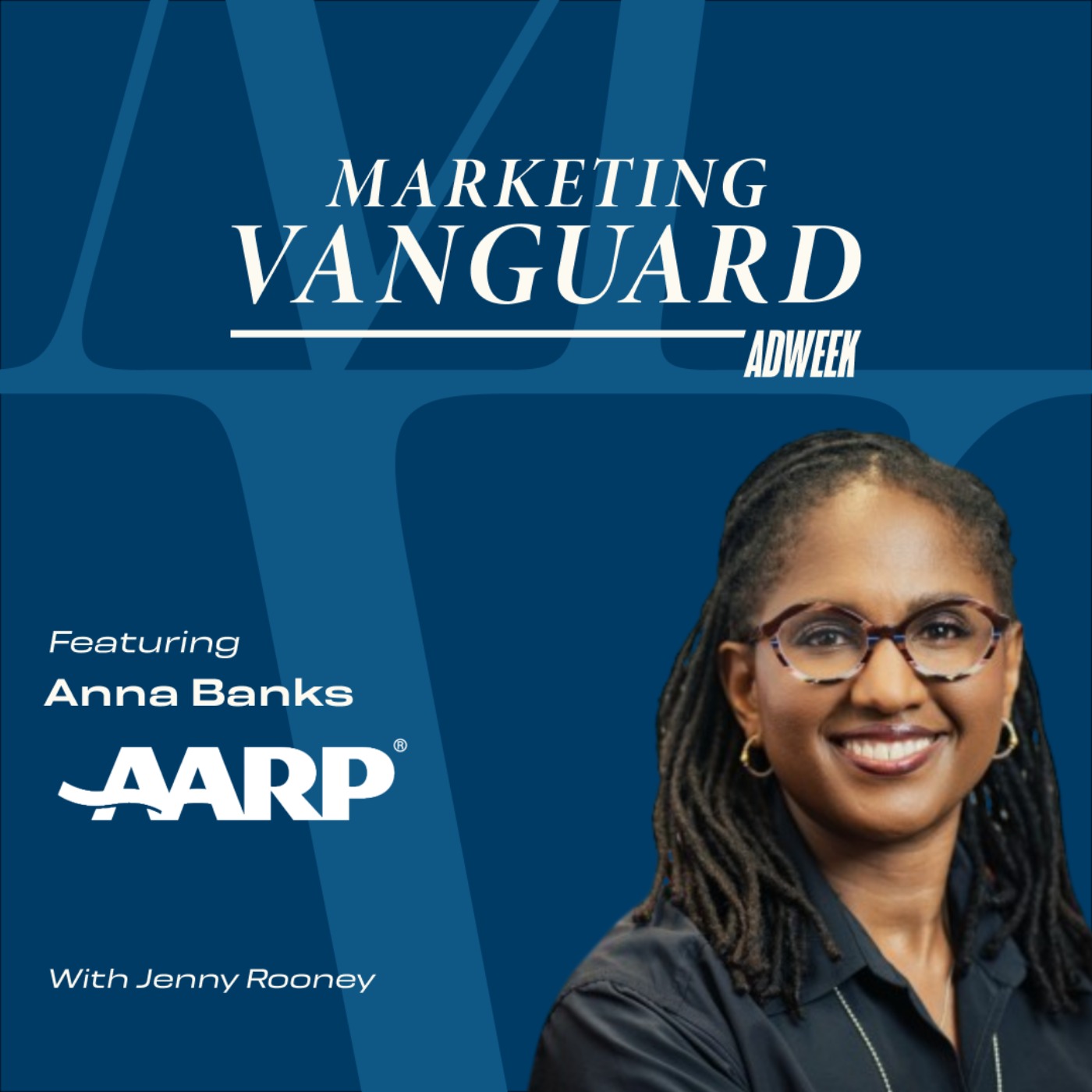
What if your brand's biggest opportunity was completely hidden within your existing assets?In this episode of Marketing Vanguard, Jenny Rooney sits down with AARP CMO Anna Banks to unpack the challenge of repositioning a brand with more than 125 million Americans aged 50 and over in its sights. Anna gets into why the second half of life deserves a different story, why celebrity partnerships need to lead somewhere meaningful, and why AARP's next chapter depends on connecting the many touchpoints it already owns.Anna also shares how performance marketing translates into a mission-driven organization, what makes a partnership genuinely valuable, and why good leadership starts with listening.Anna Banks is the Chief Marketing Officer at AARP with over 30 years of marketing experience across brand strategy, digital, ecommerce, and performance marketing under her belt.Her career has taken her from Lotus Development Corporation and 15 years on the agency side to Walmart eCommerce, Fairtrade USA, and Sephora. At AARP, she's bringing those experiences together to help reposition a legacy brand and connect more meaningfully with the 125 million Americans aged 50 and over.Her approach brings together consumer insight, brand engagement and performance-driven conversion. In this conversation, she shares how AARP is thinking about relevance, partnerships, technology and the opportunity to change how people think about aging.What You'll Learn:Why AARP is working to move beyond the perception of being a brand for old peopleHow to make the second half of life feel like a new creative opportunityWhy celebrity partnerships can catch attention, but the issues behind them keep people engagedWhy brands need to stop making assumptions about the 50+ audience and its relationship with technologyHow to connect individual channels and content into a more intentional customer experienceWhy every successful partnership should start with consumer insight Hosted on Acast. See acast.com/privacy for more information.

Comments

Download from Google Play

Download from App Store
 United States