


 Claim Ownership
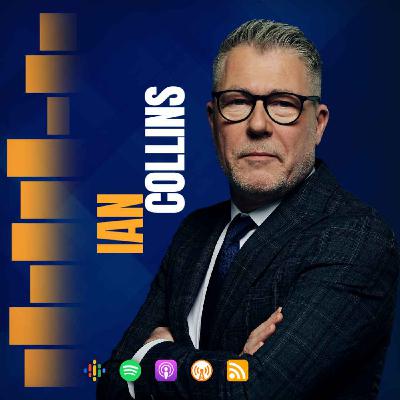
Afternoon Empire with Ian Collins
Subscribed: 361Played: 2,779
Subscribe

© News UK
Description
Join Ian Collins on Talk for a lively, no-nonsense look at the day’s biggest stories, from politics and current affairs to culture and entertainment. Ian dives deep with expert guests, outspoken commentators, and compelling callers, bringing fresh angles and sharp analysis to everything making headlines.
Hosted on Acast. See acast.com/privacy for more information.
96 Episodes
Reverse
As tensions with Iran escalate and the transatlantic alliance shows signs of strain, questions are growing over Britain’s global standing. With criticism mounting from Washington and concerns about the UK’s military readiness, is the country losing influence among its allies?Columnist David Wooding joins to discuss the political fallout after Donald Trump’s latest attacks on Sir Keir Starmer and claims Britain is failing to project strength internationally.Former US Army Europe commander General (Ret.) Ben Hodges gives his view on Britain’s military posture and whether the UK still carries weight in global security.Plus, former Trump National Security Adviser and ex-US Ambassador to the UN John Bolton joins to discuss the Iran confrontation, America’s expectations of its allies, and whether the UK is still seen as a reliable partner on the world stage. Hosted on Acast. See acast.com/privacy for more information.
Britain’s role in the escalating Iran conflict is under intense scrutiny. Former Conservative leader Sir Iain Duncan Smith and former Shadow Attorney General Sir Bill Cash debate whether the UK should be standing shoulder-to-shoulder with the US and Israel, or holding back, as reports suggest Middle East allies feel Britain has “failed” them and Cabinet divisions emerge over Donald Trump’s war strategy.Former Home Office minister Norman Baker reacts to Keir Starmer’s latest speech on Iran and what it signals about Britain’s foreign policy direction, military involvement and the future of the UK’s role on the global stage.The programme also examines the government’s tightening migration stance: failed asylum seeker families being offered up to £40,000 to leave the UK, new plans to deport foreign criminals from taxpayer-funded hotels, and proposals that migrants must speak A-level standard English before settling permanently in Britain. Former government adviser James Price discusses whether tougher immigration policies and a potential Left-wing alliance against Reform could reshape British politics. Hosted on Acast. See acast.com/privacy for more information.
Who would best lead Britain through war? We debate the leadership question dominating UK politics as Keir Starmer faces mounting criticism from allies and opponents alike, and even jibes from Donald Trump comparing him unfavourably to Churchill.Joining us: Katy Balls, Patrick Cockburn, Daniel Hannan, and Natasha Hausdorff.We discuss the UK’s war readiness, the future of the UK-US special relationship, rising tensions in the Middle East, and Iran’s claim of control over the Strait of Hormuz, a development that could have huge consequences for global security, energy markets, and Britain’s role on the world stage.Expect sharp analysis on UK defence, global conflict risk, Iran tensions, Trump vs Starmer, and Britain’s military leadership in a potential war scenario. Hosted on Acast. See acast.com/privacy for more information.
Iran war, UK foreign policy, and the risk of World War 3. Is Britain on the brink of a major Middle East conflict? As tensions rise between Iran, Israel and the United States, pressure is mounting on Keir Starmer over whether the UK should join military action. After criticism from Donald Trump, we break down the political fallout, the security risks, and what this means for Britain, NATO and global stability.Former Conservative MP and military expert Dr Bob Seely explains the military reality behind the Iran crisis, US strikes on Iran, and whether escalation in the Middle East could trigger a wider global conflict. We’re also joined by Urban Coningham from the Royal United Services Institute and journalist Emily Schrader to analyse Iran’s regime, regional tensions, and the geopolitical stakes for the UK, Europe and the West.Plus, investigative journalist David Collier discusses the growing controversy on UK campuses following reactions linked to Ali Khamenei, and the wider debate around extremism, free speech, universities, and British politics. Hosted on Acast. See acast.com/privacy for more information.
Should the UK get involved in Iran? That’s the question dominating the latest episode as tensions in the Middle East escalate following reports of British backing for military action and suspected Iranian involvement in attacks near a RAF base in Cyprus.Security and intelligence expert Anthony Glees joins the show to assess the risks of escalation and what UK involvement could realistically look like. Anti-regime Iranian journalist Niyak Ghorbani explains how the situation is being viewed by Iranians inside and outside the country, and whether pressure on the regime is growing.Journalist and broadcaster Peter Oborne discusses the political and media reaction in Britain, including the debate over whether the UK should support or distance itself from any widening conflict.And Iranian-British human rights activist Lily Moo gives a perspective on the human rights implications, what ordinary Iranians are facing, and what role the UK should play moving forward.We break down the latest developments, the geopolitical stakes, and the big question: should Britain get involved. Hosted on Acast. See acast.com/privacy for more information.
Annunziata Rees-Mogg joins to discuss the surge in Channel crossings after 545 migrants arrived in a single day, the busiest of the year so far, alongside mounting criticism of the UK’s deal with France and reports that small-boat arrivals are being processed in as little as 30 minutes. Is the government losing control of the border, and what should happen next?On the NHS, former Health Minister Steve Brine and Dr Tony O’Sullivan debate claims that doubling funding has failed to improve outcomes, amid fresh warnings about waste and long-term pressures on the health service.And Matt Ridley looks at the growing backlash over Net Zero and energy costs, as households are told bills would fall but many say they’re still paying more, raising questions about the direction of Britain’s energy policy. Hosted on Acast. See acast.com/privacy for more information.
Joe Twyman (Founder of DeltaPoll) and Tatton Spiller (Founder of Simple Politics) join the show as Westminster faces a mounting political storm around Sir Keir Starmer and the fallout from the Peter Mandelson row. With reports warning of a potential constitutional showdown over the handling of sensitive files linked to the Epstein case, we ask whether this could become the biggest test of Starmer’s leadership yet.Plus, former Home Office Minister Norman Baker reacts to fresh controversy over immigration after proposals linked to Green Party leadership hopeful Zack Polanski sparked outrage, including claims illegal migrants could be granted amnesty, housing and financial support. It comes as new reports suggest French authorities are failing to stop a large share of small boats crossing the Channel, fuelling renewed criticism of the UK–France migration deal. Hosted on Acast. See acast.com/privacy for more information.
We ask whether anyone can still trust Labour as the fallout from the Peter Mandelson story continues to dominate Westminster. After being released on bail following his arrest on suspicion of misconduct, the pressure on the government is growing - and fresh questions are being raised about transparency and standards in public life. Clark Vasey (Director, Blue Collar Conservatism) and Daniel Bruce (Chief Executive, Transparency International UK) join the conversation.We also look at law and order and the politics of public safety after calls from Zia Yusuf and Reform UK to ban face coverings such as burqas and hoods in public spaces. Former police officer Graham Wettone gives his perspective on whether tougher measures would actually improve safety.And we examine the wider failures in the mental health and justice system following the revelations surrounding the Nottingham attacks case. Julian Hendy, founder of Hundred Families, discusses what needs to change after it emerged the killer had previously been known to services. Hosted on Acast. See acast.com/privacy for more information.
Today Ian Collins asks Is Britain still a Christian country? After a series of controversies - from churches under threat and debates about religious identity to clashes over free speech on Britain’s streets - is the country changing in ways many people didn’t expect?Missionary Bishop Ceirion Dewar and commentator Fahima Mohamed join the discussion as Reform vows to block churches from being converted into mosques, a church fire raises concerns about the future of historic places of worship, and police defend a Christian preacher’s right to speak in an area described as “a Muslim area”.Then we turn to the battle over education and special needs funding. Commentator Caroline Farrow reacts to Labour’s plans to overhaul SEND support, with critics warning the reforms misunderstand what many children with autism and complex needs actually require - and whether mainstream schooling is always the right setting.A debate on faith, identity, free speech and the direction Britain is heading. Hosted on Acast. See acast.com/privacy for more information.
Ian Collins opens with the extraordinary developments surrounding Prince Andrew, after his arrest over misconduct in public office allegations. Does the latest scandal mark a turning point for the monarchy - or will the institution withstand yet another crisis? Dickie Arbiter, former Press Secretary to the Queen, historian and author, Andrew Lownie, and former Old Bailey judge, Wendy Joseph KC, assess the legal, constitutional and reputational fallout.Then, the political impact beyond the Palace. With the Right increasingly fragmented and new movements emerging, what does a divided conservative vote mean for the future of British politics? Polling expert Sir John Curtice joins Ian to break down whether splits on the Right could ultimately keep the Left in power. Hosted on Acast. See acast.com/privacy for more information.
Ian Collins is back.We begin with the battle for the future of the Right after Rupert Lowe launched a new party, throwing the conservative movement into fresh turmoil. With Reform, Restore and Advance now competing for the same voters, who actually has the momentum - and who will ultimately win the fight on the right? Ian is joined by Mayuran Senthilnathan (former Reform UK candidate), Charlie Downes (Campaign Director, Restore Britain) and Paul Thorpe (Advance UK College Member) to debate whether the movement is strengthening - or splintering.Then, a dramatic development in the Royal story as reports emerge about Prince Andrew’s arrest. What does it mean for the monarchy and the wider Epstein fallout? Ian discusses the latest with royal commentator Michael Cole and writer and journalist Valentine Low. Hosted on Acast. See acast.com/privacy for more information.
Peter Cardwell sits in for Ian Collins, asking the question on everyone’s mind: which party can actually get the cost of living under control?As Keir Starmer insists easing household pressure is his top priority, William Yarwood from the Taxpayers’ Alliance and Reform UK’s economic message are put under the microscope following Robert Jenrick’s pledge to “restore stability” to Britain’s finances.We then turn to the real-world impact on employers and workers, with Tina McKenzie from the Federation of Small Businesses and business owner Debi Heath French reacting to Labour’s new workers’ rights reforms - with critics warning they risk driving up costs, cutting jobs and hammering small firms just as youth unemployment surges.And finally, former Defence Select Committee chair Tobias Ellwood joins us as Britain faces fresh controversy over the Chagos Islands, raising wider questions about sovereignty, security and government priorities. Hosted on Acast. See acast.com/privacy for more information.
Peter Cardwell sits in for Ian Collins on the Afternoon Empire.Journalist, Nicole Lampert, expresses her anger, after a video surfaced of a group of pro-Palestine canvassers door-to-door asking locals to boycott Israeli products, accused of engaging in a 'Jew hunt'.Independent Councillor, Hilary Schan, says Labour is "making their own councillors look stupid" after abandoning plans to cancel local elections, making it the 14th U-turn from the Government.Plus Richard Tice MP, joins Peter to discuss his new role as Business, Trade and Energy Spokesman which was announced today by Reform UK leader, Nigel Farage. Hosted on Acast. See acast.com/privacy for more information.
Peter Cardwell sits in for Ian Collins on the Afternoon Empire. He speaks with Mark Francois MP about Keir Starmer’s decision to delay local elections and his subsequent U-turn, as well as the ongoing debate surrounding the proposed deal over the Chagos Islands.The discussion then shifts to royal controversy, with Norman Baker examining renewed scrutiny of Prince Andrew in light of developments connected to the Jeffrey Epstein files.Political commentator Laila Cunningham also joins to discuss Starmer's local election u-turn and what it signals for the months ahead, before then discussing the recent news of Matt Lucas' experience encountering pro-Palestine protesters on the London Underground. Insightful and wide-ranging, this episode offers sharp analysis and candid conversation on the issues shaping Britain today. Hosted on Acast. See acast.com/privacy for more information.
Ian Collins asks a question many parents are now openly debating: should men be banned from working in nurseries?Following shocking revelations about safeguarding failures that created what one report called a “perfect hunting ground” for abusers, social commentator David Shipley argues it’s time for a hard line to protect children - while Tone Langengen from the Tony Blair Institute responds with the policy case for reform rather than blanket bans. Former Conservative peer and writer Matt Ridley weighs in on whether modern ideology has overridden common sense when it comes to child safety.We also turn to energy and climate politics, as Tony Blair urges Labour to keep drilling for North Sea oil - just as Donald Trump scraps a key climate ruling in the US - raising fresh questions about whether the green agenda is finally colliding with economic reality. Hosted on Acast. See acast.com/privacy for more information.
Ian Collins takes on a government many critics say is rewriting Britain without voters’ consent.As Labour moves to give the vote to 16-year-olds, Joanna Williams, author of How Woke Won, and Darren Hughes, chief executive of the Electoral Reform Society, clash over whether this is democratic renewal — or a cynical attempt to rig the electorate in Labour’s favour.We then turn to immigration and national identity, as former Deputy Speaker Nigel Evans reacts to Sir Jim Ratcliffe’s warning that Britain is being “colonised” by mass migration — and Keir Starmer’s demand that he apologise. Are political leaders finally being forced to confront the cost and cultural impact of open borders, or still trying to silence the debate?And finally, Christine Jardine MP joins us as Labour faces another storm over alleged establishment protection and links between senior figures and convicted sex offenders — fuelling accusations that Starmer’s government is run by a closed-door elite with one rule for them and another for everyone else. Hosted on Acast. See acast.com/privacy for more information.
Ian Collins asks the question many voters are now openly raising: has this government dangerously lost touch with reality?Following a series of shocking crimes, including the jailing of an Afghan migrant for raping a schoolgirl and fresh reports of teenage stabbings in London schools - Ben Habib, leader of Advance UK, and Maria Bowtell, spokeswoman for Restore Britain, discuss whether Britain is paying the price for political decisions on immigration, policing and social order.We then turn to what critics are calling the political and cultural downfall of Britain, as Labour faces mounting backlash over accusations it has abandoned the working class while obsessing over elite priorities and internal power struggles. Ralph Schoellhammer, political theorist and head of the Center for Applied History at MCC Budapest, analyses whether Britain is now entering a period of managed decline and who is really paying the cost. Hosted on Acast. See acast.com/privacy for more information.
Ian Collins asks the big question shaking Westminster and beyond: has Britain become ungovernable?As Keir Starmer battles to cling on after a dramatic showdown with rebellious Labour MPs - and ministers move to give the Prime Minister a political stay of execution amid market jitters - Adam Cherry, editorial director at Guido Fawkes, and Lord Peter Lilley, Conservative peer, assess whether Britain’s political system is now permanently stuck in crisis mode.We then turn to free speech on campus, as Jack Anderton, political commentator, and Philip Kiszely, senior fellow at the New Culture Forum, react to a university debating society banning a Reform MP from giving a talk - and ask whether open debate is being quietly dismantled in Britain’s institutions.And finally, energy entrepreneur Dale Vince, founder of Ecotricity, joins us after his viral intervention on X sparked a fresh political storm. Hosted on Acast. See acast.com/privacy for more information.
Ian Collins asks the question dominating Westminster tonight: how long can Keir Starmer hang on?With senior figures including Tim Allan stepping away and the Prime Minister’s chief of staff Morgan McSweeney leaving Downing Street - as Labour MPs openly call for Starmer to resign - Peter Cardwell, former special adviser and author of The Secret Life of Special Advisers, joins Henri Murison, chief executive of the Northern Powerhouse Partnership and former Labour staffer, alongside Giles Dilnot, editor of ConservativeHome, to assess whether Starmer’s leadership is now in terminal decline or if he still has a route back from the brink.We then turn to immigration, with Sarah Pochin MP, Reform UK’s member for Runcorn & Helsby, responding to new figures showing small boat crossings at record levels under Starmer - and warnings that Britain’s asylum system is becoming a conveyor belt into long-term benefits. Hosted on Acast. See acast.com/privacy for more information.
Ian Collins asks the political question now gripping Westminster: if Keir Starmer went tomorrow, who should replace him?Emma Burnell, editor of Labour List, and Charlie Rowley, political commentator, debate Labour’s leadership future as rumours swirl that Angela Rayner is positioning herself for a possible challenge while pressure mounts on the Prime Minister’s handling of the Mandelson scandal. Is Labour heading for a coronation, a civil war - or a total reset?We then turn to a controversial NHS initiative in Bradford. Iram Ramzan, writer on Middle Eastern and Muslim social issues, joins us to discuss the decision to recruit a nurse specifically to work with cousin-marriage families, and whether the health service is tackling genetic risk honestly - or tiptoeing around a sensitive cultural issue. Hosted on Acast. See acast.com/privacy for more information.

Comments

Download from Google Play

Download from App Store
 United States