



 Claim Ownership
Born to Win Podcast - with Ronald L. Dart
Subscribed: 180Played: 19,348
Subscribe

© 2026
Description
Born to Win's Daily Radio Broadcast and Weekly Sermon. A production of Christian Educational Ministries.
915 Episodes
Reverse
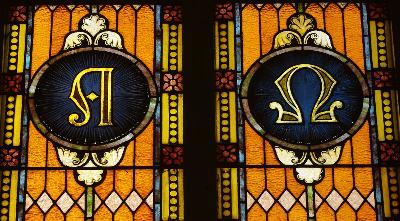
What did the First Christians believe about Jesus? He was the Messiah, of course, but more than that. Jesus himself laid out the question before the Pharisees one day.While the Pharisees were gathered together, Jesus asked them, Saying, What think you of Christ? whose son is he? […]Matthew 22:41–42Now, I think everyone knows that the term Christ basically means the Messiah—the Anointed One. This question is really loaded in this environment, at this time, because messianic expectations had been running fever-high for some time now. There was a clear belief that the Messiah was coming soon.[…] They said unto him, The son of David. He said unto them, How then does David in the Spirit call him Lord, saying, The Lord said unto my Lord, Sit on my right hand, till I make your enemies your footstool? If David then called him Lord, how is he his son? And no man was able to answer him a word, neither dared any man from that day forth ask him any more questions.Matthew 22:42–46Matthew tells us of this encounter in the midst of quite a series of challenges that had been presented by the Sadducees, the Pharisees, and sages. They were popping Jesus with what they thought was a zinger every time he turned around. This one was a show stopper, because the Jewish theologians understood this psalm of David to be messianic—which is also the way the First Christians, all of them Jewish, understood it. But while the Pharisees and Sadducees expected the Messiah, they expected him to be merely a man—born normally of the union of a man and a woman—and who, as a descendant of David, would be lower in the chain of expectations than David himself. It is hard to imagine that none of the men who questioned Jesus on this day had never struggled with this Psalm. Of course they had. So let's take a closer look at the Psalm in question: number 110.

If the world was going to blow up at noon tomorrow, would you want to know? I don’t just mean having an asteroid hit us, spread some dust and dirt around, and create a new ice age. I mean blow up—it’s just gone. One moment we are here, and the next we are scattered throughout the solar system like so much debris. Would you want to know? Why? What would you do about it? Would you visit your family one last time, read your Bible one last time, or maybe pray—hard—trying to get right with god one last time. Or maybe you’d like to get your affairs in order, but why? Surely tonight is one night you don’t even need to brush your teeth. You can forget about all the mess you left on your desk. If fact, if you are in the mood for it, you can start a bonfire with your tax records. You don’t have to worry about it any more. You’re going to die owing the IRS money—which is a good way to go.Jesus’ disciples wanted to know when Jesus was coming back and what would be the signs of the end of the world. And from that time until this, men have studied the Bible consumed with these questions. They don’t just study the Bible, they look into Nostradamus and all sorts of prophets and seers and psychics, because everybody wants to know what and they want to know when.But why should God tell us anything about the future, at all? The truth is that merely knowing what is coming is of no value at all unless there is something you can do about it. In that short statement lies what may be the most important truth of all about Biblical prophecy. So when Jesus’ disciples asked him, Tell us, when shall these things be? and what shall be the sign of your coming, and of the end of the world? Jesus gave them knowledge they could use. You may find it of some value yourself. One of the most important things he said was:And many false prophets shall rise, and shall deceive many. And because iniquity shall abound, the love of many shall grow cold. But he that shall endure unto the end, the same shall be saved.Matthew 24:11–13 KJ2000Now, on the principal that there is no value in knowing the future unless there is something to do about it, what are we to make of this passage?

If you could ask Jesus, Lord, what are the signs of your second coming and of the end of the world? would you want to know the answer? It’s a teasing question, isn’t it? And yet, I think, most people do. And all your life, if you’ve paid attention to the world of religion at all, this idea of the end of the world has hung around in the background of your consciousness somewhere. I heard that expression when I was just a boy—maybe six or seven. Everyone in my family began to look at the Bible with the start of World War II. It didn’t look good at all in those early days, and we started thinking about the end of the world. I can remember sitting out on the little concrete porch in the summertime, listening to the adults talk about the signs of the end of the world. I was just a young boy with my dog and a countryside to explore, and I didn’t like the sound of this end of the world stuff even a little bit.Well, I had to grow up a bit before I came to understand what it was all about and what Jesus really meant by the end of the world. This arose out of a discussion with Jesus on a day when were visiting the Temple. And as they were coming down, the disciples (like the country boys they were) were gawking and pointing—admiring the impressive buildings of the Temple. And Jesus said: Do you see all these things? Truly I tell you, not one stone here will be left on another; every one will be thrown down.That had to be like a dash of cold water in the face of the disciples, and it’s hard to over-estimate the importance of the Temple to a Jew of any generation—it was the center of their religious life, it was the place of the presence of God, it was a massive structure built with great stones and infinite care. Jesus’ disciples (like every other Jew of their day) were smitten with the temple—its beauty, its massiveness, and, mainly, its permanence. Nothing could ever happen to God’s temple, could it? And yet Jesus said that it was all coming down. And the idea wasn’t entirely new. Let’s begin by looking at a passage in Jeremiah 7, from the age of the First Temple…


There is a fascinating story that links Easter and Passover, and most of the world goes on blissfully unaware of it. Most know that Easter and Passover are in the same general season of the year, sometimes on the same weekend, sometimes diverging. But what most don’t realize is that the Christian observance of Easter actually arose directly from the Passover. No, I don’t mean from the resurrection. I mean from the Passover itself.Part of the confusion arises from a curious use of terms. The Hebrew word for Passover is Pesach. It is translated into Greek and Latin as Pascha. Everywhere in the Bible where the Passover is mentioned, in Greek and Latin versions, it is Pascha.Now follow me carefully through this. Throughout the Latin and Greek churches, the day of the celebration of the resurrection of Jesus is called, in their own languages, Pascha. But when the discussions of Pascha are translated into English, they become Easter. Always.How on earth did this happen? And on a related question, how on earth did colored eggs and Easter Bunnies become connected somehow to the celebration of the resurrection of Jesus?

Are you ready for a quiz? Grab pencil and pad and write down the names of the two most important Christian Holidays. It should only take you a few seconds. No consulting your calendar allowed; just write down two holidays. Got it? And the days are: Christmas and Easter—and I’ll bet you got it right.But let me tell you something curious. Neither one of these days is found observed anywhere in the Bible. And if they had the importance in the early church that they do today, you would think they would have mentioned them. You would think Luke would have recorded somewhere in Acts that we stayed over at Troas through Christmas and then sailed across to Philippi. Or maybe: We hastened in order to be in Jerusalem at Easter. But no, nothing like that is found in the Bible at all.Luke, though, does reference holidays in his travelogue. Acts 20:6 says: And we sailed away from Philippi after the days of unleavened bread, and came unto them to Troas in five days; where we abode seven days. In Acts 20:16, he records this: For Paul had determined to sail by Ephesus, because he would not spend the time in Asia: for he hasted, if it were possible for him, to be at Jerusalem the day of Pentecost. What if I told you that these holidays of the Bible, while they have a Jewish/historical significance, are actually Christian in their meaning and application? Would that change the way you look at them?


Why do you suppose God leaves us with so many unanswered questions? And why are some of the truths of the Bible so, well, obscure? If God wants us to know something, why doesn't He come right out and say so? The fact is, that on the really important things, God does come right out and say so, but there's a whole lot more to be known and God has placed in the heart of man the desire to know everything. We are not just content with a little bit of knowledge. We want to know the whys and the wherefores and we get those answers, and we still have more questions. Everything of course, is a little more than our small brains can hold, but there is a lot more that we can know.As Paul said, "Now we know in part" (1 Corinthians 13:9). We call the Bible "the Word of God", and indeed it is, but that word comes to us in the form of the testimony of a cloud of witnesses. And just as a good investigator can take the testimony of one witness, combine it with the testimony of another witness, he can then come to know something that actually isn't in the testimony of either one of them, and it is only by knowing what both of them said, that you can discern what really happened.So we can sometimes find insights into things that are not actually said by any of the witnesses in the Bible, we do it by taking a little bit here and a little bit there and we say, "Wait a minute, why did he say that?" It is like a great puzzle of life where we struggle to put together all the pieces and discover pictures previously unknown and unseen.


When the Pope viewed Mel Gibson’s movie, The Passion of the Christ, he is said to have remarked, It is as it was. The Vatican later tried to spin that remark to bring it back in bounds, but I have little doubt the Pope said exactly that—because that is the avowed object of the movie, to tell the story of the suffering of Jesus as it was.But that seems to be a real problem. And if the Pope is right, then it is not Mel Gibson’s movie that is the problem; it is the Bible. Few things I have read bring this into focus like an article in the February 15th Newsweek by Jon Meacham. In his article titled, Who Killed Jesus? he asks:Does the death, the execution of Jesus lie at the feet of the Jewish people?No. It does not.But making that simple denial does not tell the whole story.

 1
1I love a good mystery. Puzzle solving is a favorite pastime of mine. So perhaps I can be forgiven for saying in a recent radio program that God also loves a mystery.Sometimes of course, God speaks plainly—the Ten Commandments are plain enough—but at other times the truth is far more subtle. I might offer reasons for God’s subtlety, and they are there, but I hardly need to prove that. Anyone who pays attention to God’s actions in the world will be well aware that God prefers to be subtle, even when you’re confident that when something has happened has been his intervention.The Bible is more than mere subtlety. It is a collection of the testimony of witnesses, and while I certainly believe in the inspiration of the Bible, I also believe that God doesn’t engage in witness tampering. The Holy Spirit sees to it that the witnesses are in court and that they tell the truth. After that, we the jury have to evaluate their testimony and try to figure out the larger picture.Now, if you have ever watched a bunch of Perry Mason mysteries, or this type of courtroom dramas, you can often find your way to the truth of what happened. We know this even though no individual witness knows the whole story. You get a little bit from this fellow, you get a little bit from that fellow, and you get something from a third lady; and between those three things, the picture comes together.Well, something like that exists in the Bible. There is enough corroboration of the gospel accounts to support the key elements of their stories. They all saw the resurrected Christ, for example, and they are all unified. Now there may be little details, but those aren’t important. The differences that you find in the accounts show us that the witnesses were not in collusion, in other words, this is important to establish the fact that there were four witnesses, not four witnesses telling one witnesses’ story, if you follow me. There are some first-class mysteries in the New Testament and many of them have kept scholars scratching their heads for years and provided material for countless doctoral dissertations.Consider a case in point, the mystery of how you get three days and three nights between Friday night to Sunday morning?

What did the First Christians believe about the New Covenant? I’m talking about those Christians who were alive in the days when the New Testament was being written, when they could ask questions of those who had heard Jesus speak (or perhaps had even heard him themselves). These were heady days for those folks.It does seem to me, in the discussions I have heard about the Old and New Covenants, that there is something about them that very few people have understood. But before I go into that question, I’ll have to cover a little background. So let’s discuss a couple of ideas: the concept of the mind as a closet never cleaned out and the dilemma of the double bind.Also see the following messages:A Closet Never Cleaned OutThe Double Bind

I know that Jesus was a gentle man. I am certain that he was kind, that he was merciful, and very gentle with the people he dealt with. But, you know, at the same time he was straight as a die—he was totally honest. And sometimes honesty can be brutal. He could look a man straight in the eye and tell him he was a hypocrite…because that’s what he was. When you see what a man is, you can tell him, right? Of course, sometimes you can and sometimes you can’t—but from Jesus that’s what you got. On one occasion, Jesus says to the assembled crowd:[…] The scribes and the Pharisees sit in Moses’ seat: All therefore whatsoever they bid you observe, that observe and do; but do not according to their works: for they say, and do not.Matthew 23:2–3 KJ2000Nowadays, we think of a government divided into three branches: legislative, executive, and judicial. The separation of powers and checks and balances are fundamental to our system. But Moses was all three to Israel: he was a lawgiver, he was an executive, and he was also the judge. But as the burden grew over time, the responsibility of judging was distributed to a system of judges. The judges were a legitimate authority in the community, and their judgements took on the force of law. Plainly, Jesus felt the judiciary was corrupt in his time. That did not in any way justify ignoring their civil decisions, but it meant that their moral authority was bankrupt. Let’s see what else Jesus had to say about the system of his day, and what we could learn from it, in Matthew 23.

There is a time in a man’s life when he must act—when he must seize the day. There are moments of opportunity; there are simple chances to do things—an opening to produce something really worthwhile. And when you let those moments pass, they never come your way again. It’s a deep lesson, a profound lesson, and I think it lies at the root of a curious incident in Jesus’ ministry.In Matthew 21, Jesus is staying near Jerusalem in a little town called Bethany. He was on his way into Jerusalem early in the morning, and he was hungry. As he walked along the way he saw a fig tree, the season was such that there should have been fruit on it. He walked over to it, looked for fruit, and found nothing but leaves. And he said to it, Let no fruit grow on you again forever and the fig tree withered away.Now, that seems to me like a strange thing for Jesus to do, and I don’t think he would have done—nor Matthew recorded it—it unless there was a lesson for his disciples and all of us to learn from it. There are times when you and I ought to be producing something—putting something out. And if we don’t do so, then our time will pass and we will never get the opportunity again. Jesus developed a theme not unlike this in the 13th chapter of Luke…

What is the Kingdom of Heaven like, really? Listening to preachers when I was growing up, I was under the impression that the Kingdom of Heaven was Heaven itself—that is was a city with streets of gold, where we dined on milk and honey, and spent all of our days looking up into the master’s face. There was a river there where we could get together with loved ones, renew old acquaintances, and shed copious tears when we embrace someone that we had not seen in so very long and had been worried about.But, you know, Jesus’ disciples started out with a rather different view. They were looking for a messianic kingdom. They thought the Kingdom of Heaven would be Jesus leading a revolt and throwing out the Romans. We’re going to get a mob together, arm the people with swords, assault the Roman strongholds, and reestablish the Kingdom of David. Things would be like they were in the good old days.But as the disciples listened to Jesus, they became a little confused about the Kingdom because when Jesus said, The Kingdom of Heaven is like… the parable that followed did not fit their presuppositions—it was not what they expected at all. The funny thing is…it doesn’t fit ours either. We’ll begin in Matthew 19, with Jesus’ answer to question posed to him by a young, wealthy man: Good Master, what good thing shall I do, that I may have eternal life?

What is it about children that makes some people so ready to dismiss them as though they were of no consequence? You know, I have finally become convinced that one of the the reasons children behave badly is because no one pays any attention to them when they behave well. After all, a kid who behaves all the time is like wallpaper, a piece of furniture, or background music—they’re there, they’re appreciated. We pat them on the head, feed them, make sure they have clothes to wear and a bed to sleep in, and there’s really no worry apart from that. On the other hand, when children are bad we pay attention. Many kids are willing to risk the wrath of Mom and Dad just to get some recognition.Too often, children are treated like non-persons. When I was growing up, I heard it said that little owls have big ears when the conversation around children turned to something they shouldn’t hear. Now, people say all kinds of things in front of children like they were waiters in a restaurant. And when they are inconvenient, we can just get rid of them. I don’t mean kill them off (though, regrettably, in extreme cases, that happens). I’m talking about parents who leave their children home alone and go off on vacation—little kids. And then there is the ever-increasing number of children who are being raised by their grandparents because their parents are unable, or unwilling, to get their lives to together. I wonder about what we are going to do when the last generation of grandparents—who really care about children—are gone. Jesus provides for us an excellent example of the proper attitude and responsibility towards children in Matthew 19:Then were there brought unto him little children, that he should put his hands on them, and pray: and the disciples rebuked them. But Jesus said, Allow little children, and forbid them not, to come unto me: for of such is the kingdom of heaven.Matthew 19:13–14 KJ2000

Can a Christian take up arms against another person, or another nation? Can a Christian ever be responsible for the death of another human being? Thousands of Christians serve in the military and law enforcement with a clear conscience. Are they wrong? Are the misguided? What is it they don't understand? Or...what is it that those on the other side of the question don't understand?Well, first, let's clarify a few things...a few things about God.

When you were on your way home from work yesterday, and you drove by a schoolyard with a couple of hundred kids out there—either playing, or waiting for buses, or waiting for Mom and Dad to pick them up—did it ever cross your mind that, of all those children out there, fully one half of them are going to have to go through (or have already been through) a divorce? That’s the way it is nowadays, about half of all children, before they reach adulthood, are going to experience the rupture of their family. Their parents who, once upon a time, loved each other more than any other human being on the face of the planet, have now come to loath and despise one another with the same intensity. So they’re splitting up, and guess who gets the greatest emotional and psychological burden of it all. Right—the children. And about one third of those kids will go through it again.One of the stupidest things I’ve heard on this subject it that, Well, the kids will be alright. They will adjust to it. Yes, they’ll adjust to it—just as people who go to prison adjust to it. People who get committed to a mental hospital adjust to it. What kind of adjustments to kids make to divorce? Well, they’ve done some studies on that, so we don’t have to guess. Many become more passive, dependent, and repetitive in the way they go about their days. Some become less affectionate, more disobedient. Some display resent, anxiety, and grief. One study found that, ten years later, children show signs of stress left over from a divorce—with more ulcers, poor school performance, and a higher suicide rate. And when they grow up and get married, they are far more likely to get divorced.So children do make adjustments to the breakup of marriage. But these are not adjustments I would ever want my kids to go through, would you? Maybe, then, we can begin to understand why Jesus took such a hard line on divorce. When the Pharisees confronted him with a contentious question regarding divorce in different schools of rabbinical thought, they were again challenged by his answer. We’ll find it in Matthew, chapter 19.

Is it possible for a sinner to be forgiven and then have that forgiveness taken away? It doesn’t sound right, does it. After all, God says he will remove our sins from us as far as the East is from the West and that your sins and your iniquities I will remember no more. Then surely once we are forgiven, we are always forgiven, right? No one can take that away from us, right?Then came Peter to him, and said, Lord, how often shall my brother sin against me, and I forgive him? till seven times? Jesus said unto him, I say not unto you, Until seven times: but, Until seventy times seven.Matthew 18:21–22 KJ2000In case your math isn’t good, that’s 490 times you’re supposed to forgive your brother. You should know this is not a literal number—they are symbolic numbers that mean you should keep on forgiving your brother as long as there is anything to forgive. There is no limit to your forgiveness. To underline this point, he gave Peter a kind of parable. We’ll find it in Matthew, chapter 18.

Jesus told Peter that he was giving him the keys of the Kingdom of Heaven, and that whatever he bound on earth would be loosed in heaven, and whatever he loosed on earth would be loosed in heaven. On the face of it, that’s a lot of responsibility. It seems to imply an absolute authority by a human being—one human being—over the entire church, universally, wherever and whenever, through all time. At least, that’s the way Catholic theologians have taken it. That consider that authority to have been passed on down through generations to the Pope, and that he holds that kind of authority over the church universal. If their interpretation of the Gospel of Matthew is correct, then all other churches are in rebellion against the mother church.Now, I’m sure I’m not going to surprise you when I tell you that Protestant theologians don’t see it quite that way. They approach this passage a little differently. They look carefully at the Greek tenses and they translate the passage along these lines: Whatsoever you bind on earth shall be what has already been bound in heaven, and whatever you loose on earth shall be what has already been loosed in heaven. The idea being that whoever the religious leaders are in the Christian church on this earth don’t have the authority don’t have the authority to bind and loose things differently from what God would bind and loose in heaven. In other words, the initiative comes from heaven and then they follow through—as opposed to the initiative coming from the apostle (whoever he may be) and God following. In French, that kind of authority is carte blanche and is a little scary when it comes to man.So who’s right? It doesn’t take a lot of thought to realize that this is pretty important. Who today has the authority to tell you what to do about your faith and your obedience to God? Who can bind and loose matters relating to you and your church? I think people make to mistakes when analyzing this idea. To begin, let’s discuss them.

Comments

Download from Google Play

Download from App Store
 United States