


 Claim Ownership
Bad Dog Agility Podcast
Subscribed: 716Played: 19,735
Subscribe

© Bad Dog Agility LLC
Description
Dog agility training tips and discussions. We often interview agility instructors and competitors as well.
387 Episodes
Reverse
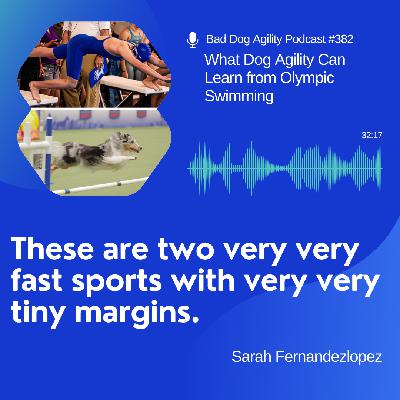
In this episode (32:17) In this episode, Esteban and Sarah explore what dog agility can learn from Olympic swimming, two fast sports where performances last seconds but preparation takes months or years. They discuss how tiny technical details, mental preparation, and strategic training decisions can dramatically impact performance when the margin for error is so small. You Will Learn Why the swimming concept of tapering may apply to preparing dogs for major agility competitions How the first few seconds of a run, from the lead-out to the first obstacle, can set the tone for everything that follows Why both sports demand trust in training and muscle memory during short, high-stakes performances How mental preparation and pre-run routines can help handlers manage nerves and perform at their best Mentioned Visualization and Mental Preparation Episode 189: How to Structure Your Dog Agility Season Sponsored By Canine Handler Fitness Saint Rocco's Treats
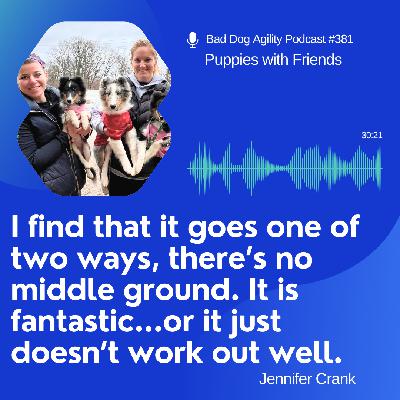
In this episode (30:21) In this episode, Jennifer, Sarah, and Esteban talk about the realities of raising and training puppies alongside someone else. We explore how shared puppy journeys can strengthen relationships, strain them, and ultimately teach us a lot about expectations, pressure, and perspective. You Will Learn Jennifer's experience raising littermates with her mom and later with her best friend and training partner Why getting puppies at the same time can create both the best and the hardest moments in an agility partnership How side-by-side progress can make you feel behind, increase stress, or quietly shift expectations The upside of having a training partner going through the same puppy stage at the same time Mentioned Episode 157: The Comparison Trap Sponsored By Canine Handler Fitness

In this episode (41:20) In this episode, Jennifer, Sarah, and Esteban dive into the often-debated world of purpose-bred sport mixes, purpose-bred mixes in general, and how they compare to rescues, mutts, and "All American" dogs. We explore why these dogs exist, why they generate strong opinions, and how much of the controversy is rooted in history, philosophy, and expectations. Most importantly, we unpack how dogs from many backgrounds can thrive in sport while serving very different goals within the broader dog world. You Will Learn The difference between purpose-bred sport mixes, general mixes, mutts, and rescues What the "All American Dog" designation really represents in competition How breed recognition and performance success address different priorities Mentioned/Related Episode 288: Interview with 2-Time Highest Scoring All-American Westminster Winner Lisa Topol All American Dog Ranking by PowerScore for 2025 Sponsored By Canine Handler Fitness Saint Rocco's Treats
In this episode (18:10) In this episode, Jennifer, Sarah, and Esteban break down how the format of the AKC National Agility Championship impacts strategy, especially for handlers with medium-speed dogs. Most competitors at Nationals are not the fastest dogs in the country, and they're not the slowest either. They're somewhere in the middle. And that middle is where smart strategy matters most. We talk about how the structure of the event affects qualification paths, what realistic advancement looks like, and how to approach Nationals in a way that gives your dog the best chance to succeed. Most importantly, we discuss how to set expectations so that no matter the outcome, you don't feel like you wasted your time. You Will Learn How the NAC format shapes strategy for medium-speed dog handlers trying to qualify for the Finals Why your dog may have a better chance of making the Finals than you think How to set realistic expectations so you walk away from Nationals feeling proud, not defeated Mentioned How to Make the Finals at AKC Nationals How to Make the Finals at AKC Nationals Episode 292: What To Do When Things Start Off Poorly at a Big Event Sponsored By Canine Handler Fitness
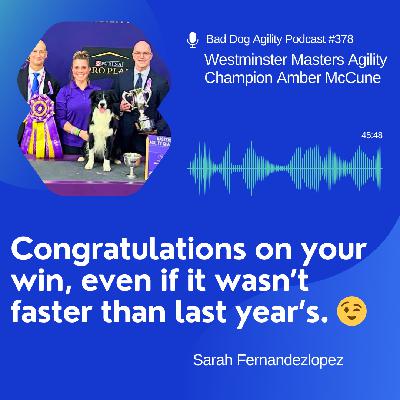
In this episode (45:48) In this episode, Jennifer, Sarah, and Esteban are joined by Masters Agility Champion Amber McCune to break down the 2026 Westminster Masters Agility Championship. The conversation ranges from course design and footing to venue history and how the event experience has changed over the years. You Will Learn How course design, footing, and venue choices shape both performance and the competitor experience at Westminster. How Jenn and Amber adjusted their handling to account for the unique format for making finals. Why Amber didn't get to wear a sparkly dress. Sponsored By Canine Handler Fitness
In this episode (26:49) In this episode, Jennifer, Sarah, and Esteban talk about the often ignored reality of agility: most of the time, dogs are not running, they are waiting. They explore why "waiting your turn" is a human concept, how dogs experience these in between moments through anticipation or regulation, and why early anticipation can lead to anxiety for some dogs while others switch on and off easily. The conversation highlights the importance of noticing how much waiting exists and being intentional about what dogs are actually doing during that time. You Will Learn Why "waiting your turn" is not a personality trait, but a set of skills shaped by arousal, uncertainty, and environment How dogs experience "waiting" through anticipation, regulation, or disengagement rather than passive stillness Why minimizing or reshaping waiting periods can be more effective than trying to train dogs to endure them Sponsored By Canine Handler Fitness Saint Rocco's Treats

In this episode (28:39) This week on the podcast, we take a closer look at how dogs actually run a course and what handlers can do to help them run it faster and with more confidence. We explain why dogs run lines rather than individual obstacles and how understanding your dog's stride, structure, and turning ability helps you choose the best line for any sequence. We also talk about why the fastest path is not always the shortest and how video comparison reveals the true optimal line for your dog. You Will Learn Why you should handle lines, not individual obstacles How pulling, position, and continuous cues shape your dog's line Why tight turns slow dogs and when a wider arc is actually faster How to compare options on video to find the best line for your dog Mentioned Episode 179: Which is Faster, a Front Cross or Rear Cross? Episode 108: Choices on Course Sponsored By Saint Rocco's Treats Canine Handler Fitness
In this episode (30:01) In this episode, we break down why so many handlers walk to the start line with a clear plan and instantly forget everything the moment the run begins. You Will Learn Why your brain blanks on course and how stress shuts down the prefrontal cortex, reducing timing, sequencing, and decision-making. How adrenaline affects handling, including tunnel vision, and reversion to default movement patterns. What the Yerkes-Dodson curve tells us about optimal arousal for performance and why beginners fall off the curve sooner. How to use the physiological sigh as a rapid, science-based tool to reset your nervous system right before a run. Mentioned Episode 159: Handler Muscle Memory for Dog Agility Episode 188: Handler Desensitization Sponsored By: Canine Handler Fitness with Liz Joyce
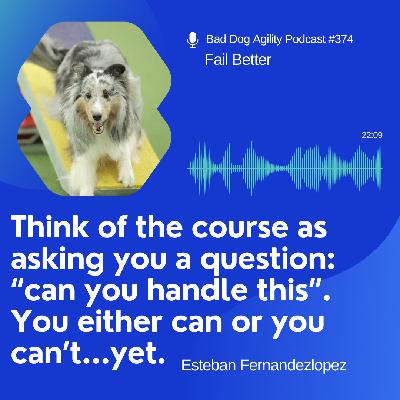
In this episode (20:34) In this episode, Esteban and Sarah talk about what it really means when things go wrong in the ring. A knocked bar, a wrong course, a dog that runs straight to the leash—none of these moments predict your future in agility. Instead, they're feedback about where you and your dog are in your training journey. You Will Learn The key difference between formative and summative feedback—and how it applies to training and trials. Why tying your success or failure to self-worth actually slows progress (and how to stop doing it). How to read your dog's "mistakes" as information about confidence, arousal, and understanding. Thank You for Listening! Thanks so much for joining us this week. To get Bad Dog Agility podcasts sent directly to your device as they become available, you can subscribe on iTunes, SoundCloud, or Spotify. Happy training and thank you for helping us reach over 2 million podcast downloads! Sponsored By: Canine Handler Fitness with Liz Joyce
In this episode (37:02) Burnout isn't just something that happens at work—it happens in dog agility, too. In this episode, we dive into what burnout looks like for handlers, why it happens, and how to recover in a healthy way. You Will Learn The three major predictors of burnout identified across 30+ studies: Why agility is uniquely vulnerable to burnout (and what's missing compared to other sports). Practical ways to recover and prevent burnout for both you and your dog. Sponsored By Saint Rocco's Treats Clip & Go Agility
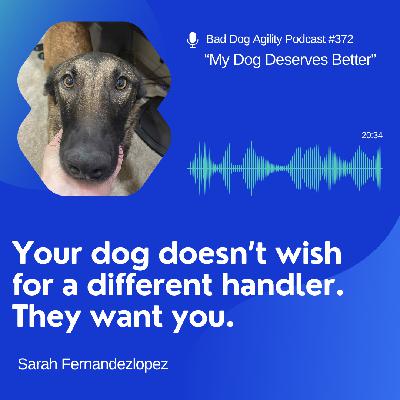
In this episode (20:34) We've all said it. "My dog deserves better." Maybe after a missed contact, a wide turn, or one of those runs where nothing clicks. But what does that phrase really mean? In this episode, we look at where it comes from, how it shapes the way we see ourselves as handlers, and what our dogs actually need from us. You Will Learn Why "my dog deserves better" comes from love and care, but can slowly turn into guilt. How to tell the difference between healthy accountability and self-blame that holds you back. Why having a super talented dog can feel like pressure instead of joy, and how to flip that around. Esteban's advice to reframe your language so it builds confidence instead of doubt. Thank You for Listening! Thanks so much for joining us this week. To get Bad Dog Agility podcasts sent directly to your device as they become available, you can subscribe on iTunes, SoundCloud, or Spotify. Happy training and thank you for helping us reach over 2 million podcast downloads! Sponsored By: Canine Handler Fitness with Liz Joyce Clip and Go Agility
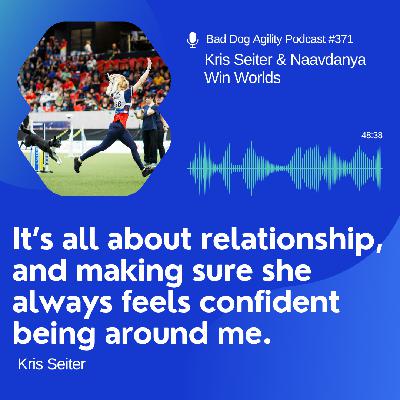
In this episode (48:38) This week on the Bad Dog Agility Podcast, we sit down with Kris Seiter, the newly crowned FCI Agility World Champion in the Intermediate height division, and her Border Collie Naavdanya, the first American team to win an overall individual gold medal since 2011. Fresh off their incredible performance in Kalmar, Sweden, Kris joins us to share what it felt like to stand atop the podium and take us behind the scenes of an unforgettable weekend on the world stage. You Will Learn Kris's thoughts and emotions after each run at AWC How she and her husband share handling duties with Naavdanya Insights into this year's course design What it's like competing as part of Team USA on the international stage The preparation and mindset behind a gold-medal performance Watch Kris' Winning Run https://www.facebook.com/watch/?v=1969545397230903 Sponsored By: Canine Handler Fitness with Liz Joyce Clip and Go Agility
In this episode (32:54) In this episode, we unpack FOMO, the Fear of Missing Out, in the world of dog agility. From chasing every seminar and trend to feeling left behind when others seem to improve faster, we talk about how FOMO affects both handlers and dogs. Drawing on psychology, personal experience, and plenty of agility-specific examples, we explore how to recognize FOMO, how it can quietly derail progress, and how to shift toward a healthier mindset, the Joy of Missing Out (JOMO). Whether you're a newcomer overwhelmed by all the options or a seasoned competitor trying to keep up with every new technique, this episode will help you reset your focus and find confidence in your own path. You Will Learn What FOMO really is and why it's especially common in dog agility. How FOMO can affect training, competition, finances, and mental health. Why even experienced handlers and coaches fall into the trap of constant comparison. Practical ways to reframe FOMO into JOMO, the Joy of Missing Out. Mentioned/Related Episode 182: Choose Your Own Agility Adventure Sponsored By: Canine Handler Fitness with Liz Joyce Clip and Go Agility
In this episode (32:54) In this episode, we unpack FOMO, the Fear of Missing Out, in the world of dog agility. From chasing every seminar and trend to feeling left behind when others seem to improve faster, we talk about how FOMO affects both handlers and dogs. Drawing on psychology, personal experience, and plenty of agility-specific examples, we explore how to recognize FOMO, how it can quietly derail progress, and how to shift toward a healthier mindset, the Joy of Missing Out (JOMO). Whether you're a newcomer overwhelmed by all the options or a seasoned competitor trying to keep up with every new technique, this episode will help you reset your focus and find confidence in your own path. You Will Learn What FOMO really is and why it's especially common in dog agility. How FOMO can affect training, competition, finances, and mental health. Why even experienced handlers and coaches fall into the trap of constant comparison. Practical ways to reframe FOMO into JOMO, the Joy of Missing Out. Mentioned/Related Episode 182: Choose Your Own Agility Adventure
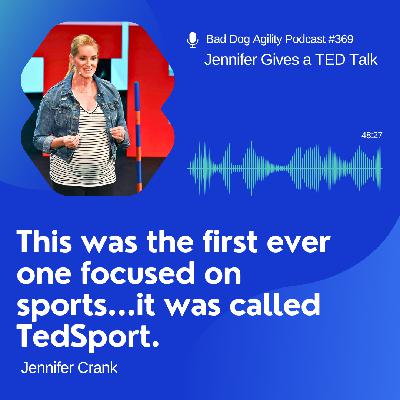
In this episode (48:27) What does it really take to deliver a TED Talk? In this episode, we sit down with Jennifer Crank to hear about her journey from invitation to standing on stage under the iconic red letters. Jennifer takes us behind the scenes of the months-long preparation process—from refining her script with TED coaches to designing visuals that would resonate with a global audience. You Will Learn Why TED Talks generate over $100 million each year and how that shapes the brand's global reach How invited speakers work with a dedicated coach to refine and sharpen their story Why every TED Talk must be fully memorized—no teleprompters allowed What it was like for Jennifer to bring a live dog agility demo onto the TED stage Mentioned/Related Speaking of being a mom, that was the topic of our first podcast with Jennifer…as a guest, not a host! Episode 154: Kids and Dogs and Jennifer Crank Sponsored By: Canine Handler Fitness with Liz Joyce Clip and Go Agility
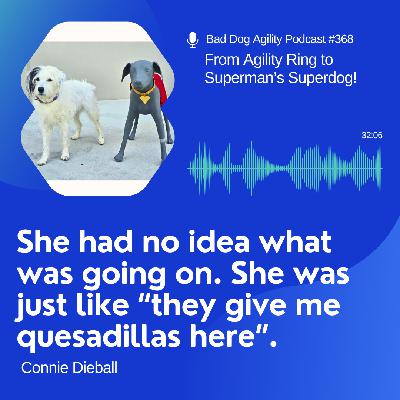
In this episode (32:06) In this special episode, we sit down with agility competitor Connie Dieball, whose dog Jolene served as the reference dog for Krypto in the new Superman movie directed by James Gunn. Connie shares the amazing story of how Jolene made it to the big screen, what it was like filming on a major movie set, and how she balanced a full-time job while working on a blockbuster production. If you love agility, movies, or just great dog stories—this one's for you. You Will Learn How Connie and Jolene got started in agility during the COVID-19 pandemic How Jolene was selected to be the reference dog for Krypto What it means to be a "reference dog" in a CGI-heavy movie What it was like on set and how Jolene interacted with the cast and crew Who Jolene's favorite people were Mentioned/Related January 9, 2025 Wednesday Wrap Up (Karen Pryor, Dogwalk Changes?, Superdog) CNN article talking about the inspiration for Krypto: https://www.cnn.com/2025/07/12/entertainment/superman-krypto-dog See the show notes for several videos featuring Jolene AKA Krypto! https://baddogagility.com/368
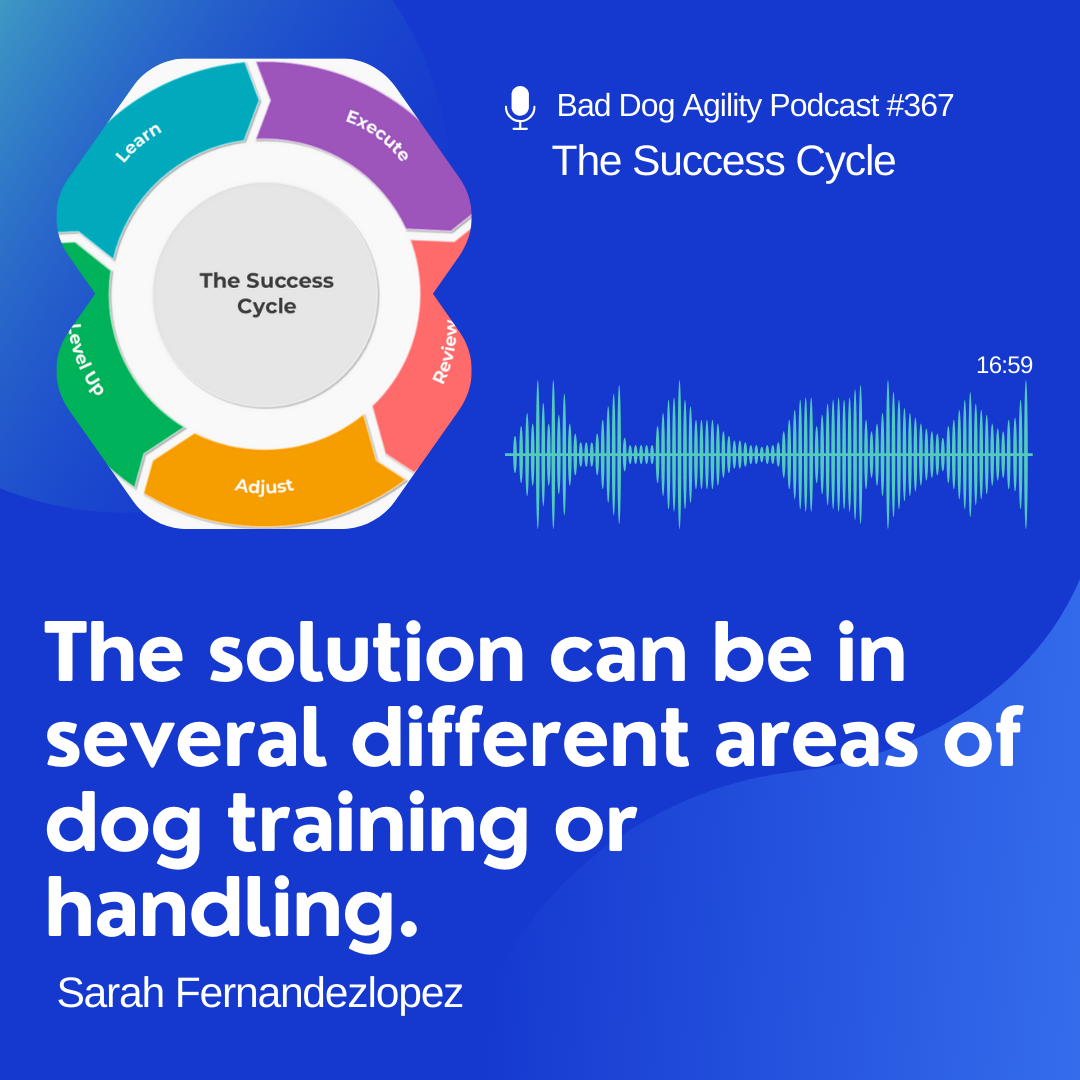
In this episode (16:59) Struggling to make progress in agility—even though you're putting in the work? In this episode, Esteban and Sarah break down the Success Cycle, a powerful 5-stage framework that shows you how to level up your agility game. Whether you're a beginner or a seasoned competitor, this blueprint will help you move forward with clarity and confidence. You Will Learn The 5 stages of the Success Cycle Why most agility handlers plateau—and how to avoid staying stuck The biggest mistake people make when they skip the Review and Adjust phases How small adjustments lead to big breakthroughs in your performance What separates handlers who level up quickly from those who spin their wheels Mentioned/Related Episode 212: Do You Really Need Video Analysis? Episode 139: The Test/Train/Adjust Cycle Episode 30: Analyzing Mistakes and a Look at Systems
In this episode (20:38) What really sets the top agility teams apart? In this episode, Esteban, Sarah, and Jennifer each choose one key factor they believe gives elite teams an edge—and it's not what you might think. Talent, speed, age, or breed? Nope. We're talking about habits and strategies that any team can develop, starting today. Whether you're aiming for national finals or just trying to feel more confident in your runs, this conversation will give you clarity on where to focus your time and energy. You Will Learn Why success in agility isn't reserved for the naturally talented or the young and fast One thing each of your hosts believes separates the top 10% from everyone else How to build these success-driving habits into your own training What doesn't matter nearly as much as you might think (hint: it's not your dog's breed) Mentioned/Related Episode 212: Do You Really Need Video Analysis?
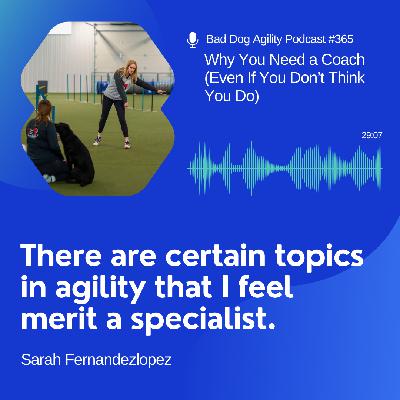
In this episode (29:07) Coaches and instructors play a crucial role in our growth as agility handlers. In this episode, Sarah, Jennifer, and Esteban reflect on the many different types of coaching available to competitors, both inside and outside the agility world, and how they can help shape your skills, mindset, and confidence. You don't have to be in a weekly class to benefit from a coach. And you don't need a title to be one. Whether it's a fellow competitor, a sports psychologist, a trial buddy, or an online instructor helping you prep for a big event, coaching is everywhere, and it's evolving fast thanks to technology. You Will Learn How video, slow motion, and remote platforms have changed the coaching game. The surprising places coaching can come from, even outside of agility. The specialized types of coaches we've each worked with (contacts, mental management, event prep, and more). Why you might be acting as someone's coach already and how to embrace that role. How a community built on shared learning makes agility better for everyone. Mentioned/Related Episode 289: The End of Coach's Eye You can find Running Contacts classes with Euan Paterson here: https://www.camddwrcanine.co.uk/camddwr-courses You can find Running Contacts classes with Silvia Trkman here: https://www.lolabuland.com/online-classes/
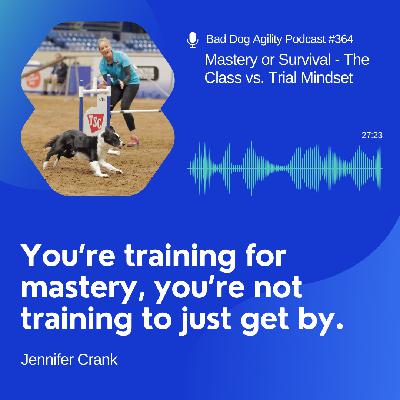
photo credit: Great Dane Photos In this episode (27:23) In this episode, we dive into a question every agility handler wrestles with: Should you train in class the way the course should be run to build skills—or adapt your handling as if you're at a trial, doing whatever it takes to get through clean? Jennifer kicks off the conversation with a story from her in-person class, where a handler faced this very dilemma. Esteban shares how he uses small-space sequences to help handlers try out multiple options—rear cross, front cross, blind cross—and then analyze which is actually faster using video review. The results are often surprising, leading to smarter handling strategies or exposing weaknesses that can be addressed in training. Whether you're a handler who trains for mastery or trials for survival, this episode will give you fresh insight into how to approach your next class—and your next run. You Will Learn The pros and cons of the "ideal execution" mindset versus the "trial-day strategy" mindset Why it's not an either-or question, and how context—your dog, your goals, your stage of training—matters How to blend both approaches into your training plan for better long-term results Mentioned/Related The Finals Map

Comments

Download from Google Play

Download from App Store
 United States