


 Claim Ownership
The BrainFood Show
Subscribed: 3,991Played: 101,175
Subscribe

© Cloud10
Description
In this show, the team behind the wildly popular TodayIFoundOut YouTube channel do deep dives into a variety of fascinating topics to help you feed your brain with interesting knowledge.
215 Episodes
Reverse

If ever there was a criminally underrated natural resource, it would
have to be Helium. Though most commonly associated with party balloons
and making one’s voice sound like a cartoon, Helium’s most important
application is in cooling the magnets of Magnetic Resonance Imaging or
MRI machines. While the finite and ever-dwindling global supply of this
vitally important gas is a topic worthy of its own video, perhaps even
more fascinating is just how bizarre an element Helium truly is. For if
Helium is liquefied and cooled to a low enough temperature, it begins to
behave like no other liquid on earth, seemingly violating the laws of
gravity, thermodynamics, and even logic itself. This is the story of
superfluid Helium II, the weirdest substance known to science.
In order for Helium to be liquefied, it must be cooled to a temperature
of -268.8 degrees Celsius or 4.2 Kelvin – that is, only 4.2 degrees
above Absolute Zero, the coldest temperature theoretically possible. By
contrast, Nitrogen liquefies at a relatively balmy 77 Kelvin, Oxygen at
54 Kelvin, and Hydrogen at 33 Kelvin. The reason Helium is so difficult
to liquefy lies in its electron orbitals being completely filled, making
it – like the other noble gases Neon, Argon, Krypton, Xenon, and Radon –
electrically neutral and chemically inert. This means that the only
force which can pull Helium atoms together is the so-called Van de Waals
Force, which is caused by electrons shifting from one side of an atom
to the other and creating a momentary electrostatic charge. This force
is incredibly weak, meaning that Helium must be cooled to extremely low
temperatures in order for the Van de Waals forces to overcome the energy
of the moving atoms and pull them close enough together for the gas to
liquefy. Solidifying Helium is even more difficult – so difficult, in
fact, that it cannot be done at regular atmospheric pressures. Only at
pressures of 25 atmospheres and above can solid Helium be created.
Learn more about your ad choices. Visit megaphone.fm/adchoices
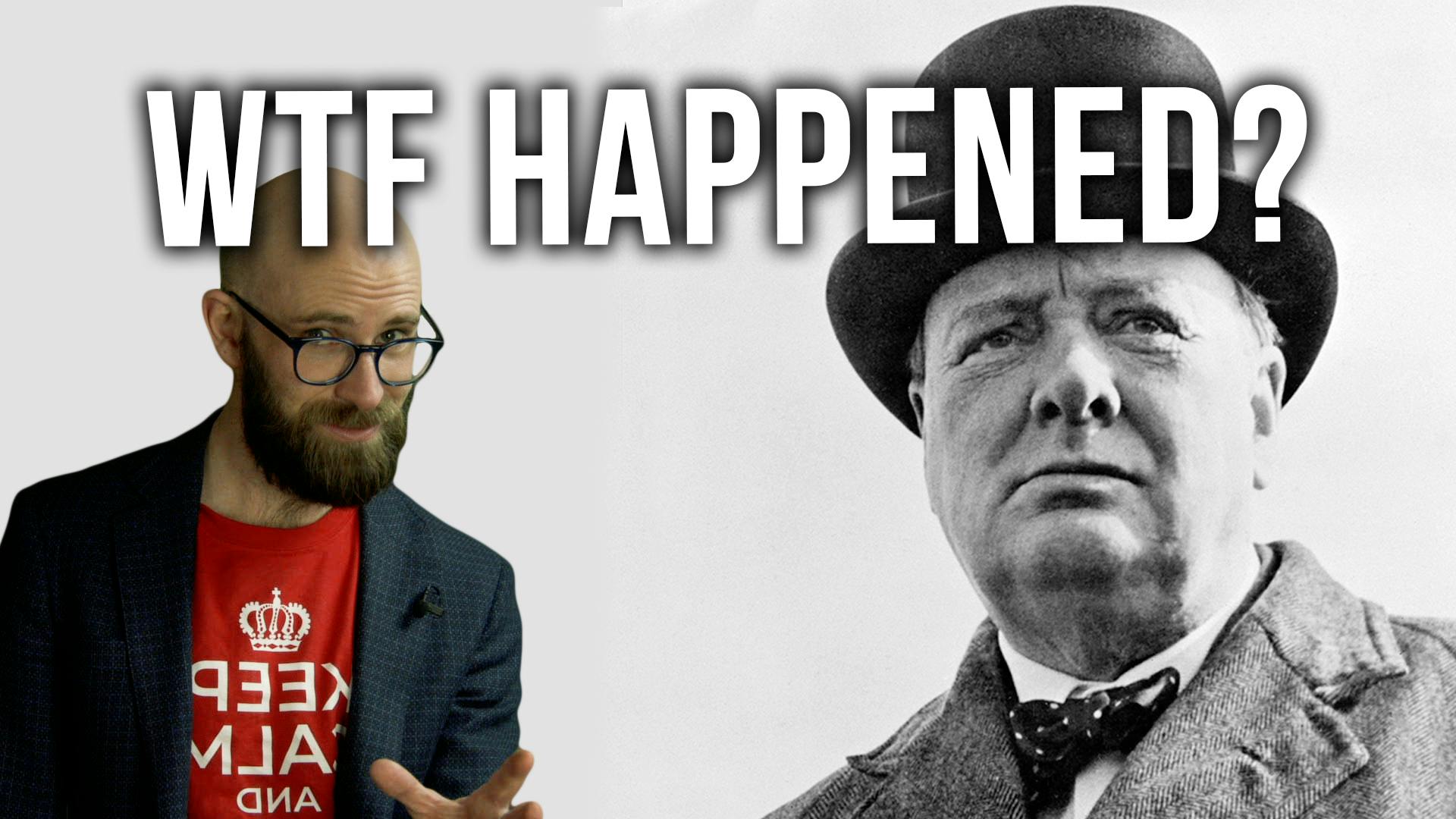
Nazi Germany officially surrendered on May 7, 1945. With the war still
raging in the Pacific against Japan and sporting a popularity rate at
around 83%, Sir Winston Leonard Spencer Churchill seemed a shoe-in to
maintain his position as Prime Minister of the British Empire. Just
before the announcement of the results of the election, Churchill had
been at the Potsdam Conference with U.S. President Truman and Joseph
Stalin, only intending to travel home briefly to accept his victory, and
then back to the conference. Yet a funny thing happened on July 26,
1945, the voting populace of the UK, which had turned out in record
numbers of 73%, had decided to collectively say “Thanks for your
service, Winston, but we’ve decided to go in a different direction,” in a
landslide defeat that shocked the world.
While in more modern times you might think some sort of scandalous
affair or offensive comment may have whipped up the mob on the interwebs
precipitating such a massive electoral fall in the span of just a
couple months, there was no such issue here either. So what happened?
How did this wildly successful politician, frequently named among the
top Prime Ministers ever in the nation, at the height of his popularity
no less, and who had just helped successfully guide Britain through one
of its most harrowing periods of its storied history, not just lose, but
lose in a landslide?
And not only this, making the whole thing even more inexplicable, he
lost to a man who one of said man’s own party members, Aneurin Bevan,
stated “seems determined to make a trumpet sound like a tin whistle.” Or
as chairman of the Daily Mirror, Cecil King, would remark in 1940, he
was “of very limited intelligence and no personality. If one heard he
was getting £6 a week in the service of the East Ham Corporation, one
would be surprised he was earning so much.” Or, let’s not stop there, as
famed social reformer Beatrice Webb would remark, “He looked and spoke
like an insignificant elderly clerk, without distinction in the voice,
manner or substance of his discourse. To realize that this little
non-entity is… presumably the future Prime Minister, is pitiable.” Or
how about as Churchill himself would allegedly quip about his opponent,
he is "a modest man, but then, he has so much to be modest about."
The demeaning quotes about the man Churchill lost to go on and on and
on, and his own party before, during, and after the election likewise
tried to oust him as their leader…. Only to see this quiet, oft’
forgotten individual who rapidly rose from a middle class background to
the heights of power, defy them all and go on to become one of the
greatest Prime Ministers in the history of the nation, often even ranked
above Churchill himself, despite only serving in the position for a
handful of years.
As ever, of course, the devil is in the fascinating details, so let’s
dive into it, and what specifically happened to see a titan of history
defeated by a man likely no one outside of the UK even knows the name
of, yet shaped the Britain we have today arguably more significantly
than Churchill ever did.
Learn more about your ad choices. Visit megaphone.fm/adchoices
In this episode of The Brain Food Show, we begin by discussing the clandestine way Niel Armstrong managed to get his application to the astronaut program in despite submitting it past the deadline. We then look at why he got to be first to walk on the moon when precedent should have had it been Buzz Aldrin. Next up we look at the oft’ forgotten second thing Armstrong said when stepping out onto the moon.
Moving swiftly on we do a rapid fire of a variety of space related bonus facts including, but not limited to, the real color of the Sun, how much energy it would take to cause the Earth to stop orbiting the Sun, how old the Sun is in Sun years, how many Sun rises and sunsets astronauts aboard the International Space Station see every day, etc.
And for those curious on Simon and my treatise on the proper order of watching Star Trek series and other such thoughts, the mentioned forum post is here.
Learn more about your ad choices. Visit megaphone.fm/adchoices
If you've followed this website, our YouTube channel, or BrainFood Show
podcast very long, you know one of our favorite historic individuals is
Theodore Roosevelt- among countless other reasons to be admired, a man
who enjoys a reputation as one of the most terrifyingly badass
individuals to ever hold the office of leader of a nation, with
countless stories detailing his cartoonishly manly exploits. For just a
small sample to start, at one point while he was living as a rancher,
some thieves stole his boat in the middle of an ice storm. Given the
rather dangerous weather conditions, you might think he'd just let them
go. But this was Teddy Roosevelt and it was the principal of the thing.
He states, "In any wild country where the power of law is little felt or
heeded, and where every one has to rely upon himself for protection,
men soon get to feel that it is in the highest degree unwise to submit
to any wrong…no matter what cost of risk or trouble. To submit tamely
and meekly to theft or to any other injury is to invite almost certain
repetition of the offense, in a place where self-reliant hardihood and
the ability to hold one’s own under all circumstances rank as the first
of virtues."
Thus, he spent the next three days building another boat so he could
track the thieves down and take his original boat back. Once done, it
took him a few days of searching, but using his prodigious skills as a
master tracker, he managed to find and capture the men. However,
ultimately the river became too frozen over to continue to the nearest
town that way, so instead he sent his ranch hand companions home and
marched the thieves on foot, alone for 40 hours straight to town. During
this trek, he did not bind the thieves' in any way as he felt sure
they'd suffer from frostbite if he did so. To keep them from
overpowering him while they trudged along through the frozen wasteland,
he simply kept a gun trained on them and, while they slept during rest
periods, he kept himself awake by reading Tolstoy's then relatively
recently published Anna Karenina.
It's also noteworthy here that because of the weather conditions, the
fact that he was in hostile territory in the middle of nowhere, and
escorting a trio of criminals who would have killed him without
hesitation if he'd given them the chance, he was within his rights to
simply execute them on the spot and go home, something the vast majority
of lawmen of his era would have done. Roosevelt, however, felt they
deserved a trial...
Learn more about your ad choices. Visit megaphone.fm/adchoices

The McRib is a food with both a devout following and many detractors.
But what is the genesis of the world’s most popular fast food chain’s
most mysterious menu item? And why, oh why, is it not available all the
time like the majority of the rest of the McDonald’s menu?
Cooking ribs in the Americas predates the colonial period. But the
earliest records of Europeans cooking foods near what we would call
barbeque were in colonial Virginia. Settlers observed a native way to
cook meat, and they adapted it to their tastes. Later, as slaves were
brought in from Caribbean plantations, the food genre we know as
barbeque developed.
In fact, the word barbeque is a loan word from the Taino language of the
Caribbean. It was originally called barbacoa. It is unclear whether the
name comes from the native islander's method of cutting the meat or the
wooden frame on which the food was smoked. In any case, after it
arrived in the North American colonies, it spread wherever pork was
plentiful.
Important here to the story of the McRib is that barbeque, in the proper
sense, is any meat that is slow-cooked over indirect heat, usually
wood, and not merely meat with barbeque sauce on it. It can take up to
eighteen hours to turn raw meat into barbeque for it to reach
perfection. If brined first, it can take an additional day.
That is part of what makes the McRib a surprise. Rib joints usually
slow-cook. Many places brine it before smoking. Additionally, cooking
with a wood fire is inherently messy. Barbeque meat is also often hand
butchered. None of this lends itself to a fast food chain that in 2011
had to abandon the idea of using celery root in one of its food items
because to offer the item, McDonald's would have had to buy all of the
world’s celery root supply, and there still would not have been enough
celery to meet the projected demand. A frequent problem for the
restaurant chain that annually serves 1/27th of all restaurant food
consumed in the world, and caters to about 1 percent of the world’s
population on any given day.
Sponsor: Incogni - Use code BRAINFOOD and get 60% off an annual plan using the link https://incogni.com/brainfood
Learn more about your ad choices. Visit megaphone.fm/adchoices
In this episode of The Brain Food Show, we begin by discussing the real origin of Tang and what that has to do with Pop Rocks and how they work. We then move on to the interesting story behind the invention of Velcro and how it works.
Next up we look at whether NASA really spent many millions of dollars developing the famous “space pen” instead of just using a pencil like the Russians.
Moving on from there we discuss the fascinating reason why only one side of the moon faces the Earth and how this happened and is still happening, with the Earth itself slowing down such that in theory at some point only one side of it will face the moon.
Moving on, we look at what the actual odds of navigating a typical asteroid field in space would be and whether the depictions in movies here are actually accurate.
Finally, we respond to some user feedback, including on initial attempts listeners of the female persuasion have made to pee standing up without peeing all over themselves (which sounds even weirder to write, but is in reference to a previous space episode ;-)), and the interesting phenomenon of people using the show to fall asleep every night and whether we should take that as a good thing or a bad thing…
Sponsor: Incogni - Use code BRAINFOOD and get 60% off an annual plan using the link https://incogni.com/brainfood
Learn more about your ad choices. Visit megaphone.fm/adchoices
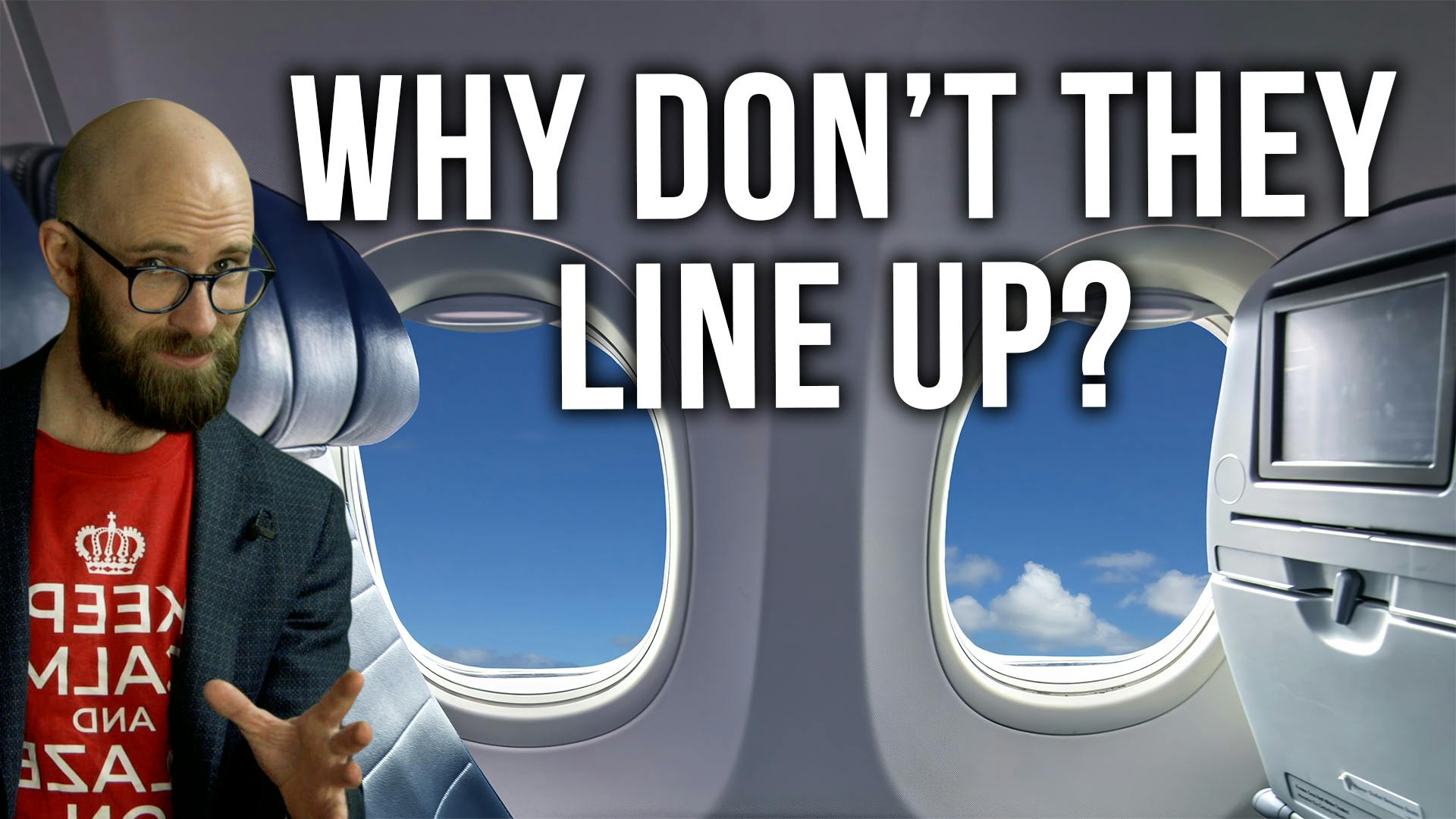
While airplane manufacturers do design the planes with general row
positioning and pitch (the measurement from one seat to the same exact
point on the seat in front or behind it) in mind, with the windows often
lining up with the seats, the designers' exact recommended arrangement
is rarely, if ever, followed. You see, the final placement of seats is
left up to the individual airlines that purchase the plane.
To make the seating arrangement as flexible as possible for airlines,
there are multiple tracks on the floors that the seats are mounted on.
This allows the seats to easily be moved closer together or farther
apart. The airlines can even switch the aisle arrangement via moving a
line of seats to a completely different track.
For example, on some versions of the Boeing 777, Boeing recommends a
layout of 3+3+3 with a 32 inch (81.2 cm) pitch for economy passengers.
In this layout, you need a passenger density of 67% before a passenger
may be required to sit next to someone else. And if some passengers
choose to sit next to one another, the percentage is even higher before
other passengers must sit next to someone. Boeing recommends this layout
because, in internal studies they've conducted, they claim that one of
the biggest factors in passenger perception of comfort on a flight is
whether there is someone directly next to them or not.
Nevertheless, disregarding the manufacturer recommendation, pitch on
a...
Sponsor: Incogni - Use code BRAINFOOD and get 60% off an annual plan using the link https://incogni.com/brainfood
Learn more about your ad choices. Visit megaphone.fm/adchoices
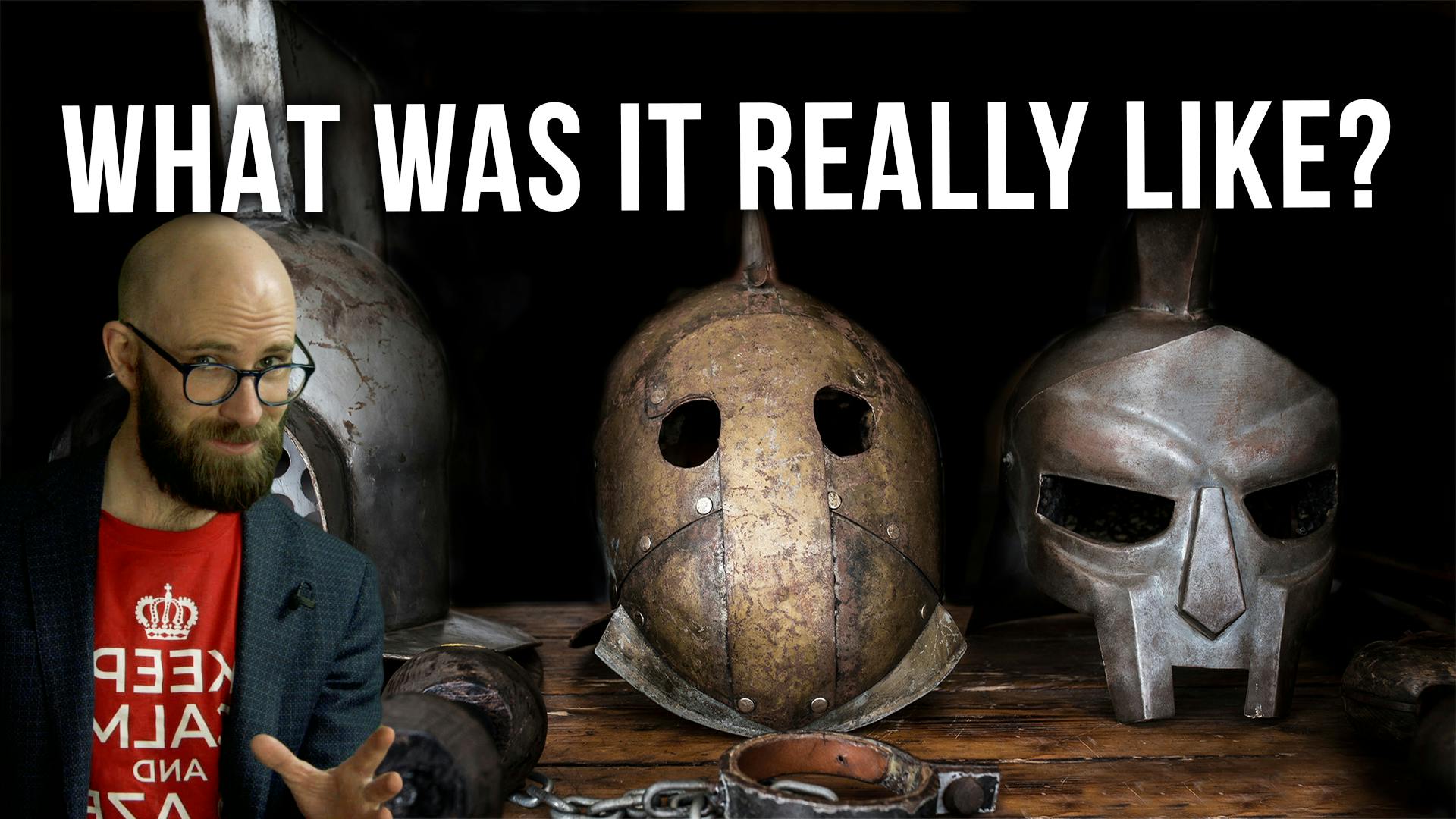
Gladiatorial combat may seem outdated and barbaric, but it is, at its
heart, a combat sport like mixed martial arts, boxing, and even
professional wrestling, with very similar appeal. There were clearly
defined rules, a sense of dramatic flair with costumes, and even
character archetypes. It was indeed bloody, but not as nearly as fatal
as many think today. Not every gladiator died in the arena, and those
who made it past their first handful of matches even less so beyond.
That isn’t to say that gladiator fights didn’t also come with many
deaths. For example, gladiator combat was usually accompanied by other
events such as parades, animal hunts, glorified prisoner executions
dressed up as combat practice for gladiators, and even occasional
audience fatalities. But how did the games get started, what was life
actually like for a typical gladiator, and how did these ubiquitous
games rather suddenly cease to be a thing after so many centuries of
widespread extreme popularity?
Sponsor: Incogni - Use code BRAINFOOD and get 60% off an annual plan using the link https://incogni.com/brainfood
Learn more about your ad choices. Visit megaphone.fm/adchoices

At the end of James Cameron’s 1989 underwater thriller The Abyss, oil
rig diver Bud Brigman, played by Ed Harris, dons an experimental diving
suit in which instead of air he breathes a special oxygenated liquid.
This allows him to avoid the lethal effects of extreme water pressure
and descend to the bottom of a deep ocean trench to defuse a nuclear
warhead. While certainly a memorable plot device, surely such a
technology is pure science fiction, right?
Well, not as much as you might think. The breathing fluid depicted in
the film, oxygenated perfluorocarbon, actually exists, and while scenes
with the diving suit were filmed with Ed Harris holding his breath, an
earlier scene in which a rat is immersed in breathing fluid was filmed
for real. While The Abyss is certainly the most famous depiction of
liquid breathing, the technology has been experimented with for over a
century, and while it might not be quite ready for use in deep-sea
diving, it may have lifesaving applications in the field of medicine.
Sponsor: Incogni - Use code BRAINFOOD and get 60% off an annual plan using the link https://incogni.com/brainfood
Learn more about your ad choices. Visit megaphone.fm/adchoices
In this episode of The Brain Food Show, we begin by discussing the first space walk in which the cosmonaut in question very nearly got stuck out there and his adventures thereafter. We then move on to discussing how the idea that the moon is made of green cheese got started.
Next up we discuss the late 1950s plan the United States had to nuke the moon, which interesting enough involved a young Carl Sagan. Failing in that endeavor we then look at that time the U.S. accidentally nuked Britain’s first satellite… That time the U.S. dropped four nuclear bombs on Spain accidentally, and then discuss the best thing that happened to Simon in the last year, which it turns out is not (apparently) getting married a couple weeks ago, but rather something else.
Also for reference, here is a picture of the Russian spacecraft mentioned in the episode and here is a link to the Tom Kirby song.
Sponsor: Incogni - Use code BRAINFOOD and get 60% off an annual plan using the link https://incogni.com/brainfood
Learn more about your ad choices. Visit megaphone.fm/adchoices

At 9:15 A.M. on November 10, 1961, a Lockheed Super Constellation of Portugal’s TAP airlines lifted off from Casablanca, Morocco. Aboard were nineteen passengers - mostly American tourists - bound for Lisbon. The skies that day were clear, and the flight looked to be smooth and uneventful. But just 45 minutes after takeoff, the pilot, Captain José Siqueira Marcelin, felt the cold barrel of a gun pressed against the back of his neck. The gun’s owner, a 39-year-old antifascist terrorist named Hermino da Palma Inácio, ordered Captain Marcelin to divert and fly over the cities of Lisbon, Barreiro, Beja, and Faro. Marcelin protested, arguing that the plane did not have enough fuel. But Inácio, a pilot and onetime aircraft mechanic himself, wasn’t fooled, and after glancing at the flight plan determined that the diversion was indeed possible. Out of options, Captain Marcelin had no choice but to obey. While in the early 1960s aerial terrorism was still a relatively new phenomenon, nothing could have prepared Marcelin and his passengers for what happened next. This is the outlandish story of history’s classiest hijacking.
Author: Gilles Messier
Editor: Daven Hiskey
Host: Daven Hiskey
Producer: Caden Nielsen
Sponsor: Incogni - Use code BRAINFOOD and get 60% off an annual plan using the link https://incogni.com/brainfood
Learn more about your ad choices. Visit megaphone.fm/adchoices
It has been called the “silent service.” Since their introduction in the early 20th century, service aboard submarines has been among the deadliest military occupations, with a full 70% of German U-boat crews during WWII never returning from patrol. But the hazards faced by submariners go well beyond enemy guns, depth charges, and torpedoes; submarines are complex machines operating in an extremely hostile environment, and can prove just as deadly in peacetime as in war. So the crew of the British submarine HMS Thetis was to discover in June 1939 when a seemingly routine shakedown cruise ended in tragic accident where Murphy’s Law was proven an immutable rule of the universe. (By the way, if you’ve not seen our video on Who was the Murphy in Murphy’s Law, we strongly suggest you go watch it. Go ahead, we’ll wait. The man behind it, Dr. John Paul Stapp, is the unsung hero and saver of millions of lives since his incredibly badass work and balls of solid steel did what he did to give us Murphy’s Law.)
Sponsor: Incogni - Use code BRAINFOOD and get 60% off an annual plan using the link https://incogni.com/brainfood
Learn more about your ad choices. Visit megaphone.fm/adchoices
In this episode of The Brain Food Show, we begin by following up on a previous discussion on Daimler and what exactly a little girl named Mercedes had to do with things. We then jump into the surprisingly oft’ requested follow up on Simon’s first ranch dressing experience.
Next up we move into the meat of the episode, discussing how astronauts scratch an itch in their space suits, followed by looking at the surprisingly long time you can survive in space without a space suit or any other protection, with no long term damage.
During that discussion we get side tracked talking about why the Apollo 13 crew got so cold on their trip when space is not cold at all, but rather a great insulator, and why they didn’t simply put on their space suits to keep warm.
We then discuss at length the amazingly fascinating way in which airline planes get oxygen to passengers when there is no central oxygen store aboard the plane, outside of the pilot’s emergency supply. Then we look at the equally interesting way in which they get oxygen to passengers when there is a loss of cabin pressure- again, given there is no central oxygen store aboard the plane for passengers.
Sponsor: Incogni - Use code BRAINFOOD and get 60% off an annual plan using the link https://incogni.com/brainfood
Learn more about your ad choices. Visit megaphone.fm/adchoices

When it comes to technological achievement and national prestige, few feats can compare to launching a satellite into space. Since the Soviet Union launched the world’s first satellite, Sputnik I, on October 4, 1957, 11 other government bodies have developed indigenous orbital launch capability: the United States, France, Japan, China, India, Israel, Ukraine, Iran, North Korea, South Korea, and a group of 22 nations represented by the European Space Agency. Conspicuously absent from the list is the United Kingdom, which in the late 1960s succeeded in developing this capability only to immediately abandon it. This is the story of the tragically brief British space program.
At the end of the Second World War, Britain was well-positioned to start its own advanced rocketry program. Like the United States and the Soviet Union, the victorious ally had captured dozens of the German V2 rockets which had rained down on Southern England and Belgium at the end of the war - along with many of the scientists and technicians who had built and fired them. In October 1945, the British Army launched Operation Backfire, in which three captured V2s were assembled, launched, and filmed near Cuxhaven in Northern Germany. These experiments gave the British a wealth of knowledge and experience on the workings of the German terror weapon. One year later, on December 23, 1946, R.A. Smith and H.E. Ross of the British Interplanetary Society submitted to the Ministry of Supply a design for a modified V2 that could carry a man into space. Their concept replaced the rocket’s one-ton explosive warhead with a pressurized capsule that would detach at apogee and parachute to earth. Alas Britain, shattered both physically and financially by the war, could not afford to fund such a project, and all plans for military and civilian rocketry were quietly shelved...
Author: Gilles Messier
Editor: Daven Hiskey
Host: Simon Whistler
Producer: Samuel Avila
Sponsor: Incogni - Use code BRAINFOOD and get 60% off an annual plan using the link https://incogni.com/brainfood
Learn more about your ad choices. Visit megaphone.fm/adchoices

In 1847 at the tender age of 16, seaman Hanson Gregory looked at some frying dough and said, “Everything is better with holes”… except his ship hull probably… and created the staple of breakfasts the diabetes lovin’ world over- the doughnut! Or so the story goes anyway. In truth, Captain Gregory’s account of how and why he supposedly invented the doughnut varied over time, and despite a statue being made of him in Rockport, Maine in 1947 commemorating his fried genius, nobody really knows where the holed doughnut came from. Some, including Captain Gregory, claim putting the hole in it makes it so you don’t get a mouthful of grease when you eat the center, but plenty of doughnuts exist that have no holes with no such issue. And people have been frying up such cakes for millennia with no apparent inclination to take the center out, except for occasionally to replace it with things like fruit and other fillings.
Nevertheless, it was in the late 19th and early 20th century that suddenly many decided a hole should be present in such fried dough. As to why, the timing of the change gives arguably the best hypothesis, or at least potentially why it became popular. Around the same time doughnuts with holes first popped up in New York City, bagels were also becoming very popular in the same place and were commonly put on display and sold stacked on wooden dowels. Thus, it is sometimes hypothesized that bakers in New York first got the bright idea to put holes in the dough before frying when one or more of them thought to sell the doughnuts in the same way as bagels- on dowels, which saved display space and, perhaps more significantly, made it easier to sell en masse on street corners. With this hypothesis, making more evenly fried dough may or may not have come into play.
Whatever the case, this holey fried dough rapidly gained in popularity in the early 20th century, particularly receiving a huge boost thanks to WWI and soldiers’ love of them in the trenches.
This all leads us to the topic of today- that time a Jr High dropout might as well have put a hole in people’s pockets with how fast they started throwing money at him when he created one of the most successful franchise businesses in history- The Open Kettle…
Author: Daven Hiskey
Host: Simon Whistler
Producer: Samuel Avila
Sponsor: Incogni - Use code BRAINFOOD and get 60% off an annual plan using the link https://incogni.com/brainfood
Learn more about your ad choices. Visit megaphone.fm/adchoices

When we think of the past prior to the 1960s or so, we tend to picture it in black and white. Much of the visual media of this period - including still photographs to films to television - was rendered in shades of grey, making relatively recent history seem that much more distant and alien. But colour photography did exist in the first half of the 20th Century; just think of classic films like The Wizard of Oz, released in 1939. But if this technology existed, why wasn’t it more common? And who first figured out how to capture the world in full living colour? Well, prepare to go from sepia to technicolour like Dorothy as we dive into the fascinating - and surprisingly long - history of colour photography.
Throughout the black-and-white photography era, people added colour to photographs and film by hand-tinting them with paint and ink. However, the development of true colour photography required a scientific understanding of how humans perceive colour. In 1850, German physicist Hermann von Helmholtz developed the trichromatic theory of vision, which postulated that the human eye contained three different kinds of light receptors - today known as cone cells - each sensitive to one of three colours: red, blue, and green. In 1861, English photographer Thomas Sutton, working with Scottish physicist James Clerk Maxwell, applied Helmholtz’s theories to create history’s first colour photograph. Sutton took three separate photographs of a tartan ribbon through a red, blue, and green filter, then converted these photographs into slides and projected them back through their respective filters, the three slides combining to create a full colour photograph. Though this image could not be fixed on a physical medium, Maxwell’s demonstration nonetheless pioneered the additive colour process, which would form the basis of colour photography for the next few decades.
Shortly after Sutton’s experiment, French physicist...
Author: Gilles Messier
Editor: Daven Hiskey
Producer: Caden Nielsen
Host: Simon Whistler
Sponsor: Incogni - Use code BRAINFOOD and get 60% off an annual plan using the link https://incogni.com/brainfood
Learn more about your ad choices. Visit megaphone.fm/adchoices
In this episode of The Brain Food Show, we begin by following up on a previous discussion on what the first good movie based on a computer game was. We then jump right into the various ways in which astronauts have managed their necessary expulsions over the years and some hilarious stories and interesting related facts that go along with that, including the teased Apollo 10 incident from The Final Frontier Part 1.
We then discuss the lost skill of women peeing standing up without getting any pee on themselves or their underwear in the process, and how exactly this is done with no equipment required.
Sponsor: Incogni - Use code BRAINFOOD and get 60% off an annual plan using the link https://incogni.com/brainfood
Learn more about your ad choices. Visit megaphone.fm/adchoices
“In mutant heaven there are no pearly gates, but instead revolving doors.” - Professor X
In the realm of comic books, the rules of the respective universe you’re reading about tend to differ wildly from the rules of our own. Besides the obvious thing of the world of say Marvel or DC being populated with virtual gods, iron plated dictators who sit atop flying laser thrones and a CEO who beats up criminals in a billion-dollar ninja-themed fur suit, problems in these universes sort of seem to just, go away.
Property damage, the judicial process and paper works are just a handful examples of things that don’t particularly seem to matter in comics and as a result, are rarely dwelled upon. There are exceptions of course, but for the most part the stories told by comics are allegorical so such details don’t really matter. Perhaps the most unusual reality of life comics have made a habit of sidestepping though is the idea of death, which is often portrayed as being about as much of an inconvenience to a comic character as an out of office hours work email. A trope so common even the characters in these stories have started to call it out.
Now, to begin with, think of a comic character. Do you have one in mind? Good. Okay so there’s a good chance that, at some point, that character has died, been buried, mourned and memorialised before springing back to life to continue slapping aside criminals and supervillains in form-fitting spandex as if nothing happened. And if they haven’t “died” there’s a good chance they were presumed dead after an explosion or something and then came back as if nothing had happened.
Starting with some of the heavier hitters from the DC side we have Batman, Superman, Wonder Woman, Green Lantern, The Flash, Martian Manhunter, Green Arrow and Robin. All of whom, at some point in their comic history have “died” and then came back.
Author: Karl Smallwood
Editor: Daven Hiskey
Producer: Samuel Avila
Host: Simon Whistler
Sponsor: Incogni - Use code BRAINFOOD and get 60% off an annual plan using the link https://incogni.com/brainfood
Learn more about your ad choices. Visit megaphone.fm/adchoices
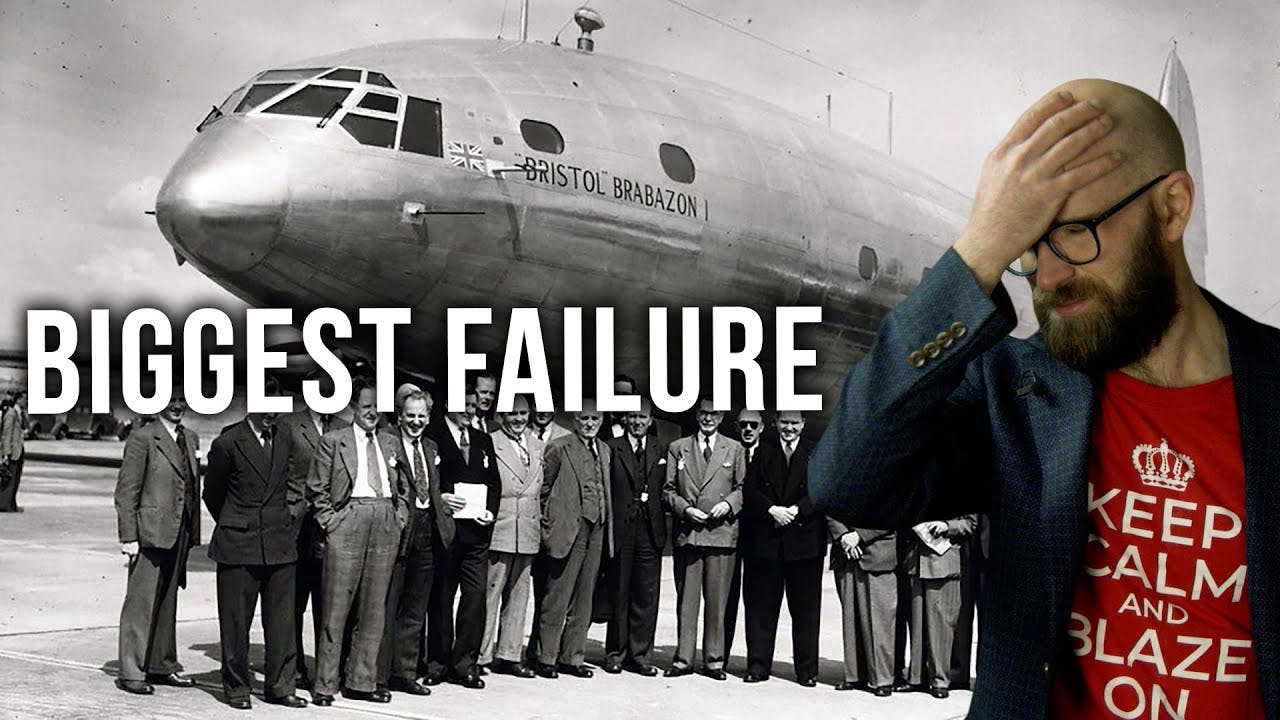
On April 27, 2005, the gigantic Airbus A380 airliner took to the skies for the first time, lifting off from Toulouse-Blagnac Airport with test pilot Jacques Rosay at the controls. At that moment the A380, weighing more than 500 tonnes and capable of carrying up to 853 passengers, became the largest commercial airliner ever to fly, dethroning the previous record holder, the venerable Boeing 747 Jumbo Jet. But while such giants might seem like products of the jet age, the dream of enormous ocean liners in the sky has been around for a lot longer. In the years immediately following the Second World War, Britain set out to build a truly gargantuan airliner, with which it hoped to revolutionize air travel and knit its crumbling empire together. Instead, the project turned out to be a technological dead end and a costly white elephant. This is the story of the Bristol Brabazon.
In 1942, the British Government began thinking ahead to the future of the British aviation industry. The demands of war had forced the British to cancel pre-war airliner projects and devote its wartime production capacity to building combat aircraft like fighters and bombers. As a result, nearly all transport aircraft used by British forces during the war were American designs like the Douglas DC-3. Even Britain’s national air carrier, the British Overseas Airways Corporation or BOAC, was forced to fill out its fleet with American aircraft like the Boeing 314 flying boat. This state of affairs, the Government realized, would leave British aviation at a serious disadvantage once the war ended - as a December 24, 1942 article in Flight magazine opined:
“The whole British Empire at the present time has an operational fleet of transport aircraft, comprising conversions, makeshifts and cast-offs, totally inadequate to represent the Empire in serving the air routes of the world in the peace to come. Have we to rely upon other nations to do it for us? The British aircraft industry is equal to the task. The Government should decide this vital question at once.”
Author: Gilles Messier
Producer: Samuel Avila
Editor: Daven Hiskey
Host: Simon Whistler
Sponsor: Incogni - Use code BRAINFOOD and get 60% off an annual plan using the link https://incogni.com/brainfood
Learn more about your ad choices. Visit megaphone.fm/adchoices
In this episode of The Brain Food Show, we kick off a series on space related facts. Before we get started in that, however, we do some follow up answering the question of whether the Allies in WWII used prisoners of war as slave labor. We then jump into the topic of the real life job of Space DJ, then the saga of the Pillownaughts.
Sponsor: Incogni - Use code BRAINFOOD and get 60% off an annual plan using the link https://incogni.com/brainfood
Learn more about your ad choices. Visit megaphone.fm/adchoices


Download from Google Play

Download from App Store
 United States
oh my GIDDY AUNT, YOU GUYS ARE BACK!!! The years of staying subscribed when you went silent have been worth it 🥳
love this podcast 5 stars. Simon we need more Brain Blaze
Great podcast been listening for a few days now and halfway through. Love the banter and the topics. Absolute perfect balance between rambling and facts as well.
Simon was feeling like a 'baller' because he could afford some 4 buck chocolate. Ten minutes later "Wait, when did we eat Foie Gras together?"
getting yelled - you infidel!! highlight of my day
7:46 Kobe!!! Too soon....? lol
I absolutly love this podcast... this and your youtube channels have gotten me thru alot of days at work. Thanks guys
This podcast needs Metamucil. Get regular, Stay regular. all jokes aside it's one of my favorites but the ebb and flow of episodes is maddening.
these boys slap
the poop thing is for like colon cancer or something instead of doing it at a doctors office or having to bring it in, but that's the only one I heard about in which Simon was talking about
Came here after discovering your emense amount of YouTube channels (you cold legit make a channel putting them all together in a news/highlights type style). The two of you here and the rest of the team from YouTube have not only saved my mind over lockdown but genuinely given me something to look forward to and learn from. I'm slowly making my way through from the very start and love the organic nature, genuine banter and perfectly random structure. I also really appreciate that'll you'll go back to something that was wrong or mispoken. Even though at least 80% of this seems to be picked from the air after a light bulb appears above your head. The facts get across. solid content. Well researched. Overall 5/5. Keep it up - you've got a life listener right here ❤
so excited to hear Simon and Daven on a somewhat regular basis
Go watch some marvel movies Simon! Cap America!
Great podcast. I binged all the episodes in about a month. The episodes got better as they went on but I do miss the "how can we connect this topic to star trek" bonus fact. I listen to other podcasts like this one but I like that the topics seems to be anything Daven finds interesting at the time. It's fun when I have heard some of facts and references on other podcasts and now get a different aspect of the story not relevant to my other podcasts topic.
Great podcast, I love listening to it when I go for a walk or run.
Simon is right about 2 months salary, class rings, and the postal service. what was the episode about again?
Simon is so right about 2 months salary thing.
Now I'm listening to the podcast as well as the numerous YouTube channels. I think this is a good addiction.
I love to listen to this show when. I'm just walking around. The back stories are so fun to hear about and the tangents are great.
finally finished the ep started when it first came out, yes you can legally rip and upload videos to your own personal accounts/servers just as long as you don't share it.