


 Claim Ownership
Cello Journey
Subscribed: 48Played: 1,238
Subscribe

Description
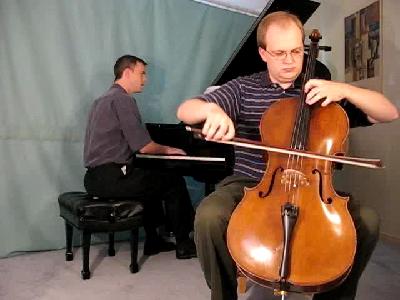
Cello Journey is a regular video podcast that features live music played on the cello and some commentary. You can listen to different pieces of music and also see what cello playing is about.
46 Episodes
Reverse

 2
2I thought
I would put up two versions of the same episode. It is difficult to
pick one sometimes. There may be a different feeling in each. Let me
know what you think.In this episode we play the Meditation from the Opera Thais by Jules Massenet.The
Thais comes from an interlude towards the end of the opera. It is
usually played on the violin. It is marked Andante Religioso and there
is a reflective mood throughout.This piece is special to me
because, over the years, my mother has played it in church on the
violin. I wanted to do a good job with it. We hope you enjoy it.For feedback you can e-mail cellojourney@gmail.com or visit the website cellojourney.com

I thought
I would put up two versions of the same episode. It is difficult to
pick one sometimes. There may be a different feeling in each. Let me
know what you think.In this episode we play the Meditation from the Opera Thais by Jules Massenet.The
Thais comes from an interlude towards the end of the opera. It is
usually played on the violin. It is marked Andante Religioso and there
is a reflective mood throughout.This piece is special to me
because, over the years, my mother has played it in church on the
violin. I wanted to do a good job with it. We hope you enjoy it.For feedback you can e-mail cellojourney@gmail.com or visit the website cellojourney.com
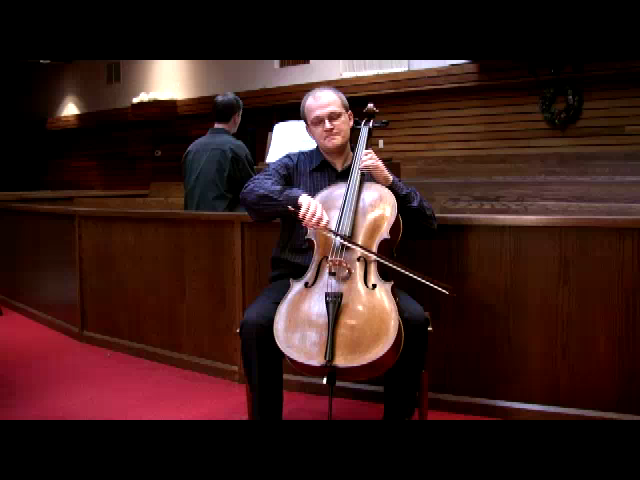
In this episode we play the cello concerto in C Major by Joseph Haydn.
We decided to play it with organ since it sounds more like an orchestra
and it makes a nice match. We are playing in a wonderful church called
Mountainview United Church. We hope you enjoy it.For feedback you can e-mail cellojourney@gmail.com or visit the website cellojourney.com
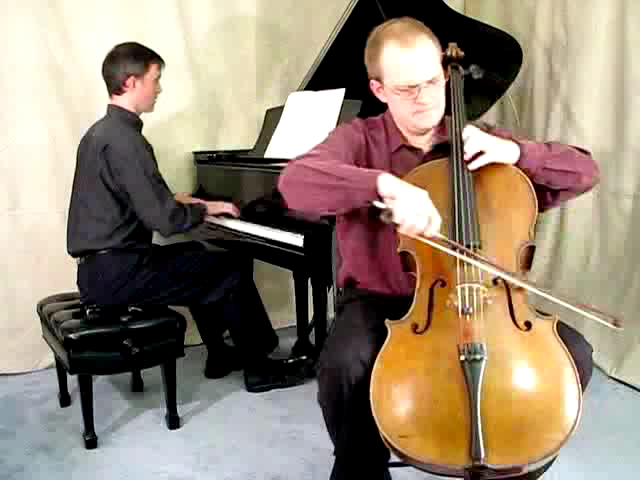
In this episode we play the Kol Nidrei by Max Bruch. This piece is
based on a Jewish prayer recited in the synagogue at the beginning of
the evening service on Yom Kippur, the Day of Atonement. You can find
out more information at the following link:
http://en.wikipedia.org/wiki/Kol_Nidre
The episode is re-posted because the video file was incomplete. Sorry about that. It should work better now.For feedback please visit cellojourney.com or e-mail cellojourney@gmail.com
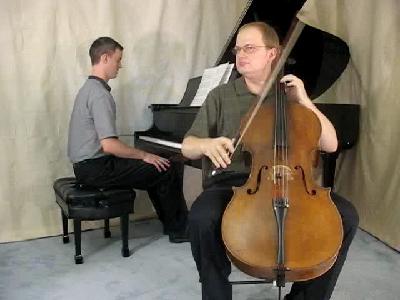
In this
episode we play the Sicilienne by the French composer Gabriel Faure. I
recently went on a trip to Quebec and had a chance to eat some great
French meals. As a result, I did a bit of French cooking myself. I
noticed that the common theme in this type of cooking is how
ingredients tend to fit well together. A sauce will fit everything else
that is on the plate. Flavors and textures go in and out of each other
to create a greater whole. This piece is similar in that its melodies
fade in and out of each other. Harmonies, colors and textures blend
well together and undergo subtle changes. I hope you can sense that in
the music.For feedback you can e-mail cellojourney@gmail.com or visit the website cellojourney.com
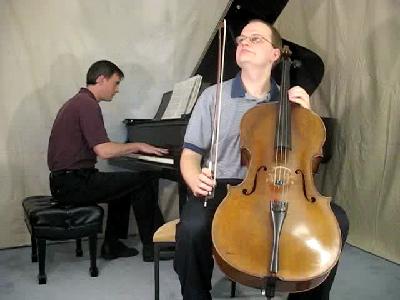
In this episode we play the variations by Ludwig van Beethoven on a theme by Mozart, "Bei Männern, welche Liebe fühlen?. This is based on a theme from the opera The Magic Flute originally sung by a soprano and a baritone in a duet. Musicians in Beethoven's time were very adept at playing and improvising variations. They could even improvise on a melody or favorite tune given to them by a member of the audience. Beethoven wrote many variations for piano solo and many variations for cello and piano. We hope you enjoy it.website: cellojourney.come-mail: cellojourney@gmail.com
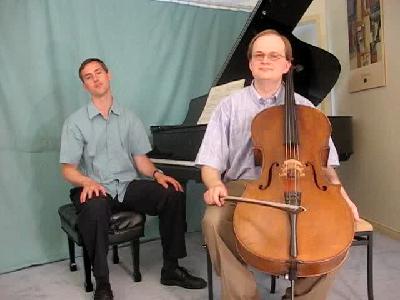
In this episode we play the first of three Fantasiestucke (Fantasy
Pieces) by Robert Schumann. This piece was originally written for
clarinet and piano but I think it sounds good on the cello. Schumann
often wrote sets of miniatures that each have their own mood. In this
one there is some tension between triplets (three notes per beat) in
the piano and duplets (two notes per beat) in melodies in both the
cello and piano. This adds unrest to this emotional and romantic piece.
We hope you enjoy it.cellojourney.comcellojourney@gmail.com
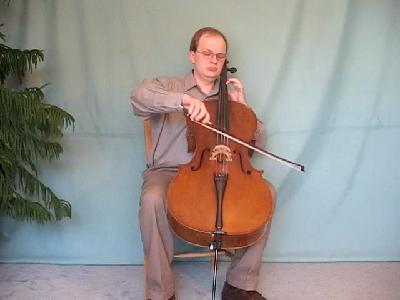
In this episode I play another dance by Johann Sebastian Bach. It is the Allemande from Suite No.2. What I like about this piece is how it flows along and how each phrase seems connected to another phrase. I hope you enjoy it.cellojourney.comcellojourney@gmail.com
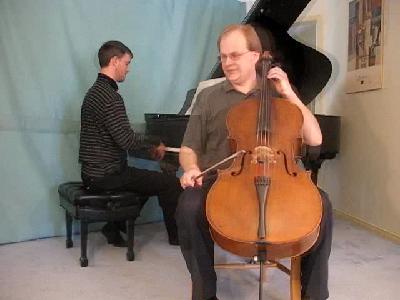
In this episode we play the Allegro Appassionato by Camille
Saint-Saens. This is a rather fast passionate and exciting piece.
Part of its passion is in its abrupt changes of tempo and loudness.
Even though it is exciting, it is in B minor and hence in a sad mode.
Also many of its melodies come down rather than go up.
For feedback please e-mail cellojourney@gmail.com or visit cellojourney.com
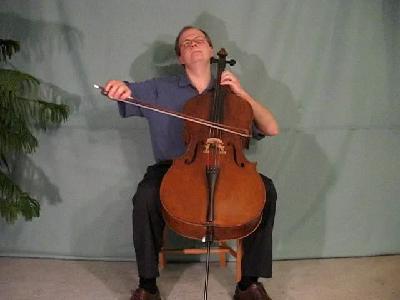
This prelude is the
introduction to Suite No.2 by Johann Sebastian Bach. Even though this
prelude is a bit sombre, I think it has a special warm mood to it. It
communicates something about life being confusing at times and how it
can be difficult to make sense of things. I think this piece is about
trying to make sense of things and putting them together. I hope you enjoy
it.To leave feedback please visit:cellojourney.comcellojourney@gmail.com

The music for this episode is the chanson or song by Gabriel Faure called Apres un Reve (After a Dream). At the time Faure wrote this he was having a difficult time in his life. A woman that he loved broke off an engagement to him. Gabriel was very disappointed, gloomy and sad. He wrote a number of pieces that reflect this mood.The poem that this piece is based on describes a dream with visions of heaven, being with one's true love, and happiness. At some point though the singer sings that he wishes the dream would return. Perhaps you have some dream that you wish would return to you. I hope you enjoy it.The poem and its translation can be found on the website cellojourney.comFor feedback please e-mail cellojourney@gmail.com
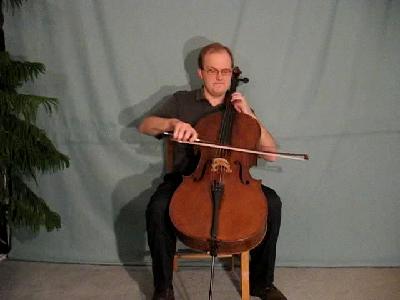
In this episode I play the Gigue from the first suite by Johann Sebastian Bach. It is a lively dance that ends the suite and also completes the suite on Cello Journey. I hope you enjoy it.For feedback please e-mail cellojourney@gmail.com or leave comments.
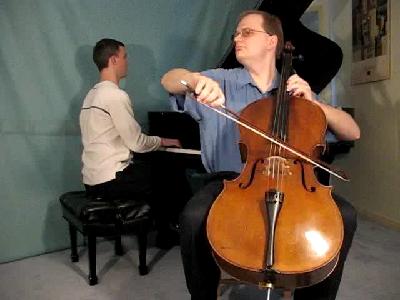
In this episode we play the 2nd half of Sonata No.4 by Ludwig van Beethoven that we started in an earlier episode. There is much care and detail that Beethoven put into this piece. There are tempo changes, accented notes and complex rhythms. The music gets suddenly louder or softer.This music is characteristic of Beethoven's later period where he combined a lot of structures and changed things around. The movement starts with a slow section that is almost timeless in nature. You can hear a quote of the theme from the first movement. Later begins a faster more energetic section. There are a lot of interruptions but eventually the music drives towards the end. We hope you enjoy it.For feedback please e-mail cellojourney@gmail.com or leave comments.
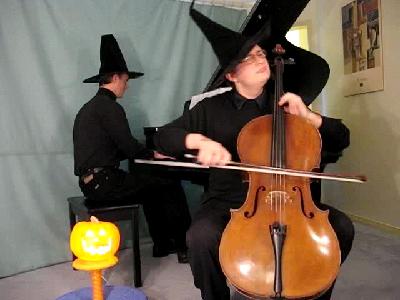
This is a special
Halloween episode of Cello Journey. Me and Ross play the Gnomentanz
(Dance of The Gnomes) by David Popper. It is a somewhat menacing and
spooky piece with a happy major section in the middle. Happy Halloween!For feedback please e-mail cellojourney@gmail.com or leave comments.
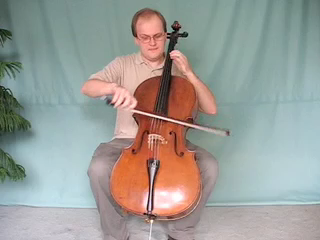
In this
episode I play a dance by Johann Sebastian Bach called a Courante.
There is only one more dance after this and then the first suite of
dances by Bach will be complete on Cello Journey. I hope you enjoy it.For feedback please e-mail cellojourney@gmail.com or leave comments.
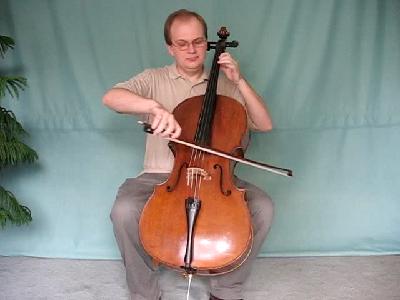
In this
episode I play a dance by Johann Sebastian Bach called a Courante.
There is only one more dance after this and then the first suite of
dances by Bach will be complete on Cello Journey. I hope you enjoy it.For feedback please e-mail cellojourney@gmail.com or leave comments.
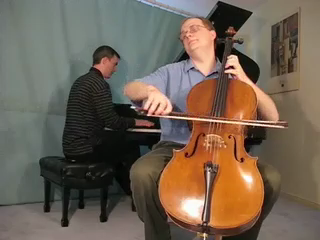
In this
episode we play the first half of Sonata No. 4 by Ludwig van Beethoven.
First there is a tender slower section and then a lively faster section.
For feedback please e-mail cellojourney@gmail.com or leave comments.
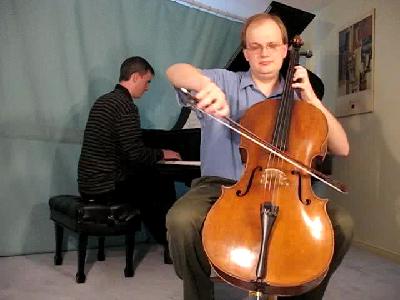
In this
episode we play the first half of Sonata No. 4 by Ludwig van Beethoven.
First there is a tender slower section and then a lively faster section.
For feedback please e-mail cellojourney@gmail.com or leave comments.

The music
for this episode is Papillon (Butterfly) by Gabriel Faure. Recently I
happened to watch a butterfly in a field. It was either flying around
quickly or it would land to rest and you could see its beautiful wings.
In this piece there are fast parts and melodic parts. I think these
represent the behavior of a butterfly. I
hope you enjoy it.For feedback please e-mail cellojourney@gmail.com or leave comments on cellojourney.com
The music
for this episode is Papillon (Butterfly) by Gabriel Faure. Recently I
happened to watch a butterfly in a field. It was either flying around
quickly or it would land to rest and you could see its beautiful wings.
In this piece there are fast parts and melodic parts. I think these
represent the behavior of a butterfly. I
hope you enjoy it.For feedback please e-mail cellojourney@gmail.com or leave comments on cellojourney.com

Comments

Download from Google Play

Download from App Store
 United States