


 Claim Ownership
Radio Rumi
Subscribed: 167Played: 2,522
Subscribe

© Radio Rumi
Description
Radio Rumi is hosted by Dr. Fatemeh Keshavarz at the University of Maryland. Keshavarz is author of award winning books including Reading Mystical Lyric: the Case of Jalal al-Din Rumi (USC Press,1998), Recite in the Name of the Red Rose (USC Press, 2006) and a book of literary analysis and social commentary titled Jasmine and Stars: Reading more than Lolita in Tehran (UNC Press, 2007). She has also published other books and numerous journal articles. Keshavarz is a published poet in Persian and English and an activist for peace and justice.
66 Episodes
Reverse
Rumi's lyric poetry seems to focus on our inner world of ambitions, joys, fears, and spiritual yearnings. In this program we look outwards and try to see the birds the way Rumi sees them. Not surprisingly, we find the inner and the outer realms to be connected closely.
In this first of a two-part program, I'll take you on the cosmic journey that Rumi plans for his readers. "There are thieves in town," he tells us but who are these thieves, and what do they want? Why does Rumi celebrate their arrival and what does he tell us to do when facing them?
In this program, I focus on the concept of trust or "tavakkol" which is a stage in the Sufi spiritual journey. I explore this concept through the lens of Rumi's poetry and as much more than a spiritual necessity. Rather, Rumi views trust as central to our personal and social well-being.
In this summer special episode, I discuss the worldly awareness of medieval Persian poets and thinkers, emphasizing their attention to cultures different than their own. Three figures are showcased: the philosopher Aziz Nasafi, Rumi, and Sa'di of Shiraz.
This episode focuses on the complexity of the concept of madness in Rumi's poetry. It explores our poet's approach to madness as a tool that curbs the power of rules and regulations to allow the formation of human spiritual originality.
 1
1This program is dedicated to the significance of dancing in human life. I start with Hafiz of Shiraz, then move on to Sa'di's approach to the topic and end with a ghazal of Rumi which uses the refrain "Come on! Dance!" We explore what these medieval poets think dancing does for us.
On the occasion of the arrival of spring, millions of people across the globe are celebrating "Nowruz." In this program, I explore the literary, symbolic, and spiritual meanings of the concept of spring through a few examples from the ghazals of Hafiz, Sa‘di, and Rumi.
In this program, I focus on wine and wine-house in the poetry of Hafiz of Shiraz. In the journey that we take from Konya to Shiraz, instead of asking whether the wine that Hafiz drank was real or allegorical, I explore the wine-house itself as a counter space to places of worship.
In this episode, I focus on the ways in which one of my favorite philosophers and a few life-companion poets (including Rumi) discuss an important aspect of our life journey: traveling from the isolation of an ego to the generosity of sharing ourselves with trusted companions.
I start this program with a quote from a modern Western philosopher about the interconnection of all life everywhere. Comparing his view with that of a medieval Persian Sufi, I then share with you Hafiz and Rumi's poetic expressions of the same idea: life as a harmonious interrelation.
A large part of the world has just celebrated Christmas. This program looks into the poetic presence of Jesus in classical Persian poetry and his symbolic dedication to perpetuating life and honoring its sanctity.
In this episode, we take another poetic journey to Shiraz to spend Yalda with the master poet, Saʿdi. He speaks of the symbolic significance of nights as moments of repose, and of cruelty to others as the true darkness. We return to Konya wishing Iranians' suffering in this Yalda of cruelty to come to an end soon.

This episode is dedicated to the Iranian children suffering as the violent response to the uprisings causes them harm. I focus on children as the dynamic, playful, and growing presences in our lives. Rumi speaks of them frequently as he alludes to our child within, the part of us which yearns for growth.
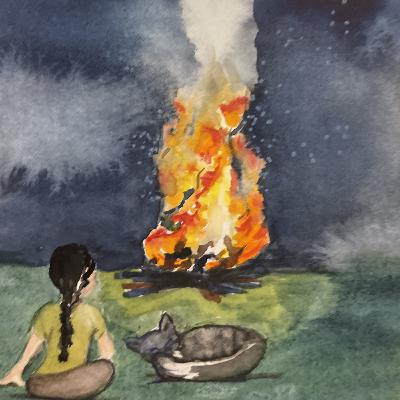
I start this episode by describing the concept of the Self - "Khod" in Persian - as an ongoing inner process. I then explore Rumi's words on the way this Self, when liberated, can become a Lover or "Ashegh," a site for the glow of the fire of life.
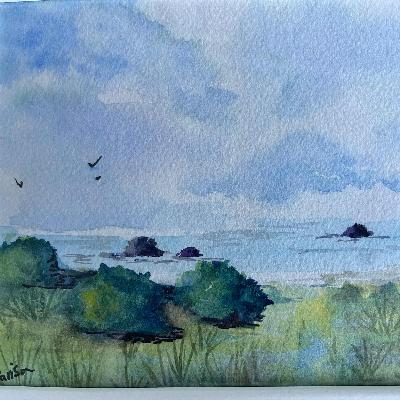
This episode is dedicated to the concept of healing, as Rumi speaks about. In his view, healing is not a thing which happens to us but something that we build gradually. It begins by taking action, observing results, and building on them with more action. To teach us this difficult concept, he uses examples from nature.
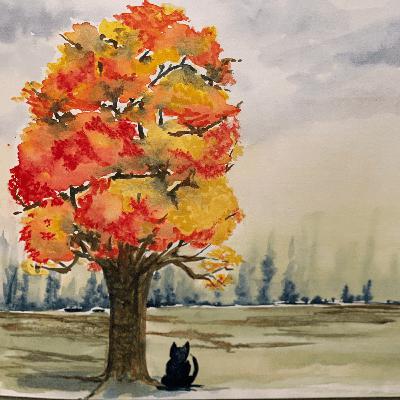
In this episode, I talk about seasonal change and the autumn, which we usually see as a sign that the summer has ended. For Rumi, the pale leaves are more than that. Dealing with the short days and cold winds, waiting for the spring, the autumn leaves know the story of lovers’ separation.
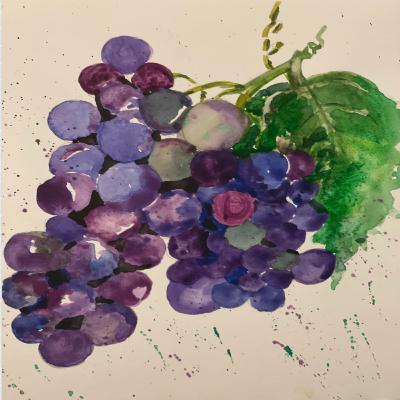
In this program I continue to explore what poetry was to Rumi. Sometimes it was the music to his happy moments, and comfort during sadness. But he also used it for more complex things like keeping us curious, or showing us the value in perplexity. Most of all, he loved helping us discover the movement in things that seem unable to move, like grapes' journey to sweetness. I end with our own journey to Shiraz, again, where Saʿdi's poetry helped me reach my ailing mother.

In this program, I start by underlining Rumi's emphasis on the concept of sokhan ('human speech'). For our poet, human beings are made up of their thoughts, which they give birth to when they speak. Like roads, even superhighways, human speech connects peoples and cultures across cities and continents. Then we do something new: we travel from Konya where Rumi lived all the way to the Southwest of Iran, to hear the Great Saʿdi of Shiraz on the same topic.
In this program I explore the concept of "birth" in Rumi's lyric poetry as it applies to the entire cosmos. The convergence of the Winter Solstice, Christmas, and the Iranian Yalda celebrations indicate the symbolic significance of birth in many cultures. What does birth mean to Rumi? How does he put his poetic mark on this universal human experience?
In this program I speak of Rumi’s vision on giving thanks. Describing “patience” and “gratitude” as the twin roads to contentment, Rumi points to our capacity for anticipation as a great source of strength. “The one who has sensed the scent of the rose,” he says ” will dance all the way to the garden.”


Download from Google Play

Download from App Store
 United States
CWNW, this one's for you. It's all about Rumi & madness, so you'll fully relate.
I love your word you are truly understand the meaning behind his word god bless you and plz continue your efforts towards the truth ♥️
عالیه فقط کاش هر هفته یه اپیزود بیرون بدید عالی تر میشه
Mrs Keshavarz I really enjoy your podcast and really appreciate it! thank you for creating this podcast.
be connected, not imprisoned