


 Claim Ownership
Travelers In The Night
Subscribed: 154Played: 9,442
Subscribe

© Albert D. Grauer
Description
A real "Science Snack" for anyone who is interested in the extraterrestrial.
Dr. Al Grauer is a member of the Catalina Sky Survey which has led the world in near Earth asteroid discoveries for 17 of the past 19 years.
The music is "Eternity" by John Lyell.
Astronomy Asteroids Space NASA Comets Earth Impact Aliens
Dr. Al Grauer is a member of the Catalina Sky Survey which has led the world in near Earth asteroid discoveries for 17 of the past 19 years.
The music is "Eternity" by John Lyell.
Astronomy Asteroids Space NASA Comets Earth Impact Aliens
1265 Episodes
Reverse
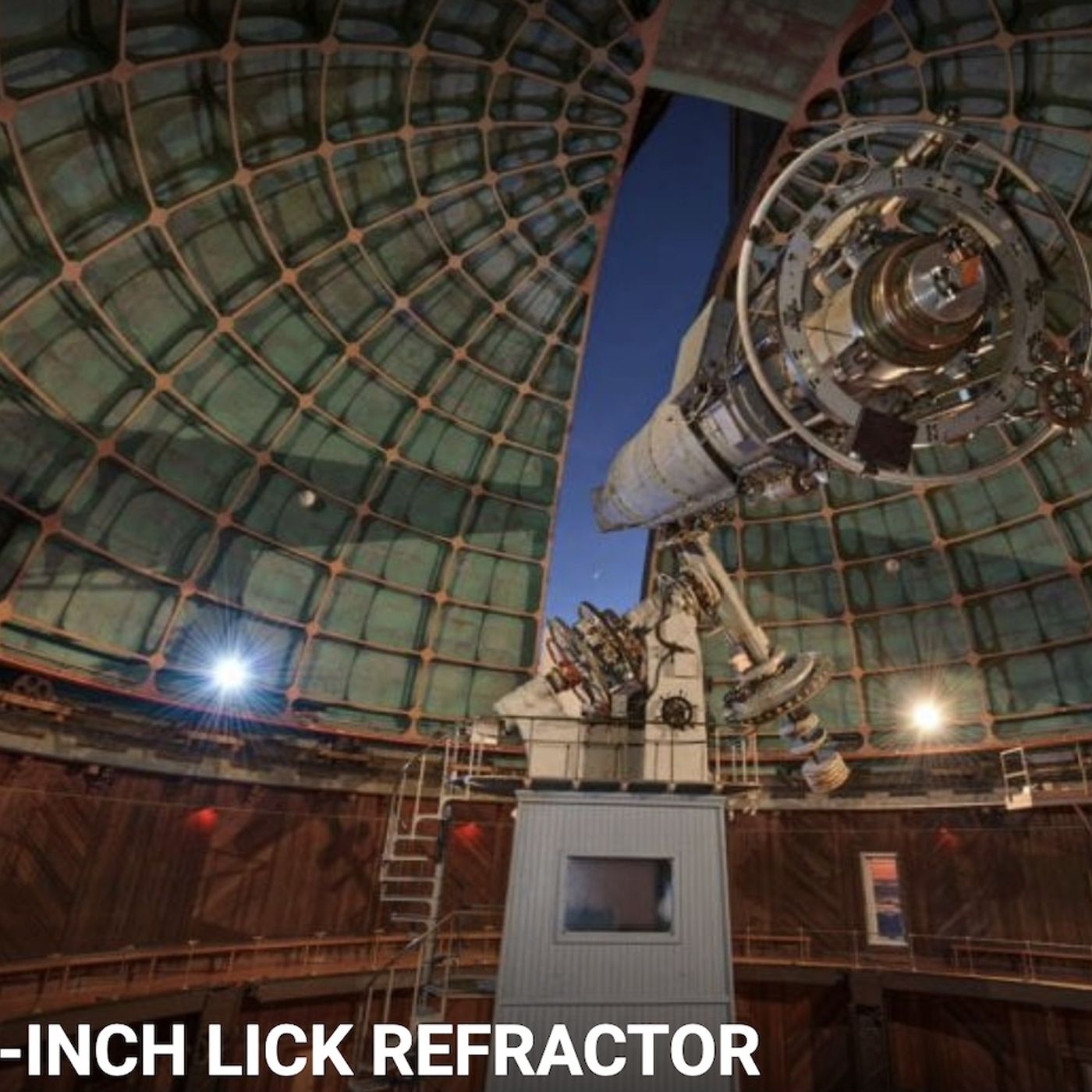
In 1892 the world’s largest telescope, the Lick Observatory’s 36 inch refracting telescope made the news when E.E. Barnard discovered, Amalthea, the 5th moon of Jupiter. In 2025 this historic telescope made the news again when on Christmas morning winds of 114 mph blew off a 3 ton piece of the shutter on its dome.The adaptive optics research pioneered at Lick Observatory helped in the creation of the twin giant 10 meter telescopes that sit atop Mauna Kea in Hawaii.
Without additional data, the true nature of the rapidly northward moving point of light my Catalina Sky Survey teammate Carson Fuls had just discovered would have remained a mystery. Fortunately, this new object was tracked by telescopes in both Arizona and New Mexico. These data were used to calculate it's orbit around the Sun, estimate it's size, and give it the name 2017 UX5. When Carson first spotted this enormous 1,200 foot diameter space rock it was more than 30 million miles away traveling in our direction at 10.7 mi/s. It's orbit and that of the Earth's nearly intersect and at the closest point they are about two and one half times the Moon's distance from us apart. An asteroid the size of 2017 UX5 impacts the Earth every 76,000 years or so. According to the impact calculator developed at Purdue University and the Imperial College of London if 2017 UK5 is made of porous rock and came in at an angle of 45 degrees, it would start to break into pieces at an altitude of 41 miles and upon reaching the surface would create a crater 2.2 miles in diameter and 5/8 of a mile deep in sedimentary rock. The results 20 miles away from impact would be that of a 6.4 Richter Scale magnitude Earth quake followed by 176 mph air wind blast which would blow down 90% of the trees and collapse wood frame buildings. Fortunately asteroid hunters have not discovered any object like Carson's discovery with our number on it.
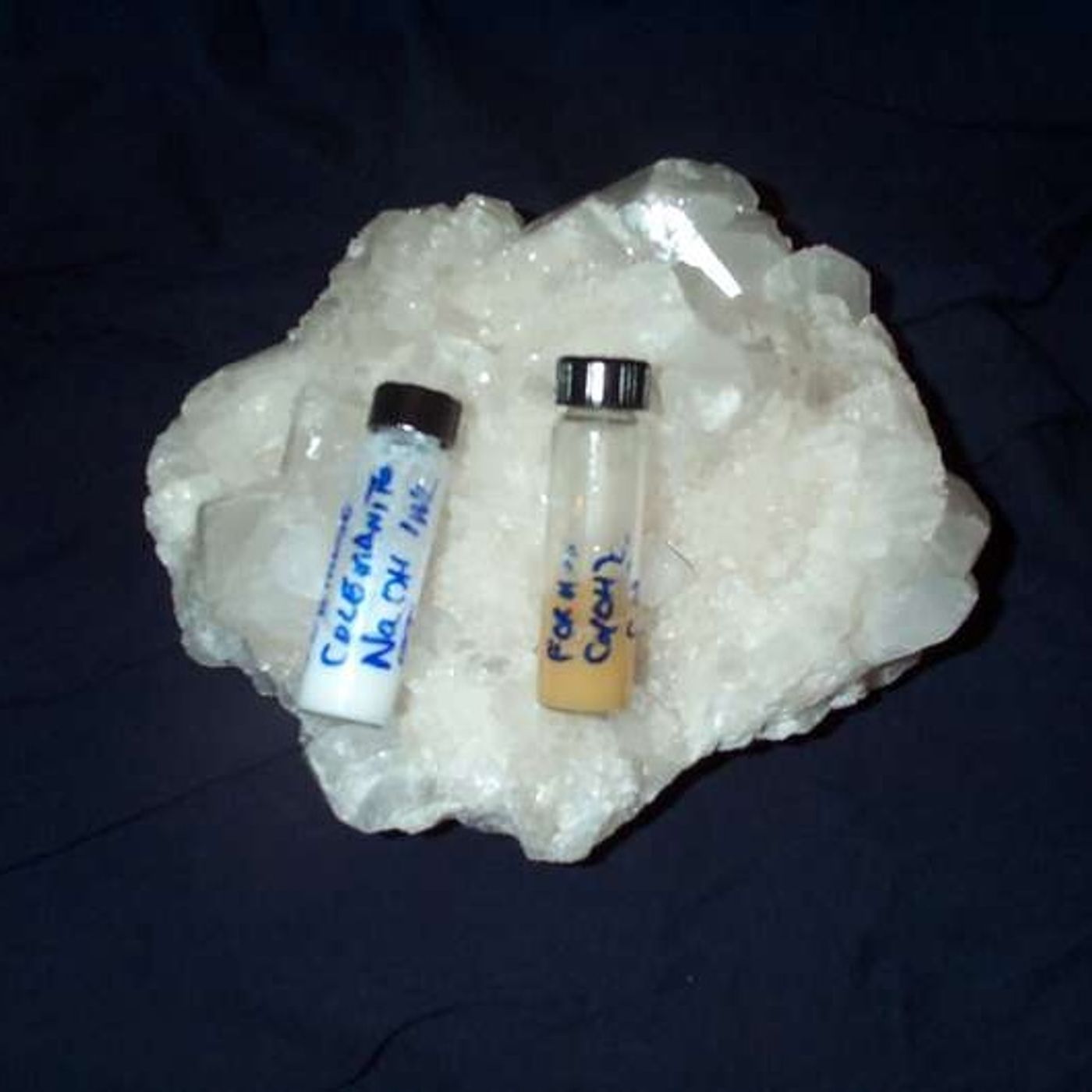
On Earth living things are everywhere from the deepest ocean depths to the highest mountain tops. On our home planet RNA (Ribonucleic Acid) is a complex essential molecule involved in the process of translating genetic information into the working components of living cells. In a recent paper in the peer reviewed scientific journal Proceedings of the National Academy of Sciences , Dr. Yuta Hirakawa and his team of two coauthors report on their experiments to produce RNA under conditions similar to those which may have occurred in the early history of Earth and Mars.
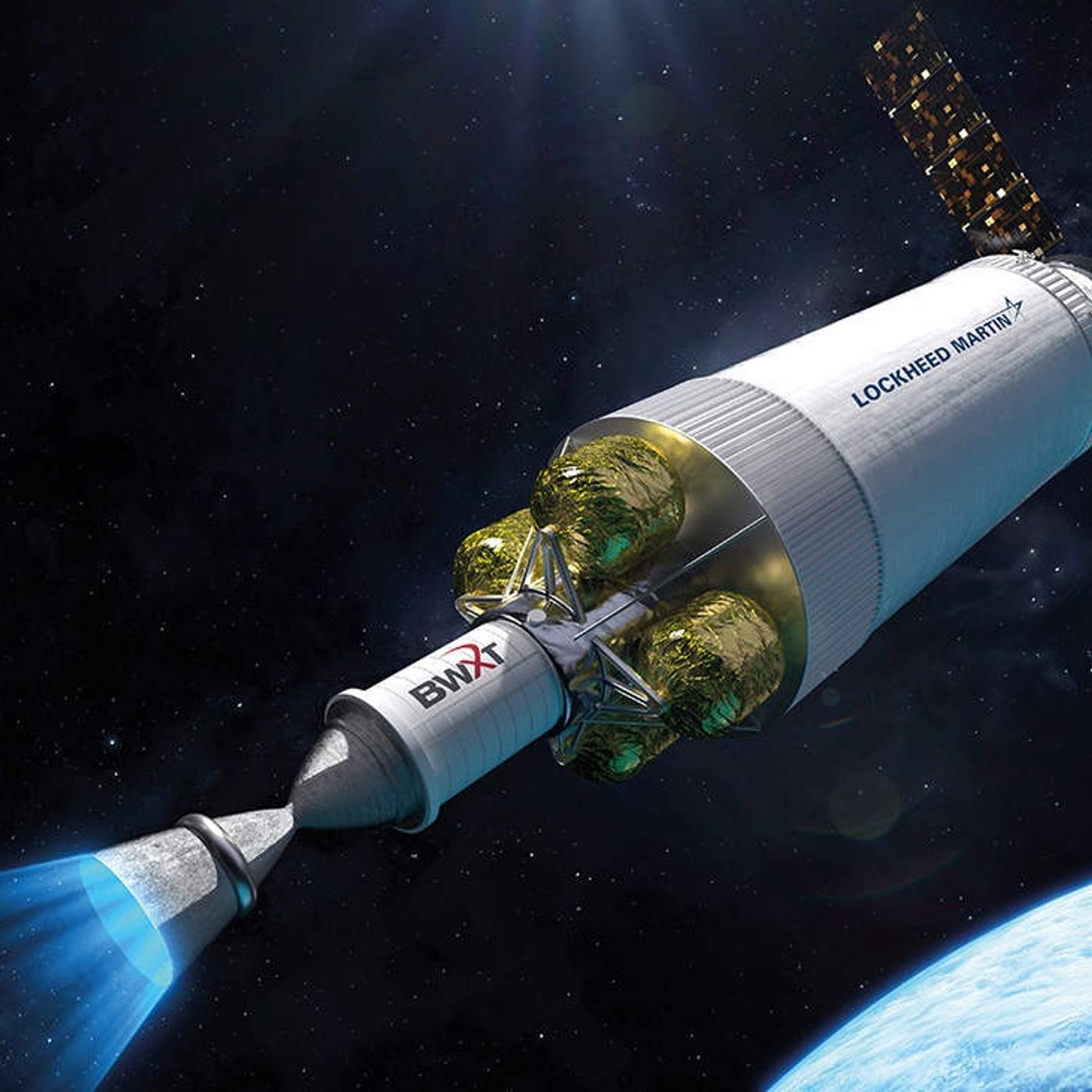
To get an idea of the energy involved in a rocket launch, the NASA Saturn V, moon rocket, fully fueled on the launch pad contained the chemical energy of 2,000 pounds of TNT. This old technology could carry us to Mars and back on missions that would last years. To cut the mission time, the risks, and the mass of supplies required for such a prolonged space mission NASA is looking at alternative means of rocket propulsion. Back in the 1950s NASA's project Orion was a study to investigate propelling a rocket by a series of atomic bomb explosions behind the vehicle. Now a safer and more gentle way of propelling a space craft with nuclear fission is being studied as the result of a NASA grant to BWX Technologies. The concept is to heat liquid hydrogen using a high temperature fission reactor furnace which would expel the gas at a high velocity producing the rocket's thrust. The process would be about twice as efficient in terms of thrust per pound of fuel when compared to burning a hydrogen and oxygen mixture. Since it is unacceptable to release trace amounts of radioactivity in the rocket's exhaust, engineers are investigating a technique developed by NASA in which the hydrogen exhaust is burned with oxygen to produce water which can be caught and decontaminated. Don't expect to buy a round trip ticket on a high speed fission powered rocket any time soon. However, in the long run nuclear technology could revolutionize the exploration and colonization of our solar system.
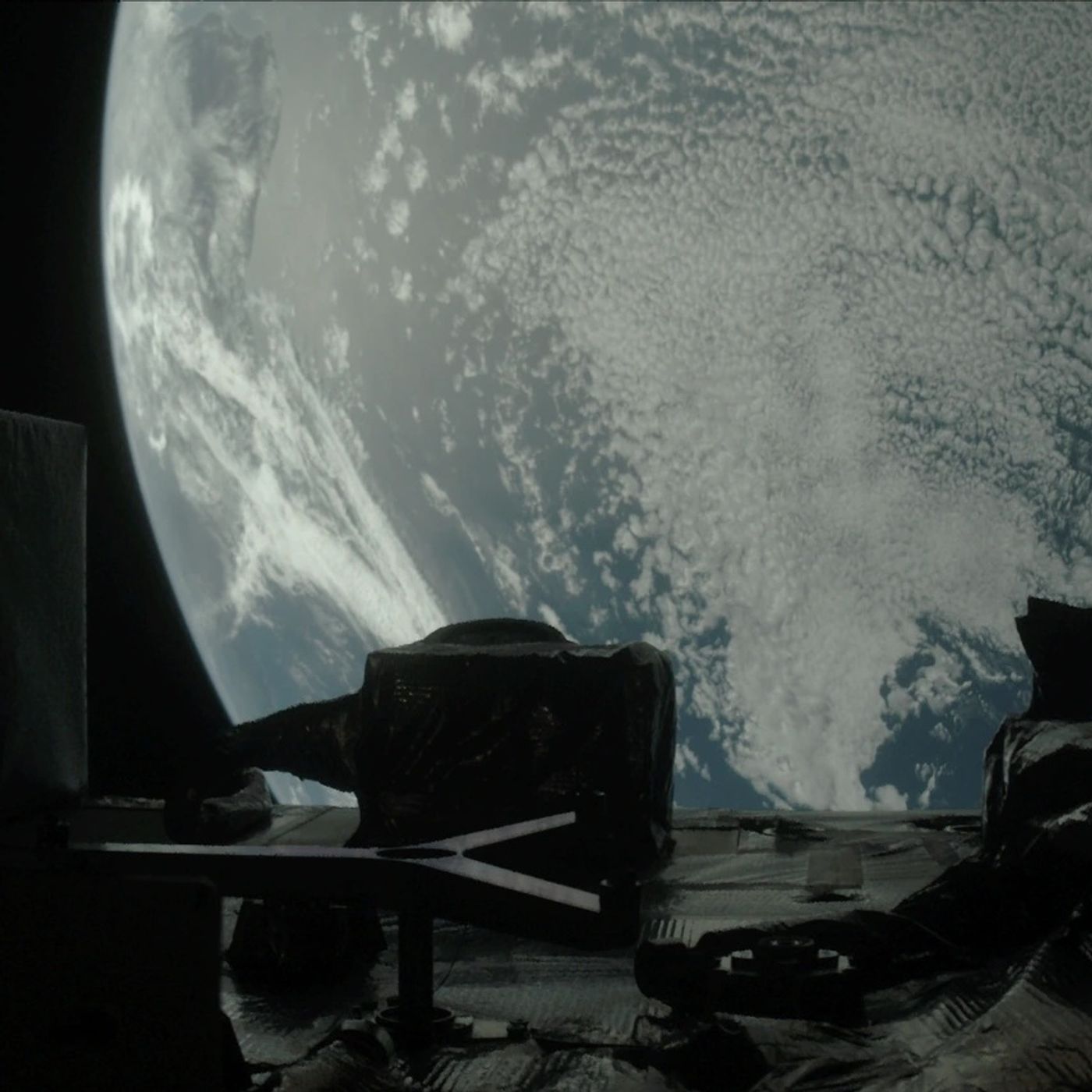
In April 2029 on one of the luckiest Friday the 13th in human history the 1500 ft by 500 ft asteroid Apophis will pass within 23,600 miles of the Earth’s surface traveling at some 4.6 mi/s. This is extremely fortunate since an Apophis impact would release the energy of scores of nuclear weapons and cause wide spread devastation. NASA's OSIRIS-APEX will become the companion of the potentially hazardous asteroid Apophis on 5 June 2029,
Eighteen hours before my Catalina Sky Survey teammate Rose Matheny first spotted a small space rock with our Schmidt telescope on Mt. Bigelow, Arizona it had passed less than the Earth's diameter from the surface of our planet. Rose was able to discover this Smart Car sized space rock after it moved out of the Sun's glare. At this point it was about the Moon's distance from her and was traveling away at 3.4 mi/s. After Rose posted her discovery observations on the Minor Planet Center's Near Earth Object Confirmation page, for the next 24 hours it was tracked by telescopes in Spain, Illinois, and Arizona. Scientists at the Minor Planet Center used these data to calculate it's orbit around the Sun, estimate it's size and give it the name 2017 UJ2. This small asteroid had come near the Earth in 1978 but was invisible to the technology which astronomers had available at the time. 2017 UJ2 will not come close enough for us to detect in the foreseeable future, however, there are likely to be tens of millions of others like it which can come close to Earth. A small asteroid the size of Rose's discovery is likely to enter our atmosphere at least once a year and explodes at about 4 times higher than airliners fly. If such an event happened at night and you were lucky enough to see it you would be treated to a fantastic light show. If you are as lucky as a power ball winner you might even be able to find a piece of it on the ground.

The Earth’s atmosphere does a good job of protecting humanity from space weather, however, occasionally a major event does break through our shield and gets our attention. Tree rings and ice cores have recorded past space weather events thousands of time larger than which have occurred in the modern age. investing in research seems wise.
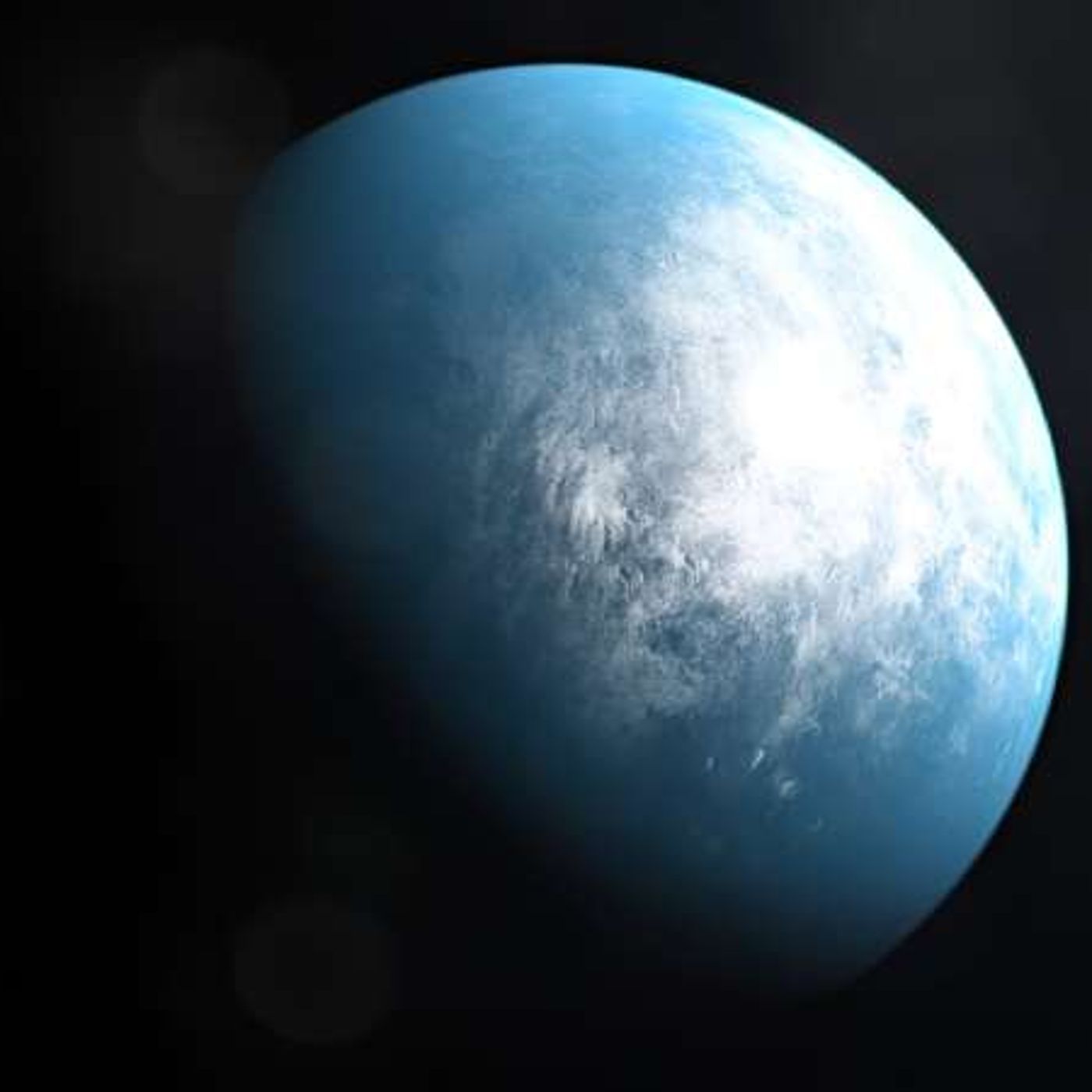
In an area which is about 1/400th of the entire sky, the NASA Kepler spacecraft has discovered 30 Earth like planets which are likely to have liquid water on their surfaces orbiting distant stars. These planets are likely to represent a tiny sample of the habitable planets which exist in the Milky Way. In spite of our efforts to find them, the question remains where are the alien civilizations? In a recent talk given at the Division of Planetary Sciences meeting Dr. Alan Stern of the Southwest Research Institute suggests that perhaps the majority of worlds with biology and intelligent civilizations exist on interior water ocean worlds where their existence is hidden by the thick layers of rock and ice which separate them from the hostile vacuum of space. We know that in our solar system alone the moon of Jupiter Europa, Saturn's moon Enceladus, and perhaps several other small worlds are likely to have oceans of nutrient rich liquid water covered by a thick layer of rock and ice. We also know that Whales and Dolphins have larger brains than humans, communicate with each other, and exhibit other forms of intelligence. Advanced civilizations existing in ice covered seas may know little of the greater Universe, may find it difficult to consider transporting enough water to travel beyond their worlds, and may not think that it is possible to communicate with others of their kind who are similarly hidden under miles and miles of radiation absorbing ice and rock.
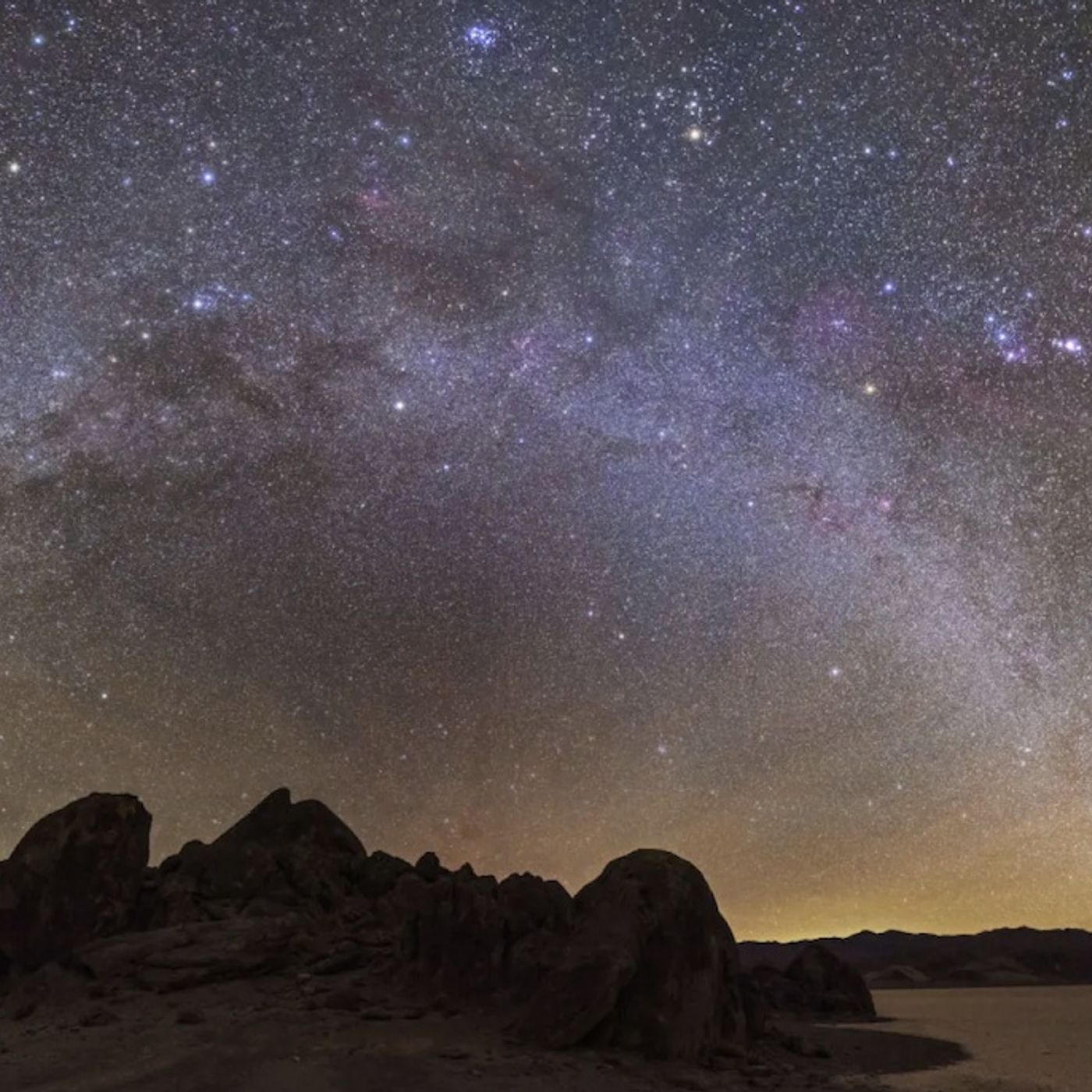
Around the world those who value the natural night sky are evaluating the effects of light pollution. In addition to impairing astronomy and star gazing the past 100 years of increasing light pollution is proving to be harmful to human health and the natural world upon which we all depend. The purpose of the Dark Sky Network is monitor and facilitate the mitigation of the harmful effects of light pollution.
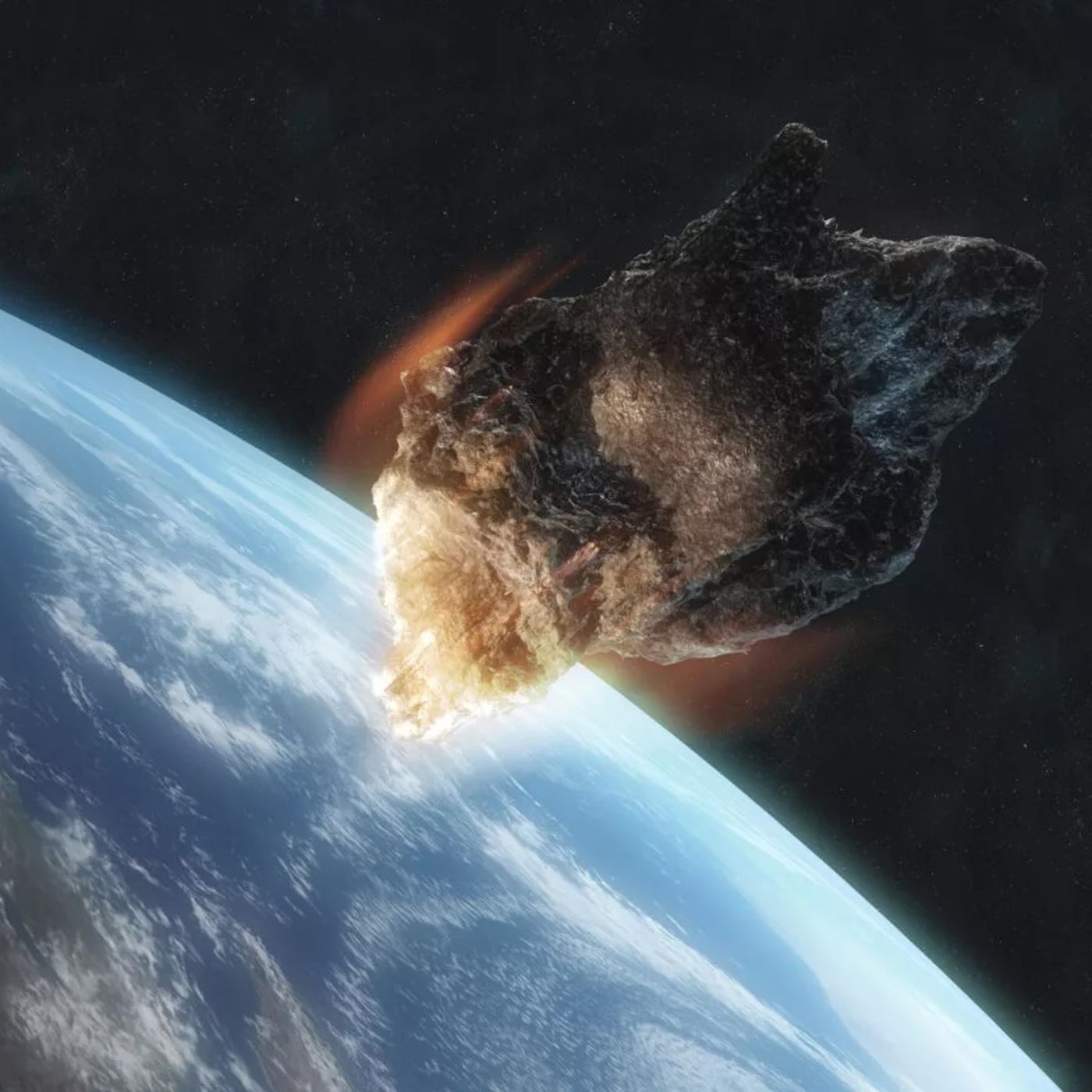
On it's gravitational leash, Earth's pet space rock, 2016 HO3, accompanies us at a distance of between 38 and 100 times the Moon's distance from Earth as we both travel about the Sun. As this tiny asteroid orbits the Sun it spends about half of it's time inside the Earth's orbit where it moves faster and passes ahead of us and the other half of it's yearly path outside of our orbit which causes it to lag behind our home planet. Since it's discovery little has been known about Earth's pet space rock leaving some to speculate that perhaps it is an old rocket booster or other piece of space junk. To answer this question, Dr. Vishnu Reddy of the University of Arizona's Lunar and Planetary Laboratory headed up a team of astronomers who used the University of Arizona's Large Binocular Telescope and the Discovery Channel's Telescope to determine some of it's properties. This team of researchers found that 2016 HO3 is indeed a natural object about 100 to 300 feet in diameter, rotates about once every 28 minutes, and is made of material similar to meteorites which have landed on Earth. Our pet space rock, 2016 HO3, has apparently been in it's present relationship to Earth for a hundred years and is likely to remain so for hundreds of years to come. Even though 2016 HO3 is not gravitationally bound to the Earth, the combination of the Sun's and Earth's gravitational pulls keeps it relatively near making it easy to reach and thus is an ideal candidate for visits by human or robotic spacecraft.
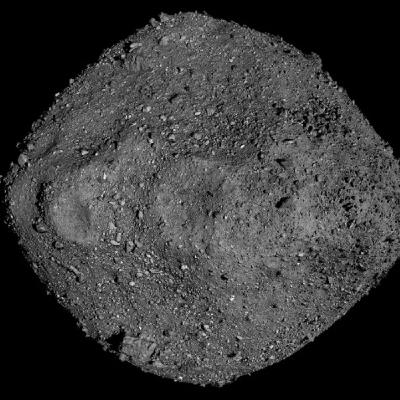
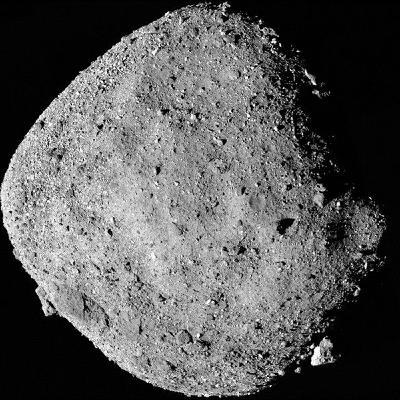
Since in its early history the Earth’s surface was hot and lifeless it is likely that asteroids formed in the same era as Bennu delivered the raw materials for life when they impacted our home planet long ago

On Earth, human life is enabled by plants which provide us with calories, vitamins, fuel, medicines, and oxygen to breathe. In addition, recent scientific studies indicate that plant cultivation reduces anxiety and depression and has a positive influence on diabetes, heart disease, obesity, and longevity. Perhaps this is the reason that 80% of the cultivated plant species on planet Earth are not used for any food related purpose. On long duration space missions astronauts live in close quarters isolated from the natural world where the basic activities like eating, sleeping, and attending to bodily functions are difficult and stress producing. Recent research conducted on the International Space Station suggests that space gardening helps astronauts to cope with the sterile space craft interior, allows them to combat boredom, as well as some of the other negative psychological effects of their long period of confinement. Specific examples of International Space Station gardens include astronaut Scott Kelly's first zinnia to bloom in space and astronaut Peggy Whitson's small crop of space soybeans. For many thousands of years people making long journeys have taken plants for food and recreation with them. It is likely that when humans travel to Mars they will continue this practice. The plants that Mars explorers take with them will provide a source of fresh fruits and vegetables , fresh air to breathe, and perhaps a psychological benefit that is crucial to the success of their mission.
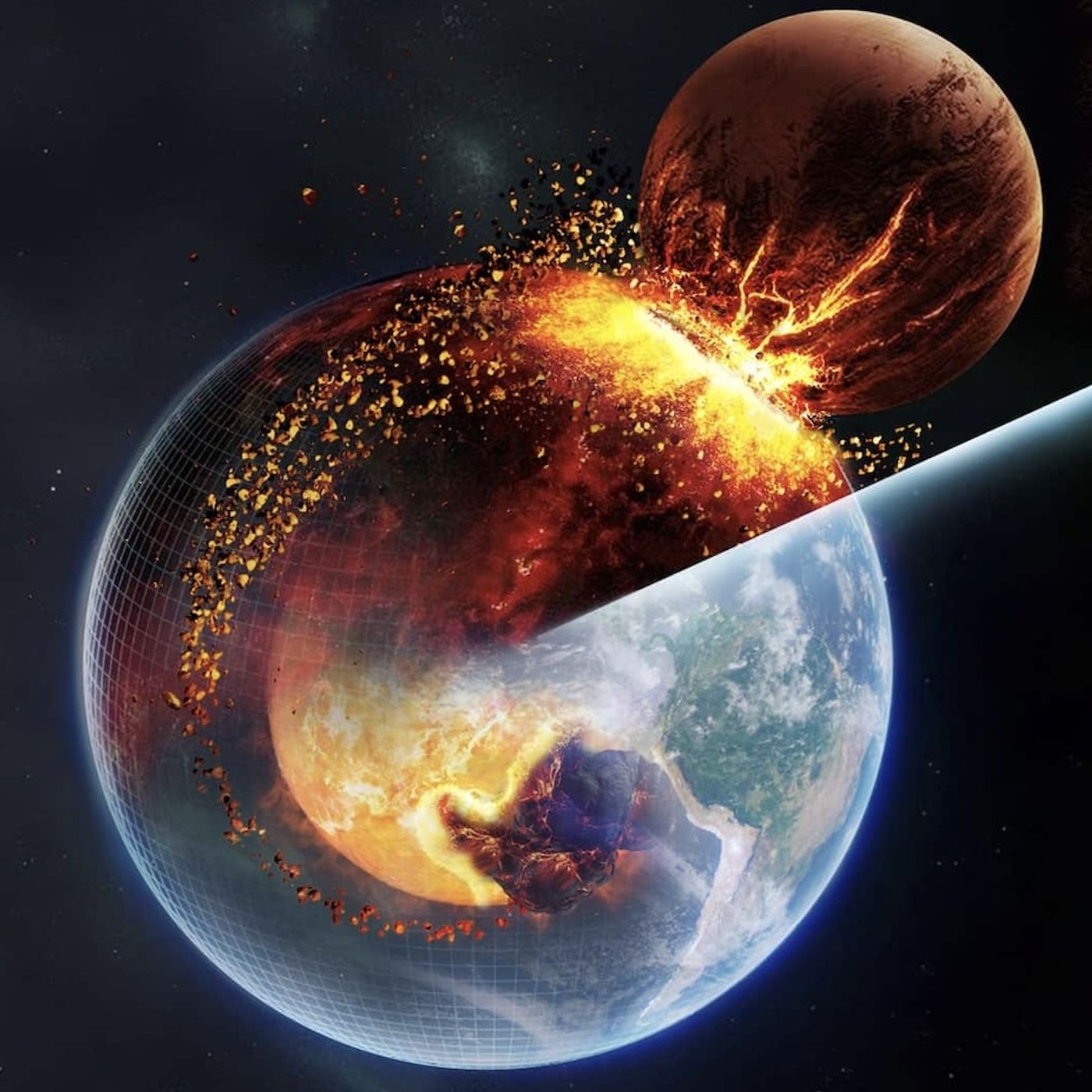
In the distant past things in our solar system were very much more wild and violent than they are today. 4.5 billion years ago a Mars sized object called Theia impacted Earth producing our Moon. Scientists are able research this event using the current chemical compositions of the Earth and Moon.
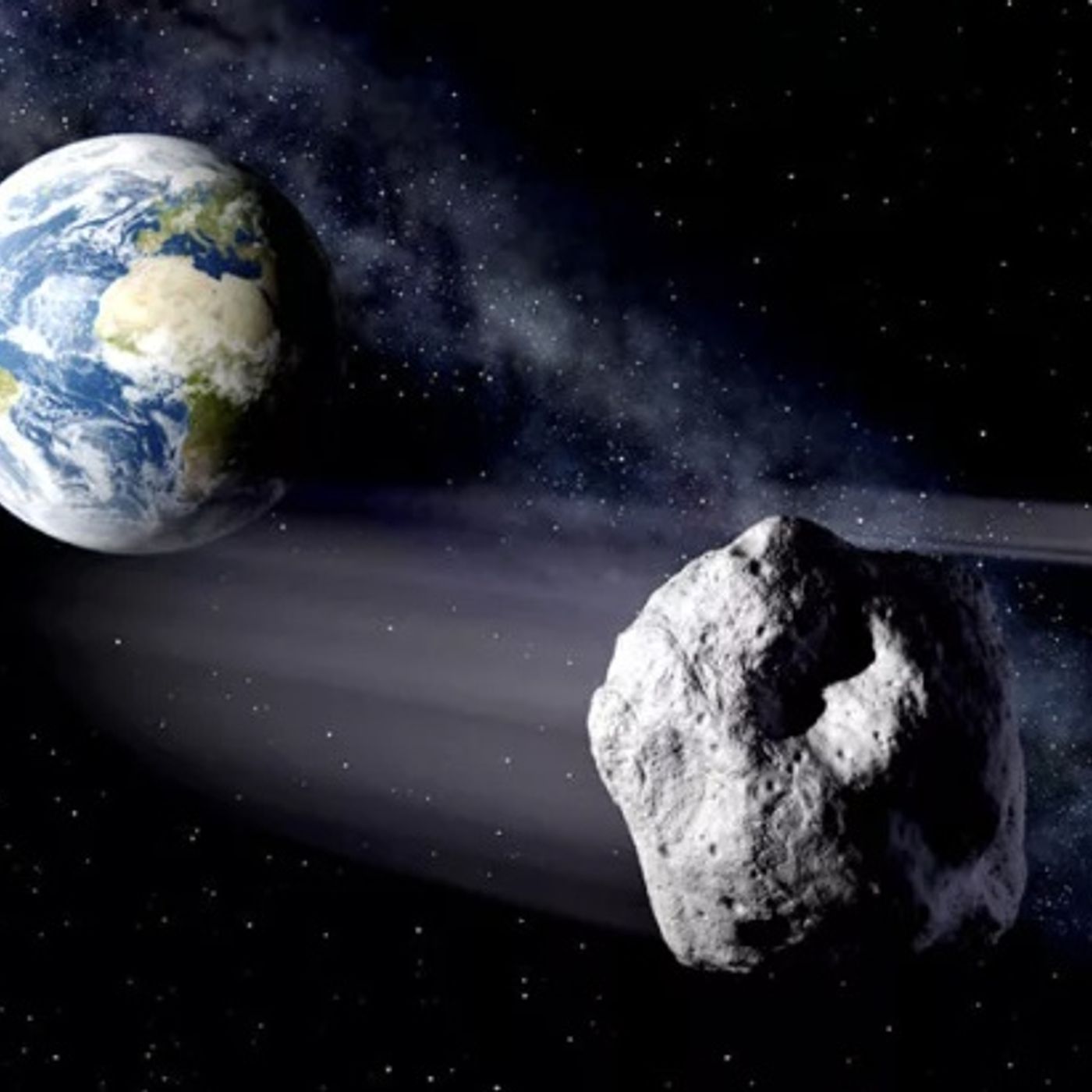
In less than 24 hours, while observing with the Catalina Sky Survey's 60 inch telescope on Mt. Lemmon, Arizona , I discovered two 25 foot diameter space rocks that theoretically can pass less than a quarter of the Moon's distance from us. After I posted my discovery observations on the Minor Planet Center's Near Earth Object Confirmation page one of them received immediate attention, as an incoming object, and was tracked by observers at 14 different observatories around the world. Scientists at the Minor Planet Center used these data to calculate it's 926 day orbital path around the Sun, estimate it's size, and give it the name 2017 TH5. 36 hours after I first spotted 2017 TH5 streaking through the night sky it came to less than 60,000 miles from the surface of our planet traveling at 7.6 miles per second. 8 hours and 49 minutes later it passed less than half a lunar distance from the surface of our moon. If 2017 TH5 would have been on an impact trajectory with Earth humans would have had time to prepare for a spectacular light show. Approximately once every 5 years a tiny asteroid like 2017 TH5 enters our atmosphere exploding at an altitude about 3 times higher than airliners fly releasing the energy of about 5,000 tons of TNT. Asteroid hunters are well on our way towards being able to issue a warning to stay away from doors and windows should a small space rock be discovered to be on an impact trajectory with planet Earth.
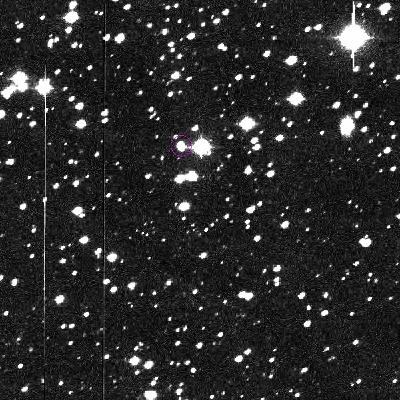
My Catalina Sky Survey teammate David Rankin was asteroid hunting in the evening twilight with our 60 inch telescope on Mt. Lemmon Arizona when he spotted an unknown object in the constellation of Lyra. The largest telescopes on Earth will likely track David's discovery until it becomes too faint to observe in 2027 and catch it again when it again becomes bright enough to track in 2050. Fortunately it is extremely unlikely that it will strike Earth when it again comes close to our home planet in 2052.
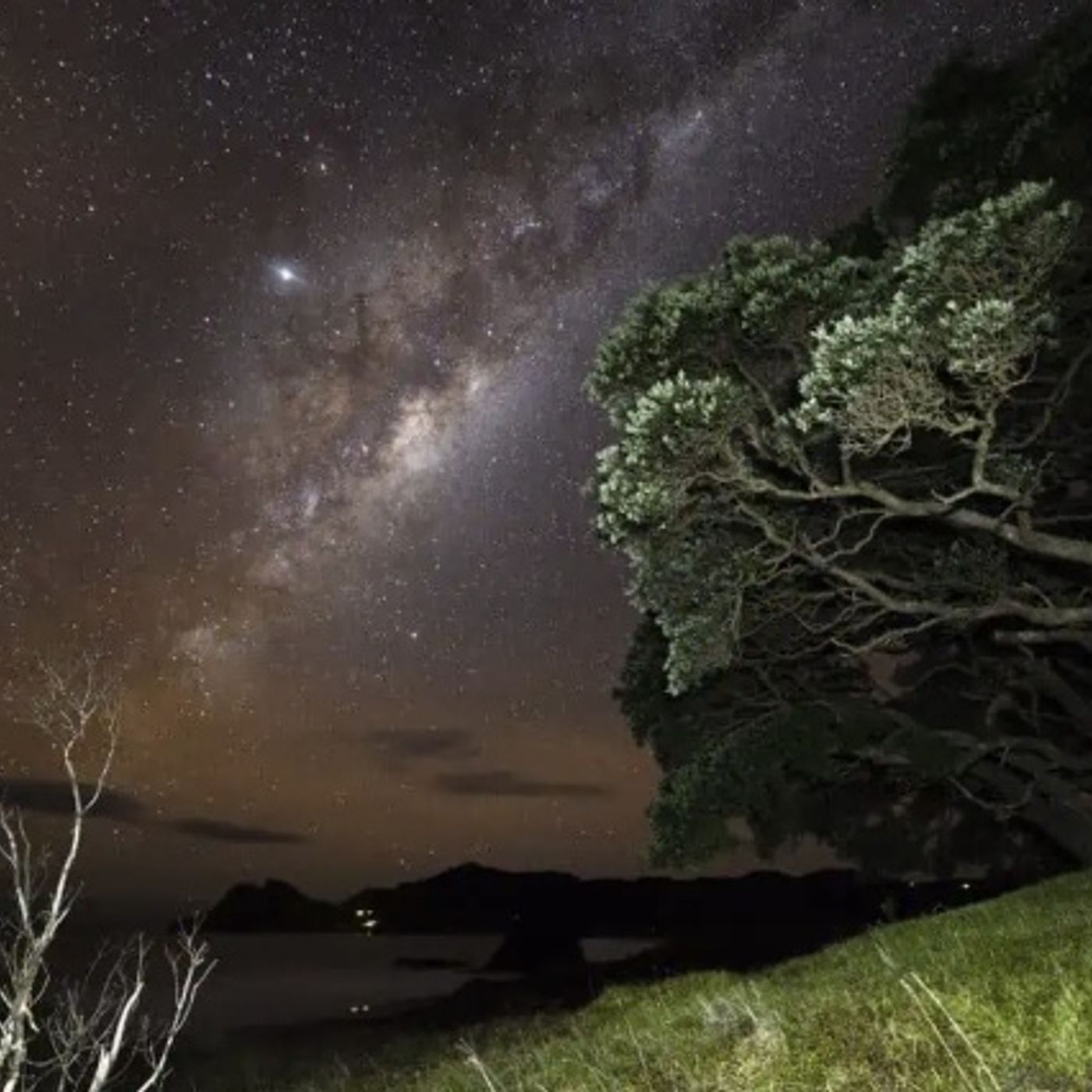
New Zealand's 4.5 million people are concentrated in three major population centers which to various degrees suffer from the modern plague of light pollution. However, most of New Zealand's large rural areas and land reserves, covering an area as large as the UK, have unpolluted natural night skies. A completely unique place to experience New Zealand's natural night sky is the Aotea [ Ah - yoh - tee - ah]-Great Barrier Island International Dark Sky Sanctuary. It encompasses New Zealand's, 110 square mile, sixth largest island, which is located about 62 miles from central Auckland. It is easily accessible by boat or a short airline flight. The island's 1000 residents are employed by agriculture and tourism. They value the natural night sky and function without externally generated electricity or street lights and fully support the preservation of their prestine night sky. In the daytime Great Barrier Island offers wonderful beaches and hikes. When the sun sets the night sky becomes alive with its own natural lights. Night sky measurements by Auckland Astronomer Nalayini [ Na - laa - i - ni] Davies and her collaborators have proved that the Great Barrier Island's natural night skies are second to none on planet Earth. Using the unaided eye, a set of binoculars, or a small telescope an observer on the Great Barrier Island is treated to spectacular views of the center of the Milky Way, the clouds of Magellan the nearest galaxies to us, the nearest stars, as well as numerous star clusters, meteors, comets, and other wonders of the natural night sky. Perhaps this unique spot deserves a place on your bucket list.
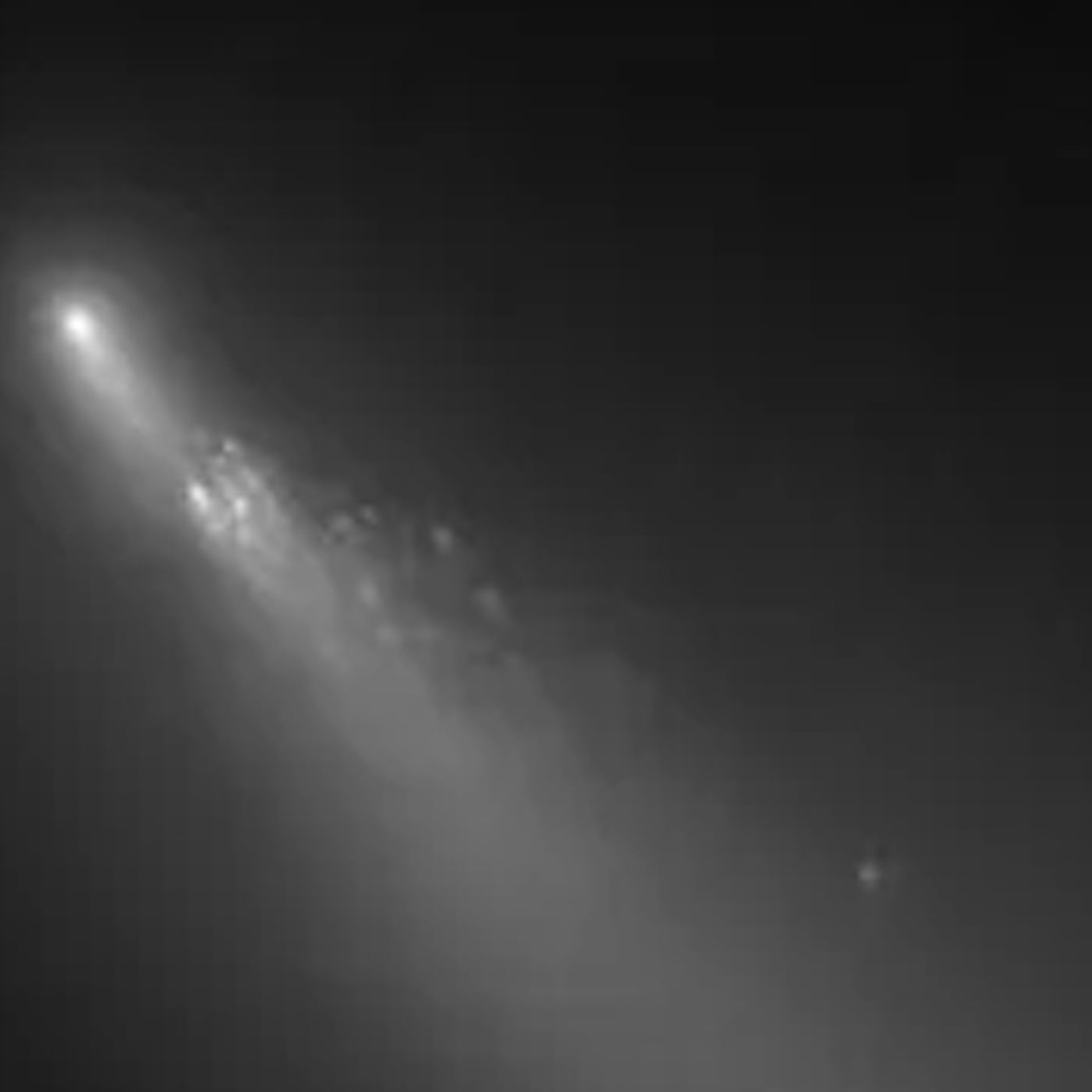
It is possible the object creating the Tunguska event in Russia 1908 which knocked down 80 million trees over an area about twice the size of New York City was a fragment of a comet or asteroid. The International Asteroid Warning Network 2025 campaign to track Comet 3L/Atlas prepares the worlds observatories for the eventual time when a comet fragment has our number on it.

In November of 2006, University of Arizona's Spacewatch astronomers on Kitt Peak discovered a faint moving point of light in the night sky which appeared to be a garden variety main belt asteroid orbiting the Sun between Mars and Jupiter. The Minor Planet Center calculated it's orbit and gave it the name 2006 VW139. Five years later when it again moved closest to the Sun the Pan-STARRS group in Hawaii discovered that 2006 VW139 is surrounded by a gas cloud like a comet and it was given a comet designation, 288P. My Catalina Sky Survey teammate Steve Larson is a member of the team of astronomers who use the Hubble Space Telescope to observe asteroids which have comet like burps. Observations by the Hubble Space Telescope between August 2016 and January 2017 clearly show 288P to be two similar, mile diameter, asteroids orbiting each other about 60 miles apart, surrounded by a gas cloud, as they move about the Sun. The Hubble team estimates that about 5,000 years ago this strange object was formed when a rapidly rotating comet nucleus came apart into two large pieces. It's gas cloud is likely to come from volatile ices like carbon dioxide and water vapor which were liberated by solar heating. Objects like this one are very interesting since they may have had a role in bringing water to a bone dry Earth in the early days of our solar system.
My Catalina Sky Survey teammate David Rankin was asteroid hunting in the evening twilight with our 60 inch telescope on Mt. Lemmon Arizona when he spotted an unknown object in the constellation of Lyra. The largest telescopes on Earth will likely track David's discovery until it becomes too faint to observe in 2027 and catch it again when it again becomes bright enough to track in 2050. Fortunately it is extremely unlikely that it will strike Earth when it again comes close to our home planet in 2052.

Many people in our modern world rarely if ever experience night vision. To achieve this interesting state of sensory awareness you cannot look at your cell phone or any other source of bright light for 30 to 45 minutes. Your night vision comes about over time because the rod sensors in the retina of your eye undergo a chemical change when they are placed in total darkness. The process starts immediately but takes 20 to 30 minutes to get 80% of maximum sensitivity. The night vision process can be reversed in seconds by exposure to a bright light. In it's most sensitive state your eye can function with a billion times less light than is present in strong sunlight enabling you to see a candle flame from 1.6 miles away.

Comments

Download from Google Play

Download from App Store
 United States