


 Claim Ownership
Scripture Central
Subscribed: 5,384Played: 223,565
Subscribe

© All rights reserved
Description
On here you will find several podcast series:
Book of Mormon Matters with John W. Welch and Lynne Hilton Wilson
Scripture Study Insights with Tyler Griffin
Come, Follow Me Insights with Tyler Griffin and Taylor Halverson.
Come, Follow Me New Testament with Lynne Hilton Wilson
Our short KnoWhy articles.
And, A Restored View of the Old Testament with Lynne Hilton Wilson and John Cho.
Visit Scripture Central at https://scripturecentral.org/
Book of Mormon Matters with John W. Welch and Lynne Hilton Wilson
Scripture Study Insights with Tyler Griffin
Come, Follow Me Insights with Tyler Griffin and Taylor Halverson.
Come, Follow Me New Testament with Lynne Hilton Wilson
Our short KnoWhy articles.
And, A Restored View of the Old Testament with Lynne Hilton Wilson and John Cho.
Visit Scripture Central at https://scripturecentral.org/
1272 Episodes
Reverse
Welcome to “Finding Christ in the Old Testament.” To view the resources connected with this episode, visit https://johnhiltoniii.com/findingchrist.
Please like and comment on this episode and subscribe @scripturecentralofficial so you can more easily see the rest of the videos and resources in this course.
Whether you're using this course for personal enrichment or to help with "Come, Follow Me," we hope it will be valuable in your studies.
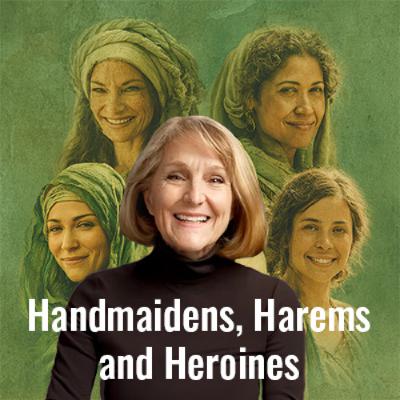
In this episode of Handmaidens, Harems, and Heroines, Lynne Hilton Wilson explores the rich and often complicated stories of women in Genesis 37–41, shining a thoughtful Latter-day Saint lens on narratives that are frequently overshadowed by the story of Joseph. Dr. Wilson brings depth and cultural insight to the account of Dinah, whose story in Genesis 34 echoes into the later family tensions surrounding Joseph; Tamar, whose courageous and calculated actions in Genesis 38 preserve covenant lineage; and Potiphar’s wife, a powerful yet unnamed Egyptian woman whose encounter with Joseph in Genesis 39 raises questions about power, agency, morality, and voice.
With careful attention to ancient Near Eastern context and covenant theology, this episode highlights how these women—whether victims, heroines, or antagonists—play essential roles in moving the Abrahamic story forward. Dr. Wilson invites viewers to look beyond surface readings and consider issues of honor, inheritance, justice, and faith in a patriarchal world. As Joseph rises from slavery to leadership in Egypt, the stories of these women remind us that God’s purposes unfold through complex human experiences—and that even the most difficult narratives in Genesis offer profound spiritual lessons for modern disciples.
"Stand Forever" Ep. 4 | The Essential Problem in Life | Elder Lawrence E. Corbridge by Scripture Central
"Stand Forever" Ep. 3 | Christ Is The Measure | Elder Lawrence E. Corbridge by Scripture Central
Welcome to “Finding Christ in the Old Testament.” To view the resources connected with this episode, visit https://johnhiltoniii.com/findingchrist.
Please like and comment on this episode and subscribe @scripturecentralofficial so you can more easily see the rest of the videos and resources in this course.
Whether you're using this course for personal enrichment or to help with "Come, Follow Me," we hope it will be valuable in your studies.
Some are hard-pressed to believe in the extraordinary or miraculous. While it is understandable that we may be challenged by the extraordinary, we shouldn’t be, because ordinary things are actually far more phenomenal.
With this and the next episode, we begin at the end, with the conclusion of the entire series: to make clear our destination, believe and follow Christ to the end, and help others do the same. Today, the focus is simply “believe.”
We’ll walk through the pattern of syllogisms, piecing together an important syllogism threaded throughout scripture, which I call “Reason Down.” If you understand Reason Down, not only will your faith be fortified, but you will know that with God, all things are possible, and nothing should be hard to believe.
Please join me on this journey and stand forever.
Transcript/Notes: https://tinyurl.com/3k73uxdz
In this episode, Dr. Lynne Hilton Wilson explores the rich Old Testament narratives surrounding the matriarchs of Israel, highlighting the faith, courage, and covenant loyalty of women in the Jacob cycle. Beginning with the well-known scene of Rebekah’s generosity in Book of Genesis—where she offers water not only to Abraham’s servant but to his camels—Dr. Wilson connects this act of selfless service to the covenant marriages that shape the house of Israel. The story then moves to Rachel and Leah, daughters of Laban, whose lives intertwine with Jacob’s through love, deception, longing, and divine promise. Through their marriages, and through the faithful contributions of Zilpah and Bilhah, the foundations of the twelve tribes are laid.
Dr. Wilson carefully examines the births of Gad and Asher through Zilpah, Leah’s handmaid, and reflects on the complex family dynamics that shaped Jacob’s household. She also addresses the wives of Esau and the contrasting covenant paths chosen by Jacob and his brother. With insight drawn from ancient context and Latter-day Saint theology, this episode brings forward the voices of these often-overlooked women—Rachel, Leah, Zilpah, Bilhah, Rebekah, and Esau’s wives—showing how their choices, sacrifices, and faith played a central role in God’s covenant story.
Thank you for joining us at Scripture Central! We hope that you have enjoyed this content.
The Stand Forever Series is about believing and following Christ to the end, engaged in His work, and helping others do the same.
In Episode one, we see the big picture. Few things provide greater comfort, confidence, and clarity than looking beyond present cares to see the big picture.
When we stand back, it looks like this:
1. The essential problem in life is separation from God our Father, resulting in chaos, darkness, and death.
2. Jesus Christ bridges the gap if we will believe and follow Him to the end engaged in His work and help others do the same. He is the Way offsetting chaos, the Truth offsetting darkness, and the Life offsetting death.
3. Therefore, cross the bridge and close the gap; believe and follow Christ to the end, engaged in His work, and help others do the same.
The kingdom and purposes of God will not fail but stand forever. The question is whether you will. To that end, we invite you to join us on this journey and Stand Forever.
The Lord said, “Peace I leave with you, my peace I give unto you: not as the world giveth, give I unto you. Let not your heart be troubled, neither let it be afraid.”
How do you do that? How do you live in a troubled world and not be troubled? How do you live in a fearful world and not be afraid?
How do you find peace?
Introducing a new original series from Scripture Central.
The Stand Forever Series is a cinematic presentation of a Christ-centered book written by Elder Lawrence E. Corbridge (Emeritus General Authority Seventy), a book that may never be published.
The book and now this series share the same title as a BYU devotional address given by Elder Corbridge in 2019, the elements of which are critical pieces to a larger puzzle. The Stand Forever Series is the larger puzzle revealing why we believe and follow Christ to the end, engaged in His work, and help others do the same.
Although this first episode is the longest and one of the last of the series, it is being released first because it is especially timely.
Subsequent episodes will be released in order every Saturday.
We invite you to join us on this journey and Stand Forever.
A downloadable transcript of this message can be found here: https://scripturecentral.org/shows/stand-forever/episodes/stand-forever-peace-let-not-your-heart-be-troubled-elder-lawrence-e-corbridge
Welcome to “Finding Christ in the Old Testament.” To view the resources connected with this episode, visit https://johnhiltoniii.com/findingchrist.
Please like and comment on this episode and subscribe @scripturecentralofficial so you can more easily see the rest of the videos and resources in this course.
Whether you're using this course for personal enrichment or to help with "Come, Follow Me," we hope it will be valuable in your studies.
Genesis 18–23 highlights several remarkable women whose stories, read through an LDS lens, reveal faith, covenant, and the quiet influence of righteous women in God’s plan. Sarah stands at the center: in Genesis 18 she hears the promise that she will bear a son in her old age and initially laughs, a deeply human reaction that the Lord gently turns into a lesson about divine power and timing. Latter-day Saints often see in Sarah a model of covenant partnership with Abraham—someone who grows into faith and ultimately receives the miracle promised. Genesis 19 introduces Lot’s wife and daughters, whose experiences near the destruction of Sodom show both the dangers of looking back spiritually and the complexity of preserving family in a fallen world. An LDS perspective emphasizes agency and accountability, while also recognizing the difficult circumstances these women faced.
Genesis 20–23 continues to show how women are woven into the covenant story. Sarah’s protection in foreign courts underscores the Lord’s watchful care over covenant mothers through whom promises flow. Her eventual joy in Isaac’s birth (Genesis 21) fulfills God’s word and highlights the doctrine that nothing is impossible for the Lord. Hagar and her son Ishmael are also remembered compassionately in Latter-day Saint thought: though separated from Abraham’s household, they are seen as recipients of God’s mercy and promises. Finally, Sarah’s death in Genesis 23 is treated with great honor, showing her importance as a matriarch in Israel. Altogether, these chapters present women not as side characters but as vital participants in the Abrahamic covenant, whose faith, struggles, and divine encounters still teach modern disciples about trust in God’s promises.
Welcome to “Finding Christ in the Old Testament.” To view the resources connected with this episode, visit https://johnhiltoniii.com/findingchrist.
Please like and comment on this episode and subscribe @scripturecentralofficial so you can more easily see the rest of the videos and resources in this course.
Whether you're using this course for personal enrichment or to help with "Come, Follow Me," we hope it will be valuable in your studies.
In this episode, Lynne Hilton Wilson explores the stories of faithful women in the Old Testament who demonstrated deep obedience, covenant loyalty, and unwavering trust in God—even when their discipleship required real sacrifice. Through an LDS lens, she highlights how women were vital participants in God’s covenant work, not merely background figures. Their lives show that faith in the Lord often requires courage, patience, and a willingness to place divine promises above personal comfort or social expectations.
A special focus is given to Sarah in Genesis 12 and the Book of Abraham, following the journey she and Abraham make to Egypt during a time of famine. There, they encounter serious danger as Abraham fears for his life because of Sarah’s beauty, leading to complex moral and spiritual tests. From an LDS perspective, Sarah’s faith, unity with Abraham, and trust in God’s protection reveal a woman deeply committed to the covenant path. Her story—marked by risk, displacement, and divine deliverance—invites viewers to appreciate the spiritual strength of covenant women and to see how their examples still guide Latter-day Saints striving to live faithfully today.
 2
2Welcome to “Finding Christ in the Old Testament.” To view the resources connected with this episode, visit https://johnhiltoniii.com/findingchrist.
Please like and comment on this episode and subscribe @scripturecentralofficial so you can more easily see the rest of the videos and resources in this course.
Whether you're using this course for personal enrichment or to help with "Come, Follow Me," we hope it will be valuable in your studies.
In this episode, we dive into Moses chapter 8 and Genesis 6–11, exploring the powerful stories surrounding Noah, the Flood, and the Tower of Babel through a Latter-day Saint lens. These chapters highlight a world struggling with increasing wickedness, yet still touched by prophetic warnings, covenants, and divine mercy. Viewers will gain insight into how the Joseph Smith Translation in the book of Moses expands the biblical account, especially in emphasizing the role of preaching, repentance, and moral agency before the Flood. The discussion connects these ancient events to modern discipleship, asking what it means to remain faithful in a corrupt society.
Special attention is given to the women mentioned or implied in these chapters—such as the “daughters of men” in Genesis 6, Noah’s wife, and the wives of his sons—who are often overlooked but are essential to the story of preservation and covenant continuity. Their presence reminds us that families, marriages, and righteous women were central to God’s plan to carry humanity forward after the Flood. By noticing these women in the text, this episode invites viewers to read more carefully and see how both men and women participate in God’s work across generations, helping build a bridge from the world before the Flood to the renewed world that followed.
Welcome to “Finding Christ in the Old Testament.” To view the resources connected with this episode, visit https://johnhiltoniii.com/findingchrist.
Please like and comment on this episode and subscribe @scripturecentralofficial so you can more easily see the rest of the videos and resources in this course.
Whether you're using this course for personal enrichment or to help with "Come, Follow Me," we hope it will be valuable in your studies.
Why do Bible translations matter? In this video, LDS scholar Lynne Hilton Wilson explains how understanding different Bible translations can deepen scripture study, clarify meaning, and strengthen faith in Jesus Christ. Learn how language, culture, and history shape the biblical text—and why thoughtful comparison of translations can enrich both personal study and classroom learning.
Moses chapter 7 centers on the rise of the City of Enoch, a people who learned to build Zion by becoming “of one heart and one mind,” dwelling in righteousness, and caring deeply for one another. Under Enoch’s prophetic leadership, the people rejected violence, pride, and inequality, choosing instead to live the law of consecration so fully that there were “no poor among them.” Their society was marked not only by moral purity but by profound compassion—so much so that the Lord Himself wept over the suffering and wickedness of the world. In contrast to the surrounding nations, Zion stood as a covenant community defined by love, justice, and unity with God.
The chapter also teaches that Zion is not merely a place, but a condition of the heart that any people can strive to achieve. Moses 7 makes clear that Zion is built through repentance, obedience, humility, and collective commitment to God’s ways. As Enoch’s people aligned their lives with heaven, they became sanctified and were ultimately taken into God’s presence, symbolizing the destiny of a truly Zion-like society. For modern readers, the City of Enoch becomes both a model and an invitation: Zion is achieved when individuals and communities choose righteousness, unity, and selfless care for the vulnerable, preparing the world—and themselves—for the return of the Lord.
Welcome to “Finding Christ in the Old Testament.” To view the resources connected with this episode, visit https://johnhiltoniii.com/findingchrist.
Please like and comment on this episode and subscribe @scripturecentralofficial so you can more easily see the rest of the videos and resources in this course.
Whether you're using this course for personal enrichment or to help with "Come, Follow Me," we hope it will be valuable in your studies.
Genesis chapter 5 and Moses chapter 6 take us into the earliest generations of God’s covenant people, tracing the lineage from Adam through Enoch and revealing why these names matter far more than a list of ages and ancestors. In this video, Dr. Lynne Hilton Wilson explains how these chapters preserve temple-centered themes of covenant, posterity, and divine identity. Genesis 5 quietly emphasizes continuity—life, death, and faith passed from one generation to the next—while Moses 6 expands the story, restoring prophetic voices, priesthood authority, and the doctrine that humans are literal children of God. Together, these texts teach that genealogy in scripture is theology: it shows how God works through families to move His plan forward.
Dr. Wilson also highlights Moses 6 as a powerful doctrinal restoration that deepens our understanding of repentance, baptism, and spiritual rebirth. Through the ministry of Enoch and the teachings given to Adam, we learn that salvation comes through Jesus Christ, that hearts can be changed, and that Zion is built when people choose righteousness in a fallen world. This video helps viewers see how the Joseph Smith Translation clarifies missing or obscured truths, transforming familiar passages into a compelling invitation to walk with God—just as Enoch did—and to claim our own place in God’s eternal family.


Download from Google Play

Download from App Store
 United States
Several new insights for me in this episode. I had never heard before that "inn" in Greek was "katalama" (sp?), which described a room in a home. Joseph and Mary had family in Bethlehem that may have refused to let them stay with them because of the unclean state that they perceived Mary to be in because of her pregnancy. Also, the description of the sacrifice that Mary and Joseph made when Jesus was 40 days old with the turtle doves was impactful. Thinking about how plucking the feathers would cause bleeding at every pore, just like Jesus experienced at Gesthemane is so amazingly symbolic.
Comments at minute 36 on make me think about the last 2 years. It seems the highest goal of everyone was to not get sick, at all costs, including not talking to anyone, not serving, and staying hidden either at home or behind a mask.
I absolutely LOVE your channel both here and on YouTube! Keep up the good work in 2022, I look forward to learning together!!💖
really excellent podcast.