


 Claim Ownership
Vinyl Vibrations with Brian Frederick podcast
Subscribed: 5Played: 47
Subscribe

© Brian Frederick Music
Description
Exploration into sounds and grooves from artists that produced their works on vinyl records
30 Episodes
Reverse
JEFF BECK GUITAR EARLY YEARS 1966- 1968
Today’s show is JEFF BECK GUITAR EARLY YEARS — PART 1
In this VINYL VIBRATIONS episode, I tour early vinyl records that showcase ENGLISH ROCK and FUSION GUITARIST GREAT … JEFF BECK. The recordings presented in this podcast are a compilation from my own LP and Singles collection. Today – we will review six songs from Jeff Beck’s early years, 1966 – 1968:
SHAPES OF THINGS – The Yardbirds (single)
OVER UNDER SIDEWAYS DOWN – The Yardbirds (single)
BECK’S BOLERO – Jeff Beck (single)
GREENSLEEVES – Jeff Beck Group (TRUTH LP)
SHAPES OF THINGS – Jeff Beck Group (TRUTH LP)
MORNING DEW – Jeff Beck Group (TRUTH LP)
Jeff Beck achieved notoriety in the mid 1960’s, through the music of The Yardbirds and their hit song “Shapes of Things”. He had been working actively as a musician since the age of 19, during the time he was attending college at what is now called the Wimbledon College of Art in London. That college specializes in theatre, screen, and performance art. That’s 1963.
Just five years later, Beck had launched three singles and his debut LP album, TRUTH.
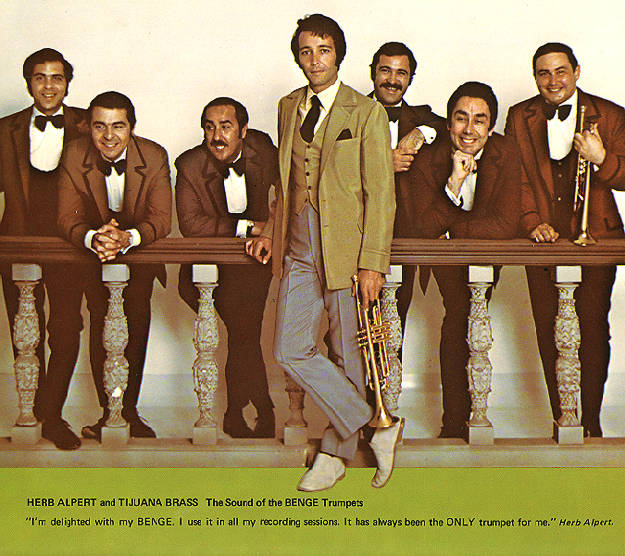
Today’s Vinyl Vibrations podcast features the great trumpeter, arranger and producer, Herb Alpert.
M1 The Lonely Bull, (Sol Lake), Herb Alpert & the Tijuana Brass, The Lonely Bull, A&M Records, 1962 (2:29).
M2 South of the Border (Jimmy Kennedy and Michael Carr), Herb Alpert’s Tijuana Brass, South of the Border, A&M Records, 1964 (2:06)
M3 I’ve Grown Accustomed to Her Face (Alan Jay Lerner and Frederick Loewe), Herb Alpert’s Tijuana Brass, South of the Border, A&M Records, 1964 (2:25)
M4 A Taste of Honey, (Bobby Scott), Herb Alpert & The Tijuana Brass, Whipped Cream & Other Delights, 1965, (2:43).
M5 More and More Amor (Sol Lake), Herb Alpert & The Tijuana Brass, Going Places, A&M Records, 1965 (2:44).
M6 Mae (Riz Ortolani), Herb Alpert & The Tijuana Brass, Going Places, A&M Records, 1965 (2:27).
M7 Shades of Blue (Julias Wechter), Herb Alpert & The Tijuana Brass, Sounds Like, A&M Records, 1967 (2:44 ).
M8 Wade in the Water” (Traditional) – Herb Alpert & The Tijuana Brass, Sounds Like, A&M Records, 1967 (3:03).
M9 “Treasure of San Miguel” (Roger Nichols), Herb Alpert & The Tijuana Brass, Sounds Like, A&M Records, 1967 (2:14)
Herb Alpert was born in 1935, and is an American trumpeter who led the band “Herb Alpert & the Tijuana Brass” in the 1960s. He was born and raised in the Eastside Los Angeles. His parents were Tillie and Louis Alpert —they were Jewish immigrants to the U.S., coming here from the Ukraine and from Romania.
Alpert was born into a family of musicians. His father was a mandolin player and his mother taught violin. Herb’s older brother was a drummer. Herb began to play trumpet at the age of eight. While attending the University of Southern California in the 1950s, he was a member of the USC Trojan Marching Band for two years.
In the 1960s Alpert co-founded A&M Records with Jerry Moss, A for Alpert and M for Moss.
There are many, many measures of success in the area of popular music by which to measure the success of Herb Alpert – – ….here are just a few:
He sold some 72 million records worldwide.
And 28 of his albums landed on the Billboard 200 chart
5 of his albums became No. 1 albums
He achieved #1 on the U.S. Billboard Hot 100 as instrumentalist
He has had 14 platinum albums (sold 1 million) and 15 gold albums (sold 500,000).
He has received a Tony Award, eight Grammy Awards, and the Grammy Lifetime Achievement Award
He was inducted into the Rock and Roll Hall of Fame in 2006….
and was awarded the National Medal of Arts by Barack Obama in 2013.
One of the recording techniques Herb Alpert used in these early records was the overdubbing of the trumpet part, Starting with his first album, THE LONELY BULL, and the title track 1 on side 1. According to Herb Alpert, he said that he had been trying to find the right trumpet voice. He tried emulating the trumpet styles of Harry James, Louis Armstrong, Miles Davis and Clifford Brown. Oddly enough, he got inspiration NOT from these famous trumpeters, but from a guitarist named …Les Paul. Les Paul had been using multitracking his guitar recordings. So Alpert tried multitracking his trumpet … and that multitracking became one of the signature sounds we will hear. Here is an example of the overdubbed trumpet from the song A QUIET TEAR…….
(Play an example of Herb’s overdubbed trumpet on the song A QUIET TEAR song side 2 track 6)
In this overdub Herb Alpert is recording each part with the same phrasing and time … but playing the second part in harmony.
Additionally Alpert does a fair amount of overdubbing and playing both parts in unison. This double-recording of one part gives Herb’s trumpet an even more rich and full sound, added resonance of the instrument and added reverb or echo of the room. So overdubbing while playing the trumpet part in unison or in harmony was a signature sound of Herb Alpert & the Tijuana Brass. Here is an example from THE LONELY BULL intro….
(Play an example of Herb’s overdubbed trumpet on the song THE LONELY BULL song side 1 track 1)
That’s overdubbing and playing the dub in unison with the first part. It creates a richer and deeper sound of the trumpet.
VV-030
PROGRAM LIST
M1 Squeeze Me (Fats Waller) Rec. 2/14/1926, FATS WALLER EARLY UNDISCOVERED SOLOS, Riverside Records RLP 12-103, 1955 (2:55)
M2 Handful of Keys (Fats Waller) Rec. 3/1/1929, HANDFUL OF KEYS, FATS WALLER AND HIS RHYTHM, RCA Victor, LPM-1502, 1957 (2:45)
M3 Ain’t Misbehavin’ (Fats Waller, Harry Brooks) Rec. 8/2/1929, AIN’T MISBEHAVIN’, FATS WALLER AND HIS RHYTHM, RCA Victor LPM-1246, 1956 (3:00)
M4 Tanglefoot (Fats Waller) Rec. 8/24/1929, THE RAREST FATS WALLER, Volume 1, RFW-1, 1955. (3:10)
M5 Honeysuckle Rose (Fats Waller) Rec 5/13/1941, AIN’T MISBEHAVIN’, FATS WALLER AND HIS RHYTHM, RCA Victor LPM-1246, 1956 (3:21)
M6 Bouncin’ on a V-Disc (Fats Waller) Rec. 9/23/1943, FATS WALLER PLAYS, SINGS AND TALKS, Jazz Treasury JT-1001, 1956 (4:46)
Background songs for this episode:
M7 Please Take Me Out of Jail (Fats Waller) Rec. 12/1/1927, THE RAREST FATS WALLER, Volume 1, RFW-1, 1955.
M8 Sometimes I Feel Like a Motherless Child (Fats Waller) Rec. 9/23/1943, FATS WALLER PLAYS, SINGS AND TALKS, Jazz Treasury JT-1001, 1956 ABOUT THE ARTIST
Today’s show features the LATE GREAT Thomas Wright Waller, a jazz pianist and organist, composer and singer, born in New York City in 1904 The 7th of 11 children, his mother was a musician, and his father was a trucker and pastor in NYC. Fats started playing piano when he was 6. He played the organ at his father’s church at age 10. PAUSE
He was home-schooled early-on by his mother and worked in a grocery store. He quit high school after just one semester at age 15 to work as an organist at the Lincoln Theater in Harlem. PAUSE
At the Lincoln Theater, he earned $32 a week. That was 1929. He became known as “Fats Waller” because he was big — both in body and in mind. PAUSE
Fats Waller laid some of the building blocks for what is NOW ‘modern jazz piano’. He popularized the use of
The stride piano style, which is widely used by jazz pianists today. He toured internationally and two of his biggest hits were Ain’t Misbehavin’ and Honeysuckle Rose. PAUSE
You are listening to Sometimes I Feel Like a Motherless Child by Fats Waller) Recorded back in 1943.PAUSE
Waller copyrighted over 400 songs. He probably composed many more, but, when he was in financial difficulty, he would sell songs to other writers and performers, who would not acknowledge the real composer, claiming the songs as their own.
Today’s podcast features Fats Waller and a few of his SOLO piano and organ compositions that were recorded between the years 1926 and 1943, or from the age of 22 to 39. Some of these songs are not available today, except where they are rediscovered – – – on my old and treasured Fats Waller record collection!
SHOW PLUG – SHOW PLUG – DON’T TOUCH THAT DIAL ! !
BIT BUCKET
Waller is also credited with his composition and performance work in Broadway Musicals. Waller is perhaps the FIRST BLACK composer to write the score and perform for a mostly all-white show on Broadway. That was the 1943 Broadway musical EARLY TO BED, produced by Richard Kollmar – the Broadway Flyer for EARLY TO BED reads “Music by Thomas (“Fats”) Waller”. .
M1
M1 Squeeze Me (Thomas Waller) Rec. 2/14/1926, FATS WALLER EARLY UNDISCOVERED SOLOS, Riverside Records RLP 12-103, 1955 (2:55)
Our first recording is titled “SQUEEZE ME” It’s a piano solo, and the composer and performer is Thomas Waller.He is not billed as “Fats” Waller yet, as he is not that unusually large at the young age of 22.
This song SQUEEZE ME was recorded for production of piano rolls in 1926, making this among Waller’s EARLIEST recordings. Waller recorded his piano solos for the production of Piano Rolls between 1926 and 1927.These rolls operate on player pianos. Insert the roll, and the piano plays the song.
PAUSE
The player piano is a specialty item, affordable by the wealthy, and not a great way to release new music to the masses. Decades later, in 1955, Riverside Records discovered these and many other piano rolls, and realized they contained a treasure trove of long-lost songs, including songs from Jazz great Thomas “Fats” Waller. Riverside tracked down the manufacturer of the rolls, “QRS” founded in 1900, located in NYC.
PAUSE
Riverside Records secured many piano rolls, and released several LP records in the 1950s.
This song SQUEEZE ME is one of a dozen that Fats Waller recorded in 1926. The music is really alive. Waller shows remarkable skill as a jazz pianist.
You can hear the stride piano on the left hand.
Play SQUEEZE ME CLIP
That was from SQUEEZE ME. Here’s another short example of stride piano…
Play HANDFUL OF KEYS CLIP
That was from A HANDFUL OF KEYS by Fats Waller.
The Stride Piano is found throughout Fats Wallers catalog of songs. It is called stride because the left hand, which is the rhythm hand, is actually running or striding back and forth, left and right. The left hand is playing two parts really, with stride. It is playing the bass note, and then quickly playing the chord. The bass note and the chord could be just one octave apart ….or 3 octaves apart. Nonetheless, the left arm moves back and forth base bass to chord, bass to chord, in perfect time. On a song like SQUEEZE ME that’s in 2/4 time, at 160 beats a minute would sound like this:
PLAY METRONOME at 160 bpm in 2/4 time
Bass Chord Bass Chord Bass Chord Bass Chord
And now, with no further adieu…lets listen to a piano roll song, SQUEEZE ME, recorded in 1926 by Thomas Waller.
PLAY M1
SHOW PLUG – SHOW PLUG – DON’T TOUCH THAT DIAL ! !
That was…M1 Squeeze Me
MUSICAL CREDIT:
Performance and composed – Thomas Waller – played on SOLO PIANO
Recorded in 1926, for production of Piano Rolls by the QRS Company and later found on Riverside Records, 1955.
BITBUCKET RCA Victor featured the dog listening to a victrola, with the subtitle “His Master’s Voice”,
M2
M2 Handful of Keys (Fats Waller) Rec. 3/1/1929, HANDFUL OF KEYS, FATS WALLER AND HIS RHYTHM, RCA Victor, LPM-1502, 1957 (2:45)
Our second track is a 1929 recording of HANDFUL OF KEYS, released by RCA Victor in 1957.
This is the second RCA Victor LP, (LPM-1502), It is a compilation of works recorded between 1929 and 1942.
This is a PIANO SOLO, a ragtime piece, composed by Fats Waller.
It features the stride style ……but in an upbeat tempo of 130 beats per minute, plus or minus, with Fats in total control PAUSE
According to the liner notes on this LP, “After classical studies and playing in church and at prayer meetings when he was a boy, Fats became increasingly fascinated by the whirling world of RAGTIME, Jazz and Theater Music.” The liner notes indicate that his father, a deacon and later a pastor in NYC, regarded his son’s diversion from church music to Ragtime and Swing as being … “ ”.
And STRIDE PIANO PIONEER James P. Johnson, had Waller as his student. He had direct influence on Waller, and put it this way: “Some little people has music in them, but Fats, he was all music and you know how big he was.”
This album comes from my father’s collection of Fats Waller records.
Looking at the disc, it must be one of the MOST PLAYED albums in that collection. So pardon the popping sounds.
Here is HANDFUL OF KEYS.
PLAY M2
SHOW PLUG – DON’T TOUCH THAT DIAL !
That was…M2 Handful of Keys
MUSICAL CREDIT:
Performance and Composer – – Fats Waller – Piano Solo
Recorded in March, 1929, and reproduced onto LP record in 1957 by RCA Victor.
M3
M3 Ain’t Misbehavin’ (Fats Waller, Harry Brooks) Rec. 8/2/1929, AIN’T MISBEHAVIN’, FATS WALLER AND HIS RHYTHM, RCA Victor LPM-1246, 1956 (3:00)
Next, I feature perhaps the most popular of Fats Waller tunes, AIN’T MISBEHAVIN’
This was 1929, the year that Fats signed a recording contract with RCA Records.
This was the first RCA volume of Fats Waller.
The beginning of the Great Depression. Fats was just 25.
Fats strength was playing and composing with an effortless style.
His works are polished and precise – practically at a CLASSICAL QUALITY level.
This was the result of long training in music theory …starting at the age of 5, and …..endless practice.
By his teenage years, he was accomplished at… piano, organ, violin, and the bass fiddle.
Some say Fats was a musical prodigy. He wrote between 360-400 songs in his short lifetime,
The story goes that Fats procrastinated on doing composition work. For a typical recording session, he was supposed to show up with a completed piece well-rehearsed by the musicians.
Instead, he would show up band members unrehearsed, and with NO composition. The musicians were flustered, and the studio personnel were frustrated, but Fats settled his huge 300-pound bulk at the piano and worked out a new piece that was acclaimed by everyone in that studio. PAUSE
One of Fats Wallers MOST FAMOUS and MOST PLAYED pieces is Ain’t Misbehavin’”.
More of the classic STRIDE STYLE is featured here.
This is an unusual instrumental version and was recorded in August, 1929
It appears on an RCA VICTOR compilation LP from 1956 titled “Ain’t Misbehavin’”, “Fats” Waller and his Rhythm”.
And now….here is the SOLO PIANO version of AIN’T MISBEHAVIN’
PLAY M3
SHOW PLUG – DON’T TOUCH THAT DIAL !
That was…M3 Ain’t Misbehavin’
MUSICAL CREDIT:
Performed and composed Fats Waller – Piano Solo
Recorded in 1929, and found on RCA as an LP reproduced in 1956
M4
M4 Tanglefoot (Fats Waller) Rec. 8/24/1929, THE RAREST FATS WALLER, Volume 1, RFW-1, 1955. (3:10)
Our next piece is a Pipe Organ solo that was composed and played by Fats Waller, and it’s a very old recording dating back to August of The song is titled TANGLEFOOT, and that is rare —- because the song has evidently not been re-released in any form, and I am not finding it in today’s market.
Between 1926 and 1939 Thomas Waller recorded dozens of songs on the pipe organ.
Did you know that Fats Waller was the FIRST person to interpret and record jazz on the pipe organ. PAUSE
The pipe organ is, in fact, the connection between Waller and what would become RCA Records
The Trinity Baptist Church, located in Camden NJ –had been i
SONG LIST*
M1 How Can You Believe (Stevie Wonder) Eivets Rednow, Motown Records LP 1968 (3:10)
M2 Which Way the Wind (Stevie Wonder) Eivets Rednow, Motown Records LP 1968 (2:40)
M3 Contusion (Stevie Wonder) Songs in the Key of Life, Motown Records 2LP, 1976 (3:45)
M4 Easy Goin Evenin’ / My Mama’s Call (Stevie Wonder) A Something’s Extra for Songs in the Key of Life, Motown Records 2LP, 1976 (3:58)
M5 The First Garden (Stevie Wonder) Journey Through the Secret Life of Plants, Motown Records 2LP, 1979 (2:32)
M6 Voyage to India (Stevie Wonder) Journey Through the Secret Life of Plants, Motown Records 2LP, 1979 (6:23)
M7 Tree (Stevie Wonder) Journey Through the Secret Life of Plants, Motown Records 2LP, 1979 (5:55)
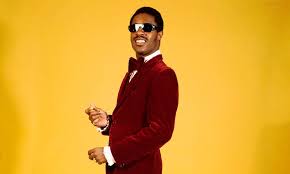
Today’s Vinyl Vibrations episode features Stevie Wonder in his early years, and more specifically his Instrumental compositions. Stevie Wonder is an international pop icon, a singer-songwriter, a record producer, AND a multi-instrumental musician (for example…harmonica, keyboards, drums, bass guitar, guitar, and an incredibly talented singer. Wonder is an innovator – he pioneered the use of the early analog synthesizer during the 1970s. His albums are individual works of art, carefully crafted and thematic. Stevie Wonder’s influence extends across a range of genres that include R&B, pop, soul, gospel, funk, and jazz. He has often been referred to as a “ONE MAN BAND” because of his broad range of talents in music composition, music production and most of all – – music performance.
Born Stevland Hardaway Morris, Stevie Wonder was born on May 13, 1950, in Saginaw, Michigan. That’s near Saginaw Bay off Lake Huron, about 100 miles northwest of Detroit. In the 1950s, Saginaw County had several General Motors plants and many companies building parts that went down to the big DETROIT assembly plants. It was a booming economic period for the entire US auto industry.
It was a difficult birth. Wonder was born six weeks premature and placed in an oxygen-rich incubator, which resulted in retinopathy of prematurity – causing his blindness.
When he was 4, his Mother divorced with his father, and along with her 3 kids, moved 100 miles down the road to bustling Detroit…. home of MOTOWN RECORDS. At age 8, Steveland attended the Whitestone Baptist Church on Detroit’s west side. There, he developed his musical talents — playing piano, drums and harmonica — and he also sang in the choir and there became a soloist. Stevie was quickly recognized as a prodigy.. He further developed his singing talent with a friend …and they performed as Stevie and John on street corners.
When he was just 11, this musical prodigy was discovered by Ronnie White of the MIRACLES, and that in-turn resulted in a meeting with Motown Records founder Barry Gordy, who signed him with the TAMLA label of Motown Records. At that time, he was given the professional name Little Stevie Wonder. That was 1961 and Wonder had a 5-year rolling contract with royalties that were to be held in trust until he was 21. The weekly pay for this young artist was meager – a stipend of just $2.50 a week plus a tutor for Stevie when he was on tour. That $2.50 weekly stipend would be worth about $25 a week today.
At age 12 he enrolled in Michigan School for the Blind in Lansing, Michigan.
BIT BUCKET
Saginaw is also where I was born, just 2 years after Stevie. My family also moved from Saginaw to Detroit, around same year as Stevie – 1954.
M1 How Can You Believe (Stevie Wonder) Eivets Rednow, Motown Records LP 1968 (3:10)
PLAY BACKGROUND – HOW CAN YOU BELIEVE
To start today’s podcast, I feature the album titled Eivets Rednow. There is some humor in the album title. Eivets Rednow is Stevie Wonder spelled backwards, and on the first release of the album, Stevie’s name did not appear on the cover. The album is also UNIQUE for Stevie as it is an INSTRUMENTAL album. No lyrics. No poetry.
This an easy listening POP and R&B instrumental album, released on the Gordy Records label in 1968. Gordy was one of the four MOTOWN labels – those labels were Gordy, Tamla, Motown, and Soul.
The release I have was released on the MOTOWN LABEL and adds “How do you spell Stevie Wonder backwards?” …on the cover. Stevie was only 18 at the time of this release, although this is Wonder’s ninth studio album! Prolific. Boundless energy.
Featured on this song is the skillful harmonica melody. Wonder plays the harmonica, drums, piano, but most notably, his harmonica style is unique, very melodic, rich with feeling, and unmistakably Stevie Wonder, listening to it 55 years later.
Have a listen to this wonderful song and Stevie Wonder’s distinctive harmonica line.
And Now
How Can You Believe
PLAY M1
Don’t Touch That Dial
that was M1 M1 How Can You Believe (Stevie Wonder) Eivets Rednow, LP 1968 a short 3:10 in length, a pop tune.
Song credits
Credits go to
Stevie Wonder, music composer arranger and producer
Stevie Wonder Instruments –
Harmonica for the song melody
Percussion
Piano and Synthesizer
Benny Benjamin – drums
James Jamerson – bass guitar
The Funk Brothers – instrumentation
More on the FUNK BROTHERS later.
M2 Which Way the Wind (Stevie Wonder) Eivets Rednow, Motown Records LP, 1968 (2:40)
PLAY BACKGROUND – WHICH WAY THE WIND
Now from that same album Eivets Rednow, on the track titled WHICH WAY THE WIND, there is a clavinet instrument on this song. The CLAVINET was a new instrument – – an electrically amplified CLAVICHORD and it was first manufactured by the HOHNER Company in Germany, starting in 1964. HOHNER is known for harmonicas, accordions, and recorders. We all played the recorder in elementary school, remember?
The CLAVICHORD itself is a very old keyboard instrument from the LATE MIDDLE AGES and was used from years 1500 to 1800. Here is a sample of what a CLAVICHORD sounds like. This instrument was made in about the year 1600. It is an amazing sound coming from this 400-year old instrument….
PLAY EXAMPLE CLAVICHORD SAMPLE
Also featured on this album is THE FUNK BROTHERS. THE FUNK BROTHERS is a Detroit-based collective of first-call studio session musicians that backed most MOTOWN records in the 1960s. Similar concept to THE WRECKING CREW collective over in LA. The FUNK BROTHERS eventually moved to LA in 1972. You will hear this ensemble on hits like “My Girl”, “I Heard It Through the Grapevine”, “Baby Love”, ” I Was Made to Love Her”, “Papa Was a Rollin’ Stone”, “The Tears of a Clown”, “Ain’t No Mountain High Enough”….
…and of course on this earlier song with Stevie Wonder WHICH WAY THE WIND.
And now, Which Way the Wind, 1968 with the brass and strings of THE FUNK BROTHES and Stevie drives the Melody on the HOHNER CLAVINET.
Play M2
Don’t Touch That Dial
That was M2 M2 Which Way the Wind (Stevie Wonder) Eivets Rednow, LP 1968
Stevie Wonder also used that Hohner Clavinet in his 1972 hit “Superstition”. Here is a bit from “Superstition”……..
PLAY SUPERSTITION CLAVINET EXAMPLE
Credits
Stevie Wonder Music composer, arranger and producer, and the Hohner Clavinet
Benny Benjamin – drums
James Jamerson – bass guitar
The Funk Brothers – “instrumentation” session musicians
In 1972, four years after this album’s release, Stevie Wonder toured the US with The Rolling Stones American Tour. I was fortunate to have seen that show at the Rubber Bowl in Akron, Ohio. Stevie did the warm-up show. He was truly a one-man band. He was guided around the stage by his team and played the bass, drums, keyboards, percussion, harmonica vamps – – plus his pop hits… quite a show that evening at the Rubber Bowl. Frankly, I was more impressed by Stevie Wonder’s incredible performance than the main act.
BIT BUCKET
The album failed to get much attention
A single was then released with one of the catchy songs, that is the song ALFIE, by Burt Bacharach and Hal David and the ALFIE single reached number 66 on the U.S. Pop charts.
M3 Contusion (Stevie Wonder) Songs in the Key of Life, Motown Records 2LP, 1976 (3:45)
PLAY BACKGROUND – CONTUSION
The double album- Songs in the Key of Life, was released in September 1976. This double album has many different styles and is complex. Some find the album hard to absorb, but I believe this is one of the three best Stevie Wonder albums. The marketplace responded …. this album became the first by an American artist to debut straight at No. 1 in the Billboard charts, where it stood for 14 non-consecutive weeks.
On this instrumental, Stevie is the composer, however the musical performance features Philadelphia session guitarist MICHAEL SEMBELLO. Sembello was featured on the earlier album, FULFILLINGNESS FIRST FINALE (1974) and also is A CORE ARTIST on this album, SONGS IN THE KEY OF LIFE.
And now Contusion
Play M3
DON’T TOUCH THAT DIAL
That Was M3 M3 Contusion (Stevie Wonder) Songs in the Key of Life, Motown Records Inc, 1976
Credits M3
CREDITS
Gregory Phillinganes – Keyboard
Mike Sembello – Lead guitar
Raymond Pounds – Drums
Nathan Watts – Bass
Stevie Wonder – Composer Producer Arranger
BIT BUCKET
Michael Gray, Josie James, Shirley Brewer, Artece May – Background vocals (doo sound)
M4 Easy Goin’ Evening / My Mama’s Call (Stevie Wonder) A Something’s Extra for Songs in the Key of Life, Motown Records 7”EP, 1976 (3:58)
PLAY BACKGROUND – EASY GOIN’
And now, one more from the SONGS IN THE KEY OF LIFE album.
The other very cool thing about vinyl records was that some artists went the extra step of providing liner notes. These liner notes would include things like music and production credits, maybe the lyrics, and maybe some analysis or critique. These notes are informative, and the idea is that you are captivated while listening and reading the notes on these new songs. In this case, Wonder went overboard, and added a 22-page booklet with all the song lyrics and song credits. So Songs in The Key of Life is a treasured collectible.
Another great thing about Wonder is that he is so prolific that he published in double album sets. That’s a LOT of new mu
SONG LIST*
M1 Bright Size Life (Pat Metheny), Bright Size Life, Pat Metheny, Released ECM, LP 1976, (4:55)
M2 Sirabhorn (Pat Metheny), Bright Size Life, Pat Metheny, Released ECM, LP 1976, (5:27)
M3 Unity Village (Pat Metheny), Bright Size Life, Pat Metheny, Released ECM, LP 1976, (3:38)
M4 Unquity Road (Pat Metheny), Bright Size Life, Pat Metheny, Released ECM, LP 1976, (3:36)
M5 So May It Secretly Begin (Pat Metheny), Still Life, Pat Metheny Group, Released Geffen Records, LP 1987, (6:24)
M6 Last Train Home (Pat Metheny), Still Life, Pat Metheny Group, Released Geffen Records, LP 1987, (5:38)
Pat Metheny is an American guitarist and composer. He has worked as a soloist, in duets and small jazz ensembles, and, for decades, with the Pat Metheny Group. His musical styles include Jazz Fusion, Jazz (both progressive and contemporary jazz) …..and also Latin Jazz. He was born in Lee’s Summit, Missouri in 1954. Lee’s Summit is a suburb on the southeast side of Kansas City.
His main influences have been other musicians, his musical family and the British Invasion.
Musicians influencing Metheny include trumpeter Miles Davis, Gary Burton on vibes, jazz guitarists Jim Hall and Wes Montgomery and Jazz Sax players John Coltrane and Ornette Coleman. PAUSE
A major foundational influence for Metheny is his musical family. His father played trumpet, his brother Mike Metheny plays jazz trumpet, and Pat’s maternal grandfather was a professional trumpeter. Brother Mike taught Pat how to play the trumpet, and so trumpet is actually Pat Metheny’s first Musicians in the family. Metheny attributes his early success to the local musical environment he was brought up in – the years 1964-1972, in Kansas City. Much of this is described in his biography titled BENEATH MISSOURI SKIES. Seems like Metheny is destined to become a great trumpeter, with all that musical environment…. PAUSE
.. there was a bump in the road at age 10. The BRITISH INVASION was in full force. Metheny saw the Beatles perform on TV in 1964, probably the Ed Sullivan Show, because that year the Beatles appeared. The Beatles are what inspired Metheny to defect from Trumpet to Guitar.
Metheny persuaded his father to buy him a guitar for his 12th birthday. That first guitar was a Gibson ES-140. PAUSE
That’s a hollow-body guitar, built in ¾ scale for young players and small hands. It’s a scale model of the Gibson ES-175 hollow body. Metheny soon got bigger hands and acquired a Gibson ES-175 …and that guitar is featured on his early albums like those in this podcast episode… Metheny started playing in pizza parlors at age fourteen (that’s 1968). At age 15, Metheny won a scholarship from Down Beat Magazine to attend a jazz camp (1969). That camp led to a meeting with Jazz guitarist Jim Hall, and bassist Ron Carter. So, by the time he graduated from high school (1972) he was the first-call guitarist for Kansas City jazz clubs, private clubs, and jazz festivals. Metheny had A LOT of support from his musical environment. Even though he switched from trumpet to guitar.
Metheny briefly attended college at U of Miami in Florida, but quickly realized after practicing on guitar for years all day long… he was unprepared for a college program … He realized then he was first and foremost, a serious guitarist and composer.
Metheny moved to Boston to teach at Berklee College of Music at the age of 19, where he met Jazz Vibraphonist Gary Burton. Teaching Jazz Theory and Performance was in demand.
BIT BUCKET
and for those not familiar, the ES-175 is sought-after by jazz country and rock guitarists – – – these vintage guitars today sell for $3,000 to $25,000. Back in the day, made in Kalamazoo MI. How about that for your first guitar? I am jealous, my first guitar was a Kay (named after John Kay) and it was … a very basic and cheap and crude electric starter guitar. Metheny, on the other hand, got a wonderful instrument, because
There have been many collaborations with Metheny and Burton over the decades since then.
that guitar was retired 20 years later- – in 1995.
M1 Bright Size Life (Pat Metheny), Bright Size Life, Pat Metheny, Released ECM, LP 1976, (4:55)
Metheny released his debut album, Bright Size Life (ECM, 1976), with Jaco Pastorius on electric bass guitar and Bob Moses on drums. This is a studio album, recorded in Ludwigsburg Germany. It is amazing to think that this is a debut album. Released in 1976, BRIGHT SIZE LIFE is still fresh today. In this title song, Metheny begins his work in a signature way, his entrance is unmistakable with a quick ascending line. Many of his solos begin with the signature Metheny sound….and Pastorious presents an equally inmistakable bass guitar part. Here’s that fabulous BRIGHT SIZE LIFE INTRO
SAMPLE Play that intro ascending line with Jaco solid bass line in Bright Size Life
Pastorius and Metheny are weaving together guitar and bass lines in this song. The bass is so much more than a rhythm support role, Pastorius is playing in parallel improvisation with Metheny. Bright Size life sets the table for a fine album of jazz fusion by 22-year old Metheny.
And now, BRIGHT SIZE LIFE, 1976
Play M1
Don’t Touch That Dial
That was M1 BRIGHT SIZE LIFE, 1976
At the time of this recording, Metheny was living in Boston and teaching at the Berklee School of Music. His mentor was Gary Burton, the jazz vibraphonist. They collaborated on the arranging of the songs to be recorded for this album, and Burton attended the recording sessions in Germany. Interesting that Burton did NOT receive a PRODUCER or ARRANGER credit on this album.
Credits
Pat Metheny – 6-and 12-string electric guitar
Jaco Pastorius – electric bass
Bob Moses – drums
BIT BUCKET
PASTORIUS FOR ANOTHER PODCAST !
M2 Sirabhorn (Pat Metheny), Bright Size Life, Pat Metheny, Released ECM, LP 1976, (5:27)
Now we review the second track on side 1…. the song is titled SIRABHORN
I attempted to analyze the magical sound of this song and how that never heard before /from another planet sound is structured. Surely it is structured, with a Pastorius bass line and with Bob Moses supplying the heartbeat throughout this song. The song is so difficult to describe in words . A skilled composer named Dr. Guy Shkolnik described SIRABHORN this way:
The beautiful harmony is made of chromatic alterations of pure diatonic harmony and three modulations.
PAUSE
Millions of amateur guitarists, myself included, remain in awe of Metheny. He is a trained musician from childhood, with composition, arrangement and performance skills and teaching skills. His guitar performance is complex and mind-bending. Decades later, his signature sound is imitated but never duplicated.
PAUSE
A little info about the bassist JACO PASTORIUS. The SIRABHORN song features a Jaco electric fretless bass solo and is from the earliest recording of Pastorius. He employed the use of a fretless bass, a 1962 Fender Jazz Bass that he called the Bass of Doom. As a youngster, he had modified the bass by removing the frets (which is outrageous) using a butter knife, then smoothing the gaps on the fretboard. Along with his use of distortion, 2-note power chords, the use of harmonics, and bass solos that sound lyrical…he is regarded today as one of the best electric bassists of all time. Here is an example of a LYRICAL SOUNDING SOLO from Pastorius….
SAMPLE Insert example of a LYRICAL SOLO by Jaco. Suggest Sirabhorn, about 60% into the song a solo that runs 60 seconds. Alternate is the solo in BRIGHT SIZE LIFE song.
What about that equally strange song name? Sirabhorn is named after a jazz guitar student of Metheny’s at Berklee.
And now here is SIRABHORN 1976
PLAY M2
Don’t Touch That Dial
that was M2 Sirabhorn (Pat Metheny), Bright Size Life, Pat Metheny, Released ECM, LP 1976, (5:27)
Song credits M2 go to
Pat Metheny – on a chiming twelve-string guitar with alternate tuning
Jaco Pastorius – electric bass guitar with lyrical bass solo
Bob Moses – drums providing the hearbeat of this song
In this same year, Pastorius released his own debut, self-titled, solo album.
BIT BUCKET
Sirabhorn is an alteration of C – Am – F – Dm a common musical theme.
This is altered to become C – B flat m – G flat – E m –
“Sirabhorn” Metheney said that The chiming opening bars have that open, pastoral sound that Metheny has said is rooted in his Missouri upbringing. The vast majority of guitar enthusiasts never get beyond 3-chord popular songs and their evolutions from the 1960s.
M3 Unity Village (Pat Metheny), Bright Size Life, Pat Metheny, Released ECM, LP 1976, (3:38)
I do recall distinctly seeing Metheny TWICE at the Amazingrace, a small speakeasy in Evanston. It was 1977 and I have my tickets from the January show and the August show. This was early in career of Pat Metheny, playing then at a BYOB event in a shell of a building on Chicago Ave. Metheny was 22. Large hair. Large hollow body Gibson guitar. Seeing this kid just nail the songs from the Bright Size Life album drove it home and made Metheny a lifetime favorite jazz guitarist. This kid is for real.
Now the song UNITY VILLAGE. Here we have a deep guitar solo. The song is named after a tiny 100-person village UNITY VILLAGE bordering Kansas City and Lee’s Summit in Missouri. It’s the headquarters for a spiritual movement, the UNITY Movement which “offers positive, practical Christianity” and describes itself as being “for people who might call themselves spiritual but not religious”. The church was a part of the Metheny family history, with his grandfather working there, and both his dad and his brother had played in the church’s Unity Village Band. The song “Unity Village” is back down to earth. Peaceful and pastoral. It has two guitar parts.
One guitar part plays the changes with bass line.
The other plays the melody and variations.
There is a head to the song, typical of a contemporary jazz. The song really sounds like a story.
And now
UNITY VILLAGE
TODAY’S PROGRAM……
M1 For What It’s Worth (Stephen Stills), Buffalo Springfield, Buffalo Springfield, Released ATCO, LP 1969 (3:00)…
M2 Bluebird (Stephen Stills) Buffalo Springfield Again, Released ATCO, LP 1967, (4:28)…
M3 Suite: Judy Blue Eyes (Stephen Stills), Just Roll Tape, Recorded 1968, Released Eyewall, LP 2007 (6:33)….
M4 Wooden Ships (Stills, Kantner, Crosby) Just Roll Tape, Recorded 1968, Released Eyewall, LP 2007 (2:26)…
M5 Carry On (Stephen Stills) Déjà Vu, Crosby Stills Nash & Young Taylor & Reeves, Atlantic LP 1970 (4:25)…
M6 4+20 (Stephen Stills), Déjà Vu, Crosby Stills Nash & Young Taylor & Reeves, Atlantic LP 1970 (1:55)…
M7 Sugar Babe (Stephen Stills), Stephen Stills 2, Atlantic Records LP, 1971 (4:04).
M8 Change Partners, (Stephen Stills), Stephen Stills 2, Atlantic Records LP, 1971 (3:14)…
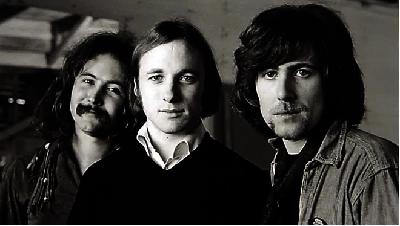
Stephen Stills is an American musician, singer, and songwriter best known for his work with
Buffalo Springfield
Crosby, Stills & Nash
Manassas …
and as a SOLO ARTIST.
He was born in 1945 in DALLAS TEXAS. He is 78 at the time of this podcast’s production. He is still active. He plays guitar, bass guitar, keyboards… he’s not only a singer and songwriter… also an arranger and producer.
Stills has had a long and prosperous career. Starting out in 1963, he has given us some 60 years of songwriting and musical performance.
Today I FEATURE original compositions by singer songwriter Stephen Stills. From my collection we will hear 5 albums:
Buffalo Springfield album and For What It’s Worth,
Buffalo Springfield Again album with Bluebird
Stephen Stills’ demo tape album JUST ROLL TAPE with Suite: Judy Blue Eyes, and Wooden Ships
Crosby Stills Nash and Young’s DÉJÀ VU album with 4+20 and Carry On
And finally, the STEPHEN STILLS 2 solo album with Sugar Babe and Change Partners.
We are now listening to ROCK AND ROLL WOMAN from BUFFALO SPRINGFIELD AGAIN.
These selections were each recorded between 1966 and 1971. Just a small time slice of this singer/songwriter’s career.
Stills was between the ages of 21 and 26. These works are important because these songs are each hand crafted by Stills. I also wanted to showcase his array of talents like multi-instrumental musician, arranger, and producer. In addition to being a successful singer/songwriter, who work has had a large musical impact.
Much more for future podcasts.
M1 For What It’s Worth (Stephen Stills), Buffalo Springfield, Buffalo Springfield, Released ATCO, LP 1969 (3:00)
Stephen Stills’ first HIT recording was FOR WHAT IT’S WORTH (or “Stop, Hey, What’s That Sound”). It was 1966. Stills was just 21 years old. This was his first big break. He had written several songs, by now.. Not only did he have an inventory of original songs, he had helped to form a new band. Along with two other singer-songwriters, Richie Furay and Neil Young… they formed Buffalo Springfield out in Los Angeles. Neil Young came from Winnipeg Alberta, and Furay and Stills left a New York City gig with the Au Go-Go Singers, a 9-member group performing at the Café Au Go-Go. Two other Canadians — bassist Bruce Palmer and rock drummer Dewey Martin were added — 5 band members in all. 2 Americans, 3 Canadians.
“For What It’s Worth” became one of the most recognizable songs of the 1960s. It was first released as a 45 RPM single in late 1966. In t1967, For What It’s Worth featured on the first Buffalo Springfield LP.
The lyrics in FOR WHAT ITS WORTH are all about a confrontation Stills had with LAPD Riot Police in Los Angeles’ earlier that year. There had been many summer nights of rowdy crowds of kids causing late-night traffic issues in the Sunset Strip neighborhood. LA responded by announcing a curfew of 10PM. As a result, there were reported to have been over 1,000 persons out on the Strip protesting and trouble broke out. There were clashes between police and young people. Peter Fonda was handcuffed by police. Jack Nicholson was also on the scene. Whisky a Go-Go was a nightclub on the Sunset Strip, where many great bands have performed. At that time, in 1966, their house band was Buffalo Springfield. Because of continuing issues of unrest, some clubs on the Sunset Strip were forced to close their doors for weeks. It was because of these civil disturbances on Sunset Strip that Stills recorded “For What It’s Worth”.
And now, For What It’s Worth (Stephen Stills)
Play M1
Don’t Touch That Dial
That was M1 FOR WHAT ITS WORTH – STOP HEY WHATS THAT SOUND
Credits
Stephen Stills – Guitar and Vocals and songwriter
Richie Furay – Guitar and vocals
Dewey Martin – Drums
Bruce Palmer – Bass
Record Company ATCO, a division of Atlantic Records
“For What It’s Worth” became a top ten hit, reaching No. 7 on the US Billboard 100 in Spring of 1967.
BIT BUCKET
I was a very impressionable age 14 at the time of this song’s release… the song chorus lyrics were very impactful on me…
I think it’s time we stop.
Hey, what’s that sound?
Everybody look, what’s going down?
M2 Bluebird (Stephen Stills) Buffalo Springfield Again, Released ATCO, LP 1967, (4:28)
The Buffalo Springfield band was really about their two biggest egos, those of STEPHEN STILLS and NEIL YOUNG. Buffalo Springfield was still a young band, only 9 months old at this point in late 1966. After their hit “For What It’s Worth”, they were eager to have a repeat success. For a SINGLE, two songs, “Bluebird” Mr. Soul were available for a single. Stills writing Bluebird, Young writing Mr. Soul. These were recorded and released by ATCO Records as a single. The version I will play today is from the LP, titled Buffalo Springfield Again, released later that year 1967. This LP version is much improved with lots more guitar work by Stills and Young. BLUEBIRD features the trading off of guitar solos between Neil Young and Stephen Stills. Stills plays the acoustic guitars, some is finger-picking. Young the rocker plays the distorted lead guitar part, on Les Paul guitar. In this song, Stills is ALL ACOUSTIC, Young is ALL ELECTRIC.
PAUSE EXAMPLE GUITARS
About that acoustic guitar we hear – Stills had just purchased a fine old guitar, a 29-year old acoustic Martin D-28. It was first used in the recording of Bluebird. On this song, Stills uses D-modal tuning … he tuned his guitar DOWN a full note to DADGAD, tuning DOWN 3 of the guitar’s 6 strings.
EXAMPLE: Record yourself d-tuning an acoustic guitar to DADGAD.
It’s a full rich sound used in Celtic music, Folk and Rock. The acoustic guitar work and this recording is sharp and clear because of some early recording expertise in SOUND PROCESSING, the use of compression and equalizers to highlight the picking and full dynamic range of that acoustic guitar. This is an ultra clear recording of Stills on that Martin D-28. AND there is also a BANJO PART.
PLAY BANJO BACKGROUND The banjo part is played by Charlie Chin, bluegrass style, from Greenwich Village – Stills’ worked earlier there. This LP VERSION with the added guitar and banjo parts, lengthens this 2-minute single to 4:28.
And now here is Bluebird … complete with dueling guitars and banjo.
PLAY M2
Don’t Touch That Dial
that was M2 BLUEBIRD (Stephen Stills) Buffalo Springfield Again, Released ATCO, LP 1967, (4:28)
Song credits M2 go to
Neil Young electric lead guitar
Bobby West Bass
Rich Furay vocal
Dewey Martin drums
Charlie Chin – Banjo
Stephen Stills – singer, songwriter, producer along with Atlantic Records, acoustic rhythm and lead guitars
The single reached number 58 on the Billboard chart, some critics see the song as their most accomplished piece. It spent 7 weeks on the HOT 100 chart. Buffalo Springfield did not last / could not last, with 3 egos as large as a house, all of this talent had dismantled by 1968 and each artist went on to their own individual successes…Neil Young departed to form Crazy Horse, Richie Furay departed to form Poco, and Stephen Stills went on to form Crosby Stills Nash and Young. BUFFALO SPRINGFIELD is a foundation of ROCK AND ROLL.
BIT BUCKET On the lyrical side, lyrics are usually lost on me. I am identifying much more with the guitar, drum, and bass parts on these songs. Some say the lyrics in this song Bluebird have to do with Stills’ musings about Judy Collins. He would soon be writing a tong he titled Suite Judy Blue Eyes. More on that later. The closing verse in the SINGLE is:
DO YOU THINK SHE LOVES YOU?
DO YOU THINK AT ALL?
M3 Suite: Judy Blue Eyes (Stephen Stills), Just Roll Tape, Recorded 1968, Released Eyewall, LP 2007 (6:33)
The next piece is titled Suite: Judy Blue Eyes” and is written by Stephen Stills and performed by Crosby, Stills & Nash (CSN). It appeared on the group’s self-titled debut album in 1969 and was released as a single.
The song is indeed a SUITE…. it imitates a classical music suite with a set of THREE musical pieces, in this case.
The inspiration for this Crosby, Stills & Nash classic “Suite: Judy Blue Eyes” is Stills’ romantic relationship with Judy Collins They were both singer songwriters and had a romantic relationship that lasted only two years, but numerous songs written by Stills down the road, would muse about Judy Collins.
The recording features a UNIQUE version of the Suite. This recording is from a DEMO tape made in April of 1968. It was done at a recording studio where Judy Collins had just finished a recording session and there was remaining studio time. Stills evidently paid the recording engineer privately to help him record the demos. He asked the engineer to “JUST ROLL TAPE” and Stills proceeded to perform 13 of his originals – – solo. The tape is available in LP form (very expensive) and on CD.
PAUSE AND PLAY EXAMPLE OF THE EEEEBE tuning at beginning of song.
The guitar is tuned to modal tuning EEEEBE and was used on later songs from the Déjà vu album— Carry On and 4+20. We will hear each of those later in this podcast
The Suite has 3 pieces on the demo tape:
Segment one – You Make It Hard
Segment two – What Have You Got To Lose
S
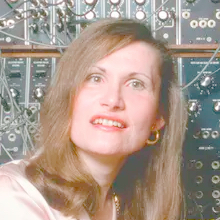
Wendy Carlos Electronic Composer VV_026
SONG LIST*
M1 Air on a G String (JS Bach 1730, W Carlos 1968), Switched-On Bach, Columbia/CBS, 1968 (2:27)
· Wendy Carlos – Moog Synthesizer
· Benjamin Folkman, Assistance
M2 Two Part Invention in F-Major,(JS Bach 1723, W Carlos, 1968), Switched-On Bach, Columbia/CBS, 1968 (0:40)
· Wendy Carlos – Moog Synthesizer
· Benjamin Folkman, Assistance
M3 Jesu, Joy of Man’s Desiring ,(JS Bach 1723, W Carlos 1968), Switched-On Bach, Columbia/CBS, 1968 (2:56)
· Wendy Carlos – Moog Synthesizer
· Benjamin Folkman, Assistance
M4 Chorale Prelude “Wachet Auf”, (JS Bach 1731, W Carlos 1968), Switched-On Bach, Columbia/CBS, 1968 (3:37)
· Wendy Carlos – Moog Synthesizer
· Benjamin Folkman, Assistance
M5 Brandenburg Concerto #3 in G Major 2nd Movement, (JS Bach 1723, W Carlos 1968), Switched-On Bach, Columbia/CBS, 1968 (2:50)
· Wendy Carlos – Moog Synthesizer
· Benjamin Folkman, Assistance
M6 Brandenburg Concerto #3 in G Major 3rd Movement, (JS Bach 1723, W Carlos 1968), Switched-On Bach, Columbia/CBS, 1968 (5:05)
· Wendy Carlos – Moog Synthesizer
· Benjamin Folkman, Assistance
M7 Title Music from A Clockwork Orange), (Purcell, 1695, W Carlos, R Elkind 1972) , Columbia/CBS, 1972 (2:21)
· Wendy Carlos – Moog Synthesizer
· Rachel Elkind Producer
M8 Theme from A Clockwork Orange (Beethoviana), (W Carlos, R Elkind 1972) , Columbia/CBS, 1972 (1:44)
· Wendy Carlos – Moog Synthesizer
· Rachel Elkind Producer
M9 Timesteps (Excerpt), (W. Carlos 1970, Tempi Music BMI), Stanley Kubrick’s A Clockwork Orange, Warner Bros Records, 1972 (4:13)
· Wendy Carlos – Moog Synthesizer
· Rachel Elkind Producer
M10 March from A Clockwork Orange/Ninth Symphony, 4th Movement, (L v Beethoven 1824, W Carlos, R Elkind 1970) Stanley Kubrick’s A Clockwork Orange, Warner Bros Records, 1972 (7:00)
· Wendy Carlos – Moog Synthesizer
· Rachel Elkind Producer and Articulations
Today’s Vinyl Vibrations podcast features the artistry of Wendy Carlos, an American composer, arranger, and electronic musician. Wendy Carlos was born Walter Carlos in Rhode Island in November 1939. She is the first transgender recipient of a Grammy Award, her album SWITCHED-ON BACH won three Grammys in 1970. Later, in 2005 she was the recipient of the SEAMUS Lifetime Achievement Award for her contribution to the art and craft of electro-acoustic music.
Wendy Carlos is best known for her electronic music such as SWITCHED-ON BACH…and film scores such as A CLOCKWORK ORANGE, THE SHINING and TRON.
Her studies of music composition at Columbia University in New York City in the 1960s led to her working with electronic musicians and technicians where she helped in the development of the MOOG SYNTHESIZER. This was the first commercially available keyboard instrument from Robert Moog. During her time at Columbia, Carlos ordered components of a custom designed synthesizer from Robert Moog, and she collaborated with Moog on the design of that early instrument, which became known as the MOOG SYNTHESIZER. Some of the modules included a touch-sensitive keyboard, a portamento control, which slides notes in the scale between one note and the next, a filter bank, and a 49-oscillator polyphonic generator bank that could create chords and arpeggios, arpeggios are the individual notes of those chords played in cycles.
Today, we take the synthesizer for granted. The keyboard synthesizer has become widely-available, and most keyboard musicians today, including me, use a synth keyboard such as BEHRINGER, KORG, NORD, ROLAND, YAMAHA, and yes… even the brand Carlos herself helped design with Robert Moog, the MOOG synthesizer.
After getting her Masters in Music Composition from Columbia University in 1965, Carlos worked for three years at Gotham Recording Studios in New York City, to support herself. She also used her Moog Synthesizer to record jingles for TV commercials. The recording engineering job would prove to be extremely valuable just three years later as she self-recorded the entire SWITCHED-ON BACH album, which is featured in today’s podcast.
In 1968, Carlos, then Walter Carlos, released her first LP, SWITCHED-ON BACH, containing several pieces written by Johann Sebastian Bach, which she arranged and recorded from her Moog Synthesizer. SWITCHED-ON BACH was released on Columbia Masterworks as part of a two-record recording contract. Carlos negotiated a good royalty arrangement, because the label really didn’t expect the album would sell many copies. Classical music rarely, if ever, achieves Gold let alone Platinum unit sales.
What makes this first album fascinating is knowing that the MOOG Synthesizer was in a very early state – – – barely a usable product. …You could not sit down and bang out a song like you could on a piano or organ. The first Moog Synthesizer could play only one note at a time. No chords! No two-handed playing ! No buttons with presets for sounds and effects! Instead, a lot of patch cables and knobs to adjust.
Every individual part had to be recorded, note for note, and then layered over the previously recorded parts. This was all done on an eight-track recorder. State of the Art at that time. Recorded parts were time-aligned with use of a click track. Carlos did not document her settings for knobs and patch cable connections – – These were complex, but she was able to recall each part’s sound from her own memory, a living library of hundreds of settings for all the knobs and cables. To add to the laborious nature of early electronic music, the Moog, being an analog device, would frequently drift out of tune. This made the recording and layering process very repetitive, tedious and laborious. The story goes that Carlos would use a hammer to bang on the Moog casing to get it back in-tune, and then re-record the part.
According to Wendy Carlos, the Switched-On Bach song recordings required 8-hour days, 5 days a week for 5 months to complete. In other words, Carlos invested some 900 to 1,000 man-hours of her own recording time to lay down what was published That is one-half man-year resulting in 12 songs for a total play time of 40 minutes on the Switched-On Bach LP.
And this was moonlighting for Wendy Carlos, she was also working full-time job at the Gotham Recording Studios! That is extreme PASSION for arranging and creating electronic music!
Today we will hear selections from three early LP productions of Wendy Carlos.
These three albums are:
SWITCHED-ON BACH
WALTER CARLOS’ CLOCKWORK ORANGE
And STANLEY KUBRICK’S CLOCWORK ORANGE
Each of these albums are in my collection, and each album refers to and gives credit to WALTER CARLOS, her name at that time.
There is also a Corporate ID and a self-credit to Walter Carlos stating on the album liner notes: THIS ALBUM WAS DEVISED AND PRODUCED BY TRANS ELECTRONIC MUSIC PRODUCTIONS INC. We can see that Wendy Carlos has been very protective of her copyrights and ownership of this music.
Wendy Carlos has released some 13 studio albums, created 5 film soundtracks, including A Clockwork Orange, The Shining, Tron, and Rediscovering Lost Scores, in two volumes.
Sadly, as of 2020, much of Carlos’s discography is out of print and has not been released for digital streaming or other platforms. BUT WE HAVE THE VINYL LPs, WHICH HAVE STOOD THE TEST OF TIME.
Fortunately, there is a treasure trove of information on Wendy’s personal website, www.wendycarlos.com
There are many many pages painstakenly updated through about 2009, this is Wendy Carlos’ personal database of information.
Carlos is also an accomplished solar eclipse photographer, and her work has been published by NASA. She has developed techniques for extending the dynamic range in eclipse photography.
Carlos remains very private, but I believe she continues to live at her music studio in New York City. At the time of this podcast recording she is 83-1/2 years old.
Perhaps we can visit two other soundtracks THE SHINING and TRON in a part 2 podcast of Wendy Carlos soundtrack skills.
That’s it for today’s show “WENDY CARLOS, ELECTRONIC COMPOSER and ARRANGER “, on VINYL VIBRATIONS.
Please SUBSCRIBE to hear new episodes of this FREE PODCAST.
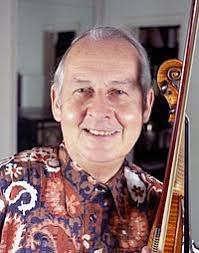
M1 Oh, Lady Be Good (George and Ira Gershwin, 1924), Django, CBS Realm Jazz Series 1969/1934 (2:50)…
M2 Dinah, (Akst, Lewis, Young, 1925) Django, CBS Realm Jazz Series 1969/1934 (2:30)…
M3 I Saw Stars (Sigler, Goodhart, Hoffman, 1934), Django, CBS Realm Jazz Series 1969/1934 (2:20)…….
M4 Confessin’, (Daugherty, Reynolds, 1929), Django, CBS Realm Jazz Series 1969/1935 (2:40)….
M5 The Sunshine of Your Smile, (Ray, Cooke, 1913) Django, CBS Realm Jazz Series, 1969/1935 (2:50)…..
M6 Swannee River (Old Folks at Home), (Foster, 1851), Django, CBS Realm Jazz Series, 1969/1935 (2:50)…
M7 Lover Man (Oh, Where Can You Be?)(Davis, Ramirez, Sherman, 1941) Best of Django Reinhardt, EMI / Columbia, 1970/1947 (3:10)
M8 Golden Green (Ponty, 1972), Ponty/Grappelli, Inner City Records, 1976/1973 (4:42)
Today’s Vinyl Vibrations podcast features the artistry of French Violinist Stephane Grappelli.
Stephane Grappelli is best known as the founder of the Quintette du Hot Club de France along with guitarist Django Reinhardt in 1934. This was a GYPSY jazz band. Grappelli is considered the grandfather of jazz violinists. He lived 90 years, from 1908 until 1997.
He began playing violin at the age of 12, early on, preferring to learn in the streets by watching how other violinists played, such as at the Barbes (pron BAR-bez) metro station in Paris. Then he was enrolled by his father at the Conservatory of Paris to learn music theory, sight reading, and ear training. He graduated three years later.
Starting at age 15, he worked in the pit orchestra at the Theatre Gaumont, accompanying silent films, then at the Ambassador Hotel orchestra, where jazz violinist Joe Venuti was playing. For a while, Grappelli abandoned violin — in favor of playing piano in a big band, it was easier to get paid for big band work. Jazz violinists were a relatively unknown and rare breed. In this big band, Grappelli met gypsy jazz guitarist Django Reinhardt. It was 1931 and Grappelli was just 23, Django was 21. Three years later, Django and Grappelli formed the Quintette du Hot Club de France . This was an all-string jazz band, and they performed regularly at the Montmartre district, an artistic village on the hill in the northside of Paris. This continued until 1939 when the Quintette disbanded due to the outbreak of World War II. ‘’
When the war was over, the original Quintette never did reform. Django and Grappelli did continue to perform together in Paris. In 1949, they briefly toured in Italy, where some 50 tunes were recorded. That would turn out to be the last time the two would record together, 1949, due to Django’s untimely death at the age of 43. Many of those recorded songs were released as an album titled Djangology in 2005 on Bluebird Records.
Most of the recordings featured in today’s podcast were recorded between 1934 and 1947 and were recorded in Paris, as performed by the Quintette du Hot Club de France.
Stephane Grappelli is a master of improvisation. He had said that he was not a fan of BEBOP jazz, which was then very fashionable in the jazz world. Instead, he was a strong proponent of SWING music, another popular jazz style. Swing developed in the US in 1935-1945 ….. This was the SWING ERA in America.
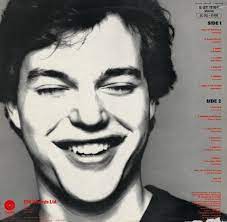
M1 Cripple Creek (Traditional), Mudlark, Capitol Records 1971 (1:56)…………………………………………………………..
M2 Stealing (Kottke), Mudlark, Capitol Records 1971 (1:35)…………………………………………………………………………
M3 Machine #2 (Kottke), Mudlark, Capitol Records 1971 (3:00)…………………………………………………………………….
M4 Bourree (J.S. Bach), Mudlark, Capitol Records 1971 (1:26)………………………………………………………………………
M5 Easter (Kottke), My Feet Are Smiling, Capitol Records 1973 (3:18)…………………………………………………………..
M6 June Bug (Kottke), My Feet Are Smiling, Capitol Records 1973 (2:20)………………………………………………………
M7 Jesu, Joy Of Man’s Desiring (J.S.Bach), My Feet Are Smiling, Capitol Records 1973 (2:00)………………………..
M8 Twilight Property (Kottke), Dreams and All That Stuff, Capitol Records 1974 (3:11)……………………………………
M9 Vertical Trees (Kottke), Dreams and All That Stuff, Capitol Records 1974 (2:34)
Today’s Vinyl Vibrations podcast features the artistry of American composer, arranger, and acoustic guitarist LEO KOTTKE. Leo Kottke was born in 1945 in Athens Georgia. As a youth he lived in several states, including Oklahoma ,,and Missouri and Minnesota and eventually settled in the Twin Cities. He released his first record on the Oblivion label in 1969 … and just 2 years later he signed on with Capitol Records … it was 1971 he was just 25 years old.
Kottke produces instrumental songs, mostly…. but on a few songs he adds his vocals. I selected the instrumental songs because I believe these best showcase his unique guitar and arrangement talent. For his guitars, Kottke uses signature Taylor 12-string and Taylor 6 string.. Kottke plays guitar by an innovative style of fingerpicking, and his style is considered “unconventional”. His style enables the mimicking of a rhythm section, His genres of music include jazz, rock, bluegrass, classical, and folk.
Kottke has also been “Different” as far his guitar tuning. He’s used different variations ranging from open tuning to tuning his guitar two steps below the traditional tuning. This produces a full and warm guitar sound.
When Kottke was younger, he suffered significant hearing loss from two events – – first from a firecracker incident as a youngster, and later during live-fire exercises while serving in the Naval Reserves.
He was inducted into the Guitar Player Hall of Fame in 1978 and scored two Grammy nominations — 1988 and 1991
Kottke has released 40 records in 40 year period.
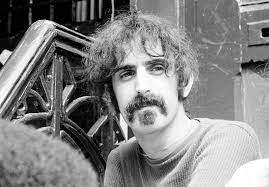
Today’s show features Frank Zappa, an American musician, composer, arranger, bandleader, multi-instrumentalist, and record producer. He lived from 1940 to 1993. Zappa composed rock, pop, jazz, jazz fusion and orchestral works. He is known for his work with the band The Mothers of Invention, producing over 60 albums with the Mothers, and he is also known for his prolific work as a Solo Artist. Zappa was one of the great guitarists of our time, and he was a sophisticated composer and highly accomplished multi-instrumental musician.
Zappa was a self-taught composer and performer. He studied and wrote classical music in high school, played drums in R&B bands. He later took to the Electric Guitar.
He has been described as the godfather of comedy rock, a critic of mainstream education and organized religion, advocating for freedom of speech and political participation. The phases of his life included different musical genres including experimental rock, jazz, classical, comedy rock, doo-wap, prog-rock, avant jazz, and pop.
Frank Zappa was prolific. His discography contains 62 albums produced during his lifetime. Zappa died much too early… at the young age 53, from prostate cancer. Following his death in 1993 , The Zappa Family Trust has overseen the release of another 57 official albums…that’s a total of 129 albums of songs recording the genius of Frank Zappa.
In the book, Frank Zappa: A Biography, by Barry Miles, Zappa describes his works in these words:
“It’s all one album. All the material in the albums is organically related and if I had the master tapes and I could take a razor blade[2] and cut them apart and put it together again in a different order it still would make one piece of music you can listen to…. I could do this twenty ways. The material is definitely related.”
Which brings us to the subject of today’s show. Each album seems like an eclectic work, combining songs of Rock, Jazz and Classical genres. It is a difficult assignment for anyone to make the right selection from those 129 albums… let alone a proper selection of the individual songs that would best capture the genius of Frank Zappa in a few sound impressions.
One way to accomplish this selection is to attribute each of Zappa’s songs as being either a Song with lyrics, (and this is 401 songs, about 2/3 of his works), and instrumental compositions, (there are 172 instrumentals). I then compiled an instrumental list from my own vinyl collection, and then shortened that list down to just to 8 instrumental pieces that would fit into this podcast format. Each instrumental piece is brilliant.
This short list of Frank Zappa Instrumentals is what we will review today.
M1 Chunga’s Revenge, Frank Zappa, Chunga’s Revenge, 1970, Reprise/Warner Brothers, (6:16)…………………………….
M2 Twenty Small Cigars, Frank Zappa, Chunga’s Revenge, 1970, Reprise/Warner Brothers, (2:17)…………………………..
M3 Idiot Bastard Son, Frank Zappa, Jean-Luc Ponty Plays the Music of Frank Zappa, World Pacific Jazz, 1970, (4:00)
M4 The Little House I Used to Live In, Frank Zappa Music, The Mothers – Fillmore East June 1971 (4:58)…………………
M5 Peaches En Regalia, Frank Zappa Music, The Mothers – Fillmore East June 1971 (3:22)…………………………………..
M6 The Grand Wazoo, Frank Zappa Music, The Grand Wazoo, 1972 Warner Records, (13:24)………………………………
M7 Eat That Question, Frank Zappa Music, The Grand Wazoo, 1972 Warner Records, (6:41)………………………………
M8 Blessed Relief, Frank Zappa Music, The Grand Wazoo , 1972 Warner Records, (6:41)………………………………….
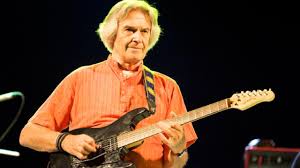
Today’s show features John McLaughlin, an English guitarist, composer and band leader, born in 1942 in Doncaster, a city in South Yorkshire, that’s located in northern England. His mother was a concert violinist. He studied violin and piano as a child and then took up the guitar at age 11.
His childhood musical influences included MILES DAVIS and LUDVIG VON BEETHOVEN, and more contemporary artists were JOHN COLTRANE and JIMMY HENDRIX
McLaughlin is a pioneer of Jazz Fusion. In his music, one can clearly pick out elements of ROCK, JAZZ and BLUES…and also additional elements later on such as WORLD MUSIC, and Western Classical Music.
In the 1960s at about age 20, he moved to London where he contributed to several British groups and did session work. One of those British Groups was the Graham Bond Quartet with Jack Bruce and Ginger Baker of Cream. Another rare opportunity was working with Miles Davis. And he gave guitar lessons too, and one of his students was Jimmy Page, founder of Led Zeppelin.
M1 Arjen’s Bag (John McLaughlin) EXTRAPOLATION, Marmalade Records, released 1969 in UK, Re-released on Polydor Records, 1972, 4:25.
M2 Goodbye Pork Pie Hat, (Charles Mingus 1959) My Goal’s Beyond, Mahavishnu John McLaughlin, Douglas 9 Released 1971(solo album) 3:15 .
M3- Dawn (John McLaughlin), Inner Mounting Flame, The Mahavishnu Orchestra with John McLaughlin, Columbia, Released 1971 (5:15)
M4 Birds of Fire(John McLaughlin), Birds of Fire, Mahavishnu Orchestra, CBS Columbia, Released 1973 (5:50)..
M5 Sanctuary (John McLaughlin), Birds of Fire, Mahavishnu Orchestra, CBS Columbia, Released 1973 (5:05).
M6 WINGS of KARMA(John McLaughlin), Apocalypse, Mahavishnu Orchestra, with London Symphony Orchestra, CBS Columbia, Released 1974 (6:12)
M7- La Danse du Bonheur, Shakti with John McLaughlin, Columbia, 1977 (4:48).
rev4 04Jan2023 17:30
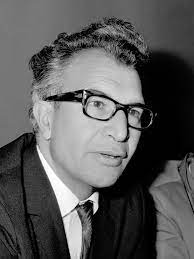
DAVE BRUBECK
Today’s show features Dave Brubeck, an American jazz pianist and composer, living between 1920 and 2012. Dave Brubeck’s music is often referred to as COOL WEST COAST JAZZ. It is JAZZ INSTRUMENTAL genre. Brubeck’s work is characterized by unusual time signatures and superimposing contrasting rhythms and meters. One example of unusual time signature is TAKE FIVE, the biggest selling single in jazz history, a Paul Desmond composition, done in FIVE time.
M1 What Is This Thing Called Love? (Cole Porter 1929) From earlier recordings, DAVE BRUBECK OCTET, Compilation. Fantasy, 1956 [ from original recordings 1946-1948], 2:40.
M2 Laura (Johnny Mercer, David Raskin 1944) DAVE BRUBECK OCTET, Compilation. Fantasy 1956 [ from original recording 1950], 2:09
M3 I Found a New Baby – Live at College of the Pacific (Jack Palmer, Spencer Williams, 1926) Recorded Dec 1953, THE DEFINITIVE DAVE BRUBECK, Fantasy, Concord Jazz and Telarc on CD 2010, 1:40
M4 Blue Rondo a la Turk (Dave Brubeck 1959) Recorded 1959, TIME OUT, Columbia 1959, 6:44
M5 Take Five (Paul Desmond 1959) TIME OUT, Columbia 1959, 6:44
M6 Time In (Dave Brubeck) Recorded Oct 1965, TIME IN, Columbia CL2512, 1966, 3:57
M7 40 Days (Dave Brubeck) Recorded Oct 1965, TIME IN, Columbia CL2512, 1966, 4:38
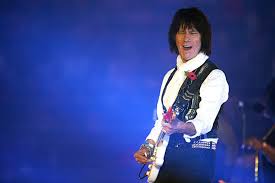
JEFF BECK EARLY YEARS 1975-1976
Today’s show is JEFF BECK GUITAR EARLY YEARS — PART 2
During the two years of 1975 – 1976, two Jeff Beck albums BLOW BY BLOW and WIRED, set a standard for instrumental rock. In today’s podcast episode, JEFF BECK GUITAR PART 2, we review 4 works from the album BLOW BY BLOW, released in 1975, and 3 works from the album WIRED, released in 1976. In the previous episode JEFF BECK GUITAR PART 1, we reviewed the early years of British, blues-based fusion guitarist Jeff Beck during his recordings with THE YARDBIRDS in 1966, and then his formation of the JEFF BECK GROUP in 1968. By 1975, Beck’s band consisted of Phil Chen on bass, Richard Bailey on drums and Max Middleton on keyboards. Middleton continued on from the earlier Jeff Beck Group. The sound with this new group and this album is instrumental Jazz Fusion It is a sound with influences from Miles Davis, and Mahavishnu Orchestra.
PROGRAM LIST
Cause We’ve Ended as Lovers (Stevie Wonder) Rec Oct 1974, BLOW BY BLOW, Epic Records/Sony Music Entertainment, 1975, 5:42
Freeway Jam (Max Middleton), Rec Oct 1974, BLOW BY BLOW, Epic Records/Sony Music Entertainment, 1975, 4:58
Diamond Dust (Bernie Holland) Rec Oct 1974, BLOW BY BLOW, Epic Records/Sony Music Entertainment, 1975, 8:26
Led Boots (Max Middleton), Rec Oct 1976, JEFF BECK WIRED, Epic Records, 1976, 4:03
Goodbye Pork Pie Hat (Charles Mingus, 1959) Rec Oct 1976, JEFF BECK WIRED, Epic Records, 1976, 5:31
Blue Wind (Jan Hammer) Rec Oct 1976, JEFF BECK WIRED, Epic Records, 1976, 5:54
Love is Green (Narada Michael Walden) Rec Oct 1976, JEFF BECK WIRED, Epic Records, 1976, 2:30
9-4-20 at 1333
In today’s VINYL VIBRATIONS podcast, I continue to tour early vinyl records that showcase JAZZ GUITARIST GREAT WES MONTGOMERY. The recording presented in this podcast are a compilation from my own LP collection – – from the golden age of vinyl. I heard these Montgomery Brothers LPs during my childhood. These records were a frequent play on my parent’s Hi-Fi record player – you could stack up to 10 records, and Wes Montgomery was a regular in that record stack.Today, I will pick more of Wes Montgomerys best recordings, made between 1961 and 1968, In those years Wes would have been between the ages of 38 and 45.
Love For Sale (Cole Porter 1930 ) Rec Oct 9, 1961, Buddy Montgomery vibes, George Shearing piano, Monk Montgomery electric bass, Walter Perkins drums, WES and FRIENDS, Milestone 1973 remaster 3:32 from the musical The New Yorkers The song is written from the viewpoint of a prostitute advertising various kinds of “love for sale”: “Old love, new love, every love but true love“.
No Hard Feelings (Buddy Montgomery) Rec Oct 9, 1961, Buddy Montgomery vibes, George Shearing piano, Monk Montgomery electric bass, Walter Perkins drums, WES and FRIENDS, Milestone 1973 remaster 3:45
Born To Be Blue (Mel Torme) Rec Apr 22 1963 Wes Montgomery guitar, Mel Rhyne organ Jimmy Cobb drums The Alternative Wes Montgomery Milestone Records 1963 Produced Orrin Keepnews 7:23 I can hear contemporary Pat Martino through this Wes Montgomery guitar part.
Fried Pies (Wes Montgomery) Rec Apr 22 1963 Wes Montgomery guitar, Mel Rhyne organ Jimmy Cobb drums The Alternative Wes Montgomery Milestone Records 1963 Produced Orrin Keepnews 6:34 awesome thumb pluck technique half way into song
Besame Mucho take 2 (Consuelo Velazquez 1940) Rec Apr 22 1963 Mel Rhyne organ Jimmy Cobb drums The Alternative Wes Montgomery Milestone Records 1963 Produced Orrin Keepnews 6:24 An exceptional improviser the likes of Joe Pass guitar and Oscar Peterson piano improvisation. The content is massive, each listen draws out another impressive sound. The story goes that WM was often not satisfied with his recordings. That;s\\’s nothing unusual for a god musician. Sure there are musicians that sit once and nail the take. Peter Keepnews was WM’s producer during the Riverside Records years. These tracks are WM’s rejects, and they sound so very good. This song used in the 1987 Brazilian film Besame Mucho.
I’ll Be Back, (Lennon-McCartney) Recorded May 7, 1968, “Road Song”, A&M Records, 2:30 Herbie Hancock piano, Richard Davis Bass, Grady Tate drums, and a cast of many in the orchestra.goes back and forth from major to minor.
Road Song (Wes Montgomery) rec May 8,1968 “Road Song”, A&M Records, 3:50 Herbie Hancock Piano , Richard Davis Bass, Ed Shaughnessy drumsalso flute oboe recorder bassoon trumpet clarinet trombone french horn violin viola cello harpsicord and percussion parts..,. final recording before his death on June 15, 1968. A lot of Octave playing in this song.
First let’s recap what we learned about Wes in Part 1
He was born in 1923 in Indianapolis INDIANA,
Wes has two musician brothers – Monk Montgomery on bass and Buddy Montgomery on piano and vibes
They recorded as the Montgomery Brothers in the 1950s
Wes recorded with Pacific Jazz in the 1950s and then Riverside Records 1959-1963, and also VERVE and A&M records from 1964 to 1968
The music style, it is jazz guitar, bebop
An Original technique: Wes ‘plucks’ the guitar string with his thumb – not a guitar pick
Guitar solos used three-tier approach: 1 single notes 2 octave notes 3 block chord melodies
That octave string sound became known as “THE NAPTOWN SOUND” , naptown being Indianapolis
Wes was a self-taught musician !!
He learned Charlie Christian songs note-for-note by listening to records,
Lionel Hampton hired Wes for that reason, Wes then toured for 1-1/2 years with Lionel
He preferred to play in a jazz trio, quartet or quintet format, with his brothers
So today let’s continue with his recording in 1961 and two songs, in particular, M1 LOVE FOR SALE and M2 NO HARD FEELINGS On VINYL VIBRATIONS !
M1 Our first song is Love For Sale by Cole Porter, written in 1930, and this is Wes’s excellent interpretation. The song Love For Sale is from the musical The New Yorkers. The song is written from the perspective of a sex worker. The lyrics say it all: “Old love, new love, every love but true love“. The song was considered in bad taste, and was banned from radio airplay. Two versions went to top 20 in 1931 and other versions of the song were played as instrumentals. What we have NOW is a Wes Montgomery rendition, recorded some 30 years later, Oct of 1961. The tune shifts between a major and minor feeling that’s a signature attribute for Porter. There is an ultra clean upbeat sound to this song. With George Shearing on piano, what a great assembly of artists.
The song features:
Buddy Montgomery vibes,
George Shearing piano,
Monk Montgomery electric bass,
Walter Perkins drums,
From the album WES and FRIENDS,
M2 No Hard Feelings written by Buddy Montgomery, and recorded in October of 1961. What an interesting song line, with the theme as a base and piano playing opposite each other. The up-tempo antics of Shearing and Montgomery is impressive almost 55 years after it was recorded. That’s George Shearing on piano, George Shearing is 42, 4 years older than Wes
On electric bass, Monk Montgomery
Buddy Montgomery is on vibes and the song composer,
Wes on guitar and Walter Perkins drums,
From the two-LP set titled WES and FRIENDS,
Born To Be Blue a Mel Torme composition, Recorded in 1963, with
Wes Montgomery guitar,
Mel Rhyne organ
Jimmy Cobb drums
The Alternative Wes Montgomery Milestone Records 1963. 7:23
I can hear contemporary guitarist Pat Martino through the Wes Montgomery guitar part on Born To Be Blue.
Even today, Wes’s techniques like octaves, block chord melody solo, are the kind of things jazz guitar students strive to accomplish, even partially. Contemporary guitarists trace their guitar influences back to Wes Montgomery, many consider Montgomery the greatest influence among modern jazz guitarists. Names like Pat Metheny, George Benson, Stevie Ray Vaughan, Eric Johnson, Joe Satriani, Jimi Hendrix, Lee Ritenour, Larry Coryell, and Pat Martino have pointed to him numerous times as a great influence.
M4 Fried Pies by Wes Montgomery, recorded in 1963 with
Wes Montgomery guitar,
Mel Rhyne organ
Jimmy Cobb drums
From the double LP The Alternative Wes Montgomery . 6:34
In just one year ,1964, Montgomery will move to VERVE RECORDS where he will release ten albums in 4 years. With Verve, Wes will be taken in a different direction, and crossover into pop/jazz style, where he did well and gained recognition in the mid 1960s. In 1966 he won a Grammy Award for “Best Instrumental Jazz Performance”.
M5 Besame Mucho take 2 (BAY SAW MAY MOO CHO) composed by Consuelo Velazquez 1940 and Wes recorded this rendition in 1963.
Wes Montgomery on guitar
Mel Rhyne on organ with bass pedals
Jimmy Cobb drums
From the 2-LP set The Alternative Wes Montgomery, 1963, Milestone Records. On this song, Wes is an exceptional improviser I compare his wizardry to that of Joe Pass-guitar and Oscar Peterson-piano improvisations that go on for minutes. The song is rich with ideas, and each listen draws out another impressive sound. The story goes that Wes Montgomery was often not satisfied with his recordings, and would himself reject takes…well…that’s not unusual for any self-respecting musician, but word is that he was a bit of a perfectionist…. So these tracks, Wes’s rejects, do SOUND VERY GOOD. The song Besame Mucho was used in the 1987 Brazilian film by the same name.
M6 I’ll Be Back, a Lennon-McCartney song, recorded in May of 1968, on the “Road Song” LP, A&M Records. A shorter pop tune at 2 minutes 30 seconds. The move to A&M Records firmly places Wes Montgomery in the POP/JAZZ world, taking the pop hits of the day and adding Wes as a lead guitar part.
On I’ll Be Back the artists were:
Herbie Hancock piano,
Wes Montgomery guitar
Richard Davis Bass,
Grady Tate drums,
…and a cast of many in the orchestra.
Like many Lennon McCartney songs, ILL BE BACK goes back and forth from major to minor. But with the orchestra – – did Wes Montgomery really enjoy what he was doing? There is such a difference as compared to his favorite format—a jazz trio.
M7 Road Song was composed by Wes Montgomery and recorded May 8,1968 and released on the album “Road Song”, on A&M Records
The song showcases what Wes is known for in JAZZ circles, now going to a much broader POP base. So in this song there is extensive Octave playing (level 2 of the 3-level, solo technique)
ROAD SONG features :
Herbie Hancock Piano ,
Richard Davis Bass,
Ed Shaughnessy drums
and small orchestra
This song is very probably the final recording before Montgomery’s death. Montgomery had just returned from a tour with his quintet
On the morning of June 15, 1968, while at home in Indianapolis, Indiana, Montgomery died of a heart attack —he was only 45 years old at the time of his death….and was at the top of his fame. Montgomery earned a high level of popular acceptance and set the bar so much higher for young and aspiring jazz guitarists. A year following his death, in 1969, he won a second Grammy, again for “Best Instrumental Jazz Performance”
Love For Sale (Cole Porter 1930 ) Rec Oct 9, 1961, “WES and FRIENDS“,Milestone 1973 remaster 3:32
No Hard Feelings (Buddy Montgomery) Rec Oct 9, 1961, “WES and FRIENDS”, Milestone 1973 remaster 3:45
Born To Be Blue (Mel Torme) Rec Apr 22 1963 “The Alternative Wes Montgomery” Milestone Records 1963 7:23
Fried Pies (Wes Montgomery) Rec Apr 22 1963 “The Alternative Wes Montgomery” Milestone Records 1963 6:34
Besame Mucho take 2 (Consuelo Velazquez 1940) Rec Apr 22 1963 “The Alternative Wes Montgomery” Milestone Records 1963
I’ll Be Back, (Lennon-McCartney) Recorded May 7, 1968, “Road Song”, A&M Records, 2:30
Road Song (Wes Mon
In today’s VINYL VIBRATIONS podcast, I tour some early vinyl records that showcase JAZZ GUITARIST GREAT WES MONTGOMERY. The recording presented in this podcast are a compilation from my LP collection from the golden age of vinyl. From my father’s LP record collection, I heard these LPs during my childhood. These LPs were a frequent play on the house Hi-Fi — it had a stackable record player. Wes Montgomery was a regular in that record stack..Jazz renditions by Wes Montgomery have had a big influence on my musical development and my music interest since that time – – some 55 years ago !
Wes Montgomery Part 1 (1959-1961)
PART 1
‘Round Midnight (music by Thelonious Monk 1944) Recorded Oct 5-6, 1959, Wes Montgomery guitar, Melvin Rhyne organ, Paul Parker drums. 4:49 Remaster 1968 Riverside Records. …bebop. Original LP: “THE WES MONTGOMERY TRIO, A Dynamic New Sound for Guitar/Organ/Drums”
Yesterdays (music by Jerome Kern 1933-from Roberta) Recorded Oct 5-6, 1959 Wes Montgomery guitar, Melvin Rhyne organ, Paul Parker drums. 3:13 Remaster 1968 Riverside Records …‘brightswing 200’ much faster pace than the Roberts play song. Original LP: “THE WES MONTGOMERY TRIO, A Dynamic New Sound for Guitar/Organ/Drums”
Love Walked In (music by George Gershwin 1930) recorded October 9, 1961 Wes Montgomery guitar, George Shearing Piano, Buddy Montgomery Vibes, Monk Montgomery Bass, Walter Perkins Drums. Riverside Records remaster, 1968. What a dynamite jazz rendition of this George Gershwin music classic, by Wes Montgomery and George Shearing. What do we know about the musical family “Montgomery”. 2:10
Airegin (Sonny Rollins) Wes Montgomery guitar, Tommy Flanagn piano, Percy Heath bass, Albert Heath druma. Recorded January 1960. Riverside Records 4:26 Note the tight synch between drummer and wes , wes is weaved into the rhythm section.
Four on Six (Wes Montgomery) Wes Montgomery guitar, Tommy Flanagn piano, Percy Heath bass, Albert Heath druma. Recorded January 1960. Riverside Records 6:10 long one there is plenty of time to develop the theme and have a more ideas play out
Tune Up-Take 9 (Miles Davis) Recorded Oct 12, 1960 Wes Montgomery guitar, James Clay, Flute, Victor Feldman, Piano, Sam Jones Bass, Bobby Thomas drums, Produced by Orrin Keepnews, released in 1963, consists of alternate unissued takes (1960-1963) from previously issued albums on the Riverside label 4:39
Bock to Bock-take 1 (Buddy Montgomery) Recorded Jan 3, 1961 for “The Montgomery Brothers-Groove Yard” in 1961 , Wes Montgomery guitar, Buddy Montgomery piano, Monk Montgomery bass, Bobby Thomas drums. Orinially produced by Orrin Keepnews, released in 1963, consists of alternate unissued takes (1960-1963) from previously issued albums on the Riverside label 5:35
Today in Part 1, I will pick some of Wes Montgomery best recordings, made between 1959 and 1961, – – – he was between the young ages of 36 and 38. Wes Montgomery had just signed with Riverside Records. There would be several LP and LP Sets released with Riverside over the next seven years…a prolific period for Wes!
What do we know about Wes Montgomery ?
John Leslie Montgomery was born March 6, 1923 in Indianapolis. He was called Wes, the baby pronunciation of his name, Leslie.
Amazing Technique fact 1
Wes Montgomery is a SELF TAUGHT musician, learning by ear, starting at age12 on a tenor guitar, then at age 20, he began playing a 6-string guitar. He had listened and learned from the recordings of his guitar idol,
CHARLIE CHRISTIAN. Wes Montgomery learned these melodies and riffs … by ear. That is an amazing fact.
Wes grew up with two musician brothers – – Monk Montgomery plays bass, and Buddy Montgomery plays piano and vibes. Montgomery did most of his early performance work in the 1950’s in Indanapolis, with his brothers, and together with with Indianapolis organist Melvin Rhyne – – they recorded from 1957-1959 for the PACIFIC JAZZ label.
The story goes that Wes learned how to play Charlie Christian songs by memory, note-for-note, and that Lionel Hampton hired Wes for this reason. His early professional history began by briefly TOURING with Lionell Hampton’s orchestra, from 1948-1950. This would have been when Wes was from the ages of 25 to 27.
Then, in 1959, at the age of 36, Wes got his big break, and signed with RIVERSIDE RECORDS.
First album was “THE WES MONTGOMERY TRIO, A Dynamic New Sound for Guitar/Organ/Drums”, recorded October 1959. There were several wonderful recordings released, featuring small-group jazz bee-bop format of jazz guitar. You will hear FIVE of those Riverside RECORDS LP recordings today – – On VINYL VIBRATIONS !!
M1 Round Midnight. This first song from the 1959 recording is ‘ROUND MIDNIGHT, a Thelonious Monk composition.This features Wes Montgomery on guitar, Melvin Rhyne on organ, and Paul Parker on drums and now….’ROUND MIDNIGHT. An interpretation of Thelonious Monk’s 1944 song, recorded in 1959, and released on Riverside Records, distributed by ABC Records.
M2 Yesterdays Music by Jerome Kern 1933-from the play “Roberta”. Recorded Oct 5-6, 1959 ….with Wes Montgomery guitar, Melvin Rhyne organ, Paul Parker drums. The sheet music calls for a tempo named ‘brightswing 200’ a much faster pace than the song in Roberts. The Original LP was titled : “THE WES MONTGOMERY TRIO, A Dynamic New Sound for Guitar/Organ/Drums”
Another amazing fact about guitar technique
WES developed an unusual playing technique, using his right THUMB to pluck the strings, instead of a guitar pick. That may not sound significant, but when you consider the speed of some of his guitar lines, as a guitarist, it is mind-boggling to hear his performance – rapid succession of a line of notes, with just the thumb.
Like for example this line from Jingles:.
Today some great guitarists use this thumb style –Jeff Beck, George Benson, John Abercrombie, and the late Emily Remner…
M3 Love Walked In Our next jazz tune is titled Love Walked In (music by George Gershwin 1930) and was recorded in 1961 in LA the track was included in a release titled George Shearing and the Montgomery Brothers
This is a jazz quintet — Wes Montgomery guitar, George Shearing Piano, Buddy Montgomery Vibes, Monk Montgomery Bass, Walter Perkins Drums. What a dynamite jazz rendition of this Gershwin classic, performed by Wes Montgomery and George Shearing. A very short piece at 2 minutes 10 seconds. Found on a Riverside Records 1968 remaster . THE BEST OF WES MONTGOMERY and featuring george shearing, Wes, Buddy and Monk Montgomery and Walter Perkins Drums.
M4 Airegin (a Sonny Rollins composition) from the 1960 album The Incredible Jazz Guitar of Wes Montgomery a QUARTET with Wes Montgomery on guitar, Tommy Flanagan piano, Percy Heath on bass, and Albert Heath drums. Riverside Records
The title of the song AIREGIN …is NIGERIA spelled backwards. Note the tight synch between drummer, and guitarist Wes is weaved into the rhythm section.
M5 Four on Six Our next song is a Wes Montgomery composition – – with Wes on guitar, Tommy Flanagan piano, Percy Heath bass, Albert Heath drums. Recorded January 1960. Riverside Records. At 6:10 this is a longer piece — plenty of time to fully develop the theme and have the ideas played out . The sheet music shows the song is in 4/4 … so where does that title FOUR ON SIX come from? One interpretation is 4th track sixth album. Another is four fingers six strings…or is it the four theme notes G-D-C-G ,repeated six times… Maybe you know the truth.
And now, Four on Six
M6 Tune Up-Take 9 (Miles Davis) Recorded Oct 12, 1960 …Wes Montgomery guitar, James Clay, Flute, Victor Feldman, Piano, Sam Jones Bass, Bobby Thomas drums, produced by Orrin Keepnews, released in 1963. This album consists of alternate unissued takes from previously issued albums on the Riverside label This track has a different sound, instead of the full-bodied guitar sound, this track sound as if the only bridge pickup is used, a hollow sound without the bottom-end we hear on other Montgomery tracks. A Miles Davis compositrion played by Wes Montgomery guitar, James Clay, Flute, Victor Feldman, Piano, Sam Jones Bass, Bobby Thomas drums, recorded in 1960.
A bit about Wes Montgomery’s signature solo technigue. It’s three tiered !!
He begins with a single notes solo.
Next he solos in OCTAVE notes
And third he moves to chord melodies or so-called “block chords” .
And that is the tree tiered solo technique of Wes Montgomery.
M7 Bock to Bock-take 1 (Buddy Montgomery) Recorded in1961 for “The Montgomery Brothers-Groove Yard”. It features a quartet including the brothers !
Wes Montgomery guitar,
Buddy Montgomery piano,
Monk Montgomery bass,
With Bobby Thomas drums.
This track was found on an LP released in 1963, containing unissued takes from previously issued albums of the Riverside label. The song title BOCK to BOCK is a reference to PACIFIC JAZZ RECORDS producer and founder Richard Bock, whom the Montgomery Brothers recorded with from 1957 to 1959. When the track starts, it sounds a bit like Peggy Lee and her hit song “FEVER”, which came out in 1958. Recorded in 1961 with the Montgomery Brothers WES BUDDY and MONK and Bobby Thomas on drums.
‘Round Midnight (T. Monk 1944) Recorded 1959, Riverside 4:49
Yesterdays (J. Kern 1933) Recorded 1959 3:13
Love Walked In (G. Gershwin 1930) Recorded 1961 Riverside 2:10
Airegin (S. Rollins) Recorded January 1960. Riverside 4:26
Four on Six (W. Montgomery) Recorded January 1960. Riverside 6:10
Tune Up-Take 9 (M. Davis) Recorded Oct 12, 1960, Producer Orrin Keepnews 4:39
Bock to Bock-Take 1 (B. Montgomery) Recorded Jan 3, 1961 Producer Orrin Keepnews, 5:35
Fats Waller Piano and Organ Solos Part 2 (1940-1943)
In today’s VINYL VIBRATIONS podcast, I tour some early vinyl records that showcase PIANIST AND ORGANIST GREAT FATS WALLER. Many of these will be original compositions by Fats Waller . These recordings of Fats Waller are found on my Vinyl LP Record compilation of his recordings between 1929 and 1943….
PART 2
Dancing Fool, The Rarest Fats Waller Volume 4. Recorded March, 1940. Piano solo.
Honeysuckle Rose (Fats Waller), ’Fat’s’ Waller and His Rhythm/Ain’t Misbehavin’, recorded 5/13/1941, 1956, RCA Victor Records. Piano solo.
Ring Dem Bells, Handful of Keys, Fats Waller and His Rhythm, RCA Victor LPM-1502, 1957. Recorded May 13, 1941. Piano solo.
Waller Jive, (Fats Waller) Fats Waller-Last Testament 1943, Alamac Recording Company, OSR2438 , recorded Sept 1943. Piano solo.
Hallelujah, (Fats Waller) Fats Waller-Last Testament 1943, Alamac Recording Company, OSR2438 , recorded Sept 1943. Piano solo.
Martinique, (Fats Waller) Fats Waller-Last Testament 1943, Alamac Recording Company, OSR2438 , recorded Sept 1943. Organ solo
Sometimes I Feel Like a Motherless Child, (spiritual, c1870, US), “Fats Waller Plays, Sings and Talks” recorded Sept 23, 1943. 1956, Jazz Treasury JT-1001. Organ solo.
Bouncin’ On A V-Disc, (Fats Waller) “Fats Waller Plays, Sings and Talks” recorded Sept 23, 1943, organ solo 1956, Jazz Treasury JT-1001
THOMAS WRIGHT “FATS” WALLER was borne May 21, 1904 in NYC, the youngest of 11 children. He started paying piano at age six. His father was the Reverend Edward Martin Waller and by the time Thomas Waller was 10, he had learned how to play the organ at his father’s church. At age 14, he was playing the organ at Harlem Lincoln’s Theater. Fats Waller is best known for his stride piano style. [insert sample of stride piano] . At age 15 he was a professional pianist and worked the local cabarets and theatres. Some of his original compositions are well known standards today, like Honeysuckle Rose, Ain’t Misbehavin’, Handful of Keys, Squeeze Me, Blue Turnin Grey Over You. Recordings of Fats Waller were inducted into the Grammy Hall of Fame, first in 1984, the song Honeysuckle Rose, and again in 1998 the song Ain’t Misbehavin’.
TODAY We will hear piano and organ solo performances by Fats Waller from 1929, during the time of the Great Depression, and 1943, when America was deeply involved in World War II in Europe and in the Pacific.
In today’s VINYL VIBRATIONS podcast, I tour some early vinyl records that showcase PIANIST AND ORGANIST GREAT FATS WALLER. There are some 360 original compositions credited to Fats Waller, so where does one start in an attempt to represent his most imortant works? These recording you will hear in this podcast are found on a vinyl LP Record compilation that were collected by my father. During my childhood, these LPs were a frequent favorite on the house Hi-Fidelity record player.
FATS WALLER PART 1
Ain’t Misbehavin’ (Music by Fats Waller, Harry Brooks), ‘Ain’t Misbehavin, Fat’s’ Waller and His Rhythm’ 1956, RCA Victor Records. rec 8/2/1929, original version of the song released 1929. Piano solo.
Baby Oh Where Can You Be (Music by Ted Koehler and Frank Magine), The Rarest Fats Waller Volume 2 RFW-2, Organ solo. Recorded 8/24/1929.
Tanglewood, (composed by Fats Waller and Sidney Easton) The Rarest Fats Waller Volume 2 RFW-2, organ solo, recorded 8/24/1929.Handful of Keys, Handful of Keys, Fats Waller and His Rhythm, RCA Victor LPM-1502, 1957. Recorded March 1, 1929.ZSz Piano solo.
Tea for Two (Music by Vincent Youmans) ’Fat’s’ Waller and His Rhythm/Ain’t Misbehavin’, recorded June, 1937 from the 1924 musical “No, No Nanette” 1956, RCA Victor Records
Then You’ll Remember Me (Music by Michael William Balfe), Fats Waller Plays, Sings and Talks , 1956, Jazz Treasury JT-1001. From Balfe’s opera, The Bohemian Girl c1861-1865) recorded Nov 30, 1939. Piano solo. Electrical Transcription (ET).
Sextet Fats Waller Plays, Sings and Talks, 1956, Jazz Treasury JT-1001. from Lucia Di Lammermoor. Recorded Nov 20, 1939. Piano solo. Electrical Transcription (ET).
MY HEART AT THY SWEET VOICE Fats Waller Plays, Sings and Talks, 1956, Jazz Treasury JT-1001. Recorded Nov 20, 1939. Piano solo. Electrical Transcription (ET).
Today in Part 1, I will canvass solo performances of Fats Waller of his recordings between 1929 and 1939, when he was between the ages of 25 and 35. Today’s show is called Fats Waller Piano and Organ Solos. . . .
THOMAS WRIGHT WALLER was born May 21, 1904 in NYC, the youngest of 11 children. He started pl aying piano at age six. His father was the Reverend Edward Martin Waller . By the time Thomas was 10, he had learned how to play the organ at his father’s church. At age 14, he was playing the organ at Harlem Lincoln’s Theater. Fats Waller is best known for his stride piano style.
At age 15 Fats was a professional pianist and worked the local cabarets and theatres. Some of his original compositions are well known standards today, like Honeysuckle Rose, Ain’t Misbehavin’, Handful of Keys, Squeeze Me, Blue Turnin Grey Over You. Recordings of Fats Waller were inducted into the Grammy Hall of Fame, first in 1984, the song Honeysuckle Rose, and again in 1998 the song Ain’t Misbehavin’.
Thomas Waller earned the nickname “Fats” at an early age, because as a Harlem ten year old boy, he was very heavy, over 250 pounds, and for the remainder of his life, his weight would stay between 280 and 300. Fats Waller was hard-working and trained in music theory and in the piano classics. He was prolific and there are some 360 songs credited to him during his short lifetime of 39 years.
In terms of music performance, he preferred small groups to big bands, and preferred to lead groups of 6-8 men. `
We will hear piano and organ solo performances by Fats Waller from 1929, during the time of the Great Depression, and 1939, the start of WW II in Europe, the invasion by Nazi Germany into Poland.
PLUG – VINYL VIBRATIONS – –
M1 Ain’t Misbehavin’ (Music by Fats Waller, Harry Brooks), ‘Ain’t Misbehavin, Fat’s’ Waller and His Rhythm’ 1956, RCA Victor Records. rec 8/2/1929, original version of the song released 1929. Piano solo.
In our first segment, we listen to Ain’t Misbehavin’. Music is composed by Fats Waller and Harry Brooks. This is one of the earliest solo recordings of Fats Waller. This 1929 recording was re-mastered from 78 to LP vinyl record by RCA Victor Records many years later, in 1956. Perhaps this song is the single most popular of Fats Waller’s original composions today. This is a piano solo version, normally one would hear the lyrics – – very whimsical…
I don’t stay out late
Got no place to go
I’m home about 8
Just me and my radio
Ain’t misbehavin’
I’m savin’ my love for you]
The solo version we will hear next is performed by Fats and recorded in August, 1929. Fats is just 25 years old. What an easy stride piano style this is. With the stride style, the left hand rhythm, he creates a rhythm section.
M2 Baby Oh Where Can You Be (Music by Ted Koehler and Frank Magine), The Rarest Fats Waller Volume 2 RFW-2, Organ solo. Recorded 8/24/1929. That was Fats Waller and his organ solo rendition of Baby Oh Where Can You Be… Music by Ted Koehler and Frank Magine), from the vinyl LP “The Rarest Fats Waller Volume 2” . The liner notes for this album are in the form of a single typewritten sheet of paper …The only information provided …reads like this: “THOMAS WALLER (pipe organ), 24Aug 1929.”
M3 Tanglewood I have another outstanding pipe organ solo. This song is titled Tanglewood, and was composed by Fats Waller and Sidney Easton. This remastered version was found on the LP “The Rarest Fats Waller Volume 2, and also was recorded on 8/24/1929.
Fats Waller is considered to be the first JAZZ ORGANIST. He made his first recordings inside a church owned by the Southern Music Company, in Camden, NJ. The organ solos were published on VICTOR records, as 78 RPM discs.
The publication of this music, using a church pneumatic organ, could be one of Fats Wallers most outstanding achievements.
M4 Tea for Two
(Music by Vincent Youmans) from the LP album ’Fat’s’ Waller and His Rhythm/Ain’t Misbehavin’, ….
The song Tea for Two is from the 1924 musical “No, No Nanette”
This piano solo was recorded in June, 1937 and remastered to LP in 1956 by RCA Victor Records
There is some amazing technical finger work on Tea for Two, and Fats Waller is solid with his rhythm and the stride style piano that he is well known for.
M5 Then You’ll Remember Me (Music by Michael William Balfe), Fats Waller Plays, Sings and Talks , 1956, Jazz Treasury JT-1001. From Balfe’s opera, The Bohemian Girl c1861-1865) recorded Nov 30, 1939. Piano solo. Electrical Transcription (ET).
In 1939, Fats Waller performed a solo piano version of Then You’ll Remember Me
The music was composed by Michael William Balfe, and is from Balfe’s opera, The Bohemian Girl .
Balfe composed the opera in 1843, and it became one of his most praised works. The Bohemian Girl spread all across Europe and even made it to some cities in the US.
The music and lyrics of “Then You’ll Remember Me” touch on ideas of love, loss, and heartache. There is no chorus in this piece, reflecting the time period this was produced, the early 1800s.
This LP track had been remastered in 1956 by Jazz Treasury JT-1001, from Fats Waller Plays, Sings and Talks. The program was recorded Nov 30, 1939, is believed to be remastered from an electric transcription. During “Golden Age” of radio, most programs were aired live. But performances were recorded while they were being broadcast. Why, you ask?? The recording was made so that a sponsor or a producer could listen to them later, or use the recording for a rebroadcast. These so-called Electrical Transcriptions” were recorded into 16″ records, called “ET’s”. This continued into the 1950s when the audio tape was used for recording. Many of these ET’s were discarded or abandoned in large quantities. Today they are considered valuable collector items. You need a turntable large enough to handle the large 16” disc.
THEN YOU’LL REMEMBER ME, a Fats Waller piano solo.
M6 Sextet and is adapted from Lucia Di Lammermoor , a tragic opera written by Gaetano Donizetti in 1835, the song title meaning the song includes six singers. The piano solo version by Fats Waller is found on the 1956 JAZZ TREASURY LP, Fats Waller Plays, Sings and Talks, Sextet, as with the previous recording, was recorded into an Electrical Transcription disc Nov 20, 1939 and then remastered in 1956 to vinyl LP record by JAZZ TREASURY.
LUCIA SEXTET has found its way into many modern productions, such as
SCARFACE,
THE DEPARTED,
THE THREE STOOGES AND MICRO PHONIES AND SQUARE HEADS OF THE ROUNDTABLE,
THE MONEY PIT,
THE FLINTSTONES,
LAW AND ORDER and
BEETLEJUICE.
M7 MY HEART AT THY SWEET VOICE
And now our final solo performance in this part 1 of Fats Waller solo piano and organ performances, the song MY HEART AT THY SWEET VOICE . This is a lesser known piano solo recorded in November 1939 as an Electrical Transcription (ET) and found on the LP titled: Fats Waller Plays, Sings and Talks, remastered to LP record format in 1956 by Jazz Treasury.
My Heart at thy sweet voice is from an ARIA from the GRAND opera SAMSON ET DALILA, by Camille Saint-Saens, FIRST PERFORMED IN 1877. IT IS BASED ON THE BIBLICAL TALE OF SAMSON AND DELILAH FROM THE BOOK OF JUDGES IN THE OLD TESTAMENT. Maybe you can find the humor, this aria is sung by Dalilah, a mezzo-soprano, she is trying to make up to Sampson, the tenor, just before he goes to sleep… and she cuts off his hair. Today, the song is a popular wedding song.
And now, MY HEART AT THY SWEET VOICE performed by Fats Waller in 1939.
About V-Discs
Some listeners might assume that V-Disc Recordings is a collection of the most famous recordings that Fats Waller made for RCA Victor during World War II. Most of the material was, in fact, recorded during the Second World War, but not for RCA Victor. The Best of the War Years is actually a collection of V-disc recordings. In the ’40s, V-discs were 78s that were pressed for the United States military. They were not sold commercially — V-discs were strictly for the enjoyment of American servicemen overseas — and many well-known jazz artists expressed their patriotism by donating recordings to the V-disc program. Sadly, Waller did not live long enoug
In my previous Vinyl Vibrations podcast of Gypsy Guitarist-Great, Django Reinhardt, I reviewed some of his early vinyl recordings. I reviewed nine songs which Django composed in the 12-year period between 1937 and 1949. As a composer, Reinhardt was prolific, with at least 112 original compositions to his credit. His own songs, in my opinion, are the most interesting of his works, because they are his creations, and embody his humor and his thinking in a most complete way.
M10 Porto Cabello (D. Reinhardt) rec 5/21/1947, Paris, 3:18, [Django Reinhardt et son Quintette du Hot Club de France, Distribution Musidisc-Europe1979]
M11 Double Whisky (D. Reinhardt) rec 5/11/1951, Paris, 2:53, [Django Reinhardt et son Quintette du Hot Club de France, Distribution Musidisc-Europe1979]
M12 Vamp (D. Reinhardt) rec 5/11/1951, Paris, 2:39, [Django Reinhardt et son Quintette du Hot Club de France, Distribution Musidisc-Europe1979]
M13 Fleche D’or (D. Reinhardt) rec 1/30/1952, Paris, 3:00, [Django Reinhardt et son Quintette du Hot Club de France, Distribution Musidisc-Europe1979]
M14 Troublant Bolero (D. Reinhardt) rec 1/30/1952, Paris, 3:30, [Django Reinhardt et son Quintette du Hot Club de France, Distribution Musidisc-Europe1979]
M15 Nuits de St. Germain-des-Pres (D. Reinhardt) rec 1/30/1952, Paris, 3:05, [Django Reinhardt et son Quintette du Hot Club de France, Distribution Musidisc-Europe1979]
M16 Anouman (D. Reinhardt) rec 1/30/1953, Paris, 2:45, [Django Reinhardt et son Quintette du Hot Club de France, Distribution Musidisc-Europe1979]
M17 D.R. Blues (D. Reinhardt) rec 1/30/1953, Paris, 3:08, [Django Reinhardt et son Quintette du Hot Club de France, Distribution Musidisc-Europe1979]
M18 Deccaphonie (D. Reinhardt) rec 4/8/1953, Paris, 3:15, [Django Reinhardt et son Quintette du Hot Club de France, Distribution Musidisc-Europe1979]
In Part I, I reviewed…..
M1 Improvisation (D. Reinhardt), rec 1937,
M2 Minor Swing (S.Grappelli-D.Reinhardt) , rec 9/9/1937,
M3 Naguine (D. Reinhardt), rec 6/30/1939,
M4 Djangology (D. Reinhardt), rec 5/8/1942,
M5 Blues Clair (D. Reinhardt), rec 2/26/1943
M6 Belleville (D. Reinhardt), rec 1950
M7 Nuages (D. Reinhardt-J. Larue), rec 2/1/1946
M8 Swing 48 (D. Reinhardt), rec 7/6/1947,
M9 Brick Top (D. Reinhardt-S. Grappelli), rec Feb 1949
In today’s podcast, Part II, I continue with more of Django’s original compositions.
DJANGO REINHARDT lived in Belgium and France between 1910 and 1953 and is best known, and most widely published, for his performances with his jazz group “Quintette du Hot Club de France”. The quintet popularized the gypsy jazz style, also known as gypsy swing or hot club jazz or jazz manouche.
The story goes that Django and younger brother Joseph Reinhardt were “discovered” one day, by a French bass player, Louis Vola, as they were playing guitars on a beach at Toulon, a town in southern France. Vola invited them to jam with his own band, which included the young violinist, Stephane Grappelli, and guitarist Roger Chaput.
The “Hot Club de France” was a music society devoted to the preservation of jazz, and two of its leaders and promoters Pierre Nourry and Charles Delaunay urged Django and Stephane to form a full-time group. The rest is history…..and “The QUINTETTE DU HOT CLUB DE FRANCE was formed in 1934 and remained active for 15 years.
The original lineup included five members, Django, Grappelli, bassist Louis Volla, Django’s brother Joseph, and one other rhythm guitarist, Roger Chaput. There was no real percussion section in the quintette, the two rhythm guitars and bass created all of the percussion in this all-string ensemble. Django and Grappelli remained constants in future recordings, while rhythm guitarists and bassists rolled in and out of the group.
Five years later, when World War II broke out in 1939, the Quintette was on a concert tour of England. Reinhardt, returned home to France, and Grappelli stayed in England throughout WW2. Back in France, Django continued using the Quintette name but without violinist Grappelli, he substituted Hubert Rostaing on clarinet. He also added conventional rhythm section by adding drums.
After the war, in 1946, Grappelli and Django re-teamed under the Quintette banner in an all-string format. and the quintette performed and recorded until about 1948.
All of the songs we review today were recorded in Paris, in five recording sessions, between May 1947 and April 1953. These recordings are found on a rare, two-disc LP set titled “DJANGO REINHARDT et son QUINTETTE DU HOT CLUB DE FRANCE. This LP set was produced in France in 1973 under the Disques Festival label, and distributed by MUSICDISC-EUROPE.
M10 PORTO CABELLO. Our first song in this podcast is PORTO CABELLO recorded in Paris, May 1947 a Django Reinhardt composition. THE SONG TITLE—PORTO CABELLO…..brings to mind the seaside resort in Venezuela… Puerto Cabello, after which the CABELLO spider was named …… perhaps Django named it after this distant coastal city…..
PORTO CABELLO has some similarities to the movie theme from SOUTH PACIFIC—BALI HAI —a film to appear two years later, in 1949.
PORTO also has similarities to the Cole Porter song Night and Day, in which Django performs here…..
PORTO CABELLO opens and closes with the Hubert Rostaing clarinet melody. The mid-song guitar solo by Django is mind-boggling, given that the high-speed neck runs are all performed with just the first two fingers.
Personnel
Hubert Rostaing cl
Eugene Vees rg
Emmanuel Soudieux, b
Pierre Fouad dm
Recorded 5/21/1947, Paris,
M11 DOUBLE WHISKY
Another Django Reinhardt Swing classic
The song has a nice, easy going stride to it. This is a larger arrangement, with lead parts for alto sax.…and muted trumpet ….Django is playing an electrified guitar. The album cover photo shows Django with a spruce-top, large-body guitar with electric pickup clamped in place over the sound hole.
DOUBLE WHISKY WAS
Recorded May 11, 1951, PARIS
Personnel included
Django on guitar solo
Pierre Michelot b
Pierre Lemarchand dm
Raymond Fol Piano
Hubert Fol as
Bernard Hullin tp
[Django Reinhardt et son Quintette du Hot Club de France, Distribution Musidisc-Europe1979]
M12 Next up is a song titled VAMP ….this is a beautiful, slow song for a quartet of guitar-sax-bass-and piano—–VAMP is another great Jazz Standard. Easy to learn, VAMP would be a good candidate for an intermediate music class such as Jazz 101. Again we have lead parts for alto sax and guitar
For those occasional dancers in the room that will do ONLY the slow dances, myself included, one would want a song like VAMP to play much, much longer…..this song lasts only 2 minutes 39 seconds !!
Recorded May 11, 1951, PARIS
Personnel included
Django on guitar solo
Pierre Michelot b
Raymond Fol Piano
Hubert Fol as
and now…VAMP
M13 Fleche D’Or, that’s French for GOLDEN ARROW
Here we have a somewhat complex and really different sounding introduction and finale theme, with unison playing by guitar muted trumpet and alto sax. This is progressing away from SWING, with more of a bebop sound with a faster pace, alternating rhythms, and a combo consisting of saxophone, trumpet, bass, drums, and piano….plus Django on electric guitar and a screaming guitar at that.. What wild stuff for 1952!!!
Here is an early example of distortion or overdrive from Django’s guitar pickup. I note on the album cover the pickup has a single large white knob, no doubt a control for the amount of GAIN that is sent to the amplifier. Here is an example
It must have been exciting to take his playing to an even higher level, …..by adding amplification and now overdrive/distortion…..AND by progressing into a new style of Jazz Bebop !!!! As a guitar player myself, vicariously, it is a thrill to hear it years later.
Golden Arrow Fleche D’Or was
Recorded 1/30/1952, Paris, 3:00
Personnel included
Django on guitar solo
Roger Guerin on Trumpet
Raymond Fol Piano
Hubert Fol as
…..and in the rhythm section ……..
Barney Spieler b
Pierre Lemarchand dm
M14 TROUBLANT BOLERO , or French for “Troubling Bolero” another fine D. Reinhardt composition. TROUBLANT BOLERO starts with an eerie Bass and rhythm guitar line, followed by a muted trumpet melody line, add in the harmony of the alto sax……..then KABOOM, a blazing guitar solo. Just as you get up off the floor from the last solo, Django knocks you over again with this powerful , melodic, finessed guitar solo…again electrified guitar with overdrive…..
TROUBLANT BOLERO was Recorded 1/30/1952, Paris, 3:30
Personnel included
Django on guitar solo
Roger Guerin on Trumpet
Raymond Fol Piano
Hubert Fol as
…..and again in the rhythm section ……..
Barney Spieler b
Pierre Lemarchand dm
….And Now…
M15 Nights in the St. Germain-des-Pres , This song, is one of Django’s more obscure “BOP” tunes. But the title tells a great story. The song title refers to a neighborhood in Paris, located around the church of the former Abbey of Saint-Germain-des-Prés. This neighborhood was the center of the existentialist movement. There were many cafes, such as Café de Flore, and Les Deux Magots, which hosted French intellectuals during the post-war years and were a rendezvous of the literary and intellectual élite of Paris.
There is one particular cafe in this district, also named St. Germain-des-Pres, that has a rich history in jazz music. During the occupation of Paris by the Nazis, jazz music was outlawed on the airwaves and in public places.The hard-core jazz fans in Paris simply took their music down into the soundproof, underground cellar clubs of St.Germain-des-Pres and the Latin Quarter of Paris. There were many such Clubs such as Les Rats de Cave, The Flore, Les Deux Magots and the Tabou Club.
During the occupation, these were street level cafes by day, and jazz cellars by night. The title of this song comes from the reopening of the infamous club Saint-Germain des-Prés, where at this time, about 1951, Reinhardt was showing off a new sound—his new bebop sound.
Recorded 1/30/1952, Paris
In today’s VINYL VIBRATIONS podcast, I tour some early vinyl records that showcase GYPSY GUITARIST GREAT DJANGO REINHARDT. Many of these will be original compositions by Django Reinhardt . These recordings of Django are found on Vinyl LP Record compilations of his recordings between 1937 and 1949. Today I will divide the show into three segments, DJANGO Songs Pre-WW2, Songs During WW2 and Songs after WW2. In all, I will SHOWCASE ten of the great works of GYPSY GUITARIST DJANGO REINHARDT.
When Day is Done (R. Katscher-B. de Sylva), rec 4/22/1937, ____, 3:10 [Capitol-Bluenote Compilation 1996]
Minor Swing (S.Grappelli-D.Reinhardt) , rec 9/9/1937, _____, 3:14 [Capitol-Bluenote Compilation 1996]
Naguine (D. Reinhardt), rec 6/30/1939, Paris, 2:25 [Capitol-Bluenote Compilation 1996]
Djangology (D. Reinhardt), rec 5/8/1942, Brussels, 3:04 [VERVE Jazz Masters Compilation 1994]
Blues Clair (D. Reinhardt), rec 2/26/1943, _______, 3:01 [Capitol-Bluenote Compilation 1996]
Belleville (D. Reinhardt), rec 2/1/1946, London, 3:15 [VERVE Jazz Masters Compilation 1994]
Nuages (D. Reinhardt-J. Larue), rec 2/1/1946, London, 3:15 [VERVE Jazz Masters Compilation 1994]
Swing 48 (D. Reinhardt), rec 7/6/1947, Paris, 2:45 [VERVE Jazz Masters Compilation 1994]
Brick Top (D. Reinhardt-S. Grappelli), rec Feb 1949, Rome, 3:42 [Djangology remaster 1961]
Night and Day (C. Porter), rec 3/10/1953, Paris, 2:51 [VERVE Jazz Masters Compilation 1994]
http://youtu.be/OYX4hQ00zcw
Django Reinhardt, Jean Vaissade – La Caravane – Paris, 20.06.1928
L’Accordéoniste Jean Vaissade –
Jean Vaissade (acc); Django Reinhardt (bj); unknown (slide whistle) –
1928 June 20 – Paris
DJANGO REINHARDT is so well known in Jazz and Guitar circles that perhaps he needs no introduction…. yet there is much cultural and personal background about this fascinating guitarist and his place in music history in the context of world events of the 1940s !!!
Jean Reinhardt, nicknamed “DJANGO, a gipsy word for “I AWAKE”, was born 1/23/1910, in a caravan, in Liberchies, Pont-à-Celles, Belgium, about 60km south of Brussels, into a family of Manouche gypsies. This was just 4 years before the German invasion of Belgium in 1914 and Germany’s declaration of war on France, in WW1.
Starting at age 8, Reinhardt spent most of his youth in Romani, or Gypsy encampments close to Paris, playing banjo, guitar and violin. His brother Joseph Reinhardt, two years younger, was an accomplished guitarist. Django Reinhardt played the violin at first, then at the age of 12, he learned to play a “banjo-guitar”. A banjo-guitar looks like a banjo, and sounds like a banjo, but is tuned like a guitar and can be played by guitarists. By the age of 13, Reinhardt was able to make a living playing music. His first known recording (in June 20, 1928, AGE 18) is of him playing the banjo –guitar with accordianist Jean Vaissade
Not long after this first recording, also when he was 18, Reinhardt was severely injured in a caravan fire. (For those non-europeans, the term “caravan” refers to a small trailer in which one can live while traveling. In the context of 1928 Belgium, these were horse-drawn caravans.)
In this fire, Django received first- and second-degree burns over half his body. His right leg was paralysed and the third and fourth fingers of his left hand were badly burned. He was able to walk within a year with the aid of a cane. And he relearned his guitar-playing skill … even though his third and fourth fingers remained partially paralysed. He played all of his guitar solos with only two fingers, and used the two injured digits for playing chords. This is an amazing fact, when you hear the speed, clarity and musicality of his guitar solos
Between 1929 and 1933 Django abandoned the banjo-guitar for the classical guitar….. Django somehow was able to acquire an extraordinary guitar, a Selmer Maccaferri. This is a large body steel-string, arched-top guitar with a “D”-shaped soundhole and a wide neck, like a classical guitar. The body had an internal resonator, invented circa 1931 by guitarist and luthier [loo-ti’-er] Mario Maccaferri, the resonator wwas designed to increase the volume of the guitar.
In 1934, Reinhardt and Parisian violinist Grappelli were invited to form the “Quintette du Hot Club de France” with Reinhardt’s younger brother Joseph and Roger Chaput on guitar, and Louis Vola on bass. The guitars also served as percussion instruments—-they had no true drums or percussion section. The Quintette du Hot Club de France (or QHCF) jazz ensemble was composed only of STRING instruments.
Today I will divide the show into three segments, DJANGO Songs Pre-WW2, Songs During WW2 and Songs after WW2. In all, I will SHOWCASE ten of the great works of DJANGO REINHARDT,
In our first segment, we look at three of DJANGO REINHARDT’s SONGS PRE-WW2, defined as the time leading up to September 1939, the invasion of Germany into Poland
M1 When Day is Done (R. Katscher-B. de Sylva), rec 4/22/1937, ____, 3:10 [Capitol-Bluenote Compilation 1996]
When Day is Done performed by Quintette du Hot Club de France recorded in April 1937 with a beautiful octave stle lead-in by Django and a lovely solo intro, followed by a tempo change for stephane grapelli’s violin solo.
Recorded in: 4/22/1937
Personnel of the Quintette du Hot Club de France included
Stephanie Grappelli VN
Django Reinhardt G
Marcel Bianchi RG
Pierre Ferret RG
Louis Vola B
M2 Minor Swing (S.Grappelli-D.Reinhardt) , rec 9/9/1937, _____, 3:14 [Capitol-Bluenote Compilation 1996]
In Minor Swing we hear the great expression in Django’s lead including fantastic runs up and down the neck.
“Ahhhh Yeah!” THAT WAS Minor Swing (S.Grappelli-D.Reinhardt) ,
Recorded in: rec 9/9/1937
Personnel of the Quintette du Hot Club de France included
Stephanie Grappelli VN
Django Reinhardt G
Joseph Reinhardt RG
Eugene Vees RG
Pierre Ferret RG
Louis Vola B
M3 Naguine (D. Reinhardt), rec 6/30/1939, Paris, 2:25 [Capitol-Bluenote Compilation 1996]
This is a very easy-going solo demonstration of chorded guitar melody, a studio recording from June of 1939. The name of the song, Naguine, is also his second wife’s middle name, Sophie “Naguine” Ziegler, whom he married fours years later, in central France, and with whom he had a son, Babik Reinhardt, who became a respected guitarist in his own right.
Personnel Django solo performance
SONGS DURING WAR (1939-1945)
When WWII broke out, (or September 1939) the original quintet was on tour in the United Kingdom. Reinhardt returned to Paris and Grappelli remained in the United Kingdom for the duration of the war (six years, or May 1945). Reinhardt reformed the quintet in Paris, with Hubert Rostaing on clarinet replacing Grappelli’s violin.
Just a few months after returning to Paris, in May of 1940, France, Belgium, and the Netherlands fell to the Nazis. Reinhardt’s problems were compounded by the fact that the Nazis officially disapproved of jazz. Jazz was prohibited by the Nazis at the beginning of the war. The Nazi regime even passed edicts banning jazz records and muted trumpets calling them…. degenerate art!! He made several attempts, unsuccessful, to escape occupied France.
Reinhardt survived the war unscathed, unlike many Gypsies who perished in the Romani holocaust. Nazi Germany, the Independent State of Croatia, the Kindom of Hungary and their allies, attempted to exterminate the Romani people of Europe during World War II…..both Roma and Jews were defined as “enemies of the race-based state” by the Nuremberg laws; ….and the Nazi regime systematically murdered several hundred thousand European Gypsies.
There may be two reasons why Django succeeded in surviving persecution, after all he was living in France and a key musician of “Quintette du Hot Club de France” now for six years. One reason is that Eastern European Romani communities were less organised than Jewish communities, and therefore not well documented. The other reason is that supposedly, Django enjoyed the protection of one jazz-loving Nazi, Luftwaffe officer Dietrich Schulz-Köhn, nicknamed “Doktor Jazz.
Our first wartime song is DJANGOLOGY, recorded in Brussels, May 8, 1942. At this time, Belgium had fallen to the Nazis along with France and the Netherlands, two years earlier. The Battle of Britain had also passed, and Belgium is occupied at this time.
Djangology leads the piece with a brief solo, then the Stan Brenders and Son Grand Orchestra performers are added in, and Django is prominently mixed to be in the front of the orchestra. Note the lack of violinist Stephan Grappelli. He remains in London during the WW2. Here is an early example of jazz guitar with a LEAD role within a large orchestra. The very young jazz guitarist Charlie Christian has died two months earlier in New York.
Without further adieu, Djangology (composed by D. Reinhardt), recorded in 1942
Djangology (D. Reinhardt), from the VERVE Jazz Masters Compilation 1994
Recorded in: Brussels May 8, 1942
Personnel Included members of the Stan Brenders and Son Grand Orchestra
M5 Blues Clair (D. Reinhardt), rec 2/26/1943, _______, 3:01 [Capitol-Bluenote Compilation 1996]
Blues Clair is a 12-bar blues format but in a happy major scale and without the commonly used Pentatonic scale of American Blues. Django demonstrates a number of bizaar techniques here, including some fabulous fast-strumming chords , the use of ringing harmonics, and picking strings beyond the guitar bridge. Listen to these strange techniques, all played together, mid song…
We also hear Django’s high paced single-note guitar lead delivery. There is a drum part in this song, not commonly done, in earlier recordings of Quintette du Hot Club de France, the guitar strumming and bass provided all of the percussion.
Recorded in: 1943
Personnel Included
Django Reinhardt G
Eugene Vees RG
Gaston Leonard D
Jean Storne B
Now we switch gears and go to SONGS POST WW2. It is now early 1946, eight months after the capture of Berlin by Polish and Soviet forces
PROGRAM NOTES
Hotter Than That, (Lil Hardin) Louis Armstrong Hot Fives, Lonnie Johnson guitar, 1927 (Smithsonian Collection of Classic Jazz CBS 1973)
Mahogany Hall Stomp (Spencer Williams) (excerpted), Louis Armstrong & Orchestra, Lonnie Johnson guitar, 1929, Parlophone R571
All Star Strut, (R. Mergentroid) Metronome All Star Nine, Charlie Christian amplified guitar, NYC, Columbia Records, 1940
Gone With What Wind, (C. Basie, B. Goodman) Benny Goodman Sextet, Charlie Christian amplified guitar, NYC, 1940
I Got Rhythm, (I + G Gershwin) Charlie Christian Quintet, Charlie Christian amplified guitar, Minneapolis, 1940
Tea For Two, (I. Caesar, V. Youmans) Charlie Christian Quintet, Charlie Christian amplified guitar, Minneapolis, 1940
Benny’s Bugle (B. Goodman) Benny Goodman & his Sextet, Charlie Christian amplified guitar, Columbia, NYC, 1940
Royal Garden Blues, (C. Williams, S. Williams) Benny Goodman & his Sextet, Charlie Christian amplified guitar, Columbia, NYC, 1940
Gilly (B. Goodman) Benny Goodman & his Sextet, Charlie Christian amplified guitar, Columbia NYC, 1940
Blues Sequence / Breakfast Feud (B. Goodman) Benny Goodman & his Sextet Charlie Christian amplified guitar Columbia NYC, 1940
I Found A New Baby (Jack. Palmer, Spencer. WIlliams) Benny Goodman & his Sextet Charlie Christian amplified guitar Columbia NYC, 1941
Solo Flight (Charlie. Christian, James Mundy, Benny Goodman) Benny Goodman & his Orchestra, Charlie Christian amplified guitar Columbia NYC, 1941
In today’s VINYL VIBRATIONS podcast, I tour some early vinyl records that showcase guitarist great Charlie Christian. These performances of Charlie Christian are found on Vinyl LP Record compilations of his recordings between 1939 and 1941. Often you will hear remarks from today’s jazz, pop, blues, even rock guitarists ….like Jimmy Page, Jeff Beck, and Eric Clapton ….that their BIGGEST INFLUENCES came from two or three early guitarists — DJANGO REINHARDT, LONNIE JOHNSON and CHARLIE CHRISTIAN. You will hear this many times.
The former, DJANGO REINHARDT, the BELGIAN jazz guitarist, is well known for his EUROPEAN style of jazz, the so-called “HOT JAZZ” or “GYPSY JAZZ” or “ROMANI” style of music, that has become a living musical tradition within FRENCH GYPSY CULTURE. DJANGO’s “GYPSY JAZZ” style is widely emulated by today’s jazz guitarists. DJANGO lived 43 years, between 1910 and 1953, and some of his most popular ORIGINAL compositions, such as MINOR SWING, DAPHNE, BELLEVILLE, DJANGOLOGY, SWING 42 and NUAGES…are jazz standards today. DJANGO REINHARDT is widely recorded, with SIX recordings during his lifetime, and a total of 23 recordings all together, many of which are compilations of his works. So DJANGO as a cultural influence, is a fascinating subject in and of itself, and will be the subject of an upcoming VINYL VIBRATIONS podcast!
LONNIE JOHNSON, ANOTHER Jazz and blues guitarist, is credited with PIONEERING the ROLE of jazz guitar …..and for being perhaps the FIRST recorded case of playing single-note guitar solos. He had an extensive discography and lived to be 71, so Lonnie Johnson is well recognized, having being extensively recorded AND after having a long-standing career, performing as late as 1966, or at age 67 years.
But WHAT ABOUT THIS THIRD INFLUENTIAL GUITARIST …the AMERICAN guitarist CHARLIE CHRISTIAN…NAMED SO OFTEN…..OF WHOM WE KNOW SO LITTLE ??? CHARLIE CHRISTIAN. Who is that??? What are his songs? What was his guitar style? How can CHRISTIAN be cited so often as a strong influence, when there are relatively few recordings to play? IS CHARLIE CHRISTIAN LOST IN JAZZ MUSIC HISTORY?
I am going to bring to light some of this lesser known work of Charlie Christian, and feature some of the first recorded examples of his jazz guitar. More importantly, jazz guitar where the instrument is amplified and the guitarist is playing a lead role. This is truly unusual, in retrospective. Today, I feature the young guitarist genius born in Texas and raised in Oklahoma, named Charlie Christian.
So who is guitarist Charlie Christian?? It’s a fair question ….because Charlie Christian played professionally a very long time ago, and one would only hear this guitarist in the context of music from the AMERICAN SWING ERA. Christian was recorded in the late 1930s and early 1940s. He was captured in …at most…25-30 distinct songs, in which he is primarily captured as a sideman with his catalyst, band leader Benny Goodman. Christian lived to be only 25 years of age, having succumbed to the infectious disease tuberculosis, in Staten Island New York, in 1942.
What makes Charlie Christian so unusual is how much influence and groundbreaking guitar work he did achieve in just 8 to10 years of his adult lifetime.
This guitar work represents one of the FIRST recorded examples of SINGLE-NOTE AMPLIFIED GUITAR, WHERE THE GUITAR IS BEING PLAYED AS A LEAD INSTRUMENT IN A SEXTET or in a BIG BAND. This is very unusual, because of the nature of the jazz guitar.
Until the time of Charlie Christian, the jazz guitar was strictly an acoustic instrument, perhaps a classical guitar, with gut strings, playing a RHYTHM part in the band, with the pronounced strumming of chords in time or double time with the bass line. Often a banjo was used as the rhythm instrument, it was brighter in sound, and projected better than a guitar.
So, for the jazz guitar circa 1938, THAT WAS IT…just rhythm strumming. No pickups. No amplifiers, no instrument microphones and definitely no SOLO role for the guitarist. Pretty cozy, really, for the guitar work. No pressure at all…..
M1 LONNIE JOHNSON HOTTER THAN HOT in background…
TEN YEARS BEFORE CHARLIE CHRISTIAN, THERE IS ONE OTHER EXAMPLE OF LEAD GUITAR IN A JAZZ BAND , RECORDING STARTING IN 1925. —Lonnie Johnson.
Hotter Than That, (Lil Hardin) Louis Armstrong Hot Fives, Lonnie Johnson guitar, 1927 (Smithsonian Collection of Classic Jazz CBS 1973)
LONNIE JOHNSON was born in 1899 in NEW ORLEANS. He was an American blues and jazz singer/guitarist and songwriter who pioneered the role of jazz guitar and is recognized as the first to play single-string guitar solos. Johnson’s discography is ENORMOUS with 192 songs recorded between 1925 and 1942, 65 of which are his original compositions. He recorded on OKEH (‘OKAY’), BLUEBIRD and DECCA labels. Johnson lived to be 71 and he performed, off and on, even later in life, and he performed as late as 1966 in Toronto.
Now let’s go back in time to 1927, in Chicago, Lonnie Johnson, from New Orleans, is just 28 years old, and here he is being recorded as a guest artist with Louis Armstrong and his Hot Five, the song is “Hotter than That”. This is an experimental jazz improvisation, played in the New Orleans “DIXIE” style of Jazz. LONNIE JOHNSON is playing lead guitar side-by-side with a 26-year old Louis Armstrong, and Armstrong is doing his SCAT style of singing.
Louis Armstrong has to be credited with the innovation of emphasizing a solo guitarist, ……who would know that this would be the natural future state of jazz bands??? For this particular recording session, the Hot Fives became, in effect, the Hot Six, based on the addition of guitarist Lonnie Johnson. Thank you Louis Armstrong !!
note— LONNIE IS LEAD GTR AT 1:21-1:33 and 1:54-2:07
M2 Mahogany Hall Stomp (Spencer Williams) (excerpted), Louis Armstrong & Orchestra, Lonnie Johnson guitar, 1929, Parlophone R571 (78 RPM record0. Here is another example of Lonnie Johnson in Mahogany Hall Stomp (Spencer Williams), another DIXIE JAZZ style of music.
Lonnie Johnson is credited on this 78RPM album with being “GUITAR SOLOIST“. … this is thought to be a FIRST in CREDITS (GUITAR SOLOIST) in jazz guitar history.
Personnel included
Louis Armstrong ~ Trumpet and Vocal
Lonnie Johnson ~ Guitar
J.C. Higginbotham ~ Trombone
Albert Nicholas ~ Alto Saxophone
Charlie Holmes ~ Alto Saxophone
Teddy Hill ~ Tenor Saxophone
Luis Russell ~ Piano
Eddie Condon ~ Banjo
Pops Foster ~ String Bass
Paul Barbarin ~ Drum
M3 SOME TRACKS FEATURING CHARLIE CHRISTIAN ON SOLO GUITAR
Many of the tracks I will play today are from the compilation double album “Solo Flight: The Genius of Charlie Christian”. This is a 1972 LP 2-album set, collecting the few recordings that captured performances of this little-known artist. Most of the recorded works are of songs performed as SIDEMAN from sessions with Benny Goodman’s bands. The INNOVATION is that Benny Goodman, (like Louis Armstrong with guitarist Lonnie Johnson) saw the future of amplified guitar as a solo instrument.
THIS FIRST SONG, ALL STAR STRUT is performed by the Metronome All Star Nine, Charlie Christian amplified guitar, this was recorded in NYC in 1940. The Metronome All-Stars were a collection of jazz musicians assembled for studio recordings by Metronome Magazine. All Star Strut has the Dixie Jazz flavor to it. You can clearly hear Christian’s amplified guitar, the traditional rhythm strumming, it is in time with the bass line. The clarinet is first to solo then amazingly, the GUITAR is the second to solo. This is groundbreaking to employ the guitar at a peer level with the other band instruments — clarinet–trombone-piano -bass-trumpet-saxophone-and drums- Christian’s ONE guitar solo is clear and stands up well with these other instruments
Personnel
recorded in New York, Feb 1940 with the Metronome All Star Nine:
▪ Benny Goodman — clarinet
▪ Charlie Christian — amplified guitar
▪ Harry James — trumpet
▪ don’t read
▪ Jack Teagarden — trombone
▪ Benny Carter — alto saxophone
▪ Eddie Miller — tenor saxophone
▪ Jess Stacy — piano
▪ Bob Haggart — bass
▪ Gene Krupa — drums
M4 GONE With WHAT Wind, (C. Basie, B. Goodman) featuring the Benny Goodman Sextet, Charlie Christian amplified guitar
Charlie Christian is 21 years old, and has the third lead solo, following the Benny Goodman clarinet (age 31) and Count Basie on piano (age 36) Ch

Comments

Download from Google Play

Download from App Store
 United States