


 Claim Ownership
Slate Culture Feed
Subscribed: 7,453Played: 391,360
Subscribe

©2019 The Slate Group
Description
Get the Culture Gabfest and all of Slate's culture coverage here.
Hosted on Acast. See acast.com/privacy for more information.
2935 Episodes
Reverse
On today’s episode, guest host Scaachi Koul is joined by journalist and content creator Melanie Hamlett to talk about the trend of wives who make content about the husbands who seem to hate them. Melanie has covered the toxic dynamics of some heterosexual relationships for years, including a viral 2019 article for Harper’s Bazaar. She was recently interviewed as part of an article for The Cut called I Love My Husband (Who Hates Me). Get more of ICYMI with Slate Plus! Join for exclusive bonus episodes of ICYMI and ad-free listening on all your favorite Slate podcasts. Subscribe from the ICYMI show page on Apple Podcasts or Spotify. Or, visit slate.com/icymiplus for access wherever you listen.This podcast episode is produced by Vic Whitley-Berry, Daisy Rosario, and guest host Scaachi Koul. Hosted on Acast. See acast.com/privacy for more information.
On this week’s monster mash, Steve, Dana, and Julia gather around the proverbial reanimation laboratory to take on the nutty, goth, and unbridled The Bride! Maggie Gyllenhaal’s feminist—or not, it’s up for debate—retelling of Frankenstein features a truly committed performance from Jessie Buckley. Do the disjointed pieces add to a coherent whole? They discuss.Next, they take a look at Paul McCartney: Man on the Run, the Morgan Neville documentary about the moment when the legendary songwriter and rockstar stopped being a Beatle and had to become something else.Finally, they wade through the morass of titles like How to Tame a Silver Fox and Ms. CEO’s Baby Daddy Is the Merchant of Death to explore the exceedingly cheap and increasingly popular world of vertical micro-dramas via the app ReelShort. In a bonus episode for Slate Plus subscribers, they tackle the question of when, in fact, one becomes an adult—inspired by a recent piece in The New Yorker by Shayla Love. And if you’re watching the Oscars this week, don’t miss a chance for a special live pre-show with your fave Gabfest critics. Dana joins Isaac Butler, Nadira Goffe, and Sam Adams on Thursday, March 12, for an Oscars preview unlike any other. They’ll weigh in on the sinners and saints of this year’s award season.EndorsementsDana: The compilation of Kris Kristofferson songs The Essential Kris Kristofferson, especially the first disc.Julia: The Helen Garner novel The Spare Room. Also her new LA-based news outlet, L.A. Material, launching next week.Steve: Jean Guéhenno's account of life in Occupied France Diary of the Dark Years, 1940-1944.---Email us your thoughts at culturefest@slate.com. Podcast production by Benjamin Frisch. Production assistance by Daniel Hirsch. Hosted on Acast. See acast.com/privacy for more information.
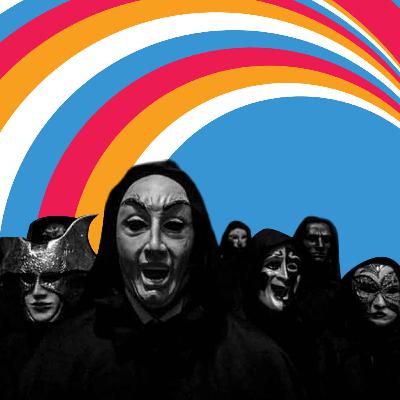
When Eyes Wide Shut opened in the summer of 1999, it was widely considered a disappointment. This final film from legendary director Stanley Kubrick had been sold as an erotic thriller, and potentially even a peek into the real sex lives of its then-married stars, Tom Cruise and Nicole Kidman. But Eyes Wide Shut was stranger than that: a meditative art film whose much-hyped orgy scene is more creepy than sexy, run by a cabal of rich and powerful men who prey on young women.But Eyes Wide Shut has received a burst of new attention in the last few years, amid constant revelations about a real-life cabal of rich and powerful men who prey on young women. Across the internet, cinema sleuths have been asking: is it possible Eyes Wide Shut was not fictional? Was Stanley Kubrick trying to warn the world about a real conspiracy? And if so… was he murdered for it? In this episode of Decoder Ring, we follow Lane Brown—a lifelong Kubrick fan and features writer for New York Magazine—as he investigates this conspiracy theory and what it says about how we deal with ugly facts and murky fictions.This episode was written and produced by Max Freedman and edited by Willa Paskin. Decoder Ring is also produced by Katie Shepherd and Evan Chung, our supervising producer. Merritt Jacob is Senior Technical Director.If you have any cultural mysteries you want us to decode, email us at DecoderRing@slate.com or leave a message on our hotline at (347) 460-7281.Sources for This EpisodeBarbezat, Michael. “‘Pizzagate’ and the Nocturnal Ritual Fantasy: Imaginary Cults, Fake News, and Real Violence,” The Public Medievalist, May 4, 2017.Brown, Lane. “The Eyes Wide Shut Conspiracy,” New York Magazine, Dec. 17, 2025.Ebiri, Bilge. “An Oral History of an Orgy,” New York Magazine, June 27, 2019.Nicholson, Amy. “The Year Tom Cruise Gave Not One but Two Dangerously Vulnerable Performances,” The New York Times, Aug. 27, 2024.Raftery, Brian. “Dream Team: Cruise, Kidman, Kubrick, and the making of Eyes Wide Shut,” New York Magazine, Apr. 15, 2019.Shapiro, Lila. “What I Learned After Watching Eyes Wide Shut 100 Times,” New York Magazine, July 1, 2019. Get more of Decoder Ring with Slate Plus! Join for exclusive bonus episodes of Decoder Ring and ad-free listening on all your favorite Slate podcasts. Subscribe from the Decoder Ring show page on Apple Podcasts or Spotify. Or, visit slate.com/decoderplus for access wherever you listen. Hosted on Acast. See acast.com/privacy for more information.
On today’s encore episode, host Kate Lindsay is joined by sociologist and content creator Josh Lora, who goes by @tellthebeees on TikTok and Substack. In his viral piece, “The Mainstreaming of Loserdom,” Lora explores how a generation of people is becoming proudly anti-social, often in favor of staying home on their phones. While less and less people may be partying, they’re not exactly happy about it. Are we doomed to doomscroll, or can we fight for our right to party again?This podcast is produced by Vic Whitley-Berry, Daisy Rosario, and Kate Lindsay. Hosted on Acast. See acast.com/privacy for more information.

This week and next, we’re talking to listeners about how chatbots are impacting their personal lives. Anna talks to a parent getting tips on how to raise a teenager, an American abroad who turned to ChatGPT for grief counseling, a therapist who says Claude is better than a lot of her peers, and a husband who says AI broke up their marriage. Podcast production by Zoe AzulayDeath, Sex & Money is now produced by Slate! To support us and our colleagues, please sign up for our membership program, Slate Plus! Members get ad-free podcasts, bonus content on lots of Slate shows, and full access to all the articles on Slate.com. Sign up today at slate.com/dsmplus.And if you’re new to the show, welcome. We’re so glad you’re here. Find us and follow us on Instagram and you can find Anna’s newsletter at annasale.substack.com. Our new email address, where you can reach us with voice memos, pep talks, questions, critiques, is deathsexmoney@slate.com. Hosted on Acast. See acast.com/privacy for more information.
Hosts Alex Kirshner, Lindsay Gibbs, and Ben Lindbergh discuss the unusually high number of NFL teams that are seeking new quarterbacks via trades and free agency amid a weak draft class. Later: Why the Miami (Ohio) RedHawks could be left out of March Madness despite an undefeated regular season. Finally, Lindsay breaks down some of the stranger aspects of the WNBA’s collective-bargaining process—and the behind-the-scenes contributions of Kelsey Plum and Breanna Stewart.In this week’s bonus episode for Slate Plus members, the hosts turn to the Celtics’ improbable (and slightly annoying) dominance despite missing their best player for most of the season. Quarterback merry-go-round: (10:34): Tua to Atlanta?Miami Redhawks (26:36): 31-0.WNBA CBA (41:52): A Union divided?(Note: time codes are only accurate for Slate Plus members, who listen ad-free.)Get more Hang Up and Listen with Slate Plus! Join for weekly bonus episodes of Hang Up and Listen and ad-free listening on all your favorite Slate podcasts. Subscribe from the Hang Up and Listen show page on Apple Podcasts or Spotify, or visit slate.com/hangupplus for access wherever you listen.You can email us at hangup@slate.com.Podcast production and editing by Kevin Bendis, with production assistance from Joel Meyer. Hosted on Acast. See acast.com/privacy for more information.
On today’s episode, host Kate Lindsay is joined by Slate editor Tony Ho Tran to talk about everyone’s sudden obsession with Anthropic, the AI company that refused to allow the Trump administration to use it for potential domestic surveillance and autonomous weapons. Now, the right is branding them as “woke,” and the left is rushing to download Claude, Anthropic’s AI chatbot. Both sides, however, are wrong. An AI company will never be the leader of the #resistance, and stanning them for this choice risks normalizing all of AI’s other problems.This podcast is produced by Vic Whitley-Berry, Daisy Rosario, and Kate Lindsay. Hosted on Acast. See acast.com/privacy for more information.
On this week’s show, Steve is joined by June Thomas, author of A Place of Our Own, and Michael Schulman, author of Her Again and Oscar Wars, for some rollicking Gabfest discourse. First up, they get all shook up by EPiC: Elvis Presley in Concert, the concert documentary directed by Baz Luhrmann from archival Elvis performance footage. Does the master of cinematic spectacle bring the King back to life?Next, they turn to The Fall and Rise of Reggie Dinkins, the new sitcom from 30 Rock co-creator Robert Carlock starring Tracy Morgan. Finally, they examine the uncanny and profound phenomena of posthumously-published celebrity interviews—including Eric Dane and Jane Goodall—of Netflix’s Famous Last Words specials. Existential bravery or exploitative trash? They discuss.In an exclusive bonus episode for Slate Plus subscribers, the panel weighs in on the best casting Oscar race.EndorsementsMichael: The audiobook of the memoir I Regret Almost Everything by Keith McNally as narrated by the incomparable Richard E. Grant.June: Two niche podcasts featuring conversations with authors of biography including Bio, the official podcast of the Biographers International Organization, and Biographers in Conversation. Also, jumping on the Richard E. Grant train, the BBC parody cooking series Posh Nosh starring Grant and Arabella Weir.Steve: The recent essay “The Stony Dark Within” by Joy Williams about Rainer Maria Rilke in the New York Review of Books.--Email us your thoughts at culturefest@slate.com. Podcast production by Benjamin Frisch. Production assistance by Daniel Hirsch. Hosted on Acast. See acast.com/privacy for more information.
On today’s episode, host Kate Lindsay is joined by journalist Lorena O’Neil to talk about the rise in celebrities’ families using GoFundMe to fundraise after their deaths. In her piece for Rolling Stone, Lorena spoke to experts about why GoFundMes like Eric Dane’s and James Van Der Beek’s are becoming so common, but also why we feel so weird about it. If healthcare can financially devastate both celebrities and regular people alike, then who is really to blame? This podcast is produced by Daisy Rosario, Vic Whitley-Berry, and Kate Lindsay. Hosted on Acast. See acast.com/privacy for more information.
Graham Platner has never run for elected office before. He’s a war veteran, an oyster farmer, and now he’s running in a Democratic primary to eventually unseat Senator Susan Collins of Maine. He’s ahead in the polls, but he’s also been criticized for Reddit comments from his past and recently covered up a tattoo that looks suspiciously like a Nazi symbol (a connection he denies knowing about). Last week, before the recent attacks on Iran, Anna sat down with Graham to discuss his unlikely outsider campaign. They also talk about his upbringing in rural Maine, his military experience (and current anti-war stance), and what politicians need to do to actually help working people today. This episode was produced by Cameron Drews and Daisy Rosario. You can see a longer, video version of this interview at youtube.com/slate. Get more Death, Sex & Money with Slate Plus! Join for exclusive bonus episodes of DSM and ad-free listening on all your favorite Slate podcasts. Subscribe from the Death, Sex & Money show page on Apple Podcasts or Spotify. Or, visit slate.com/dsmplus to get access wherever you listen.If you’re new to the show, welcome. We’re so glad you’re here. Find us and follow us on Instagram and you can find Anna’s newsletter at annasale.substack.com. Our email address, where you can reach us with voice memos, pep talks, questions, critiques, is deathsexmoney@slate.com. Hosted on Acast. See acast.com/privacy for more information.
Hosts Alex Kirshner, Lindsay Gibbs, and Ben Lindbergh revisit the whirlwind week for the U.S. men’s hockey team, after their gold medal win, and SOTU and White House visits. Then, the Ringer’s Megan Schuster joins to preview the new season of Formula 1 and its broadcasting move to Apple TV. To close, Ben breaks down what to look out for in the World Baseball Classic, which starts this week.On the bonus episode, available exclusively for Slate Plus members, the hosts share their highs and lows of watching the Winter Olympics. Hockey and Politics: (3:45): The U.S. men’s hockey team gets their Big MacsF1 (20:02): Formula One’s new home at AppleWBC (44:24): The American baseball dream team still has an uphill battle(Note: time codes are only accurate for Slate Plus members, who listen ad-free.)Get more Hang Up and Listen with Slate Plus! Join for weekly bonus episodes of Hang Up and Listen and ad-free listening on all your favorite Slate podcasts. Subscribe from the Hang Up and Listen show page on Apple Podcasts or Spotify, or visit slate.com/hangupplus for access wherever you listen.You can email us at hangup@slate.com.Podcast production and editing by Kevin Bendis, with production assistance from Patrick Fort. Hosted on Acast. See acast.com/privacy for more information.
On today’s episode, host Kate Lindsay and Slate staff writer Luke Winkie debrief after Luke’s scene report from outside Nancy Guthrie’s Arizona home. The 84-year-old was reported missing on February 1, and ever since, true-crime creators have been livestreaming from her home, spreading theories, and profiting off her disappearance without any journalistic or investigative experience. Independent creators redefining news and media isn’t necessarily a bad thing, so why does this feel so sinister? This podcast is produced by Daisy Rosario, Vic Whitley-Berry, and Kate Lindsay. Hosted on Acast. See acast.com/privacy for more information.
These days, country and pop acts regularly invade each other’s territory. But in Nashville during the 1970s, “crossover” was a dirty word. Then came two rising stars who offered up a new hybrid of Americana-style pop.John Denver infused his folk balladry with homespun lyrics about country roads and wide-open skies. Olivia Newton-John sang over twangy melodies that belied her British-Australian roots. Both faced backlash—especially when they started topping the country and pop charts simultaneously and winning prizes that used to go to Nashville legends.Eventually, both artists outgrew country music. Denver became a ubiquitous entertainer and beloved Muppet wingman. Newton-John dazzled in the film Grease, then reinvented herself as a leather-clad siren unafraid to get physical.Join Chris Molanphy as he traces the parallel rise of two country-pop titans from the Rocky Mountains to Xanadu.Get more Hit Parade with Slate Plus! Join for monthly early-access episodes, bonus episodes of "The Bridge," and ad-free listening across all your favorite Slate podcasts. Visit slate.com/hitparadeplus to get access wherever you listen. Hosted on Acast. See acast.com/privacy for more information.
On today’s episode, host Kate Lindsay and senior supervising producer Daisy Rosario reflect on the 2026 Winter Olympics—but not just what happened out on the ice. There was a different Olympics unfolding on social media, with viral moments from the ceremony that deserve their own gold, silver, and bronze medals. Kate and Daisy rank them, and also finally break their silence on the internet’s other current fixation: Punch the monkey. This podcast is produced by Daisy Rosario, Vic Whitley-Berry, and Kate Lindsay. Hosted on Acast. See acast.com/privacy for more information.
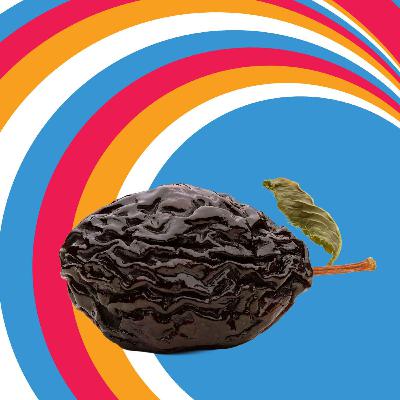
The delicious, healthful prune has long had a cross to bear: It’s best known for making people poop. In the late 1990s, the California Prune Board set out on a quixotic mission to amend this sales-flattening reputation. It would attempt to rechristen this ancient fruit in the hopes the prune could one day be as unencumbered as an apricot, a raisin, or a fig. In a world where every product and person increasingly believes it’s one good rebrand away from changing how they are seen, the story of the prune’s attempt to become the “dried plum” is a telling tale about the impossibility of escaping who you really are—and the freedom that comes with self-acceptance. You’ll hear from Richard Peterson, retired Executive Director of the California Prune Board; food writer and chef David Liebovitz; lawyer and lobbyist Dan Haley; and Kiaran Locy, Director of Brand and Industry Communications at the California Prune Board.This episode was written by Willa Paskin. It was edited by Evan Chung, our supervising producer. It was produced by Katie Shepherd. Decoder Ring is also produced by Max Freedman. Merritt Jacob is Senior Technical Director.If you have any cultural mysteries you want us to decode, email us at DecoderRing@slate.com or leave a message on our hotline at (347) 460-7281.Get more of Decoder Ring with Slate Plus! Join for exclusive bonus episodes of Decoder Ring and ad-free listening on all your favorite Slate podcasts. Subscribe from the Decoder Ring show page on Apple Podcasts or Spotify. Or, visit slate.com/decoderplus for access wherever you listen.Sources for This EpisodeBarry, Dave. Dave Barry Hits Below the Beltway, Ballantine Books, 2002. Brasher, Philip. “FDA Approves Prune Name Change,” ABC News, Feb. 1, 2001. Brasher, Philip. “Where's the beef? Kids give prune burgers the taste test,” Associated Press, Jan 29, 2002. Cimons, Marlene. “A New Wrinkle for the Prune Industry,” Los Angeles Times, Dec. 21, 1999.Crespi, John M., Harry M. Kaiser, Julian M. Alston, and Richard J. Sexton. “The Evaluation of Prune Promotion by the California Dried Plum Board,” The Economics of Commodity Promotion Programs: Lessons from California, Peter Lang USA, 2005. Davis, Glenn. “French History in Your City: San Jose, California - the Pellier Brothers,” Yale National Initiative, Sep. 2015. Fabricant, Florence. “In France, the Prune Holds a Noble Station,” The New York Times, Oct. 31, 2001.Fabricant, Florence. “Responsible Party: Richard Peterson; Rejuvenating The Humble Prune,” The New York Times, Aug. 13, 2000. Fabricant, Florence. “Underapprecaited: The Humble Prune,” The New York Times, Oct. 12, 1983.A Fortune In Two Old Trunks. Sunsweet, 1947. Fullan, Genevieve. “In Defense of Prunes,” Eater, Jun 21, 2022. Gellene, Denise. “New Wrinkle in an Old Story,” Los Angeles Times, Oct 16, 1997. Good Wrinkles. Sunsweet, 1951. Kamen, Al. “Sunday in the Loop: Plum Outta Luck,” Washington Post, Dec. 11, 1999. Koger, Chris. “Dried plums no longer: California prunes have new brand,” The Packer, Nov. 15, 2022. Lucas, Greg. “Who'd Have Thought? Pruneburgers / Juicy, tender and low-fat, they're surprising hits in school cafeterias,” San Francisco Chronicle, Aug. 9, 1999.Martin, Ronda Beaman. “Stan Freberg—His Credits and Contributions to Advertising,” M.A. Thesis, Texas Tech University, Dec. 1986. McKay, Leonard. “Louis Pellier,” San Jose Inside, Sep. 25, 2006.Morse, Rob. “Hold the prunes, hold the lettuce,” San Francisco Examiner, July 28, 1999. “Prune gets $10 million makeover -- as dried plum,” CNN, Sep. 13, 2000.Rao, Tejal. “In Praise of the Prune,” The New York Times Magazine, Feb. 16, 2017.Roach, Mary. “The power of prunes,” Salon, Nov. 5, 1999.Waters, Michael. “When the Dried Plum Lobby Tried to Make Pruneburgers Happen,” Atlas Obscura, April 13, 2018. Zasky, Jason. “Prunes: Turning Over a New Leaf,” Failure Magazine, Apr. 16, 2002. Hosted on Acast. See acast.com/privacy for more information.
The original trio Steve, Dana, and Julia convene for a right cracker of a Gabfest as they discuss How to Get to Heaven from Belfast, the new comedic mystery from Derry Girls creator Lisa McGee. In the Netflix series, three longtime Belfast friends must revisit their childhood trauma to unravel the mystery of a fourth friend’s disappearance— raucous Northern Irish hijinks ensue.Next, they step into the unhinged dystopian Los Angeles of Gore Verbinski’s new film Good Luck, Have Fun, Don’t Die. In it a beleaguered time traveler played by Sam Rockwell must visit the same Norm’s diner 117 times to save the world from the menace of A.I..Finally, they welcome Slate senior writer Christina Cauterucci to unpack her recent piece “My Gun and Me” about her unlikely journey towards gun ownership during Trump 2.0—and how she’s not alone in doing so in her left-leaning, queer community.In an exclusive bonus episode for Slate Plus subscribers, they determine if there are indeed no comfortable reading positions, as a recent Slate essay by Luke Winkie attests. EndorsementsDana: The latest Today in Tabs entry from Rusty Foster "A.I. Isn't People."Julia: In lieu of an endorsement, a gripe: the much-hyped New York Times two-player word game Crossplay is just Scrabble! (If only there were a German word for this specific form of disappointment...)Steve: Rereading J.D. Salinger with some distance from one’s own adolescence— particularly Franny and Zooey and the short story "For Esmé—with Love and Squalor." And for a good critical reassessment, read Janet Malcolm's New York Review of Books essay "Justice to J.D. Salinger." --Email us your thoughts at culturefest@slate.com. Podcast production by Benjamin Frisch. Production assistance by Daniel Hirsch. Hosted on Acast. See acast.com/privacy for more information.
When Helena de Groot got married she didn't want children, but her husband did. For eight years, love was enough to paper over their differences. Then an unplanned pregnancy forced them to finally choose.Listen to her terrific new podcast Creation Myth, out now from the CBC.This episode was produced by Andrew Dunn. Death, Sex & Money is now produced by Slate! To support us and our colleagues, please sign up for our membership program, Slate Plus! Members get ad-free podcasts, bonus content on lots of Slate shows, and full access to all the articles on Slate.com. Sign up today at slate.com/dsmplus.And if you’re new to the show, welcome. We’re so glad you’re here. Find us and follow us on Instagram and you can find Anna’s newsletter at annasale.substack.com. Our new email address, where you can reach us with voice memos, pep talks, questions, critiques, is deathsexmoney@slate.com. Hosted on Acast. See acast.com/privacy for more information.
Hosts Alex Kirshner, Lindsay Gibbs, and Ben Lindbergh relive the dual wins for Team USA's women's and men’s hockey teams and examine how MAGA has co-opted the victory. Then, they’re joined by journalist Chris Dalby, author of the Sports and Crime newsletter, goes deep on why Trump seems to love pardoning athletes. Next, the hosts get into the alarming expansion of sports betting via prediction markets. And finally, Ben brings us an Afterball on the demise of the European Super League.On the bonus episode, available exclusively for Slate Plus members, the hosts share their highs and lows of watching the Winter Olympics. Olympics Hockey: (--): Team USA brings home gold.Trump Pardons (--): Chris Dalby breaks down what’s really going on.Prediction Markets (--): Who will reign in this new way of betting?European Super League (--): Ben eulogizes the failed league. Episode Notes:Alex in Slate on America’s reckless, brilliant strategy to beat Canada.This New York Times breakdown of the move that beat Chloe Kim in the halfpipeChris Dalby on Donald Trump’s love of pardoning athletes.(Note: time codes are only accurate for Slate Plus members, who listen ad-free.)Get more Hang Up and Listen with Slate Plus! Join for weekly bonus episodes of Hang Up and Listen and ad-free listening on all your favorite Slate podcasts. Subscribe from the Hang Up and Listen show page on Apple Podcasts or Spotify, or visit slate.com/hangupplus for access wherever you listen.You can email us at hangup@slate.com.Podcast production and editing by Kevin Bendis, with production assistance from Patrick Fort. Hosted on Acast. See acast.com/privacy for more information.
On today’s episode, host Kate Lindsay is joined by writer Charlie Sosnick to break down “looksmaxxing.” While the trend—which involves things like jaw surgery and “bone smashing” to achieve mathematically-determined levels of attractiveness—has existed for some time in incel forums, creators like Clavicular have brought it mainstream. Now, teenage boys are growing up with their own kind of beauty standard, one that insists their success in life is determined by arbitrary factors like the width of their clavicles or tilt of their eyes. Rooted in racism and eugenics, the movement risks normalizing a new kind of masculinity that’s barely even human. This podcast is produced by Daisy Rosario, Vic Whitley-Berry, and Kate Lindsay. Hosted on Acast. See acast.com/privacy for more information.
On today’s episode, host Kate Lindsay is joined by Jenna Ryu, a lifestyle writer at SELF whose piece, “Meet the ‘Finger Princess’: The Annoying Friend Everyone Has,” introduced the term for a persistent pet peeve. “Finger princess,” the English translation of the Korean phrase ping-peu, applies to those in the group chat who ask questions instead of Googling, and refuse to scroll up to see if their question has already been answered. But by calling out finger princesses, are we actually being the finger police?This podcast is produced by Daisy Rosario, Vic Whitley-Berry, and Kate Lindsay. Hosted on Acast. See acast.com/privacy for more information.


Download from Google Play

Download from App Store
 United States
So very very sorry for the loss of Grant Wahl. As displayed in this interview, just before his untimely death, Grant was one of the leading voices on US soccer, and our foremost journalist on the beautiful game.
Julia was 100% on here. I love hearing her voice.
let's be sure to get a sandwich shop plug in before talking about our feelings
you made all of my thoughts a reality in this show ahah
I enjoyed the podcast. There is one host however who has the extremely annoying habit of saying 'like' every two/three seconds. Does she listen to herself speak? The other two speakers were fine.
It must really pain this guy that in all of his attempts to try to phrase everything in terms of racism and exclusion, he was never actually able to provide a link between the position of rap music on the charts and some vast societal oppression or conspiracy. All he really did was point to a few noted incidents of bribery. But how much influence could that bribery have had? These charts were kept week after week after week and the bribery was the exception, not the rule. And for it to have the influence that he wants us to believe it had, that would have to be a lot of bribery on a very consistent basis and very widespread. That simply wasn't the case This is nothing new for this guy, though. He tried to blame the fall of disco on racism and homophobia so I knew what I was getting into when I started listening to this one. It's kind of sad, really. There was fertile ground here to really explore the nature of the charts and how they changed. But instead he preferred to try to turn thi
Unfortunately, I'm going to have to call b******* on yet another podcast. Janet Jackson did not suffer greatly in the public eye because of the wardrobe malfunction at the Super Bowl. Her popularity had already been flagging for quite awhile when that came about. There was about a week worth of people sort of scratching their heads but it's not like she didn't issue an apology. Everyone moved on. Unfortunately for Janet, they were already moving on to other artists long before that. Just as in another podcast he seems to want to blame the demise of disco on homophobia and racism, here again he fails to acknowledge that sometimes things just run their course.
You know, I was in college during this Janet Jackson album. But I had never heard the term "New Jack Swing" until I started listening to this guy's podcasts decades later. At no time did we refer to Janet Jackson's music or Keith sweat's music or Bobby Brown's music as "New Jack Swing." We had the term R&B, it seemed to do the trick, and that's what we called it. I get the distinct impression that terms like "New Jack Swing" are created by people trying to set themselves apart who want to convince themselves that they have worthwhile opinions.
I'm glad there was a man there to explain to the 13-year-old girl with the retainer how movies work.
I had to sub once I realized that this was the first in about a half-dozen reviews of this movie where the people doing the reviewing seemed to actually get what was going on in the movie they were watching. The one thing I would ask people to reconsider, though, is this assertion that runs like a thread through all of the reviews I've listened to, which is that the boyfriend is necessarily horrible. He doesn't seem like a particularly great guy, but most of his transgressions took place while under the influence of God knows what. By contrast, she is an anchor of a girlfriend. Seriously, ask almost any guy and he will tell you that there is no way he would want someone like that constantly around. I can't blame him for having wanted to have gotten rid of her a long time ago. I would say the worst thing about him was that he allowed the relationship to drag on because she was so needy all the time.
you can tell the bullshit right off the back lmao. C list superhero? yea you don't know much about the comics. this was the first ep. of the this cast and the last they have horrible memory with the other movies, they say the most unthought through shit, complains about moronic made up identity political issues in a movie. straight trash
Stephen might come off a bit snobby but it's part of the fun of it! He's the snooty one, he balances out Dana who is super sweet. I've gotten to know them over the years so now I wouldn't want them to change.
As a big fan of other Slate podcasts, I was pretty excited about this one, but it really is the weakest of the bunch. The participants are sooo snobbish, which I suppose makes sense, but it is not immediately apparent upon what grounds they are snobbish. On the Political Gabfest, Dickerson knows politics, Bazelon knows the law, Plotz...well, he's editor now so he does what he wants. On the Culture Gabfest, you get a couple of mildly literate twenty-somethings and a thirty-something talking down to the world. No thanks.
I agree with most of what has been said -- both the good and the bad -- yet this is still my favorte Slate podcast. Hearing the writers present such overly complicated, pretentious arguments about trivial details of pop culture makes me nostalgic for my college years. Outside of academia, there are few places where you can hear such trumped up commentary of, say, Miley Cyrus's decisions. There are lots of cringe-worthy moments, but, like that old college boyfriend who compared Seinfeld to Beckett, I actually find them endearing. Metcalf's accent is hard on my ears, though. Is it from a region I haven't visited, or is it the vocal manifestation of pretentiousness? I agree that Stevens and Turner are easier to take. Perhaps they will start to deflate more of Metcalf's pompous comments in the future. I wish the cultural gabfest recorded more than twice a month. In contrast, I find the political gabfest more grating by the week. They veer into in-jokes and tedious personal anecdotes that d
Sadly, the Slate Culture Gabfest doesn't hold a candle to the Political Gabfest. Even for a culture snob like me, this show is a little hard to take. One problem is the main host, Stephen Metcalf. He has a creepy way of overenunciating—it sounds like he chews each word twelve times before swallowing it. That, combined with his use of pretentious phrases like "the creative underclass" (referring to himself) and occasional lapses into French, induce mild nausea after prolonged exposure. The other participants, Turner and Stevens, are easier on the ears and slightly more down-to-earth. And all of the hosts are clearly intelligent and well-informed. But since they all have two conflicting opinions about almost everything, the conversation gets bogged down and goes nowhere. Everything good is a guilty pleasure, and everything bad has some sort of redemptive flipside. And you can cut the pretension in the air with a knife. The Culture Gabfest needs a co-host with a functioning BS detector. S