


 Claim Ownership
American Scientist Podcast
Subscribed: 450Played: 6,653
Subscribe

© American Scientist Magazine
Description
Periodic audiocasts from American Scientist, a publication of Sigma Xi, The Scientific Honor Society.
123 Episodes
Reverse
Today, we’re joined by Dr. Cecilie S. Traberg.The transcript for this episode will be available the day following the original airdate.Links/Sources mentioned:Dr. Traberg’s website: https://www.cecilietraberg.com/ Solomon’s Secret, a digital murder mystery game designed to explore the psychology of misinformation and social influence Dr. Traberg’s research:Traberg, C. S., Roozenbeek, J., & van der Linden, S. (2022). Psychological Inoculation against Misinformation: Current Evidence and Future Directions. The ANNALS of the American Academy of Political and Social Science, 700(1), 136–151. Traberg, C. S., & van der Linden, S. (2022). Birds of a feather are persuaded together: Perceived source credibility mediates the effect of political bias on misinformation susceptibility. Personality and Individual Differences, 185, 111269.Traberg, C. S., Roozenbeek, J., & van der Linden, S. (2024). Gamified inoculation reduces susceptibility to misinformation from political ingroups. Harvard Kennedy School Misinformation Review.Traberg, C. S., Harjani, T., Roozenbeek, J., & van der Linden, S. (2024). The persuasive effects of social cues and source effects on misinformation susceptibility. Scientific Reports, 14(1). Cecilie Traberg, Morten, T., & van. (2024). Counteracting socially endorsed misinformation through an emotion-fallacy inoculation. Advances In/Psychology, 2. Other relevant studies: Marks, J., Copland, E., Loh, E., Sunstein, C. R., & Tali Sharot. (2018). Epistemic spillovers: Learning others’ political views reduces the ability to assess and use their expertise in nonpolitical domains. Cognition, 188, 74–84. Hassoun, A., Beacock, I., Consolvo, S., Goldberg, B., Kelley, P. G., & Russell, D. M. (2023). Practicing information sensibility: How Gen Z engages with online information. In Proceedings of the 2023 CHI Conference on Human Factors in Computing Systems (pp. 1-17).Vidgen, B., Taylor, H., Pantazi, M., Anastasiou, Z., Inkster, B., & Margetts, H. (2021). Understanding vulnerability to online misinformation. Gawronski, B., Ng, N. L., & Luke, D. M. (2023). Truth sensitivity and partisan bias in responses to misinformation. Journal of Experimental Psychology: General. Garrett, R. K., & Bond, R. M. (2021). Conservatives’ susceptibility to political misperceptions. Science Advances, 7(23). One example of unintentionally spread misinformation: How a simple math error sparked a panic about black plastic kitchen utensils Some examples of (earned) distrust of institutions: 5 times the US government revealed secrets it tried to keep hiddenWhy we know so little about women’s health NAACP Criminal Justice Fact Sheet Wired For This is produced and edited by Nwabata Nnani and hosted by Celia Ford. American Scientist has been in publication since 1913 and is published by the nonprofit Sigma Xi, the Scientific Research Honor Society. The magazine focuses on producing narrative-driven features by scientists about their own peer-reviewed work. The publication also produces shorter-form staff-written news articles, as well as blogs, multimedia, and social media. See more at www.americanscientist.orgSubscribe to American Scientist: https://subscribe.americanscientist.org/AMS/?f=paid Music by Nat KeefeFollow us on social media: BlueskyFacebookInstagramLinkedIn
Today, we’ll hear from Dr. Dan Willingham, a Professor of Psychology at the University of Virginia. He’s taught there since 1992, and until about 2000, studied the neural basis of learning and memory. But today, all of his research concerns the application of cognitive psychology to K-16 education. He’s the author of several books, including the best-selling Why Don't Students Like School?, and most recently, Outsmart Your Brain. His writing on education has appeared in twenty-three languages. In 2017 he was appointed by President Obama to serve as a Member of the National Board for Education Sciences. TranscriptLinks/Sources mentioned:Dr. Willingham’s books: Why Don’t Students Like School?Outsmart Your BrainSome relevant op-eds written by Dr. Willingham: Why Aren’t We Curious About the Things We Want to Be Curious About? – New York Times (October 18, 2019) You Still Need Your Brain - New York Times (May 19, 2017)Dr. Willingham’s graduation speech for the University of Virginia’s Class of 2024Dr. Willingham’s TikTok, where he posts short videos about cognitive science and educationA collection of Dr. Willingham’s academic articlesWired for This is produced and edited by Nwabata Nnani and hosted by Celia Ford. American Scientist has been in publication since 1913 and is published by the nonprofit Sigma Xi, the Scientific Research Honor Society. The magazine focuses on producing narrative-driven features by scientists about their own peer-reviewed work. The publication also produces shorter-form staff-written news articles, as well as blogs, multimedia, and social media. See more at www.americanscientist.orgSubscribe to American Scientist: https://subscribe.americanscientist.org/AMS/?f=paid Music by Nat KeefeFollow us on social media: BlueskyFacebookInstagramLinkedIn
In this episode, we're talking about how we consume, process, and share information—and how all of this is changing as our relationships with technology evolve. Jason Lodge is the Director of the Learning, Instruction, and Technology Lab and Professor of Educational Psychology in the School of Education at The University of Queensland, in Australia. He explores the cognitive, metacognitive, and emotional aspects of learning, particularly in higher education and digital environments. He’s also an award-winning educator and advisor to the Australian Government on technology in education.Philipp Lorenz-Spreen leads the junior research group “Computational Social Science” within the Center Synergy of Systems at TU Dresden, in Germany. He and his team study the societal impact of digitalization, and how complex online discourse affects democracies worldwide. TranscriptLinks/Sources mentioned:Dr. Jason Lodge’s websiteSome of Dr. Lodge’s relevant studies: Lodge, J. M., Yang, S., Furze, L., & Dawson, P. (2023). It’s not like a calculator, so what is the relationship between learners and generative artificial intelligence?. Learning: Research and Practice, 9(2), 117-124.Lodge, J. M. (2023). Misjudgements of Learning in Digital Environments. Pedagogy and Psychology in Digital Education, 239–247. Arguel, A., Lockyer, L., Kennedy, G., Lodge, J. M., & Pachman, M. (2019). Seeking optimal confusion: a review on epistemic emotion management in interactive digital learning environments. Interactive Learning Environments, 27(2), 200-210.Panadero, E., Broadbent, J., Boud, D., & Lodge, J. M. (2019). Using formative assessment to influence self-and co-regulated learning: the role of evaluative judgement. European Journal of Psychology of Education, 34, 535-557.Scharff, L., Draeger, J., Verpoorten, D., Devlin, M., Dvorakova, L. S., Lodge, J. M., & Smith, S. V. (2017). Exploring metacognition as a support for learning transfer. Teaching and Learning Inquiry, 5(1).Dr. Philipp Lorenz-Spreen’s websiteSome of Dr. Lorenz-Spreen’s relevant studies: Philipp Lorenz-Spreen, Oswald, L., Lewandowsky, S., & Hertwig, R. (2022). A systematic review of worldwide causal and correlational evidence on digital media and democracy. Nature Human Behaviour, 7(1), 74–101. Baumann, F., Lorenz-Spreen, P., Sokolov, I. M., & Starnini, M. (2020). Modeling Echo Chambers and Polarization Dynamics in Social Networks. Physical Review Letters, 124(4). Philipp Lorenz-Spreen, Bjarke Mørch Mønsted, Philipp Hövel, & Lehmann, S. (2019). Accelerating dynamics of collective attention. Nature Communications, 10(1). Other relevant links: van den Broek, G., Takashima, A., Wiklund-Hörnqvist, C., Karlsson Wirebring, L., Segers, E., Verhoeven, L., & Nyberg, L. (2016). Neurocognitive mechanisms of the “testing effect”: A review. Trends in Neuroscience and Education, 5(2), 52–66. Brian Resnick for Vox: Yes, the internet is destroying our collective attention span.Jason Lyon for Quanta Magazine: To Pay Attention, the Brain Uses Filters, Not a SpotlightWired For This is produced and edited by Nwabata Nnani and hosted by Celia Ford. American Scientist has been in publication since 1913 and is published by the nonprofit Sigma Xi, the Scientific Research Honor Society. The magazine focuses on producing narrative-driven features by scientists about their own peer-reviewed work. The publication also produces shorter-form staff-written news articles, as well as blogs, multimedia, and social media. See more at www.americanscientist.orgSubscribe to American Scientist: https://subscribe.americanscientist.org/AMS/?f=paid Music by Nat KeefeFollow us on social media: BlueskyFacebookInstagramLinkedIn
Emma Levine and Shereen Chaudhry join this episode of Wired for This.TranscriptLinks/Sources mentioned:HOPE LAB, led by Dr. Levine and Dr. Chaudhry with Dr. Erika Kirgios and Dr. Jane RisenSome relevant HOPE LAB research from Dr. Shereen Chaudhry: Chaudhry, S.J. & Loewenstein, G. (2019) “Thanking, apologizing, bragging, and blaming: Responsibility exchange theory and the currency of communication.” Psychological Review, 126(3), 313-344. Chaudhry, S.J. & Wald, K.A. (2022) “Overcoming listener skepticism: Costly signaling in communication increases perceived honesty,” Current Opinion in Psychology, 101442.Molnar, A., Chaudhry, S.J., & Loewenstein, G. (2023) “’It’s not about the money. It’s about sending a message!’: Avengers Want Offenders to Understand the Reason for Revenge,” Organizational Behavior and Human Decision Processes, 174, 104207.Chaudhry, S. J., & Burdea, V. The apologizer’s dilemma: Two-sided transgressions introduce concerns about relative blame. Preprint.And from Dr. Emma Levine: Jensen, S., Levine, E., White, M., Huppert, E., Bartels, D., Berman, J., Dietvorst, B., Epley, N., Gaertig, C., Graham, J., Herzog, N., & Landy, J. Lying is sometimes ethical, but honesty is the best policy: The desire to avoid harmful lies leads to moral preferences for unconditional honesty. Preprint.Levine, E. E. (2022). Community standards of deception: Deception is perceived to be ethical when it prevents unnecessary harm. Journal of Experimental Psychology: General, 151(2), 410.Levine, E. E., & Lupoli, M. J. (2022). Prosocial lies: Causes and consequences. Current Opinion in Psychology, 43, 335–340. Levine, E., & Munguia Gomez, D. (2021). “I’m just being honest.” When and why honesty enables help versus harm. Journal of personality and social psychology, 120(1), 33.Levine, E. E., Roberts, A. R., & Cohen, T. R. (2020). Difficult conversations: navigating the tension between honesty and benevolence. Current Opinion in Psychology, 31, 38–43. Levine, E. E., & Wald, K. A. (2020). Fibbing about your feelings: How feigning happiness in the face of personal hardship affects trust. Organizational Behavior and Human Decision Processes, 156, 135–154. Levine, E. E., & Cohen, T. R. (2017). You Can Handle the Truth: Mispredicting the Consequences of Honest Communication. SSRN Electronic Journal. Lupoli, M. J., Levine, E. E., & Greenberg, A. E. (2018). Paternalistic lies. Organizational Behavior and Human Decision Processes, 146, 31–50. Levine, E. E., Hart, J., Moore, K., Rubin, E., Yadav, K., & Halpern, S. D. (2017). The Surprising Costs of Silence: Asymmetric Preferences for Prosocial Lies of Commission and Omission. SSRN Electronic Journal. Other relevant studies: Zhu, J., & Molnar, A. The End of Writing as We Know It? Generative AI May Undermine the Social Signaling Function of Writing. Preprint.Timmermans, E., Hermans, A.-M., & Opree, S. J. (2020). Gone with the wind: Exploring mobile daters’ ghosting experiences. Journal of Social and Personal Relationships, 38(2), 026540752097028. Eyal, T., Steffel, M., & Epley, N. (2018). Perspective mistaking: Accurately understanding the mind of another requires getting perspective, not taking perspective. Journal of personality and social psychology, 114(4), 547.Wald, K. A., Kardas, M., & Epley, N. (2024). Misplaced divides? Discussing political disagreement with strangers can be unexpectedly positive. Psychological Science, 35(5), 471-488.Dungan, J. A., & Epley, N. (2024). Surprisingly good talk: Misunderstanding others creates a barrier to constructive confrontation. Journal of Experimental Psychology: General, 153(3), 779.Rogers, T., Zeckhauser, R., Gino, F., Norton, M. I., & Schweitzer, M. E. (2017). Artful paltering: The risks and rewards of using truthful statements to mislead others. Journal of personality and social psychology, 112(3), 456.
What does it take to change a mind?In episode two of Wired for This, we’ll hear from Dr. Katy Milkman, James G. Dinan Professor at The Wharton School of the University of Pennsylvania and host of the behavioral economics podcast Choiceology. She cofounded the Behavior Change for Good Initiative and has advised organizations such as Google, the White House, and the U.S. Department of Defense. Her research on behavior change has been published in top journals and featured in her bestselling book How to Change. In 2022, Dr. Milkman was also named one of 10 Innovators Shaping the Future of Health by Fortune Magazine and won Penn’s highest teaching award,Christian R. and Mary F. Lindback Foundation Award for Distinguished Teaching.TranscriptLinks/Sources mentioned:More from Dr. Milkman: WebsiteHow to Change, her self-help book Milkman Delivers, her behavioral science Substack Choiceology, her podcast on how to make better judgments and avoid costly mistakesDr. Milkman’s studies: Dai, H., Milkman, K. L., & Riis, J. (2014). The Fresh Start Effect: Temporal Landmarks Motivate Aspirational Behavior. Management Science, 60(10), 2563–2582.Beshears, J., Dai, H., Milkman, K. L., & Benartzi, S. (2021). Using fresh starts to nudge increased retirement savings. Organizational Behavior and Human Decision Processes, 167, 72–87.Milkman, K. L., Minson, J. A., & Volpp, K. G. (2014). Holding the hunger games hostage at the gym: An evaluation of temptation bundling. Management science, 60(2), 283-299.Other academic work discussed Nembhard, I. M., & Edmondson, A. C. (2006). Making it safe: the effects of leader inclusiveness and professional status on psychological safety and improvement efforts in health care teams. Journal of Organizational Behavior, 27(7), 941–966. Mindset: The New Psychology of Success, by Carol DweckAsch conformity experiments, designed by Solomon AschPetrik, R., Vega, J., & Vindas-Meléndez, A. (2022). A Reflection on Growth Mindset and Meritocracy. Journal of Humanistic Mathematics, 12(1), 408–421. __________________________________Wired for This is produced and edited by Nwabata Nnani and hosted by Celia Ford. Music by Nat Keefe___________________________________American Scientist has been in publication since 1913 and is published by the nonprofit Sigma Xi, the Scientific Research Honor Society. The magazine focuses on producing narrative-driven features by scientists about their own peer-reviewed work. The publication also produces shorter-form staff-written news articles, as well as blogs, multimedia, and social media. See more at www.americanscientist.orgSubscribe to American Scientist: https://subscribe.americanscientist.org/AMS/?f=paid Follow us on social media: BlueskyFacebookInstagramLinkedIn
Welcome to Wired for This—a deep dive into how we think, believe, change, and connect. In this limited series, we’ll explore the psychology of human behavior and neuroscience—what drives us forward, what holds us back, and how we navigate a world bursting with noise, contradiction, and complexity.Dr. Paul A. O’Keefe is a social psychologist and professor of organisational behaviour at the University of Exeter Business School. His research examines how psychological barriers—particularly beliefs about abilities, interest, and opportunity—shape the goals people pursue and their potential to achieve them. He and his team design growth-mindset interventions, tested through randomized controlled field experiments, to foster thriving in work, education, and health contexts. Dr. O’Keefe also directs the Mindsets & Motivation Lab and serves as an Associate Editor at Journal of Experimental Psychology: General.The transcript for this episode is available here.Links/Sources mentioned:Mindset: The New Psychology of Success, by Carol DweckStop Trying to ‘Find’ Your Passion — There’s a Better Way to Love What You Do, by Paul O’Keefe for Scientific AmericanThe Mindsets & Motivation Lab, led by Paul O’Keefe at the University of Exeter Business School. Examples of their research we mentioned: O’Keefe, P. A., Ramya, S. M., & Horberg, E. J. (2025). A growth-theory-of-interest intervention helps align science students with a new multidisciplinary curriculum. Contemporary Educational Psychology, 81, 102371.O’Keefe, P. A., Horberg, E. J., Lee, F., & Dweck, C. S. (2023). Implicit theories of opportunity: When opportunity fails to knock, keep waiting or start cultivating? Journal of Personality and Social Psychology, 124(6), 1146–1173. O'Keefe, P. A., Horberg, E. J., Dweck, C. S., & Walton, G. M. (2023). A growth-theory-of-interest intervention increases interest in math and science coursework among liberal arts undergraduates. Journal of educational psychology, 115(6), 859.O’Keefe, P. A., Lee, H. Y., & Chen, P. (2021). Changing students’ beliefs about learning can unveil their potential. Policy Insights from the Behavioral and Brain Sciences, 8(1), 84-91.O’Keefe, P. A., Dweck, C. S., & Walton, G. M. (2018). Implicit theories of interest: Finding your passion or developing it?. Psychological science, 29(10), 1653-1664.The Utility-Value Intervention, a book chapter by Chris Hulleman and Judith Harackiewicz____________Wired for This is produced and edited by Nwabata Nnani and hosted by Celia Ford. American Scientist has been in publication since 1913 and is published by the nonprofit Sigma Xi, the Scientific Research Honor Society. The magazine focuses on producing narrative-driven features by scientists about their own peer-reviewed work. The publication also produces shorter-form staff-written news articles, as well as blogs, multimedia, and social media. See more at www.americanscientist.orgSubscribe to American Scientist, today.Music by Nat KeefeFollow us on social media: BlueskyFacebookInstagramLinkedIn
The American Scientist Podcast presents a new audio series, Wired for This, premiering on September 10, 2025. Wired for This offers an in-depth look at how we think, believe, change, and connect.In this bi-weekly limited series, we’ll examine the psychology of human behavior and neuroscience—what drives us forward, what holds us back, and how we navigate a world bursting with noise, contradiction, and complexity.Hosted by journalist and former neuroscientist Celia Ford, the show features interviews with scientists like Paul O’Keefe, whose research explores how psychological barriers influence the goals people pursue and their potential to reach them. We’ll also hear from behavioral science professors Emma Levine and Shereen Chaudhry on how to navigatedifficult conversations in high-stress environments.Jason Lodge and Phillip Lorenz-Spreen discuss how we consume, process, and share information, and how these processes are changing as our relationships with technology evolve.Each episode will challenge your thinking and offer fresh perspectives on the world around us.Tune into Wired for This every other Wednesday starting September 10, 2025, on Spotify, Apple Podcasts, iHeartRadio, and more. Follow the American Scientist Podcast today to stay updated on new episodes.________________________________________________________Wired for This is produced and edited by Nwabata Nnani and hosted by Celia Ford. American Scientist has been in publication since 1913 and is published by the nonprofit Sigma Xi, the Scientific Research Honor Society. The magazine focuses on producing narrative-driven features by scientists about their own peer-reviewed work. The publication also produces shorter-form staff-written news articles, as well as blogs, multimedia, and social media. See more at www.americanscientist.orgSubscribe to American Scientist: https://subscribe.americanscientist.org/AMS/?f=paid Music by Nat KeefeFollow us on social media: BlueskyFacebookInstagramLinkedIn
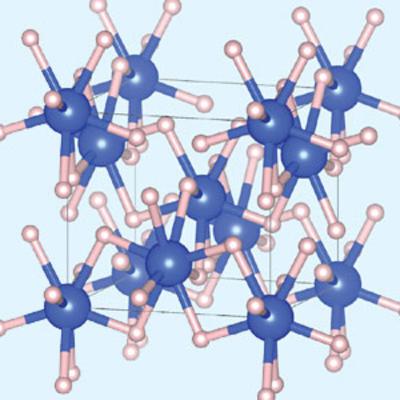
Chris Pickard is a materials scientist who employs what are called first principles methods—modeling techniques that work out material properties using fundamental rules such as quantum mechanics and Newton’s laws. Trained as a condensed matter physicist, he refocused on materials science just as interest in the field was exploding amid advancements in computation. Switching between empirical and theoretical sciences was good preparation for a field that works closely with experimentalists and testers, and that is itself becoming more empirical under the influence of machine learning. Pickard spoke with American Scientist associate editor Nicholas Gerbis about his early successes in studying hydrogen under high pressure, and his hopes for the future of his field. This interview has been edited for length and clarity.For more on this episode, visit https://www.americanscientist.org/article/first-principles-and-beyond. Unlock full access to the American Scientist magazine by subscribing today at https://subscribe.americanscientist.org/AMS/?f=paid
An interview with the president and founder of African Gong, Elizabeth Rasekoala. Her current book "Race and Sociocultaral Inclusion in Science Communication" brings together perspectives from science communicators from the global south. Host, Katie L. Burke, Digital Features Editor at American Scientist. Edited by Nwabata Nnani.
An interview with Virginia Tech environmental engineer, Linsey Marr. Her expertise in aerosols came to center stage as she and her colleagues worked for years to change policies based on faulty ideas about the transmission of the coronavirus. Host, Katie L. Burke, Digital Features Editor at American Scientist. Edited by Nwabata Nnani.
We'll hear from science communication leaders and podcasters on why podcasting is an important platform for Science. Interviews from Samir Honwad—professor at the University of Buffalo, Wendy Zuckerman—host of Science VS and 2022 Sigma Xi IFORE award winner, and Aaron Scott and Emily Kwong from NPR Short Wave as well as one of their guests Dr. Tiana Williams-Claussen from the Yurok Tribe. Host, Jordan Anderson.
Andrea "Annie" Kritcher discusses her and her team's achieved ignition, raising new hopes for fusion as a practical energy source. Host Corey S. Powell and American Scientist Magazine.
Cecilia Padilla-Iglesias is melding enviromental data and how these early populations interacted. Host Corey S. Powell and American Scientist Magazine.
The collision of the Great Resignation and long-standing gender inequities in medicine is heightening calls for improved family leave policies at American health care institutions. Host Jordan Anderson and American Scientist editor Katie L. Burke discuss caregiving support policies, bringing in perspectives from interviewees Christina Mangurian of UCSC, Jessica Lee of UCSC, and Neda Laiteerapong of University of Chicago.
On using synthetic biology to create next-generation diagnostics and therapeutics -- an interview with James J. Collins of Harvard and MIT, one of founders of the field.
How science fiction promotes science curiosity and why that matters. Hear from science communication practitioners and scholars Reyhaneh Maktoufi, Thomas DeFrantz, and Stephanie Castillo.
The first images from the James Webb Space Telescope (JWST) are already transforming our view of the universe. Hear from John Mather, Nobel Laureate and senior project scientist for JWST at NASA.
There are many ways organisms adapt to their environments, which can be seen both with the eye and in an organism's genetic sequence.
Researchers are working to understand the cellular composition and diversity of the brain, creating a catalog of cell types as well as seeking to plot the relationships, structures, and functions of those cell types.
Arrays of microneedles that could replace injections have been the subject of research for some 50 years, but have not yet been commercially successful. A new type of high-resolution 3D printing could change that.

Comments

Download from Google Play

Download from App Store
 United States