


 Claim Ownership
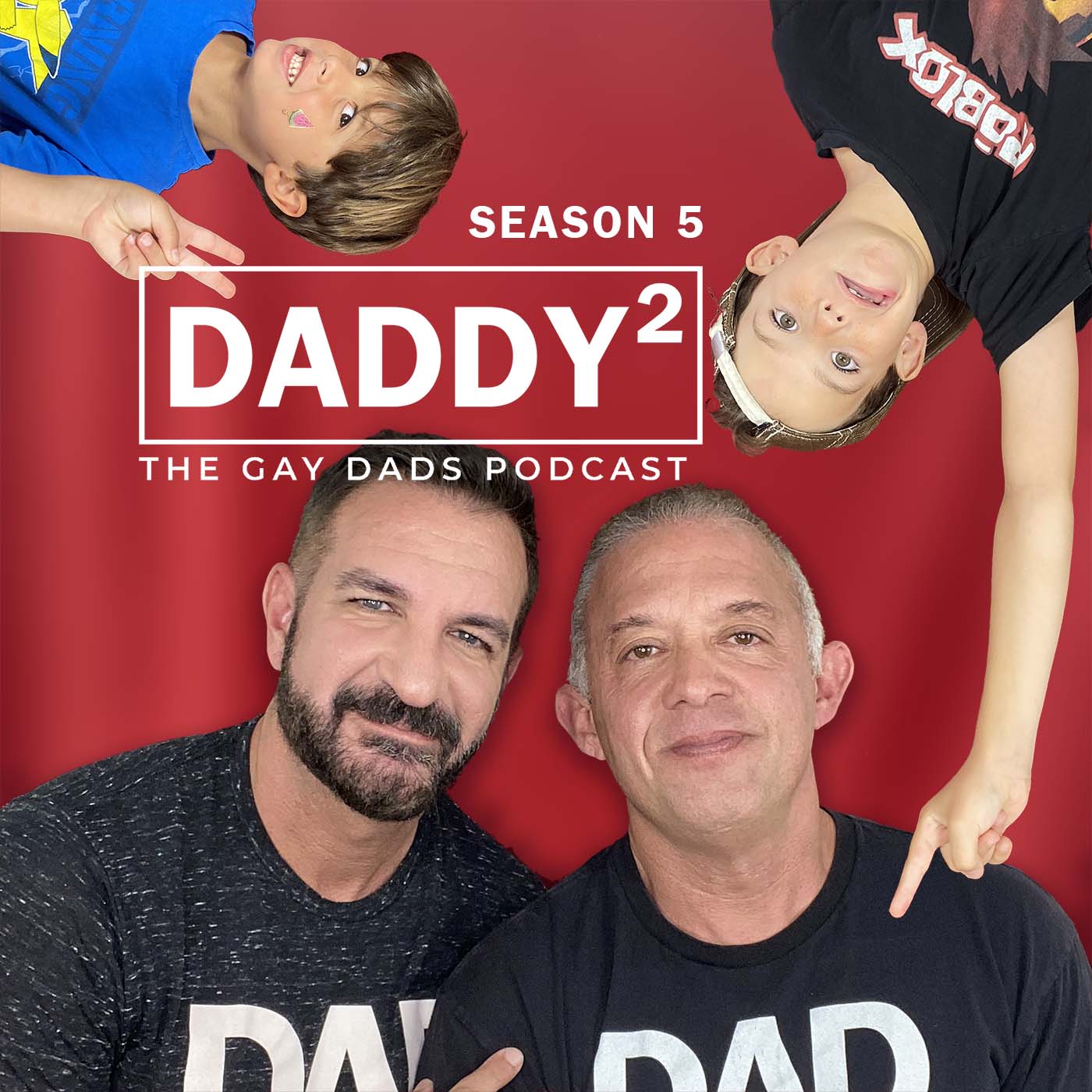
Daddy Squared: The Gay Dads Podcast
Subscribed: 45Played: 1,049
Subscribe

©2022 Daddy Squared Media
Description
An online resource for gay dads and prospective dads
103 Episodes
Reverse
Looking to meet other gay dads in your home town and beyond? in this Season Finale of Daddy Squared podcast we hope to leave you with ideas and inspiration on how to connect with other gay dads. We explore advocacy and social media as ways to form communities with three inspiring guests who have managed to do just that.
In addition to juggling work and parenting, gay dads need other gay dad friends. Not only to show our kids families like ours, but also for ourselves and as a connection to our own gay identity, and frankly there are issues that we can't discuss with straight people.
"Certainly there's the aspect [of connecting with other gay dads] for the kids' sake, but then there's the aspect, the real need for comradery is also for us," says Ron Poole-Dayan, Executive Director and co-founder of Men Having Babies. "Given that a lot of our gay friends disappeared after the kids were born, whereas the parents of our kids at school have different circumstances than us as well. It's not that we're completely different than anybody else - but you know, when you go to Mommy and Me, or Music Together with the kids and all these other things, you're in a mom-centric world. And it's not only that you need to show your kids, YOU need to let your hair down and be more comfortable and create friendships with people."
Download Daddy Squared Season 5 Cheat Sheet Magazine
Finding other gay dads can be around advocacy or a cause like Men Having Babies or Raise A Child, which add an extra layer of mutual interest in addition to geographical proximity. But social media is becoming the number one tool for gay dads to find others like them in the area.
"That happens all the time," says Brian Copeland, founder and admin of the Gay Fathers Facebook group that currently holds over 10,000 members. "Someone says 'oh, I'm in Olathe, Kansas, any gay fathers nearby here?' and people start commenting and they get together. We'll see a lot of fathers who say 'hey, we're going on a cruise at this time, is there anyone else going to be on the cruise,' or 'we're going to Disney this week, is there anyone else going,' and they start meeting up. We encourage those things."
When we talk about being social, we also talk social responsibility and roles of gay dads within the LGBT+ community.
"I think that as older gay men with kids or older gay men period, it's very important that we show up proudly at the gay pride parades with our kids," Rich Valenza, CEO of Raise A Child, says. Show not only the world who we are and what we are and what our values are but also to allow younger people to see this and envision for themselves of what's possible."
Our Guests: Rich Valenza, Ron Poole-Dayan, Brian Copeland
Rich Valenza is the Founder and Chief Executive Officer of RaiseAChild. A father of two children adopted through Los Angeles County Department of Children and Family Services, Rich has more than 20 years of success in marketing and development for broadcast media and nonprofit organizations. He has used his expertise in working with leading national and international corporations to form strategic partnerships with community service agencies, national and regional LGBT organizations. In addition to his personal experience, he brings the knowledge gained from serving five years as a board member and three years as the president of The Pop Luck Club, which promotes the well-being of gay prospective parents, gay parents, and their children.
Ron Poole-Dayan is the executive director and founder of Men Having Babies. He has over 20 years of experience in marketing and business strategy development both in the USA and internationally. Ron earned his Masters degree in political economy and comparative politics from Columbia University, and his bachelor’s degree in business administration from the Hebrew University of Jerusalem. He met his husband Greg in 1994, and are among the first same-sex couples in the nation to father children through gestational surrogacy. The twins, born in 2001, were conceived with the use of eggs donated by Greg's sister, and carried by a gestational carrier. Ron has been the MHB program coordinator since 2005, and was appointed as the Executive Director of Men Having Babies upon its incorporation in July 2012.
Brian Copeland is the founder and administrator of Gay Fathers on Facebook, the largest global online community for gay dads. In 2018, he was chosen as one of Facebook's top 100 community leaders. He has represented Facebook on stage at their Marketing Week Executives’ Meeting in New York City and at the CMX Summit in Los Angeles. In 2022, Gay Fathers was nominated in the Identity Category for Facebook's Community Awards. Brian is a real estate investor and professional in Nashville, Tennessee where he and his husband live with their two children on a farm where they raise alpacas, fainting goats, cows, and chickens.
Episode Credits
Co-Hosts: Yan Dekel, Alex MaghenGuests: Rich Valenza, Ron Poole-Dayan, Brian CopelandOpening Theme: Hercules & Love Affair, “Leonora” buy hereArticles Related to this episode:
Scientists create mice with two fathers after making eggs from male cells (The Guardian, March 8, 2023)
Gay Fathers Facebook Group
Eurovision Song Contest 2023 List of Songs
Daddy Bear T-Shirt
Download Daddy Squared Season 5's Cheat Sheet
Connect With Us
Drop us a line
Daddy Squared on Instagram
Daddy Squared on Facebook
Join our Facebook group!
Work with Yan!
What’s it like raising kids in a throuple? In this episode we dive into the dynamic of a polyamorous relationship with Ian, Alan, and Jeremy, the throuple who made the news after they managed to change the way California law defines family, listing all three of them as fathers on their daughter’s birth certificate.
In recent years we are seeing more and more throuples in the gay community, and on our podcast Dr. Ian Jenkins, author of the book Three Dads and a Baby, explained to us how it came about for him.
“In collage I took a bunch of anthropology classes,” Jenkins explains, “and I was thinking to myself, it’s pretty unusual that someone is EVERYTHING to somebody else, and there may be different aspects of your personality that somebody else nurtures or feels, needs and stuff, so, that was something that I brought to my dating with Alan and he had needed to do some thinking about it and make sure that was okay, we went ahead and started to date a couple of people, we kissed a number of frogs before we met Jeremy, with Jeremy it was totally different, we had a great connection right away.”
Ian had been with Alan for 19 years, and they’ve been with Jeremy, for ten. And they have two biological children — Piper, who is 5, and Parker, who is 3.
“If you asked me about being in a throuple, before [my experience] I’d say that’s too complicated and crazy,” Alan says on Daddy Squared, “why would anyone want that it’s hard enough to be with one person.”
“And after I’d say, oh, now that I’m approaching 45 I realize it’s so pragmatic in a lot of ways. I’m not trying to sell somebody on that and say you should definitely do this, it works for us, it worked out it evolved this way organically, and if we are talking to friends that are of our age, they have kids, they have been in a relationship for a long time, almost universally the reaction is oh I see the appeal.”
On our interview with the three we heard about what it’s like raising kids as a throuple, why it was important to them to make it legal, and we also hear about some of the stereotypes and the misconceptions they face, including ‘coming out’ to their parents about the throuple.
“Being in a throuple is coming out again, for sure,” Alan admits. “I’ve been with Ian for a long time and [my parents] knew Ian. My mom was more like, ‘okay, it’s different, I understand,’ she was supportive, and my dad was like, ‘I just struggle to see how is that conforms with fidelity in all these kind of traditional values.’ But he quickly came around. But we were also in a position, kind of later in life, where I’m not financially dependent on my parents, I’ve got my own life going on, I gotta live my life. I’ve been with Ian for a long time and I felt strongly that our life is better with Jeremy, this needs to work, I wanted to work and this is important to me. ”
“I make a point,” Jeremy adds, “if I meet new people, like if we have a new worker, pretty early on I’d say, like, ‘hey just so you know I have two partners, so if we’re talking about our home lives I don’t want you to sit there and say hey what’s going on.’ I [come out] constantly at all times.”
Our Guests: Ian, Alan and Jeremy
Dr. Ian Jenkins is the author of “Three Dads and a Baby: Adventures in Modern Parenting“, a debut memoir about his experiences trying to have a baby as part of a polyamorous gay “Throuple.” The three men wanted to have a child, but the road to having a baby took them through embryo adoption, IVF and surrogacy, dealing with lawyers and doctors, enormous medical bills, questions about polyamorous parenting, and legal battles to get all 3 dads listed on the birth certificate (they were the first to do so).
Ian is joined by his partners Alan, a clinical psychologist, and Jeremy, a zookeeper at the San Diego Zoo.
Men Having Babies Corner
Men Having Babies is a nonprofit organization that helps gay men who are interested in becoming fathers through surrogacy navigate the sea of information and overcome the financial barrier. In this episode, Alan from Men Having Babies talks about the meaning of Ethical Surrogacy: MHB has developed a framework for ethical surrogacy principles, protocols and best practices for intended parents
Episode Credits
Co-Hosts: Yan Dekel, Alex MaghenGuests: Dr. Alan Jenkins, Alan Mayfield, Jeremy HodgesOpening Theme: Hercules & Love Affair, “Leonora” buy hereArticles Related to this episode:
DR. IAN JENKINS: ‘Three Dads and a Baby’ Tells the Story of the First Polyamorous Family to Secure Three Parents Listed on a Birth Certificate (San Diego LGBTQ News, 2020)
Polyamorous gay throuple who made history by becoming first family to list THREE dads on a birth certificate say their unique journey into parenthood is 'like winning the lottery' (Daily Mail, 2021)
Daddy Squared on Instagram - meet the dads on our Committee of Imperfect Parenting: Rick, Frankie, Chad, Adrain, Jorge
Connect With Us
Drop us a line
Daddy Squared on Instagram
Daddy Squared on Facebook
Join our Facebook group!
Work with Yan!
Latest research shows that more than 25% of children experience bullying, based on them being or seeming different. Some bullied kids end up with serious emotional damage. In this episode we discuss bullying with Ross Ellis from Stomp Out Bullying, and also Yan shares what he learned, unfortunately from his own personal experience. This is part 2 of a double-episode special, celebrating 100 episodes of Daddy Squared: The Gay Dads Podcast.
According to stopbullying.gov, bullying is defined as unwanted, aggressive behavior among school-aged children that involves a real or perceived power imbalance. The behavior is repeated, or has the potential to be repeated, over time. Both kids who are bullied and who bully others may have serious, lasting problems.
“Kids don’t want to come to and tell you, ‘dad, this is something that’s happening to me,’” says Ross Ellis, a parenting expert and founder of Stomp Out Bullying. “They try to fix it themselves or pray it will go away. But it doesn’t go away. You really have to take steps.”
This is part 2 in a special double-episode, celebrating 100 episodes of Daddy Squared: The Gay Dads Podcast, discussing bullying. In part 1, also dropped today, we discussed stereotypes and judgement of gay dads. In both episodes we saw how the two subjects are weaved into each other.
“If a kid is being verbally bullied, we tell them to use what we call ‘comebacks’ - don’t have a conversation,” Ellis advises. “You’ve just taken away the bully’s power. Never use the word ‘ignore’ because you just cannot ignore bullying, but you can say things and do things that will make the bully think, ‘what just happened?! And if you experience cyber bullying – never ever respond. I don’t care what they say, just click ‘delete’ and block.”
“That is the bully’s worst nightmare, when someone responds not the way they want them to. You’re taken away their power,” she adds.
Ellis also advises parents to resist the urge of going to the bully’s parents, and try to solve it in indirect way in order to avoid escalation with the parents.
“If you find out that a kid is a bully, you don’t want to go to the parents, because the parents will probably have the attitude of ‘not my kid,’” she says. “And the it creates a problem in the neighborhood with the kids and the whole thing. Hopefully your kids can get to this kid by being nice and being kind. If it gets really bad you may want to talk to the principal and see how they handle it, and by the way, there are anti-bullying legislate in every state.”
Based on the conversation with Ross Ellis, and on his own experience of being harshly bullied as a kid, Daddy Squared's Yan talked about the result of that growing up, and also comes up with top three suggestion of what could have helped him, and what can help a child who is harshly bullied in the same way.
Yan's Advise for Parents Whose Kids Are Being Bullied
1: Pay extra attention to your kid's social experienceSome kids may not admit they were bullied – but the parents can tell. If you suspect that your kid is being bullied, first validate it by seeing it around: pay extra attention when you are in public with your kid, see what type of kids he brings home, etc. If you find these validation, try to get the kid to talk to you about what are people do or say to him. Consult with a specialist, and do not ignore, because you ignoring leaves the kid alone in this horrible situation. Support your kid by constantly telling him how much you love them the way they are.
2: Learn reaction options during an attackThe feedback to the bully is key. The more the answer to the bully is that you think it’s no big deal – the faster you can ‘disarm’ them.
3: Try to get at least one kid to tell them they want to be friends with them.“I never answered to the bullies – but I was miserable,” Yan says. “It would have been amazing if there was a friend who acknowledged what I was going through and say that they don’t care what other said and that they liked me. My girl friends definitely saw that I was bullied but never talked to me about it. So I grew up with a deep feeling of ‘there’s something wrong with me.’”
As a parent, if you see that your bullied child has that one friend that they feel safe with – try to somehow get that friend to say to your child that they like them as friends despite what others say. Creating a support system around a kid who’s constantly bullied is a key.
Our Guest: Ross Ellis
Ross Ellis is the founder and CEO of STOMP Out Bullying. She is nationally recognized as an expert for her work in bullying and cyberbullying prevention, social advocacy for youth, violence against children, and online safety.With over 20 years of experience in the non-profit, public relations and corporate sector, Ross has been a child advocate for more than two decades, educating on reducing and preventing bullying, cyberbullying, and other digital abuse, educating against homophobia, LGBTQ+ discrimination, racism and hatred, and deterring violence in schools, online and in communities across the country. She spearheaded a social health initiative to avoid the negative affect social media can have on teens which can distract them, disrupt their sleep, and expose them to cyberbullying, rumor spreading, unrealistic views of other people's lives and peer pressure.A noted speaker to schools and corporations, Ms. Ellis is often asked to provide expert commentary to news organizations and has won numerous awards.
Men Having Babies Corner
Men Having Babies is a nonprofit organization that helps gay men who are interested in becoming fathers through surrogacy navigate the sea of information and overcome the financial barrier. In this episode, Lisa from Men Having Babies discusses the difference between traditional surrogacy and gestational surrogacy.
Episode Credits
Co-Hosts: Yan Dekel, Alex MaghenGuest: Ross Ellis, Stomp Out BullyingOpening Theme: Hercules & Love Affair, “Leonora” buy hereArticles Related to this episode:
Resources on bullying on the government's website and on Stomp Out Bullying
“If You Are Going To Teach Your Son To Hate…” Dad Stands Up For Gays (Instinct Magazine)
What the World Can Learn From Gay-Straight Friendships (The New York Times)
Comeback lines: Are You Being Bullied? How to Deal with Bullies
Pharrell-produced science show ‘Brainchild’ wants to inspire kids to pursue STEM
How We Got Our Babies to Sleep Through the Night
Bros - Official Trailer
Connect With Us
Drop us a line
Daddy Squared on Instagram
Daddy Squared on Facebook
Join our Facebook group!
Work with Yan!
Gay dads often face stereotypes, including homophobic ones, but also somewhat uncomfortable stereotypes from moms, and even from childless gay men in our very own community. In this episode of Daddy Squared, we brought Neal Broverman, editor of The Advocate and OUT magazines, to try and break down the stereotypes, and see if there’s something we can do to avoid them. This is part 1 of a double-episode special, celebrating 100 episodes of Daddy Squared.
“Society is more used to women being with children, and when you have men with children there’s just judgement and some of it is not good,” Neal Broverman says on Daddy Squared. “So yeah, I do think there’s pressure on us to be stand out people and kind of represent the best all the time.”
This is part 1 in a special double-episode, celebrating 100 episodes of our podcast discusses stereotypes and judgement of gay dads. In part 2, also dropped today, we discuss bullying. In both episodes we saw how the two subject are weaved into each other.
“If you’ve had a negative situation as a gay male parent, I think almost all of us have had at least one, it kind of colors your experience and you’re on edge,” Broverman says. “You can kind of make situations that aren’t inherently negative negative. As I’ve grown older as a parent, I’ve done my best to filter out other people’s looks, expectations, reactions to my kids.”
Broverman himself made the news last year, after he and his family faced a harsh homophobic harassment in an Amtrak train in San Jose that ended only after police intervention.
“This lie [that drives hate towards gay men] has been going around for decades,” Broverman says, “and now it’s been magnified by people like Margory Taylor Green and all the people that want to refer to us as ‘groomers.’ It’s a cynical tactic.”
“I can be father of the year – and I’ll still be an abomination in the eyes [of the person on the train]. There’s nothing I can do. There’s so much judgement with gay people, and it’s just a war you’re not going to win and I care what my kids think of me, I don’t care what strangers think of me.”
In the podcast, we also discuss the contribution of social media to the judgment and stereotypes.
“I follow gay dads on Instagram and I follow opposite sex couple,” Neal tells us. “There’s definitely a representation being put out there of all our kids are dressed perfectly all the time and their hair is blown out, and, you know, we’re tanned and we have abs and we’re in Maui every other weekend.”
“I mean – everyone who’s a parent knows that’s not the case, we usually running around trying to get our kids to school and hold our jobs and feed the dog and afford to put over a roof and feed them so I take it with a grain of salt. Every parent I know is struggling, and it’s not that they don’t love the idea of being parent, it’s just hard. When I’m on Instagram I understand that this is marketing for people, they present themselves in a very specific way… I know that Instagram is not reality.”
Our Guest: Neal Broverman
Neal Broverman is the Editorial Director, Print of Pride Media, publishers of The Advocate, Out, Out Traveler, and Plus, spending more than 20 years in journalism. He indulges his interest in transportation and urban planning with regular contributions to Los Angeles magazine, and his work has also appeared in the Los Angeles Times and USA Today.
Neal lives in the Los Angels with his husband, Robbie, their children, and their chiweenie.
Men Having Babies Corner
Men Having Babies is a nonprofit organization that helps gay men who are interested in becoming fathers through surrogacy navigate the sea of information and overcome the financial barrier. In this episode, Executive Director Ron Poole-Dayan discusses misconception and stereotype of surrogacy - often revolve around the surrogates' motives.
Episode Credits
Co-Hosts: Yan Dekel, Alex MaghenGuest: Neal BrovermanOpening Theme: Hercules & Love Affair, “Leonora” buy hereArticles Related to this episode:
Gay Parents Called 'Rapists' and 'Pedophiles' in Amtrak Incident (NBC News)
Amtrak Responds After Gay Couple is Verbally Assaulted by Unruly Passenger (KTLA 5 News)
The Parent Test Trailer
ABC’s ‘The Parent Test’ Cast Includes Gay Dads Yan and Alex (BearWorld Magazine)
The Parent Test: Eight Things I Learned From Being on the Show
Connect With Us
Drop us a line
Daddy Squared on Instagram
Daddy Squared on Facebook
Join our Facebook group!
Work with Yan!
Working gay dads have so much around them that requires attention; we have to divide ourselves between our jobs, our kids, our gay childless friends, our straight parent friends and still remember who we are. In this episode of Daddy Squared we gathered four working dads, each with a different kind of job, to discuss life.
When both parents have jobs, raising kids can be even more challenging: how does parenting effect work? How are the couples' roles divided? And who stays at home when kids are sick? We gathered a committee(?) of four working dads. All are married and with different kinds of jobs, to discuss gay life and more from their perspective and experience.
Meet The Dads
Joshua Ayou
Joshua is a registered nurse with more than eight years of practice in emergency room care, triage, and intensive care unit/critical care units. He received his Master’s of Science in Nursing from West Coast University in Los Angeles, California and is affiliated with Community Hospital Long Beach. Joshua lives in Santa Ana with his husband Omar and their two children Allie and Blair.
TJ Hill
TJ is the Executive Director of DCRC - Disability Community Resource Center Staff in Venice, California. He served as the Mental Health Policy Director for almost 10 years representing non-profit provider agencies in the LA County mental health system. He serves on the Board of Directors of the American Civil Liberties Union of Southern California and as a Commissioner on the City of Santa Monica Disabilities Commission. TJ lives in Santa Monica with his husband Jay, an Art Director on TV shows, and their daughter Chloe.
Josh Levine
Josh Levine is a queer writer with the heart of a golden retriever and an obsession with unapologetic, funny women. Josh most recently served as Executive Story Editor on Steve Levitan's new Hulu comedy Reboot. His other writing credits include Ms. Marvel for Marvel Studios, Peter Tolan's series for FX entitled Belated, and the Emmy-nominated Season 2 of Hulu's critically acclaimed comedy, PEN15. He lives in Los Angeles with his husband Ryan, an actor, and their daughters Helena and Olivia.
Lance Radford
Lance is a mathematics teacher at Santa Monica-Malibu Unified School District. He's a self-directed, enthusiastic educator and basketball coach with over twenty years of experience and who won High School Teacher of the Year (2006, 2012) and Girls Basketball Coach of the Year (2008, 2013). Originally from Oklahoma, Lance now resides in Santa Monica with his husband Trevan, a surgeon, and their daughter, Ava.
Men Having Babies Corner
Men Having Babies is a nonprofit organization that helps gay men who are interested in becoming fathers through surrogacy navigate the sea of information and overcome the financial barrier. In this episode, Lisa from Men Having Babies talks about the relationship between the intended dads and their surrogate.
Episode Credits
Co-Hosts: Yan Dekel, Alex MaghenGuests: Joshua Ayou, TJ Hill, Josh Levine and Lance RadfordOpening Theme: Hercules & Love Affair, “Leonora” buy hereArticles Related to this episode:
Enjoli - Classic 80's Commercial (dedicated from Alex to all working dads!)
Connect With Us
Drop us a line
Daddy Squared on Instagram
Daddy Squared on Facebook
Join our Facebook group!
Work with Yan!
Many parents feel shame about giving their kids cake or candy and the idea of giving processed sugar became taboo among parents. In this episode of Daddy Squared we went on a journey to find the balance of nutrition for kids and found the “no-shame no-shade” method that will reassure you that your kids eat healthy, but at the same time not depriving them of sugar. We spoke to a nutritionist and a pediatric gastroenterologist, and came up with our own nutrition mix-and-match healthy meal cheat sheet.
Admitting we give our kids “Cake for Breakfast” on the TV Show The Parent Test sparked a conversation around sugar and kids’ nutrition. While we’ve been struggling with this for a while (and even tried to solve it before on our podcast), we were reluctant to deprive our kids of sugar, but instead wanted to find a “magic formula” of a diet that is healthy – but also has cake in it. We think we found it!
“We all deal with the same problems, I come across that on a daily basis,” told us celebrity nutritionist Kevin Libby. “First and foremost, when you’re approaching adolescent nutrition, whether it be toddlers or pre-teens, the number one thing you don’t want to do is assign any punishment or rewards to foods. Otherwise you start creating a life-long negative behaviors around food. You want them to have a good relationship with food, it’s there to nourish them, it’s there to give them energy.”
To further deepen our research, we also found Dr. Matthew Riley, a pediatric gastroenterologist (and a gay dad!) who first of all stripped off the shame around sugar and then told us that there’s no one right food to eat or right way to formulate your diet – so we can start with what our kids eat now, and just add what’s missing and play with the balance of the type of food.
“You really have to go back to what are the building blocks of nutrition,” Dr. Riley explained on Daddy Squared podcast. “And sugar - it’s just sugar, it’s carbohydrate, nearly everything that we eat has sugar in it. So it’s sugar, fats, proteins, those are the three marco nutrions that humans need to survive – whether you want to call it sugar or carbohydrates it’s all the same thing.”
“I think when people say ‘I don’t give my kid sugar’ they are talking about processed sugar or foods with added sugar or food with primary macro nutrions, when you read the label is most or only sugar based. If you look at a muffin or bread, those are full of complex carbohydrates which are all technically sugars as well. So it’s a really bigger issue that gets really over simplified for a lot of people and that leads to an overlay of shaming [in parents].”
Dr. Riley advised us that while the amount of sugar may be a consideration, the better question is what you’re having it with.
“How do you mixing and combining foods together so they are presented in a balanced way,” he said. “Dietitians will talk to you about every meal or snack really, ideally, will be some kind of a carbohydrate-based (grain) item, a protein source and a fruit or vegetable option. And there’s place for candy too! Candy is delicious, that’s why we have it, right? Should that be done in eccess? Probably not, should that be the sole source of your carbohydrates? Probably not, but I don’t think that there’s one right way. You’re looking for the right balance and making sure that that’s part of your diat but not the sole source.”
FREE DOWNLOAD: Daddy Squared's Meal Plan - Inspired by our conversation with Dr. Matthew Riley
“When you are saving [candy] only to special occasions, jou are just amping up the natural rewards system that exists for us human anyway. What we striving for with kids, is getting not only that balanced nutrition that we’re talking about but also developing the healthy attitude towards food: it’s there to nourish my body and keep me healthy – and sometimes it’s for fun! Sometimes it’s just delicious and we’re having it to celebrate to be with people and mark occasions. But it shouldn’t be these obsessive things, like oh my god these are taboo foods which we give more power to.”
Episode Guest: Dr. Matthew Riley
Dr. Matthew Riley (pictured in a proud moment with his son) is a proud gay dad and a fellowship-trained physician in Pediatric Gastroenterology and Nutrition. He loves teaching kids and their parents about the inner working of their bodies, including the diseases that affect the GI tract and all of the ways that children and their parents can support nutrition and gastrointestinal wellness.
Episode Guest: Kevin Libby
Kevin Libby (PH2 Nutrition) is a nutritional counselor in Santa Monica, California with over 20 years of experience. He defined his purpose in service by continually adopting best practices in nutritional sciences. His talents for getting incredible results were recognized immediately worldwide. This has translated to numerous physique transformations in Hollywood blockbusters and countless television series’. His specialties range from difficult weight loss cases, autoimmune and digestive issues, performance athletes to actors/actresses getting ready for a big role or the red carpet.
Check out the full interview with Kevin:
https://youtu.be/ejb_F5sPFKw
Men Having Babies Corner
Men Having Babies is a nonprofit organization that helps gay men who are interested in becoming fathers through surrogacy navigate the sea of information and overcome the financial barrier. In this episode, Sara Miller from the MHB staff discuss considerations before matching with your surrogate.
Episode Credits
Co-Hosts: Yan Dekel, Alex MaghenGuests: Kevin Libby, Dr. Matthew RileyOpening Theme: Hercules & Love Affair, “Leonora” buy here
Connect With Us
Drop us a line
Daddy Squared on Instagram
Daddy Squared on Facebook
Join our Facebook group!
Work with Yan!
Dealing with the “Stranger Danger” concept is so sensitive and should be done carefully: We want to raise kids who make connections in the world, who are friendly, helpful and kind to others. While raising them to be careful of their surroundings is a must, teaching them fear of strangers is not the answer – it divides people and plants seeds of fear, distrust and separation from the world. Besides, statistics show that 99% of abductions in America are NOT by strangers. We turned to the National Center for Missing and Exploited Children to learn how to carefully tackle this issue, what to teach and say to our kids and how to empower them to learn to see the difference between harmful and helpful people.
ABC and Disney chose to scare parents on the TV show The Parent Test, showing children opening the door to strangers in the “Stranger Danger” challenge. But calling out “Stranger Danger” is not only deceiving and incorrect, it separates people, and results in kids full of fear, who grow up with the sense that “everyone is out to get you” and everyone you don’t know may harm you. The reality is different. According to the National Center for Missing and Exploited Children (NCMEC), almost 99% precent of abductions of children in America are actually done by people who the children know! So the big question of “Stranger Danger” – is how to balance out being careful of people who can harm you (not necessarily strangers) and raising kids who are kind and friendly and make connections with people and are unafraid!
“The good news is that abductions as we traditionally think about them are very rare,” says Susan Kennedy, who leads the NCMEC’s prevention, outreach, training. “These cases, even though they make the news, even though they haunt our nightmares, they are very rare.”
“One problem with Stranger Danger is that it’s confusing to kids because they are a lot of situations when we want them to see strangers as helpful,” Susan adds. “If you are lost we actually want kids to seek out help from those people. We also want them to be open to trusting adults and understanding some nuance there in terms of roles, in terms of who might be helpful. Additionally, the problem with Stranger Danger is that it puts an emphasis on strangers as those who harm children when unfortunately the reality across this kind of victimization type is that they most likely be harmed by the people that they know and people that they trust. And for parents when we focus on strangers we’re missing the other part, which is to talk to our children about behaviors that are not ok and not to feel guilty if they think someone in their circle of trust is harming them.”
As much as us parents have moved on about stranger danger in real life, Susan says, online is a different matter. “And we tend to have a very black and white conversations with our kids about their friends in real life and then there’s the online friends,” she explains.
“We don’t trust your online friends, we don’t want you to make them, we don’t want you to talk to them – and that’s not realistic guidance for this day in age, especially as your kids get older, I mean people interact with strangers online all the time. And there are many kids that form really meaningful friendship with people they know online. And especially kids who are marginalized, or maybe some part of their identity is not accepted by their family, those online friendships can be even more important. But really check in with your kids constantly about their online life, monitor that as you need to, and more importantly, have a non-judgmental conversation with your kid, like ‘who are your online friends,’ ‘how do you know who to trust,’ ‘what kind of conversations are you having,’ it’s also the kind of skills your kids need as they leave the house so you need to be building those over time.”
One of the key tools that Kennedy gives to parents on the Daddy Squared podcast, is educating kids to make sure the parents know if something out of the ordinary happens. They call this rule “Check First.”
“This is where we tell our kids that if there’s a change in plans, so if someone who’s coming to the bus stop to pick you up and it’s not who you’d expect to pick you up, you want to check with your parent or guardian first,” Susan explained. “If someone approaches you at the park and say ‘I can’t find my puppies will you help me look for it’ you want to check with your parents first before you go with that person. And I like ‘Check First’ because it’s an action step, it gives the kids something to do, and to me it’s not overly fearful as like, ‘run away from stranger,’ ‘stranger-danger,’ those kind of messaging we want to stay away from for a variety of reasons, and what you want to say to your child is, ‘hey, check first if something like that happens, before you accept any gifts from people, before you go with someone somewhere.’”
Our Guest: Susan Kennedy
Susan Kennedy joined the National Center for Missing and Exploited Children in 2018. At NCMEC, Susan leads NCMEC’s prevention, outreach, training, and partnership programs. Previously Susan was the Director of Programs at the Center for Alexandria’s Children where she conducted child forensic interviews, coordinated the Child Advocacy Center program, and oversaw a community-based primary prevention program for children aged zero to five and their caregivers. She earned her Bachelors’ degree in Psychology from The College of William & Mary and a Master of Education degree in Human Development and Psychology from Harvard University.
Men Having Babies Corner
Men Having Babies is a nonprofit organization that helps gay men who are interested in becoming fathers through surrogacy navigate the sea of information and overcome the financial barrier. In this episode, Ron Poole-Dayan, the Executive Director of the organization, discusses scenarios in which a female friend or family member steps in to become a surrogate or an egg donor for a gay couple.
Episode Credits
Co-Hosts: Yan Dekel, Alex MaghenGuest: Susan KennedyOpening Theme: Hercules & Love Affair, “Leonora” buy hereArticles Related to this episode:
Daddy Squared: Helping Kids Through Fear with Dr. Tina Payne Bryson
Safely Ever After
Connect With Us
Drop us a line
Daddy Squared on Instagram
Daddy Squared on Facebook
Join our Facebook group!
Work with Yan!
Competition and comparison between siblings is an absolute nightmare for parents. We all want our kids to grow up to be this unit that will support, protect, love, and be each other’s best friends. How can we use the short time with them to pass this message along? We brought Parenting Expert Einat Nathan to discuss sibling rivalry, when it is healthy, and what we parents need to do in order to not pour gasoline onto the flame.
At the beginning of the episode, we came to Einat with the notion of the competition between brothers, but Einat first tought us the important distinction between competition and rivalry.
“Competition is not natural, the rivalry is natural,” Einat said. “When I’m talking about Rivalry I’m talking about a field of practice in the sibling zone which we are not 100% aware of. We’re all looking for this place of belonging, significance, attention, encouragement, all the good stuff that the parents have to offer is now a commodity, and the race for the commodity.”
Competition between brothers, Einat suggests, is an unhealthy development of the rivalry. “In competition there’s a winner, and only one winner,” she says. “That’s the difference.”
Einat says that the first thing parents should notice when they intervene in siblings’ fights is that we parents never know the full, big picture. “We see dots on a long range of time [which is the siblings’ relationship]. We become this judge because we are very edgy when it comes to every behavior that is not harmonious.”
“If we understand or accept that we know nothing. If we step in in the name of justice – we’re not doing justice. We’re only reacting to a specific scene that we’ve seen.”
“We don’t want to give our children this ideal of something that doesn’t exist, that relationship has to be quite, perfect. Relationships are messy, and they are all about communicating different needs, negotiating, explaining, getting hurt, making amends.”
“If we are curious enough, we can be this ambulance outside the field, we’re getting the hurt ones, we can be there for them. When I hear, ‘mommmy!’ I’m saying ‘I’m in the kitchen guys whoever needs me is welcome to come.”
Einat says that dissolving competition between siblings takes time, and the key for it is for us parents not to give equally to every child.
“We parents have this amazing super power,” She explains. “We know at every minute what each pone of you needs. Not wants, we don’t promise the want, but what each of you need. And we’re going to prove it but it’s not going to be equal. When they have a birthday they are able to celebrate their siblings birthday with an open heart because they know it’s going to be their turn.”
Also on competition, we talked about parents judging other parents. “We are basically wired to judge who’s in our club and who’s not,” Einat told us. “And we women are so good at that, you know. If she’s breastfeeding I’m thinking something, if she has a career and I’m a stay-at-home I’m thinking something, If she has this Instagram… and it all lands on our basic insecurity and/or on our innate need for a group, for empathy. We’re all yearning for that, against judgement and judging ourselves. And I think the minute we can accept that it’s all happening, you know, between our ears, and the subjectivity of us interpreting who’s for us and who’s against us, other people are commenting or judging or giving advise – it helps them feel superior. It’s the way that humans self-talk themselves, self-soothe themselves and find this group they want to belong to.”
Our Guest: Einat Nathan
Einat Nathan is a parenting expert, public speaker and bestselling author, certified by the Adler Institute and the Ministry of Education for Parental Instruction and Group Instruction. She also holds a bachelor’s degree in law from Tel Aviv University.Her debut book “Haimsheli”, was the national bestseller of the year across all categories (2018) and is still a steady-seller. The rights for the book had been acquired by top publishers in North America (published under the name "My Everything", picked by Amazon editors as one of the best books of 2021) China, South Korea, Russia, Spain, Romania, Lithuania, Croatia, Turkey and the Netherlands.Her second book "Mishelanu" about parenting teenagers, came out in Israel in March 2021 and is also a bestseller.Einat lives in Tel Aviv with her husband Yuval, and her five children Eyal, Yoav, Lihi, Rona, and Shira.
Men Having Babies Corner
Men Having Babies is a community, nonprofit organization that helps gay men become fathers via surrogacy with education and financial assistance. In each episode this season, the team of Men Having Babies (MHB) will educate us on aspects of having kids through ethical surrogacy. In this episode, Executive Director Ron Poole-Dayan discusses twins pregnancy in ethical surrogacy.
Episode Credits
Co-Hosts: Yan Dekel, Alex MaghenGuest: Einat NathanOpening Theme: Hercules & Love Affair, “Leonora” buy hereArticles Related to this episode:
https://www.youtube.com/watch?v=GSFkczZrbLI
"Kids are the best psychotherapy a conscious person can undergo. They take us back to our own painful and thrilling childhood, they will always be first to identify our weaknesses, but most of all they are a profound mirror that confronts us with the fact that we never were and never will be perfect..." - Read more
Connect With Us
Drop us a line
Daddy Squared on Instagram
Daddy Squared on Facebook
Join our Facebook group!
Work with Yan!
For gay men looking to build their family through adoption, adopting a children of a different race can add a layer in parenting. We brought on adoption expert Jennifer Bliss alongside Lane Mashal, a gay dad who adopted transracially and a former adoption social worker who lead transracial adoption workshops, to help us go in depth into the meaning of adopting a child of a different race.
“For people looking to explain their family through adoption, there are three ways to do that,” Jennifer Bliss, LCSW, PsyD, Director of Adoptions & Foster Care, Vista Del Mar Child & Family Services, explained on Daddy Squared podcast, “one would be through international adoption, one is through foster care- adoption which is usually referred to foster-adopt, and then the third is through private adoption which is when people go through an agency or an attorney to adopt domestic, private adoptions.”
“Adopting in itself adds an extra layer in parenting,” Jennifer said, “because you’re raising an adoptee. That comes with its on challenges and psycho-education and toolkit that the parents sould have to help navigate different encases over the years with their child. Choosing to adopt transracially adds another layer to that parenting experience because while it’s tempted to say ‘I will love you no matter what color your skin is, it’s beautiful,’ we have to be careful that we don’t minimize the difference or act like it doesn’t matter because it will matter to your child. And minimizing that basically will invalidate their experience.”
Lane said, from his years of experience working with parents who adopted transracially, the biggest misconception of parents is that if they will be “color blind” and “show they love their kid no matter what,” maybe not even talk about the race difference between them and their kids, the kids will be fine.
“It doesn’t matter if you say you’re color blind or not,” Lane told us, “because the world does not see your child in a colorblind way. And the child has to grow up knowing that the world doesn’t see them the way you are seeing them. My children throughout their childhood were always seen differently, judged differently, people talked to me about their racist thoughts upfront, because I was white, even though my children were not.”
Our Guests: Dr. Jennifer Bliss and Lane Mashal
For over 20 years, Dr, Jennifer Bliss has dedicated her career to the field of child welfare and adoption. After completing her MSW at UCLA, she became a family reunification social worker with Los Angeles County while earning her Doctorate in Clinical Psychology. A few years later she transitioned into the non-profit sector as an Adoptions Counselor. In this role, she counseled expectant parents and prospective adoptive parents through the match and placement process. She has been quoted in American Baby Magazine, Psychology Today, and has spoken on the importance of best practices in adoption at statewide conferences. She has also appeared as the adoption expert on Huffington Post Live and the Hallmark Channel. Additionally, Dr. Bliss was the primary adoption consultant on WEtv's 4-part documentary series, "Adoption Diaries” and co-authored the book Another Choice: A Compassionate Guide to Placing a Child for Adoption. In 2018, she joined Vista Del Mar as the Director of Adoptions and Foster Care.
Guest Host: Daniel Vandenbark
Daniel is a single dad, co-parenting with his former partner to raise their son, Torbett, who came to them through open-adoption. Daniel founded his design firm over twenty years ago, designing custom interiors and waterwise landscapes for clients in SoCal and through the US. Daniel is an outdoor enthusiast and enjoys sharing time backpacking, snowboarding and dadventuring with Torbett.
Men Having Babies
Men Having Babies is a community, nonprofit organization that helps gay men become fathers via surrogacy with education and financial assistance. In each episode this season, the team of Men Having Babies (MHB) will educate us on aspects of having kids through ethical surrogacy. In this episode, Lisa Schuster of the MHB staff talks about the effect of COVID-19 on surrogacy.
Episode Credits
Co-Hosts: Yan Dekel, Alex MaghenGuest Host: Daniel VandenbarkGuests: Jennifer Bliss, LCSW, PsyD, Lane MashalOpening Theme: Hercules & Love Affair, “Leonora” buy hereArticles Related to this episode:
"That's my son, and I'm his mother, and I don't know if you have some sort of a problem with that arrangement, but also I don't really care..." - This is Us INCREDIBLE pool sceneSurrogacy fraud storyWhy Adoption Wait Times are Longer Post-COVID?“I Saved All The Receipts”: Surrogacy Intended Dad Reveals His Costs Spreadsheet
Connect With Us
Drop us a lineDaddy Squared on InstagramDaddy Squared on FacebookJoin our Facebook group!Work with Yan!
Whether you decide to adopt or have babies through assistant reproduction, you'll want a judgement to approve your guardianship on your baby. In this episode of Daddy Squared podcast, we explore different types of legal guardianship with the help of Family Formation attorney Amira Hasenbush, JD, MPH.
For gay men who want to become fathers, it doesn’t matter if you choose to do it through assisted reproduction or adoption, you’re going to need a lawyer to protect your parentage. Some states now have administrative procedures where you don’t have to go to court, but Family Formation lawyer Amira Hasenbush warned against that.
“There’s something in the United States constitution called The Full Faith and Credit Clause,” and what that says is that judgement from one state has to be legally recognized in every other state in the country,” Amira explained on Daddy Squared podcast. “An administrative document is not a judgement. You want a judgement that protects your parenthood.”
In our interview with Amira we explored the various ways in which attorneys are involved in protecting parentage for gay men, from adoption, to nomination of legal guardianship, to surrogacy, which include, besides the contracts with the surrogate and egg donor, a judge’s order that your babies are yours.
“In some states you can get a pre-birth order,” Amira said, “that you get before the baby’s born. That’s what we do in California. The birth clerk uses that to put both of you on the Birth Certificate, from birth. And it will vary by state, even by county, as to what the judge is going to want to see. In California, if you do gestational surrogacy, meaning you have an egg donor, there’s a very clear statutory frame work of ‘these are the boxes you need to check’ and in most cases in California if you check all those boxes and the lawyer has put together all of the paperwork to say ‘yes we checked all those boxes’ you don’t even have to go in for a hearing.”
“So some states will do pre-birth, some will do post-birth and there are states that from time to time will require some sort of adoption proceeding. So it’s really important that when choosing your surrogate, talk to lawyers where the surrogate lives and the baby’s going to be born.”
Talking to a family formation lawyer before you begin your journey to fatherhood can be helpful – no matter what route to fatherhood you choose. There are some family formation lawyers who only do assisted reproduction, some will only do adoption and there are many who do both. Amira advises to choose your lawyer from either AAAA, or The Family Law Institute, which is more specific for LGBT people.
In our discussion on adoption, Hasenbush explained the difference between step-parent adoption and second-parent adoption.
“Step parent histrorically was switching out the parents,” Amira explained, “it was usually, let’s talk historically, a different-sex couple, so you got mom and dad, they got divorced, let’s say kid goes with mom and mom gets remarried to step dad, so step dad wants to raise the child so they basically take out bio dad and replace, because you could only have two parents.”
“Then we had all these same-sex couples who couldn’t get married, and they said, well, we’re two parents, and we’d like to both be the parents of this child,” and that’s how second-parent adoption started, which is basically an adoption outside of marriage.
Amira also said that in California, starting in 2016, it was determined that we can actually file for more than two parents, and there are different ways to do it depending upon how things started – but that’s a whole other episode!
Godfather
In this episode we also talked about godparents, and how it's related to guardianship. We heard on the show Godfather stories from three gay men, Kyle from Texas, Armani from California and Jonathan from Wisconsin. Below are the full interviews with the guys.
https://youtu.be/GfW68FrrPUU
https://youtu.be/dzZ1DO_LDnY
https://youtu.be/K3E3SNlpNPQ
Our Guest: Amira Hasenbush, JD, MPH
Amira Hasenbush is a family formation attorney, and the founder of All Family Legal in Los Angeles, California. She helps families through the process of surrogacy, adoption, sperm donation and egg donation. Amira has chosen family representing all ends of the LGBTQ spectrum, giving her a deeper understanding of the special needs that may be involved for LGBTQ+ families. Prior to taking her law practice full-time, Amira spent five and a half years as a Fellow for the Williams Institute at UCLA School of Law, where she did research and published reports on LGBT law and policy. She graduated second in her class from UCLA School of Law and holds a Masters in Public Health from UCLA School of Public Health. Amira has been published extensively and cited and featured in a variety of media outlets and journals, including the Boston Globe, ABC News, Time and the New England Journal of Medicine. She is an active member of the National LGBTQ+ Bar Association's Family Law Institute, the chair of the Legal Advisory Committee for Men Having Babies, and the Family Law Section Liaison for the American Bar Association 's Commission on Sexual Orientation and Gender Identity.
Guest Host: Daniel Vandenbark
Daniel is a single dad, co-parenting with his former partner to raise their son, Torbett, who came to them through open-adoption. Daniel founded his design firm over twenty years ago, designing custom interiors and waterwise landscapes for clients in SoCal and through the US. Daniel is an outdoor enthusiast and enjoys sharing time backpacking, snowboarding and dadventuring with Torbett.
Men Having Babies
Men Having Babies is a community, nonprofit organization that helps gay men become fathers via surrogacy with education and financial assistance. In each episode this season, the team of Men Having Babies (MHB) will educate us on aspects of having kids through ethical surrogacy. In this episode, Sara Miller of the MHB staff talks about the role of the lawyer in the surrogacy process.
Episode Credits
Co-Hosts: Yan Dekel, Alex MaghenGuest Host: Daniel VandenbarkGuests: Amira Hasenbush, All Family Legal and Jonathan Fox-Haines, Kyle Loyd, Armani RonaldoOpening Theme: Hercules & Love Affair, “Leonora” buy hereArticles Related to this episode:
It's Corn!
Academy of Adoption and Assisted Reproduction Attorneys Directory
Connect With Us
Drop us a line
Daddy Squared on Instagram
Daddy Squared on Facebook
Join our Facebook group!
Work with Yan!
Money is a big issue when you are trying to have kids (especially when it’s through surrogacy) and – of course – raising a child ain’t cheap. We brought in celebrity financial planner, David Rae, to discuss saving and planning financially for your next big thing, and other financial planning issues that may occur for gay men.
David Rae, a certified financial planner and a regular advisor on KTLA5 morning show, says financial planning is crucial for gay men who are thinking about having kids. “It’s definitely something you want to address before you start the process,” he explained on Daddy Squared: The Gay Dads Podcast. “You want to know it’s going to cost, say, $200k. You want to make sure that you put your financial house in order so you’re not putting this on a credit card, not mortgaging your future.”
“When I say planning ahead, look at ways to save for this expense,” Rae continued. “If you must, look at ways that you can possibly get a loan or take loans against your 401(k) which normally financial advisors wouldn’t want you to be doing. I wouldn’t suggest doing that to buy a car but to start a family, we are probably starting a family later in life than our [straight] siblings.”
David, a gay man himself, specializes in the needs of the LGBT community and often blogs on his website about financial issues that come up in the community, looking at our lifestyle and how it can be adjusted so what we spend money on is what we think we really need – and not spend money according to expectations from our surroundings. About having kids, David advises to take time to save. The best thing to do, he says, is start an investment account and start putting away money every month and let that build up. If you go for loans consider where you have assets.
“There are a lot of sources out there for terrible loans: ‘Oh sure I’ll just give you $200,000 at 30% and you’ll be in debt forever!’,” David says. “There are approaches for staggering different types of loan in time as well. The IVF agencies themselves sometimes have their own loan packages but their terms may not be the best. You might want to look at home equity loan of you own a home. You can even take a loan against your 401(k) if you must. And with all of that, be careful of the debt you’ll be taking on. You don’t want to be buying diapers for twins and drowning in existing debt.”
“The interest rate is a big piece to consider, too. If you have a 5-year loan vs. a 10-year loan vs. a 20-year loan, you might pay a lot more interest on a 20-year loan and sometimes you think if you have a 20-year loan, you’ll have to pay all this interest. If you are stretching to make this happen or you are already struggling financially a little bit or on edge – it will make it more affordable and you can pay the loan up faster if you get a 20-year loan, but a 5-year you’ll be like, ‘oh my gosh, I have to come up with $200,000 in five years, that adds some extra stress”
Our Guest: David Rae, CFP
David Rae, Certified Financial Planner™, Accredited Investment Fiduciary™, and President / Founder of DRM Wealth Management LLC, helping you make smarter financial decisions and positioning yourself for prosperity.
Working with a wide diversity of clients for well over a decade, he has built a successful career developing comprehensive financial plans to meet life goals, retirement, tax planning, estate issues, portfolio revision, life insurance, portfolio management, business exit strategies, and more. While based in Los Angeles, he serves clients across the country. At the same time, he enjoys a solid reputation as a smart, go-to financial guy for both mainstream and LGBT print, broadcast, and online media.
Guest Host: Daniel Vandenbark
Daniel is a single dad, co-parenting with his former partner to raise their son, Torbett, who came to them through open-adoption. Daniel founded his design firm over twenty years ago, designing custom interiors and waterwise landscapes for clients in SoCal and through the US. Daniel is an outdoor enthusiast and enjoys sharing time backpacking, snowboarding and dadventuring with Torbett.
Men Having Babies
Men Having Babies is a community, nonprofit organization that helps gay men become fathers via surrogacy with education and financial assistance. In each episode this season, the team of Men Having Babies (MHB) will educate us on aspects of having kids through ethical surrogacy.
Episode Credits
Co-Hosts: Yan Dekel, Alex MaghenGuest Host: Daniel VandenbarkGuest: David Rae, CFPOpening Theme: Hercules & Love Affair, “Leonora” buy hereArticles Related to this episode:
Golden Girls Retirement Plan / David RaeHow the LGBT Community Can Retire Early and Fabulously / David RaeRIP Leslie Jordan
Connect with Us
Drop us a lineDaddy Squared on InstagramDaddy Squared on FacebookJoin our Facebook group!Work with Yan!
Dealing with our kids’ fears is one of our key roles as parents. We invited Dr. Tina Payne Bryson, co-author of The Power of Showing Up who conducts workshops for parents, educators, and clinicians all over the world, to help us navigate our children’s greatest fears (and some of our fears as parents).
Our consistent response to our kids’ fears defines the way in which they will deal with life growing up. Sound overwhelming? To us it did too. So it didn’t come as a surprise in conversation with Dr. Tina Payne Bryson (one of the most sought-after parenting coaches in America) that she directed us back to our own anxieties.
“We are not at fault for all of our children’s fears,” Dr. Payne Bryson said on our podcast, “but we play a big role in how they construct the meaning of it, how tolerable the fear is and how to respond to it. So we have to start with ourselves and our own fears and anxieties.”
“We first have to remember how much we set the tone and the meaning for our kids. You know, when you have a toddler and they hear a scary noise, like a helicopter overhead, the first thing they do is look at your face. And if your face looks scared that creates the meaning, ‘wow, that’s dangerous’ that they follow, especially in those early years.”
We talked with Dr. Tina about “popular” children’s fears: fear of going to new places (new class, new camp), COVID-19, fear of the dark and fear of a parent dying.
“Around the ages 4-6 and especially between 5-7 kids go through a significant separation anxiety or other kind of anxieties like not wanting to go to the bathroom by themselves,” Dr. Tina explained, and said it’s something most parents don’t talk about and may not know. “It’s evidence of a new cognitive growth, a new cognitive development spurt that they can now imagine bad things happening, parents dying, someone getting into the upstairs bathroom and murdering everyone – they can imagine these things now, but they don’t have the emotional capacity to regulate the feelings around that. So it is really typical for kids development and these are real legitimate fears.”
Dr. Payne Bryson gave us some tips to handle our kids’ fears. One of them was to never criticize, minimize or mobilize the fears.
“Comments like ‘why are you upset about this? It’s not that big of a deal’ minimizes the fear. That doesn’t ever cause the child to think ‘Oh, you’re right, I’m not afraid anymore.’ What it does is leave them alone with the fear. Their feeling stays the same but now they got the message of ‘they don’t get me and I’m alone with it because they’re just going to try to talk me out of it'.”
“Our brain is an association machine. When we criticize them with ‘Why are you being so sensitive about this?’ they make an association with ‘I shared my feelings, that didn’t feel good, maybe I’m not going to keep doing this.’”
“The third thing we don’t want to do is mobilize: ‘Ok, I’m going to call the camp director, I’m going to tell them you’re freaked out, I’m going to call the director, and I’m going to make sure I’ll stay with you the whole day…’ When we mobilize to fix it all, what it accidentally communicates to our kids is, I don’t actually trust that you can handle this – I have to go solve everything for you.”
“All of this said, it’s important to add that even if you make all of these mistakes - criticize, minimize, mobilize - that doesn’t mean your child won’t not grow up to be a great human being," Dr. Payne Bryson assured, "because the most important thing is that our kids will know we love them. We can’t get too neurotic about every little thing that comes out of our mouths. And what we get wrong related to our kids’ fears on one occasion, we can improve and repair on other occasions."
Our Guest: Dr. Tina Payne Bryson
Dr. Tina Payne Bryson is the author of the Bottom Line for Baby and co-author (with Dan Siegel) of two New York Times Best Sellers—The Whole-Brain Child and No-Drama Discipline—each of which has been translated into over fifty languages, as well as The Yes Brain and The Power of Showing Up. She is the Founder and Executive Director of The Center for Connection, a multidisciplinary clinical practice in Southern California. Dr. Bryson keynotes conferences and conducts workshops for parents, educators, and clinicians all over the world, and she frequently consults with schools, businesses, and other organizations. An LCSW, Tina is a graduate of Baylor University with a Ph.D. from USC. The most important part of her bio, she says, is that she’s a mom to her three boys. You can learn more about Dr. Bryson at TinaBryson.com.
Men Having Babies Corner
Men Having Babies is a nonprofit organization that helps gay men who are interested in becoming fathers through surrogacy navigate the sea of information and overcome the financial barrier. In this episode, Ron Poole-Dayan, the executive director of the organization, discusses surrogacy destination and why does the organization advocates for surrogacy in the U.S. and Canada.
MHB Guidelines for Safe, Legal and Ethical Surrogacy Abroad
Episode Credits
Co-Hosts: Yan Dekel, Alex MaghenGuest: Dr. Tina Payne BrysonOpening Theme: Hercules & Love Affair, “Leonora” buy hereArticles Related to this episode:
Instagram Post of Jesse, a gay dad from ColoradoThe Power of Showing Up BookCOVID pandemic made people meaner, lazier: StudyEthical SurrogacyCharmed :)
Connect with Us:
Going to the gym is part of gay culture. But when you have kids it's harder to make time for it. We brought in personal trainer and gay dad Chris Tye-Walker to help you bring back the motivation to lose that dad bod and get back into your sexy, muscular, DILF shape.
It may be a little stereotypical, but most gay men make it their business to go to the gym. And when you become a father, the commitment to your body is just one of a long list of commitments. The goal of this episode of Daddy Squared: The Gay Dads Podcast is to help you with this commitment. “Having kids is super restrictive on all schedules,” explains our guest in this episode, personal trainer Chris Tye-Walker. “You lose any alone time, you lose time with your spouse to go and enjoy each other. Before I had kids no one told me that the last thing you’re going to have is time and freedom. Well, maybe they told me, but I didn’t hear them!”
“So when it comes to working out when you have kids, you can use your kids for your workouts, you can do your weights at home to still be active and [make your workouts a time that you are] playing with your children.”
An ideal number of workout per week is five, “but that’s not always realistic,” Chris says. “I would prefer you’d do 30 minutes a day. And here’s the thing: we all get tired when the kids go to bed at 7-7:30 and it’s always a choice. If you want to work out when the kids go to bed you totally can. It’s hard, you want to sit on the couch, you want to eat you want to have a cocktail and do nothing. If you want to focus on fitness you can get up and jump rope for 15 minutes or do a circuit for 30 minutes – if that’s the time you have.”
“If you’re just going to do cardio, you can do it first thing in the morning. If you do a session with cardio and weights – do your weights first, because you’re going to be strongest and freshest when you start your workout.”
We also discussed body shame and that feeling some gay men have at the gym, and you look around you and see the hot, muscular guys around you. Chris recommends to stop comparing yourself to them, and to remember that they were once too where you are now.
“Everyone suffers from body dysmorphia,” he explains. “I have it too, and no matter what you’re going to feel like ‘I don’t look good today’, ’I don’t feel good about myself.’ Someone who’s out of shape, or coming back from having newborns, or being injured or wherever else is always going to be very daunting coming back to the gym where everyone is younger or ripped. So, here’s the really hard part for everyone: no one gives a f***.”
“Everyone is so narcissistic in a gym, all they care about is themselves. No one is really looking. They’re on their treadmill, doing their own thing. Yes, people look, but you have to remember that everyone’s there for themselves, everyone’s there to prove themselves, everyone’s there to work hard, no one’s there to make fun of you for looking a certain way. Everyone in the gym is going to better themselves. Everyone’s been in the place where they’re not happy with how they look, even if it’s the person in the best shape in that gym – they had to work to get there, at some point they didn’t feel they’re in the shape they want to get into, so they went to the gym.”
Our Guest: Chris Tye Walker
Chris Tye-Walker (CSCS) is a Certified Fitness Trainer, and one of the most sought after celebrity Elite Performance Coach in Los Angeles. He is the host and creator of TheTreadSeries.com, a lululemon ambassador, and he has appeared as a Fitness Trainer / Host on Bodyrock.TV, SELF Magazine’s 5 Ways To, BeFit’s Transform workout series, and a variety of online, live and televised fitness programs. Originally from London, England, Chris has extensive fitness training and experience stemming from his own prolific career as a nationally ranked athlete. He ran Track & Field for Great Britain and was from 2002-2005.
The discipline, passion for fitness, education and expertise that Chris acquired during his own athletic career, combined with his love for working with people, propelled him into a career as a fitness trainer and has made him an international success. He is favorite among the who’s-who of Hollywood.
In addition to being a Certified Strength & Conditioning Specialist, Chris has a Bachelors Degree in Sports Science (with a concentration in Sports Psychology). His fitness resume includes being a Guest Fitness Instructor for the NIKE Women's NTC Tour and working for the UCLA Department of Athletics.
https://www.youtube.com/watch?v=WEQkuShPnxY
Download Chris' List of Basic Moves
When you’re stuck in your workout - fall back to one of these basic moves that fits with the program of the day. Sign up to Daddy Squared community and receive Chris Tye-Walker's cheat sheet of to your email:
#mc_embed_signup{background:#fff; clear:left; font:14px Helvetica,Arial,sans-serif; width:600px;}
/* Add your own Mailchimp form style overrides in your site stylesheet or in this style block.
We recommend moving this block and the preceding CSS link to the HEAD of your HTML file. */
* indicates required
First Name
Email Address *
Location (City, State)
(function($) {window.fnames = new Array(); window.ftypes = new Array();fnames[0]='EMAIL';ftypes[0]='email';fnames[1]='FNAME';ftypes[1]='text';fnames[2]='LOCATION';ftypes[2]='text';}(jQuery));var $mcj = jQuery.noConflict(true);
Men Having Babies Corner
International nonprofit organization Men Having Babies helps gay men who want to become fathers through surrogacy to realize their dream of fatherhood. The organization helps with education and financial assistance, and holds conferences across the globe that are dubbed 'surrogacy bootcamp' and help gay men navigate through the sea of information on surrogacy. In this episode, Sara Miller, a former surrogate and member of MHB's staff, explains how to choose your surrogacy agency and clinic.Surrogacy Directory - Ratings and Reviews
Episode Credits
Co-Hosts: Yan Dekel, Alex MaghenGuest: Chris Tye-WalkerOpening Theme: Hercules & Love Affair, “Leonora” buy hereArticles Related to this episode:
Chris Tye Walker on YouTubeDaddy Squared 1x03 (another "gay gym" episode): Dad Bod
Connect with Us
Daddy Squared on InstagramDaddy Squared on FacebookJoin our Facebook group!Work with Yan!
A Parents' Guide to Roblox: more than half of America’s kids play Roblox, and let’s face it: most of us parents have no idea what they actually do there. In this episode, we dive into the popular gaming platform, what is it, what are they doing there, and most important: is it safe? We interviewed a gay dad who plays Roblox with his kids, the platform’s Community Director for Safety and Civility, and for the first time in the podcast’s history: we interview our kids!
Roblox, the popular gaming platform, seems to be a growing phenomenon that is becoming a childhood milestone, just like Halloween obsession or the Baby Shark song.
“It is a platform where people can create anything they can imagine,” explains Laura Higgins, Director for Community Safety and Civility at Roblox. “We actually started as a physics classroom app and it was a way that young people can carry out experiments that they can’t do in the real world, for example, what happens if you drop a car off a tall building. So it started as a classroom, but what we started seeing is what kids were doing outside of the classroom. They were using their imagination to come up with that wacky creations.”
Higgins says that the company encourages that parents be involved as much as possible especially when setting up the kids’ accounts. The tips she shared on our podcast in order to ensure the safety of the kids include using the kids’ actual birth date (to make sure the age-appropriate restrictions will be part of the child’s profile), choosing a restricted games list, turn chat on/off, choose who they can talk to and create a (not-obvious) pin number control.
“Safety is definitely our core at Roblox,” Higgins says. “We are a platform designed around kids and for kids, so that safety was built right from day one. We don’t allow any sharing of identifiable information, so they cannot share their telephone number, their address, their real names – all of those sorts of things it’s banned.”
“We have very strict chat filtering that runs across the platform, in fact, we use several filtering systems, it’s a mix of human moderation and machine and AI technologies that constantly run across the platform. Until very recently you couldn’t type any numbers. Our technology has moved on and we’ve become much more savvy about managing these things, we use contextual moderation, so for example if I work on a pizza place, it will be able to detect if you say ‘I sold three pizzas today,’ as opposed to ‘I’m 3-years-old’.”
In the episode, we also heard from Jeremy, a gay dad in Minnesota, who plays with his kids regularly on the platform. Jeremy shares custody of his 3 boys, ages 11, 10, 8. He works for a school district as the Finance Director. Jeremy has been with his boyfriend for 2 years and, he is the Band Teacher at the school his kids go to. They like playing Minecraft and Roblox as a family.
"My partner and I were kinda dragged into 'we want you to play with us'," Jeremy tells us. "I am not a big gamer, so it was new for me, but I did help them set up their accounts."
“It’s scary when you first start," the dad of three concluded, "it’s so overwhelming and I was like ‘I don’t know what to do, you’re going to have to show me'."
https://www.youtube.com/watch?v=tThEJBBS_X4
Our Guest: Laura Higgins
Laura Higgins, Roblox
Director of Community Safety and Civility, Roblox
Laura Higgins is Director of Community Safety and Civility at Roblox with more than two decades of experience building proven safeguarding, online safety and civility programs. Roblox’s groundbreaking digital civility initiative is focused on providing the community with the skills needed to create positive online experiences in partnership with the world’s leading safety and industry organizations that drive meaningful change. Civility online is a new concept that’s based on existing principles—that everybody has a part to play in making the digital world a better place.
In her previous role with the UK Safer Internet Centre (part of the “Better Internet for Kids” project funded by the European Commission), Laura founded several award-winning services including the Professionals Online Safety Helpline and the world’s first helpline dedicated to supporting victims of image based abuse. Laura has worked with the biggest names in tech sitting on Twitter and Snapchat’s advisory boards. She has spoken on digital safety topics across the globe and regularly appears in the media sharing her expertise with industry experts, parents and kids.
Guest Host: Daniel Vandenbark
Daniel is a single dad, co-parenting with his former partner to raise their son, Torbett, who came to them through open-adoption. Daniel founded his design firm over twenty years ago, designing custom interiors and waterwise landscapes for clients in SoCal and through the US. Daniel is an outdoor enthusiast and enjoys sharing time backpacking, snowboarding and dadventuring with Torbett.
Men Having Babies Corner
Men Having Babies is a community, nonprofit organization that helps gay men become fathers via surrogacy with education and financial assistance. In each episode this season, the team of Men Having Babies (MHB) will educate us on aspects of having kids through ethical surrogacy. This fall, Men Having Babies is having two more conferences for gay men who want to learn more about building a family through surrogacy – in what they call ‘surrogacy bootcamp.’ They will be in Chicago (October 14-15) and New York City (November 11-13).
Episode Credits
Co-Hosts: Yan Dekel, Alex MaghenGuest Host: Daniel VandenbarkGuests: Jeremy Wilcox, Laura Higgins (Roblox), our kids! Adam and Ben, and Torbett.Opening Theme: Hercules & Love Affair, “Leonora” buy hereArticles Related to this episode:
Parents Safety and ModerationSafety and Civility at RobloxSafety and Civility Page[Episode Extension] Therapist Tyler Tooley Utilizes Roblox, Mindcraft to Help Children Through Anxieties
Connect with Us
Daddy Squared on InstagramDaddy Squared on FacebookJoin our Facebook group!Work with Yan!
You’re in a long-term relationship. You think it’s stressful when you love air conditioning and he wants to keep it at 85 degrees in the house? Imagine what happens when he doesn’t want to have kids and you do? When you want an open relationship and he wants to stay monogamous? Daddy Squared opens Season 5 with couples’ conflict specialist, Dr. Alan Fruzetti
Dr. Fruzetti, author of the book The High-Conflict Couple, which is by itself a crash-course in couples therapy, joined Alex and Yan to discuss types of couples’ conflict, and in particular, three types of conflicts that were raised by our audience and are very common in gay relationships: wanting kids, religion & politics, and sex (yeah, baby – sex!)
“The topic of the conflict is not nearly as important as how couples experience and work through it,” Dr. Fruzetti says. “Conflict topics typically show up when people are vulnerable and their emotions are high and their communication process isn’t so good, and it’s often around things like who’s going to do what, and – ‘do you really love me?’”
Skills that we learned in this episode: what Dr. Fruzetti called Relationship Mindfulness. Purposefully signaling prior to or during a conflict: ‘I’m coming at this conversation with love,’ ‘I want to be connected with you.’
“Signaling that desire for connection first can prevent destructive conflict,” Dr. Fruzetti says.
“The first part of Relationship Mindfulness is remembering ‘I love you, I want to be close to you, I want to have a good relationship with you.’ The second part is, ‘by the way, what’s it like to be you right now?’”
We also learned that, unfortunately, not every conflict can be resolved – at least not right now. “The ability to not let the unsolved conflict destroy the good parts that aren’t broken, that’s Step 1,” Dr. Fruzetti says. “Sometimes there’s real value in taking a conflict and putting it in a box for a while, and then purposefully come back to the problem.”
“If we frame the problem as ‘you don’t want kids and I do,’ we’re already framing this as insurmountable,” Fruzetti continues. “If we’re really going to try to solve it, we have to make the frame smaller. The frame needs to be, ‘Ah, I know that at the moment when the word kid comes up you kind of recoil. There’s something about it that you don’t want to do. So let’s start a conversation about what’s appealing about it and what is not. But the idea is, we’re both going to talk about the options and how each direction could or could not work for us.”
Our Guest: Dr. Alan Fruzzetti
Dr. Alan Fruzzetti is an internationally recognized DBT researcher, therapist, teacher and supervisor. He is the Director of Training in Family Services and senior/adherence DBT supervisor for 3East DBT programs at McLean Hospital/Harvard Medical School, and professor emeritus at the University of Nevada, Reno. Alan is Past-President of the National Education Alliance for Borderline Personality Disorder (NEA-BPD) and on the Board of Directors for the DBT Board of Certification, World Association for DBT, and a co-founder of the Center for Trauma and Stress Education and the Center for DBT and Families. He has authored more than 100 research and clinical papers and book chapters, two books (including The High Conflict Couple which is discussed in this podcast), is the editor of the Guilford DBT Practice series, and has lectured and trained professionals and the public in more than twenty-five countries on Dialectical Behavior Therapy and DBT with parents, couples and families. Alan is the co-creator of the NEA-BPD no-cost Family Connections programs for parents, partners, and other loved ones of people with borderline personality disorder, severe emotion dysregulation, suicide attempts and related problems. He has testified before Congressional committees about problems related to suicide and has received many honors for research, teaching, and community service.
Men Having Babies Corner
Men Having Babies is a community, nonprofit organization that helps gay men become fathers via surrogacy with education and financial assistance. In each episode this season, the team of Men Having Babies (MHB) will educate us on aspects of having kids through ethical surrogacy.
In this episode, Sara Miller, a former surrogate and MHB's Director of Business Development, list the people gay men need around them if they decide to build a family through surrogacy. It takes a village, you know.
This fall, Men Having Babies is having three conferences for gay men who want to learn more about building a family through surrogacy - in what they call 'surrogacy bootcamp.' They will be in Europe (Brussels) on September 16-18, in Chicago (October 14-15) and New York City (November 11-13).
Episode Credits
Co-Hosts: Yan Dekel, Alex MaghenGuest: Dr. Alan FruzettiMen Having Babies Corner: Building Your Team with Sara MillerOpening Theme: Hercules & Love Affair, “Leonora” buy here
Daddy Squared would like to thank David Dadon who is a production sound mixer for on-set sound for feature films and commercials. He helped us improve the audio we record when our wonderful guests cannot join us in the studio and the audio ain’t quite right. Thank you, David!
Connect With Us
Throughout the season we've interviewed gay men from countries around the world, but all of these countries could easily be argued incredibly supportive of the LGBT community and of LGBT parenting. Not so much the three countries that we are focusing on in this episode
The Not-Such-Great-Places-to-be-a-Gay-Dad Episode
This season, Daddy Squared has (virtually) flown from country-to-country around the world talking to gay dads and experts about what it’s like to be gay and become a gay dad in places like Ireland, South Africa, Argentina, etc., etc. The countries we’ve covered have had all kinds of important variations in LGBTQ rights, parental rights, laws regarding Surrogacy and IVF, etc., etc. But one thing they all had in common was a basic belief in the right of a gay man to live openly – and have a family.
For our season finale, we decided it was time to deal with the rest of the world: the many, many countries where not only is being a gay dad impossible, but homosexuality itself is forbidden or persecuted. For obvious reasons, our guests on this episode could not come to us live from the countries of their origin. Instead, X, Y and Alex joined us representing Taiwan & China, Russia, and Iran, respectively. It’s a fascinating and meaningful talk.
And yes, we know: Way to end the season on a high note! But actually, having just listened to the episode ourselves, we’ve realized that the perseverance held by members of the LGBTQ community everywhere in the world is nothing short of miraculous – and ultimately, we shall overcome!
China
LGBT people in China face legal and social challenges that are not experienced by non-LGBT residents. According to the Constitution of China, same-sex couples are unable to marry or adopt, and households headed by such couples are ineligible for the same legal protections available to heterosexual couples. No anti-discrimination protections exist for LGBT people.
Iran
Iran's government structure is parliamentary. It has a "democratic" layer with a tripartite separation of powers, above which looms the "theocratic" layer with the Guardian Council and Supreme Leader. LGBT people in the Iran face legal challenges not experienced by non-LGBT residents. While people can legally change their assigned sex, sexual activity between members of the same sex is illegal and can be punishable by up to death. Bottom line: it's scary to be gay in Iran.
Russia
Russia has long held strongly negative views regarding homosexuality. Although same-sex sexual activity between consenting adults in private was decriminalized in 1993, homosexuality is disapproved of by most Russians, and same-sex couples and households headed by same-sex couples are ineligible for the legal protections.
Our Guests
Eddie Chen, an entrepreneur born and raised in Taiwan, moved to the United States in 1990 at the age of 16. He graduated from USC then founded a few businesses including a wearable heated clothing company called VENTURE HEAT. With ongoing business in China and some family members in Taiwan; he travels back to Asia frequently. This allows him to stay connected to his heritage and familiar with current social climate. He currently resides in Orange County, California with his loving husband of 5+ years. They welcomed their first son in 2019 through surrogacy in California and they have a second son due in 2021.
Dimitry Kostantinov moved to Los Angeles from Russia, and raises his 14-months son, born through surrogacy, with his husband, Casey.
Life for LGBT People in China, Iran and Russia: Related Articles
Man forced to flee Iran for being gay after police raided family home (London News, January 25, 2022)Iran’s new government leaves country’s LGBTQ community hopeless (LA Blade, August 16, 2021)WeChat in China shuts down LGBTQ-related accounts (LA Times, July 7, 2021)'All Discrimination Comes from Ignorance.' Meet the Chinese Ex-Cop Creating a Global LGBTQ+ Community (Time, June 24, 2021)'We're not hiding': Gay and lesbian Russians say a cultural shift is underway (NBC News, June 21, 2021)Gay Iranian man allegedly killed by family days before seeking asylum (ABC News, May 14, 2021)
Episode Credits
Co-Hosts: Yan Dekel, Alex MaghenGuests: Dimitry Kostantinov, Eddie ChenOpening Theme: Hercules & Love Affair, “Leonora” buy hereArticles Related to this episode:
Hungary: Hungarians speak out on anti-LGBT+ law as EU pushes for its repeal (July 7, 2021)
Listen to previous seasons of Daddy SquaredJoin our Facebook groupConnect with us on Instagram
Daddy Squared: The Gay Dads Podcast looks at gay rights and fatherhood options in Ireland. We talked with Irish Minister for Equality Roderic O'Gorman, to get a taste of what it’s like being gay in Ireland, and researched options for Irish gay men who want to become dads.
Ireland's Minister of Equality, Roderic O'Gorman responds to Westlife star Mark Feehily call on Irish government to put surrogacy legislation in place.
"I think in terms of surrogacy, the problems that are faced by gay couples, we have very little legislation about surrogacy, and how the law treats children born through surrogacy," Minister O'Gorman said on Daddy Squared podcast, "and that's something that this government is acting on, we're committed to acting on this."
"Laws of surrogacy are dealt with by our department of health and they will be leading on this but my department of equality and also the departments of children and of justice," Minister O'Gorman explains, "We have all been working together, so the three ministers have met a number of times with our attorney general. As I'm sure you know, there are many different circumstances in which a child can be conceived as a result of surrogacy, and different people can be involved depending on the approach taken, so there's a whole range of legal relationships that has to be regulated. Obviously of course, the center to that are the rights of the child, and I'm actually meeting with the minister for justice and the minister for health next week to continue to work on this."
"Obviously our department of health, like every department of health across the world, has been absolutely focused on COVID over the last 15 months, but I think as we come out of COVID now and the situation here in Ireland has been improving significantly, we need to prioritize issues like this and it is a priority for this government. I know Mark said it's not an emergency, but it leaves hundreds, if not soon to be thousands, of children in a really grey area in terms of their legal rights with respect to their two parents and that can't go on."
Our Guest: Minister Roderic O'Gorman
Roderic O'Gorman is an Irish Green Party politician who has served as Minister for Children, Equality, Disability, Integration and Youth since June 2020. He lives in Dublin with his partner, Ray Healy. He has said that he knew he wanted to be a politician even before he identified his sexuality.
Surrogacy for Gay Men in Ireland
"I think that surrogacy is what's growing at the moment [as an option for gay men to build their family in Ireland] and that's why it's so important to provide that regulatory and that legal framework protection for children and to make sure that the legal relationship between the child and their two dads is clear and strong," Minister O'Gorman said on Daddy Squared Podcast.
There is no Irish legislation to cover the legal issues arising from surrogacy. Due to this current vacuum, the legal status and rights of all involved are governed by legislation dealing with non-surrogate births and children. Read about Ireland's surrogacy legal status on CitizenInformation.ie
Fostering and Adoption for Gay Men In Ireland
"Internally in Ireland, there aren't as many mothers giving their children up for adoption anymore," said Minister O'Gorman, "so the number of children who are available to adopt every year is very small. Some adoptions will take place within the family, maybe family members are deceased."
In Ireland, there are currently over 6,000 children and young people in care and almost 90% of these are living with foster caregivers. If you are thinking about becoming a foster family, please make sure you follow all the prerequisites:
You must be over the age of 25You need a spare bedroomYou need a full driving licenseYou must have flexibility in your working arrangementsIf you are fostering as a couple, you will need to have been together for three years and living together for at least one yearIf you have children, your youngest child must be at least three years old when you start to foster
The Irish Foster Care Association can also help with any enquiries you might have around fostering a child. See: www.ifca.ie
If you are considering adoption contact a your Local Adoption Office in the HSE.
Organizations
LGBT Ireland lgbt.ieTreoir, an organisation which provides information for unmarried parents, has a section on their website for LGBT parents, which provides legal information on a range of issues from guardianship to parental leave.COLAGE – Network For Children With LGBT ParentsEquality for Children
Men Having Babies
Often when we discuss issues related to surrogacy ethics, we focus on the surrogate and the prospective parents. Possibly even more important, though, are the rights of the children, themselves. What are the ethics regarding the children once they are born? Some kids can find themselves without basic rights like citizenship, health insurance and everything that's related to that. There's a lot of discourse worldwide that starts with surrogacy, and organizations like Men Having Babies claim that regardless of how a child came to being, they should have inherent rights for citizenship and parentage, and that they should be able to cross borders and be able to live discrimination-free regardless of opinions about the process by which they were brought into the world.
Gay Dads in Ireland: Related Articles and News
Surrogacy Bill to Give Full Parent Rights to Couples (The Sunday Times / November 12, 2022)International surrogacy to be regulated under new legislation (Business Post / November 12, 2022)Brian Dowling: Our battles for surrogacy or adoption left me feeling angry (Independent / May 7, 2022)Derry dads become first couple to welcome baby through surrogacy completely in Northern Ireland (Irish Central, February 17, 2022)Two men and two babies: Why Irish surrogacy law needs to change (Irish Times, November 13, 2021)'This directly affects my family': Westlife star Mark Feehily supports surrogacy campaign (Irish Examiner, October 5, 2021)Daddy and Dad: It’s little things that make a big difference (Irish Examiner, July 25, 2021)Westlife's Mark Feehily wants surrogacy legislation in Ireland to have rights for daughter Layla (RSVP live, June 14, 2021)Legal rights call for children born through surrogacy (RTE, June 1, 2021)Brian Tobin: Ireland’s approach to surrogacy law needs a rebirth (Irish Examiner, April 28, 2021)New laws needed on surrogacy, Special Rapporteur on Child Protection says (Irish Examiner, April 1, 2021)
Episode Credits
Co-Hosts: Yan Dekel, Alex MaghenGuest: Roderic O'GormanOpening Theme: Hercules & Love Affair, “Leonora” buy hereArticles Related to this episode:
Judge Denies Britney Spears' Request To Have Her Father Removed From Conservatorship (NPR)Pride flags cut down again in Waterford in 'truly despicable act' (Irish Examiner)Minister for Equality praises people of Waterford for 'incredible solidarity' with LGBTQ+ community (thejournal.ie)
Gay Icons from Ireland
Katherine Zappone
Katherine Zappone is a former American-Irish independent politician who served as Minister for Children and Youth Affairs from May 2016 to June 2020. She was a Teachta Dála (TD) for the Dublin South-West constituency from 2016 to 2020. She previously served as a Senator from 2011 to 2016, after being nominated by the Taoiseach. With her Seanad nomination, she became the first openly lesbian member of the Oireachtas and the first member in a recognised same-sex relationship.
Senator David Norris
Norris is an Irish scholar, independent Senator and civil rights activist. Internationally, Norris is credited with having "managed, almost single-handedly, to overthrow the anti-homosexuality law which brought about the downfall of Oscar Wilde", a feat he achieved in 1988 after a fourteen-year campaign. He has also been credited with being "almost single-handedly responsible for rehabilitating James Joyce in once disapproving Irish eyes".
Twink (Adele King)
https://www.youtube.com/watch?v=hqIqv7RAfv8
Johnny Logan and Ireland's Eurovision Winners
Johnny Logan from Ireland is known by the name "Mr. Eurovision," having won for Ireland twice as a singer (1980, 1987) and again once as a writer (1992). His song Hold Me Now is not only a multi-million seller single, but also voted in the top 3 most favorite Eurovision songs of all time.
https://www.youtube.com/watch?v=WJy9ZiliwwU
Linda Martin - Represented Ireland twice in the Eurovision Song Contest: First in 1984 with Terminal 3, and later she won for Ireland in 1992 with Why Me?, which became a massive hit in several countries in Europe.Niamh Kavanagh - Represented Ireland in twice in the Eurovision Song Contest. First in 1993, she won the contest with the song In Your Eyes, then in 2010 with It's For You. Eimear Quinn - Eurovision Song Contest 1996 winner with the song "The Voice". Since then she has toured and performed extensively internationally and has released four albums of her work, the most recent being Ériu, recorded with the RTÉ Concert Orchestra and released in 2020.
Listen to previous seasons of Daddy SquaredJoin our Facebook groupConnect with us on Instagram
Daddy Squared: The Gay Dads Podcast looks at gay rights and fatherhood options in Brazil. We talked with Brazilian Senator and gay dad Fabiano Contarato, to get a taste of what it’s like being a gay dad in Brazil, and researched options for Brazilian gay men who want to become dads.
Brazil has a constitution that guarantees equal rights under the law for all Brazilians regardless of background or sexual identity. "But in actuality," says Senator Fabiano Contarato, "it is a country that unfortunately is racist, sexist, classist and homophobic. Especially in terms of the nuclear families, I would say that in terms of the prejudices that we experience as gay men and other LGBTQIA+ it is our nuclear families that eventually has the most prejudice against our kind."
"I will say that within Brazilian society, if a gay man is able to gain better position of power, we do end up gaining more rights within society," The Senator adds.
It wasn't until 2019 that the Brazilian supreme court gave equal standing status to homophobic attacks at the same plain of race-based attacks. And it wasn't until 2020 that the federal tribunal in Brazil allowed for LGBTQA people to donate blood. "The rights of LGBTQA people in Brazil were not gained through the normal means of legislation," says Senator Contarato, "but through the supreme court where we would have to fight for the rights."
Fabiano Contarato is currently married and has two children through adoption. As the first ever LGBT senator elected, he contributes a lot to the visibility of LGBT people in Brazil in general, and same-sex parents in particular. "Despite all the prejudice I was able to work at the police force and as a law professor," he says. "I was able to be elected as Senator and have more votes than the current governor."
Our Guest: Fabiano Contarato
Fabiano Contarato is the first openly LGBT person to be elected for the Brazilian Senate. He was the most voted candidate for the Brazilian Senate in the state of Espírito Santo during the 2018 Brazilian general election, with over one million votes. He's a Brazilian law professor, a former police chief, he lives with his husband and two adopted children.
Ouça a entrevista completa e não editada com o senador Fabiano Contarato em português. No estúdio em Los Angeles estão pais gays e o casal Yan e Alex, com o tradutor para o português Mario Guevara-Martinez
https://www.youtube.com/watch?v=UPmLtLwRefc
Adoption for Gay Men in Brazil
Adoption is legal in Brazil following a supreme court decision in 2010. The procedure is relatively simple, and begins with submitting an application for qualifying for adoption at the Children's and Youth Court of the city where the gay single or couple resides.
They then present an initial petition containing: complete qualification, family data, certified copies of birth or marriage certificate or statement relating to the period of common-law marriage, copies of RG and CPF, proof of income and residence, certificate of physical and mental health, criminal record certificate and civil distribution clearance certificate.
The maximum period for completing the qualification for adoption is 120 days, which can be extended for an equal period.
Read more about adoption in Brazil (Portuguese)
Surrogacy for Gay Men in Brazil
Commercial surrogacy is not allowed in Brazil, as the Constitution prohibits the commercialization of organs and tissues. However, since there is no specific law expressly prohibiting such a reproductive technique, surrogacy may be performed altruistically.
The Surrogate must be a family member of the first, second, third, or fourth degree of one of the intended parents – and can’t be over 50 years old.Similarly to the UK – the surrogate has parental rights, and so does her husband – and this is where problems can occur.
As far as going overseas for surrogacy -- there's no problem bring the baby back to Brazil. A birth certificate from the country of birth with both parents written as parents grants both parents legal rights for the child in Brazil as well.
Co-Parenting
Co-parenting is also stated by courts, and since 2014 it can be given to three people.
Men Having Babies
Understanding the relationship with your surrogate should be, could be, will be--is important. You can find out what the relationship that your surrogate wants by talking to her and being upfront. Before you start it, before you get the medical screening and certainly before you start your journey you have to figure out what's important to you, what relationship you want and what sort of interaction with your surrogate you want throughout the journey, and when you talk to your potential surrogate see what she wants.
Men Having Babies Webinar: You and Your Surrogate
Gay Icon: Paulo Gustavo
Gustavo was a Brazilian actor, comedian, director, screenwriter, and a TV host. Coming out as gay in adolescence, in 2015, he married dermatologist Thales Bretas. Their twin boys were born via surrogacy in 2019. In May 2021 Gustavo died following complications of COVID-19.
https://www.youtube.com/watch?v=Yc8Vscl2K7I
Co-Hosts: Yan Dekel, Alex MaghenGuest: Fabiano ContaratoTranslator: Mario Guevara-MartinezOpening Theme: Hercules & Love Affair, “Leonora” buy hereArticles Related to this episode:
Blue's Clues - Pride segment
Listen to previous seasons of Daddy SquaredJoin our Facebook groupConnect with us on Instagram
Daddy Squared: The Gay Dads Podcast looks at gay rights and fatherhood options in Israel. We talked with Israeli pop star and gay dad Ivri Lider to get a taste of what it’s like being a gay dad in Israel, and researched options for Israeli gay men who want to become dads.
Parenting is engraved in Israeli culture. In this episode of Daddy Squared we give a taste of gay fatherhood in Israel as well as explore options for gay men to become dads.
"In Israel these days it's really very common for gay men to have kids," singer Ivri Lider tells Daddy Squared, "it's pretty amazing what happens in Tel Aviv. In the last 10 years it became the obvious thing, like the normal obvious thing for gay couples to have kids. In Israel, having kids is something that is very much intrenched in society and it's, like, important. Having kids is like the most important thing you can do with your life."
Despite the normality of gays with kids in Israel, and the popularity of surrogacy among gay Israelis, surrogacy is still illegal in the country, and gay men are forced to have kids abroad. "It is something that we really are fighting for these days," Lider says, "because right now it's a discriminating law. If you're a straight couple you can do surrogacy in Israel and also if you're a woman you can do surrogacy in Israel, but if you are a man you can't. It's kinda obvious that it's more of an anti-gay law because there's not a lot of straight men who go through surrogacy alone. We definitely see it as something discriminating against gay men, but the Israeli Supreme Court ruled last year that it should be changed. So it's this moment in time when we're waiting to see what's gonna happen with that."
Lider, had his son, Alby, through surrogacy in the U.S. in 2019. "It's such an amazing thing," he says about parenthood, "suddenly to having a little kid and watching the world through his eyes, learning about the world with him and being able to teach him --it's just incredible."
"It took time for me to decide that I'm doing it and how I'm doing it. At the beginning I was in a long relationship and I was thinking I would be doing it in a relationship, and then we broke up--partially because of that, because he wasn't ready, and then I was a long for a while, thinking I would do joint parenting, and I met with a few girls and then after a while I was feeling that this is not really for me, I was feeling that I'll never feel ready to do it with a woman who's not my wife, and I felt in a kind of deep psychological way for me to not commit enough. So I thought, 'ok, you're going to commit,' and I was still single when I started the process."
"And the most amazing thing is that I met Yonatan, my boyfriend, right after I started. So I started the process as a single man but eventually when Alby was born we were already in a relationship. Yonatan will tell you that on the first date we were sitting at my house and talking and having wine, and I was like, 'yeah, I'm having a kid.'"
Surrogacy for Gay Men in Israel
Surrogacy is illegal for single men and gay couples in Israel, therefore, gay men travel abroad, mostly to the U.S. and Canada, for their journey.
Joint Parenthood (Co-Parenting) for Gay Men in Israel
"It's very common to do it with someone you know for many years," Ivri Lider says. "Like, a lot of my friends will tell you, 'oh we were friends in high school,' or we know this woman for 20 years and now we're going to have a kid together.' In a very Israeli fashion it's very family-like, a close relationship."
Our Guest: Ivri Lider
Ivri Lider is an Israeli musician, pop star, icon. He took the Israeli music world by storm and has sold over a million copies of his albums, which includes 12 original albums, live albums and DVDs. His performances are highly-praised by critics and audiences alike, and are always quick to sell out. Lider has fans spanning all generations – teenagers, soldiers, students, young couples, and even the young at heart who are sixty and over. His songs have become the soundtrack of Israeli living. Ivri is known for his versatility and for his passion to collaborate with artists from all different genres. In addition to collaborating with other musicians, he works with artists from the film, video, visual arts and dance world.
Organizations
Avot Ge'im (Israel's Gay Fathers Association)The Aguda (Israel's LGBT Task Force)
Men Having Babies
When men pursue surrogacy to build their families, obviously one of the biggest obstacles is the financial barrier, given that in almost in every variation a very expensive preposition. This is where Men Having Babies sees the fertility equality as crucial for our advocacy work. The reason being, that we are not considered anywhere as 'infertile,' therefore, even if there are benefits associated with infertility that would otherwise allow us to get insurance or other funds -- those are given only to heterosexual couples or people that they can show that they are 'medically infertile.' Men Having Babies is now advocating a new definition of fertility that isn't a disease, but also a status.
Men Having Babies Parenting Options for Israeli Men
Men Having Babies Gay Parenting Assistance Program (GPAP)
Gay Dads in Israel: Related Articles and News
Israel’s LGBTQ community celebrates surrogacy equality (Israel21c.org / June 6, 2022)Children by surrogacy to be allowed for same-sex couples (Times of Israel, January 4, 2022)Israeli Court OKs Surrogacy for Same-sex Couples (Voice of America, July 11, 2021)Two Men and Three Adopted Kids: How Parenthood Changed Israeli LGBTQ Families (Ha'aretz, July 11, 2011)Nvidia To Finance Surrogacy And Adoption Proceedings For Israeli Employees (No Camels, June 2021)How Bituach Leumi avoids Surrogacy Law (in Hebrew) (June 2021)High Court pushes deadline to fix surrogacy law after elections (March 2021)Israel's LGBTQ Community Demands: Cancel the Discrimination in Surrogacy Law (Hebrew) (January 2021)Supreme Court Rules: Adoption Law Discriminates Against the LGBTQ Community and Will Be Changed (2017)
Episode Credits
Co-Hosts: Yan Dekel, Alex MaghenGuest: Jesse Brune-Horan, Active Love MinistriesOpening Theme: Hercules & Love Affair, “Leonora” buy hereArticles Related to this episode:
A Day of Pride - Book translated by Daddy SquaredMy Everything by Einat Natan
Listen to previous seasons of Daddy SquaredJoin our Facebook groupConnect with us on Instagram
Gay Icons from Israel
Gal Uchovskyan Israeli screenwriter, producer, journalist, activist and Israeli TV personality. Read more
Dana InternationalAn Israeli pop singer. She has released eight albums and three additional compilation albums. She was the winner of the Eurovision Song Contest 1998 in Birmingham with the song "Diva". Read more
https://youtu.be/h5W3ko1ft2M?t=193
Daddy Squared: The Gay Dads Podcast looks at gay rights and fatherhood options in Australia. We talked with Equality Australia founder and gay dad Tom Snow to get a taste of what it’s like being a gay dad in Australia, and researched options for gay men who want to become dads.
Gay dad Tom Snow was a key person in Australia's Marriage Equality campaign. Though the Australian campaign was fueled by the success in Ireland and in the United States, in the interview on our podcast Tom explained the key difference between Australia and those countries.
"In Ireland the biggest message around marriage equality was about equality," Snow explained. "In the U.S. there were a few things that were use but freedom was a big one, equality and rights were also big in the states. But when we message-tested those in Australia, the biggest thing that Australians get is fairness. And what we realized is that people just saw it as not fair that same sex couples were not able to get married. They could see the unfairness of it, and they were like 'that's not decent' that there's a group of people that are not treated the same."
Winning marriage was important for the country, however, Snow told Daddy Squared it wasn't quite important for parenting, as gay men could have kids, even before marriage, in a few different ways. "Surrogacy, adoption and co-parenting are probably the big three," he says, "historically many gay men and lesbian women did it through co-parenting. The good news in Australia is that adoption is reasonably equal in the law, in that case it's reasonably equal for gays and lesbians. We do have some issues that some of the adoption agencies that are religious-based, discriminate against our community and continue to do so."
"Surrogacy is harder for gay men in Australia, there might be a family friend or a family member who might carry a baby for a gay male couple. That's difficult [to find a surrogate] so many gay men do go overseas."
A dad of a twin 10-year-olds and a 6-year-old through surrogacy, Snow shared his own story of parenthood. "Never is everything under control," he laughs, "but it's the most fun experience, every day is just a riot of fun. I say this to everyone looking at being a parent, it's a lot harder than I ever expected it to be, but it's also a lot better than I ever expected it to be. It is a complete change in your life."
Adoption for Gay Dads in Australia
Currently in Australia, laws around adoption and fostering by LGBT people differ by state/territory. The first step for prospective parents is to research which type of adoption or permanent care is possible in your state or territory.
There are three types of adoption in Australia: domestic adoption (local and from out of home care), inter-country adoption, or permanent care and foster care. Helpful information about adoption in general and by-state in Australia can be found on adoptchange.org.au
It's important to state that religious-based foster care agencies may appeal to legal provisions allowing them to refuse to assess LGBT applicants.
Full information sheet on adoption and foster care in Australia by Australian Psychology Society (APS) can be found here.
Surrogacy for Gay Dads in Australia
Surrogacy in Australia is based on state-by-state laws. Western Australia, for example, only allows single women and heterosexual couples to engage in surrogacy.
There are different rules, and generally the laws are you can have altruistic surrogacy so you can pay for costs but you can't pay for someone to undertake surrogacy for you.
A typical surrogacy journey within Australia costs around $70,000 AUD. Most of these costs are the costs of IVF. Cost of surrogacy in the U.S. can reach up to $200,000 AUD. More info about surrogacy for gay men in Australia can be found here
Co-Parenting for Gay Men in Australia
Currently, co-parenting is still largest avenue for gay men to become parents (surrogacy is catching up fast though). Historically, co-parenting cases ended up in court in Australia due to scam or other problematic issues that stem from not really knowing the person you get into co-parenting with. It is highly recommended to look for co-parent through friends, word of mouth, rather than on internet searches.
In general, law in all states say that all sperm donors must be known and so dads can decide the level of involvement they would like to have in their kids' lives and state it in their co-parenting agreement.
Co-Parenting Agreements
Rodney Chiang-Cruise, one of the Admins in Gay Dads Australia Facebook group recommends the co-parenting agreement to become a living document. "Revisit the contract a year later and see what has worked and what didn't really work," he advises. "Also, make sure to spend the first years build the family structure. Focus in the first two years on building the relationship with your co-parents rather than dividing the time of the baby. Spend time with your co-parent daily. Remember, it's not about ownership of the child - it's about building and raising a family."
A dad on Gay Dads Australia group, who co-parent a 9-year-old and a 6-year-old with lesbian moms advises to draw everything up legally, even if it feels a bit awkward at the beginning, and really discuss not only what each parents role will be in the child’s life but what that roll actually means and involves for each person. "In our case, we learned that my partner and I had a very different idea of an 'active father' role involves compared to the mums ideas of that role," he says. "Things got a bit difficult navigating those differences for a few years but we are all now in a really amazing place with two awesome kids."
Men Having Babies
In several countries that are not allow surrogacy to the same extent as in the United States, there is a feeling that for the sake of the surrogate surrogacy should be uncompensated, as well as that the surrogate should have more rights to protect them, including, supposedly, the right to keep the child of the intended parents. The assumption is that the surrogate will appreciate that she will get to decide the fate of the baby she's carrying. The reality is that surrogates do not ask for this supposed right. More about surrogate's stigma and stereotypesMen Having Babies ethical framework for ethical surrogacy for intended parentsAlso, check out MHB's video archive on ethical surrogacy and legal clarity
Our Guest: Tom Snow
Tom Snow is Chair of Equality Australia, and was a Co-Chair and Founder of the Equality Campaign, which led the successful Yes vote in the Australian Marriage Law Postal Survey and saw in the successful legislative change for marriage equality.
Tom is an accidental activist. When his family stood in front of a rainbow coloured Canberra Airport in August 2015, he was thrust into being one of the leaders of the marriage equality campaign.
Through his business career, Tom has played a range of directorship roles, including being a director at Perth Airport, Canberra Airport, the Port of Adelaide, Bankstown Airport, Peninsula Link, Etihad Stadium and the Australian Science Festival. He was also Chair of the Canberra Convention Bureau. He is a Rhodes Scholar, and is a proud father of three kids.
Organizations
Gay Dads Australia (also check out their Facebook Group)
Rainbow Families
Gay Dads in Australia: Related Articles and News
Australian Gay Dads Share Foster to Adoption Story (January 14, 2023)
As a single, gay man, I refused to forget fatherhood (SBS News / April 20, 2022)
Single Aussie gay man makes history with the birth of his own baby boy: 'It's a love like I've never experienced before' (Daily Mail / April 5, 2022)
Student Volunteer Army founder Sam Johnson and husband searching for surrogate to start family (Stuff, March 5, 2022)
How surrogacy allowed a single man to keep hold of his fatherhood dream (The Age, December 5, 2021)
Recognising Children of Same-Sex Couples (by Owen Hodge Lawyers, 2020)
From foster to 'forever' parents: One gay couple's path to adoption (SBS News, 2018)
Shattering the Co-Parenting Dream (Star Observer, 2015)
Episode Credits
Co-Hosts: Yan Dekel, Alex MaghenGuest: Jesse Brune-Horan, Active Love MinistriesOpening Theme: Hercules & Love Affair, “Leonora” buy hereArticles Related to this episode:
A Supreme Court Case Poses a Threat to L.G.B.T.Q. Foster Kids (The New York Time, June 5, 2021)
Me, My Therapist and Kylie Minogue (Yan's op-ed in HuffPost)
Tom's choice for Australian gay icons: Ian Thorpe and Magda Szubanski
Listen to previous seasons of Daddy SquaredJoin our Facebook groupConnect with us on Instagram

Comments

Download from Google Play

Download from App Store
 United States