


 Claim Ownership
The Dr. Greg Wells Podcast
Subscribed: 143Played: 5,406
Subscribe

© Wells Performance Inc. 2018-2026
Description
Healthy High Performance for a Limitless Life
You can get healthier, improve your wellness, and live a limitless life and physiologist Dr. Greg Wells would love to be your trusted guide on that adventure.
Dr. Greg is one of the rare scientists who can take research and make it understandable so that you can have a clear path to achieving your goals.
In every episode, Dr. Greg and his expert guests will explain the science of how your body and brain work in a way that you can understand so you that you can get healthy, perform better, and live a limitless life.
61 Episodes
Reverse

In today’s conversation Philip McKernan explores what it really takes to move from “doing all the right things” to living from a deeper, more aligned place—what he calls SoulSet™. He and Dr. Wells unpack why so many driven people chase goals, money, and control…and still feel like something is missing. Philip shares how creating space, asking better questions, and trading judgment for curiosity can open the door to clarity and meaningful change. The result is a practical, courageous path toward the work (and life) you were actually built to live.

Stephen is solving the “pressure gap”: the moment when stress hijacks focus and people react instead of respond—in leadership, business, and life—because they haven’t built a deliberate process to prepare for defining moments.In today’s conversation Stephen Drum explores what it really means to “perform on the X”—the critical moment when everything is on the line and you don’t get a do-over. He breaks down the difference between reacting and responding, and why presence, rehearsal, and simple performance cues matter more than raw intensity. Stephen also shares how Stoic philosophy, mindfulness, performance psychology, and breathing practices help leaders stay steady in chaos.You will learn how Navy SEAL teams prepare for “no-return” moments, and how to translate that into boardroom, relationship, and life pressure. You will learn practical tools to notice your stress signals early, pause, and choose a response that serves you. You will learn why confidence is earned through preparation (not “fake it till you make it”), and how to build a repeatable readiness process. You will learn simple breathing and mental rehearsal techniques that improve focus and composure fast.You will discover that your mind and body often respond to a high-stakes presentation (slides failing, tough feedback, big pitch) with the same stress physiology as truly dangerous situations—and the solution is a trained, deliberate process, not willpower.Stephen helps listeners solve the challenge of staying calm, clear, and decisive when pressure spikes—so they can execute effectively instead of getting pulled into fight/flight/freeze and regretful reactions.

Andy is solving the “guesswork problem” in endurance performance: athletes lose wildly different amounts of fluid and sodium, so generic hydration advice leads to dehydration, cramping, GI distress, or even hyponatremia—and performance falls apart in the heat and over long durations. In today’s conversation Andy Blow explores why hydration and fueling are never one-size-fits-all—and how understanding your sweat losses can transform performance in long or hot training and racing. He and Dr. Wells break down sweat physiology, heat adaptation, and why you can “do everything right” yet still struggle if your sodium and fluid strategy doesn’t match your body. Andy also shares practical guardrails for drinking, electrolyte replacement, and carbohydrate intake, plus the simple “three levers” framework that helps athletes execute better under stress.You will learn why humans sweat (and why it’s a performance superpower), and how sweat is linked to blood plasma and electrolyte loss. You will learn the real-world range of sweat sodium losses (and why that range matters more the longer/hotter the event). You will learn how heat acclimation changes sweating, blood volume, and tolerance over ~2 weeks. You will learn practical hydration guidance (short sessions vs long sessions) and how to avoid overdrinking/underd rinking traps. You will learn the emerging best practices for endurance fueling—from ~30g/hr up to 90–120g/hr for high-output athletes who can tolerate it.You will discover that your “hydration problem” is often a sodium + fluid mismatch—and that getting those two numbers closer to your personal losses can be “night and day” for performance in the heat. Andy helps listeners solve the challenge of finishing long/hot sessions strong—without bonking, cramping, or having the day ruined by avoidable hydration and fueling mistakes.

Melissa is solving the “I’m functioning but not thriving” problem—where high performers feel tired, inflamed, foggy, or stuck with weight/metabolic issues because modern stress + ultra-processed food + hidden toxins quietly push them toward “not sick” instead of healthy and optimal. Her approach is to identify gaps (often via blood work), reduce toxic load, and build realistic nutrition routines that support energy, mood, and long-term disease prevention. In today’s conversation Melissa Piercell explores how we move along the health spectrum from disease → not sick → healthy → optimal using practical, high-impact nutrition and lifestyle changes. She and Dr. Wells unpack epigenetics (how lifestyle influences gene expression), why toxins and processed foods can amplify inflammation, and how digestion and “detox” really work in day-to-day life. Melissa shares simple rules for hydration, fiber, fats for brain health, stress routines, and time-restricted eating—tools that help busy people perform better without getting extreme.You will learn how epigenetics connects daily habits (stress, food, toxins) to long-term health outcomes. You will learn practical “detox” fundamentals—especially the role of daily elimination, fiber, and hydration. You will learn how fats (omega-3 vs omega-6, trans fats, and cooking oils) influence brain function and inflammation. You will learn why chronic stress changes immunity, recovery, and metabolism—and how routines support hormonal rhythms. You will learn realistic strategies for weight/body composition (including time-restricted eating and “no eating after dinner”).You will discover that the biggest breakthroughs often come from small, repeatable upgrades—like consistent sleep timing, daily fiber + water, and nutrient-dense meals—because these changes reduce physiological stress and improve how your body adapts over time.Melissa helps listeners solve the challenge of feeling depleted in a high-demand life—by turning nutrition into a realistic system that stabilizes energy, mood, digestion, and performance (even when schedules are chaotic).

Marco is solving the “data confusion” problem: people are surrounded by wearable metrics and made-up scores, but don’t know what’s actually measured, what’s estimated, and what’s meaningful over time. His work helps people use reliable physiological signals (HR, HRV, temperature) longitudinally to manage stress, avoid bad training decisions, and improve performance and health.In today’s conversation Marco Altini explores how wearable tech has shifted us from one-time lab snapshots to long-term physiology tracking in real life. He explains what wearables can measure accurately at rest (like heart rate and HRV), what they’re estimating (like sleep stages and readiness), and why the most valuable insights come from trends vs your own baseline. Marco also breaks down HRV as a practical stress marker, how wearables can flag “something’s off” (like infection), and the simple morning routine that makes HRV data useful.You will learn what modern wearables measure well at rest (HR/HRV) and why movement still challenges accuracy. You will learn the difference between measured signals versus algorithmic estimates (sleep stages, readiness), and how to avoid being fooled by a single score. You will learn what HRV is (beat-to-beat variation), why it reflects autonomic stress load, and how to interpret changes day-to-day and across training blocks. You will learn why infection detection is usually non-specific (it flags stress, not the exact virus) but still useful for decision-making. You will learn how to start a consistent, one-minute morning HRV routine that produces actionable trends.You will discover that the real superpower of wearables isn’t perfect accuracy—it’s longitudinal tracking: comparing today’s physiology to your history to spot meaningful change early.Marco helps listeners solve the challenge of making better decisions under uncertainty—when training, work stress, sleep disruption, travel, or early illness is pushing the body toward overload—so they can adjust before stress becomes chronic.

Michael is fighting the core problem of stigma-driven silence—the belief that depression, anxiety, and other mental illnesses are personal weaknesses. His work aims to shift the narrative to “sick, not weak”, so people get help sooner, caregivers understand better, and fewer individuals suffer alone. In today’s conversation Michael Landsberg explores his journey from decades in Canadian sports media to becoming one of the country’s most visible mental health advocates. He shares how anxiety shaped his early life, how a family health crisis preceded a devastating depressive episode, and why speaking openly on-air in 2009 changed the direction of his life. Dr. Wells and Michael dig into how language shapes stigma, why “weakness” is the wrong frame, and how being truly understood is often the first step toward healing. You will learn why mental illness stigma persists—and how a simple shift in language (“sickness, not weakness”) can change whether people reach for help. You’ll learn what depression can actually feel like from the inside, and why “normal stress” language can unintentionally minimize real illness. You’ll learn how honesty (shared with strength, not shame) can empower others to speak up—especially men and high performers who feel pressure to look “fine.” You’ll also learn why caregivers need support too, and how understanding—not fixing—is often the most powerful first move.You will discover that loneliness isn’t about being alone—it’s about not feeling understood—and that finding one person who truly “gets it” can meaningfully reduce isolation and open the door to recovery.Michael helps solve the challenge of how to talk about mental health in a way that reduces shame—so people struggling (and the people who love them) can move from silence to support without judgment.

In today’s conversation Todd Henry explores how everyday professionals can stay creative and effective in a world full of distraction and pressure. He and Dr. Wells unpack why “creativity” isn’t just art—it’s problem-solving—and why tiny daily rituals matter even more when life gets disrupted. Todd shares practical ways to protect attention, reduce overwhelm, and build a sustainable rhythm for producing brilliant work without burning out.

How to pursue big goals (in sport, work, or life) without being limited by adversity — by building discipline, experimenting until you understand your “systems,” and leading yourself (and others) one step at a time.In today’s conversation Sébastien Sasseville explores how a diagnosis of type 1 diabetes became a turning point that pushed him toward structure, endurance, and purpose. He shares what it took to summit Mount Everest, why the Sahara strips away expectations fast, and how running across Canada became a mission-driven way to help others living with diabetes. Along the way, Sébastien breaks down the mindset of execution under pressure: balancing control with letting go, focusing on the return trip (not just the summit), and finding meaning beyond performance.You will learn how Sébastien trained for extreme goals by stacking skills, fitness, and logistics over years (not weeks), and how he “experimented” to understand his body well enough to perform safely with type 1 diabetes. You’ll hear why the desert is a masterclass in humility and presence, and how dropping expectations can actually improve performance and enjoyment. You’ll also learn how he translates endurance lessons into leadership: mission-first teams, disciplined execution, and purpose as the fuel that lasts.You will discover why the most dangerous part of big goals is often after the win — and how elite performers stay focused on the “way down,” not just the summit moment.Sébastien helps solve the common high-performer trap of setting ambitious goals but lacking the structure, patience, and process-focus required to execute consistently—especially when conditions are uncertain and discomfort is guaranteed.

Dr. Pelletier is solving the “I’m exhausted and slipping, but I don’t know what to change” problem—helping busy professionals and leaders understand what burnout really is, how to spot the early warning signs, and how to rebalance demands vs. supplies with practical, evidence-based actions at both the individual and organizational level.In today’s conversation Marie-Hélène Pelletier explores why burnout is more than just feeling tired—and how it shows up as exhaustion, cynicism, and declining performance. She breaks down a simple but powerful framework: demands are rising (especially during crisis), and if supply doesn’t increase, we slide downward over time. Dr. Wells and Dr. Pelletier also dig into how to build self-awareness earlier, reduce stigma through more specific conversations (anxiety, depression, substance use, etc.), and protect performance using the fundamentals that move the needle most.You will learn the World Health Organization framing of burnout and why people often misuse the term. You’ll learn how to map your stressors using a “demand list” and identify the small percentage you can change to get meaningful relief. You’ll learn the four foundational behaviors that most strongly support mental health (sleep, nutrition, exercise, and relationships), plus why they require consistency—not quick fixes. You’ll learn simple self-awareness tools (daily 0–10 ratings, nuance over extremes, and check-ins with trusted people) that help you catch problems sooner.You will discover that resilience isn’t just “trying harder”—it often starts by reducing the load you’re carrying and aligning your choices with your values, because some demand levels are impossible to “out-supply.”She helps listeners solve the challenge of staying high-performing without slowly breaking down—by creating a realistic plan to prevent burnout, restore energy, and protect mental health in high-demand workplaces.

High-performing people are stuck in a cycle of chronic stress that quietly erodes energy, mood, relationships, and results—until it becomes burnout. Susan’s work (and this conversation) focuses on breaking that cycle with science-based tools that help leaders build sustainable high performance without sacrificing health.In today’s conversation Susan Biali Haas explores how high achievers can build stress resilience and prevent burnout without lowering their standards. She and Dr. Wells unpack why the brain and nervous system can get “stuck” in threat mode, especially after prolonged stress, and how small, repeatable practices can shift you back toward calm, energy, and clarity. They also dig into the performance value of purpose, joy, and mental training—simple levers that help people show up better at work and at home.You will learn how to spot early burnout signals (before you crash), how to use neuroscience-informed strategies to downshift stress and rebuild capacity, how purpose and meaning protect performance over time, and why “fun” and recovery aren’t indulgences—they’re part of the physiology of sustainable output.You will discover that resilience isn’t a personality trait—it’s a trainable skillset, built through small, evidence-based shifts that change how you respond to pressure.This episode helps solve the challenge of trying to maintain elite performance while feeling exhausted, overwhelmed, or emotionally flat—by giving you practical ways to protect your brain, energy, and mental health under real-world demands.

Kyle is tackling the “toxic excellence” problem: how to pursue world-class performance without fear-based coaching, emotional harm, or unsafe culture—by building athlete-driven, supportive environments where people can grow, fail, and thrive.In today’s conversation Kyle Shewfelt explores what it takes to build a healthy, high-performing life after the biggest moments—Olympic gold, devastating injuries, and the emotional crash that can follow achievement. He and Dr. Wells unpack how stress shows up in the body, why perspective is a practice, and how creating space (even sitting alone in a car) can restore clarity and leadership. Kyle also makes a powerful case for safe sport—pushing hard with dignity, respect, and kindness—so athletes can reach the top in a positive way.You will learn practical ways to interrupt “fight-or-flight” when pressure spikes—by getting out of your head and into your body. You will learn how Kyle thinks about leadership during uncertainty, including the value of protecting time and space so you can show up better for others. You will learn what “athlete-driven, parent/coach-supported” development looks like—and why it matters for both performance and long-term wellbeing. You will learn the cultural ingredients of safer, healthier sport environments that still produce excellence.You will discover that the fastest way back to calm isn’t more thinking—it’s noticing your body’s signals (jaw, chest, tension), then using breath and a quick change in environment to reset your physiology.Kyle helps you solve the challenge of staying optimistic, steady, and constructive through setbacks—without losing themselves (or their culture) in fear, control, and reactivity.

How to turn overwhelming training science into simple, context-specific programming—so athletes and busy professionals can use HIIT, recovery, and fueling strategies that actually improve performance without burnout.
In today’s conversation Paul Laursen explores how to program high-intensity interval training by putting context before content, so sessions match a person’s sport, goals, and physiology. He and Dr. Wells break down when to use short vs. long intervals, why recovery choice (passive vs. active) changes what your muscles can do next, and how to monitor readiness with simple cues and HRV. They also dig into endurance nutrition, including fat-adapted approaches for long events and why “being a nutrivore” matters more than labels. Paul closes with Athletica.ai’s mission—making adaptive endurance plans practical for real life.
You will learn how to define HIIT precisely (above critical speed/power with structured recovery) and select interval formats that target the right systems for your sport. You’ll learn why context drives programming—from neuromuscular power work to VO₂-focused intervals—and how recovery type alters muscle oxygen re-loading to enable more quality work. You’ll hear a commonsense framework for endurance fueling, including when and why fat-adaptation can be useful, and how to individualize it. You’ll also learn practical monitoring ideas (readiness cues, HRV, and low-intensity “reset” days) and how adaptive tools like Athletica can translate theory into day-to-day training.
You will discover that choosing the right recovery between intervals (often passive, not active) can restore intramuscular oxygen (via myoglobin) and let you accumulate more truly high-quality work. That small switch can transform the same workout into a better stimulus with less grind.
It’s hard to navigate conflicting advice on HIIT, readiness, and nutrition. This episode gives a clear decision-tree—match the session to your goal, recover intentionally, and fuel for the demand—so training stops feeling random.
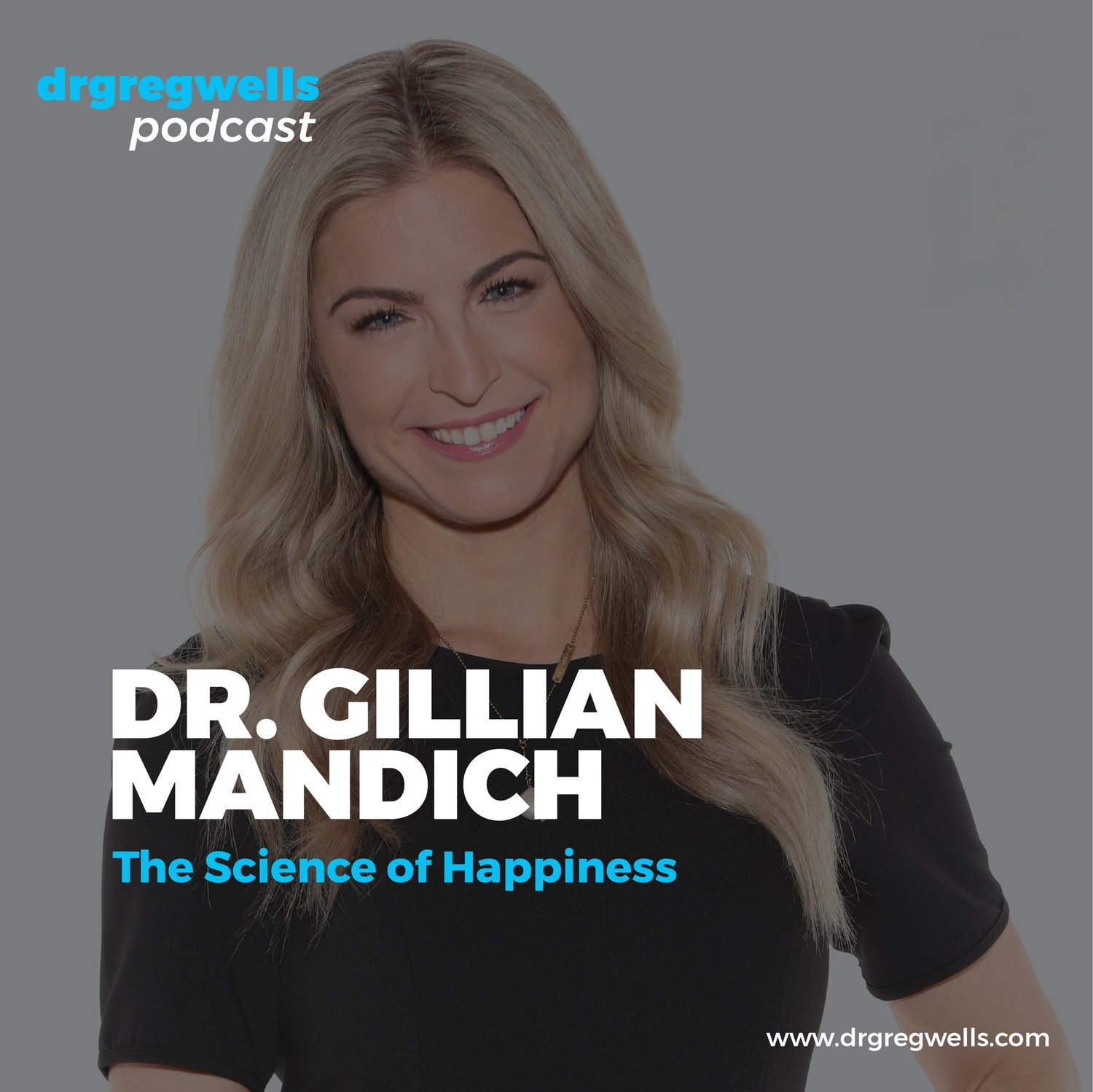
Most people chase happiness as a destination or wait for big, external wins—money, status, milestones—yet still feel flat. Dr. Mandich tackles this by reframing happiness as a learnable, daily practice driven by autonomy, micro-moments of joy, and evidence-based behaviors, not luck or life circumstances.
In today’s conversation Gillian Mandich explores why the goal isn’t to be happy all the time and how happiness and sadness are separate—often co-existing—experiences. She explains how autonomy and intentional habits raise our “happiness set point,” creating an upward spiral where both highs and lows trend higher over time. We unpack money myths (why buying time and experiences matters more than things), how smiles can shift brain chemistry, and why happiness spreads through social networks. You’ll leave with simple, research-backed ways to engineer small bursts of joy throughout your day.
You will learn how scientists define happiness and why meaning and momentary joy both matter; why autonomy outranks looks, popularity, money, and even sex life as a predictor of happiness; how to build “happiness muscles” with tiny, repeatable behaviors; the science of spending (buy time and experiences); and why your mood can ripple three degrees through your network.
You will discover that happiness isn’t found—it’s built through small, consistent practices that raise your baseline over time. You’ll also discover why chasing constant positivity backfires, and how welcoming the full emotional spectrum—without “marinating” in low states—actually makes you more resilient.
Feeling stuck, burned out, or “languishing”? Dr. Mandich shows how to regain agency with autonomy-boosting choices and daily micro-joys so you can perform better at work and feel better at home—no overhaul required.
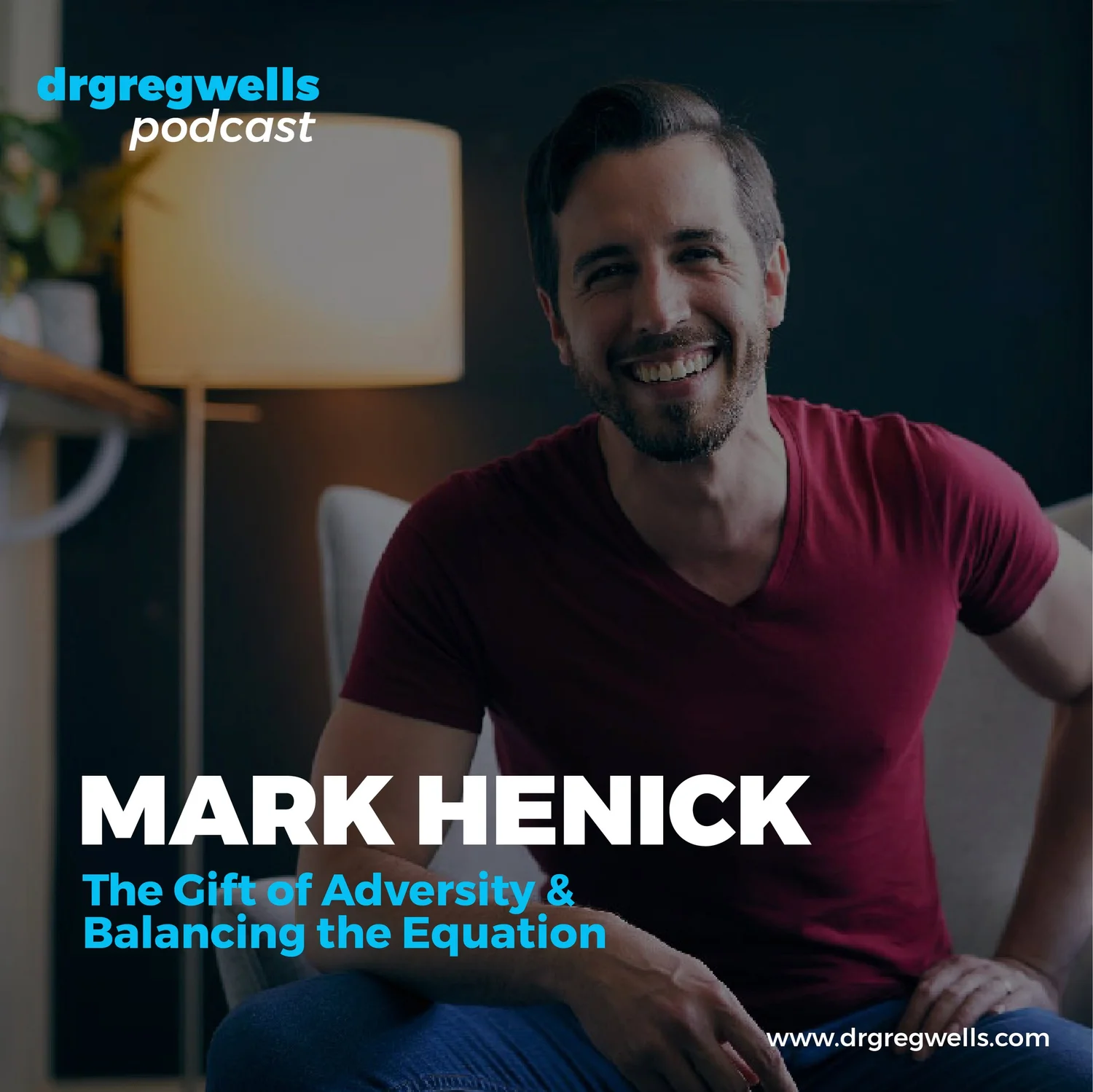
People get stuck in reactive loops—shame, fear, and rigid stories—when stress hits. Mark shows how to expand the gap between stimulus and response, transforming stigma and “awareness only” into practical skills that sustain mental health at work and at home.
In today’s conversation Mark Henick explores why resilience isn’t “never falling” but learning to fail well—and how that mindset carried him from adolescent depression and suicidality to rebuilding a purpose-driven life. He and Dr. Wells unpack radical acceptance, the discipline of creating space before you respond, and the role of contact-based education in reducing stigma. Mark shares concrete practices that helped him navigate job loss, grief, and parenting under pressure. The result is an honest playbook for mental fitness that’s equal parts compassion and execution.
You will learn how to spot default reactions and train a deliberate pause that leads to better choices. You will learn why pain and suffering aren’t the same thing, and how acceptance reduces friction. You will learn simple reps—journaling, emotion-labeling, perspective shifts—that turn adversity into agency. You will also learn how to “balance the equation”: process difficult emotions and intentionally amplify joy to rewire memory and mood.
You will discover that resilience is repeatable: consistent micro-practices expand your response-ability, even in chaos. You will discover how curiosity (“what now?”) reframes setbacks into skill-building moments.
Feeling hijacked by worry loops or old narratives. Mark offers tools to notice the story, accept the moment, and choose the next useful action—especially when life doesn’t go to plan.
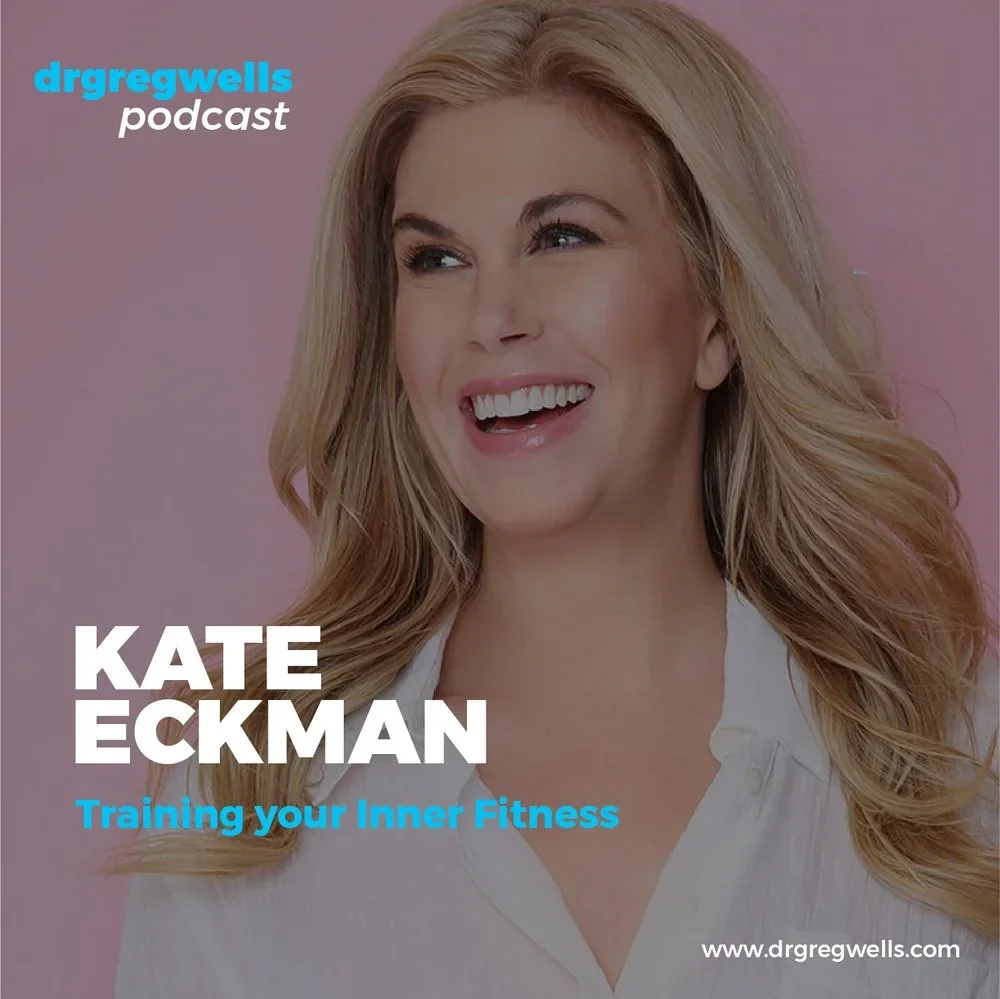
Closing the gap between external achievement and inner stability—teaching high achievers how to build trainable confidence, presence, and resilience so performance isn’t hostage to fear, perfectionism, or other people’s opinions.
In today’s conversation Kate Eckman explores how to develop “inner fitness” with the same intention we bring to physical training. She shares her swimmer-to-broadcaster-to-coach journey, how early beliefs fueled achievement yet amplified anxiety, and why true confidence means trust—in your preparation, process, and timing. Kate unpacks her “Five Ps of Confidence” (presence, patience, purpose, preparation, practice) with two bonuses (pause, person), then describes “surrendering the outcome” so you can be all-in without gripping. The episode lands on practical rituals—journaling, stillness, breath, and values-driven action—that make composure repeatable.
You will learn a repeatable framework for confidence (the Five Ps), how to engineer presence (be where your feet are and bring your energy), and how a short pause protocol prevents reactive emails and bad decisions. You will learn why trust—not theatrics—sits at the core of confidence, and how “surrender the outcome” actually improves execution. You will also learn simple inner-fitness reps (sit-and-stare time, emotion labeling, journaling prompts) that lower anxiety and align action with your values.
You will discover that the gap between stimulus and response is trainable—and that letting go of rigid timelines often unlocks faster results.
Feeling stuck in self-doubt, over-attachment to outcomes, or performative perfectionism; Kate offers a playbook to trust, loosen the grip, and show up fully.
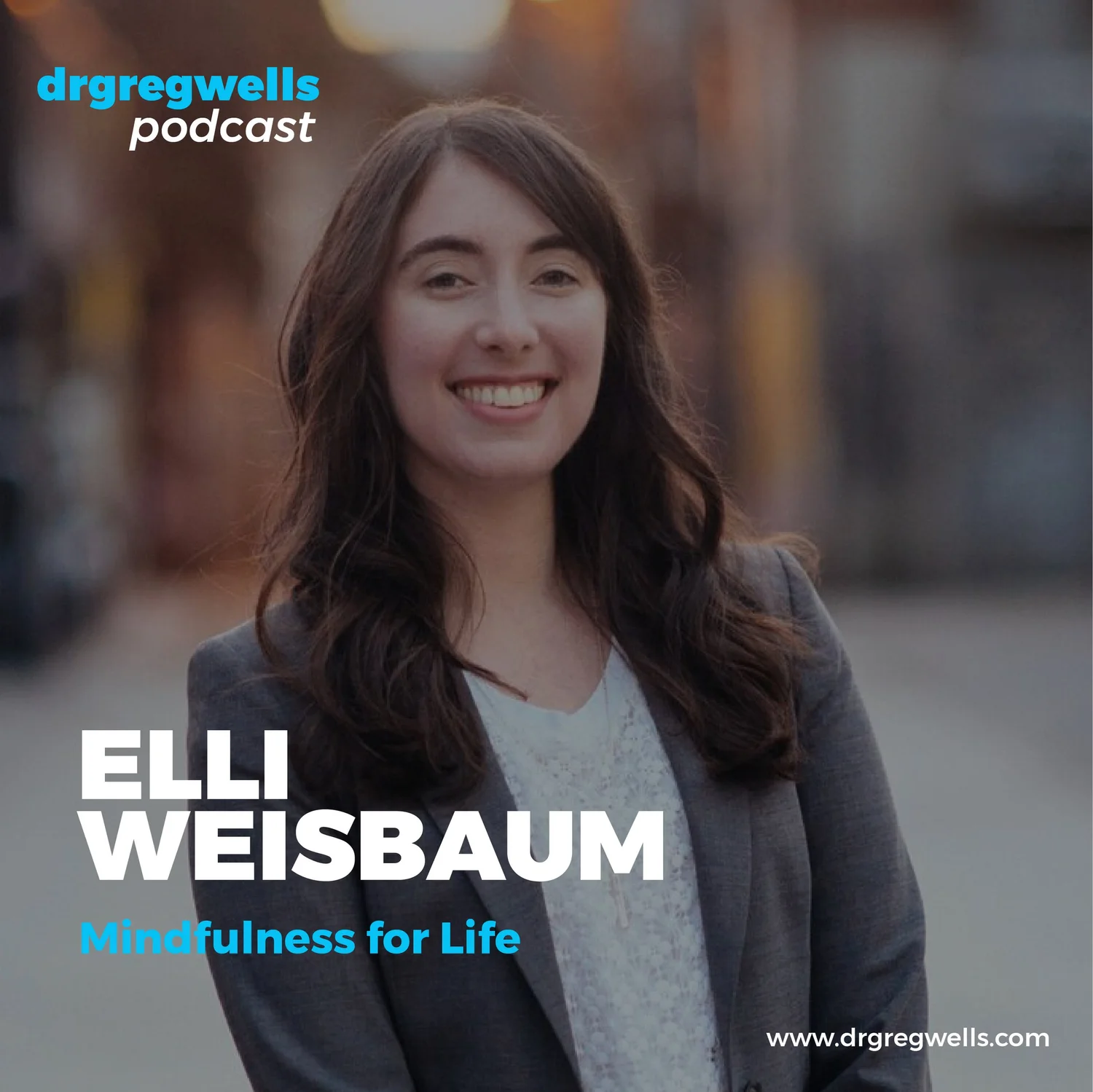
How to reduce anxiety, burnout, and rigid, reactive thinking by shifting from the brain’s default chatter to trainable, moment-to-moment awareness—and then making that awareness useful in real life (clinics, classrooms, meetings, and at home).
In today’s conversation Elli Weisbaum explores how mindfulness builds cognitive flexibility and steadies the nervous system under everyday stress. She traces her path—from attending her first retreat with Thich Nhat Hanh at age ten to researching physician wellbeing—while unpacking the neuroscience of attention and the default mode network (the mind-wander system). You’ll hear practical ways to weave mindfulness into ordinary moments (email, commuting, brushing your teeth), plus how “awareness of awareness” upgrades focus, values clarity, and relationships. Together we connect these skills to leadership, healthcare, and family life with simple, repeatable practices.
You will learn what mindfulness is (paying attention to what’s happening inside and around you, with kindness and curiosity) and why it measurably changes brain function and behavior over time. You will learn how to notice the default mode network and gently return attention—without self-criticism—building mental “reps” like strength training. You will learn engaged mindfulness tactics: micro-practices during daily tasks, start/finish rituals for work, and emotion-labeling to create space between stimulus and response. You will also learn how these tools support physician wellbeing, psychological safety, and performance in high-pressure environments.
You will discover that calm and clarity are trainable states: short, consistent reps of attention + kindness outcompete willpower. You will discover how “awareness of awareness” turns ordinary moments into recovery and focus boosters.
Feeling hijacked by worry loops, email alerts, and shifting plans. Elli offers a prevention-first playbook—brief practices that restore agency and make composure your default, even on hard days.

Most people fight anxiety, burnout, and polarized “us vs. them” thinking with surface fixes. Dr. Braticevic is tackling the root problem: over-identification with the mind’s default narrative and a fragmented view of health. She shows how a prevention-oriented, nondual approach—treating mind as embodied, emergent, and relational—builds sustainable mental health and better collaboration.
In today’s conversation Milena Braticevic explores how her path from tech entrepreneur through clinical depression to a PhD in Integral Health reshaped her understanding of the mind. She explains the default mode network—the inner story machine—and why training attention, journaling, and emotion regulation interrupt rumination. She lays out nondual awareness as a practical paradigm shift: experiencing reality more directly, strengthening belonging, and working with nature rather than against it. Together you connect these ideas to heart-rate variability, growth mindset under uncertainty, and daily rituals that restore energy and clarity.
You will learn why the mind is embodied, emergent, and relational—and how that changes your approach to sleep, movement, nutrition, and relationships. You will learn simple ways to spot when the default mode network is driving anxiety and how to pivot into focused presence. You will learn how journaling surfaces unconscious patterns, how visualization reshapes automatic responses, and why positive emotions (gratitude, hope, joy) compound performance and connection. You will also learn how nondual awareness reframes “How does this affect me?” into “How do I relate and collaborate?”—a shift that supports psychological safety at work.
You will discover that calm, clarity, and creativity aren’t traits—you can train them by toggling between effort and deliberate relaxation, measured physiologically through heart-rate variability. You will discover that practicing nondual awareness reduces worry loops and widens your field of options in moments of stress.
Feeling trapped in worry, isolation, or burnout—especially during uncertainty. Dr. Braticevic offers a prevention-first playbook to renew energy daily, relate more skillfully, and work from an authentic, non-reactive state.

How to break the loop of reactive thinking—replacing guilt, fear, and limiting self-talk with a trainable mindset so you can perform under pressure in sport, business, and life.
In today’s conversation Todd Stottlemyre explores what it really takes to win—first in your head, then on the field and in life. He shares formative lessons from growing up around the Yankees, the identity-shaking lows of being sent to the minors, and the all-in decision that saved his MLB career. Todd opens up about the loss of his younger brother, the burden of self-blame, and the breakthrough that came from learning to observe thoughts and emotions rather than react to them. We connect those practices to everyday performance—journaling, movement, and presence—so listeners leave with a clear playbook to change their inner game.
You will learn how elite environments expand belief and capacity, and why failure is a non-negotiable part of getting great. You will learn Todd’s “observer” method—document thoughts, name emotions, delay reaction—and how a 7-day journaling challenge builds awareness fast. You will learn practical strategies to convert adversity into agency (forgiveness, reframing, accountability partners) and why presence—being all in where you are—is the only real “balance.”
You will discover that the gap between stimulus and response is trainable—and mastering that gap is the unlock for consistent performance. You will discover how letting go of old narratives creates the psychological space to go “all in” on the next chapter.
Feeling stuck in repeat reactions—anger, doubt, self-criticism—that sabotage goals. Todd’s tools show you how to observe, reframe, and choose a response aligned with who you want to become.

Closing the gap between intention and action—making evidence-based mental health and performance habits simple enough to do daily at work and at home.
In today’s conversation Lisa Bélanger explores how to design days that reliably produce focus, energy, and calm—especially in uncertainty. She and Dr. Wells unpack why behavior change fails when it relies on motivation alone, and how to use “make it easy and attractive” design to make the right choice the default. They dig into exercise as first-line therapy for cancer-related fatigue, what nature does to the brain during recovery, and how “doormat” rituals separate work from home when boundaries blur. Expect practical micro-habits grounded in psychology, neuroscience, and behavioral medicine.
You will learn a simple behavior-design formula: engineer your physical and social environments so the desired action is the easiest one available. You will learn why exercise acts like a drug for fatigue (even during treatment) and how clinicians drove 97% adherence with a “just show up” contract. You will learn a three-bucket break model—connect to self, others, or nature—and why even three minutes off-screen changes mood and performance. You will also learn practical mindfulness (notice wandering, bring it back) and “doormat” rituals that bookend the workday so you can be fully present at work and fully present at home.
You will discover that motivation usually follows smart design—tiny, friction-free steps compound faster than willpower. You will discover that nature reliably downshifts the brain’s decision-making load, accelerating recovery and clarity.
Feeling overwhelmed by uncertainty, screens, and endless to-dos. Lisa gives you a playbook to regain agency—design the next three minutes, not the next three months.
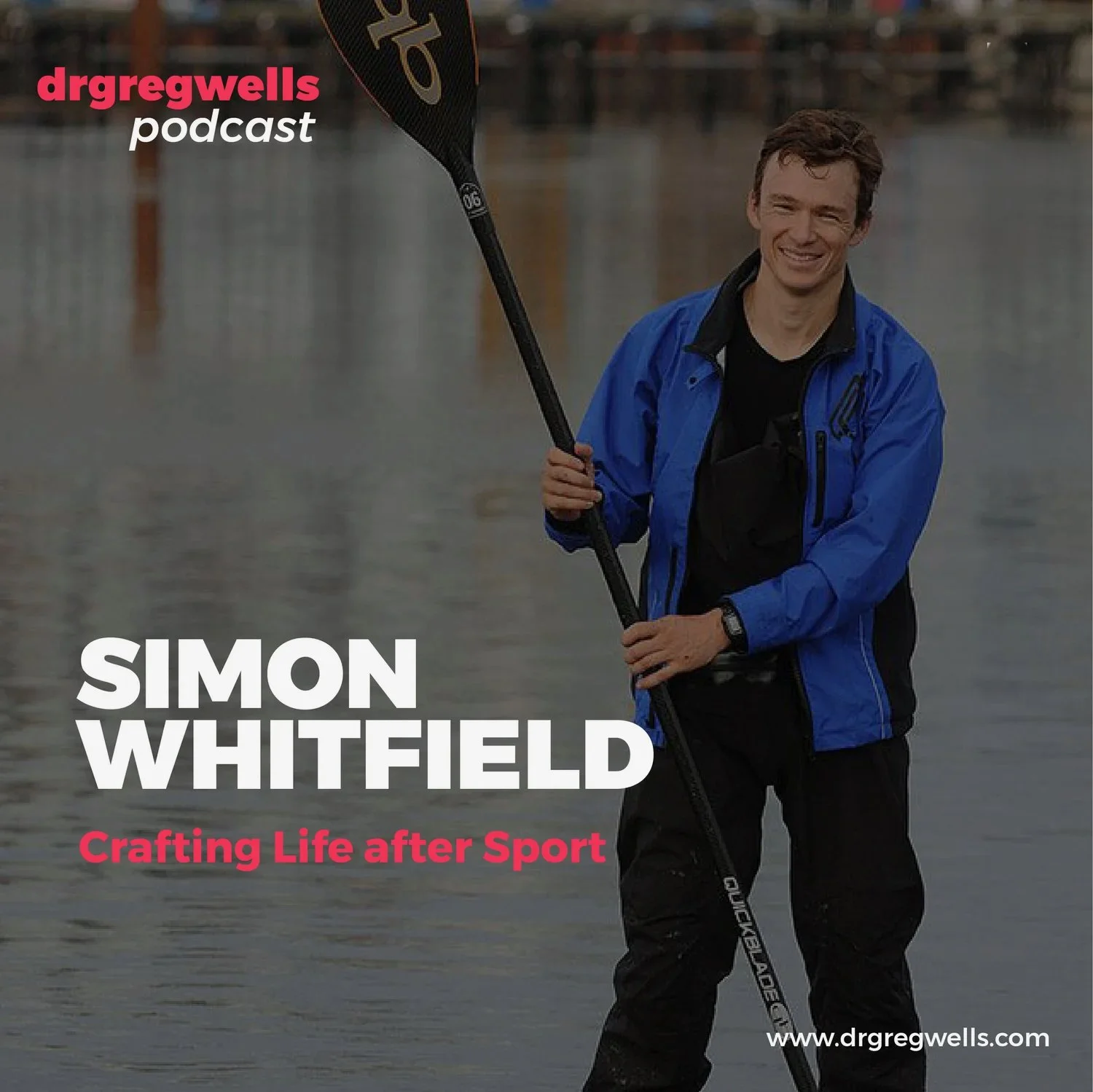
How to sustain a meaningful, healthy high-performance life—during and after peak achievement—by turning pressure, identity shifts, and fear into purpose, calm decision-making, and daily practices that actually stick.
In today’s conversation Simon Whitfield explores the mindset behind his Sydney 2000 Olympic gold and Beijing 2008 silver, and how visualization, breath control, and teamwork shaped those races. He shares the “imagine if” habit from his training log, the deliberate use of a domestique strategy in 2008, and the “do-nothing defense” for regaining composure in decisive moments. Simon opens up about the costs of fame, the post-career identity pivot, and why rebuilding around nature—specifically time on the ocean—restored his presence with family and joy in daily life. The result is a practical blueprint for anyone navigating pressure, change, or reinvention.
You will learn how Whitfield used mental rehearsal—“seeing the race” countless times—to solve scenarios before they happened. You will learn how a team-first plan (with Colin Jenkins as domestique) let him dictate Beijing’s race dynamics instead of reacting. You will learn a field-tested calm-under-duress protocol: nasal breathing, relaxing grip/tension, and delaying reactions—the “do-nothing defense.” You will also learn why seeking empty space (water, nature, boredom) is not a luxury but a performance tool that improves focus, relationships, and decision quality.
You will discover that mastery is largely the precise application of attention and energy—repeated with joy—more than raw talent. You will discover how simple pre-commitment cues (“imagine if…”) and environmental design (water, horizon, quiet) reliably flip your physiology from panic to presence.
Feeling hijacked by pressure or transition. Simon shows how to reset identity and agency—breath first, choose the controllable move, and build rituals that make composure your default under stress.


Download from Google Play

Download from App Store
 United States
*The Dr. Greg Wells Podcast* emphasizes optimizing performance and wellness for a limitless life. Complementing these principles with treatments like a Hydrafacial Houston(https://www.yanaskincare.com/services/hydrafacial-houston/) can enhance skin health, boost confidence, and support an overall high-performance lifestyle.
Dr. Greg Wells' podcast equips you with science-backed strategies to achieve sustainable excellence, moving beyond burnout. To unlock this potential, consider joining the vibrant club13 community for shared growth. It focuses on mastering sleep, nutrition, and mindset for a truly limitless life. https://club13.com/shop/kratom-capsules/green-malay-kratom-capsules/
Beyond simply offering products, American HTV Crafts – Mesquite provides value through customization capabilities. Uploading your own artwork or arranging multiple designs via a gang-sheet builder means you’re not limited to pre-defined inventory. For a craft entrepreneur, being able to bring a brand’s imagery or a local event’s theme into your transfers is a major advantage. That kind of personalization empowers small businesses to deliver unique, event-specific or brand-specific products rather than generic offerings. Site:https://americanhtvmsq.com/
Stress has become a defining challenge of modern life, and Eastern Wisdom Acupuncture offers a serene refuge from daily pressures. Many clients come seeking relief from the toll stress takes on the mind and body. Through acupuncture and complementary therapies, the clinic helps restore calm, regulate mood, and promote restful sleep. The soothing atmosphere and attentive care provide an experience that nurtures both inner and outer well-being. Over time, patients often notice a renewed sense of focus, vitality, and emotional stability that extends beyond the treatment room. Site:https://ewa-c.com/
The store’s commitment to innovation keeps it ahead in the crafting industry. American HTV Crafts Arlington continuously updates its inventory with the latest vinyl styles, including glitter, holographic, patterned, and specialty finishes. By offering trendy options, the brand helps creators stay current with design trends and produce unique products that catch attention. Their innovative spirit extends to the tools and technologies they offer, ensuring that crafters always have access to modern equipment that enhances the precision and quality of their work.Site:https://ahtvcraftsaf.com/
Beyond offering top-quality supplies, American HTV & Craft fosters a strong crafting community that encourages creativity, sharing, and learning. Crafters often exchange tips and showcase projects inspired by the brand’s products, creating a sense of belonging among artists of all skill levels. The company’s dedication to community building has transformed crafting into more than just a pastime—it’s a way for people to connect through their shared love for design. With every project, customers contribute to a growing network of inspired creators, making the American HTV & Craft name synonymous with creativity and collaboration. SIte:https://americanhtvsupply.com/
Many clients at Drugs Rehab FL benefit from medication‑assisted treatment (MAT)—a strategy that uses FDA‑approved medications to help manage cravings, reduce withdrawal severity, and stabilize brain chemistry. For addictions to opioids, fentanyl, or prescription painkillers, MAT can be life‑saving. Combined with counseling and therapy, this blended model addresses both the physiological and psychological dimensions of addiction, increasing the likelihood of sustained recovery. Drugs Rehab FL underscores that MAT is not a standalone “fix,” but an integrated component of a holistic treatment plan. For more visit https://drugsrehabfl.com/