



 Claim Ownership
The Bid
Subscribed: 768Played: 23,345
Subscribe

© 2025 BlackRock, Inc. All Rights Reserved. BLACKROCK is a registered trademark of BlackRock, Inc. All other trademarks are those of their respective owners.
Description
The Bid breaks down what’s happening in the world of investing and explores the forces changing the economy and finance. From stock market outlooks to geopolitics and technology, BlackRock speaks to thought leaders and industry experts from around the globe about the biggest trends moving markets.
258 Episodes
Reverse
AI and bond markets are becoming increasingly interconnected as artificial intelligence reshapes capital demand, market structure, and investing approaches across fixed income. As inflation regimes shift and traditional diversification dynamics evolve, investors are rethinking the role bonds play in portfolios.In this episode of The Bid, host Oscar Pulido speaks with Jeff Rosenberg, Senior Fixed Income Portfolio Manager at BlackRock Systematic, about how AI and bond markets are evolving together. They explore how the rise of artificial intelligence is driving a new wave of capital investment, influencing real interest rates, and increasing debt issuance as companies finance AI infrastructure through bond markets.The conversation also examines how AI and bond markets intersect at the investment level. Rosenberg explains how advances in machine learning and generative AI are enhancing systematic investing, improving tools like sentiment analysis, and enabling deeper insights across thousands of issuers, central banks, and global markets.Finally, they discuss how modernization in fixed income — including electronic trading and the growth of bond ETFs — is transforming liquidity and price discovery. Together, these shifts are creating new opportunities and challenges for investors navigating a more complex and data-driven bond market.Key insights in this episode:00:00 Introduction to AI and Bonds02:20 From GFC to Post COVID - How bond markets have changed over time03:31 Bonds Beyond Ballast05:20 Inflation, rates, and diversification challenges06:53 Debt issuance and AI financing trends08:42 Generative AI Toolkit - using AI in fixed income investing10:14 ETFs and Price Discovery12:33 Systematic Investing and Data-Driven Strategies at Scale14:43 The Future of Bond Markets and AI and Technology17:04 Wrap Up and DisclosuresSources: Stock-Bond Diversification Offers Less Protection From Market Selloffs, IMF article, February 2026; “On Secular Stagnation in the Industrialized World”, Paper released by Harvard and Bank of England, 2019; “Financing the AI boom: from cash flows to debt”, BIS Bulletin paper, January 2026; ‘AI is eating software’ and it is redefining supply chain decision-making as a result”, Supply Chain Management Review article, 2026; How AI is transforming Investing”, BlackRock 2026; The economic potential of generative AI: The next productivity frontier”, McKinsey 2026; “40 years of innovation in pursuit of alpha”, BlackRock, 2025; “Key Trends in Credit Markets for 2025” Barclays 2025AI and bond markets, fixed income investing, AI investing, bond market trends, systematic investing, capital markets, interest rates, bond ETFsThis content is for informational purposes only and is not an offer or a solicitation. Reliance upon information in this material is at the sole discretion of the listener. Reference to any company or investment strategy mentioned is for illustrative purposes only and not investment advice. In the UK and non-European Economic Area countries, this is authorized and regulated by the Financial Conduct Authority. In the European Economic Area, this is authorized and regulated by the Netherlands Authority for the Financial Markets. For full disclosures, visit blackrock.com/corporate/compliance/bid-disclosures.See Privacy Policy at https://art19.com/privacy and California Privacy Notice at https://art19.com/privacy#do-not-sell-my-info.
Private markets are moving from the sidelines of institutional portfolios into the mainstream of wealth management. As companies stay private longer and financing increasingly happens outside public exchanges, investors are beginning to rethink how broad the traditional investment universe really is. The shift is raising a new question for portfolios: should investors be looking beyond public markets to access the full range of opportunities across capital markets?In this episode of The Bid, host Oscar Pulido speaks with Jon Diorio, Head of Product and Alternatives for BlackRock’s U.S. Wealth Business, live from the Future Proof Citywide conference in Miami. Together they explore why interest in private markets has accelerated in recent years, how access for individual investors has expanded, and what’s driving greater adoption among financial advisors.They also discuss how private markets differ from public markets — including liquidity considerations, longer investment horizons, and the potential role of what’s often called an “illiquidity premium.” The conversation explores how private equity, private credit, infrastructure, and real estate investments may fit within diversified portfolios, why education and due diligence remain essential, and how the industry is evolving to integrate private assets more seamlessly into modern portfolio construction.Key insights from this episode:00:00 Introduction02:11 What are private markets and alternatives and Why Now?03:09 Why companies are staying private longer04:54 How access to private markets has expanded06:46 Are Private Markets for Everyone?08:33 Liquidity, time horizons, and the illiquidity premium11:33 How advisors integrate private markets into portfolios13:58 Challenges and due diligence in private markets15:21 Next Steps and Wrap Up16:59 Outro and DisclosuresSources: Bloomberg as at 12/31/2025, BlackRock US Wealth Survey Internal private markets investing, private equity, private credit, alternatives investing, portfolio diversification, capital markets, wealth management, investment strategiesThis content is for informational purposes only and is not an offer or a solicitation. Reliance upon information in this material is at the sole discretion of the listener. Reference to any company or investment strategy mentioned is for illustrative purposes only and not investment advice. In the UK and non-European Economic Area countries, this is authorized and regulated by the Financial Conduct Authority. In the European Economic Area, this is authorized and regulated by the Netherlands Authority for the Financial Markets. For full disclosures, visit blackrock.com/corporate/compliance/bid-disclosures.See Privacy Policy at https://art19.com/privacy and California Privacy Notice at https://art19.com/privacy#do-not-sell-my-info.

 1
1Alternative investing is moving from a niche allocation to a core portfolio conversation. As volatility returns, interest rates reset higher, AI accelerates capital spending, and fiscal deficits expand, investors are reassessing what diversification really means. In a world where stocks and bonds can move together and macro forces dominate markets, traditional portfolio frameworks are under pressure.In this episode of The Bid, host Oscar Pulido revisits conversations with investors and strategists across BlackRock to explore why alternative investing is gaining renewed attention. From private equity, private credit, and infrastructure to hedge fund strategies, gold, and digital assets, the episode examines how alternatives are being used to broaden return drivers and navigate today’s regime shift in capital markets.The discussion highlights how structural megaforces — including AI buildout, geopolitical fragmentation, and fiscal expansion — are reshaping opportunity sets. Private markets offer exposure to long-duration capital themes and potential illiquidity premia, though with liquidity tradeoffs and manager dispersion. Hedge fund strategies aim to capture rising market dispersion through flexible long/short and systematic approaches. Infrastructure sits at the center of AI-driven energy demand and essential services. Meanwhile, gold and digital assets are increasingly viewed as monetary alternatives with distinct risk-return profiles. As portfolio construction evolves beyond the traditional 60/40 model, alternative investing is becoming part of a broader shift toward expanding diversification tools in volatile markets.Check out the previous episodes featured in this episode in this playlist on Alternative Investments: https://open.spotify.com/playlist/4Fe8VwKyG5FPYekFFSksbIKey insights from this episode:00:00 Introduction01:08 Why traditional diversification has become harder in AI-driven markets03:22 Defining Alternative Investing04:00 How private markets have grown — and what tradeoffs they introduce06:04 Infrastructure The AI Buildout: Where infrastructure investing connects to AI and energy demand08:37 Liquid Alternatives & Hedge Fund Strategies12:12 Systematic Alpha In Volatility13:36 How gold and digital assets fit into the evolving diversification toolkit18:38 Rethinking Portfolio Mix19:22 Wrap Up And Next EpisodeAlternative investing explained, private equity, private credit, hedge fund strategies, infrastructure investing, AI capital spending, portfolio diversification, 60/40 portfolio shift, digital assets, bitcoin investing, gold investing, capital markets outlook, alternative investingThis content is for informational purposes only and is not an offer or a solicitation. Reliance upon information in this material is at the sole discretion of the listener. Reference to any company or investment strategy mentioned is for illustrative purposes only and not investment advice. In the UK and non-European Economic Area countries, this is authorized and regulated by the Financial Conduct Authority. In the European Economic Area, this is authorized and regulated by the Netherlands Authority for the Financial Markets. For full disclosures, visit blackrock.com/corporate/compliance/bid-disclosures.See Privacy Policy at https://art19.com/privacy and California Privacy Notice at https://art19.com/privacy#do-not-sell-my-info.
Emerging markets are back in focus in 2026 — not just as a cyclical trade, but as investors reassess performance leadership, diversification, and where growth is showing up in a shifting global paradigm. After a long stretch of disappointing returns, emerging markets have started the year strongly, alongside record interest from global investors. But the case for EM today is less about a single story — and more about dispersion across countries, sectors, and themes.In this episode of The Bid, host Oscar Pulido is joined by Alex Brazier, Global Head of Investment and Portfolio Solutions, and Sam Vecht, Portfolio Manager on BlackRock’s Global Emerging Markets Equities team. Alex shares what he’s hearing from investors across the U.S. and Europe, including the role of flows, sentiment, and portfolio positioning. Sam brings a bottom-up perspective on how emerging markets have evolved over the past two decades — and why market pricing hasn’t always reflected economic progress.Together, they explore why emerging markets may play a different role in portfolios today: providing exposure to distinct parts of the AI buildout, offering potentially different valuation and earnings dynamics than developed markets, and responding differently to U.S. dollar moves. The conversation also highlights where opportunities may be emerging beneath the surface — from under-owned regions like Latin America and parts of the Middle East, to shifting sentiment around India — while underscoring the reality that EM remains volatile, cyclical, and highly heterogeneous.Key moments in this episode:00:00 Introduction01:56 Why emerging markets are drawing renewed investor attention in 202604:58 Two Decades of Underperformance06:16 Explaining The Diversification Mirage10:31 Where emerging markets can broaden portfolios — and where correlations still matter13:00 How Investors Can Get Exposure To Emerging Markets16:55 How dispersion across regions is driving more selective, active approaches19:09 Conclusions and Next EpisodeSources: BlackRock, data based on 1,245 EMEA survey submissions in February 3rd rapid response client call; BlackRock calculated using Aladdin data; “World Economic Outlook, Global Economy in Flux, Prospects Remain Dim”, IMF, October 2025; Bloomberg as at Dec 2025; BlackRock, Global Business Intelligence, as at 20 Feb 2026; BlackRock, Morningstar, Aladdin. Portfolio average allocation based on 166 Europe-domiciled Morningstar moderate-risk multi-asset FoF portfolios, positioning as of 31 December 2025. Global index refers to MSCI All Country World Index.Emerging markets, Emerging markets investing, Capital markets, Global diversification, AI investing, U.S. dollar, Latin America equities, India markets, Middle East markets, Global portfolio strategyThis content is for informational purposes only and is not an offer or a solicitation. Reliance upon information in this material is at the sole discretion of the listener. Reference to any company or investment strategy mentioned is for illustrative purposes only and not investment advice. In the UK and non-European Economic Area countries, this is authorized and regulated by the Financial Conduct Authority. In the European Economic Area, this is authorized and regulated by the Netherlands Authority for the Financial Markets. For full disclosures, visit blackrock.com/corporate/compliance/bid-disclosures.See Privacy Policy at https://art19.com/privacy and California Privacy Notice at https://art19.com/privacy#do-not-sell-my-info.

The K-shaped consumer is redefining the outlook for the U.S. economy. While overall spending remains resilient, growth is increasingly concentrated among higher-income households, creating widening gaps across income levels. As policy shifts, AI adoption, and healthcare innovations reshape behavior, the consumer landscape is becoming more uneven.In this episode of The Bid, host Oscar Pulido is joined by Lisa Yang, Portfolio Manager and Co-Head of the Consumer Industry Group within BlackRock Fundamental Equities, to assess the state of the U.S. consumer heading into 2026. From wage growth and labor market dynamics to fiscal policy, tariffs, and immigration, Lisa explains how macro forces are influencing spending patterns — and why resilience is strongest at the high end. The conversation also explores structural shifts shaping stock market trends, including the rise of value-focused retailers, the impact of GLP-1 weight-loss drugs on food and apparel demand, and how AI-driven “agentic commerce” could transform retail media and brand discovery. As capital markets digest these changes, understanding the nuances of consumer behavior is critical for investors.Key insights from this episode:02:11 Introducing The "Two Speed Consumer"04:26 Yellow Flags Ahead - Why the U.S. Consumer Remains Resilient But increasingly K-shaped05:46 Policy Shocks 2026 - How fiscal policy and tariffs could widen income-driven spending gaps08:45 Why Value Retailers and Discounters are Outperforming12:01 GLP One Ripple Effects - How GLP-1 Drugs Are Reshaping Grocery, Apparel, and Beauty categories14:40 How AI Will Change Shopping Trends - What agentic commerce means for retailers, brands, and advertising models17:43 Other Trends Watchlist - Why Health and Wellness Remains A Durable Long-term Consumer Trend20:02 ConclusionsK-shaped economy, U.S. consumer spending, AI in retail, GLP-1 drugs, capital markets, stock market trends, consumer investing, megaforcesSources: “Advance Monthly Sales for Retail and Food Services” February 2026, United States Census Bureau; US Bureau of Economic Analysis (PCE data); FRED 2026, Bureau of Labor Statistics; Wage Growth Data, January 2026, Federal Reserve of Atlanta; Tax refunds per Morgan Stanley, Piper Sandler estimates; “US food outlook 2026”, Bernstein; “GLP-1 Boom Accelerates Nationwide Shift in Size Curves, Putting $5 Billion in U.S. Apparel Retail Inventory at Risk, According to New Impact Analytics Study”, Global Newswire, September 2025This content is for informational purposes only and is not an offer or a solicitation. Reliance upon information in this material is at the sole discretion of the listener. Reference to any company or investment strategy mentioned is for illustrative purposes only and not investment advice. In the UK and non-European Economic Area countries, this is authorized and regulated by the Financial Conduct Authority. In the European Economic Area, this is authorized and regulated by the Netherlands Authority for the Financial Markets. For full disclosures, visit blackrock.com/corporate/compliance/bid-disclosures.See Privacy Policy at https://art19.com/privacy and California Privacy Notice at https://art19.com/privacy#do-not-sell-my-info.
Skilled trades are becoming one of the most important — and overlooked — drivers of the global infrastructure boom. As trillions of dollars flow into energy systems, transportation networks, telecoms, and AI data centers, the constraint is no longer just capital — it’s labor. The scale of the infrastructure buildout is historic, but delivering it depends on the availability of trained workers.In this episode of The Bid, host Oscar Pulido is joined by Claire Chamberlain, Global Head of Social Impact and President of the BlackRock Foundation, and Sandra Lawson, Managing Director in Global Corporate Affairs, to explore why skilled trades are central to the next phase of infrastructure investing. With an estimated $85 trillion in global infrastructure investment needed over the next 15 years, demand for electricians, HVAC technicians, grid specialists and plumbers is accelerating.Claire and Sandra explain how apprenticeship-based career pathways offer paid training, competitive wages, and the prospect of long-term financial stability — while also highlighting the growing supply-demand imbalance in the labor market. The conversation explores how philanthropy, employers, unions, schools, and policymakers can work together to expand training capacity and modernize workforce development. As megaforces like AI and infrastructure reshape capital markets, human capital will be just as critical as financial capital in determining long-term economic success.Key moments:00:00 Introduction and meet the guests02:13 WWhat the $85 trillion infrastructure opportunity means for labor markets03:54 Why AI and infrastructure are increasing demand for specialized workers04:45 Why Are These Skilled Jobs Good Jobs?07:15 Training Pipeline Worker Shortage08:43 Philanthropy as Catalyst For The Infrastructure Skilled Trades Requirement10:41 What success looks like for workforce development in an infrastructure-driven economy12:56 Rethinking Going to College vs Apprenticeships and Skilled Trades15:25 How collaboration among employers, unions schools, and philanthropy can expand training capacity17:19 Wrap Up and DisclosureSkilled trades, infrastructure investing, workforce development, capital markets, AI infrastructure, megaforces, economic growth, energy transitionSources: “On the record: Infrastructure and the opportunity in skilled trades”, BlackRock 2026Written Disclosures In Episode Description:This content is for informational purposes only and is not an offer or a solicitation. Reliance upon information in this material is at the sole discretion of the listener. Reference to any company or investment strategy mentioned is for illustrative purposes only and not investment advice. In the UK and non-European Economic Area countries, this is authorized and regulated by the Financial Conduct Authority. In the European Economic Area, this is authorized and regulated by the Netherlands Authority for the Financial Markets. For full disclosures, visit blackrock.com/corporate/compliance/bid-disclosures.See Privacy Policy at https://art19.com/privacy and California Privacy Notice at https://art19.com/privacy#do-not-sell-my-info.
Powering AI is no longer just a technology story — it’s an energy and infrastructure story reshaping capital markets and the global economy. As artificial intelligence scales from training to real-world inference, electricity demand is accelerating at a pace few anticipated.In this episode of The Bid, host Oscar Pulido is joined by Will Su from BlackRock’s Fundamental Equities Group to examine how powering AI is transforming utilities, natural gas markets, renewables, and nuclear power. With data centers expanding rapidly and gigawatt-scale facilities coming online, the AI build-out is driving a structural shift in U.S. electricity demand after more than a decade of stagnation.Will explains why the energy sector sits at the center of AI investing. From the rise of “bring your own power” models to the growing role of natural gas as a dispatchable, scalable fuel source, the infrastructure required to support AI represents one of the largest capital investment cycles in modern history. The conversation also explores renewables, battery storage, and nuclear power — including the limits of restarts and the long timeline for new reactor construction.Key moments:00:00 Introduction Power Is Knowledge: AI’s Exponential Energy Appetite02:31 From Tokens to ‘Yottaflops’: Why Smarter Models Need More Electricity05:04 Training LLMs vs. Inference: The Next Wave of AI Power Demand06:45 Data Centers at City Scale: How Big Is the Load?11:15 Bring Your Own Power (BYOP): Why Natural Gas Is Back in Focus16:04 Renewables Reality Check: Solar Momentum, Wind Headwinds, and Batteries19:14 Nuclear’s Comeback - Restarts Now, New Builds Later21:26 Can AI Beat Humans at Investing? Man + Machine as the Edge23:33 Wrap-Up, What’s NextCheck out Will's first episode on AI and energy on Spotify: https://open.spotify.com/episode/6wgKwkSLqmXFdG0qvW6Kov?si=I0R6YfbcSASC2BvcnhUBTwOr watch on YouTube: https://youtu.be/_AOkSc7usYQPowering AI 2.0, AI investing, infrastructure, capital markets, energy transition, utilities, stock market trends, megaforcesSources: “From CES 2026 to Yottaflops: Why the AMD Keynote Highlights a Turning Point for AI Compute”, AMD 2026; “The Industrial Revolution, coal mining, and the Felling Colliery Disaster”, Lancaster University, 2026; Bureau of Economic Analysis data 2026; “Stargate's First Data Center Site is Size of Central Park, With At Least 57 Jobs”, Bloomberg 2026; “Energy Demand from AI”, IEA 2026; “Scaling bigger, faster, cheaper data centers with smarter designs”, McKinsey 2025; EEI 2024 Review; “Data Centers Ditching the Power Grid, Mark Carney's Viral Speech, and Some Joy”, Clearview Energy; “2024 North American Energy Inventory”, IER;This content is for informational purposes only and is not an offer or a solicitation. Reliance upon information in this material is at the sole discretion of the listener. Reference to any company or investment strategy mentioned is for illustrative purposes only and not investment advice. In the UK and non-European Economic Area countries, this is authorized and regulated by the Financial Conduct Authority. In the European Economic Area, this is authorized and regulated by the Netherlands Authority for the Financial Markets. For full disclosures, visit blackrock.com/corporate/compliance/bid-disclosures.See Privacy Policy at https://art19.com/privacy and California Privacy Notice at https://art19.com/privacy#do-not-sell-my-info.
Thematic investing is increasingly shaping how investors interpret markets heading into 2026, as artificial intelligence, geopolitical fragmentation, and infrastructure constraints intersect across the global economy.Jay Jacobs, Head of U.S. Equity ETFs at BlackRock, joins Oscar to discuss why mega forces are becoming harder to ignore—and harder to diversify away from—than in past market cycles. Their conversation explores how AI investing is evolving from a growth narrative into one focused on usage intensity, how national security considerations are reshaping the definition of defense, and why physical infrastructure is emerging as a critical market constraint.Key insights include:· Why thematic investing is gaining relevance alongside sector and style frameworks· How AI usage intensity reframes the AI investment conversation· Where infrastructure and energy constraints may influence adoption timelines· How geopolitical fragmentation is expanding the definition of defense· Why overlapping mega forces may shape market outcomes into 2026Key moments in this episode:00:00 Introduction to Thematic Investing in 2026: AI and Market Forces00:40 The Rise of Thematic Investing01:43 Deep Dive into AI's Market Impact05:22 Understanding Token Consumption07:55 Evaluating AI Investments11:12 Geopolitical Fragmentation and Defense13:51 Infrastructure's Evolving Role16:42 Future of AI and Broader Implications18:38 Conclusion and Final Thoughts Thematic investing, AI investing, Capital markets, Infrastructure, Megaforces, Stock market trends, Geopolitical fragmentation, Defense spendingSources: iShares Thematic Outlook, 2026This content is for informational purposes only and is not an offer or a solicitation. Reliance upon information in this material is at the sole discretion of the listener. Reference to any company or investment strategy mentioned is for illustrative purposes only and not investment advice. In the UK and non-European Economic Area countries, this is authorized and regulated by the Financial Conduct Authority. In the European Economic Area, this is authorized and regulated by the Netherlands Authority for the Financial Markets. For full disclosures, visit blackrock.com/corporate/compliance/bid-disclosures.See Privacy Policy at https://art19.com/privacy and California Privacy Notice at https://art19.com/privacy#do-not-sell-my-info.

Retirement planning is becoming more complex as careers grow less linear, lifespans extend, and financial decisions start earlier in life. From early-career savers to small business owners and those approaching retirement, people are asking how to build financial security while staying flexible in an unpredictable world.In this Ask Me Anything episode of The Bid, host Oscar Pulido is joined by Jaime Magyera, Head of BlackRock’s U.S. Wealth Advisory and Retirement Businesses, to answer listener-submitted questions on retirement realities. Jaime shares perspectives drawn from her work with individual savers, financial advisors, and small business owners across the country.The conversation reframes retirement as the freedom to choose what comes next, rather than a fixed end point. Jaime discusses the importance of starting early, maintaining discipline through market cycles, and building plans that can adapt as careers, families, and goals evolve. The episode also explores the role of professional advice, the challenges facing non-traditional career paths, and why preparation — not prediction — is central to long-term financial resilience.Key insights include:• Why retirement is best viewed as a transition, not a destination• How starting early and staying invested can shape long-term outcomes• Why flexible planning matters for non-linear careers and families• What advisors should consider when working with small business owners• How professional advice differs from social and digital guidance• Why preparedness and emergency savings support financial resilienceKey moments in this episode:00:00 Introduction to The Bid00:50 Meet Jamie Magyera: Insights on Retirement Planning01:48 Transitioning into Retirement: Key Considerations04:05 Financial Planning for Younger Generations06:41 Non-Traditional Retirement Timelines09:56 Advisors and Small Business Owners: Planning for the Future12:45 How To Build Long-Term Client Relationships15:33 The Value of Professional Financial Advice17:28 Conclusion and Key Takeaways18:16 Closing Remarks and Up Nextretirement planning, financial security, wealth planning, capital markets, long-term investing,Sources: BlackRock’s Read On Retirement Survey, September 2025This content is for informational purposes only and is not an offer or a solicitation. Reliance upon information in this material is at the sole discretion of the listener. Reference to any company or investment strategy mentioned is for illustrative purposes only and not investment advice. In the UK and non-European Economic Area countries, this is authorized and regulated by the Financial Conduct Authority. In the European Economic Area, this is authorized and regulated by the Netherlands Authority for the Financial Markets. For full disclosures, visit blackrock.com/corporate/compliance/bid-disclosures.See Privacy Policy at https://art19.com/privacy and California Privacy Notice at https://art19.com/privacy#do-not-sell-my-info.
Hedge fund strategies are gaining renewed attention as market volatility rises and traditional stock and bond diversification becomes less reliable. With inflation uncertainty, shifting monetary policy, and growing macro instability, investors are reassessing how different sources of return and risk management show up across capital markets.In this episode of The Bid, host Oscar Pulido speaks with Mike Pyle, Deputy Head of BlackRock’s Portfolio Management Group, about how hedge fund strategies work and why they are being re-examined in today’s environment. Mike explains what defines hedge fund strategies, how their flexibility seeks to allow managers to express views more precisely, and why they can play different roles within portfolios depending on investor objectives.They explore common misconceptions around hedge fund strategies, including the idea that they are inherently high risk or designed solely to outperform equities. Mike outlines how these strategies span a wide range of risk profiles and can be used for diversification due to their potentially lower correlation to traditional assets. The conversation also examines why macro volatility since 2021 has created a more favorable backdrop for hedge fund strategies, and how their ability to either navigate or reduce macro exposure is shaping investor interest.Key moments in this episode:00:00 Introduction: Navigating Uncertainty in Today's Market03:57 Debunking Myths About Hedge Funds07:36 The Growing Interest in Hedge Funds Strategies12:18 Hedge Funds vs. Other Alternatives16:31 Evolution of the Hedge Fund Industry18:28 Key Takeaways for Investors19:41 Conclusion and Next UpKey insights include:• What hedge fund strategies are and how they differ from traditional investments• Why lower correlation, not market outperformance, is often the core objective• How higher volatility and macro uncertainty are reshaping portfolio construction• How hedge fund strategies compare with other alternatives like private markets and infrastructure• Why scale and multi-strategy platforms are changing the hedge fund landscapehedge fund strategies, capital markets, portfolio diversification, alternatives investing, market volatility, megaforcesThis content is for informational purposes only and is not an offer or a solicitation. Reliance upon information in this material is at the sole discretion of the listener. Reference to any company or investment strategy mentioned is for illustrative purposes only and not investment advice. In the UK and non-European Economic Area countries, this is authorized and regulated by the Financial Conduct Authority. In the European Economic Area, this is authorized and regulated by the Netherlands Authority for the Financial Markets. For full disclosures, visit blackrock.com/corporate/compliance/bid-disclosures.See Privacy Policy at https://art19.com/privacy and California Privacy Notice at https://art19.com/privacy#do-not-sell-my-info.

Global markets are entering 2026 amid heightened geopolitical uncertainty, structural shifts in the global order, and rapid technological change. Recorded live from the World Economic Forum in Davos, this episode of The Bid examines the macroeconomic and geopolitical forces shaping the year ahead.Host Oscar Pulido is joined by Philipp Hildebrand, Vice Chairman of BlackRock, and Tom Donilon, Vice Chairman of BlackRock and Chairman of the BlackRock Investment Institute. Drawing on conversations with political leaders, policymakers, and business executives in Davos, they reflect on an evolving geopolitical landscape and its implications for markets, governments, and global cooperation.The discussion explores how shifts in U.S. policy are reshaping alliances — particularly between the United States and Europe — and why this period may mark a broader transition away from the post–World War II global framework. Philipp outlines the pressures facing Europe, while Tom examines how national security considerations are increasingly shaping economic policy, trade, and global investment flows.Artificial intelligence emerges as a central theme, viewed both as an economic driver and a geopolitical force. The episode considers AI’s role in national security competition, the growing importance of data centers and energy infrastructure, and how concerns around sovereignty, critical minerals, and societal impact are elevating AI from a technological issue to a political one.Key insights· How current geopolitical developments are reshaping the global outlook entering 2026· Why Davos remains a key forum for understanding policy and market sentiment· Where Europe’s macroeconomic challenges and opportunities are most pronounced· How AI is increasingly intersecting with geopolitics and national security· What recent U.S.–Europe tensions reveal about future global cooperation· How investors and policymakers are interpreting uncertainty in today’s environmentGeopolitics, global macro outlook, Europe economy, World Economic Forum Davos, AI and geopolitics, global markets, policy uncertaintyThis content is for informational purposes only and is not an offer or a solicitation. Reliance upon information in this material is at the sole discretion of the listener. Reference to any company or investment strategy mentioned is for illustrative purposes only and not investment advice. In the UK and non-European Economic Area countries, this is authorized and regulated by the Financial Conduct Authority. In the European Economic Area, this is authorized and regulated by the Netherlands Authority for the Financial Markets. For full disclosures, visit blackrock.com/corporate/compliance/bid-disclosures.See Privacy Policy at https://art19.com/privacy and California Privacy Notice at https://art19.com/privacy#do-not-sell-my-info.
AI investment, evolving earnings leadership, and shifting global dynamics are redefining stock market trends as investors enter 2026. Companies are deploying unprecedented capital toward data centers, compute, and productivity-enhancing technologies, while rate cuts and supply-chain realignment reshape the macro backdrop. These forces are changing how fundamentals, valuations, and sector growth patterns show up in equity markets.In this episode of The Bid, host Oscar Pulido speaks with Carrie King, Global CIO of BlackRock’s Fundamental Equities group, about the major drivers influencing the 2026 equity outlook. Carrie breaks down why high-level valuations may mask improved corporate quality, how AI-related investment is broadening beyond semiconductors, and why the gap between megacap earnings and the rest of the market may begin to narrow.They also explore how global monetary easing is benefiting emerging markets, why Japan’s structural reforms continue to support its equity story, and how diversification is becoming more challenging in a market shaped by a few powerful megaforces. Carrie explains what this means for sector positioning, volatility, and where long-term investors may find underappreciated opportunities.Key moments in this episode:00:00 Introduction: Can Stocks Maintain Momentum in 2026?03:29 AI's Dominance in the Market09:34 Global Investment Trends and Opportunities12:06 Earnings Growth and Sector Performance15:36 Diversification Strategies for Investors17:10 New Year's Resolutions for Investors18:59 Conclusion and Upcoming EpisodesKey insights include:· How AI-driven spending is reshaping earnings patterns and stock market trends· Why equity valuations may be better anchored than headlines suggest· Where the “other 493” may see accelerating earnings growth· How global rate cuts and supply-chain shifts are supporting EM and Japan· Why diversification requires new approaches in a megaforce-driven market· Which sectors—industrials, travel, and healthcare—may offer overlooked potentialstock market trends, AI investing, megaforces, capital markets, equity markets, global investing, sector rotationSources:Written Disclosures In Episode Description:This content is for informational purposes only and is not an offer or a solicitation. Reliance upon information in this material is at the sole discretion of the listener. Reference to any company or investment strategy mentioned is for illustrative purposes only and not investment advice. In the UK and non-European Economic Area countries, this is authorized and regulated by the Financial Conduct Authority. In the European Economic Area, this is authorized and regulated by the Netherlands Authority for the Financial Markets. For full disclosures, visit blackrock.com/corporate/compliance/bid-disclosures.See Privacy Policy at https://art19.com/privacy and California Privacy Notice at https://art19.com/privacy#do-not-sell-my-info.

This week, the focus is on diversification—and why it’s getting harder to achieve. Portfolio Strategist Natalie Gill explains how the “diversification mirage,” a key theme in BII’s 2026 outlook, is now showing up in real time. A small set of megaforces is increasingly dictating equity performance, meaning traditional attempts to diversify—whether toward equal-weighted indices or new regions—can amount to larger active positions than many investors realize.Natalie also breaks down how rising developed-market bond yields challenge the long-held assumption that long-term bonds reliably balance portfolios. Fiscal strains, shifting central bank stances, and policy divergence between the U.S. and other economies further complicate the diversification picture. As bond volatility rises and a small number of equity drivers dominate returns, investors may need to reconsider how and where true diversification can be found.The episode also highlights the growing disconnect between the Federal Reserve’s policy posture and the more hawkish tone across Australia, Canada, and Japan—where fiscal dynamics and reopening risks are influencing long-term rates. These divergences, paired with delayed U.S. labor data and inflation considerations, shape the macro backdrop as markets enter the new year.Key Insights· Diversification is increasingly difficult as a handful of megaforces drive global equity performance.· Traditional diversifiers—such as long-term government bonds—provide less balance amid rising yields.· Policy divergence between the U.S. and other major central banks is creating new cross-market risks.· Fiscal concerns are influencing yield curves, particularly in Japan and the UK.· Portfolios may require more deliberate, active decisions and alternative sources of return to achieve true diversification. diversification, megaforces, capital markets, macro trends, bond yields, portfolio balance, market outlookThis content is for informational purposes only and is not an offer or a solicitation. Reliance upon information in this material is at the sole discretion of the listener. Reference to any company or investment strategy mentioned is for illustrative purposes only and not investment advice. In the UK and non-European Economic Area countries, this is authorized and regulated by the Financial Conduct Authority. In the European Economic Area, this is authorized and regulated by the Netherlands Authority for the Financial Markets. For full disclosures, visit blackrock.com/corporate/compliance/bid-disclosures.See Privacy Policy at https://art19.com/privacy and California Privacy Notice at https://art19.com/privacy#do-not-sell-my-info.
As The Bid takes a short break for the holidays, we’re introducing listeners to Market Take, the weekly macro podcast from the BlackRock Investment Institute. Market Take offers fast, digestible insights on what’s moving markets - and this week, the focus is squarely on the labor market.Senior Economist Nicholas Fawcett breaks down why softer U.S. labor data is reinforcing expectations for another potential Federal Reserve rate cut. With hiring and labor supply both cooling, policymakers are watching these trends closely as they navigate the balance between inflation control and economic resilience. Nicholas also explores how delayed jobs data complicates the Fed’s visibility into the economy, what markets are pricing in ahead of the December meeting, and how fiscal dynamics in the UK are shaping long-term bond views.Whether you’re tracking monetary policy, macro signals, or broader capital markets trends, this short episode offers a concise view of the forces shaping the economic backdrop.Key Insights· The U.S. labor market is softening, raising the likelihood of another Fed rate cut.· Payrolls show a “no hiring, no firing” pattern as labor demand and supply slow.· Delayed jobs data may create noise, but markets still expect a quarter-point cut.· Fiscal tightening in the UK influences gilt valuations and long-term yield dynamics.· Labor market trends, inflation, and rates continue to guide broader market sentimentlabor market, inflation, interest rates, Federal Reserve, capital markets, macro trends, market commentary, economic outlookThis content is for informational purposes only and is not an offer or a solicitation. Reliance upon information in this material is at the sole discretion of the listener. Reference to any company or investment strategy mentioned is for illustrative purposes only and not investment advice. In the UK and non-European Economic Area countries, this is authorized and regulated by the Financial Conduct Authority. In the European Economic Area, this is authorized and regulated by the Netherlands Authority for the Financial Markets. For full disclosures, visit blackrock.com/corporate/compliance/bid-disclosures.See Privacy Policy at https://art19.com/privacy and California Privacy Notice at https://art19.com/privacy#do-not-sell-my-info.
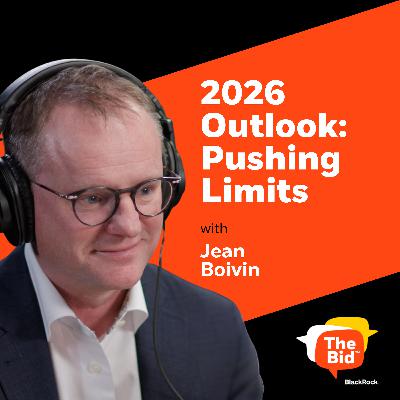
AI-driven investment, rising leverage and shifting market dynamics are reshaping the 2026 stock market outlook. As companies accelerate spending on data centers, chips and digital infrastructure, micro-level decisions are increasingly influencing the capital markets and broader economy.In this episode of The Bid, host Oscar Pulido speaks with Jean Boivin, Head of the BlackRock Investment Institute, about the major forces shaping the 2026 markets and investing landscape. Jean breaks down how AI-related capital expenditure is transforming growth patterns, why governments and companies may need to leverage up to finance large-scale projects, and how these trends interact with today’s policy and market environment.They also explore the diversification mirage — the idea that in an economy driven by a few powerful megaforces, some strategies that appear diversified may actually be concentrated calls. Jean shares how this affects views on regional equity markets, fixed income trends and the evolving structure of global investing.🔗 Check out this Spotify playlist for more on the AI growth story: https://open.spotify.com/playlist/1rt6kLl0fzg9D7puEkAupqKey moments in this episode:00:00 Introducing AI's Unprecedented Growth in 2025 and Beyond01:11 Introduction to the 2026 Global Outlook02:04 Three Big Market Themes for 202603:33 AI's Dominance and Economic Impact05:39 Is AI in a Bubble?09:44 Leveraging Up: Financing the AI Boom12:30 Diversification Mirage in the AI Era15:06 Future of Finance: Private Credit and Digital Innovation17:30 Investment Opportunities Beyond AI19:28 Conclusion and Final Thoughts🔗 Watch and Subscribe to The Bid on YouTube: https://1blk.co/48iHOs4 🔗 Follow Us on LinkedIn: https://1blk.co/3v09q6Q 🔗 Follow Us on Twitter (or X): https://1blk.co/3NuiIOW 🔗 Learn More About BlackRock: https://1blk.co/41uwhDS Sources: BlackRock Investment Institute 2026 Global Outlook2026 market outlook, AI investing, AI Buildout, AI infrastructure, Capital markets, Megaforces, Stock market trends, Private credit, Global macro outlook, diversification strategiesThis content is for informational purposes only and is not an offer or a solicitation. Reliance upon information in this material is at the sole discretion of the listener. Reference to any company or investment strategy mentioned is for illustrative purposes only and not investment advice. In the UK and non-European Economic Area countries, this is authorized and regulated by the Financial Conduct Authority. In the European Economic Area, this is authorized and regulated by the Netherlands Authority for the Financial Markets. For full disclosures, visit blackrock.com/corporate/compliance/bid-disclosures.See Privacy Policy at https://art19.com/privacy and California Privacy Notice at https://art19.com/privacy#do-not-sell-my-info.

Europe’s macro outlook is shifting. After years of fiscal restraint and fragmented policy, the region is entering a new chapter one centered on pro-growth fiscal policy, energy security, and capital-market reform. For investors, this transformation signals the potential for renewed momentum in European equities and fixed income.In this episode of The Bid, host Oscar Pulido speaks with Helen Jewell, Chief Investment Officer for EMEA Fundamental Equities, and Roelof Salomons, Chief Investment Strategist for Northern Europe at the BlackRock Investment Institute, about how Europe’s evolving macro and investing environment is creating new opportunities across sectors.They explore how fiscal flexibility is enabling investment in productivity and innovation, how energy transition and AI demand are reshaping infrastructure and power markets, and why European banks, defense companies, and energy-efficiency leaders have emerged as standouts. The conversation also looks at the valuation gap between Europe and the U.S., the implications of potential ECB rate cuts, and what reforms could drive a broader, more durable resurgence.Key Takeaways:· Europe’s shift toward fiscal flexibility marks its first explicitly pro-growth stance in over a decade.· The intersection of energy transition and AI is driving infrastructure and power investment.· Banks, defense, and efficiency-focused industrials remain strong performers.· Europe still trades at a discount to the U.S., offering selective opportunity.· Integration of capital markets could unlock long-term competitiveness.Key moments in this episode:00:00 Introduction: Europe's Economic Challenges and Optimism01:10 Meet the Experts: Helen Jewell and Roelof Salomons02:17 Historical Context: Europe's Economic Journey03:51 Current Barriers and Progress in Europe05:40 Sector Focus: Defense, Banks, and Energy08:49 Fiscal Policy and Unified European Growth10:33 Energy and AI: The Long-Term Investment Landscape14:30 Valuation and Market Opportunities in Europe17:17 Conclusion: Path to a Broad Resurgence in Europe19:21 Closing Remarks and Future OutlookEurope investing; Europe macro; European equities; investing in Europe; capital-markets union; energy transition Europe; European fiscal policy; European banks; AI power demand; ECB rate cuts; BlackRock Investment Institute; European defense; valuation gap; competitiveness in EuropeSources: “What’s needed for an investment renaissance in Europe?”, BlackRock Investment Institute, October 2025; NATO, August 2025; BlackRock Fundamental Equities analysis, September 2025; “Entering The Age of Electricity”, IEA Electricity Demand 2025;This content is for informational purposes only and is not an offer or a solicitation. Reliance upon information in this material is at the sole discretion of the listener. Reference to any company or investment strategy mentioned is for illustrative purposes only and not investment advice. In the UK and Non-EEA countries, this is authorized and regulated by the FCA. In the EEA, it is authorized and regulated by the AFM. For full disclosures, visit blackrock.com/corporate/compliance/bid-disclosures.See Privacy Policy at https://art19.com/privacy and California Privacy Notice at https://art19.com/privacy#do-not-sell-my-info.

Stock market trends are in sharp focus as central banks pivot, earnings broaden beyond mega-cap leaders, and AI-driven CapEx reshapes corporate priorities. In this AMA edition of The Bid, host Oscar Pulido sits down with BlackRock’s Gargi Pal Chaudhuri, Chief Investment and Portfolio Strategist for the Americas in the Investment Portfolios Solutions team. Together they field listener questions on rate cuts, market breadth, ETF flows, and how AI adoption could influence equity leadership over time.Gargi brings a cross-asset lens to what’s driving global growth and volatility. Fresh off a busy earnings season and recent policy moves, she shares what she’s hearing most from investors and how she thinks about portfolio positioning in the present market environment.Key moments in this episode:02:00 Parallels between running and investing - run your own race, what are your risk parameters04:32 Where policy’s heading: The Fed’s first rate cut marks a shift toward easing. December isn’t guaranteed, but the big picture is that rates are starting to move toward more normal levels.07:52 Earnings season check-in: Big tech is still leading, but other companies are finally joining in with stronger results. That’s helping the market feel a little more balanced.11:29 AI spending boom: Companies are pouring money into data centers and infrastructure to keep up with AI demand—funded by healthy cash flows and long-term plans.12: 25 Shoppers are split: Higher-income consumers are still spending on travel and tech, while others are trading down to save. GLP-1 medicines (like weight-loss drugs) are showing up as a big talking point for companies.13:40 Money on the move: Investors are starting to put cash to work again. ETF flows hit over $1 trillion this year, with interest across bonds, stocks, and even gold.16:37 Bonds and gold today: Many people are looking at bonds for income and keeping an eye on gold as markets shift.Check out this Spotify playlist for more content on alternative investing: https://open.spotify.com/playlist/4Fe8VwKyG5FPYekFFSksbI🔗 Learn More About BlackRock: https://1blk.co/41uwhDS 🔗 Watch and Subscribe to The Bid on YouTube: https://1blk.co/48iHOs4 🔗 Follow Us on LinkedIn: https://1blk.co/3v09q6Q 🔗 Follow Us on Twitter (or X): https://1blk.co/3NuiIOW stock market trends, capital markets, AI investing, earnings season, monetary policy, ETF flows, megaforces, market volatilitySources: Data sourced from Bloomberg as of November 5th 2025; iShares client poll October 20th 2025; iShares analysis and calculation of AI stock performance.Disclosures: This content is for informational purposes only and is not an offer or a solicitation. Reliance upon information in this material is at the sole discretion of the listener. Reference to any company or investment strategy mentioned is for illustrative purposes only and not investment advice. In the UK and Non-EEA countries, this is authorized and regulated by the Financial Conduct Authority. In the EEA, it is authorized and regulated by the Netherlands Authority for the Financial Markets. For full disclosures, visit blackrock.com/corporate/compliance/bid-disclosuresSee Privacy Policy at https://art19.com/privacy and California Privacy Notice at https://art19.com/privacy#do-not-sell-my-info.

Private markets are transforming the investment landscape — reshaping portfolios, expanding access, and driving growth across asset classes from private equity to infrastructure and private credit. Once the domain of institutions, private markets are increasingly accessible to individual investors, offering new ways to pursue diversification and long-term opportunity.In this episode of The Bid, host Oscar Pulido is joined by Cameron Joyce, Head of Research Insights at Preqin, a part of BlackRock, to explore how private markets could reshape portfolios and investment opportunities by 2030. Cameron shares why the asset class has surged from $11 trillion pre-pandemic to an expected $32 trillion by the end of the decade — and what this evolution means for investors.Together they discuss how companies are staying private longer, why liquidity dynamics are shifting, and how new fund structures are widening accessibility for individuals and retirement savers alike. Cameron breaks down the three major growth engines powering the sector: private equity, infrastructure, and private credit — and explains how megaforces like AI and energy transition are creating new opportunities within each.Sources: “Private Markets in 2030” Preqin October 2025Key moments in this episode:00:00 Introduction to why Private Markets are having a moment now01:01 Understanding Private Markets - Why companies are staying private longer — and where the value creation is shifting.02:01 Growth and Trends in Private Markets - The forecasted $32 trillion in alternative AUM by 2030 and what it means for diversified portfolios.02:46 Impact on Investment Portfolios - The rise of individual access through open-ended fund structures.06:04 Where we are in the private equity cycle — and why lower fundraising periods often precede strong returns.09:56 Infrastructure Investment Opportunities - How infrastructure is becoming a key beneficiary of AI and reshoring trends.11:51 Why private credit and direct lending are gaining momentum as banks step back from traditional lending14:20 Artificial Intelligence in Private Markets - How AI is influencing value creation within privately backed companies.16:40 Conclusion and Final ThoughtsCheck out this Spotify playlist for more content on alternative investing: https://open.spotify.com/playlist/4Fe8VwKyG5FPYekFFSksbI🔗 Learn More About BlackRock: https://1blk.co/41uwhDS 🔗 Watch and Subscribe to The Bid on YouTube: https://1blk.co/48iHOs4 🔗 Follow Us on LinkedIn: https://1blk.co/3v09q6Q 🔗 Follow Us on Twitter (or X): https://1blk.co/3NuiIOW private markets, private equity, alternative investments, infrastructure, private credit, capital markets, AI investing, megaforces, diversification, BlackRock, Preqin, portfolio constructionThis content is for informational purposes only and is not an offer or a solicitation. Reliance upon information in this material is at the sole discretion of the listener. Reference to any company or investment strategy mentioned is for illustrative purposes only and not investment advice. In the UK and Non-EEA countries, this is authorized and regulated by the Financial Conduct Authority. In the EEA, it is authorized and regulated by the Netherlands Authority for the Financial Markets. For full disclosures, visit blackrock.com/corporate/compliance/bid-disclosuresSee Privacy Policy at https://art19.com/privacy and California Privacy Notice at https://art19.com/privacy#do-not-sell-my-info.

Investing in any market can feel daunting — but it doesn’t have to. In this episode of The Bid, host Oscar Pulido sits down with Jim Cramer, investor, author, and host of Mad Money, to explore what it really takes to build wealth and confidence over time.Cramer’s latest book, How to Make Money in Any Market, continues his mission of empowering everyday investors to take control of their financial futures. From lessons learned running a hedge fund to insights from decades in media, Cramer’s message is clear: you don’t need to be a professional to succeed - you just need discipline, curiosity, and patience. From the birth of the “FAANG” concept to the story behind naming his dog Nvidia, Cramer shares personal stories that illuminate his broader philosophy — that investing is about persistence, not prediction. He and Oscar also discuss long-term trends in capital markets, the role of index investing, and why hope and participation remain central to a healthy investing mindset.This episode covers:· Why Cramer believes this is the right moment for a new playbook on investing.· The power of compounding and why saving regularly still works in today’s capital markets.· How technology — from online research to tools like ChatGPT — has transformed access to information.· Why he encourages investors to “do the homework” or choose a diversified index approach if they can’t.· His pyramid-style investing framework: build positions slowly, remove emotion, and let time work for you.· What he’s learned from mistakes, like overconfidence or losing faith too soon.· How curiosity, observation, and understanding the “craft” can help investors find opportunities all around them.Key timestamps in this episode:00:00 Introduction to Investing with Jim Cramer00:50 Jim Cramer's Journey and New Book02:37 The Importance of Saving and Investing04:12 How to Analyze Stocks and Develop Market Strategies06:10 Jim's Investment Ethos and Practical Advice19:16 Personal Insights and Lightning Round21:57 Conclusion and Next Episode PreviewMad Money, Investing in any market, Stock market trends, Capital markets, Long-term investing, Financial education, Retail investors, Compounding, AI investingThis content is for informational purposes only and is not an offer or a solicitation. Reliance upon information in this material is at the sole discretion of the listener. Reference to any company or investment strategy mentioned is for illustrative purposes only and not investment advice. In the UK and Non-EEA countries, this is authorized and regulated by the FCA. In the EEA, it is authorized and regulated by the AFM. For full disclosures, visit blackrock.com/corporate/compliance/bid-disclosures.See Privacy Policy at https://art19.com/privacy and California Privacy Notice at https://art19.com/privacy#do-not-sell-my-info.

Global investors are rethinking diversification as APAC markets investing takes center stage. As monetary policies diverge and growth paths split across regions, Asia Pacific is emerging as a key source of resilience — and opportunity — in global portfolios.In this episode of The Bid, host Oscar Pulido speaks with Alex Brazier, Global Head of Investment & Portfolio Solutions, and Navin Saigal, Head of Global Fixed Income for Asia Pacific. Joining from Singapore, they share on-the-ground insights into how investor sentiment, policy divergence, and portfolio positioning are evolving across the region.Alex explains how investors’ appetite for risk has returned — with the strongest demand for equities and alternatives now coming from APAC. Navin highlights why Asia’s fixed income markets have outperformed this year, as conservative fiscal policy and lower inflation have driven steady yields and strong demand. Together, they unpack what these shifts mean for APAC markets investing and global diversification.Sources: BlackRock Investor Survey, September 2025Insights include:· How global investors are reallocating toward Asia Pacific assets· Why policy divergence between the U.S. and Asia is creating opportunities in fixed income· The growing appeal of short-duration bonds and local-currency exposure· How correlations between the U.S. dollar, equities, and bonds are shifting· The renewed focus on gold and liquid alternatives as portfolio diversifiersKey moments in this episode:00:00 Introduction to Global Market Trends00:32 Focus on Asia's Market Dynamics00:51 Insights from Investment Experts01:53 Investor Sentiments and Diversification05:01 Opportunities in Asia's Fixed Income Markets07:25 Equity Market Opportunities11:03 Currency Risk and Hedging Strategies13:55 Challenges in Asia Pacific Investments16:05 Diversification Beyond Traditional Assets19:22 Looking Ahead: Market Predictions for 202521:53 Conclusion and Upcoming Episodes Check out this playlist to learn more about tariff volatility and global markets: https://open.spotify.com/playlist/3iiZbbNz3eI08zXGZ4n3LI🔗 Learn More About BlackRock: https://1blk.co/41uwhDS 🔗 Watch and Subscribe to The Bid on YouTube: https://1blk.co/48iHOs4 🔗 Follow Us on LinkedIn: https://1blk.co/3v09q6Q 🔗 Follow Us on Twitter (or X): https://1blk.co/3NuiIOW APAC markets investing, Asia Pacific markets, capital markets, fixed income, global diversification, equities, investor sentiment, monetary policy divergence, liquid alternatives, goldThis content is for informational purposes only and is not an offer or a solicitation. Reliance upon information in this material is at the sole discretion of the listener. Reference to any company or investment strategy mentioned is for illustrative purposes only and not investment advice. In the UK and non-European Economic Area countries, this is authorized and regulated by the Financial Conduct Authority. In the European Economic Area, this is authorized and regulated by the Netherlands Authority for the Financial Markets. For full disclosures, visit blackrock.com/corporate/compliance/bid-disclosures.See Privacy Policy at https://art19.com/privacy and California Privacy Notice at https://art19.com/privacy#do-not-sell-my-info.

Comments

Download from Google Play

Download from App Store
 United States