


 Claim Ownership
Ridgeview Podcast: CME Series
Subscribed: 35Played: 447
Subscribe

©2018 Ridgeview Medical Center
Description
A quality, portable, on-demand continuing medical education, brought to you by Ridgeview's Continuing Education program.
DISCLOSURE ANNOUNCEMENT:
The information provided through this and all Ridgeview podcasts as well as any and all accompanying files, images, videos and documents is/are for CME/CE and other institutional learning and communication purposes only and is/are not meant to substitute for the independent medical judgment of a physician, healthcare provider or other healthcare personnel relative to diagnostic and treatment options of a specific patient's medical condition; and are property/rights of Ridgeview. Any re-reproduction of any of the materials presented would be infringement of copyright laws.
It is Ridgeview's intent that any potential conflict should be identified openly so that the listeners may form their own judgments about the presentation with the full disclosure of the facts. It is not assumed any potential conflicts will have an adverse impact on these presentations. It remains for the audience to determine whether the speaker's outside interest may reflect a possible bias, either the exposition or the conclusions presented.
DISCLOSURE ANNOUNCEMENT:
The information provided through this and all Ridgeview podcasts as well as any and all accompanying files, images, videos and documents is/are for CME/CE and other institutional learning and communication purposes only and is/are not meant to substitute for the independent medical judgment of a physician, healthcare provider or other healthcare personnel relative to diagnostic and treatment options of a specific patient's medical condition; and are property/rights of Ridgeview. Any re-reproduction of any of the materials presented would be infringement of copyright laws.
It is Ridgeview's intent that any potential conflict should be identified openly so that the listeners may form their own judgments about the presentation with the full disclosure of the facts. It is not assumed any potential conflicts will have an adverse impact on these presentations. It remains for the audience to determine whether the speaker's outside interest may reflect a possible bias, either the exposition or the conclusions presented.
14 Episodes
Reverse
In this final podcast of the Ridgeview CME Podcast Series [sigh], Dr. Dennis Mohling, an obstetrician/gynecologist with Western OB/GYN, a Division of Ridgeview Clinics, along with one of his patients, Abie Rosckes discuss a special case around a improbable postpartum event and the decisions that were made. *Disclosure note: None of the speakers or planners for this education activity have relevant financial relationships to disclose with any inelgible company - who's primary business is producing marketing, selling, re-selling, or distributin healthcare products used by or on patients. Enjoy the podcast. Objectives:Upon completion of this podcast, participants should be able to: Explain the presentation of late postpartum hemorrhage (PPH). Distinguish the need for rapid evaluation and treatment of late postpartum hemorrhage (PPH). Summarize the team members and resources needed (and available) to ensure rapid delivery of treatment in a patient experiencing postpartum hemorrhage. This activity has been planned and implemented in accordance with the accreditation criteria, standards and policies of the Minnesota Medical Association (MMA). Ridgeview is accredited by the Minnesota Medical Association (MMA) to provide continuing medical education for physicians. CME credit is only offered to Ridgeview Providers & Allied Health staff for this podcast activity. After listening to the podcast, complete and submit the online evaluation form. Upon successful completion of the evaluation, you will be e-mailed a certificate of completion within approximately 2 weeks. You may contact the accredited provider with questions regarding this program at Education@ridgeviewmedical.org. Click the link below, to complete the activity's evaluation. CME Evaluation (**If you are listening to the podcasts through iTunes on your laptop or desktop, it is not possible to link directly with the CME Evaluation for unclear reasons. We are trying to remedy this. You can, however, link to the survey through the Podcasts app on your Apple and other smart devices, as well as through Spotify, Stitcher and other podcast directory apps and on your computer browser at these websites. We apologize for the inconvenience.) DISCLOSURE ANNOUNCEMENT The information provided through this and all Ridgeview podcasts as well as any and all accompanying files, images, videos and documents is/are for CME/CE and other institutional learning and communication purposes only and is/are not meant to substitute for the independent medical judgment of a physician, healthcare provider or other healthcare personnel relative to diagnostic and treatment options of a specific patient's medical condition; and are property/rights of Ridgeview. Any re-reproduction of any of the materials presented would be infringement of copyright laws. It is Ridgeview's intent that any potential conflict should be identified openly so that the listeners may form their own judgments about the presentation with the full disclosure of the facts. It is not assumed any potential conflicts will have an adverse impact on these presentations. It remains for the audience to determine whether the speaker's outside interest may reflect a possible bias, either the exposition or the conclusions presented. None of Ridgeview's CME planning committee members have relevant financial relationship(s) to disclose with ineligible companies whose primary business is producing, marketing, selling, re-selling, or distributing healthcare products used by or on patients. All of the relevant financial relationships for the individuals listed above have been mitigated. Thank-you for listening to the podcast. Thanks to Dr. Dennis Mohling and Abbie Roskes for their expert knowlege and contribution to this podcast. Also a special thanks to Jason Hicks and Fred DeMeuse for their contribution to all the Ridgeview CME Podcasts the past 6 seasons, as they made the educational podcasts fun and entertaining.
In this podcast, Dr. Chris Solie, an emergency physician, along with Jason Hicks, Fred DeMeuse, Greta Sowels (physician assistants), working for Emergency Medicine Physicians and Consultants (EMPAC) who review journals and papers around emergency medicine. *Disclosure note: None of the speakers or planners for this education activity have relevant financial relationships to disclose with any inelgible company - who's primary business is producing marketing, selling, re-selling, or distributin healthcare products used by or on patients. Enjoy the podcast. Objectives:Upon completion of this podcast, participants should be able to: Identify emergency medicine journal articles that may be potentially practice changing. Differentiate between using a HEAR score versus a HEART score when assessing patients coming into the ED with chest pain. Restate whether vaccination during pregnancy could reduce the burden of respiratory syncytial virus (RSV) - associated lower respiratory tract illness in newborns and infants. Discuss the rate of wound infection from suturing with sterile gloves, dressings, drapes, etc. versus non-sterile gloves, dressings in emergency department. Discuss the risk-benefit of using tranexamic acid (TXA) in the treatment of gastrointestional bleeds. Identify interventions designed to reduce fatigue among emergency department physicians. Determine whether a direct oral penicillin challenge is noninferior to the standard of care of penicillin skin testing followed by an oral challenge in patients with a low-risk pencillin allergy. This activity has been planned and implemented in accordance with the accreditation criteria, standards and policies of the Minnesota Medical Association (MMA). Ridgeview is accredited by the Minnesota Medical Association (MMA) to provide continuing medical education for physicians. CME credit is only offered to Ridgeview Providers & Allied Health staff for this podcast activity. After listening to the podcast, complete and submit the online evaluation form. Upon successful completion of the evaluation, you will be e-mailed a certificate of completion within approximately 2 weeks. You may contact the accredited provider with questions regarding this program at Education@ridgeviewmedical.org. Click the link below, to complete the activity's evaluation. CME Evaluation (**If you are listening to the podcasts through iTunes on your laptop or desktop, it is not possible to link directly with the CME Evaluation for unclear reasons. We are trying to remedy this. You can, however, link to the survey through the Podcasts app on your Apple and other smart devices, as well as through Spotify, Stitcher and other podcast directory apps and on your computer browser at these websites. We apologize for the inconvenience.) DISCLOSURE ANNOUNCEMENT The information provided through this and all Ridgeview podcasts as well as any and all accompanying files, images, videos and documents is/are for CME/CE and other institutional learning and communication purposes only and is/are not meant to substitute for the independent medical judgment of a physician, healthcare provider or other healthcare personnel relative to diagnostic and treatment options of a specific patient's medical condition; and are property/rights of Ridgeview. Any re-reproduction of any of the materials presented would be infringement of copyright laws. It is Ridgeview's intent that any potential conflict should be identified openly so that the listeners may form their own judgments about the presentation with the full disclosure of the facts. It is not assumed any potential conflicts will have an adverse impact on these presentations. It remains for the audience to determine whether the speaker's outside interest may reflect a possible bias, either the exposition or the conclusions presented. None of Ridgeview's CME planning committee members have relevant financial relationship(s) to disclose with ineligible companies whose primary business is producing, marketing, selling, re-selling, or distributing healthcare products used by or on patients. All of the relevant financial relationships for the individuals listed above have been mitigated. RESOURCES Article 1: O'Rielly, C.M., Andruchow, J.E., McRae, A.D. et al. External validation of a low HEAR score to identify emergency department chest pain patients at very low risk of major adverse cardiac events without troponin testing. Can J Emerg Med 24, 68–74 (2022). https://doi.org/10.1007/s43678-021-00159-y Article 2: Kampmann B, Madhi SA, Munjal I, et al. Bivalent Prefusion F Vaccine in Pregnancy to Prevent RSV Illness in Infants. N Engl J Med. 2023;388(16):1451-1464. doi:10.1056/NEJMoa2216480 Article 3: Zwaans JJM, Raven W, Rosendaal AV, et al. Non-sterile gloves and dressing versus sterile gloves, dressings and drapes for suturing of traumatic wounds in the emergency department: a non-inferiority multicentre randomised controlled trial. Emerg Med J. 2022;39(9):650-654. doi:10.1136/emermed-2021-211540 Article 4: HALT-IT Trial Collaborators. Effects of a high-dose 24-h infusion of tranexamic acid on death and thromboembolic events in patients with acute gastrointestinal bleeding (HALT-IT): an international randomised, double-blind, placebo-controlled trial. Lancet. 2020;395(10241):1927-1936. doi:10.1016/S0140-6736(20)30848-5 Article 5: Fowler LA, Hirsh EL, Klinefelter Z, Sulzbach M, Britt TW. Objective assessment of sleep and fatigue risk in emergency medicine physicians. Acad Emerg Med. 2023;30(3):166-171. doi:10.1111/acem.14606 Article 6: Copaescu AM, Vogrin S, James F, et al. Efficacy of a Clinical Decision Rule to Enable Direct Oral Challenge in Patients With Low-Risk Penicillin Allergy: The PALACE Randomized Clinical Trial. JAMA Intern Med. 2023;183(9):944-952. doi:10.1001/jamainternmed.2023.2986 Thank-you for listening to the podcast. Thanks to Dr. Chris Solie, Jason Hicks, Fred DeMeuse and Greta Sowels for their expert knowledge and contribution to this podcast.
In this podcast, Dr. Purvi Gada, a hematologist and oncologist, along with Alicia Wojchik, a nurse practitioner, both with Minnesota Oncology, come together to discuss immunotherapy in regards to cancer treatment. *Disclosure note: Alicia Wojchik, C-NP, speaker for this educational event, has disclosed that she is a consultant for Merk. All relevant financial relationships for this individual has been mitigated. Enjoy the podcast. Objectives:Upon completion of this podcast, participants should be able to: Describe how the immune system functions (works), and how it impacts immunotherapy. Define the difference between immunotherapy and chemotherapy. Describe how immunotherapy drugs work. Identify and manage side effects of immunotherapy. This activity has been planned and implemented in accordance with the accreditation criteria, standards and policies of the Minnesota Medical Association (MMA). Ridgeview is accredited by the Minnesota Medical Association (MMA) to provide continuing medical education for physicians. CME credit is only offered to Ridgeview Providers & Allied Health staff for this podcast activity. After listening to the podcast, complete and submit the online evaluation form. Upon successful completion of the evaluation, you will be e-mailed a certificate of completion within approximately 2 weeks. You may contact the accredited provider with questions regarding this program at Education@ridgeviewmedical.org. Click the link below, to complete the activity's evaluation. CME Evaluation (**If you are listening to the podcasts through iTunes on your laptop or desktop, it is not possible to link directly with the CME Evaluation for unclear reasons. We are trying to remedy this. You can, however, link to the survey through the Podcasts app on your Apple and other smart devices, as well as through Spotify, Stitcher and other podcast directory apps and on your computer browser at these websites. We apologize for the inconvenience.) DISCLOSURE ANNOUNCEMENT The information provided through this and all Ridgeview podcasts as well as any and all accompanying files, images, videos and documents is/are for CME/CE and other institutional learning and communication purposes only and is/are not meant to substitute for the independent medical judgment of a physician, healthcare provider or other healthcare personnel relative to diagnostic and treatment options of a specific patient's medical condition; and are property/rights of Ridgeview. Any re-reproduction of any of the materials presented would be infringement of copyright laws. It is Ridgeview's intent that any potential conflict should be identified openly so that the listeners may form their own judgments about the presentation with the full disclosure of the facts. It is not assumed any potential conflicts will have an adverse impact on these presentations. It remains for the audience to determine whether the speaker's outside interest may reflect a possible bias, either the exposition or the conclusions presented. None of Ridgeview's CME planning committee members have relevant financial relationship(s) to disclose with ineligible companies whose primary business is producing, marketing, selling, re-selling, or distributing healthcare products used by or on patients. All of the relevant financial relationships for the individuals listed above have been mitigated. Thank-you for listening to the podcast. Thanks to Dr. Purvi Gada and Alicia Wojchik for their expert knowledge and contribution to this podcast.
In this podcast, Dr. Brian Driver, an emergency medicine physician with Hennepin Healthcare, brings his research expertise to this podcast and will help to decipher the complexities of research articles, what makes a good study, and how we can better interpret the literature. Enjoy the podcast. Objectives:Upon completion of this podcast, participants should be able to: Define what is meant by "evidence-based medicine". Explain what makes a good research study. Correctly interpret findings in research articles. This activity has been planned and implemented in accordance with the accreditation criteria, standards and policies of the Minnesota Medical Association (MMA). Ridgeview is accredited by the Minnesota Medical Association (MMA) to provide continuing medical education for physicians. CME credit is only offered to Ridgeview Providers & Allied Health staff for this podcast activity. After listening to the podcast, complete and submit the online evaluation form. Upon successful completion of the evaluation, you will be e-mailed a certificate of completion within approximately 2 weeks. You may contact the accredited provider with questions regarding this program at Education@ridgeviewmedical.org. Click the link below, to complete the activity's evaluation. CME Evaluation (**If you are listening to the podcasts through iTunes on your laptop or desktop, it is not possible to link directly with the CME Evaluation for unclear reasons. We are trying to remedy this. You can, however, link to the survey through the Podcasts app on your Apple and other smart devices, as well as through Spotify, Stitcher and other podcast directory apps and on your computer browser at these websites. We apologize for the inconvenience.) DISCLOSURE ANNOUNCEMENT The information provided through this and all Ridgeview podcasts as well as any and all accompanying files, images, videos and documents is/are for CME/CE and other institutional learning and communication purposes only and is/are not meant to substitute for the independent medical judgment of a physician, healthcare provider or other healthcare personnel relative to diagnostic and treatment options of a specific patient's medical condition; and are property/rights of Ridgeview. Any re-reproduction of any of the materials presented would be infringement of copyright laws. It is Ridgeview's intent that any potential conflict should be identified openly so that the listeners may form their own judgments about the presentation with the full disclosure of the facts. It is not assumed any potential conflicts will have an adverse impact on these presentations. It remains for the audience to determine whether the speaker's outside interest may reflect a possible bias, either the exposition or the conclusions presented. None of Ridgeview's CME planning committee members have relevant financial relationship(s) to disclose with ineligible companies whose primary business is producing, marketing, selling, re-selling, or distributing healthcare products used by or on patients. All of the relevant financial relationships for the individuals listed above have been mitigated. Thank-you for listening to the podcast. Thanks to Dr. Brian Driver for his expert knowledge and contribution to this podcast.
In this podcast, Dr. Nick Schneeman, a geriatrican and the Chief Medical Officer for LifeSpark, brings his passion and expertise to discuss the state of care in geriatrics, along with how current delivery in care and payment models effect the geriatric population. Disclosure note: Dr. Nick Schneeman , speaker for this educational event, has no relevant financial relationship(s) with ineligible companies to disclose. Enjoy the podcast. Objectives:Upon completion of this podcast, participants should be able to: Describe what is meant by "value-based care". Describe current barriers to delivering high value care to a senior population. This activity has been planned and implemented in accordance with the accreditation criteria, standards and policies of the Minnesota Medical Association (MMA). Ridgeview is accredited by the Minnesota Medical Association (MMA) to provide continuing medical education for physicians. CME credit is only offered to Ridgeview Providers & Allied Health staff for this podcast activity. After listening to the podcast, complete and submit the online evaluation form. Upon successful completion of the evaluation, you will be e-mailed a certificate of completion within approximately 2 weeks. You may contact the accredited provider with questions regarding this program at Education@ridgeviewmedical.org. Click the link below, to complete the activity's evaluation. CME Evaluation (**If you are listening to the podcasts through iTunes on your laptop or desktop, it is not possible to link directly with the CME Evaluation for unclear reasons. We are trying to remedy this. You can, however, link to the survey through the Podcasts app on your Apple and other smart devices, as well as through Spotify, Stitcher and other podcast directory apps and on your computer browser at these websites. We apologize for the inconvenience.) DISCLOSURE ANNOUNCEMENT The information provided through this and all Ridgeview podcasts as well as any and all accompanying files, images, videos and documents is/are for CME/CE and other institutional learning and communication purposes only and is/are not meant to substitute for the independent medical judgment of a physician, healthcare provider or other healthcare personnel relative to diagnostic and treatment options of a specific patient's medical condition; and are property/rights of Ridgeview. Any re-reproduction of any of the materials presented would be infringement of copyright laws. It is Ridgeview's intent that any potential conflict should be identified openly so that the listeners may form their own judgments about the presentation with the full disclosure of the facts. It is not assumed any potential conflicts will have an adverse impact on these presentations. It remains for the audience to determine whether the speaker's outside interest may reflect a possible bias, either the exposition or the conclusions presented. None of Ridgeview's CME planning committee members have relevant financial relationship(s) to disclose with ineligible companies whose primary business is producing, marketing, selling, re-selling, or distributing healthcare products used by or on patients. All of the relevant financial relationships for the individuals listed above have been mitigated. Thank-you for listening to the podcast. SHOW NOTES: *See the attachment for additional information. PODCAST OVERVIEW- Geriatric care delivery and quality has not evolved significiantly. - Pockets of excellence exist in academic centers. - Social support systems is integral, but lacking in many parts of the country. - Fee for service (FFS) system is not a sustainable model per Dr. Schneeman for complex senior patients. - Training and exposure to the 'business platforms' in medicine is lacking with providers - FFS = paying for a specific service, procedure, treatment, etc. Value Based Care (VBC)- Value based care = outcomes/cost - Clinical outcomes - Experience outcomes of patient/family and caregiving team - How is VBC measured? - Medical loss ratio (cost containment) - How does VBC work? - Organization contracts with payor - VBC organization takes on risk - Money savings opportunity - Half of seniors in USA are already in a VBC model - Medicare (CMS) - ACO (group of doctors, health care organization, etc.) - Medicare advantage (CMS product that insurance companies contract with federal government) - Cost Product (Medicare advantage product) - Introduced in MN with assumption that this state will do such a good job with cost containment, but this wasn't how it worked out. - For-profits don't participate in Medicare advantage products which keep the non-profits more accountable, although there are also disadvantages with for-profit programs. - How does the care delivery work in VBC organizations (Nick's viewpoint)? - Step 1: Journey from simple problems into complexity - Step 2: What is the current reality and quality of life? (When people hear you restating their story, trust goes up immensily.) - Step 3: What are you hoping for? (patient, family, etc.) - Step 4: Acute care planning - Step 5: Chronic care planning - Outcomes: POLST (physician orders for life-sustaining treatment) form that is comprehensive; Chronic care plans that are clear and purposeful and match goals of care - Well done POLST forms require intential discussion with patient and advocates who have decision making capacity and understanding of the patient's reality and values Palliative Care- How it's integrated and its controversy - All practitioners should be able to make palliative decisions with and for their patients who they know intimately - Palliative care as a specialty exists largely due to a FFS model - Often this is a clinican the patient has never met before and is a one time consult - Private equity had created palliative care 'cold call' business models in recent years Value Based Care (VBC) - continued- How does a practitioner go about doing this? - Make sure the organization you join actually values the primacy of primary care - Clinicians need TIME with their complex patients and to be paid for this time - FFS can work well for simple problems - Who does this well? Small pockets, mostly senior care (i.e. clinic-based, homebased healthcare etc.) - Nurse, APP, physician - are assigned to each patient and continue to follow their care, avoid overprescribing, inappropriate abx - Private equity and Big insurance is getting into the game, but their approaches tend to be siloed and perhaps less humanistic - Recruiting quality providers to this care delivery model is imperative - Improved patient outcomes and costs exisst (i.e. geriatric assessment before cancer care) - Value Based Care really has to be an "all in" experience for a clinic or organization for it to work Training- Training typically happens in house, as opposed to a training program or course - Subspecialists will still be very much part of the care team, although decision making about proceeding with advanced therapies will be oriented around the VBC medical home team - Pharmacy is a valuable team member as well, especially if part of the "goals of care" as opposed to merely looking up medications - Challenge: SNFs and long term care facilities often have significant staff turnover, care quality issues, and these can lead to unnecessary care, ED visits and hospitalizations Evidence Based Moment (EBM) ResourcesMagill MK. Time to Do the Right Thing: End Fee-for-Service for Primary Care. Ann Fam Med. 2016 Sep;14(5):400-1. doi: 10.1370/afm.1977. PMID: 27621155; PMCID: PMC5394371. chrome-extension://efaidnbmnnnibpcajpcglclefindmkaj/https://www.ncbi.nlm.nih.gov/pmc/articles/PMC5394371/pdf/0140400.pdf Basu S, Phillips RS, Song Z, Landon BE, Bitton A. Effects of New Funding Models for Patient-Centered Medical Homes on Primary Care Practice Finances and Services: Results of a Microsimulation Model. Ann Fam Med. 2016 Sep;14(5):404-14. doi: 10.1370/afm.1960. PMID: 27621156; PMCID: PMC5394379. chrome-extension://efaidnbmnnnibpcajpcglclefindmkaj/https://www.annfammed.org/content/annalsfm/14/5/404.full.pdf Thanks to Dr. Nick Schneeman for his expert knowledge and contribution to this podcast.
In this podcast, Dr. Nedaa Skeik, a vascular surgeon with Minneapolis Heart Institute, brings his knowledge and experience in regards to vascular insufficiency, and the importance of a timely diagnosis and management options. *Disclosure note: Dr. Nedaa Skeik, speaker for this educational event, has disclosed that he received honorarium from Medtronic. All relevant financial relationships for Dr. Skeik have been mitigated. Enjoy the podcast. Objectives:Upon completion of this podcast, participants should be able to: Summarize the pathophysiology of different venous disorders. Recognize and confidently diagnose venous insufficiency. Identify the risks and benefits of different interventions for venous conditions. Differentiate medical management (conservative and interventional) for venous insufficiency. This activity has been planned and implemented in accordance with the accreditation criteria, standards and policies of the Minnesota Medical Association (MMA). Ridgeview is accredited by the Minnesota Medical Association (MMA) to provide continuing medical education for physicians. CME credit is only offered to Ridgeview Providers & Allied Health staff for this podcast activity. After listening to the podcast, complete and submit the online evaluation form. Upon successful completion of the evaluation, you will be e-mailed a certificate of completion within approximately 2 weeks. You may contact the accredited provider with questions regarding this program at Education@ridgeviewmedical.org. Click the link below, to complete the activity's evaluation. CME Evaluation (**If you are listening to the podcasts through iTunes on your laptop or desktop, it is not possible to link directly with the CME Evaluation for unclear reasons. We are trying to remedy this. You can, however, link to the survey through the Podcasts app on your Apple and other smart devices, as well as through Spotify, Stitcher and other podcast directory apps and on your computer browser at these websites. We apologize for the inconvenience.) DISCLOSURE ANNOUNCEMENT The information provided through this and all Ridgeview podcasts as well as any and all accompanying files, images, videos and documents is/are for CME/CE and other institutional learning and communication purposes only and is/are not meant to substitute for the independent medical judgment of a physician, healthcare provider or other healthcare personnel relative to diagnostic and treatment options of a specific patient's medical condition; and are property/rights of Ridgeview. Any re-reproduction of any of the materials presented would be infringement of copyright laws. It is Ridgeview's intent that any potential conflict should be identified openly so that the listeners may form their own judgments about the presentation with the full disclosure of the facts. It is not assumed any potential conflicts will have an adverse impact on these presentations. It remains for the audience to determine whether the speaker's outside interest may reflect a possible bias, either the exposition or the conclusions presented. None of Ridgeview's CME planning committee members have relevant financial relationship(s) to disclose with ineligible companies whose primary business is producing, marketing, selling, re-selling, or distributing healthcare products used by or on patients. All of the relevant financial relationships for the individuals listed above have been mitigated. Thank-you for listening to the podcast. SHOW NOTES: *See the attachment for additional information. PODCAST OVERVIEW Wide Range of Venous Disorders and Presentations - Morphologic (spider, reticular, varicose), skin discoloration, ulceration - Functional (venous reflux +/- loss of pumping mechanism - Anatomic (thrombosis, congenital anomalies) - Presentation (asymptomatic vs symptomatic)Anatomy PathophysiologyEpidemiology - Chronic vein abnormalities- Prevalence (venous insufficiency) - Varicose veins & prevalence- Presence of symptoms Risk factors - Family component- Other Clinical features - Correlation - severity of venous reflux, age- Asymptomatic - General symptoms - Vein appearance - Severity Disease Severity - Classification Scales - CEAP calssification scale- Venous Clinial Severity Score Disease Progression - Correlation- pregression of disease not well understoodDiagnosis - History - Symptoms - Exam findings - including venous ultrasound - Differential diagnoses (edema, skin manifestations, vein engorgement) - Pre-management considerations (severity, superficial and/or deep, proximal/distal, multiple or single, comorbidities) ManagementAsymptomatic - visual sclerotherapy- surface laser therapy - complications Symptomatic- compression therapy - exercise - leg elevation - skin care Conserative Therapy- leg elevation - exercise - compression stockings Pharmacologic Therapy and Skin Care- vasoactive drugs - rheologic agents - skin care Interventional Options - Preintervention measures (venous anatomy, preop medications, anesthesia) - Sclerotherapy (visual, US guided)- Vein closure procedures (thermal - RFA/EVLA, chemical, MOCA, PEM, EHIT) - Surgical (phlebectomy, ligation, stripping) Post Intervention Care - pain management - ambulation - leg elevation - compression - return to normal activity/work - post procedural US - follow up appointment Thanks to Dr. Nedaa Skeik for his expert knowledge and contribution to this podcast. Please check out the additional show notes for more information/resources.
In this podcast, Dr. Gabi Hester, a pediatric hospitalist and Quality Improvement (QI) medical director for Children's Hospitals of Minnesota and St. Luke's Hospital in Duluth. Dr. Hester brings her knowledge and experience in everything related to croup and bronchiolitis (specifically pertaining to in-patients and to frontline healthcare providers). *Dr. Gabi Hester, speaker for this educational event, has disclosed that she is a consultant who provides content recommendations to AvoMed. All relevant financial relationships for Dr. Hester have been mitigated. Enjoy the podcast. Objectives:Upon completion of this podcast, participants should be able to: State at least 2 challenges in the recognition of and treatment of acute respiratory illnesses in children. Describe potential interventions for bronchiolitis that have not been shown to provide significant benefit to most patients. Recognize common "mimickers" of croup. This activity has been planned and implemented in accordance with the accreditation criteria, standards and policies of the Minnesota Medical Association (MMA). Ridgeview is accredited by the Minnesota Medical Association (MMA) to provide continuing medical education for physicians. CME credit is only offered to Ridgeview Providers & Allied Health staff for this podcast activity. After listening to the podcast, complete and submit the online evaluation form. Upon successful completion of the evaluation, you will be e-mailed a certificate of completion within approximately 2 weeks. You may contact the accredited provider with questions regarding this program at Education@ridgeviewmedical.org. Click the link below, to complete the activity's evaluation. CME Evaluation (**If you are listening to the podcasts through iTunes on your laptop or desktop, it is not possible to link directly with the CME Evaluation for unclear reasons. We are trying to remedy this. You can, however, link to the survey through the Podcasts app on your Apple and other smart devices, as well as through Spotify, Stitcher and other podcast directory apps and on your computer browser at these websites. We apologize for the inconvenience.) DISCLOSURE ANNOUNCEMENT The information provided through this and all Ridgeview podcasts as well as any and all accompanying files, images, videos and documents is/are for CME/CE and other institutional learning and communication purposes only and is/are not meant to substitute for the independent medical judgment of a physician, healthcare provider or other healthcare personnel relative to diagnostic and treatment options of a specific patient's medical condition; and are property/rights of Ridgeview. Any re-reproduction of any of the materials presented would be infringement of copyright laws. It is Ridgeview's intent that any potential conflict should be identified openly so that the listeners may form their own judgments about the presentation with the full disclosure of the facts. It is not assumed any potential conflicts will have an adverse impact on these presentations. It remains for the audience to determine whether the speaker's outside interest may reflect a possible bias, either the exposition or the conclusions presented. None of Ridgeview's CME planning committee members have relevant financial relationship(s) to disclose with ineligible companies whose primary business is producing, marketing, selling, re-selling, or distributing healthcare products used by or on patients. All of the relevant financial relationships for the individuals listed above have been mitigated. Thank-you for listening to the podcast. SHOW NOTES: *See the attachment for additional information. PODCAST OVERVIEW CROUP (layngotracheitis)Overview - 400,000 approx. ER visits/year in U.S. - Costly, approx. $53 million/year - Scary disease due to airway obstruction - Para-influenza most common - Classically, kids are admitted after 2 racemic epinephrine nebulizers - Dr. Hester studied croup and hospitalization (see resources below) - Kids admitted, and no further treatment or intervention (observed) Presentation and treatment - Rhinorrhea, low grade fever, barky cough (seal bark)- Inspiratory stridor, usually worse when agitated - Rarely insp and exp stridor (if progressed disease state) - Dexamethason 0.6 mg/kg (max dose of 12-16 mg) - Nebulized racemic epinephrine (RA) - bridge for steroid to kick in - reserved for stridulous patient - Think about croup mimics - not responding to racemic epinephrine - older kids (i.e. 7 yr old), think about other diagnoses - Epiglottitis - cough is less barky - respiratory distress and tripoding - thumb print sign - Bacterial tracheitis - can be complication of viral croup - can quickly decompensate - Foreign body, airway anomalies, etc. TREATMENT: - cool outdoor air can be soothing, no good studies to support - humidified air - imaging can be done (steeple sign on AP neck) but not routinely required - Worried about foreign body? Epiglottitis? - not responding to racemic epi - CXR if hypoxia. Not typical of croup to be hypoxia.Research (links below) - Most kids don't need further treatment after ED course. - <1% needed adanced airway, heliox, etc. - 1:5 hospitalized kids needed further racemic epi - Some limitations (included pre-ER racemic epi) - Study was done at a Children's, tertiary hospital, not a community or small hospital - Follow-up QI study (2022) evaluating croup guidelines showed 60% relative reduction in admissions to hospital (4-5% hospitalization rate) - 3 RA nebs before admission was found to be safe Croup Guidelines at Children's Hospital - '3 is the new 2' re: racemic epi nebs - Good H&P, dexamethasone and up to 3 doses of RA, hen admit - 2 hour obsrervation after each dose of RA - Repeating steroids is controversial. If repeated, give in 48 hours, but rarely needed - Dexamethasone tastes terrible COVID impact - Seasonal presenation shift occurred - Omicron related croup more common - No difference in serverity with COVID-19, but increased volumes Resources: Hester, G., Barnes, T., O'Neill, J., Swanson, G., McGuinn, T., & Nickel, A. (2019). Rate of Airway Intervention for Croup at a Tertiary Children's Hospital 2015-2016. The Journal of emergency medicine, 57(3), 314–321. https://doi.org/10.1016/j.jemermed.2019.06.005 Hester, G., Nickel, A. J., Watson, D., Maalouli, W., & Bergmann, K. R. (2022). Use of a Clinical Guideline and Orderset to Reduce Hospital Admissions for Croup. Pediatrics, 150(3), e2021053507. doi.org/10.1542/peds.2021-053507 https://publications.aap.org/pediatrics/article/150/3/e2021053507/188776/Use-of-a-Clinical-Guideline-and-Orderset-to-Reduce?autologincheck=redirected Lefchak, B., Nickel, A., Lammers, S., Watson, D., Hester, G. Z., & Bergmann, K. R. (2022). Analysis of COVID-19-Related Croup and SARS-CoV-2 Variant Predominance in the US. JAMA network open, 5(7), e2220060. https://pubmed.ncbi.nlm.nih.gov/35796213/ BRONCHIOLITISOverview - Leading cause of hospitalization in kids < 1 year old in U.S. - Cold sx, fever, runny nose at first - Several days into URI, increased work of breathing, wheezing, reatractions - Typically at its worst on day 5 - Cough can persist up to 2 weeks Diagnosis and treatment - Most interventions and tests don't have a significant impact on patient outcome - Consider albuterol nebulizer trial after intial therapies (suctioning, hydration) - Nasal suctioning imperative - consider socioeconomic factors - Hydration staus important - Respiratory therapy is a resource (consider this if albuterol is not really working) - Be mindful of exlusion criteria for the guideline (cardiac and other underlying co-morbidities, etc.) - Oxygen (low flow) - High flow nasal cannula is helpful in respiratory distress - no reduction in hospital length of stay - may increase PICU use (some institutions only use this in the ICU) - Scoring systems for bronchiolitis severity not very useful - Respiratory rate, work of breathing (WOB), agitation, coloration, heart rate - all factor into asssessment - Infants may be tricky - be sure to examine well with baby unclothed, watch carefully for retractions and nasal flaring COVID impact - Seasonal variation/timing and severity of illness changes were seen Testing and CXR - Will testing change treatment?- Routine RSV testing not needed - Apnea and RSV: any respiratory virus can cause apnea in susceptible and very young infants - Routinely, CXR not required, unless worried about bacterial pneumonia - high fever late in illness - When and who to admit? - Significant WOB, hypoxia, dehydration, very young infants, apnea - Consider family resources and barriers to care Treatment and Vaccines - On the way!- Vaccine gibven to mothers in 3rd trimester - Nirsevimab given to infants Research (links below) - Forthcoming treatment (Nirsevimab) specifically for RSV- Improved outcomes, less hospitalizations - Race, ethnicity and socioeconomics impact outcomes Resources: Hammitt, L. L., Dagan, R., Yuan, Y., Baca Cots, M., Bosheva, M., Madhi, S. A., Muller, W. J., Zar, H. J., Brooks, D., Grenham, A., Wählby Hamrén, U., Mankad, V. S., Ren, P., Takas, T., Abram, M. E., Leach, A., Griffin, M. P., Villafana, T., & MELODY Study Group (2022). Nirsevimab for Prevention of RSV in Healthy Late-Preterm and Term Infants. The New England journal of medicine, 386(9), 837–846. https://doi.org/10.1056/NEJMoa2110275 chrome-extension://efaidnbmnnnibpcajpcglclefindmkaj/https://www.nejm.org/doi/pdf/10.1056/NEJMoa2110275?articleTools=true Hester, G., Nickel, A. J., Watson, D., & Bergmann, K. R. (2021). Factors Associated With Bronchiolitis Guideline Nonadherence at US Children's Hospitals. Hospital pediatrics, 11(10), 1102–1112. https://doi.org/10.1542/hpeds.2020-005785 https://publications.aap.org/hospitalpediatrics/article

In this podcast, Edith Nagel Eisinger continues entertaining us with the seventh chapter (and final chapter) of her memoirs in Waconia, MN. Edith Nagel Eisinger, was the wife of Dr. Harold Nagel and nurse in the hospital she talks about in her memoirs. In 1936, the Nagel's founded the first hospital in Waconia - Nagel Hospital - which later became Waconia Hospital, and eventually Ridgeview Medical Center. Enjoy this chapter of Edith Nagel Eisinger's story.

In this podcast, the Edith Nagel Eisinger's memoirs continue, in the sixth chapter. Edith Nagel Eisinger, was the wife of Dr. Harold Nagel and nurse in the hospital she talks about in her memoirs. In 1936, the Nagel's founded the first hospital in Waconia - Nagel Hospital - which later became Waconia Hospital, and eventually Ridgeview Medical Center. Enjoy this next chapter of Edith Nagel Eisinger's story.
The memoirs of Edith Nagel Eisinger continues. This podcast contains the fifth chapter of the personal memoirs of Edith Nagel Eisinger, wife of Dr. Harold Nagel. In 1936, the Nagel's founded the first hospital in Waconia - Nagel Hospital - which later became Waconia Hospital, and eventually Ridgeview Medical Center. Enjoy the next chapter of Edith Nagel Eisinger's story.
The memoirs of Edith Nagel Eisinger continues. This podcast contains the fourth chapter of the personal memoirs of Edith Nagel Eisinger, wife of Dr. Harold Nagel. In 1936, the Nagel's founded the first hospital in Waconia - Nagel Hospital - which later became Waconia Hospital, and eventually Ridgeview Medical Center. Enjoy the next chapter of Edith Nagel Eisinger's story.
This podcast is a reading of the third chapter from the personal memoirs of Edith Nagel Eisinger, wife of Dr. Harold Nagel. In 1936, they founded the first hospital in Waconia - Nagel Hospital - which later became Waconia Hospital, and eventually Ridgeview Medical Center. Enjoy the next chapter of Edith Nagel Eisinger's story.
This podcast is a reading of the second chapter from the personal memoirs of Edith Nagel Eisinger, wife of Dr. Harold Nagel. In 1936, they founded the first hospital in Waconia - Nagel Hospital - which later became Waconia Hospital, and eventually Ridgeview Medical Center. Enjoy chapter 2 of Edith Nagel Eisinger's story.
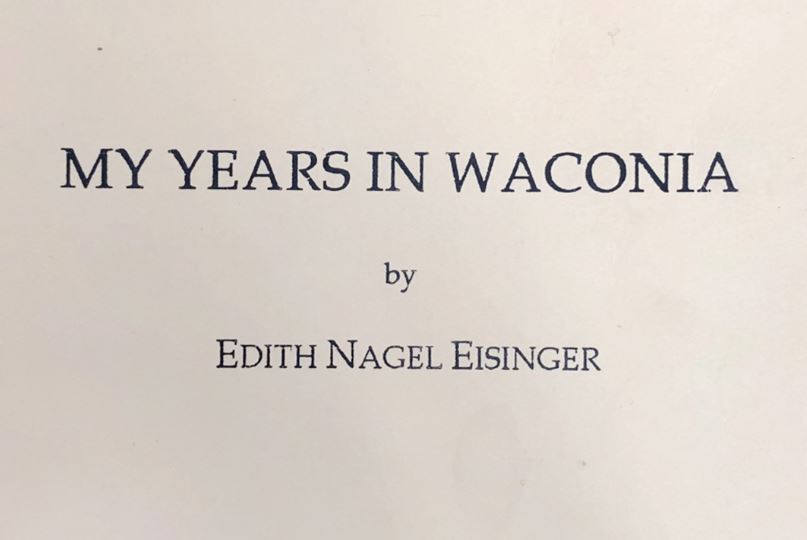
This podcast is a reading of the first chapter from the personal memoirs of Edith Nagel Eisinger, wife of Dr. Harold Nagel. In 1936, they founded the first hospital in Waconia - Nagel Hospital - which later became Waconia Hospital, and eventually Ridgeview Medical Center. Enjoy the podcast.
Comments

Download from Google Play

Download from App Store
 United States