


Awkward Silences
Subscribed: 325Played: 11,359
Subscribe

© 045109
Description
Welcome to Awkward Silences by User Interviews, where we interview the people who interview people. Listen as we geek out on all things UX research, qualitative data, and the craft of understanding people to build better products and businesses. Hosted by Erin May and Carol Guest, VPs of growth/marketing and product at User Interviews. Take this survey and let us know what topics you want to hear next! userinterviews.com/awkwardsurvey
198 Episodes
Reverse

Erin May talks with Jared Forney, Research Operations Principal at Okta, about how the role of research and research operations is shifting as AI accelerates product development. Jared explains why scale and rigor do not have to be opposing forces and why teams need to return to their core goals before adding new tools.Jared dives into how he builds trust across legal, product, and design teams and why that trust becomes the capital you spend when driving big change. He shares why automating more work actually concentrates human attention rather than removing it, how he approaches knowledge management and orchestration across many data sources, and why written communication and technical skills now matter more than ever. Jared also answers audience questions on governance, getting buy in for research ops, working faster under compressed timelines, AI guard rails, and breaking into the field.Highlights02:13 Upskilling for scale and rigor04:33 Balancing speed with research quality14:50 Where humans fit in AI workflows25:00 Rethinking knowledge management and MCP32:00 Best tactic for getting governance buy-in41:35 Enabling faster research under pressureAbout Our GuestJared is a Research Operations Principal based in the San Francisco Bay Area with 8+ years building research infrastructure from the ground up. His work sits at the intersection of governance, tooling, and enablement: building systems that help research teams move faster while keeping data practices sound. He's led repository migrations, developed AI governance frameworks, consolidated tooling ecosystems, and spoken at industry conferences about how operations can amplify — not constrain — great research. Connect with Jared on LinkedIn!ResourcesThe Blueprint for Evaluating AI Across the Research PipelineThe State of Research Operation 2026State of Synthetic Users ReportAI in Research Risk Cascade

This week we're revisiting one of Awkward Silences' most memorable episodes.Much of the conversation around AI in UX involves how it will shape and change researchers' work. This episodes's guest, Jess Holbrook, who leads UX research for Microsoft AI, thinks a lot about how this technology can be improved with design and UX best practices. Jess has spent over a decade working on the UX of AI at companies like Meta and Google. He's also helped develop foundational principles for the ethical use of LLMs.Jess joined Erin and Ben to reframe the AI conversation, focusing on how UXRs can and should adapt, what working on these systems has taught him about the UX discipline, and his philosophy for building teams that are ready to take on the innovative challenges of tomorrow.Jess's recommendations: Matt Webb, Maggie Appleton, and the Pessimists Archive Newsletter.Highlights07:15 Human-Centered AI Evolution17:53 Evolving AI Forecast Strategies24:04 Diverse AI Team Building33:27 Navigating Responsible AI Challenges37:01 Qualitative Analysis with AI Tools40:15 Optimism and Concerns About AIAbout JessSenior Director of Research specializing in human-centered AI. Early stage investor in AI, AI hardware ecosystems, climate, and anything that seems like the world would be better with it in it. Currently leading UX research for Microsoft AI. Previously led the Generative AI team and supported all UX functions for the Responsible AI and data transparency teams at Meta. I also served on the Board of Forging Youth Resilience, a nonprofit that empowers young people to build physical and mental strength for life by providing access to a national network of community-based fitness programs and mentorship.ResourcesThe AI in UX Research Report20+ Tools for Every Research PhaseUsing AI in UX: A Day-in-the-Life
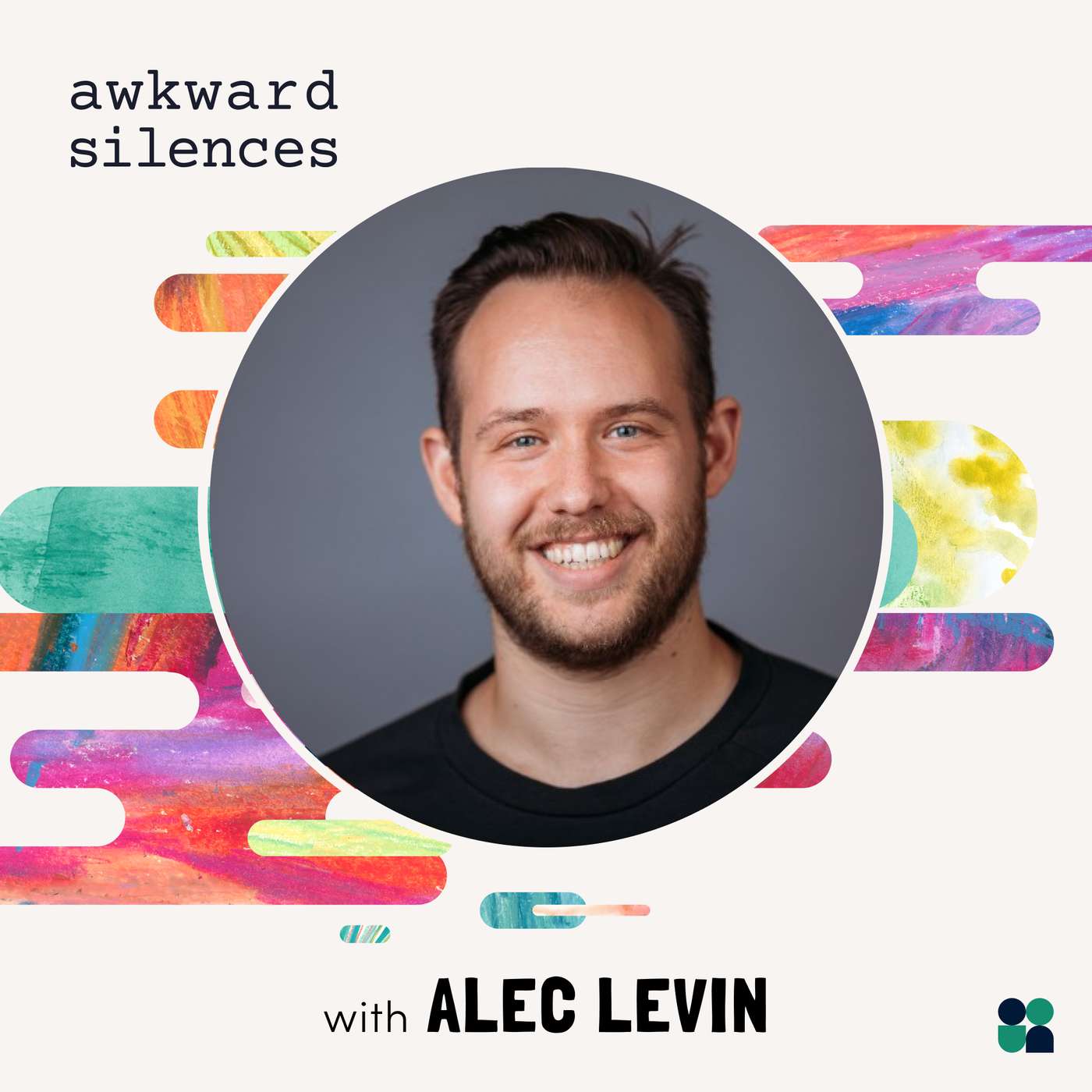
Erin May sits down with Alec Levin, CEO and Co-Founder of Learners, to explore how researchers can navigate the rapid changes reshaping their field. Alec shares his vision for how AI and automation are creating unprecedented opportunities for research teams willing to step up and lead.Alec argues that while AI can handle routine tasks like usability testing and surveys, researchers have a chance to focus on higher-value discovery work that includes prototyping and coding. He emphasizes that this is a critical moment for researchers to define their own future rather than letting executives decide their role. The conversation covers practical examples of AI-powered research workflows, the importance of cross-functional collaboration, and why researchers need to be more proactive in pitching their vision internally.Highlights03:40 Balance sheeting thinking for change06:15 Connecting researchers through community13:11 Discovery research importance 15:02 Vision needed for researcher evolution24:08 Automated research workflows emerging31:16 Human elements AI can't replaceResourcesAI for User Research 101 WorkshopWhat is the New AI in Research Risk Cascade?Assessing the ROI of AI in UX Research WebinarAI Context Engineering for Research Course

This week we're revisiting one of Awkward Silences' most memorable episodes.This episode welcomed Ruby Pryor, founder of Rex, a consulting firm specializing in UX research and strategic design.This episode gets into what it means to demonstrate the "business value" of one's work, specifically how researchers can and should quantify their impact in terms that are tangible to the company. Ruby shared ways to score early wins, build momentum, and overcome communication frictions to find shared value.Episode Highlights03:14 - UX researcher impact: insights, optimization, prioritization, strategy09:14 - Understanding organizational structures and strategy development collaboration20:22 - Challenge of quantifying impact and strategic level21:33 - Measuring strategy impact: challenges and indicators30:04 - Prioritizing investments based on strong market indicators38:51 - Stakeholders prioritize growth, revenue, and cost reductionAbout Our GuestRuby Pryor is the founder of Rex, a service design and UX research consulting firm. Her previous roles include UX research at Grab, strategic design at Boston Consulting Group and management consulting at Nous Group. She has taught courses on increasing the impact of UX to learners from 5 continents and has spoken about design and UX at conferences in Asia and Europe.Resources on UX Research ImpactHow to Track the Impact of Your UX ResearchLeading an Impactful User Research TeamUse Stakeholder Interviews to Drive Impact

Erin May sits down with Sam Ladner, Senior Principal Researcher of Strategy at Workday, to explore the evolving role of AI in qualitative research. Sam brings a refreshingly balanced perspective on where AI can genuinely help researchers and where it fundamentally cannot replace human insight.Sam explains how AI has transformed labor-intensive tasks like transcription and closed coding, freeing researchers to focus on the deeper work of sense-making and understanding outliers. She emphasizes that while AI excels at mathematical correlation hunting, qualitative research is about unriddling complex human experiences that require thinking, feeling, and imagination. The conversation covers practical applications like using MAXQDA for AI-assisted coding, the importance of explaining every outlier in qualitative work, and why emotional storytelling must remain exclusively human territory.Highlights03:09 Why machines can't replace human sense-making08:47 Human moments AI cannot understand12:00 Explaining outliers in qualitative coding16:27 Building effective coding systems for AI21:33 Getting AI to do closed coding properly29:26 When to use AI for low stakes research37:23 AI cannot substitute for qualitative researchAbout SamSam Ladner (she/her) is a sociologist who helps teams innovate, design, and learn. She is the author of Practical Ethnography: A Guide to Doing Ethnography in The Private Sector and Mixed Methods: A Short Guide to Applied Mixed Methods Research. She has worked on dozens of advanced software projects at Microsoft, Amazon, and most recently Workday, where she worked as a Senior Principal Researcher studying the future of work. She is now an independent researcher and consultant, writing her third book, tentatively titled Practical Foresight: Strategic Foresight in Applied Settings. She received her PhD in sociology from York University and lives in Toronto, Ontario, Canada. ResourcesPractical Ethnography: A Guide to Doing Ethnography in The Private SectorMixed Methods: A Short Guide to Applied Mixed Methods ResearchQual vs Quant vs Mixed-Methods Field GuideQualitative Sample Size Calculator

Comments

Download from Google Play

Download from App Store
 United States