


 Claim Ownership
Post Reports
Subscribed: 20,364Played: 3,367,427
Subscribe


© The Washington Post
Description
Post Reports is the daily podcast from The Washington Post. Unparalleled reporting. Expert insight. Clear analysis. Everything you’ve come to expect from the newsroom of The Post, for your ears. Martine Powers and Elahe Izadi are your hosts, asking the questions you didn’t know you wanted answered. Published weekdays around 5 p.m. Eastern time.
1939 Episodes
Reverse
 3
3Just over seven years ago, we launched this daily news podcast from The Washington Post.Our goal was to bring you inside our newsroom, sharing our reporting with listeners to help make sense of what was happening in the world. We’ve published hundreds of episodes. We’ve covered elections, wars, a pandemic, tech revolutions, pop culture phenomena, scientific discoveries and more. As of this week, The Post has decided to suspend "Post Reports."It was a privilege to know that we got to spend time in your ears, as part of your day. To everybody who’s listened to this podcast and made it a part of your lives: We want to extend our deepest gratitude for the trust you’ve put in us.
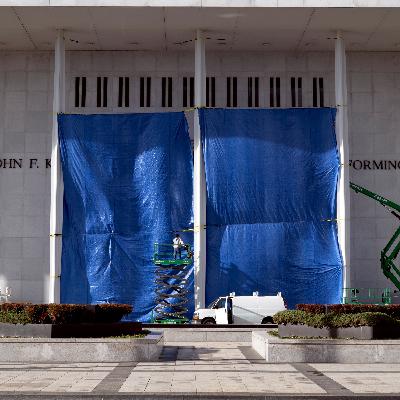
In his second term, President Donald Trump has gone on a mission to reinvent the Kennedy Center, the beloved performing arts venue in Washington, D.C.Trump promised to overhaul the center’s programming. He installed loyalists on the board who made him chairman. In December, Trump’s name joined John F. Kennedy’s on the building’s facade. This week, Trump announced further plans to close the center for two years as he undertakes a massive renovation. Details of the plan remain murky, but Trump says he intends to overhaul even the building’s marble facade. Style writer Travis Andrews has been reporting on Trump’s growing involvement with the Kennedy Center. Today, he joins Martine Powers to talk about why the president is so invested in the future of the institution — and why his plans have some people concerned. Today’s show was produced by Emma Talkoff, Thomas Lu and Rennie Svirnovskiy. It was edited by Reena Flores and mixed by Sam Bair. Subscribe to The Washington Post here.

In late January of last year, an American Eagle flight and a U.S. Army helicopter collided above the Potomac River, killing everyone aboard both aircraft. It was the deadliest flight disaster in the U.S. in decades.A year later, families and first responders are reflecting on their enduring sorrow.Local public safety reporter Emma Uber reads her story that recounts how loved ones left behind are processing the anniversary and finding solace in the keepsakes first-responders were able to recover after the crash.Today’s show was produced by Sabby Robinson. It was edited by Ariel Plotnick and mixed by Sean Carter.Subscribe to The Washington Post here.

Ten years ago this month, Washington Post journalist Jason Rezaian was freed from Iran’s Evin prison. He and his wife, Yeganeh, had been arrested at their home in Tehran and falsely accused of espionage. Since then, Rezaian has dedicated himself to advocating for press freedom, and now he’s the director of The Post’s press freedom initiatives. On Thursday, before a live audience at The Post, host Elahe Izadi sat down with Rezaian and his wife to talk about their reflections 10 years after their wrongful imprisonment. They were joined by ambassador Brett McGurk. As a presidential envoy, McGurk was integral to Rezaian’s release. They also spoke about what’s happening in Iran today, the widespread protests, what the United States could do and what this could all mean for the future of Iran.Subscribe to The Washington Post here.
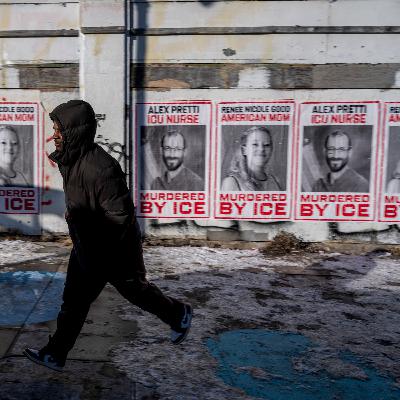
Since the killing of Renée Good and Alex Pretti by federal agents in Minnesota, President Donald Trump and his administration are feeling the pressure — not only from Democrats, but also from members of their own party. Some congressional Republicans have been critical of the administration’s aggressive immigration enforcement tactics and are worried about consequences for the midterms.“The more the image is out there that President Trump is pushing things very far … [and] is responsible for chaos,” senior national politics reporter Naftali Bendavid says, “the easier it is for Democrats to make the case that they are needed, if nothing else, to put some guardrails up.”Naftali spoke on this week’s episode of the “Post Reports” politics roundtable, alongside host Colby Itkowitz and Dan Merica, co-anchor of the politics newsletter The Early Brief. They discussed how Democrats are using the threat of a government shutdown as leverage to demand stronger reforms of the Department of Homeland Security.Colby, Naftali and Dan also reflected on the attack against Rep. Ilhan Omar (D-Minn.) at a recent town hall. “We've seen people lose their lives in political violence moments last year,” Merica says, ”and you have to worry that it could happen again this year.”Today’s show was produced by Thomas Lu and Josh Carroll. It was edited by Martine Powers and mixed by Sean Carter. Subscribe to The Washington Post here. And watch us on YouTube here.

In early 2024, executives at artificial intelligence start-up Anthropic ramped up an ambitious project they sought to keep quiet. It was code-named Project Panama, and internal documents filed in court described it as an “effort to destructively scan all the books in the world.”According to the filings, the company had spent tens of millions of dollars to acquire and slice the spines off potentially millions of books, before scanning their pages to feed knowledge into the AI models behind products such as Claude, its popular chatbot. A judge ruled this fair use.Details of Project Panama emerged in more than 4,000 pages of documents in a copyright lawsuit brought by book authors against Anthropic. The company agreed to pay $1.5 billion to settle the case in August – but a district judge’s decision last week to unseal a slew of documents in the case more fully revealed Anthropic’s zealous pursuit of books.Today on “Post Reports,” technology reporter Will Oremus explains the lengths to which AI firms such as Anthropic, Meta, Google and OpenAI went to obtain colossal troves of data with which to “train” their software – a frantic and sometimes clandestine race to acquire the collected works of humanity. He and host Martine Powers discuss how AI companies’ efforts sometimes might have crossed over into the illegal, and how authors and artists might fare in an AI-centered future. Today’s show was produced by Rennie Svirnovskiy. It was edited by Dennis Funk and mixed by Sam Bair.Subscribe to The Washington Post here.
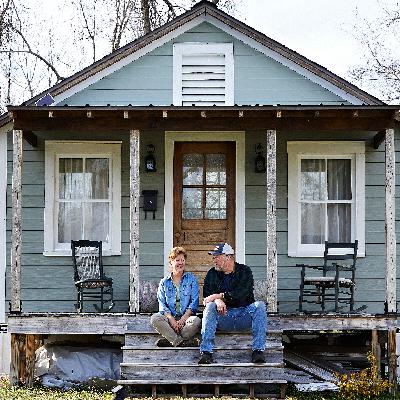
Houses in the United States keep getting bigger, but the people in bigger houses aren’t necessarily happier. Bigger homes often come with higher costs and more maintenance and can pull people further away from the places and relationships that matter. For some, choosing a smaller home can actually make life feel easier, more connected and more satisfying.Elahe Izadi speaks with climate coach Michael Coren about the joys that come with living in a smaller house and what to prioritize when deciding where to live. Today’s show was produced by Sabby Robinson. It was edited by Dennis Funk with help from Ariel Plotnick and mixed by Sean Carter. Subscribe to The Washington Post here.
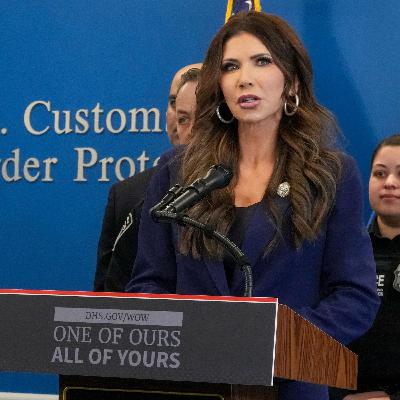
After both Renée Good and Alex Pretti were shot and killed by Department of Homeland Security officers in Minneapolis this month, the story from the agency’s secretary, Kristi L. Noem, was that these individuals’ intentions represented acts of domestic terrorism. Confirmed as DHS secretary a year ago under President Trump, Noem has been one of the most visible defenders of Trump’s immigration agenda, executing a sprawling deportation campaign and backing the increasingly aggressive tactics of Immigration and Customs Enforcement officers and Customs and Border Patrol agents, which fall under her purview. Over several months, ICE and CBP officers have been fanning out across Democratic-run cities — entering neighborhoods and homes to make arrests, aggressively spraying protesters with tear gas, and even detaining U.S. citizens. Federal officers have been involved in 16 shootings since July and have killed three people, including two U.S. citizens. Yet this sweeping immigration agenda and the consequent actions by federal officers were not part of the original mission of DHS. Today, immigration reporter Marianne Levine discusses how former South Dakota governor Kristi Noem has transformed DHS and what that could mean for its future. Today’s show was produced by Sabby Robinson with help from Rennie Svirnovskiy. It was edited by Dennis Funk and mixed by Sam Bair.Subscribe to The Washington Post here.
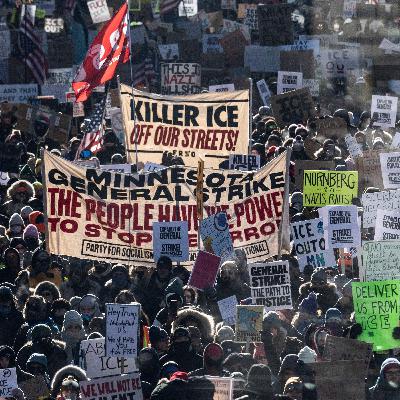
The killing of 37-year-old ICU nurse Alex Pretti on Saturday morning marks a dramatic escalation of what was already a very tense moment for Minneapolis. Just a day before, thousands of residents marched in a citywide strike organized by faith leaders and labor unions. They were protesting U.S. Immigration and Customs Enforcement actions in the state, including the fatal shooting of 37-year-old Renée Good by an ICE officer earlier this month. Although it is not clear how Pretti’s interaction with federal agents began on Saturday, bystander footage reviewed by The Post raises questions about Homeland Security’s account of what happened. On Saturday, Department of Homeland Security Secretary Kristi Noem said Pretti – a legal gun owner, who was carrying a gun in or near his waistband when he was killed – had been committing an act of domestic terrorism. According to a Post analysis, federal agents had already secured the handgun he was carrying by the time they fatally shot him.Today on “Post Reports,” host Martine Powers speaks with national reporter Kim Bellware about the death of Alex Pretti – why many people are worried that his death won’t get a thorough investigation, and how this encounter is raising important questions around America’s gun debate.Today’s show was produced by Elana Gordon and Rennie Svirnovskiy with help from Sabby Robinson. It was edited by Ariel Plotnick and mixed by Sean Carter. Thanks to Annie Gowen, Lauren Gurley and Gina Harkins. Follow the latest in The Post’s Minneapolis coverage here. Subscribe to The Washington Post here. And watch us on YouTube here.

Today on the show, we explore the science behind why going outside is so good for us, even when it’s freezing.If you’re interested in learning more about nature therapy, check out the Center for Nature Informed Therapy.A psychologist says this exercise can make you more hopeful in 14 days: the Noticing Nature Intervention is straightforward, but its results might surprise you.If you want more Optimistic stories in your inbox, subscribe to our newsletter. And if you’d like to hear more hopeful stories on the weekend on “Post Reports,” please send us an email: podcasts@washpost.com. Today’s show was produced by Maggie Penman with help from Rennie Svirnovskiy who also mixed the show. It was edited by Allison Klein and Ariel Plotnick. Thank you to Sean Carter. Subscribe to The Washington Post here.

President Donald Trump made headlines with two speeches this week. First came his sprawling, stream-of-consciousness address in the White House briefing room on Tuesday. Then, his barbed remarks about fellow world leaders at the annual meeting of the World Economic Forum in Davos, Switzerland.Trump concluded the week with a purported deal on America’s future role in Greenland – but it remains unclear what that deal will entail.“A lot of what we've seen from Trump during his political career, but specifically over the last year is … notching the win before the details are worked out,” White House reporter Cleve Wootson said on this week’s episode of the “Post Reports” politics roundtable. “He gets to walk away from Davos saying: I got what I wanted from these European leaders. America has won.”Wootson spoke on the podcast with host Colby Itkowitz and Dan Merica, co-anchor of the politics newsletter The Early Brief. They also talk about the 2026 midterms, and why Democrats are newly optimistic about their chances in the Senate.“The map is not overall very favorable to them,” Colby says, “but they're suddenly looking at it and thinking: We might be able to do this.”Today’s show was produced by Thomas Lu and Josh Carroll. It was edited by Martine Powers and mixed by Sean Carter. Subscribe to The Washington Post here. And watch us on YouTube here.

Iranian director Jafar Panahi has been making social cinema since the 1990s. His work follows everyday Iranians and their struggles against societal forces. In 2010 the director received a ban on filmmaking from the Iranian government, and in 2022 he was imprisoned after he inquired into a fellow filmmaker’s arrest. Despite being jailed and censored, Panahi has continued to work. His films such as "The Circle,” “Taxi” and “No Bears” have won awards from the top film festivals in the world. Now his latest film, “It Was Just an Accident,” has been nominated for two Oscars for best international feature film and best original screenplay. The film follows a group of former Iranian political prisoners who kidnap a man they suspect was their torturer, but they aren’t totally sure it’s him. Panahi shot the film in secret in Iran because he didn’t have official government permission to make it. While it is receiving critical acclaim around the world, it’s being repressed in Iran, where the government recently handed Panahi a new prison sentence. Today on “Post Reports” Elahe Izadi speaks with Jafar Panahi about how he made “It Was Just an Accident” and why he is planning to return to Iran once his awards campaign is over. The two spoke this month, before this week’s Oscar nominations and the most recent escalation of anti-government demonstrations and crackdowns in Iran. Today’s show was produced by Lucas Trevor, Joshua Carroll and Sam Bair, who also mixed it. It was edited by Elana Gordon and Peter Bresnan, with help from Reena Flores.Thanks to Neon for movie clips and photos.Subscribe to The Washington Post here. And watch us on YouTube here.

When U.S. Immigration and Customs Enforcement announced the death of a detainee at a Texas detention camp this month, the agency initially gave no cause of death. A fellow detainee said he witnessed Geraldo Lunas Campos being choked to death by guards; ICE said “staff observed him in distress.” Seeking answers, Lunas Campos’s family called El Paso County’s Office of the Medical Examiner, and an employee told them that – subject to the result of a toxicology report – the office is likely to classify Lunas Campos’s death as a homicide. Today on “Post Reports,” investigative reporter Douglas MacMillan tries to find out what really caused the death of a detainee – and takes us inside the black box of the largest detention camp in the United States. Today’s show was produced by Emma Talkoff. It was edited by Ariel Plotnick, Dennis Funk and Martine Powers and mixed by Sean Carter.Thanks also to Juliet Eilperin. Subscribe to The Washington Post here.
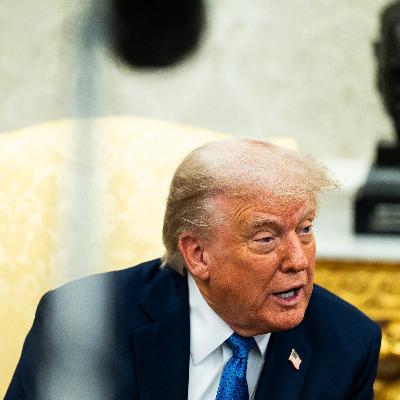
Over the weekend, President Donald Trump sent an unusual text to the prime minister of Norway. The two leaders had been messaging about Greenland – specifically, Trump’s threats to impose tariffs on European countries opposed to the United States taking over the autonomous Danish territory. Norwegian Prime Minister Jonas Gahr Store said in a statement that he had been trying to de-escalate the situation. President Trump responded by linking his insistence on taking over Greenland to his grievance over not receiving the Nobel Peace Prize – bestowed yearly by the Nobel Committee in Norway. Today on “Post Reports,” London bureau chief Steve Hendrix joins host Martine Powers with the latest on Trump’s bid for Greenland, how it all comes back to his perceived Peace Prize snub, and how his obsession is starting to have a real impact on geopolitics. Today’s show was produced by Rennie Svirnovskiy. It was edited by Dennis Funk and mixed by Sean Carter. Subscribe to The Washington Post here.

Friendship is vital for our health and happiness, but we don’t always prioritize it. The Optimist’s Maggie Penman goes on a journey to make new friends and learn why so many of us are craving connection.Today’s show was produced by Maggie Penman, with help from Ted Muldoon, who also mixed the show. It was edited by Allison Klein. For more stories from The Optimist, subscribe to our newsletter. If you want to hear more stories like this on “Post Reports,” send Maggie an email at maggie.penman@washpost.com. If you want to check out Billy Baker's book, it's called “We Need to Hang Out: A Memoir of Making Friends.”Subscribe to The Washington Post here.

At a time of year when many of us are reflecting on our lives and setting goals, we look at the research into what makes for a good life – and share some advice on how to get there.Here’s what science considers a path to a good life. Plus, some tips and advice on how to get there.Are you living a good life? Take this quiz to find out.7 simple ways to be a bit happier each dayDoing good is good for you, research showsBoredom is a warning sign. Here’s what it’s telling you.If you want to hear more stories like this on “Post Reports,” please let us know. You can reach the whole team at podcasts@washpost.com or email Maggie at maggie.penman@washpost.com.The Optimist has a newsletter! Subscribe here.Today’s show was produced by Maggie Penman with help from Rennie Svirnovskiy, who also mixed the show. It was edited by Ariel Plotnick and Allison Klein. Subscribe to The Washington Post here.
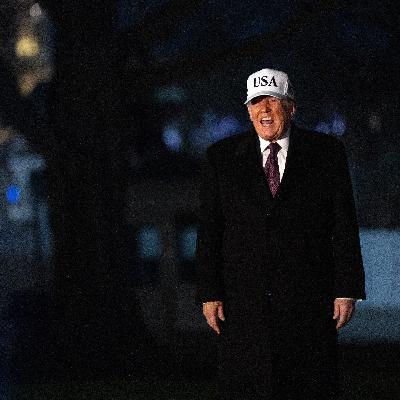
This week, the FBI raided the home of a Washington Post journalist, sparking First Amendment fears. At the same time, the Justice Department has opened an investigation into Fed Chair Jerome Powell, drawing concerns from bigwigs on Wall Street and questions as to how the administration treats its perceived political enemies. Colby speaks with Dan Merica, co-anchor of our politics newsletter The Early Brief, and Matt Viser, White House bureau chief, about President Donald Trump’s playbook for intimidating his critics, the chilling effects of his administration’s probes and why his coarse response to a heckling auto worker has drawn both criticism and praise.Today’s show was produced by Thomas Lu and Josh Carroll. It was edited by Martine Powers and mixed by Sean Carter. Subscribe to The Washington Post here. And watch us on YouTube here.
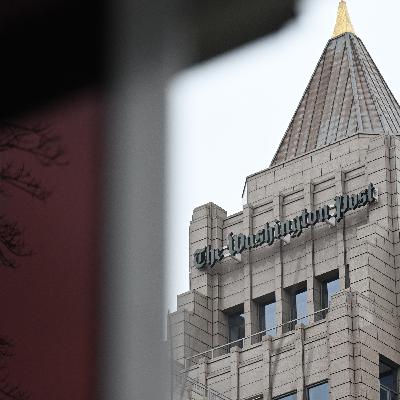
Early Wednesday, FBI agents raided the home of a Washington Post reporter as part of an investigation of a government contractor accused of illegally retaining classified government materials. The reporter – Hannah Natanson – was at her home in Virginia at the time of the search. She covers the federal government for The Post and spent the past year connecting with sources while reporting on the Trump administration’s efforts to fire federal workers. Investigators said neither Natanson nor The Post are the focus of the probe, but many saw the search as a jarring new step aimed at limiting news organizations’ ability to gather information. Today on “Post Reports,” democracy reporter Sarah Ellison joins host Elahe Izadi to discuss the unusual move by federal law enforcement and the lengths journalists go to to keep sources safe. And, in the second half of the show, we bring you an excerpt from an April 2025 conversation with Natanson – about how she became The Post’s “federal government whisperer.”Today’s show was produced by Rennie Svirnovskiy with help from Sabby Robinson. It was edited by Dennis Funk and mixed by Sam Bair.The April 23 episode was produced and mixed by Ted Muldoon and edited by Peter Bresnan.Subscribe to The Washington Post here.
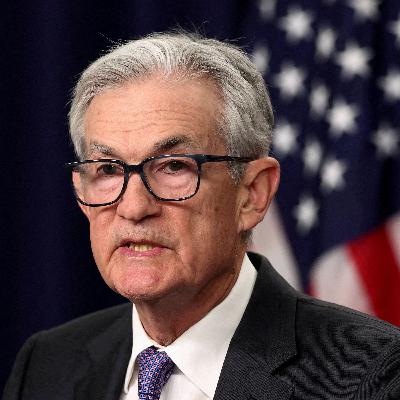
For years, President Donald Trump has complained about Federal Reserve Board Chair Jerome H. Powell. He’s called him names, said he should be fired and has tried to pressure the Fed leader into lowering interest rates.Trump’s feud against Powell escalated over the weekend, when Powell revealed that the Justice Department launched a criminal inquiry against him, alleging that Powell lied about the cost of renovations to the Federal Reserve buildings.Host Elahe Izadi speaks to banking reporter Andrew Ackerman about what this probe could mean for Powell, the Fed and whether Trump’s consistent pressure on Powell could undermine America’s central bank forever.Today’s show was produced by Emma Talkoff. It was edited by Ariel Plotnick and mixed by Sean Carter. Subscribe to The Washington Post here.

Conflicting narratives of Renée Good’s killing in Minneapolis have quickly emerged – federal officials claim the ICE officer who shot her was acting in self-defense, while others believe her death was easily avoidable and that ICE’s tactics are overly aggressive. Host Martine Powers speaks with immigration reporter Maria Sacchetti about how law enforcement officials are scrutinizing the shooting and what accountability in this case could look like.


Download from Google Play

Download from App Store
 United States
I relied on post reports above most others for reliable reporting. I am very sorry to see this important news source retire.
I am so sad to see this podcast end. You will be missed. I hope you will remain employed in some capacity.
pouting libs
voice fry to the max.. I want to listen.. but its hard
I didn't catch who you are interviewing but has a very annoying valley girl type of voice.
2:31.. its not a fucking "premium" to pay prevailing wages.. how Anti-American can the fuckin Post be? geeeeze
so the Post only has women reporters? or do they make sure its only like that when covering issues with men?
host is very snarky
Bought and paid for by JEFF BEZOS--DENY, DECONSTRUCT, DESTROY
what are fucking tool. he's "opposing" Trump but a total fucking coward--another ridiculous interview, so mild and nuanced that ot normalizes the ILLEGAL COUP AND DESTRUCTION OF OUR GOVERNMENT AND THE CONSTITUTION -- SAY THE FUCKING WORDS COWARDS!
isaZzz,z,,,nmmmzz,drem,sz,
wtf, your first answer to "what is he trying to do" by illegally creating his own partisan gov and usurping 250 years of democracy is: "MARS"?? Either you're a total idiot, sycophant, and/or BEZOS destroyed The Post--it's BEZO and YOU are complicit--FUCK THE WASHINGTON POST!
it seems wp is aligning fast with current administration
🥲🥲🥲🥲
two women talking about solar economics, but constantly referencing "experts" to tell us what they've been selling us was all wrong... maybe it's the messenger
goodbye bezos.
Normalize the audio level on the podcast to make it consistent. At times it is too soft & I turn up the volume only to turn it back down when the conversation gets loud.
Good summary
Is Patrick Marley a Fox News Hack? His answer about Nancy Mace was an absolute joke. She is one of the most HATED members of the Do Nothing Congress, that has done absolutely nothing to help her constituents. She was the clown that made a trip to stand outside Trump Tower, to kiss Donold's Ass. She also was one of the clowns who went to kiss his ass at the Trial. Instead of being at a hearing like she was supposed to. The infamous BBBBBB hearing. She is also the Rape Victim that supports a Rapis
Also when talking about Trump at Arlington you spouted FOX talking points about who was responsible for the Afghanistan withdrawal, blaming Biden. Trump was responsible. He set the withdrawal date, he negotiated with the Taliban and not the Afghan government, He demanded the release of 5,000 Taliban from jail, he closed the airports, leaving Abbey Gate, as the only base, and most importantly he did Jack about withdrawing soldiers, for a year. Leaving it all for Biden.