



Decoder with Nilay Patel
Subscribed: 51,143Played: 1,073,943
Subscribe


© 2020 Vox Media, Inc. All Rights Reserved
Description
Decoder is a show from The Verge about big ideas — and other problems. Verge editor-in-chief Nilay Patel talks to a diverse cast of innovators and policymakers at the frontiers of business and technology to reveal how they’re navigating an ever-changing landscape, what keeps them up at night, and what it all means for our shared future.
913 Episodes
Reverse

Today, I’m talking with Zillow CEO Jeremy Wacksman. Zillow is one of those apps that really exemplifies what you might call the smartphone era of software: the company built a great mobile app for looking at real estate listings, and it turned into not just entertainment for so many of us, but what has become a vertically-integrated platform for buying, selling, and renting real estate.
Jeremy’s argument is that the future of Zillow looks a lot like an end-to-end business platform for real estate agents, and we spent a lot of time talking about whether a business as local and as relationship driven as real estate can benefit from platform-level scale in the way he’s proposing.
Read the full interview transcript on The Verge.
Links:
Zillow’s new AI staging feature is impressively unimpressive | The Verge
Zillow’s upgraded AI search will show you more homes you can’t afford | The Verge
Zillow adds DMs so you can chat about homes you’ll never buy | The Verge
FTC accuses Zillow of paying $100 million to ‘dismantle’ Redfin | The Verge
Housing is frozen. Wacksman knows you’re still scrolling | NYT
Wacksman on the US housing market | Bloomberg Talks
Subscribe to The Verge to access the ad-free version of Decoder!
Credits:
Decoder is a production of The Verge and part of the Vox Media Podcast Network.
Decoder is produced by Kate Cox and Nick Statt. This was edited by Xander Adams. Our editorial director is Kevin McShane.
The Decoder music is by Breakmaster Cylinder.
Learn more about your ad choices. Visit podcastchoices.com/adchoices

Today, we’re talking about the future of Xbox. Phil Spencer, a two-time Decoder guest who’s led Xbox for more than a decade, is stepping down. But in a shocking twist, his deputy long-assumed successor Sarah Bond is also out too, and the Xbox division is now in the hands of an Asha Sharma, one of Microsoft’s AI executives with no prior game industry experience.
There is no better person to talk to about all of this than Tom Warren, senior editor here at The Verge and author of the excellent Notepad newsletter. Tom is actually on parental leave right now, but Microsoft has a longstanding habit of disrupting his well-earned time off. So, Tom was gracious enough to come on the show after publishing a major scoop about what went down at Xbox this past week.
Read the full interview transcript on The Verge.
Links:
Inside Microsoft’s big Xbox leadership shake-up | The Verge
Billions of dollars later and still nobody knows what an Xbox is | The Verge
Xbox chief Phil Spencer is leaving Microsoft | The Verge
Read Xbox chief Phil Spencer’s memo about leaving Microsoft | The Verge
Here’s what Xbox is working on for 2026 | The Verge
AMD hints Microsoft could launch its next-gen Xbox in 2027 | The Verge
The next Xbox is going to be very different | The Verge
Xbox co-founder believes it’s being ‘sunsetted’ in favor of AI | VGC
Subscribe to The Verge to access the ad-free version of Decoder!
Credits:
Decoder is a production of The Verge and part of the Vox Media Podcast Network.
Decoder is produced by Kate Cox and Nick Statt and edited by Ursa Wright. Our editorial director is Kevin McShane.
Learn more about your ad choices. Visit podcastchoices.com/adchoices

 3
3Today, I’m talking with Hank Green, a longtime friend of Decoder and the co-founder and now former owner of Complexly, an online education company he started with his brother John in 2012. I say former owner because Hank and John have just converted Complexly into a nonprofit and given up their ownership of the company in the process.
That’s some of the purest Decoder bait that ever was, because it’s all about how you structure a company and how you make decisions about changing that structure. So of course I had to bring Hank back on to talk all about it.
Read the full interview transcript on The Verge.
Links:
Greens’ studio becomes nonprofit as they aim to make ‘trustworthy content’ | AP
Hank Green makes Nilay Patel explain why websites have a future | Decoder (2024)
Why Hank Green can’t quit YouTube for TikTok | Decoder (2022)
Hank Green and Sam Reich on running content companies | Decoder
Hank Green and Sal Khan on AI in educational video | Decoder
Subscribe to The Verge to access the ad-free version of Decoder!
Credits:
Decoder is a production of The Verge and part of the Vox Media Podcast Network.
Decoder is produced by Kate Cox and Nick Statt and edited by Ursa Wright. Our editorial director is Kevin McShane.
The Decoder music is by Breakmaster Cylinder.
Learn more about your ad choices. Visit podcastchoices.com/adchoices

Today we're talking about the war for AI talent. Right now, the hottest job market on the planet is for AI researchers. And the vast majority of these people are concentrated into a small number of hugely valuable, extremely fast-growing companies in the San Francisco Bay Area, most of which are now paying some of the highest salaries in the history of tech to poach from one another.
We’ve been dying to really dig in and try to unpack what's going on with all these talent moves in AI. So we brought on Verge senior AI reporter Hayden Field, who's been covering the revolving door of the AI industry really closely and also the broader culture that's motivating workers to jump ship.
Links:
What’s behind the mass exodus at xAI? | The Verge
OpenClaw founder Peter Steinberger is joining OpenAI | The Verge
Two more xAI co-founders leave after the SpaceX merger | The Verge
AI safety leader says 'world is in peril' and quits to study poetry | BBC
OpenAI is making the mistakes Facebook made. I quit. | NYT
Anthropic’s chief on AI: ‘We don’t know if the models are conscious’ | NYT
Meet the one woman Anthropic trusts to teach AI morals | WSJ
OpenAI plans fourth-quarter IPO in race to beat Anthropic to market | WSJ
Subscribe to The Verge to access the ad-free version of Decoder!
Credits:
Decoder is a production of The Verge and part of the Vox Media Podcast Network.
Decoder is produced by Kate Cox and Nick Statt and edited by Ursa Wright. Our editorial director is Kevin McShane.
The Decoder music is by Breakmaster Cylinder.
Learn more about your ad choices. Visit podcastchoices.com/adchoices

Today, we're talking about the camera company Ring, lost dogs, and the surveillance state. Since it aired for a massive audience at the Super Bowl, Ring’s Search Party commercial has become a lightning rod for controversy. It’s easy to see how the same technology that can find lost dogs can be used to find people, and then used to invade our privacy in all kinds of uncomfortable ways, by cops and regular people alike.
Although Ring has since canceled its partnership with controversial surveillance company Flock, the company is now facing hard questions about its plans to use AI to promote safer neighborhoods, and how that intersects with its ongoing relationship with law enforcement.
Links:
Ring cancels partnership with Flock after surveillance backlash | The Verge
Ring’s lost dog ad sparks backlash amid fears of surveillance | The Verge
Ring says it’s not giving ICE access to its cameras | The Verge
How police recovered Nancy Guthrie’s Nest Doorbell footage | The Verge
Ring’s Jamie Siminoff thinks AI can reduce crime | Decoder
Ring CEO says cameras can almost ‘zero out crime’ within 12 months | The Verge
ICE taps into nationwide AI camera network, data shows | 404 Media
ICE, Secret Service had access to Flock's camera network | 404 Media
Subscribe to The Verge to access the ad-free version of Decoder!
Credits:
Decoder is a production of The Verge and part of the Vox Media Podcast Network.
Decoder is produced by Kate Cox and Nick Statt and edited by Ursa Wright. Our editorial director is Kevin McShane.
The Decoder music is by Breakmaster Cylinder.
Learn more about your ad choices. Visit podcastchoices.com/adchoices

My guest today is Bridget McCormack, former chief justice for the Michigan Supreme Court and now president and CEO of the American Arbitration Association. For the past several years, Bridget and her team have been developing an AI-assisted arbitration platform called the AI Arbitrator.
So I sat down with her to talk about how the tool works, the pros and cons of automating parts of the arbitration process, and the bigger picture questions around institutional trust, justice, and the future of law.
Links:
All rise for JudgeGPT | The Verge
Why do lawyers keep using ChatGPT? | The Verge
Judge berates AI entrepreneur for using a generated ‘lawyer’ | The Verge
Judge slams lawyers for ‘bogus AI-generated research’ | The Verge
LexisNexis CEO says the AI law era is already here | Decoder
ChatGPT can be a disaster for lawyers — Robin AI wants to fix that | Decoder
Considerations In building guardrails for AI use In arbitration | Law360
The AI Arbitrator: What it is, what it isn’t, and where it’s going | Law360
Subscribe to The Verge to access the ad-free version of Decoder!
Credits:
Decoder is a production of The Verge and part of the Vox Media Podcast Network.
Decoder is produced by Kate Cox and Nick Statt. This episode was edited by Chris Jereza and Ursa Wright. Our editorial director is Kevin McShane.
The Decoder music is by Breakmaster Cylinder.
Learn more about your ad choices. Visit podcastchoices.com/adchoices

Siemens is one of those absolutely giant, extremely important, fairly opaque companies we love to dig into on Decoder. At a very basic, reductive level, Siemens makes the hardware and software that let other companies run and automate their stuff.
We spent a lot of time talking about what happens to jobs when Siemens automates everything — and what happens to a company like Siemens when the free trade era we’re used to gets turned on its head.
Read the full interview transcript on The Verge.
Links:
Siemens Energy CEO attends Trump meeting at Davos | Reuters
PepsiCo, Siemens, Nvidia announce digital twin collaboration | PepsiCo
Siemens spins off Healthineers majority stake | Reuters
Siemens USA to train 200,000 electricians by 2030 | Siemens
Subscribe to The Verge to access the ad-free version of Decoder!
Credits:
Decoder is a production of The Verge and part of the Vox Media Podcast Network.
Decoder is produced by Kate Cox and Nick Statt and edited by Ursa Wright. Our editorial director is Kevin McShane.
The Decoder music is by Breakmaster Cylinder.
Learn more about your ad choices. Visit podcastchoices.com/adchoices

Today, we’re going to talk about reality, and whether we can label photos and videos to protect our shared understanding of the world around us. To do this, I sat down with Verge reporter Jess Weatherbed, who covers creative tools for us — a space that’s been totally upended by generative AI.
We’ve been talking about how the photos and videos taken by our phones are getting more and more processed for years on The Verge. Here in 2026, we’re in the middle of a full-on reality crisis, as fake and manipulated ultra-believable images and videos flood onto social platforms at scale. So Jess and I discussed the limitations of AI labeling standards like C2PA, and why social media execs like Instagram boss Adam Mosseri are now sounding the alarm.
Read the full transcript on The Verge.
Links:
This system can sort real pictures from AI fakes — why aren’t we using it? | The Verge
You can’t trust your eyes to tell you what’s real, says Instagram | The Verge
Instagram’s boss is missing the point about AI on the platform | The Verge
Sora is showing us how broken deepfake detection is | The Verge
Reality still matters | The Verge
No one’s ready for this | The Verge
What is a photo, @WhiteHouse edition | The Verge
Google Gemini is getting better at identifying AI fakes | The Verge
Let’s compare Apple, Google & Samsung’s definitions of 'photo’ | The Verge
The Pixel 8 and the what-is-a-photo apocalypse | The Verge
Subscribe to The Verge to access the ad-free version of Decoder!
Credits:
Decoder is a production of The Verge and part of the Vox Media Podcast Network.
Decoder is produced by Kate Cox and Nick Statt and edited by Ursa Wright. Our editorial director is Kevin McShane.
The Decoder music is by Breakmaster Cylinder.
Learn more about your ad choices. Visit podcastchoices.com/adchoices

Today, I’m talking with Allan Thygesen, who is the CEO of Docusign. You know Docusign, it’s the platform that lets you sign stuff online. It turns out 7,000 people work there, which is one of those facts floating around that’s always felt like perfect Decoder bait. What are all those people doing? And what kind of product roadmap does a company like Docusign even need?
Alan has only been CEO of Docusign for three years, so he has some interesting perspective on where the company was, the changes he wanted to make, and where he thinks this is all going. Hint: it involves AI.
Read the full transcript on The Verge.
Links:
Docusign's AI will help you understand what you're signing | Fast Company
Docusign on ‘transformational journey,’ CEO Says | Bloomberg
How Docusign Is modernizing the age-old business contract | Barron’s
Docusign unveils next-gen eSignature with AI | Docusign
Docusign brings its contract AI to ChatGPT | Docusign
Interview with Docusign CEO Allan Thygesen | Motley Fool (Podcast)
Subscribe to The Verge to access the ad-free version of Decoder!
Credits:
Decoder is a production of The Verge and part of the Vox Media Podcast Network.
Decoder is produced by Kate Cox and Nick Statt and edited by Ursa Wright. Our editorial director is Kevin McShane.
The Decoder music is by Breakmaster Cylinder.
Learn more about your ad choices. Visit podcastchoices.com/adchoices
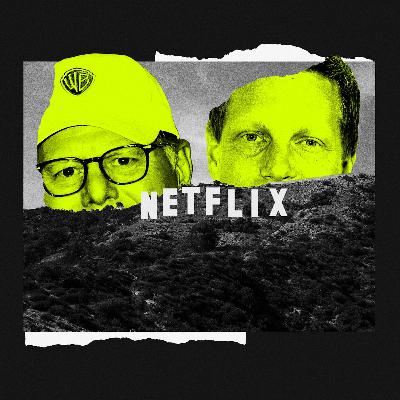
Today, we’re talking about the bidding war over Warner Bros. Discovery, which is the biggest story in the entertainment industry right now, and for good reason. It has pretty much everything you could want in a buzzy Hollywood saga — big names, big money, and big drama.
To help me make sense of it all, I wanted to talk with Julia Alexander, a Verge alum and now media correspondent at Puck News who’s one of the best in the business at analyzing corporate strategy, Hollywood, and what’s next in entertainment. Julia really helped me break down why Netflix is the clear front runner to acquire Warner Bros., why David Ellison of Paramount Skydance is so desperate to win, and, perhaps most importantly, how the tech industry fits into this puzzle.
Links:
Netflix is buying Warner Bros. for $83 billion | The Verge
Paramount launches hostile $108 billion bid to snatch Warner | The Verge
Netflix revises Warner Bros. bid to an all-cash offer | The Verge
Why Netflix needs Warner Bros. | Puck News
The Warner Bros. bidding war Is over | Bloomberg
The Son King of Hollywood | Vulture
FCC Chair: ‘Legitimate competition concerns’ with Netflix’s Warner deal | Variety
Netflix's Ted Sarandos to testify at antitrust hearing over Warner deal | Variety
Subscribe to The Verge to access the ad-free version of Decoder!
Credits:
Decoder is a production of The Verge and part of the Vox Media Podcast Network.
Decoder is produced by Kate Cox and Nick Statt and edited by Ursa Wright. Our editorial director is Kevin McShane.
The Decoder music is by Breakmaster Cylinder.
Learn more about your ad choices. Visit podcastchoices.com/adchoices

Experian is one of those giant multinationals convoluted enough to have multiple CEOs all over the world, so first I asked Alex Lintner, Experian's CEO of technology and software solutions, to dig into the classic Decoder questions and explain how all of that even works.
He oversees big operations like security and privacy, and now, of course, AI. If you want to participate in the modern economy — rent an apartment, buy a car, get a job, etc — you’re part of Experian’s ecosystem, whether you like it or not. At its heart, Experian’s core service is data about people and the choices they make. And this extremely valuable data weirdly makes Experian a part of your life — a life that becomes much smoother if the data the company collects about you tells a good story.
Read the full interview transcript on The Verge.
Links:
Roughly half of Americans are knowledgeable about personal finance | Pew Research
How Americans view data privacy | Pew Research
Consumer voices on credit reports and scores | CFPB
Mercedes-Benz CEO Ola Källenius on Decoder | The Verge
The Palantir app ICE uses to find neighborhoods to raid | 404 Media
T-Mobile customers exposed in major Experian breach (2015) | The Verge
All the news about the Equifax breach | The Verge
Subscribe to The Verge to access the ad-free version of Decoder!
Credits:
Decoder is a production of The Verge and part of the Vox Media Podcast Network.
Decoder is produced by Kate Cox and Nick Statt and edited by Ursa Wright. Our editorial director is Kevin McShane.
The Decoder music is by Breakmaster Cylinder.
Learn more about your ad choices. Visit podcastchoices.com/adchoices
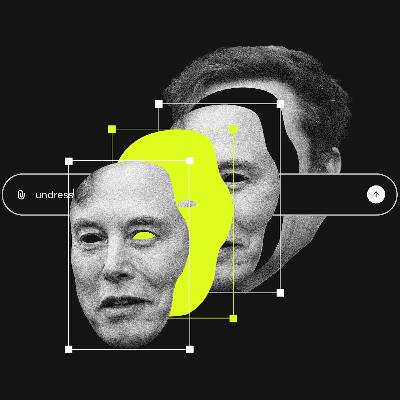
Grok, the chatbot made by Elon Musk’s xAI, is able to make all manner of AI-generated images on demand, including non-consensual intimate images of women and minors. It's the kind of "controversy" that would have completely sunk a platform five or 10 years ago, but now it seems clear that Elon wants Grok to be able to do this.
A lot of people feel like someone should be able to do something about a one-click harassment machine like this. But who has that power, and what they can do with it, is a deeply complicated question,tied up in the thorny mess of history that is content moderation and the legal precedents that underpin it. So I invited Riana Pfefferkorn, from the Stanford Institute for Human-Centered Artificial Intelligence, to come talk me through it.
Links:
Grok’s gross AI deepfakes problem | The Verge
Grok is undressing children — can the law stop it? | The Verge
Tim Cook and Sundar Pichai are cowards | The Verge
Senate passes a bill to let nonconsensual deepfake victims sue | The Verge
EU looks to ban nudification apps following Grok outrage | Politico
Grok flooded X with millions of sexualized images | The New York Times
The Supreme Court just upended internet law | The Verge
Mother of Elon Musk’s son sues xAI over sexual deepfake images | AP
Subscribe to The Verge to access the ad-free version of Decoder!
Credits:
Decoder is a production of The Verge and part of the Vox Media Podcast Network.
Decoder is produced by Kate Cox and Nick Statt and edited by Ursa Wright. Our editorial director is Kevin McShane.
The Decoder music is by Breakmaster Cylinder.
Learn more about your ad choices. Visit podcastchoices.com/adchoices

We’re back to start the year with a very special live interview with Razer CEO Min-Liang Tan, which we taped in front of a terrific audience at Brooklyn Bowl in Las Vegas during CES. At this year’s show, Razer made headlines for something it calls Project Ava, an AI companion that has a physical presence in the real world, as an anime hologram that sits in a jar on your desk. It’s powered by, you guessed it, Elon Musk’s Grok.
There are a whole lot of choices bundled up in all of that, as well as Razer’s decision to go all-in on AI at a moment when the gaming community is outright rejecting it. So Min and I really got into it. I think you’ll have a lot to think about with this one.
Links:
Razer is making an AI anime waifu hologram for your desk | The Verge
Razer thinks you’d rather have AI headphones instead of glasses | The Verge
Baldur’s Gate 3 studio says it won’t use AI for concept art or writing | The Verge
In 2025, AI became a lightning rod for gamers and devs | The Verge
Razer plans $600M push to capture 'untapped' AI gaming demand | Bloomberg
Replika CEO says it’s okay if we end up marrying AI chatbots | Decoder
Lawsuits blame ChatGPT for suicides and harmful delusions | NYT
Inside three longterm relationships with AI chatbots | NYT
Torment Nexus | Know Your Meme
The future of gaming is AI | Razer (Instagram)
Subscribe to The Verge to access the ad-free version of Decoder!
Credits:
Decoder is a production of The Verge and part of the Vox Media Podcast Network.
Decoder is produced by Kate Cox and Nick Statt and edited by Ursa Wright. Our editorial director is Kevin McShane.
The Decoder music is by Breakmaster Cylinder.
Learn more about your ad choices. Visit podcastchoices.com/adchoices

Hey everyone, it’s Nilay. We’re settling back in here after the winter break and CES, and we’ll have new episodes for you starting next Monday. In the meantime, we wanted to highlight one of our favorites from last year: an interview with journalist and author Megan Greenwell about her book Bad Company: Private Equity and the Death of the American Dream.
My conversation with Megan last year was extremely illuminating as to why private equity does what it does to industries like healthcare, media and real estate — and just how deeply it's affecting the everyday lives of Americans everywhere. It's a really great conversation that feels just as timely today as it did last summer. Enjoy.
Links:
Bad Company | HarperCollins
How private equity kills companies and communities | Decoder
Private equity bought out your doctor and bankrupted Toys ‘R’ Us | Decoder
Private equity makes its first college sports play | Axios
Private equity Is gutting America — and getting away with it | NYT
I was fired from Deadspin for refusing to ‘stick to sports’ | NYT
Will private equity be the next ‘Big Short’? | Marketplace
The profit-obsessed monster destroying American ERs | Vox
Why your vet bill is so high | The Atlantic
The investment firms leave behind a barren wasteland’ | Politico
Subscribe to The Verge to access the ad-free version of Decoder!
Credits:
Decoder is a production of The Verge and part of the Vox Media Podcast Network.
Decoder is produced by Kate Cox and Nick Statt and edited by Ursa Wright. Our editorial director is Kevin McShane.
The Decoder music is by Breakmaster Cylinder.
Learn more about your ad choices. Visit podcastchoices.com/adchoices

We’ve got something special for you today. It’s my friend Hank Green, longtime YouTuber, science educator, and viral TikTok star, interviewing Dropout CEO Sam Reich.
Hank did this episode as a guest host over the summer, and it’s a fan favorite, bringing together two internet personalities that’ve known each other for a very long time and who have a lot of inside knowledge about how the internet, Hollywood, and entertainment all intertwine.
Links:
Dropout’s Sam Reich on business, comedy, and keeping the internet weird | Decoder
How Dropout broke through in 2025 | AV Club
Dropout CEO on launching ‘Superfan’ tier, crossing 1M subscribers | Variety
How CollegeHumor reinvented itself for the new internet age | People
CollegeHumor shaped online comedy. What went wrong? [2020] | Wired
‘I believe in this enough to try to do it myself’ [2020] | Digiday
Jacob Wysocki needed a minute to process that Game Changer | Vulture
Game Changer smartly weaponizes its online following | Mashable
Vimeo CEO Philip Moyer is betting on the human touch | Decoder
Vimeo to be acquired by Bending Spoons for $1.38B | The Verge
Subscribe to The Verge to access the ad-free version of Decoder!
Credits:
Decoder is a production of The Verge and part of the Vox Media Podcast Network.
Decoder is produced by Kate Cox and Nick Statt and edited by Ursa Wright. Our editorial director is Kevin McShane.
The Decoder music is by Breakmaster Cylinder.
Learn more about your ad choices. Visit podcastchoices.com/adchoices
Hey everyone, it’s Nilay. Decoder is on our holiday break. We’ve got a lot of fun stuff coming up in the New Year, though, including a special Decoder Live at CES. Stay tuned for more details, including how to RSVP for free tickets.
In the meantime, we’ve got a great episode of the podcast Channels, featuring two of the best media reporters in the business. Host Peter Kafka sat down with Bloomberg’s Lucas Shaw to talk about the bidding war between Paramount SkyDance and Netflix over Warner Bros. Discovery. It’s the biggest story in entertainment right now, and this episode breaks down everything you need to know about the contentious acquisition.
Links:
"Neither Side Is Used to Losing”: Lucas Shaw on the battle for Warner Bros. | Channels
Five things we’re getting wrong about Warner Bros.′ Netflix deal | Bloomberg
Warner Bros.’ bidders brace for a fight that will last months | Bloomberg
WBD wants its shareholders to reject Paramount’s latest offer | The Verge
There are no good outcomes for the Warner Bros. sale | The Verge
Netflix is “100% committed” to releasing WB films in theaters | The Verge
Netflix is buying Warner Bros. for $83 billion | The Verge
Subscribe to The Verge to access the ad-free version of Decoder!
Credits:
Decoder is a production of The Verge and part of the Vox Media Podcast Network.
Decoder is produced by Kate Cox and Nick Statt and edited by Ursa Wright. Our editorial director is Kevin McShane.
The Decoder music is by Breakmaster Cylinder.
Learn more about your ad choices. Visit podcastchoices.com/adchoices

Hey everyone! Decoder senior producers Kate Cox and Nick Statt here. We’ve had a big year, including nearly 100 episodes, a new YouTube channel, an ad-free podcast feed, and a slate of great guest hosts while Nilay was on parental leave. It’s been a lot!
We’ve also had a lot of great questions and comments this year from you, our audience. So we pulled together all the feedback we’ve received on topics like CarPlay, Monday episode guest suggestions, and — of course — AI. And then we turned the tables on Nilay to ask him his thoughts on the past 12 months: What we liked, what we want to improve, and how he’s making decisions for Decoder in the new year.
Links:
Answering your biggest Decoder questions, 2024 edition | Decoder
The DoorDash Problem | Decoder
How decision making changes when AI answers are cheap and (too) easy | Decoder
Why GM will give you Gemini — but not CarPlay | Decoder
Rivian CEO: ‘We’re really convicted’ about skipping CarPlay | Decoder
How SharkNinja took over the home, with CEO Mark Barrocas | Decoder
Why Tubi CEO Anjali Sud thinks free TV can win again | Decoder
Disney accuses Google of copyright infringement following OpenAI deal | The Verge
Subscribe to The Verge to access the ad-free version of Decoder!
Credits:
Decoder is a production of The Verge and part of the Vox Media Podcast Network.
Decoder is produced by Kate Cox and Nick Statt and edited by Ursa Wright. Our editorial director is Kevin McShane.
The Decoder music is by Breakmaster Cylinder.
Learn more about your ad choices. Visit podcastchoices.com/adchoices
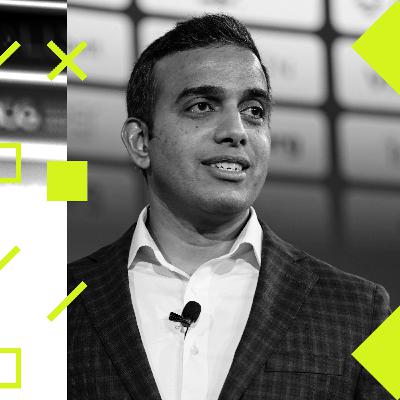
Stack Overflow CEO Prashanth Chandrasekar was last on the show in 2022 — just one month before ChatGPT launched and upended literally everything for Stack Overflow in a deeply existential way.
He called a company emergency, reallocated about 10 percent of the staff to figure out solutions to the ChatGPT problem, and made some pretty huge decisions about structure and organization to navigate that change — all of it pure Decoder bait.
Links:
2025 Developer Survey | Stack Overflow
The people who make your apps go to Stack Overflow for answers | Decoder
OpenAI, Stack Overflow partner to bring technical knowledge to ChatGPT | The Verge
Stack Overflow feeds programmers’ answers to AI whether they like it or not | The Verge
Stack Overflow cuts 28 percent of its staff | TechCrunch
AI-generated answers temporarily banned on Stack Overflow | The Verge
Stack Overflow’s strike is over, but problems persist | Jon Ericson
A new era of Stack Overflow | Stack Overflow
Subscribe to The Verge to access the ad-free version of Decoder!
Credits:
Decoder is a production of The Verge and part of the Vox Media Podcast Network.
Decoder is produced by Kate Cox and Nick Statt and edited by Ursa Wright. Our editorial director is Kevin McShane.
The Decoder music is by Breakmaster Cylinder.
Learn more about your ad choices. Visit podcastchoices.com/adchoices

Massachusetts Sen. Ed Markey and I agree it seems like democracy is on the line right now, especially around the First Amendment and the increasing pressure the Trump administration — especially FCC chair Brendan Carr — is putting on free speech. I also had a lot of questions for Sen. Markey about the supposed TikTok ban, which no one seems to know anything about, and all the other problems we’re facing in 2025.
Links:
Even the lawmakers behind the TikTok ban have no idea what’s going on | The Verge
Carr’s FCC is an anti-consumer, rights-trampling harassment machine | The Verge
The FCC is a weapon in Trump’s war on free speech | Decoder
Here’s the Trump EO that would ban state AI laws | The Verge
Silicon Valley is rallying behind a guy who sucks | The Verge
Silicon Valley’s man in the White House is benefiting himself and his friends | The New York Times
Subscribe to The Verge to access the ad-free version of Decoder!
Credits:
Decoder is a production of The Verge and part of the Vox Media Podcast Network.
Decoder is produced by Kate Cox and Nick Statt and edited by Ursa Wright. Our editorial director is Kevin McShane.
The Decoder music is by Breakmaster Cylinder.
Learn more about your ad choices. Visit podcastchoices.com/adchoices

Today, I’m talking with Willem Avé, who’s the head of product at Square. You know Square — it was started by billionaire Jack Dorsey of Twitter fame more than 15 years ago, and it got big on the back of that little magnetic reader that once plugged into the headphone jack of the iPhone and let small businesses accept credit cards.
Nowadays, of course, Square is more than a credit card reader, and sadly, the headphone jack is ancient history. The company itself is now part of parent organization called Block, which is made up of a very interesting mix of financial services like Afterpay, Cash App, and, yes, the streaming music service Tidal. So Willem and I really got into where Square is headed next with AI and automation, why he’s excited about crypto and Bitcoin specifically, and even what it means that the US is discontinuing the penny.
Links:
Square’s public roadmap | Square
Jack Dorsey is reorganizing the entirety of Block | Fortune
How Block turned Square into a financial services giant | Fast Company
Block to roll out bitcoin payments on Square | Square
Square buys $170 million worth of bitcoin | CNBC
Square, Jack Dorsey’s payments company, changes its name to Block | NYT
The penny dies at 232 | NYT
Subscribe to The Verge to access the ad-free version of Decoder!
Credits:
Decoder is a production of The Verge and part of the Vox Media Podcast Network.
Decoder is produced by Kate Cox and Nick Statt and edited by Ursa Wright. Our editorial director is Kevin McShane.
The Decoder music is by Breakmaster Cylinder.
Learn more about your ad choices. Visit podcastchoices.com/adchoices


Download from Google Play

Download from App Store
 United States
Finding a top Irish online casino is easier with our guide. Discover honest reviews and real player feedback at http://www.walkingandhikingireland.com/ where we track licensed sites, fair games, and secure payments. Explore popular casinos offering welcome bonuses, free spins, and VIP programs. Whether you prefer slots, roulette, blackjack, or live dealer tables, our ranking highlights platforms with smooth mobile play, fast withdrawals, and reliable support. Each casino is checked for licenses, game variety, and user experience to ensure safe and enjoyable gaming in Ireland.
This episode is just a rant, there are no insights. I was done after 10 min.
Hello, everyone! I've been playing for about three years, and I've spent the last two years at https://www.jumbo88.com/. I'm happy with everything at this casino. It's the best experience and excitement I've ever had. Everything on the site works smoothly, there is no cheating, and it's always nice to come back. I especially like that the site works equally well on both mobile and desktop. I really tried to switch to other sites, but I always came back. And you know, I guess that means Jumbo88 is really the best option.
Let's get to know each other a little! Write how long you've been playing, what sites you prefer, why them. I think it will be interesting to compare the experiences of different people. Someone has probably been playing for several years, and someone, like me, is just thinking about it. The forum is for communication, after all - let's share stories and experiences!
BUT I can't seamlessly send what I'm doing on my phone to my PC, and vice versa.
AI image editing automates complex tasks like object removal or style transfer without manual input, unlike Photoshop which relies heavily on user skill and precision. AI also "understands" image context, enabling smarter, more intuitive edits.
Amazon is evil. It is the duty of all Europeans to destroy it
"Microsoft Azure Surface" lol ... ok you're an expert ...
If you are a crafting lover and are a creator, the Minecraft APK is for you. You are free with unlimited resources to mine and craft your world. It has all this in the prebuild blocks. You are to arrange these blocks to give them shape and build them into structures and landforms. https://minecraftdownloadd.com/minecraft-pocket-edition/
In the official version of Car Parking Multiplayer, you have limited features and you need to pay for its premium features. Now, there are mostly people who do not have money to invest in the game. But Don’t worry!! I have brought you “Car Parking Multiplayer Mod Ppk. In this latest version, you get unlocked cars, money, and coins all the Premium features are unlocked. Simplu, download the latest version (4.8.22.3) and enjoy your favorite game. https://carparkingapp.com/
The difference between traditional editing tools and AI-powered solutions like Remini is incredible. It simplifies complex tasks like restoring old photos, making AI editing accessible even for beginners. For more details click here https://downloadreminiproapk.com
what a terrible interview
Heme is key. Don't kid yourself.
henke is either ignorant or disingenuous and his argument simply repeats that btc can't be money bc it isn't. also, what makes him say its expensive? doesn't even compare to intl wire transfers . it produces yield. double digit %, in many cases. it's not centralized- node operators vs miners vs devs vs users. i could go on... feels like this is all a prelude to his version of a "superior" shitcoin, manipulated by men and enriching himself.
fuck fb. it's a shitty dead app which all the teens are abandoning. Won't be long before it totally dies out
Great listen!! Am now following Decoder
Hillary is Clare Underwood
Universal Basic Income.
Wake up America #YangWasRight! #YangGang and #Yang2024
so why we should panic about coronavirus? ... however now I want to study medicine at Stanford.