


 Claim Ownership
Tech Policy Leaders
Subscribed: 1,663Played: 1,492
Subscribe

© WashingTech - Joseph Shepherd Miller
Description
Tech Policy Leaders features the best minds in tech law & policy keeping you informed about the latest trends in privacy, free speech, and media law & policy throughout the world.
327 Episodes
Reverse
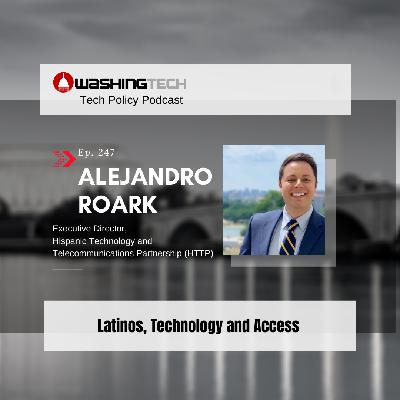
Bio Alejandro Roark is Executive Director of the Hispanic Technology and Telecommunications Partnership (HTTP) in Washington, DC. HTTP is a national non-profit that convenes an intersectional coalition of national Latino organizations committed to promoting access, adoption, and the full utilization of technology and telecommunications resources by the Hispanic/Latino/a community in the United States. HTTP works at the intersection of ethics, technology, and public policy to educate, advocate, and serve as a national voice for Hispanics/Latinos in technology and telecommunications policy. As Executive Director, Alejandro leads a strategic planning process with HTTP member organizations to set the national Latino tech policy agenda that creates opportunities for national, and local advocates to engage with Congress and the Administration to advocate for inclusive public policy that promotes civil rights protections, equitable access to broadband, and increased diversity in media and tech workforces. HTTP works to extend Latino priorities in the following policy areas: broadband adoption, spectrum allocation, consumer privacy, open internet, intellectual property, and diversity & Inclusion within the technology workforce. With nearly a decade of experience working at the local, state and national level, Alejandro has dedicated his career to the elimination of structural inequities across LGBT inclusion, racial and social justice, and civil rights policies, through community power building, story-telling, equitable resource allocation and by creating pathways for a more diverse workforce. Alejandro applies his skills and leadership to the examination of the ethical and social dimensions of technological change including the attention economy, data privacy, algorithmic decision-making, and artificial intelligence to ensure that Latino priorities are integrated into the policy-making process. Prior to his position with HTTP, Alejandro oversaw the tech policy portfolio which included the planning and execution of its annual Latinx Tech Summit, for LULAC National, the nation's oldest nation's country's oldest and largest Latino civil rights organization. In addition to leading the corporate social responsibility team where he worked with fortune 500 companies to develop, implement, and scale nationwide community programs and coordinating LULAC's Corporate Alliance. Alejandro has also served as the founding executive director for Utah's first and only Mexican Cultural Arts organization, as well as the associate director for Equality Utah where he managed the region's public relations systems, community outreach programming, and state, local, and federal advocacy work. Resources Hispanic Technology and Telecommunications Partnership Intro Hey everyone. Here we are on Election Day as purveyors of misinformation and intimidation use both traditional and digital tactics to keep voters away from the polls. The backdrop to this, of course, has been the Supreme Court's roll-back of the Voting Rights Act, most notably its Shelby County v. Holder decision, in which it essentially neutered the VRA's preclearance requirement -- the provision requiring state and local governments to get federal approval before making changes to their voting laws and practices. Section 5 is still there. The Court just ruled the 40-year-old data Congress relied on to decide which states are subject to the requirement were too-old. Then, as Laurence Tribe wrote in Lawfare last week, we have the current, conservative majority of the Supreme Court, with the exception of Chief Justice Roberts, suggesting state legislatures should be the highest authority in each state when it comes to each state's voting laws, even above the highest state court charged with enforcing each state's constitution. Social media has not played as dominant a role in shaping public opinion as it did in 2016. But that doesn't mean state actors and others aren't still using it. And the Washington Post reports bad actors are using robocalls, in Michigan specifically, to explicitly tell people to stay away from the polls. The FCC empowered carriers to block robocalls before they reach consumers. But apparently they dropped the ball here. The New York Times warned the public this morning about potential rigged voting machines, tossed ballots, and intimidating federal agents, Yes, this is 2020. And yes, we are still fighting this battle. In this election though the electorate cast their votes by mail in record numbers. So we are seeing this shift across the political spectrum to more analog tacticseither to suppress votes or to preserve them. --- We'll see what happens. I'm tuning it out--at least until tomorrow. I don't think I'm even gonna watch the results come in. I'll wake up tomorrow and see what happened. But my guest today is Alejandro Roark, Executive Director of the Hispanic Technology and Telecommunications Parntership here in Washington. Previously, Alejandro led LULAC's tech portfolio. He was also the founding Executive Director of the state of Utah's first and only Mexican Culutral Arts Organization. Alejandro Roark!


How to spot and stop misinformation with John Breyault (Ep. 244) How to spot and stop misinformation with John Breyault (Ep. 244) -- John and Joe Miller discuss how consumers themselves can correct misinformation, by weighing in when they see it, rather than relying on tech companies. Bio John Breyault is a nationally-recognized consumer advocate with more than 15 years of experience championing the rights of consumers and the underserved. At the National Consumers League, he advocates for stronger consumer protections before Congress and federal agencies on issues related to telecommunications, fraud, data security, privacy, aviation, live event ticketing, video gaming, and other consumer concerns. In addition, John manages NCL's Fraud.org and #DataInsecurity project campaigns. John has testified multiple times before Congress and federal agencies and is a regular contributor to national press outlets including the Washington Post, New York Times, and The Wall Street Journal. Prior to NCL, John was the director of research at Amplify Public Affairs, where hs supported clients in the telecommunications, energy, labor, and environmental sectors. Earlier in his career, John worked at Sprint and at the American Center for Polich Culture in Washington, DC. A lifelong Virginian, John is a graduate of George Mason University, where he received a bachelor's degree in International Studies with a minor in French. Resources: National Consumers League Intro Joe: Hey everybody. Congress can't get anything done. Now the state Attorneys General are hamstrung by corruption and politics, as they try to execute a serious of actions against big tech. Real news outlets believe the Department of Justice and various state coalitions are planning to sue Google. The DOJ is expected to focus on Google's search dominance. The state coalitions are working together with the DOJ, but then again, they're no,t because many of them believe the DOJ's moving too slowly. Congress has subpoenaed Facebook, Google, and Twitter. But, of course, Republicans and Democrats rarely see eye-to-eye. But now we've got problems in Texas -- with their Attorney General, Ken Paxton, facing bribery charges -- accusations his own Deputies alleged in a whistleblower complaint. It's a litany of allegations claiming that: He received hundreds of thousands of dollars in gifts for his own legal defense fund. What did the people who gave those donations expect in exchange? They couldn't have given them out of the goodness of their hearts. In that case, why not give it to poor people? Nevertheless, Paxton says these donors are family friends. His own wife, a state senator, introduced a bill to expand his power to exempt individuals from state regulations, which would have set him up to return favors to people. He unilaterally decided that Texas Governor Greg Abbot's ban of elective procedures due to COVID-19 should apply to abortions. This went into effect immediately, forcing women to cancel their appointments, pending the outcome of litigation arising from this. The list goes on and on. So Democratic Attorneys General are calling for Paxton to step down, saying it threatens their multistate investigation into Google's market practices. Meanwhile, sources expect the DOJ to file a lawsuit in a few days. Why that's public, I have no idea. You'd think it'd be attorney-privileged. But, frankly, following ethical guidelines doesn't appear to be part of Bill Barr's skill set. To make matters worse, you have a dozen or so other Republican Attorneys General facing similar corruption problems. Eliot Spitzer must feel vindicated for his little prostitution situation back in 2008. But that was 12 years ago! Let's move on, let's move on. John McAfee, the namesake of the antivirus software, was arrested in Spain Monday. The Securities and Exchange Commission alleges McAfee took $23 million from people to invest in cryptocurrencies he was being paid to promote. But the officials note this is a personal lawsuit, not one against McAfee, the company. So we're in this place where politics are holding up anything meaningful when it comes to antitrust enforcement against big tech companies. We'll see what the DOJ lawsuit says. But, without even looking at it, I anticipate a number of free speech problems that will have to be overcome, and much of the case law has been written by Conservatives. Related Episodes 'Social media policy: It's the moderation, stupid!' with Chris Lewis Ep. 232(Opens in a new browser tab) 'Health Tech and Communications in Crisis' with Licy DoCanto (Ep. 231)(Opens in a new browser tab) 'They Smile in Your Face: How the Internet is Unmasking Hidden Racism' with Robert Eschmann (Ep. 222)(Opens in a new browser tab) Ep. 203: The Internet and Racial Justice w/ Charlton McIlwain(Opens in a new browser tab) Kids and YouTube with Patrick van Kessel (Ep. 197)(Opens in a new browser tab)

Bio Charlton McIlwain (@cmcilwain) is Vice Provost or Faculty Engagement and Development; Professor of Media, Culture and Communication at New York University. His recent work focuses on the intersections of race, digital media, and racial justice activism. He recently wrote Racial Formation, Inequality & the Political Economy of Web Traffic, in the journal Information, Communication & Society, and he co-authored, with Deen Freelon and Meredith Clark, the recent report Beyond the Hashtags: Ferguson, #BlackLivesMatter, and the Online Struggle for Offline Justice, published by the Center for Media & Social Impact, and supported by the Spencer Foundation. Today, Tuesday October 1st, 2019, his new book entitled Black Software: The Internet & Racial Justice, From the AfroNet to Black Lives Matter releases via Oxford University Press and available wherever you buy books. Resources McIlwain, Charlton. Black Software: The Internet & Racial Justice, from the AfroNet to Black Lives Matter (Oxford University Press, 2019)

Hey everybody, I'm Joe Miller and here's what's going on in the world of tech law & policy this week. Alfred Ng over at Politico reports that the police can obtain Ring camera footage without your permission. All they need is a warrant. But don't worry – they will be nice. They will call you instead of knocking on your door. If you don't give them the footage, Ring will also contact you. If you still don't give them the footage, well, I don't know about you but I wouldn't want to find out what happens after that! And getting a warrant is the least intrusive way to gain access. San Francisco recently passed an ordinance allowing police access to live Ring camera footage. – Should the U.S. ban TikTok in the U.S.? The younger you are, the more likely you are to say, "No." But lawmakers across the aisle want the app banned, citing security and propaganda concerns about the fact that its parent company, ByteDance, is based in China, and China has way more control over its corporations than the U.S. But in yet another deadlock in Washington, the Biden administration hasn't acted, the Commerce Department hasn't acted, and neither has Congress. The Committee on Foreign Investment in the U.S. (CFIUS) has engaged nine agencies in an investigation, but it has taken years to get that completed. Neither Democrats nor Republicans want to be the ones to anger GenZ and suburban moms. And a ton of TikTok accounts are run by politicians. There's been discussion about Oracle handling all U.S. TikTok data in the U.S. But engineers in Beijing will still have access. – House Republicans are lining up in support of Elon Musk, as Cat Zakrzewski reports in the Washington Post. House Judiciary Committee Chair Jim Jordan released an 18-page report attacking the Federal Trade Commission's investigation of the platform, calling it a "harassment campaign" against Elon Musk.. The FTC began re-investigating Twitter last year, before Musk acquired Twitter, about a possible breach of its 2011 consent decree to improve privacy practices. The privacy loophole in your doorbell Police were investigating his neighbor. A judge gave officers access to all his security-camera footage, including inside his home. politico.com VIEW MORE As Washington wavers on TikTok, Beijing exerts control TikTok's link to China has sparked fears over propaganda and privacy. It's also exposed America's failure to safeguard the web. washingtonpost.com VIEW MORE House Republicans defend Musk from FTC's 'harassment campaign' The FTC's Twitter probe has earned the ire of House Republicans, who argue the agency is trying to thwart Musk's absolutist vision of free speech on Twitter. washingtonpost.com VIEW MORE Biden Seeks $100 Million Boost for Justice's Antitrust Muscle President Joe Biden is asking for a $100 million increase in the fiscal year 2024 budget for the Justice Department's antitrust division, underscoring his focus on enforcing against companies' anticompetitive conduct. news.bloomberglaw.com VIEW MORE CFPB and NLRB Announce Information Sharing Agreement to Protect American Consumers and Workers from Illegal Practices | Consumer Financial Protection Bureau The Consumer Financial Protection Bureau (CFPB) and the National Labor Relations Board (NLRB) today signed an information sharing agreement, creating a formal partnership between the two agencies to better protect American families and to address practices that harm workers in the "gig economy" and other labor markets. consumerfinance.gov VIEW MORE Warren Urges DOJ Review of Thoma Bravo Rental Software Unit A group of Democratic senators is urging the US Justice Department to scrutinize whether Thoma Bravo LLC's rental software company RealPage Inc. is fomenting rising rents across the US through its rental pricing software. bloomberg.com VIEW MORE Biden FCC nominee withdraws after a bruising lobbying battle Gigi Sohn's decision leaves the agency deadlocked -- and Biden's internet promises in limbo washingtonpost.com VIEW MORE
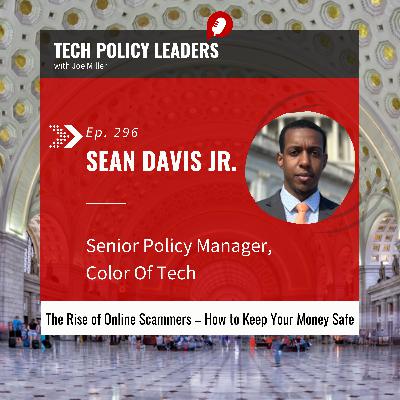
The internet can be a minefield of financial scams, but you don't have to navigate it alone. Arm yourself with knowledge and stay protected from online fraud. Bio LinkedIn Instagram Sean Davis is a privacy lawyer based in Washington, D.C. and Senior Analyst at the Information Technology and Innovation Foundation (ITIF). Previously, he was with Engine.org, the small business advocate, where he served as Policy Manager. Prior to that Sean was with Wikimedia Foundation and Public Knowledge. He earned his JD from George Washington University School of Law and his Bachelor's in English from Mount St. Mary's. Resources Staff, the P.N.O. and Nguyen, S.T. (2023) New FTC data show consumers reported losing nearly $8.8 billion to scams in 2022, Federal Trade Commission. Available at: https://www.ftc.gov/news-events/news/press-releases/2023/02/new-ftc-data-show-consumers-reported-losing-nearly-88-billion-scams-2022 (Accessed: March 6, 2023).
Characterizing the popular TikTok app as a modern-day "Trojan Horse" because its parent company, ByteDance, is based in China, House Foreign Affairs Committee Chairman, Michal McCaul, aa Texas Republican, introduced the "Deterring America's Foreign Adversaries Act, which would ban TikTok in the United States. Democrats oppose the bill, saying it would go too far in abridging the Freedom of Speech. The American Civil Liberties Union is also pushing back against the bill. Federal courts have previously held that blocking TikTok would violate the International Emergency Economic Powers Act, which limits the president's ability to block informational and personal communications. In the coming weeks, TikTok is expected to release a new feature that notifies kids when they have been using the app over a specified period of time, after which kids can decide if they want to stay logged in. For kids under 13, they'll need a password from mom and dad to keep using TikTok after the allotted time has passed. Critics of these measures say they are meaningless since kids can still claim to be adults when they set up TikTok accounts. A new initiative from the National Center for Missing & Exploited Children has a new app called 'Take it Down' that helps kids confidentially remove nude images of themselves that exist online, shared when they were minors. The app is available for download at https://takeitdown.ncmec.org/. It doesn't work with TikTok yet. However, it does work with Facebook, Instagram, OnlyFans, and PornHub. The White House last week released what it is calling a New Initial Blueprint to address online harassment and abuse. The Executive Summary, prepared by a Task Force the Biden Harris Administration established last year, includes provisions for preventing online harassment and abuse, supporting victims, conducting research, and holding platforms accountable. And as prosecutors in states in which abortion has become illegal continue to push for more access to reproductive health data from women seeking abortions, some lawmakers are seeking privacy legislation more suited for our post-Roe v. Wade world. One bill, introduced by Democratic Representative Sara Jacobs from California – the SAFER Health Act – would require patients to provide consent to permit healthcare providers to share data about abortions or miscarriages, even if the data are being sought via court order. And democratic senators Mazie Hirono, Amy Klobuchar, and Elizabeth Warren also introduced a bill – the Upholding Protections for Health and Online Location Data (UPHOLD) Privacy Act - that would also restrict access to patient location data. The new bill comes amid a decision by Walgreens –America's second-largest pharmacy chain – to stop selling abortion prescriptions throughout the United States, even where abortion remains legal. The decision dealt a blow to abortion rights activists. The Federal Trade Commission has proposed a $7.5 million settlement to mental health app BetterHealth for sharing patients' data with marketers even after telling the patients Betterhealth would protect the data. The FTC has also commenced looking into how landlords may use algorithms to screen tenants. In other news … The Inspector General's Office of the Department of Homeland Security issued a report showing federal law enforcement officials with Immigrations & Customs Enforcement, as well as other federal agencies, didn't follow established protocols for using cell-site simulators – or Stingrays – to pursue subjects. Police in the Commonwealth of Virginia are back to using facial recognition software – but the data collection is limited to certain circumstances, which don't include scanning faces in real-time. Algorithms are starting to decide which employees to lay off. And Google has released its civil rights review. House Committee Advances Bill To Ban TikTok "If it's too dangerous to be on our phones, it's also too dangerous to be on our children's phones," Rep. Michael McCaul said at a hearing Tuesday. mediapost.com VIEW MORE TikTok isn't really limiting kids' time on its app Teens can still click right on through the new screen time limit. vox.com VIEW MORE Take It Down This service is one step you can take to help remove online nude, partially nude, or sexually explicit photos and videos taken before you were 18. takeitdown.ncmec.org VIEW MORE EXECUTIVE SUMMARY: Initial Blueprint for the White House Task Force to Address Online Harassment and Abuse | The White House Online harassment and abuse is increasingly widespread in today's digitally connected world. This can include online threats and intimidation as well as various forms of technology-facilitated gender-based violence (GBV), such as the non-consensual distribution of intimate images, cyberstalking, and sextortion. Women, girls, and LGBTQI+ individuals are disproportionately affected. Survivors of online harassment and abuse—especially image-based… whitehouse.gov VIEW MORE Post-Roe, prosecutors can seek unprotected reproductive health data Health privacy in the post-Roe digital age is fraught as prosecutors seeking to enforce anti-abortion laws are free to go after reproductive health data in mobile apps. axios.com VIEW MORE FTC says online counseling service BetterHelp pushed people into handing over health information – and broke its privacy promises In the hierarchy of confidential data, health information ranks right up there. ftc.gov VIEW MORE Democrats' New Bill Could Be the First Real US Privacy Law Did you know there are basically no privacy laws at the federal level? Even HIPAA, the US's big medical privacy rule, lets companies buy and sell your health secrets. The Democrats want to change that with a bill that would protect health and location data. gizmodo.com VIEW MORE AI is starting to pick who gets laid off As layoffs rave the tech industry, algorithms once used to help hire could now be helping to lay people off. washingtonpost.com VIEW MORE Tenant screening practices: the FTC wants to learn more consumer.ftc.gov VIEW MORE Police use of facial recognition tech resumes with guardrails Critics argue the law governing its use is still too broad. vpm.org VIEW MORE Report: ICE and the Secret Service Conducted Illegal Surveillance of Cell Phones The Department of Homeland Security's Inspector General has released a troubling new report detailing how federal agencies like Immigration and Customs Enforcement (ICE), Homeland Security Investigations (HSI), and the Secret Service have conducted surveillance using cell-site simulators (CSS)... eff.org VIEW MORE Home Depot, Ring, others allegedly record website visitors' online communications Consumers recently filed multiple class action lawsuits against companies accused of unlawfully recording the online communications of their website visitors. topclassactions.com VIEW MORE Google releases civil rights review, caving to years of pressure Advocacy groups have long called on the tech giant to follow companies such as Meta and Apple and vet its products for racial biases. washingtonpost.com VIEW MORE
In this episode of the Tech Policy Leaders podcast, Meredith Broussard discusses her new book 'More Than a Glitch,' which takes a critical look at algorithms and the people who create them. Bio Website LinkedIn @MerBroussard Data journalist Meredith Broussard is an associate professor at the Arthur L. Carter Journalism Institute of New York University, research director at the NYU Alliance for Public Interest Technology, and the author of several books, including "Artificial Unintelligence: How Computers Misunderstand the World" and "More Than a Glitch: Confronting Race, Gender, and Ability Bias in Tech." Her academic research focuses on artificial intelligence in investigative reporting and ethical AI, with a particular interest in using data analysis for social good. She appeared in the 2020 documentary Coded Bias, an official selection of the Sundance Film Festival that was nominated for an Emmy Award and an NAACP Image Award. Resources (2022) More Than a Glitch: Confronting Race, Gender, and Ability Bias in Tech. Available at: https://bookshop.org/p/books/more-than-a-glitch-confronting-race-gender-and-ability-bias-in-tech-meredith-broussard/18634652?ean=9780262047654 (Accessed: February 27, 2023).
Hey everybody, I'm Joe Miller and here's what's going on in the world of tech law & policy this week. Somehow, a U.S. government server running on Microsoft's Azure government cloud was unsecured, exposing U.S. Special Operations Command (USSOCOM) data, including sensitive personnel information. Security researcher Anurag Sen discovered the breach last week, and the Department of Defense patched it up after spilling data for 2 weeks. USSOCOM told TechCrunch that no data breach occurred. Thirty-eight months – that's all Garret Miller got for assaulting officers and tweeting a threat at Alexandria Ocasio-Cortez saying "assassinate AOC" during the January 6th 2021 Capitol Riot. Miller, a 36-year-old from Texas, was sentenced to 38 months for assaulting officers and threatening Rep. Alexandria Ocasio-Cortez, tweeting at her the words "assassinate AOC," and running around with rope and grappling hooks. Vice reports that ICE's $22 million contract with LexisNexis gives the agency unfettered, warrantless access to millions of data points. LexisNexis also links public records between agencies, including the Secret Service. 80 civil society and immigration advocacy groups have urged the Department of Homeland Security not to renew LexisNexis' contract when it expires on February 28th. Thirty-year-old Sam Bankman-Fried may be safe living at home with his parents, while he's out on bail, but the charges against him following the implosion of the FTX crypto currency exchange he founded are piling up. Federal prosecutors allege Mr. Bankman-Fried used "straw donors" to evade campaign contribution limits, hundreds of times, using money from FTX customer accounts. Stat reports that machine learning models to predict stroke risk are mediocre – not much better than simpler algorithms – and they're even worse at predicting risk for Black men and women compared to White patients. Researchers proposed connecting electronic health records with local community data. The Markup reports that Kroger, the supermarket chain that includes Harris Teeter, reports your data to countless brands including General Mills. We're talking 2,000 variables about you times the billions of other transactions from customers just like you over the years.. They're collecting facial recognition data, they get your household data every time you enter your phone number at the cash register, they're tracking your online shopping cart and making all sorts of predictions about you, when all you were trying to do was buy a bag of mandarin oranges. And the Markup says the problem will get worse if Kroger & Albertson's $24.6 billion merger goes through. Also … The Wall Street Journal reported that federal law enforcement arrested Ozy Media CEO Carlos Watson for misleading potential investors, misreporting audience numbers and who the other investors were. The Verge reports that video game maker Valve has cracked down on cheaters, banning 40,000 users for accessing a cheat "honeypot" in Dota 2. And a science fiction magazine had to cut off submissions after being bombarded with AI-generated content To go deeper, you can find links to all of these stories in the show notes. Stay safe, stay informed, have a great week. Ciao. Sensitive US military emails spill online A security researcher told TechCrunch that a government server was exposing military emails to the internet because no password was set. techcrunch.com VIEW MORE Capitol rioter who tweeted threat to Rep. Ocasio-Cortez sentenced to 38 months in prison | CNN Politics A Texas man was sentenced to more than three years in prison Wednesday for assaulting police officers during the US Capitol riot and threatening Rep. Alexandria Ocasio-Cortez on Twitter shortly after the attack. cnn.com VIEW MORE Immigration Advocates Urge DHS to Drop ICE's LexisNexis Contract ICE has queried LexisNexis' data more than a million times, and leadership encouraged officials to use the tool for finding non-citizens. vice.com VIEW MORE Bankman-Fried charged with hundreds of illegal campaign donations The FTX co-founder is accused of "flooding the political system with tens of millions of dollars in illegal contributions," according to a new indictment. nbcnews.com VIEW MORE Tools to predict stroke risk work less well for Black patients, study finds Stroke risk prediction tools are meant to guide how doctors approach a potentially deadly condition. But a new analysis finds several work less well for Black patients. statnews.com VIEW MORE Forget Milk and Eggs: Supermarkets Are Having a Fire Sale on Data About You – The Markup When you use supermarket discount cards, you are sharing much more than what is in your cart—and grocery chains like Kroger are reaping huge profits selling this data to brands and advertisers themarkup.org VIEW MORE Ozy Media CEO Carlos Watson arrested on fraud charges Prosecutors allege Watson misled potential investors about their revenue and business projections to the company's audience numbers and the identities of its investors. nbcnews.com VIEW MORE Dota 2 bans 40,000 cheaters after laying 'honeypot' trap Valve caught players red-handed while patching a known exploit. theverge.com VIEW MORE A sci-fi magazine has cut off submissions after a flood of AI-generated stories The science fiction and fantasy magazine Clarkesworld says it has been bombarded with AI-mage stories. Its publisher says it's part of a rise of side hustle culture online. npr.org VIEW MORE
ChatGPT is an artificial intelligence (AI) chatbot written in natural language processing (NLP) technology that can interact with its users on a variety of different topics and respond in meaningful ways. AI-driven tools are emerging as powerful new tools in the legal industry, especially when it comes to streamlining mundane tasks, assisting with research and enhancing customer service functions. In this episode, I interviewed ChatGPT and input its responses into a text to speech generator. We took a dive into the ethics of AI, the limitations of its capabilities, and some of the philosophical questions about the nature of how it "thinks," using the use of AI in the legal profession as a case study. Bio Website ChatGPT (Chat Generative Pre-trained Transformer) is a chatbot developed by Open AI and launched in November 2022. In January, Microsoft announced a $10 billion investment in Open AI, which includes ChatGPT as well as DALL-E, another Open AI generative AI platform that creates artwork based on user queries. Obviously, ChatGPT is text-based so I put the answers it gave me into a text-to-speech reader. I used a platform called Speechify, which gave me a 3-day free trial to do this, so thank you Speechify. And I think this particular voice is based on Sir David Attenborough's, which made it kind of fun. I hope you enjoy it too. And thank you David Attenborough! How do I get you on the show? I guess this will have to suffice. Resources OpenAI
Folks, kids are having a really hard time, and a lot of it has to do with what's happening on the internet. Some lawmakers appear to be trying to do the right thing, but it seems like all they're really capable of doing is introducing legislation – legislation that doesn't get anywhere. The CDC released a report Monday finding teens, especially girls, are in a bad place right now with some 57% of the 17,000 high school girls surveyed persistently feeling bad or hopeless. Some twenty percent of these girls report experiencing sexual violence. And a third of boys also report feeling persistently sad or depressed. One young person in Washington State is working to get a bill passed to protect images their parents shared on parenting blogs that went viral. And here in DC, the Senate Judiciary Committee heard brutal testimony from victims of addiction, cyberbullying, sexual abuse, and suicides spurred by social media and the internet. Committee Chair Dick Durbin notes that we often warn kids about strangers in public, but obv iously aren't doing enough to protect kids. So Senate Democrats introduced legislation on Monday, the Clean Slate for Kids Online Act, that would give kids the ability to have content removed that depicts them before they turned 13. Another bill, the EARN IT Act, which would establish a National Commission on Online Child Sexual Exploitation Prevention, has been floundering in Congress since 2020. On the House side, the Judiciary Committee Chair Jim Jordan subpoenaed Google, Alphabet, Apple, Amazon, Facebook, and Microsoft for documents regarding their content moderation practices. The House is currently investigating the platforms for harboring anti-conservative bias. — Down in Florida, Polk County arrested 200, charging 89 of them with soliciting a prostitute, after a week-long investigation. 111 of the suspects were arrested for prostitution, of which 24 actually turned out to be human trafficking victims. Separately, the U.S. denied a tourist visa to a UK-based VRChat user who goes by the name of "Hex." She does sex shows on the platform. The reason for the passport denial? Prostitution. —- Don't be surprised if the healthcare platforms you rely on are selling your information to marketers. The only privacy bill specifically for healthcare is the Health Insurance Privacy & Portability Act (HIPPA), which contains no provisions regarding your health data in the U.S. An anonymous plaintiff filed a class action lawsuit in Loa Angeles this week alleging Microsoft Bing, Google, and Meta rec eived data from Cedars-Sinai Health System and Cedars-Sinai Medical Center via a tracking code. And a new Duke study found data brokers can sell lists containing personally-identifiable information on thousands of depression, anxiety, bipolar disorder, PTSD, and OCD patients. – Bao Fan has disappeared in China. The American-educated and outspoken billionaire investment banker has stakes in massive Chinese companies like Alibaba & Tencent. Chinese president Xi Jinping, as Daisuke Wakabayashi of the New York Times reports, has been cracking down on business titans there. Alibaba co-founder Jack Ma disappeared from public view as well back in 2020 for being too vocal about China's fiscal policies. As were several other prominent Chinese billionaires, one of which, Xiao Jianhua, who was born in China, was arrested at the Hong Kong Four Seasons and got 13 years in the slammer for embezzlement and bribery. —- Elon Musk says he'll eventually step down as Twitter CEO once he gets the company financially stable – he's aiming for the end of this year. Earlier this week, Casey Newton reported on Platformer that Musk was forcing engineers – firing one of them – for not getting Musk's content to the top of the feed. Musk responded with a meme of a woman force-feeding another woman from a bottle of milk. Then he claimed that Newton's source was a disgruntled former employee. Also, Twitter is allowing weed advertisers on the platform now. Musk was high last year when he announced plans to acquire the company. Also, Podcaster Joe Rogan got deepaked by someone – they made him look like he was endorsing a testosterone supplement. Voice Actors are calling folks out for using their voices to create AI models without their consent Microsoft's Chatbot has gone haywire, telling one reporter to leave his wife. And the EU is investigating Amazon for acquiring iRobot To go deeper, you can find links to all of these stories in the show notes. Stay safe, stay informed, have a great week. Ciao. Addiction, Suicide, Cyberbullies: Senate Confronts Kids' Online Horror At a hearing on Tuesday, congress heard from victims and experts about the horrific effects of social media creates on children, including cyberbullying, internet addiction, sexual abuse, and suicide. It's one of the rare issues with bipartisan agreement. gizmodo.com VIEW MORE Teen Girls Are Sadder Than Ever, But Schools Can Make "A Profound Difference" New data from the CDC shows that teen girls are experiencing record levels of sadness. romper.com VIEW MORE How one teen is urging legislators in Washington state to help protect kids from being exploited on vlogs State legislators held a public hearing about a bill that would protect "the interests of minor children featured on for-profit family vlogs." nbcnews.com VIEW MORE House Republicans subpoena Apple, Facebook and Google over content moderation Rep. Jim Jordan of Ohio, chair of the Judiciary Committee, also sent subpoenas to the CEOs of Amazon and Microsoft. nbcnews.com VIEW MORE Undercover human trafficking bust in Florida leads to over 200 arrests, rescue of 24 suspected victims The Polk County Sheriff's Office in Florida announced that a weeklong human trafficking operation has resulted in the arrests of 213 individuals and the rescue of 24 victims. foxnews.com VIEW MORE VRChat Sex Worker Denied Entry To US Over 'Prostitution' UK-based Hex wanted to visit friends in the U.S. but was barred from entering due to her virtual work kotaku.com VIEW MORE Lawsuit accuses Cedars-Sinai hospital's website of sharing data with Meta, Google A proposed class action lawsuit alleges Cedars-Sinai hospital in Los Angeles shared sensitive patient data to companies such as Meta and Google for targeted advertising. abcnews.go.com VIEW MORE Data Brokers Are Selling Long Lists of People With Depression A new study finds data brokers selling lists of people with anxiety, depression, PTSD, and more for as little as $0.20. Privacy laws like HIPAA don't cover much of the internet, and there's a mental health data buffet for anyone who wants to know your secrets. gizmodo.com VIEW MORE Star Banker Vanishes in China, Stoking Fears of Renewed Beijing Crackdown Bao Fan is the latest businessman in China to disappear, raising concerns that Beijing's crackdown on the technology and financial industries will continue. nytimes.com VIEW MORE Elon Says He'll Finally Step Down as Twitter CEO, Just Give Him a Year The billionaire Twitter owner promised that he would hand over the reins after a Twitter poll overwhelmingly showed users wanted him gone. gizmodo.com VIEW MORE From 404 to 420: Twitter Now Allows Weed Advertising It's no secret Elon Musk's social media platform has been struggling financially. Maybe cannabis ads could be the green boost the company needs. gizmodo.com VIEW MORE Elon Musk's Tweets Are All Over Twitter's 'For You' Feeds After throwing a hissy fit because his tweets weren't getting seen, Musk's tweets flooded some users' 'For You' feeds on Monday. gizmodo.com VIEW MORE AI Joe Rogan promotes libido booster for men in deepfake video A deepfake video showing Joe Rogan and guest Andrew D. Huberman on The Joe Rogan Experience podcast promote a male enhancement that can be bought on Amazon. dailymail.co.uk VIEW MORE Your Favorite Voice Actors Call Out AI Sites Copying Voices Without Consent Voice actors like Jennifer Hale, Steve Blum, and SungWon Cho ask fans to support real actors, not AI kotaku.com VIEW MORE Creepy Microsoft Bing Chatbot Urges Tech Columnist To Leave His Wife The AI chatbot "Sydney" declared it loved New York Times journalist Kevin Roose and that it wanted to be human. huffpost.com VIEW MORE Amazon Subject of Investigation Over iRobot Acquisition The upcoming EU antitrust probe will also reportedly look at privacy concerns related to how the autonomous vacuum cleaner can take pictures around a home. gizmodo.com VIEW MORE
Ahmad Thomas: A Glimpse Into a Shifting World - Examining the Purpose of Corporate Social Responsibility in a Turbulent Environment Corporate social responsibility (CSR) has become an increasingly important part of business practices. Companies are ostensibly thinking more proactively and creatively about how they can contribute to the world around them and make a positive impact on society. But what does this mean for tech policy in a tumultuous world? In this episode of Tech Policy Leaders, you'll learn from Ahmad Thomas, CEO of the Silicon Valley Leadership Group. After listening to this episode, you'll understand more about: 1. The current state of corporate social responsibility 2. Ahmad Thomas' definition of CSR 3. Why corporations should care about CSR 4. How to implement CSR in your business 5. The benefits of CSR 6. Challenges faced by businesses when implementing CSR Ahmad Thomas Silicon Valley Leadership Group Twitter LinkedIn Bio Ahmad Thomas is the CEO of the Silicon Valley Leadership Group, the region's most dynamic business association. As a change agent and next-generation business leader, Thomas partners with the organization's 350+ member companies to promote entrepreneurial solutions to strengthen Silicon Valley business competitiveness, bolster its innovation ecosystem, and create shared economic value throughout the greater Bay Area. Resources The White House. The United States Government. Available at: https://www.whitehouse.gov/briefing-room/statements-releases/2022/08/09/fact-sheet-chips-and-science-act-will-lower-costs-create-jobs-strengthen-supply-chains-and-counter-china/ (Accessed: February 13, 2023) Inflation reduction act of 2022 (no date) Internal Revenue Service. Available at: https://www.irs.gov/inflation-reduction-act-of-2022 (Accessed: February 13, 2023). (no date) Broadbandusa. Available at: https://broadbandusa.ntia.doc.gov/news/latest-news/ntias-role-implementing-broadband-provisions-2021-infrastructure-investment-and (Accessed: February 13, 2023).
Hey everybody, I’m Joe Miller and here’s what’s going on in the world of tech law & policy this week. So the White House confirmed earlier this afternoon that it had shot down another object floating 40,000 ft. above Alaska. No word yet on whether it’s part of China’s balloon festival, but this one was much smaller than the one they shot down last week. Feds are investigating. Americans want privacy legislation but – as Colorado Attorney General Phill Weiser noted to the Washington Post with quite a bit of frustration – there doesn’t really seem to be a lot of governance coming from Congress. A new study from the University of Pennsylvania’s Annenberg School found most Americans simply do not understand how companies use their data. I’d venture to guess that many tech companies want to keep it that way. For example, eighty-two percent of those Americans surveyed reported that they had no idea that the Health Insurance Privacy and Portability Act (HIPPA). I didn’t even know that, if I’m being honest with you. And TSA is collecting facial data at more and more airports – with the Washington Post reporting that some 16 major U.S. airports collect facial recognition data. At Tuesday’s State of the Union, President Biden ardently called for action from Congress to do more to protect kids online, as the current minimum age to advertise to kids is currently just 13. And the U.S. Surgeon General Vivek Murthy said that 13 is too young. Republican Senator Josh Hawley is calling for 16 to become the minimum age for kids to be allowed to join social media networks. Meanwhile, over at Twitter, Elon Musk says cleaning up the platform of child abuse content is his top priority. But plenty of that material is still showing up, according to a New York Times exposé. This coincides with these repulsive individuals who were once banned, now being reinstated. And the Center for Digital Hate released a report saying these accounts spreading vile hate speech make millions for the company. And major brands’ advertisements are still showing up next to hate speech – with Fiverr, NFL, Amazon, & Apple TV among them. The University of Exeter reports an Eight-fold increase of misogynistic, dehumanizing content posted by incels on Twitter. Incels, as you may recall, are men who are “involuntarily celibate” and are furious at women for not genuflecting before them. Ofcom, the communications oversight agency in the UK is calling for amending the online safety bill to further protect women by putting a code of practice in place. This is happening as women struggle with defending themselves against all sorts of monsters on the internet creating deepfake porn using their likenesses. And a new Pew report on online dating found that some 38% of online daters, mostly women, reported receiving unwanted, sexually explicit material. And the New York Times reports that a District Court in Louisiana is now considering whether the government should have any discretion at all when it comes to putting any measures in place to combat disinformation. It is Republicans who primarily oppose any government intervention to combat harmful information, even though former Twitter employees reported that that company kept Republicans’ requests to remove progressive speech, including requests from former President Trump, whom Meta reinstated to Facebook and Instagram last week. In Turkey, victims of the horrifying earthquake that killed10s of thousands of people weren’t able to get on Twitter at all to ask for help. That’s because the Turkish government has a long history of blocking access to Twitter. So that’s what’s going on! It is astonishing how much has changed in only the last few weeks. To go deeper, you can find links to all of these stories in the show notes. Stay safe, stay informed, and have a great week. Ciao.
![[Encore Episode] Tiffany D. Cross: How to Stay True to Your Audience](https://s3.castbox.fm/62/5d/23/488cf9c05e6b4e9c7481f175ac820a5901_scaled_v1_400.jpg "[Encore Episode] Tiffany D. Cross: How to Stay True to Your Audience")
[Encore Episode -- originally recorded 1/17/2017] Bio Tiffany Cross (@tifcrossmyheart) is brings 20 years of relationships, outreach, and storytelling to The Beat, Washington's inclusive political pulse. Having spent significant time working in newsrooms, covering Capitol Hill, managing in-house corporate public affairs, working on campaigns, and navigating communities of color, she brings a unique set of skills that casts a wide net of influence. Understanding the intersection of press, partnerships, politics, and policy, Tiffany has a proven record of excellent relationships in the private and public sectors, media, the entertainment industry, and civic and social justice organizations. Most recently, Tiffany served as a Senior Advisor for the National Education Association (NEA) and its three million members. In this capacity, she liaised with the public sector, traditional and niche media markets, constituency groups, and civic and social justice organizations. She worked with NEA leadership on branding and positioning and was responsible for forging strategic partnerships, internal and external messaging, conducting scans on grassroots and grasstop organizations, and engaging communities in bilateral conversations on education, labor, and civic and social justice issues. Before joining the NEA, Tiffany served as the Manager of News & Public Affairs and the Liaison to the Executive Branch for Black Entertainment Television (BET) Networks. Her work at BET included coordinating with the Democratic National Convention and Republican National Convention in 2008, executing the network's participation in the 2008 Presidential election, brand enhancement for the network, and advising on BET's political and social agenda. Tiffany's broad experience includes guest booking for CNN's Reliable Sources with Howard Kurtz, covering Capitol Hill for Late Edition with Wolf Blitzer, and working as an Associate Producer for Capital Gang. She was also a former Producer at America's Most Wanted and Director of Communications for Brilliant Corners Research & Strategies where she worked on the Obama for America Presidential Campaign and secured high-level visibility for company president Cornell Belcher. In this episode, we discussed: how Tiffany's personal journey has informed her approach to creating value for her network. Tiffany's key strategies and mindset hacks for building powerful professional relationships in Washington. how 'The Beat' is helping policy professionals in Washington stay on top of what's happening and find relevant networking opportunities. Resources: The Beat (send news leads to: info@thebeatdc.com) The Raben Group Task Rabbit The Poisonwood Bible by Barbara Kingsolver NEWS ROUNDUP Donald Trump named former New York City Mayor and early Trump supporter Rudy Giuliani as an informal cybersecurity advisor. He'll head the President-elect's cybersecurity working group. Abby Phillip in the Washington Post writes that, since leaving the New York City Mayorship, Giuliani has started his own cybersecurity consulting firm-Giuliani Partners. Now a bunch of people are saying, "What the hell does Guiliani know about cybsecurity?" Well, Motherboard's Jason Koebler and Lorenzo Franceschi-Bicchierai looked into it and found some folks familiar with Giuliani and Partners' work ... It turns out their expertise is more along the lines of telling companies how to legally cover their asses if they're the victim of cyberbreach, as opposed to advising on actual cybersecurity solutions. So it's looking like this job is more of a thank you for to Giuliani for his help during the campaign. It also turns out, as Rob Price at Business Insider found, that Giuliani's company website--giulianisecurity.com--is replete with vulnerabilities. -- You've heard all about Trump's dossier--people calling him PEEOTUS and things like that on Twitter, so we won't go into all the details on that--especially since the dossier is still largely unsubstantiated. But Scott Shane put together a nice summary just in case you don't want to sit there all day trying to figure out what's going on with this. Basically, this all started when the Republicans retained a company called Fusion GPS to look into Trump to figure out how to hurt him politically. Then, when it turned out he was going to be the Republican nominee, the Clinton campaign took over and retained Fusion to continue the investigation. The dossier has been floating around Washington for quite sometime, but the President and President-elect were briefed on it, and that's when it made its way to the public via BuzzFeed and other sites. Mr. Trump says the entire dossier is a total fabrication. But if it's a total fabrication--it's pretty detailed, so someone must have had a lot of time on their hands. In any case, the FBI is investigating the claims ... although no one knows if Trump will authorize that investigation to continue. Some are also wondering why FBI Director James Comey was so interested in Hillary Clinton's email but not this. So this issue isn't going away anytime soon, basically, is the takeaway here. -- Matt Hamilton at the LA Times reports that BackPage--the classified ad website -- shut down its adult section last week after the U.S. Senate released a scathing report accusing the company of hiding targeted search terms related to prostitution and child abuse. BackPage Founders Michael Lacey and and James Larkin were scheduled to testify before the Senate Committee on Homeland and Governmental Affairs' subcommittee on investigations. The committee's report alleges that its review of some 1.1 million documents revealed evidence that the company facilitated sex trafficking and child abuse. Testimony from a BackPage site moderator seems to show the company actively removed search terms so they wouldn't lose ad revenue, but still keep the ads posted without actively promoting crimes. But BackPage says it adheres to the the Communications Decency Act which provides immunity to websites that host content by third parties. The company also claimed the government investigation was an violation of its First Amendment Rights One children's advocate--Lois Lee--founder of Children of the Night--even said the site has actually helped law enforcement identify predators and locate missing children. But Senators Bob Portman--the Republican from Ohio and as Democratic Missouri Senator Claire McCaskill--both of who led the bi-partisan investigation-- say BackPages's decision to shut down the adult section shows how damning the evidence they uncovered was. -- Congress has selected its leadership for its communications and tech-related committees. Senate Commerce Committee Chair John Tune announced that Mississippi Republican Senator Roger Wicker will lead the Senate Subcommittee on Communications, Technology, Innovation and the Internet. House Energy and Commerce Committee Chair Greg Walden announced Tennessee Republican Marsha Blackburn, who opposes net neutrality and prevented efforts to build municipal broadband networks, will lead the House Communications and Technology subcommittee. Jon Brodkin reports in Ars Technica. -- Aaron Smith at Pew reports that a record number of Americans have smartphones and access to broadband at home. Seventy-seven percent of Americans have smartphones, with explosive growth among adults over age 50. Americans with access to broadband at home increased 6 points to 73%. Also, Seventy percent of Americans use social media and half own a tablet. -- iPhone app purchasers may sue Apple for not allowing them to purchase apps outside of the Apple store, according to the 9th Circuit U.S. Court of Appeals, overturning the lower court's ruling. The decision doesn't affect the merits of the case brought against Apple, but if the plaintiff's win, it could open the door for more competition in the app market. Stephen Nells and Dan Levine have the story in Reuters. -- The independent prosecutor in South Korea investigating the corruption scandal that has led to the suspension of the country's first female president -- Park Geun-hye -- has asked a local court to issue an arrest warrant for Lee Jae--yong--the head of Samsung. The prosecutors allege Lee used corporate money to bribe Park for favors. The court is expected to review the request on Wednesday. Anna Fifield has more at the Washington Post. -- Finally, The Email Privacy Act is alive again, after passing unanimously in the House and dying in the Senate last year. The bill would require authorities to get warrants for emails as well as social media data, including data older than 180 days. It would also allow providers to notify their customers that their information was requested. The bill was introduced by Rep. Kevin Yoder (R-Kan.) and Jared Polis (D-Colo.). John Eggerton has the story in Multichannel News.

China was caught floating a spy balloon over Montana. Like no one was going to see it. What else is there to do in Montana except look up at the sky? According to the Washington Post, a defense official said, “It loitered overhead for an extended period of time.” Come on guys, when are we going to get serious? What other shenanigans do we have here … Oh! The European Union is warning Elon Musk that they’re going to hit him with a can of you-know-what if he doesn’t comply with their Digital Services Act. The Act prohibits hate speech. We don’t have a hate speech ban in the U.S. But EU’s law influences Twitter content in the U.S., since managing U.S. policy and EU policy would be more expensive. And the Republican-controlled House is going to grill former Twitter staff at a hearing next week. They want to know more about why the company suppressed stories about Hunter Biden. What else? Oh – Harvard’s Kennedy School is shutting down its Technology & Social Change project after just 5 years. Prominent scholar Joan Donovan led the institute focused on misinformation. Harvard says the landscape has changed drastically and that the mission is no longer relevant. That’s the public version of the story. Donovan didn’t comment to the Washington Post. And the other piece to this is that Elon has now blocked access to Twitter's API, so researchets can no longer access it. Tech Policy Press & Justin Hendrix released a podcast episode last week giving the Indigenous perspective on Generative AI and the need to publish more work by Indigenous peoples. New York Attorney General Letitia James wants answers from Madison Square Garden and Radio City Music Hall about reports the venues used facial recognition technology to ban the lawyers opposing them from entering the venues. Thousands of lawyers were affected. James is investigating whether this practice violated New York’s Civil Rights laws. Finally, Google CEO Sundar Pichai is promising new chat features to compete with ChatGPT. Meanwhile, the company just laid off 12,000 people.
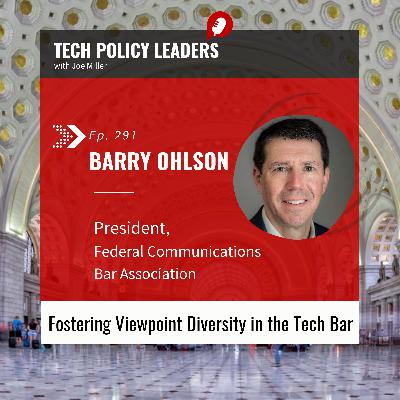
Viewpoint diversity is essential for having meaningful dialogue and achieving true understanding. It allows people to be exposed to different perspectives and consider all sides of an issue without judgment. Viewpoint diversity can lead to better solutions, deeper insights into current problems, and improved collaboration between individuals with vastly different backgrounds and opinions. Without it, the conversation becomes stagnant and limited, ultimately limiting progress. Historically, the telecommunications, media, and tech policy bar has failed to reflect the racial and ethnic diversity of the population as a whole. Until now. Barry joined Joe on the podcast to discuss how FCBA -- The Tech Bar (Federal Communications Bar Association) fosters viewpoint diversity via its new curriculum to certify underrepresented voices in this practice area. Bio LinkedIn Barry J. Ohlson serves as Vice President of Regulatory Affairs at Cox Enterprises, Inc. and currently serves as President of FCBA -- The Tech Bar (Federal Communications Bar Association). Mr. Ohlson's practice focuses on the wireless, telecommunications, and broadband sectors, with an emphasis on assessing the strategic and regulatory implications of advanced technologies and new telecommunications services. He has nearly 30 years of government, corporate, and legal experience in telecommunications, media, and tech law & policy, and he has been intimately involved in the complex regulatory and legal issues impacting businesses and stakeholders. Resources FCBA -- The Tech Bar (Federal Communications Bar Association)
Hey everybody, I’m Joe Miller and here’s what’s going on in the world of tech law & policy this week. ChatGPT is still at the top of headlines this week with Buzzfeed announcing that it’s going to use generative AI to produce “select” content. Buzzfeed’s CEO Jonah Peretti says he wants BuzzFeed to lead the future of AI-powered content. This comes only days after CNET faced scrutiny for using AI to produce content for years. And a lot of writers and journalists are worried about their jobs, as they should be. Prominent BuzzFeed journalist Max Collins told Peretti to “get f*cked.” But shareholders loved the news, rose by just over 85 percent at today’s closing bell to $3.87 per share. And on the education front, NPR reports that a University of Pennsylvania Wharton professor, Ethan Mollick, told them that “everyone is cheating.” This comes after ChatGPT aced an MBA exam earlier last week.. But Mollick decided to go ahead and make using ChatGPT a course requirement. But prominent science journals like Elsevier and Springer Nature are prohibitting ChatGPT from being listed as a co-author. And Google has text to music AI that makes songwriting a cinch with just one or two word prompts. What else? Trump’s back on Facebook. Meta made the decision to reinstate Trump because a company Global Affairs Exec Nick Clegg says enough time has passed since the January 6th insurrection at the US Capitol. On the medical mis and disinformation front, a California judge has blocked the state’s new law that prohibits doctors from giving COVID-19 misinformation. The judge rules that the misinformation standard is too vague.
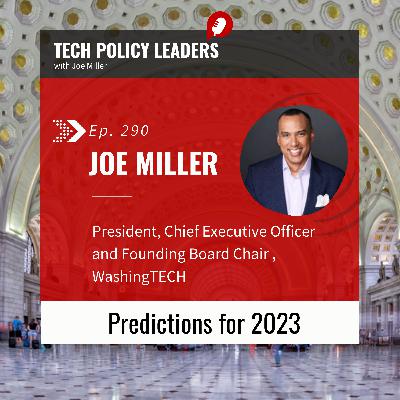
Hi everybody - Just a quick, solo episode this week, and then we're Audi 5,000 to get some rest and relaxation, spending time with friends and family for the holidays, etc. It has been such a crazy year, hasn't it? But I feel like we say that every year – In any case … I've put together some predictions for you, for whatever they're worth – First off, SBF - Sam Bankman Fried, the former billionaire and founder of the now bankrupt crypto exchange, FTX – gets convicted. I don't see him getting out of this one. I still remember Enron – actually as a young lawyer I worked on that fiasco in New York – it was a meas. And I think we're going to see a lot of others pulled into this. Every few years, someone has to be the case study for financial regulation – 5 years after Enron we had the global financial crisis and now it's SBF's turn. Next– I see children's online privacy and safety legislation finally succeeding and signed into law – we'll have the minimum age for marketing to children raised to 16. We may even see a federal standard for what schools do with kids' data and what they're going to have to do to monitor compliance from companies providing services in the classroom. Third – I think we'll see some impetus start to grow for copyright reform. We're coming up on 25 years since the Digital Millennium Colyright took effect, and I think AI-generated content is going to call for some new protocols, and at least a bit more chatter about DMCA. I don't predict comprehensive copyright reform – such as a rewriting of the entire Copyright Act – but I do see a call for an update. It's too early to tell how Open AI is going to change content – but that's where creativity comes into play. So we won't know where those pressure points are until we see what kinds of things people and companies end up creating with it. Fourth, as far as Section 230 is concerned, the Supreme Court is considering 2 cases from the 9th Circuit expected to have widespread implications for the extent to which internet platforms should be held liable for harms caused by content posted by third party users. In the first – Gonzalez v. Google – the Supreme Court will rule in favor of the petitioners – the Gonzalez family – holding that when Google recommended terror-related videos to would-be terrorists who participated in the Paris terror attacks 2015 – I see the Court ruling that by recommending content, Google went beyond the protections afforded by Section 230, stepping into the role of content creator. It will be interesting to see how far back into the common law the Court's conservative majority ventures this time – because in Dobbs it went way back to the 14th century. So maybe we'll go back to Athens or Sumer or something. As for the Twitter case, I see a positive outcome for Twitter … In that case, a terrorist attack in Istanbul killed a Jordanian citizen, and the family in that case says Twitter aided and abetted the attack by hosting terrorist-related content. I see the Court ruling that Twitter can enjoy Section 230 protection in that case, since it didn't recommend content. And, finally, antitrust. I think with a conservative House, it's going to be very difficult to get a bill passed but we've seen glimmers of bipartisanship in the context of children's online safety. But as far as competition legislation in general, I don't see it. Because the same competition policy would have to apply to all industries, I think, not just tech, and I just don't envision lawmakers wanting to end up on the wrong side of things as they take contributions from corporations heading into the 2024 presidential election season. So that's what I've got for you today as we head into the holidays. Short and sweet. We'll have new episodes for you in 2023. But until then, I'll be getting some r&r, and I encourage you to do the same after a year of completely random developments. Enjoy!


Download from Google Play

Download from App Store
 United States
small correction: her twitter handle is @anelsona