


 Claim Ownership
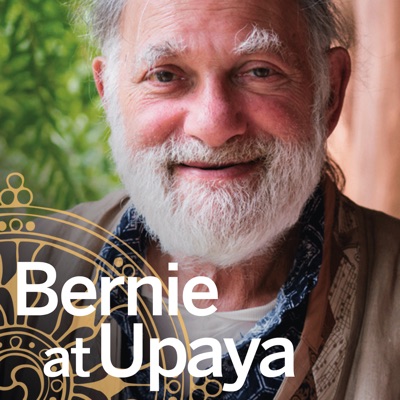
Bernie Glassman at Upaya
Subscribed: 22Played: 201
Subscribe

© Copyright 2006-2018, Upaya Zen Center. All rights reserved.
Description
This podcast features Roshi Bernie Glassman’s teachings at Upaya over the years and is a memorial series honoring his profound Zen teachings and socially engaged work in the world.
32 Episodes
Reverse

Part 5: “I live my life according to experiences, not according to the commentary.” This last half of the final panel traverses: projection in student-teacher relationships; how Roshi Joan’s and Bernie’s relationship has changed over the years; whether it’s true that “you can’t be friends with your students;” distinctions between resilience and “getting over yourself” in caregiving work…
Source
Part 4: A song and questions. After Alan leads everyone in song, the panel takes open questions and jams. They consider: are there any restrictions on what people do with this liturgy when they leave? How does the joy in breaking boundaries dance with respect for boundaries? How do you feel about the word “death” — is it too final? Or does its definiteness highlight the sea change in whatever…
Source
Part 3: Dialogue ensues! The question of feeding hungry spirits what they want versus feeding them what they need engages many voices. This leads on to: what is the difference between bearing witness and the reflex to get rid of, to “heal?” In Bernie’s opinion Bearing Witness retreats are all about fear, going to what’s scary. In the Gate, we repeat the final Dharani so as to call out yet once…
Source
Part 2: Feeding everyone. Bernie explains the inner logic and dramatic progression of the liturgy’s several pieces. It proceeds through loving invitations and invocations, magic work to actualize energies and feed everyone; through giving teachings; and climaxes with giving and taking the Buddhist precepts. Shingon condenses the five precepts into two: “Now I have raised the Bodhi mind…
Source
Part 1: An open-hearted overhaul. Bernie spins a lively history of the Gate of Sweet Nectar liturgy, from an early version (mythically attributed to Shakyamuni) to Menzan’s tantric innovations to his own open-hearted overhaul. Maezumi Roshi gave Bernie remarkable permission to remake the Gate (and by extension Zen) in an American grain: “He didn’t try to get me to be like him — he wanted me to be…
Source
Part 8: “Everything is opinion.” In this last dialogue, Bernie — with a little help from Roshi Joan and Sensei Alan — fields questions about whether the view that “everything is opinion” closes or opens dialogue; about the Greyston model; about the five Buddha families as a model for social entrepreneurship; about assassinating Hitler. Roshi Bernie Glassman More from this speaker Hozan…
Source
Part 7: Q&A. The teachers complete the Q & A session. Roshi Bernie Glassman More from this speaker Hozan Alan Senauke More from this speaker Roshi Joan Halifax, PhD Abbot Roshi Joan Halifax, Ph.D. is a Buddhist teacher, Founder and Head Teacher of Upaya Zen Center in Santa Fe, New Mexico, a social activist, author, and in…
Source
Part 6: Feminism, liturgy, and clown noses. After a song led by Sensei Alan, the panel conducts a Q & A period to close out the day. Topics covered include liturgy, feminism, teacher-student relationships, clown noses, street retreats and the meaning of radical chaplaincy. Roshi Bernie Glassman More from this speaker Hozan Alan Senauke More from this speaker Roshi Joan…
Source
Part 5: The practice of zazen. Concluding the third session of the retreat, Roshi Bernie continues his dialogue with retreatants, answering questions about the stages of “bearing witness,” telling stories from the “Bearing Witness Retreats,” and discussing the practice of zazen. Roshi Bernie Glassman More from this speaker…
Source
Part 4: Bearing witness retreats. Roshi Bernie describes the Zen Peacemakers Order and the approach of “Bearing Witness Retreats” with homelessness in New York and genocide at Auschwitz and in Rwanda. Roshi Bernie Glassman More from this speaker…
Source
Part 3: Listening without preconception. In the second part of the session, Roshi Bernie talks about the actualization of an “Indra’s Net” connecting impoverished communities by responding to the various groups’ needs by listening without preconception and acting on what arises within and between. Among other cases of skillful means, he cites his own work with the homeless, near-homeless…
Source
Part 2: Indra’s Net. After Sensei Alan Senauke opens the session with a guided meditation song, Roshi Bernie offers his opinions on “non-dual communication” on interdependence and Indra’s Net, reincarnation, koan study, the Eightfold-fold path, social activism, education, and many other images, models, and practices. Roshi Bernie Glassman More from this speaker Hozan Alan Senauke…
Source
Part 1. Nonduality. Bernie-Roshi reflects on three periods of his life, each marked by stepping beyond limited “clubs” into ever wider and less sure circles of caring engagement. He speaks of nonduality as not-knowing, freedom to think and feel outside grooved categories — a state provoked both by Zen koans and by “plunges” into deeply unfamiliar circumstances. He takes several questions from the…
Source
“Have you seen The Big Lebowski?” In this final session, Bernie continues to answer questions posed by the retreat participants. One person asked: “How can one go about distributing homemade soap to the homeless without offending them?” Another person asked Bernie to talk about his transition from being an engineer to a Zen student and then on to his engaged activity through the Grayston Mandala.
Source
Being on the street. This session continues where the previous left off, with Roshi Bernie taking a number of questions from the participants. The first question concerns Indra’s net, which leads Bernie into a discussion on the possibility of escaping the space-time continuum. The next question concerns “going deeper and deeper.” Which for Bernie means going “broader and broader in that energy…
Source
Amazing stories of forgiveness. In this Saturday afternoon session, Roshi Bernie discusses forgiveness using the Rwandan genocide as a backdrop. During a 100 day period starting in April of 1994, between 500,000 and 1,000,000 Tutsis were slaughtered by the Hutus. In light of extremely horrific, unimaginable atrocities, Bernie offers a number of amazing and beautiful stores of forgiveness.
Source
Bearing witness retreats. In this session, Roshi Bernie answers questions from the audience. Questions include: “Are there Bearing Witness Retreats in Hiroshima or Nagasaki?” “What is the status of the Lakota Retreat?” “How should one work with a person that has a tremendous amount of guilt over their past actions?” “What is the hardest thing you personally had to face at Auschwitz?
Source
Rejoice! In this Saturday morning session, Roshi Bernie opens by answering a couple of questions posed by the audience. “What is the most important element in bringing about change?” “What should you do if you don’t know what to do?” Rejoice! Bernie then moves on to the main topic of the session, the Auschwitz retreats that he founded, lead and participated in for the past twenty years.
Source
Honoring the interconnection of life. During the second half of the final retreat session, Roshi Bernie invites the gathered retreatants to share what they will take away from their time together. Retreatants then share thoughtfully and movingly on the transformations that have taken place for them over the past two days. Roshi Bernie then wraps up the retreat by drawing attention to our ability…
Source
Bearing Witness. The session begins with Roshi Joan Halifax informally reflecting on her deep affection and respect for Roshi Bernie Glassman and their long collaboration in the dharma. Roshi Bernie then shares profound teachings gleaned from his long involvement in the bearing witness retreats at Auschwitz. Roshi Bernie Glassman More from this speaker…
Source

Comments

Download from Google Play

Download from App Store
 United States