


 Claim Ownership
The Experienced Entrepreneur
Subscribed: 66Played: 2,951
Subscribe

© Marissa Lawton 2018
Description
Welcome to the show for seasoned business owners, coaches, and service providers who've been in the game long enough to know that the flashy hustle isn't sustainable — The Experienced Entrepreneur is your weekly refuge. Here, experience is your edge. This is not a show for newbies chasing overnight success; it's a podcast for those who bring wisdom, perspective, and resilience to the long game of entrepreneurship.
If you've ever felt unseen in the noise of business marketing, tired of strategies that no longer fit, or ready to recalibrate how your work serves your life — this is where you land. Every Monday, you'll get raw, candid conversations, strategy grounded in lived wisdom, and gentle challenges to rebuild your business with clarity, connection, and integrity.
Topics you'll hear here:
Business growth strategies tailored for seasoned entrepreneurs
How to overcome burnout, stagnation, and pivot fatigue
High-touch marketing, relational funnels, and value-based client attraction
Balancing scale, purpose, and life integration
Collaboration, brand philosophy, and community over competition
Whether you're a consultant, coach, or service provider who's built traction but is ready for something deeper — join me. Subscribe now so you never miss an episode, and let this show be your anchor and your catalyst in the work that matters.
If you've ever felt unseen in the noise of business marketing, tired of strategies that no longer fit, or ready to recalibrate how your work serves your life — this is where you land. Every Monday, you'll get raw, candid conversations, strategy grounded in lived wisdom, and gentle challenges to rebuild your business with clarity, connection, and integrity.
Topics you'll hear here:
Business growth strategies tailored for seasoned entrepreneurs
How to overcome burnout, stagnation, and pivot fatigue
High-touch marketing, relational funnels, and value-based client attraction
Balancing scale, purpose, and life integration
Collaboration, brand philosophy, and community over competition
Whether you're a consultant, coach, or service provider who's built traction but is ready for something deeper — join me. Subscribe now so you never miss an episode, and let this show be your anchor and your catalyst in the work that matters.
254 Episodes
Reverse

You know what you sell, who buys it, and how to deliver it. But there's a gap between where your business is and how you're showing up to lead it. In this episode, Marissa introduces the petri dish analogy that changes everything: in build stage, you're inside the petri dish as one of the variables in the experiment. In growth stage, you become the scientist running the experiment. She breaks down why taking responsibility for your business doesn't mean you can't acknowledge external factors, it means you stop using them as excuses. You'll hear about the three barriers that keep entrepreneurs stuck in builder mode (fear of failure, fear of losing freedom, and fear of looking arrogant), why the CEO shift is uncomfortable because you can't hide behind "I don't know" anymore, and what changes when you move from guessing to hypothesizing. This episode is for experienced entrepreneurs who are running businesses that need a CEO but are still showing up as a builder, who feel the weight of responsibility but don't know how to step into ownership without losing their freedom, and who are ready to stop reacting and start leading. What You'll Learn Understand the petri dish analogy that explains the shift from build stage to growth stage (you go from being a variable in the experiment to being the scientist running it) Discover the three barriers that keep entrepreneurs stuck in builder mode: fear of failure, fear of losing freedom, and fear of looking arrogant before you've "earned it" Learn the difference between acknowledging external factors and using them as excuses (a builder says "I had a bad quarter because the market was bad," a CEO says "I had a bad quarter and here's what I'm adjusting") Find out why you can't hide behind "I don't know" anymore when you have years of data, patterns, and experience guiding your decisions Hear the shift from guessing to hypothesizing and why that changes how you introduce new offers, navigate market conditions, and make strategic decisions Get clarity on what it means to lead your business instead of just react to it, and why that's the skill that makes scaling sustainable Featured Quote "You shift from being a variable inside the petri dish to being the scientist running the experiment. You're not experimenting anymore in the same way. You've gone from guessing to hypothesizing." Resources + Links Mentioned Monday Meeting: https://marissalawton.com/monday-meeting Book a Clarity Call: https://calendar.app.google/W2iLo7PbNNosQ6e88
What if the success you've been calling luck is actually a system you built without realizing it? In this episode, Marissa tackles the "fluke mindset" that keeps experienced entrepreneurs stuck in build stage thinking even when they're years into business. She breaks down why dismissing your wins as accidents keeps you from investigating the patterns that actually drive your results, and why shifting from "fluke thinking" to "framework thinking" is the first step in becoming a growth stage entrepreneur. You'll hear about the CEO shift that happens when you stop attributing success to timing and start taking responsibility for replicating it, why your wins aren't random even if they feel that way, and what changes when you start analyzing patterns instead of hoping magic strikes twice. This episode is for entrepreneurs who have consistent sales but still feel like they don't know if they can do it again, who attribute their best months to luck instead of skill, and who are ready to build frameworks that make success repeatable instead of random. What You'll Learn Understand why the "it's a fluke" mindset keeps you operating with build stage energy even when you're years into business Discover the patterns that are actually driving your success and why you haven't been able to see them yet Learn the CEO shift that happens when you stop calling wins flukes and start taking responsibility for replicating them Find out what intermediate skills growth stage entrepreneurs build that make scaling sustainable instead of chaotic Hear why your clients aren't random, your easy months aren't accidents, and your success is based on patterns you can investigate and replicate Get actionable reflection questions to help you identify one pattern you can investigate this week to replicate your best results Featured Quote "You didn't get here by accident. The clients who say yes to you aren't random. The months where revenue feels easy aren't flukes. There are patterns driving your results, and growth stage is where you learn to see them." Resources + Links Mentioned Monday Meeting: https://marissalawton.com/monday-meeting Book a Clarity Call: https://calendar.app.google/W2iLo7PbNNosQ6e88
If you're making money online, you probably think the next step in your business is to scale. Well, this episode is going to shift your entire perspective. Marissa breaks down the three stages of business (build, grow, scale) and explains why most entrepreneurs skip the growth stage entirely, jumping straight from build to scale and breaking everything in the process. She introduces the industry lie that once you're making money, it's time to scale, and explains why growth stage (the unsexy, unglamorous stage of analyzing and optimizing) is the foundation that makes sustainable scaling actually possible. You'll hear why skipping growth stage costs you in time, money, and wellbeing, what analyzing and optimizing actually look like in practice, and why refining your foundation now sets you up to scale faster and further later. This episode is for experienced entrepreneurs who are past the build stage but aren't ready to pour gasoline on a system that hasn't been refined yet. If you've been chasing the sexy promise of scaling, this is your reality check and your roadmap forward. What You'll Learn Discover the three stages of business (build, grow, scale) and why the growth stage is the most skipped and least talked about stage in online business Learn the industry lie that's pushing experienced entrepreneurs to scale before they're ready and why "if you're not scaling, you're stagnating" is costing you money and wellbeing Understand what actually happens in growth stage, and why refining your foundation is the key to sustainable scaling Find out the real cost of skipping growth stage, from wasted ad spend on unconverted funnels to hiring teams to execute inefficiency at scale Hear Marissa's radio tuning analogy that makes the concept of growth stage crystal clear (and why you don't want to amplify static) Identify what would break in your business if everything was 10x bigger tomorrow and why that's the exact reason you need growth stage first Featured Quote "Build stage is about figuring out what to sell and who to sell it to. Growth stage is about refining how you sell it and making it profitable. Scaling is about doing more of what's already working. Skip growth stage, and you're just doing more of what's broken." Resources + Links Mentioned Monday Meeting: https://marissalawton.com/monday-meeting Book a Clarity Call: https://calendar.app.google/W2iLo7PbNNosQ6e88
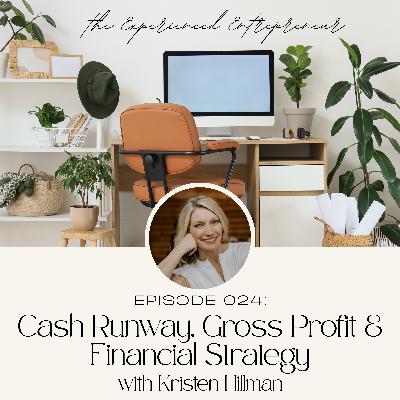
Cash reserves, gross profit, and knowing whether you're building an enterprise or an owner-driven business might sound like advanced financial concepts, but according to Kristen Hillman of Veticula Financial, they're the foundational metrics every growth-stage entrepreneur needs to understand. In this episode of The Experienced Entrepreneur, Marissa Lawton sits down with Kristen to unpack the "golden triangle" of financial advisors (CPA, wealth planner, and fractional CFO), why your cash runway should include your own pay (not just operating costs), and how to navigate the current "trust recession" by owning your community and making calm, data-informed decisions. Kristen breaks down the difference between scalable enterprise businesses and owner-defined lifestyle businesses, explains how to allocate net profit strategically, and shares why understanding your gross profit is the key to identifying which offers are actually profitable. If you've been running your business on vibes and bank account balances instead of real financial clarity, this conversation is the wake-up call you need. What You'll Learn Discover the "golden triangle" of financial advisors and why fractional CFO services fill the critical gap between your CPA and your wealth planner once you hit $500k in revenue Learn how to calculate and maintain a cash runway of three to six months (including your own pay, not just operating costs) and why tapping into it is a sign of good planning, not failure Understand the difference between enterprise businesses (built to scale and sell) and owner-defined businesses (built to fund your lifestyle and retirement) and why this distinction changes every financial decision you make Find out how to allocate net profit strategically using the 30/20/50 framework (taxes, cash reserve, owner compensation) and when to build in "fun money" for spontaneity Identify why gross profit (revenue minus cost to deliver) is the most important number for service-based businesses with teams, and how it reveals which offers are actually profitable Navigate the current "trust recession" in the online space by owning your community off social media and making decisions from data instead of panic Featured Quote "Without intentionality, we risk becoming slaves to our own businesses. Your business should always support you personally, not the other way around." Resources + Links Mentioned Kristen Hillman's website: https://veticularfinancial.com Connect with Kristen on LinkedIn Money Personality Quiz (link provided by Kristen) Monday Meeting: https://marissalawton.com/monday-meeting Book a Clarity Call: https://calendar.app.google/W2iLo7PbNNosQ6e88 Connect With Marissa Website: https://marissalawton.com

This week on The Experienced Entrepreneur, we're doing something a little different. The My Favorite Metric summit kicked off this week, and if you've been curious about what it's all about, this episode gives you a full look inside. Marissa walks you through the structure of the five-day event, who it's designed for (spoiler: growth-stage entrepreneurs, not newbies), and why she built it without the typical summit pressure tactics like disappearing content or forced upsells. You'll hear about the four themed days covering lead acquisition, engagement, sales and profit, and lifestyle metrics, plus the live panel happening Friday where 25 experienced entrepreneurs will answer your real-time questions. If you've been on the fence about signing up or you're already registered and want to know how to get the most out of the week, this episode is your orientation guide. And if you're a regular listener who just wants to know what Marissa's been building for the last few months, this is your behind-the-scenes peek. What You'll Learn Discover the difference between build-stage and growth-stage entrepreneurs and why metrics matter so much more once you've hit the growth stage Learn why this summit has no disappearing content, no all-access upsells, and no artificial urgency (and what Marissa believes about creating longer-lasting, more substantial resources) Understand the four categories of metrics covered across the summit days and why each one matters for sustainable business growth Find out how to make the most of the live panel on Friday and why showing up prepared with questions is where the real value lives Hear Marissa's full business journey (therapy license, military spouse life, eleven years online) and the values that ground everything she teaches Featured Quote "If you have everything in place — tons of leads, tons of exposure, tons of revenue — but you hate your life, then you don't have a successful business." Resources + Links Mentioned My Favorite Metric Summit (free, Feb 23–27): https://marissalawton.com/metric Register here: https://marissalawton.myflodesk.com/w4a2gvsnii The Decision Dashboard (free tracker): https://marissalawton.com/dashboard Live Panel: Friday, February 27th at 10am PT / 1pm ET Connect with Marissa: https://marissalawton.com Podcast: https://podcasts.apple.com/us/podcast/the-experienced-entrepreneur/id1448104773
If you've ever said "I'm just not a numbers person" — this episode is going to gently, but firmly, challenge that. For experienced entrepreneurs, the belief that metrics are complicated, cold, or designed for someone else is one of the most costly myths in business. Not because tracking is hard, but because the story we tell ourselves about it keeps us from accessing the clearest signal our business has to offer. In this episode of The Experienced Entrepreneur, Marissa Lawton breaks down where the "I'm not a metrics person" identity actually comes from, what it's quietly costing you in today's market, and what it really looks like to build a simple, sustainable metrics practice — one that doesn't require a finance degree or hours of spreadsheet time. If your business has been trying to talk to you through your numbers and you've been leaving it on read, this is the episode that changes that. What You'll Learn Discover where the "I'm not a numbers person" belief actually comes from — and why it has nothing to do with your actual ability to track your business Learn why instinct alone was enough in a booming market but why today's business climate demands a simple, consistent data practice Understand the difference between complicated data analysis and the kind of light-touch metrics tracking that experienced entrepreneurs actually need Identify the signals you're already reading in your business every day — and what it would mean to have a consistent way to capture them Find out what a sustainable monthly metrics practice actually looks like, and why you don't have to do it alone Featured Quote "Your numbers aren't a test you have to pass — they're the most honest conversation your business is trying to have with you." Resources + Links Mentioned My Favorite Metric Summit (free, Feb 23–27): https://marissalawton.com/metric Register here: https://marissalawton.myflodesk.com/w4a2gvsnii Monday Meeting: https://marissalawton.com/monday-meeting Book a Clarity Call: https://calendar.app.google/W2iLo7PbNNosQ6e88

In this episode of The Experienced Entrepreneur, Marissa Lawton sits down with Megan Smyth to unpack what's actually working in sales right now — and why many experienced business owners are quietly moving away from social media–dependent strategies. Megan shares the story of losing every copywriting client in a single week and how that moment forced her to confront a hard truth: relying on referrals without a system is not a strategy. Instead of doubling down on platforms she hated, Megan rebuilt her sales process around what felt sustainable, human, and repeatable — and went on to have her first six-figure year without social media driving demand. Together, Marissa and Megan explore: Why social media often functions as a vanity metric rather than a profit driver How personalized, high-touch sales processes are outperforming automated funnels The role of metrics in choosing the right platform for your business Why messaging drives over 90% of conversion rates, regardless of launch length How lifestyle metrics reveal whether your sales strategy actually supports your life This conversation is especially relevant for experienced entrepreneurs navigating a quieter market, longer sales cycles, and rising skepticism from buyers. Instead of chasing visibility for visibility's sake, Megan makes a compelling case for building sales systems rooted in clarity, consistency, and human connection. Megan is also a featured presenter at the My Favorite Metric Summit, where she goes deeper into the metrics that reveal whether your sales strategy is actually working — and how to refine it without burning yourself out. Listen in to learn how to sell in a way that aligns with your values, your capacity, and the kind of business you actually want to sustain. If this conversation resonated, you'll love what's coming next. My Favorite Metric is a free, week-long audio summit for experienced business owners who want clearer signals and calmer decision-making inside their business. Each day focuses on a different category of metrics — from lead acquisition and nurture to sales, profit, and lifestyle — so you can understand what actually deserves your attention right now. Megan Smyth is one of the featured presenters, sharing the specific metrics she uses to guide human-centered, high-conversion sales without relying on social media. The summit runs February 23–27, 2026, and all sessions remain available once you register. Sign up for free at marissalawton.com/myfavoritemetric
In this behind-the-scenes episode of The Experienced Entrepreneur, Marissa Lawton pulls back the curtain on the first few weeks of the Monday Meeting founding round. Instead of theory or hype, this episode shares what's actually happening inside the container: how the Decision Dashboard is being used in real businesses, what patterns are emerging through live dashboard reviews, and why Monday Meeting was intentionally designed as an accountability and community-based mentorship rather than a content-heavy membership. Marissa walks through two real examples from recent one-on-one sessions: How Jennifer used two Decision Dashboards, one for her private practice and one for her online business, to compare overhead, profitability, and intentionally reduce her caseload while maintaining stability How Eric re-engaged with his business after a quieter season by breaking down referral sources to see which relationships were truly generating leads and where to focus next The episode also explores: Why metrics are meant to support clarity, not pressure How intuition and data work best together in growth-stage businesses What makes Monday Meeting different from typical online memberships Why community and accountability matter more than content at this stage of entrepreneurship This conversation is for experienced business owners who are ready to stop guessing, start leading with clarity, and build sustainable growth without hustle or overwhelm. Call to Action (at the end of show notes) If this episode resonated, enrollment for Monday Meeting is opening soon. During February, waitlist members receive 50% off founding enrollment. After February 28, pricing doubles. Join the waitlist here: 👉 https://marissalawton.com/waitlist
Lifestyle and energy are often treated as personal concerns, separate from "real" business metrics. But for experienced entrepreneurs, they are some of the earliest and most honest indicators of how a business is actually functioning. In this episode of The Experienced Entrepreneur, Marissa Lawton explores why lifestyle and energy deserve a permanent place inside your business metrics system — and what happens when you ignore them for too long. Rather than framing energy as a mindset issue or a self-care problem, this conversation positions lifestyle metrics as leading indicators. They often show signs of strain, misalignment, or unsustainable growth long before revenue dips or engagement drops. Marissa shares how she tracks lifestyle and energy inside the Decision Dashboard, why these metrics matter just as much as leads and sales, and how paying attention to them helps business owners make steadier, earlier decisions without waiting for burnout to force change. This episode is especially for business owners who: Feel successful on paper but depleted in real life Want their business to support their actual capacity Sense misalignment but cannot pinpoint why Are tired of separating "business growth" from well-being Inside this episode, we explore: What lifestyle and energy metrics actually look like in practice Why they are predictive, not reactive How they interact with lead acquisition, nurture, and sales What happens when these signals are ignored How tracking them creates more sustainable growth over time This episode completes a January series exploring the four core categories of the Decision Dashboard: Lead Acquisition, Lead Nurture, Sales & Profit, and Lifestyle & Energy. If you want your business to grow without quietly costing you your capacity, this episode will help you see why these metrics matter — and how to work with them intentionally. Download the Decision Dashboard at marissalawton.com/dashboard
Sales numbers can look fine on the surface and still leave you feeling uneasy. For experienced entrepreneurs, sales and profit are not just outcomes. They are signals — indicators of alignment, capacity, sustainability, and decision quality over time. In this episode of The Experienced Entrepreneur, Marissa Lawton breaks down how to think about sales and profit metrics beyond "did it work or not." Instead of treating revenue as a scorecard, this conversation reframes sales data as information that helps you lead your business more intentionally. You'll hear why many seasoned business owners feel confused or reactive around sales even when they are making good money, and how tracking sales and profit in isolation creates unnecessary pressure. Marissa shares exactly what she tracks inside the Decision Dashboard, why profit margin matters just as much as revenue, and how sales metrics reveal patterns long before something feels wrong. This episode is especially for business owners who: Are making sales but feel unsure about sustainability Want clearer insight into what is actually driving revenue Feel tension between growth and capacity Are ready to move past hustle-based sales thinking Inside this episode, we explore: Which sales and profit metrics actually matter in a mature business Why profit margin is a leadership metric, not a bonus How sales patterns reveal alignment issues early What happens when you do not track sales intentionally How a centralized metrics system supports calmer decisions This conversation is part of a January series exploring the four core categories of the Decision Dashboard: Lead Acquisition, Lead Nurture, Sales & Profit, and Lifestyle & Energy. If you want your sales numbers to support steadier growth instead of emotional whiplash, this episode will help you see them differently. Download the Decision Dashboard at marissalawton.com/dashboard
Lead nurture is not about posting more, emailing more, or staying visible at all costs. For experienced entrepreneurs, lead nurture is about trust, continuity, and relationship — and when it's working, it should feel steady, not exhausting. In this episode of The Experienced Entrepreneur, Marissa Lawton explores what lead nurture really looks like once your business has matured past hustle-based marketing. Rather than focusing on engagement hacks or content volume, this conversation reframes lead nurture as a signal-based system that helps you understand how your audience is actually responding over time. You'll hear why inconsistent engagement is rarely a motivation problem and more often a visibility and interpretation problem, especially when metrics are scattered or tracked in isolation. Marissa shares what she personally tracks inside the Decision Dashboard, how those metrics reveal trust patterns long before sales are made, and why nurture should support your energy instead of draining it. This episode is especially for business owners who: Feel like they are "showing up" but unsure what's landing Want to build trust without performing online Are tired of chasing engagement without context Want a calmer, more sustainable way to nurture leads over time Inside this episode, we explore: What lead nurture actually measures in a mature business Why engagement metrics only make sense when viewed longitudinally How nurture metrics reveal readiness, trust, and timing What happens when you don't intentionally track nurture signals How a centralized metrics system changes how you show up This conversation is part of a January series breaking down the four core categories of the Decision Dashboard: Lead Acquisition, Lead Nurture, Sales & Profit, and Lifestyle & Energy. If you want to build trust without burning yourself out — and understand what your audience is telling you before they ever buy — this episode will meet you right where you are. Download the Decision Dashboard at marissalawton.com/dashboard
Since you've been in business for a while, you already know that "getting more leads" isn't the be-all-end-all solution some coaches say it is. The real challenge is knowing what kind of leads you're attracting, where they're coming from, and whether your lead flow is actually supporting sustainable business growth — or quietly working against it. In this episode of The Experienced Entrepreneur, I kick off a four-part January series about making better business decisions starting with Lead Acquisition. This conversation is for seasoned online business owners who are tired of guessing, reacting, or chasing visibility trends — and want a calmer, more intentional way to understand what's driving growth in their business. Rather than tracking vanity metrics or obsessing over algorithms, I share what I actually measures inside my metrics tracker Decision Dashboard, why those metrics matter, and how they reveal early signals about what's working and what's not, before things feel urgent. Inside this episode, you'll learn: What lead acquisition really means at this stage of business Which lead metrics Marissa tracks — and why she chose them How tracking lead sources over time changes your marketing decisions The early indicators that show whether growth is sustainable or shaky What happens when you don't track lead acquisition intentionally How the Decision Dashboard acts as a monthly business hub you can return to again and again This episode isn't about doing more marketing. It's about seeing clearly, so you can grow your business with steadiness instead of scramble. If you've been craving a grounded way to understand your numbers without pressure, this episode will help you orient yourself and show you how metrics can become a tool for clarity, not judgment. Listen now and learn how lead acquisition metrics support long-term business growth. Want your own clear, centralized way to track these metrics month after month? You can explore and download your free copy of the Decision Dashboard at marissalawton.com/dashboard. It's designed to help experienced entrepreneurs see what's actually happening inside their business, calmly and clearly.
Before you rush into goal-setting, optimization, or "what's next," there's something more important to do: integrate the year you just lived. In this reflective year-end episode of The Experienced Entrepreneur, Marissa Lawton guides seasoned business owners through 10 powerful questions designed to help you make sense of 2025 and move into 2026 with more clarity, steadiness, and intention. This is not a productivity episode. It's an integration episode — created for entrepreneurs who have been in business long enough to know that insight doesn't come from moving faster, but from listening more closely. Through a series of thoughtful prompts, Marissa invites you to reflect on the ways your business grew beyond revenue, the patterns that repeated themselves throughout the year, and the moments that revealed how much your capacity and maturity have expanded. You'll explore: Where your business quietly grew in resilience, boundaries, and self-trust Patterns in your metrics, energy, or decision-making that shaped your year Wobbles you moved through with more steadiness than in past seasons What you released in 2025 — and how letting go created space for something truer How aligned your business felt with the life you're trying to build What steady growth could look like in 2026 Which parts of your business are asking to be tended to before your next step How you want decision-making to feel in the year ahead What kind of rhythms, boundaries, or structures will support the version of you you're becoming Which wobble you want to catch earlier next year — and what will help you steady it Marissa also shares an invitation to a live, waitlist-only focus group for The Monday Meeting, a new mentorship space designed for experienced entrepreneurs who want a steadier relationship with their business and clearer signals for navigating the year ahead. If you're craving reflection without pressure — and clarity without hustle — this episode offers a grounded place to pause before stepping forward.
As an experienced entrepreneur, the most powerful decisions you make aren't about doing more — they're about choosing what actually deserves to come with you into the next chapter. In this reflective year-end episode of The Experienced Entrepreneur, Marissa Lawton invites seasoned business owners to pause, integrate what 2025 revealed, and practice CEO-level discernment as they step into 2026. This episode isn't about setting aggressive goals or forcing clarity before it's ready. It's about learning how to decide — calmly, intentionally, and with maturity — what stays in your business and what gets released. Inside this conversation, Marissa guides listeners through thoughtful reflection questions designed specifically for entrepreneurs who have been in business long enough to know that growth without discernment creates chaos, not stability. You'll explore: Where your business grew in meaningful but often invisible ways in 2025 Patterns in your metrics, energy, or decisions that are asking for your attention Moments where you moved through wobbles with more steadiness and self-trust What you released this year — and how letting go created space for something truer What steady growth can look like in 2026 without defaulting to hustle How to strengthen your decision-making so you're not carrying outdated strategies forward Marissa also shares details about her upcoming live, waitlist-only focus group for The Monday Meeting — a space designed to help experienced entrepreneurs reconnect with the signals inside their business and build a steadier operating rhythm for the year ahead. If you're ready to move into 2026 with clarity instead of confusion, and intention instead of reaction, this episode will meet you right where you are.
As online business owners head into a new year, most look only at the traditional metrics — revenue, growth, conversions, launches. But seasoned entrepreneurs know those numbers don't tell the full story. The real signals that predict stability, sustainability, and success are often intangible: energy, capacity, creative bandwidth, emotional resilience, and decision fatigue. In this episode of The Experienced Entrepreneur, Marissa breaks down the concept of energy accounting — the year-end audit that mature entrepreneurs use to evaluate the health of their business, not just the output. You'll learn why intangible metrics matter just as much (if not more) than the numbers on your spreadsheet, and how these internal signals often forecast your revenue, your consistency, and your ability to grow without burning out. If 2025 felt unpredictable, exhausting, or inconsistent, this episode will help you understand why. And more importantly, it will show you how to stabilize your business in 2026 by tracking the metrics most entrepreneurs overlook. In this episode, you'll learn: Why intangible metrics like energy, clarity, and emotional bandwidth are leading indicators of success The difference between energy drains, energy returns, and energy investments How to measure subjective metrics in a real, non-fluffy way Why capacity always wobbles before revenue does How to spot early signals of burnout, resistance, and overextension Why traditional planning fails seasoned entrepreneurs — and what to use instead How energy accounting strengthens your decision-making, your creativity, and your staying power If you've ever wondered why your business feels harder than it should — even when the numbers "look fine" — this episode is your guide to understanding what's actually happening underneath the surface. 👉 Ready to steady your business for 2026? Join the waitlist for The Monday Meeting and get invited to the private January 6th focus group: marissalawton.com/waitlist
Should We Be Planning 2026? (How to Lead Your Business in an Unpredictable Market) If you've been wondering whether it even makes sense to plan for 2026 with the market shifting under our feet — this episode is going to feel like a deep exhale. In today's solo episode, we're talking about what mature entrepreneurs already know: Annual planning isn't about predicting the year. It's about directing it. It's about creating a structure sturdy enough to hold you, even when the market doesn't cooperate. I'm walking you through the exact framework I use — the Rocks, Pebbles, and Sand method — and how seasoned business owners can use it to build a grounded yet flexible plan for the year ahead. Here's what we explore: Why Annual Planning Still Matters (Even in an Unstable Market) Market instability doesn't make planning irrelevant. It makes planning essential — especially for long-term business owners who need clarity, direction, and steadiness to lead well. The Rocks, Pebbles, and Sand Framework for 2026 • Rocks → your major anchors: launches, revenue cycles, time off • Pebbles → your marketing rhythms, content cadence, CEO time • Sand → everything else that fills in around the bigger pieces This is the flexible, mature CEO approach to annual planning. Why the Market Makes 12-Month Planning Hard (and What to Do Instead) Sales cycles are longer. Trust is slower. Forecasting feels impossible. So instead of forcing a rigid plan, I break down how to build: • an annual vision, • a quarterly strategy, • and monthly goals that respond to real data. Why Monthly Metrics Are Your True North for 2026 Annual planning gives you direction. Monthly metrics give you staying power. I'll share how a monthly relationship with your numbers helps you: • spot micro-trends before they become problems • correct course quickly • make decisions you actually trust • stay grounded through market uncertainty This is how experienced entrepreneurs lead with clarity instead of reactiveness. Ready for More Clarity in 2026? If this episode speaks to you, you'll want to join my live, waitlist-only Focus Group for my new offer, The Monday Meeting — a space designed for seasoned entrepreneurs who are craving steadiness and clearer decision-making in the year ahead. Join the waitlist to get your invite: marissalawton.com/waitlist
Being in business long enough, you've faced this question: "Do I stay the course… or am I self-sabotaging?" In this week's solo episode of The Experienced Entrepreneur, we unravel one of the most complex challenges seasoned business owners face — knowing when something in your business still has staying power, and when your desire to quit is actually coming from fear, fatigue, or avoidance. This is not a beginner conversation. This is a maturity conversation — one that honors both your intuition and your data. For years, the online business world taught us that ease equals alignment, that discomfort signals misalignment, and that the moment something feels hard we should pivot. But the truth is far more nuanced for entrepreneurs who have been in business 5, 8, 10+ years. In this episode, we explore: How to distinguish intuitive guidance from self-sabotage Not all discomfort is misalignment — some of it is growth. Not all fear is a sign to stop — sometimes it's a sign you're on the edge of something important. The difference between "bad vibes" and genuine misalignment Most experienced entrepreneurs are either intuition-led or data-led — but neither alone is enough in your second decade of business. How intuition + data work together to reveal the truth We talk through the real interplay between gut instinct, metrics, and emotional maturity… and how blending these two creates the clearest decision-making you've ever had. Why self-sabotage often appears right before a breakthrough We break down the subtle forms self-sabotage can take — from calling fear "intuition" to reinventing instead of refining. What staying power feels like inside your body and inside your business This is the wisdom piece no one teaches: how the work that is still yours will continue to pull you forward even when it's challenging. How to avoid burning down something that still belongs to you You'll learn the signals of a wobble vs a warning — and how to see your business clearly again. This episode is for you if: You're an established entrepreneur craving clarity in your next chapter You've questioned whether you're meant to stay or pivot You've felt discomfort and weren't sure if it meant misalignment or growth You want to make decisions from wisdom, not fear or exhaustion You're ready to rebuild a steadier, more grounded relationship with your business And if this episode illuminated something for you — if it helped you see where you've been wobbling, or where you've been tempted to burn down something that still has staying power — I would love for you to join me for the focus group for my brand new offer The Monday Meeting. It's live. It's intimate. It's waitlist-only. And it's designed specifically for long-term entrepreneurs who lived through the unpredictability of 2025 and are craving a steadier, clearer, more grounded way to run their business in 2026. We'll talk honestly about what's been missing from your business, what's working, what's not, and what kind of support actually feels nourishing in this season of your journey. You'll also get a first look at how The Monday Meeting is being built for entrepreneurs who aren't newbies anymore — the ones who are ready for less chaos and more clarity. Get on the waitlist at marissalawton.com/waitlist.
What if the real measure of a healthy business isn't how much you make—but how much you keep? In this episode of The Experienced Entrepreneur, Marissa Lawton shares why she's shifting her focus to profit margin and what that means for seasoned business owners who are ready to step off the "scale at all costs" treadmill. After more than a decade in business, Marissa has seen every iteration of the CEO era—the endless hiring, the tech subscriptions, the outsourcing, the pressure to look like you're growing faster than you actually are. But now, the most experienced entrepreneurs are craving something different: stability, discernment, and financial breathing room. Inside this episode, you'll learn: What profit margin actually means and how to calculate it. Why mature entrepreneurs are prioritizing profit over growth. The difference between smart and wasteful investments (and how to know which is which). How to simplify your tech stack, trim recurring expenses, and build true financial resilience. Why keeping more money isn't about scarcity—it's about sovereignty. If you've been feeling the weight of too many expenses, too many tools, and too little clarity, this conversation will help you get back to what matters: a business that's efficient, steady, and deeply sustainable. Listen to Episode 10: Why I'm Focusing on Profit Margin Right Now
There's a difference between running a business and playing at one. In this episode of The Experienced Entrepreneur, Marissa Lawton breaks down what it really means to work hard without burning out — and how to reclaim your energy through intentional effort. You'll learn how to spot the difference between hustle (reactive, fear-based, endless) and a sprint (focused, strategic, time-bound). Marissa shares her framework for designing "seasons of sprint" that move your business forward without tipping you into exhaustion — including how to track what's working, when to rest, and how to tell if you're running your business or if it's running you. If you've been feeling like slowing down means losing progress, this episode will help you reframe your relationship with effort, rebuild trust in your discipline, and remember that running a real business takes time, energy, and heart. In this episode, you'll learn: The crucial difference between hustle and hard work Why running a business should take effort — and how to make that effort sustainable The five key elements of a healthy sprint: purpose, time frame, metrics, focus, and rest How to recognize when you're sprinting intentionally versus avoiding stillness Why rest isn't a reward, but a strategic part of your success rhythm Listen to Episode 9: Hustle vs. Sprint — How to Be Ambitious Without Burning Out
The online business space has changed — and so has the way people buy. In this episode of The Experienced Entrepreneur, Marissa Lawton breaks down what's really happening behind today's slower sales cycles and why it's not a bad thing. You'll learn how buyer psychology has evolved, what the new customer journey looks like, and how to adapt your business strategy with more steadiness, connection, and confidence. Marissa shares how the old "seven touchpoints before a sale" rule has ballooned to nearly eighty — and what that means for your marketing, your mindset, and your metrics. You'll explore how to meet buyers where they are, build genuine trust over time, and make sales that feel aligned instead of forced. Whether you're a coach, service provider, or creative entrepreneur, this conversation will help you reframe what success looks like in a maturing market — and remind you that your experience is your greatest asset. In this episode, you'll learn: What a sales cycle actually is (and how to track yours) Why buyers are taking longer to make decisions in 2025 How to shorten your sales cycle without pushing harder How to build a business that supports longer buyer timelines Why slower doesn't mean broken — it means sustainable Listen now to Episode 8: How to Sell in Today's Market and learn Why Sales Cycles Are Getting Longer (and What That Means for You) like how to sell smarter, lead softer, and build a business that lasts.

Comments

Download from Google Play

Download from App Store
 United States