


 Claim Ownership
Rise City Church Sermon Podcast
Subscribed: 19Played: 1,072
Subscribe

© Copyright Rise City Church
Description
Rise City Church in Gresham, OR delivers biblical teaching designed to shape everyday disciples. Each message opens Scripture with clarity and conviction, inviting people to encounter Jesus, be formed in His way of life, and live out their faith in real life. Rooted in the local mission of Rise City Church, these sermons speak to the challenges of following Jesus in a complex cultural moment—calling listeners to deeper obedience, communal faith, and a hope that carries into every part of life.
279 Episodes
Reverse
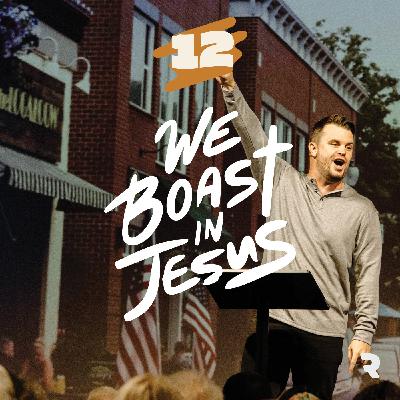
Twelve years in, it would be easy to start believing our own press. We’re growing. We’re hungry. We’re bringing friends. There’s momentum, influence, reach. But Paul confronts that instinct in 1 Corinthians: “Not many of you were wise… influential… of noble birth.” God chose the foolish. God chose the weak. God chose the lowly—so that no one may boast before Him.The reason anything is happening in this church is not because we are great—it’s because God is good. Not because we hustle—it’s because He moves first.
This city does not need our abilities and strategies—it needs a crucified and risen Savior lifted high. So we resolve to know nothing except Jesus Christ and Him crucified. We are a people formed by grace, fueled by the Spirit, and sent for the glory of the King. We boast in the Lord—and together we shine His name over our city. We boast in Jesus.
We all know what’s wrong with the world. Or at least we think we do. It’s the system. The culture. The other side. But Scripture turns the mirror toward us. The fracture in our relationships doesn’t begin “out there” — it begins in the old self, the part of us that protects pride, feeds resentment, and quietly keeps score. Until Jesus deals with the corruption in our own hearts, healing stays out of reach. The cross doesn’t just diagnose evil; it defeats it. And forgiveness is how resurrection power starts repairing what sin has broken.
In Colossians 3:5–14, Paul calls us to put off the old self and put on the new — to clothe ourselves with compassion, humility, patience, and above all, love. “Forgive as the Lord forgave you.” Because we are already chosen and dearly loved, we can release the wound and refuse to let it define our future. Christ’s forgiveness is stronger than our offense. And when we forgive, healing becomes possible — in our hearts, in our homes, and in our church.
We live in a world that celebrates visibility, scale, and success—yet Jesus tells a story in Matthew 25 that reframes what actually matters. The Master doesn’t commend influence or outcomes; He says, “Well done, good and faithful servant.” Each servant receives a different entrustment, but the call is the same: steward what you’ve been given. Faithfulness means resisting comparison, surrendering entitlement at the cross, and trusting that what God places in your hands today is neither random nor small.
Faithfulness also unfolds over time. There are seasons of waiting that shape our trust, moments when doubt whispers and fear urges us to play it safe. But the gospel anchors us: the same Christ who entrusted you with your assignment has proven His character at the cross. So we refuse to bury what He’s given. We offer it back—our time, gifts, influence, resources—and trust Him to multiply it for His purposes. And in the end, the reward is not status but relationship: sharing in the joy of the Master, right here and ultimately forever.
Most people assume purpose is something you must invent or achieve, but Scripture tells a different story. God didn’t just save you from something—He saved you for something. In a world contested by good and evil, every life is shaping the future of something larger than itself. Grace pulls us out of death, but it also places us into God’s unfolding plan to heal what’s broken.
Ephesians declares that we are God’s workmanship—His work of art—formed by grace and shaped through surrender. Like a master sculptor, God chips away through trials, obedience, and service, revealing the image of Christ within us. Good works don’t earn heaven; they bring heaven to earth. As we commit to gathering regularly, joining the team, and stewarding what we’ve been given, we begin walking in the purpose God prepared long before we ever knew His name.
We long to be known—but we fear what might happen if we actually are. Yet from the earliest days of the church, God’s people devoted themselves to shared life: shared meals, shared prayers, shared needs. Even Paul—the tireless missionary—needed friends, family, and community to remain faithful.
True community is where masks come off and grace moves in. It’s where someone notices when you’re not okay, celebrates your wins, and walks with you through your struggles. Jesus created space to be fully known among His closest followers—and then carried our isolation to the cross so we could belong fully to God and His people. When we step into gospel-centered community, we don’t just find connection—we find formation, healing, and hope.
Everyone needs their people. Scripture is filled with them—Adam had his partner, David his mighty men, Esther her mentor, Paul his companions, and even Jesus surrounded Himself with friends when facing the cross. Isolation makes us vulnerable, but community makes us resilient. Like a herd protecting its own, the church becomes the place where faith is guarded, sharpened, and sustained. The enemy isolates; Jesus gathers.
Jesus steps into this fractured world and forms a people. He calls disciples into shared life, sends them two by two, and builds His church as a gathered body. Faith flourishes in community because community reflects the very nature of God Himself. Jesus calls us to something better: a church where burdens are shared, hope is reinforced, and discipleship is lived side-by-side.
Most of us want deep change, but we want it fast. We long for peace without patience, love without pruning, and freedom without formation. Yet Jesus tells us the truth: lasting transformation only happens through abiding. Just as branches don’t produce fruit by effort, we cannot become who God intends apart from a life rooted in Christ. We all abide somewhere—and whatever we abide in is forming us.
Jesus reveals Himself as the true Vine, the One who supplies life, love, and growth. As we remain in Him, the Spirit reshapes our desires, heals our wounds, and forms us into people of love, joy, and self-control. This is not an overnight miracle, but a long obedience in the same direction. The invitation is hopeful and freeing: make your home in the love of Jesus, and trust that over time, He will shape your life into something beautiful and strong.
Most of us assume spiritual growth begins with clarity—having answers, confidence, or conviction. But in John 1, discipleship begins somewhere far more honest: curiosity. Before belief, before commitment, Jesus invites two searching men with simple words—“Come and see.” We all need an encounter with Jesus for ourselves. You can’t follow a Jesus you’ve never met.
Discipleship deepens as encounter becomes abiding—when time with Jesus turns from a moment into a rhythm. As we open Scripture, we’re not just reading ancient words—we’re meeting the living Christ. Discipleship flourishes when time with Jesus becomes a daily rhythm, not a distant memory. The invitation still stands: meet Him, remain with Him, and allow His life to reshape yours from the inside out.
We are always being formed—by what we give our attention to, who we listen to, and the rhythms that shape our days. Every habit is pointing us somewhere. The question isn’t whether formation is happening, but who is shaping us. Jesus’ invitation, “Come, follow me,” cuts through distracted, half-present faith and calls us into an intentional life of apprenticeship with Him.
This week, we’re launching our Discipleship Pathway—a clear way to follow Jesus together. At the center is Jesus Himself, not just what He teaches, but how He forms people over time. As we learn to be with Him, become like Him, and join Him in His Kingdom work, we discover a faith that reshapes every part of life. The invitation is still open to whoever is willing to take their next step on the way of Jesus.
Jesus often shows up where we least expect Him—in overlooked places, through ordinary people, during hidden seasons. In Luke 1, God begins the greatest rescue story not in a palace but in Nazareth, not with prestige but with humility. Mary isn’t chosen because of her résumé but because of grace. Jesus enters the world quietly, but with eternal purpose, showing us that God often does His greatest work in the places we’re tempted to overlook.
Scripture reveals Jesus as the promised King, the Savior whose very name means “God saves,” and the One the Holy Spirit is always pointing us toward. We’ll see how faith grows not through proximity or effort, but through revelation—and how hidden seasons often prepare us for holy moments. Stop searching elsewhere and recognize the One who has been searching for us all along. Don’t miss Jesus—the Savior who came to rescue, reign, and restore.
Most of us don’t realize the weight of what we’re carrying. Like David, we’re often living inside a story bigger than we can see—faithfully holding responsibilities, wounds, and callings without knowing how God might use them. Long before the crown, David learned dependence as a shepherd, repentance as a worshiper, and courage as an overlooked fighter. His life reveals that God’s promise doesn’t move through perfection or control, but through hearts that return to Him and trust Him fully.
David’s story ultimately points beyond himself to Jesus—the greater Shepherd who carries the wounded, the better King who restores broken hearts, and the true Victor who fights the battle we could never win. Tune in as we discover what David carried, what Jesus has already accomplished, and how surrendering what’s in our hands places us inside God’s unfolding story of redemption and hope.
Most of us assume spiritual growth happens in mountaintop moments—when God shows up loudly and life finally makes sense. But what if real transformation happens in the long, ordinary stretches in between? Jacob’s story tells the truth we often miss: God doesn’t wait for us to get it together. He works through messy families, immature prayers, unresolved wounds, and years that feel painfully unremarkable.
In Genesis 32, we find Jacob no longer bargaining with God, but clinging to Him—humble, grateful, and desperate for grace. Tune in as special guest Rick McKinley traces Jacob’s journey from deceiver to dependent, from running to wrestling, and discover how God uses ordinary faithfulness to form resilient, mature trust. Hope is growing, even when you can’t yet see it.
We all have places in our lives that feel dry, stuck, or long gone—marriages running on fumes, faith that’s cooled off, habits we can’t break, or a heart that feels more numb than alive. Most of us try harder, push more, or attempt to “fix” ourselves, but Ezekiel shows us something deeper: the problem isn’t that we’re weak—it’s that we’re spiritually dead without God’s Spirit. And dead things don’t need advice; they need resurrection.
Tune in as we walk into the valley with Ezekiel and discover how God uses His Word and His Spirit to rebuild what’s broken, breathe life where hope has collapsed, and raise us into the people He created us to be. If you’ve ever wondered whether the dry places in your story can live again, this is your invitation to find out.

We all know what it’s like to chase something we think will finally make us whole—success, affirmation, control—only to find the ache still there. Hannah lived in that gap: honored by her husband yet carrying a pain no amount of love or status could fix. Her story names what we often feel but rarely say out loud: nothing in this world can satisfy the deepest desires of the heart. In her anguish, she turns to the only One who can—crying out to the Lord who sees, hears, and remembers her.
Tune in as we follow her journey from sorrow to surrender and watch God turn her offering into Samuel—a prophet, priest, judge, and king-maker shaped for God’s purposes (1 Samuel 1; 1 Samuel 16). This week calls us to bring our longings honestly to God, trust His timing, and dedicate the next generation with open hands, believing He can do more with their lives than we ever could.
We’re living in a moment where compassion is thinning and outrage is thickening, and it’s easy—even for believers—to run from the very people God is calling us to love. Jonah did exactly that. Sent to carry God’s mercy to a violent and hated city, he fled in the opposite direction. But God pursued him through a storm, a sea, and a fish—not to punish him, but to reclaim him.
Jonah’s plunge into the deep becomes a prophetic preview of Jesus: Jonah the reluctant prophet swallowed by death, Jesus the relentless Savior who enters the grave willingly and rises in victory. The story of Jonah shows a God who runs toward rebels, loves the undeserving, and calls His people to carry that same grace into a broken world. Tune in as we discover how God pursues us in our reluctance and invites us to join Jesus—the greater Jonah—in His mission of mercy.
We’re living in a cultural drought—shrinking belief, collapsing moral imagination, rising false gods—and it feels like the heavens have been shut. Israel knew this same barrenness in the days of Elijah. After years of idolatry, immorality, and spiritual compromise, God withheld the rain to expose the emptiness of their gods and awaken hunger in their souls.
Our moment feels eerily similar. Spiritual drought covers our land, yet signs of a fresh cloud are rising on the horizon. God is calling His people out of hiding, exposing the counterfeit gods of our age, and rebuilding worship in His church. Elijah reminds us that revival begins not with culture shifting, but with God’s people returning. Tune in as we look at how God restores His altar, sends His rain, and invites us into the next great move of His Spirit.
We live in a world that prizes performance, pedigree, and power—yet deep down, most of us still wrestle with feeling unseen or unworthy. The story of Mephibosheth flips all of that upside down. David, now king, seeks out the last living son of his former enemy—not to punish him, but to show him kindness. In a single moment, a crippled exile from “Lo Debar” (“no place”) is carried into the palace, seated at the royal table, and treated like a son.
This is what the kindness of King Jesus looks like. He searches for the broken, the forgotten, the ones hiding in the wilderness of shame, and He carries us home to His table. The gospel isn’t about climbing your way to God—it’s about being found, lifted, and loved by Him. Join us as guest preacher Joshua Ryan Butler explores how the King’s kindness restores our destiny, overcomes our fear and pride, and teaches us to extend that same kindness to others.
When life feels like a battle you can’t win, it’s easy to believe that trying harder will finally bring peace. But what if the breakthrough you need doesn’t come from more control, but from surrender? King Jehoshaphat faced an army he couldn’t defeat, yet instead of drawing a sword, he lifted a song. As Judah began to worship, God began to work.
In a world that says, “You got this,” Scripture declares, “The battle is not yours, but God’s.” Tune in for this victory Sunday as we see how praise pushes back fear, how worship invites God’s power into impossible places, and how the same God who fought for Judah gives us ultimate victory in Jesus.
Paul ends his letter to the Thessalonians with a rapid-fire list of commands—a vision for what life in the church should look like while we wait for Jesus to return. It’s like he’s saying, “Don’t just sit back and count the days—live like the Kingdom is already here.”
In these final verses, Paul paints a picture of a church that loves well, serves faithfully, rejoices often, listens to the Spirit, grows in holiness, and stays connected through grace. This is what a healthy, hope-filled church looks like.
Tune in as we explore Six Marks of a Healthy Church Community—and discover how faith in the future changes how we live right now.
Most people assume spiritual growth just happens over time. But the truth is, everyone is being spiritually formed by something — our families, habits, culture, and desires are shaping who we’re becoming. In Ephesians 4, Paul draws a bold line between the “old self,” shaped by sin and self-reliance, and the “new self,” shaped by the Spirit. You can’t keep wearing your old clothes and expect a new life to fit. Transformation doesn’t begin with trying harder; it begins with responding to the invitations of the Holy Spirit, who makes us new from the inside out.
Tune in as guest preacher Matt Berg unpacks what it means to “put on the new self,” created to be like God in true righteousness and holiness (Ephesians 4:24). Discover how daily practices like confession, forgiveness, and community open us to the Spirit’s renewing work — not just to manage sin, but to reflect Christ’s compassion, truth, and love for the sake of others.

Comments

Download from Google Play

Download from App Store
 United States