


 Claim Ownership
How to Fix Democracy
Subscribed: 72Played: 1,507
Subscribe

Description
Since its origins, democracy has been a work in progress. Today, many question its resilience.
How to Fix Democracy, a collaboration of the Bertelsmann Foundation and Humanity in Action, explores practical solutions for how to address the increasing threats democracy faces. Host Andrew Keen interviews prominent international thinkers and practitioners of democracy.
How to Fix Democracy, a collaboration of the Bertelsmann Foundation and Humanity in Action, explores practical solutions for how to address the increasing threats democracy faces. Host Andrew Keen interviews prominent international thinkers and practitioners of democracy.
122 Episodes
Reverse
As How to Fix Democracy opens its seventh season on democratic resilience, host Andrew Keen welcomes Maury Giles, the new CEO of Braver Angels, for a candid conversation about whether American democracy can withstand what Giles calls the "industrial outrage complex." In a year marking the nation's 250th anniversary, Giles argues that resilience is not something institutions deliver from above, but something citizens practice from below. Drawing on his experience leading one of the country's largest cross-partisan civic movements -and on the lived reality of raising a political divided family of ten- he makes the case for "courageous citzenship", the discipline of choosing to act rather than react. Together Keen and Giles explore why polarization in 2026 may feel more toxic than a decade ago, how performative politics and social media have eroded trust, and why dialogue alone is no longer enough without collaborative local action. They confront hard questions about government incentives, declining institutional trust, and whether putting down our devices might be a precondition for rebuilding civic culture. Yet the tone remains cautiously hopeful: if the pain of division is finally high enough, Americans may be ready to change. In the end, this episode suggests that democratic renewal will not come from one side defeating the other, but from citizens rediscovering their agency, and practicing resilience as a daily civic habit.

For 26 years, Richard Edelman has measured the world's trust levels through the Edelman Trust Barometer. In this final episode of our trust series, he joins Andrew Keen to diagnose a new and troubling phase: insularity. After years of polarization, grievance, and activism, societies are hardening into self-contained camps, "turtles in shells", as Edelman puts it, trusting only those who share their values, media and worldview. Governments are faltering, media credibility is shrinking, and a widening mass class divide is fueling pessimism about the future. Yet amid AI disruption, nationalism, and economic anxiety, Edelman argues that trust can still be rebuilt, from the bottom up. Employers, local institutions, and "poly-national" businesses may hold the key. The question is whether democracies can restore optimism before insularity becomes permanent. Is trust the missing ingredient in democratic, or its final casualty?
In this episode of How to Fix Democracy, host Andrew Keen explores America's deepening crisis of trust, both social and political. Joined by Frederick Riley of Weave at the Aspen Institute and Dr, Michael Neblo of the Ohio State University, the conversation examines rising isolation, collapsing confidence in institutions, and the growing divide across communities. From neighborhood-level connection to large-scale democratic reform, they discuss practical, evidence-based ways to restore trust, and why small, everyday actions may be the key to saving democracy.
In this episode of How to Fix Democracy, host Andrew Keen sits down with Cynthia Miller-Idriss - scholar of extremism, founder of the Polarization and Extremism Research and Innovation Lab (PERIL), and author of Man Up: The New Misogyny and the Rise of Violent Extremism. Together they explore one of democracy's most fragile foundations: trust. From gender polarization and the rise of the "manosphere", to the declining institutional confidence, to why young men are increasingly vulnerable to online radicalization, Miller-Idriss explains how mistrust is reshaping politics, culture, and everyday relationships. She also discussed what might work to rebuild trust - from community level engagement to national service models - and why belonging, meaning and purpose might be the most powerful antidotes to extremism. A wide-ranging, urgent conversation about loneliness, democracy and whether America can restore trust before it is too late. Miller-Idriss offers a note of cautious optimism: most people, she argues, don't actually want to live this way.
In this episode of How to Fix Democracy, host Andrew Keen speaks with Derek Leebaert - historian, technologist and author of Unlikely Heroes - about the shifting foundations of trust in democracy. From Franklin D. Roosevelt's efforts to rebuild confidence in government during the New Deal era to today's rapid rise of articifical intelligence, Leebaert traces how accelerating technological change has shortened the lifespan in trust in institutions, leaders, and even truth itself. As AI transforms knowledge, work and power, is it a threat to democracy or a chance to renew it? Leebaert explores what "responsible AI" might look like - and why transparency, accountability, and common-sense regulation are vital in restoring trust in a digital age.
Can democracy survive without trust in the law? In this episode of How to Fix Democracy, host Andrew Keen speaks with Burt Neuborne, founding legal director of the Brennan Center for Justice and professor of law at NYU, about the complex relationship between law and trust in America. From Hobbes and Rousseau to Madison, Lincoln, and the U.S. Constitution itself, Neuborne explores how law can both deter or worst instincts and inspire our better angels.
Is mistrust a defining feature and flaw in American democracy? Or is it a manifestation of basic opposition against long-term democratic and aspirational concepts such as "all men are created equally"? In this thought provoking conversation author and historian Richard Kreitner joins Andrew Keen to explore the deep mistrust in U.S. political life. Drawing on themes from his book Break it up: Secession, Division, and the Secret History of America's Imperfect Union. Kreitner traces the fractured origins of the American project, argues that national cohesion may be neither possible nor desirable at the continental scale, and makes the provocative case, that mistrust - even secessionist thinking - can sometimes be a rational response to genuine democratic failures. A timely conversation that challenges prevailing narratives about unity and the Constitution in an age of polarization and rising political anxiety.
Legal scholar and author Joan Williams joins How to Fix Democracy to unpack the breakdown of trust between political elites and the American working class. Drawing from her new book Outclassed, Williams explores how class-blindness, cultural signaling, and economic inequality have shaped political divides - and what the left must do to win back working class voters. From language to long-term coalition-building, this episode offers a sobering but essential roadmap for restoring trust.
In this episode Brookings's scholar Jonathan Rauch explores America's historically unprecedented position as a "high-tech, low trust society" - a dangerous combination where technological advancement coexists with collapsing social trust. Trust levels have plummeted since the 1970s warns Rauch, with America now ranking 52nd globally in believing strangers would return a lost wallet. He traces this decline to systematic attacks on institutions from both left and right, fomented by libertarian populists. He warns that without rebuilding trust - which is seven times more important in determining life satisfaction- democracy itself will remain at existential risk.

In this episode of How to Fix Democracy, host Andrew Keen, speaks with journalist Sally Lehrman, founder of the Trust Project - a global initiative aimed at restoring trust in journalism. They discuss the origins of the project, inspired in part by the 1947 Hutchins Commission report on media responsibility, and how today's digital landscape has blurred the lines between news and content. Lehrman outlines the Trust Project's "Eight Trust Indicators" which help news outlets demonstrate transparency, ethical standards, and commitment to diverse voices. She also addresses the challenges posed by ideological bias, opinion vs news, and journalism on platforms such as Substack. The conversation explores how media organizations can rebuild credibility, empower the public, and support a healthy democracy through responsible, clearly-labeled reporting.
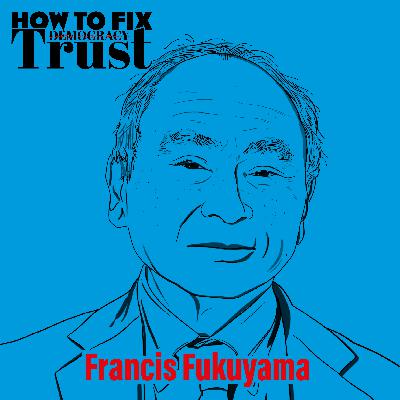
In this episode, host Andrew Keen sits down with Francis Fukuyama to explore the concept of trust. Fukuyama defines it as a byproduct of virtuous behaviors like reliability, truthfulness, transparency, and keeping commitments. He describes trust as a crucial "lubricant" for social interactions and distinguishes between interpersonal and institutional trust, both of which are built through experiences of reliability and can be eroded by betrayal and disappointment. Fukuyama discusses how trust originates within families and extends to broader social circles. He also examines the global decline in trust over the past 30 years, attributing it to several key factors: the rise of technology and anonymous online interactions, higher education fostering more critical thinking, increased transparency exposing institutional failures, and growing political polarization reinforcing tribal identitities. Connecting trust to his earlier work on "the struggle for recognition, " he argues that as liberal democracies secure equal rights, individuals increasingly seek recognition for specific identities - such as religion, ethnicity, or gender - which can contribute to societal fragmentation. To address this decline, Fukuyama emphasizes the importance of governments reliably delivering on promises and providing expected services. However, he acknowledges that while competent governance is essential, it alone may not be enough to fully restore trust in institutions and society.
Days before the U.S. election, Professor Carol Anderson of Emory University spoke with the three producers of the How to Fix Series about the current state of American democracy. With references to previous interviews, the discussion focuses on the urgency of the times, the criticical issues at stake, the forces of deep conflict and expectations for the future of America's democracy.
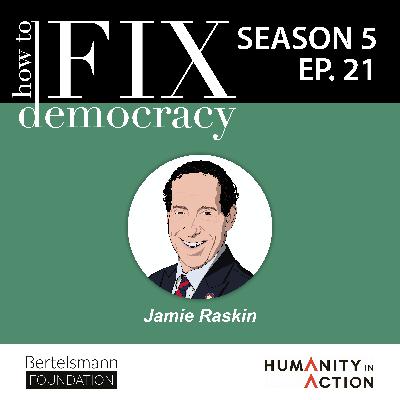
In conversation with Congressman Jamie Raskin, host Andrew Keen explores key elements of American democracy. Raskin highlights his deep commitment to public service, grounded in his believe that the rule of law is fundamental to America's greatness. He reflects on the influence of Presidents Reagan, Clinton, Bush, Obama and Trump on their political journeys and how their legacies relate to his vision of democracy as an "unfinished project".
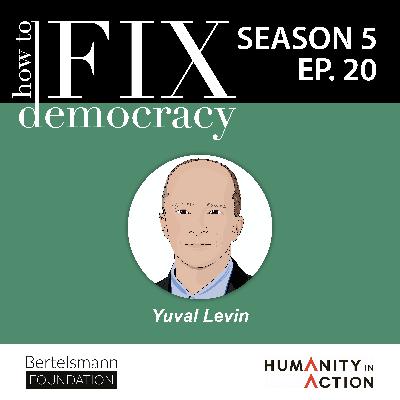
In a conversation with Andrew Keen, Yuval Levin, Director of Social, Cultural, and Constitutional Studies at the American Enterprise Institute, explores the critical transition from the 1950s- a decade often seen as a conservative period of economic prosperity- into the 1960s, a turbulant era marked by confrontations over race, gender, and shifts in the politcal landscape of the Republican and Democratic Parties.
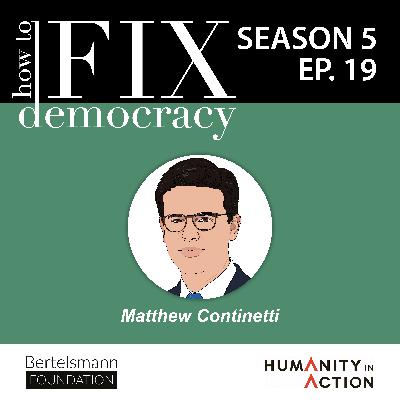
In this episode, host Andrew Keen and historian Matthew Continetti explore the pivotal moments in the history of American conservatism, starting in 1964. Continetti elaborates on the ideological foundations of American conservatism, emphasizing its roots in the political traditions of the Declaration of Independence and the U.S. Constitution. The conversation delves into the marginalization of conservative thought during the New Deal era and the eventual resurgence of conservatism in the mid 20th century.
Author and broadcast journalist, Ray Suarez, born into a Puerto Rican family newly settled in New York City in the 1950s, speaks with Andrew Keen about American immigrant experiences in the late 20th and 21st centuries. Extolled as a welcoming democracy built by immigrants, they were both hailed and despaired over - needed for labor and growth but feared for the different cultures they brought to the country. Invoking both personal and broad societal reflections, Suarez describes the historic tension in the powerful American immigrant dream between reality and mythology: aspirations and acceptance sort after by unwanted outsiders.
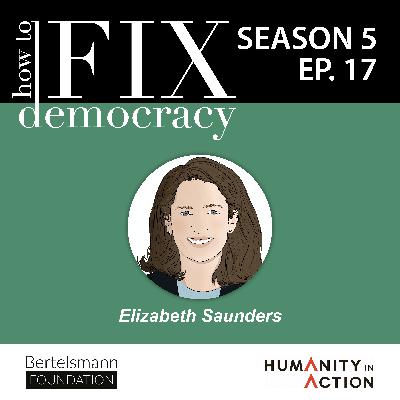
Elizabeth Saunders, Professor of Political Science at Columbia University and author of The Insiders' Game: How Elites Make War and Peace, speaks with Andrew Keen about democracy and foreign policy. The conversation focuses on the tension between elites and democracy, power and accountability and domestic priorities and global responsibilities between the 1950s and 1970s. In the era between the Korean War and Vietnam domestic tensions reverberated through foreign policy decisions made to promote democracy in the cold war era.
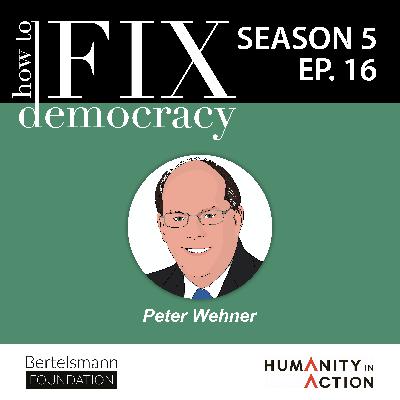
In this episode host Andrew Keen sits down with Peter Wehner to discuss the intersection of faith and politics and the rise of the Evangelical movement in the Republican Party. Pete reflects on his early caution of the dangerous intertwining on faith and politics, his concerns about the religious impact on the Republican Party, and the shift towards more authoritarian tendencies within the party. He explores the connections among figures such as Pat Buchanan, Newt Gingrich, and Donald Trump, tracing the evolution of the Republican Party's conservative ideologies and its current state.
In conversation with Andrew Keen, the American historian Jacob Heilbrunn, outlines the continuous history of the close association of conservative views and the Republican Party in the early to Mid-Twentieth Century. He describes the party's support of strong anti-immigrant racial differences in the 1920s, hostility to the New Deal, support of the anti-Communist campaign of Senator McCarthy in the 1950s, and support of Donald Trump and his isolationist perspectives, now and in the recent past.
For this episode, host Andrew Keen sits down with James Kirchick, journalist and author of the New York Times bestseller Secret City: the Hidden History of Gay Washington. They discuss the historical exclusion of gay individuals within American democracy, with a particular emphasis on the challenges - from legal persecution to professional exclusion, and social stigmatization, Kirchick and Keen explore how political attitudes towards gay rights have evolved, intertwining with broader cultural and political shifts. Kirchick describes the gradual inclusion of homosexuals in the democratic process, highlighting key moments of setbacks and progress over the past century. The conversation explores significant events such as the Kinsey report in 1948, the Alger Hiss case, McCarthyism, and the political landscape during the 1960s, 1970s and 1980s. The emergence of homosexuality as a national political issue, alongside movements like gay liberation and the AIDS crisis, had a profound impact on American politics and society. When America openly accepted homosexuals into its civic and cultural life, it marked a significant enhancement of its democracy.

Comments

Download from Google Play

Download from App Store
 United States