


 Claim Ownership
Stories from the NNI
Subscribed: 12Played: 166
Subscribe

Description
This podcast series features voices from the National Nanotechnology Initiative (NNI). Researchers and innovators discuss their work at the nanoscale, the challenges they’ve faced, and how they’ve connected with the NNI.
If you want to learn more about nanotechnology, visit www.nano.gov or email us at info@nnco.nano.gov and check back here for more stories.
To celebrate the NNI, special anniversary episodes of the Stories from the NNI podcast series will share the perspectives of experts from academia, government, and industry on key research and development advances in nanotechnology and how the NNI has changed the nanotechnology landscape. These experts will share their thoughts on emerging applications and research questions at the expanding boundaries of nanotechnology. The series will also highlight what has been learned about the potential environmental, health, and safety implications of nanomaterials, as well as the safe handling procedures that have been developed.
If you’d like to share your story, please contact us at info@nnco.nano.gov.
Any opinions, findings, conclusions, or recommendations expressed in this podcast are those of the guest and do not necessarily reflect the views of the National Nanotechnology Coordination Office or United States Government. Additionally, mention of trade names or commercial products does not constitute endorsement or recommendation by any of the aforementioned parties. Any mention of commercial products, processes, or services cannot be construed as an endorsement or recommendation.
If you want to learn more about nanotechnology, visit www.nano.gov or email us at info@nnco.nano.gov and check back here for more stories.
To celebrate the NNI, special anniversary episodes of the Stories from the NNI podcast series will share the perspectives of experts from academia, government, and industry on key research and development advances in nanotechnology and how the NNI has changed the nanotechnology landscape. These experts will share their thoughts on emerging applications and research questions at the expanding boundaries of nanotechnology. The series will also highlight what has been learned about the potential environmental, health, and safety implications of nanomaterials, as well as the safe handling procedures that have been developed.
If you’d like to share your story, please contact us at info@nnco.nano.gov.
Any opinions, findings, conclusions, or recommendations expressed in this podcast are those of the guest and do not necessarily reflect the views of the National Nanotechnology Coordination Office or United States Government. Additionally, mention of trade names or commercial products does not constitute endorsement or recommendation by any of the aforementioned parties. Any mention of commercial products, processes, or services cannot be construed as an endorsement or recommendation.
123 Episodes
Reverse
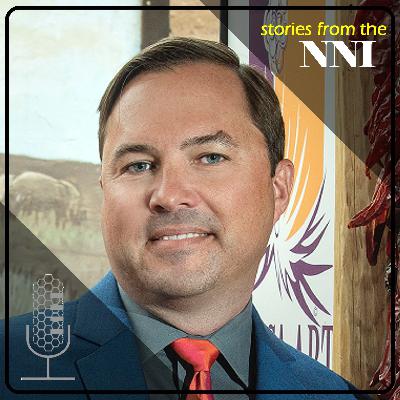
In this episode of the “Stories from the NNI” podcast, Hunter McDaniel, Founder and CEO of UbiQD (Los Alamos, NM), discusses his experience launching and growing this company, which manufactures nanoparticles called quantum dots. McDaniel describes various applications of these quantum dots in the agricultural, national security, and energy sectors and explains the importance of federal grants, partnerships, and technology licensing in the growth and expansion of UbiQD.
If you would like to learn more about nanotechnology, go to nano.gov or email us at info@nnco.nano.gov.
CREDITS
Special thanks to:
Hunter McDaniel (UbiQD)
Produced by:
Andrew Pomeroy
Music:
"Inspirational Outlook" by Scott Holmes, licensed with permission from the Independent Music Licensing Collective - imlcollective.uk.
Any opinions, findings, conclusions, or recommendations expressed in this podcast are those of the guest and do not necessarily reflect the views of the National Nanotechnology Coordination Office or United States Government. Additionally, mention of trade names or commercial products does not constitute endorsement or recommendation by any of the aforementioned parties. Any mention of commercial products, processes, or services cannot be construed as an endorsement or recommendation.
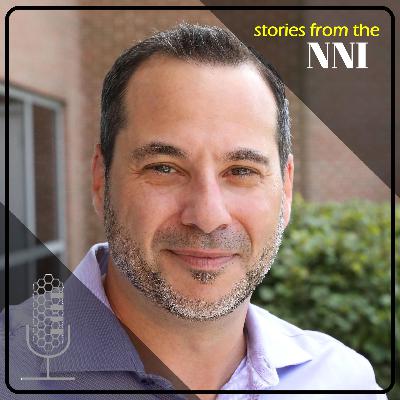
This episode of the “Stories from the NNI” podcast features Craig Bandes, CEO of Pixelligent, a company that manufactures tunable, high-refractive-index nanocrystal formulations that enable extended-reality devices, organic light-emitting diodes (LEDs), and optical sensors. Mr. Bandes describes how funding received through Federal government grants has helped support the scalability and manufacturability of Pixelligent technologies and shares his perspectives on training the next-generation technical workforce. If you would like to learn more about nanotechnology, go to nano.gov or email us at info@nnco.nano.gov. CREDITS Special thanks to: Craig Bandes (Pixelligent) Produced by:Andrew Pomeroy Music: "Inspirational Outlook" by Scott Holmes, licensed with permission from the Independent Music Licensing Collective - imlcollective.uk. Any opinions, findings, conclusions, or recommendations expressed in this podcast are those of the guest and do not necessarily reflect the views of the National Nanotechnology Coordination Office or United States Government. Additionally, mention of trade names or commercial products does not constitute endorsement or recommendation by any of the aforementioned parties. Any mention of commercial products, processes, or services cannot be construed as an endorsement or recommendation.

What do superheroes, sloth backpacks, and digital movie projectors all have in common? In this episode of the “Stories from the NNI” podcast, Marshall Escamilla, co-host of the Tumble Science Podcast for Kids; Matthew Jackson, a physics teacher at Cobb County School District in Marietta (near Atlanta), GA; and Matt Pleil, a research professor of mechanical engineering and a cleanroom manager at the University of New Mexico answer this question and describe how they inspire curiosity, creativity, and action in students with nanotechnology.
If you would like to learn more about nanotechnology, go to nano.gov or email us at info@nnco.nano.gov.
CREDITS
Special thanks to:
Marshall Escamilla (Tumble Science Podcast for Kids), Matthew Jackson (Cobb County School District), and Matt Pleil (University of New Mexico).
Produced by:
Andrew Pomeroy
Music:
"Inspirational Outlook" by Scott Holmes, licensed with permission from the Independent Music Licensing Collective - imlcollective.uk.
Any opinions, findings, conclusions, or recommendations expressed in this podcast are those of the guest and do not necessarily reflect the views of the National Nanotechnology Coordination Office or United States Government. Additionally, mention of trade names or commercial products does not constitute endorsement or recommendation by any of the aforementioned parties. Any mention of commercial products, processes, or services cannot be construed as an endorsement or recommendation.
This is Part 6 of a "Stories from the NNI" podcast episode on perspectives from participants in the Nano4EARTH kick-off workshop (Jan. 24–25, 2023). This episode was broken down into six parts, and listeners can choose any part in which they are most interested. Full podcast episode: https://www.youtube.com/playlist?list=PLy4wjGabGUTYY7X0Nvs4hlXBGB6Vqacih
If you would like to learn more about nanotechnology, go to nano.gov or email us at info@nnco.nano.gov.
CREDITS
Special thanks to:
Baratunde Cola (Georgia Tech & Carbice Corporation), Victoria DiStefano (U.S. Department of Energy), Mariel Kolker (Morristown High School), and Jeff Miller (Kavli Foundation).
Produced by:
Andrew Pomeroy
Music:
"Inspirational Outlook" by Scott Holmes, licensed with permission from the Independent Music Licensing Collective - imlcollective.uk.
Any opinions, findings, conclusions, or recommendations expressed in this podcast are those of the guest and do not necessarily reflect the views of the National Nanotechnology Coordination Office or United States Government. Additionally, mention of trade names or commercial products does not constitute endorsement or recommendation by any of the aforementioned parties. Any mention of commercial products, processes, or services cannot be construed as an endorsement or recommendation.
This is Part 5 of a "Stories from the NNI" podcast episode on perspectives from participants in the Nano4EARTH kick-off workshop (Jan. 24–25, 2023). This episode was broken down into six parts, and listeners can choose any part in which they are most interested. Full podcast episode: https://www.youtube.com/playlist?list=PLy4wjGabGUTYY7X0Nvs4hlXBGB6Vqacih
If you would like to learn more about nanotechnology, go to nano.gov or email us at info@nnco.nano.gov.
CREDITS
Special thanks to:
Baratunde Cola (Georgia Tech & Carbice Corporation), Victoria DiStefano (U.S. Department of Energy), Mariel Kolker (Morristown High School), and Jeff Miller (Kavli Foundation).
Produced by:
Andrew Pomeroy
Music:
"Inspirational Outlook" by Scott Holmes, licensed with permission from the Independent Music Licensing Collective - imlcollective.uk.
Any opinions, findings, conclusions, or recommendations expressed in this podcast are those of the guest and do not necessarily reflect the views of the National Nanotechnology Coordination Office or United States Government. Additionally, mention of trade names or commercial products does not constitute endorsement or recommendation by any of the aforementioned parties. Any mention of commercial products, processes, or services cannot be construed as an endorsement or recommendation.
This is Part 1 of a "Stories from the NNI" podcast episode on perspectives from participants in the Nano4EARTH kick-off workshop (Jan. 24–25, 2023). This episode was broken down into six parts, and listeners can choose any part in which they are most interested. Full podcast episode: https://www.youtube.com/playlist?list=PLy4wjGabGUTYY7X0Nvs4hlXBGB6Vqacih
If you would like to learn more about nanotechnology, go to nano.gov or email us at info@nnco.nano.gov.
CREDITS
Special thanks to:
Baratunde Cola (Georgia Tech & Carbice Corporation), Victoria DiStefano (U.S. Department of Energy), Mariel Kolker (Morristown High School), and Jeff Miller (Kavli Foundation).
Produced by:
Andrew Pomeroy
Music:
"Inspirational Outlook" by Scott Holmes, licensed with permission from the Independent Music Licensing Collective - imlcollective.uk.
Any opinions, findings, conclusions, or recommendations expressed in this podcast are those of the guest and do not necessarily reflect the views of the National Nanotechnology Coordination Office or United States Government. Additionally, mention of trade names or commercial products does not constitute endorsement or recommendation by any of the aforementioned parties. Any mention of commercial products, processes, or services cannot be construed as an endorsement or recommendation.
This is Part 2 of a "Stories from the NNI" podcast episode on perspectives from participants in the Nano4EARTH kick-off workshop (Jan. 24–25, 2023). This episode was broken down into six parts, and listeners can choose any part in which they are most interested. Full podcast episode: https://www.youtube.com/playlist?list=PLy4wjGabGUTYY7X0Nvs4hlXBGB6Vqacih
If you would like to learn more about nanotechnology, go to nano.gov or email us at info@nnco.nano.gov.
CREDITS
Special thanks to:
Baratunde Cola (Georgia Tech & Carbice Corporation), Victoria DiStefano (U.S. Department of Energy), Mariel Kolker (Morristown High School), and Jeff Miller (Kavli Foundation).
Produced by:
Andrew Pomeroy
Music:
"Inspirational Outlook" by Scott Holmes, licensed with permission from the Independent Music Licensing Collective - imlcollective.uk.
Any opinions, findings, conclusions, or recommendations expressed in this podcast are those of the guest and do not necessarily reflect the views of the National Nanotechnology Coordination Office or United States Government. Additionally, mention of trade names or commercial products does not constitute endorsement or recommendation by any of the aforementioned parties. Any mention of commercial products, processes, or services cannot be construed as an endorsement or recommendation.
This is Part 3 of a "Stories from the NNI" podcast episode on perspectives from participants in the Nano4EARTH kick-off workshop (Jan. 24–25, 2023). This episode was broken down into six parts, and listeners can choose any part in which they are most interested. Full podcast episode: https://www.youtube.com/playlist?list=PLy4wjGabGUTYY7X0Nvs4hlXBGB6Vqacih
If you would like to learn more about nanotechnology, go to nano.gov or email us at info@nnco.nano.gov.
CREDITS
Special thanks to:
Baratunde Cola (Georgia Tech & Carbice Corporation), Victoria DiStefano (U.S. Department of Energy), Mariel Kolker (Morristown High School), and Jeff Miller (Kavli Foundation).
Produced by:
Andrew Pomeroy
Music:
"Inspirational Outlook" by Scott Holmes, licensed with permission from the Independent Music Licensing Collective - imlcollective.uk.
Any opinions, findings, conclusions, or recommendations expressed in this podcast are those of the guest and do not necessarily reflect the views of the National Nanotechnology Coordination Office or United States Government. Additionally, mention of trade names or commercial products does not constitute endorsement or recommendation by any of the aforementioned parties. Any mention of commercial products, processes, or services cannot be construed as an endorsement or recommendation.
This is Part 4 of a "Stories from the NNI" podcast episode on perspectives from participants in the Nano4EARTH kick-off workshop (Jan. 24–25, 2023). This episode was broken down into six parts, and listeners can choose any part in which they are most interested. Full podcast episode: https://www.youtube.com/playlist?list=PLy4wjGabGUTYY7X0Nvs4hlXBGB6Vqacih
If you would like to learn more about nanotechnology, go to nano.gov or email us at info@nnco.nano.gov.
CREDITS
Special thanks to:
Baratunde Cola (Georgia Tech & Carbice Corporation), Victoria DiStefano (U.S. Department of Energy), Mariel Kolker (Morristown High School), and Jeff Miller (Kavli Foundation).
Produced by:
Andrew Pomeroy
Music:
"Inspirational Outlook" by Scott Holmes, licensed with permission from the Independent Music Licensing Collective - imlcollective.uk.
Any opinions, findings, conclusions, or recommendations expressed in this podcast are those of the guest and do not necessarily reflect the views of the National Nanotechnology Coordination Office or United States Government. Additionally, mention of trade names or commercial products does not constitute endorsement or recommendation by any of the aforementioned parties. Any mention of commercial products, processes, or services cannot be construed as an endorsement or recommendation.
In this episode of the “Stories from the NNI” podcast, four participants in the Nano4EARTH kick-off workshop (Jan. 24–25, 2023; Washington, DC, and virtual) provide their perspectives on various topics related to climate change and nanotechnology that were discussed during the workshop. The podcast episode will be coming soon!
If you would like to learn more about nanotechnology, go to nano.gov or email us at info@nnco.nano.gov.
CREDITS
Special thanks to:
Baratunde Cola (Georgia Tech & Carbice Corporation), Victoria DiStefano (U.S. Department of Energy), Mariel Kolker (Morristown High School), and Jeff Miller (Kavli Foundation).
Produced by:
Andrew Pomeroy
Music:
"Inspirational Outlook" by Scott Holmes, licensed with permission from the Independent Music Licensing Collective - imlcollective.uk.
Any opinions, findings, conclusions, or recommendations expressed in this podcast are those of the guest and do not necessarily reflect the views of the National Nanotechnology Coordination Office or United States Government. Additionally, mention of trade names or commercial products does not constitute endorsement or recommendation by any of the aforementioned parties. Any mention of commercial products, processes, or services cannot be construed as an endorsement or recommendation.

In this episode of the “Stories from the NNI” podcast, Dan Nocera, the Patterson Rockwood Professor of Energy at Harvard University, describes how he and his team have developed a nanostructured device, called an artificial leaf, which works like a leaf by using sunlight to split water into hydrogen and oxygen; then, the hydrogen can be used to generate renewable fuel. If you would like to learn more about nanotechnology, go to nano.gov or email us at info@nnco.nano.gov. CREDITS Special thanks to: Dan NoceraHarvard University Produced by:Andrew Pomeroy Music: Inspirational Outlook by Scott Holmes https://freemusicarchive.org/music/Sc...https://creativecommons.org/licenses/... Any opinions, findings, conclusions, or recommendations expressed in this podcast are those of the guest and do not necessarily reflect the views of the National Nanotechnology Coordination Office or United States Government. Additionally, mention of trade names or commercial products does not constitute endorsement or recommendation by any of the aforementioned parties. Any mention of commercial products, processes, or services cannot be construed as an endorsement or recommendation.

In this special episode of the “Stories from the NNI” podcast, Lisa Friedersdorf, the Former Director of the National Nanotechnology Coordination Office, reflects with the NNCO staff on the NNI’s impact on the nanotechnology landscape. If you would like to learn more about nanotechnology, go to nano.gov or email us at info@nnco.nano.gov. Closed captioning is provided on our YouTube channel. For this episode, go to: https://youtu.be/VJK6EDO65Vg Produced by:Andrew Pomeroy Music: Inspirational Outlook by Scott Holmes https://freemusicarchive.org/music/Sc...https://creativecommons.org/licenses/... Any opinions, findings, conclusions, or recommendations expressed in this podcast are those of the guest and do not necessarily reflect the views of the National Nanotechnology Coordination Office or United States Government. Additionally, mention of trade names or commercial products does not constitute endorsement or recommendation by any of the aforementioned parties. Any mention of commercial products, processes, or services cannot be construed as an endorsement or recommendation.

In this episode of the “Stories from the NNI” podcast, Leo Li, Assistant Professor of Physics at Brown University, describes his work studying unusual properties of two-dimensional materials. Also, he discusses the importance of accessing instrumentation from nanotechnology research facilities in order to pursue his scientific research. If you would like to learn more about nanotechnology, go to nano.gov or email us at info@nnco.nano.gov. Closed captioning is provided on our YouTube channel. For this episode, go to: https://youtu.be/6_TiTEk9ys0 CREDITS Special thanks to: Leo LiBrown University Produced by:Andrew Pomeroy Music: Inspirational Outlook by Scott Holmes https://freemusicarchive.org/music/Sc...https://creativecommons.org/licenses/... Any opinions, findings, conclusions, or recommendations expressed in this podcast are those of the guest and do not necessarily reflect the views of the National Nanotechnology Coordination Office or United States Government. Additionally, mention of trade names or commercial products does not constitute endorsement or recommendation by any of the aforementioned parties. Any mention of commercial products, processes, or services cannot be construed as an endorsement or recommendation.

In this episode of the “Stories from the NNI” podcast, Sharon Glotzer, the Anthony C. Lembke Department Chair of Chemical Engineering at the University of Michigan, Ann Arbor, discusses her research on how to build crystal nanostructures from self-assembling nanoparticles and the role of entropy in ordering nanoparticles into these nanocrystal structures. If you would like to learn more about nanotechnology, go to nano.gov or email us at info@nnco.nano.gov. Closed captioning is provided on our YouTube channel. For this episode, go to: https://youtu.be/VE1CICHdW1U CREDITS Special thanks to: Sharon GlotzerUniversity of Michigan, Ann Arbor Produced by:Andrew Pomeroy Music: Inspirational Outlook by Scott Holmes https://freemusicarchive.org/music/Sc...https://creativecommons.org/licenses/... Any opinions, findings, conclusions, or recommendations expressed in this podcast are those of the guest and do not necessarily reflect the views of the National Nanotechnology Coordination Office or United States Government. Additionally, mention of trade names or commercial products does not constitute endorsement or recommendation by any of the aforementioned parties. Any mention of commercial products, processes, or services cannot be construed as an endorsement or recommendation.

In this episode of the “Stories from the NNI” podcast, Michael Filler, Associate Professor and the Traylor Faculty Fellow in the School of Chemical and Biomolecular Engineering at Georgia Tech, describes how his team is growing nanowires to create functional devices for on-demand nanoelectronics. If you would like to learn more about nanotechnology, go to nano.gov or email us at info@nnco.nano.gov. Closed captioning is provided on our YouTube channel. For this episode, go to: https://youtu.be/z_pOTJ6xGhc CREDITS Special thanks to: Michael FillerGeorgia Tech Produced by:Andrew Pomeroy Music: Inspirational Outlook by Scott Holmes https://freemusicarchive.org/music/Sc...https://creativecommons.org/licenses/... Any opinions, findings, conclusions, or recommendations expressed in this podcast are those of the guest and do not necessarily reflect the views of the National Nanotechnology Coordination Office or United States Government. Additionally, mention of trade names or commercial products does not constitute endorsement or recommendation by any of the aforementioned parties. Any mention of commercial products, processes, or services cannot be construed as an endorsement or recommendation.

In this episode of the “Stories from the NNI” podcast, Thomas Epps, III, the Allan and Myra Ferguson Distinguished Professor of Chemical and Biomolecular Engineering at the University of Delaware, describes how he and his team are designing bio-based and sustainable nanostructured polymers. He also discusses the importance of federal government-funded user facilities in conducting scientific research in his laboratory. If you would like to learn more about nanotechnology, go to nano.gov or email us at info@nnco.nano.gov. Closed captioning is provided on our YouTube channel. For this episode, go to: https://youtu.be/-u6Go72KKEo CREDITS Special thanks to: Thomas Epps, IIIUniversity of Delaware Produced by:Andrew Pomeroy Music: Inspirational Outlook by Scott Holmes https://freemusicarchive.org/music/Sc...https://creativecommons.org/licenses/... Any opinions, findings, conclusions, or recommendations expressed in this podcast are those of the guest and do not necessarily reflect the views of the National Nanotechnology Coordination Office or United States Government. Additionally, mention of trade names or commercial products does not constitute endorsement or recommendation by any of the aforementioned parties. Any mention of commercial products, processes, or services cannot be construed as an endorsement or recommendation.
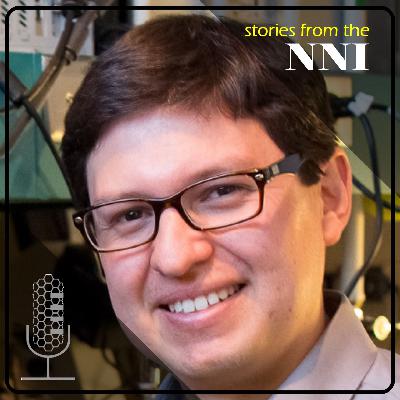
In this episode of the “Stories from the NNI” podcast, Juan Pablo Giraldo, Associate Professor in the Department of Botany and Plant Sciences at the University of California, Riverside, describes optical nanosensors that he and his team have developed and tested to monitor plant health and alleviate plant stress. If you would like to learn more about nanotechnology, go to nano.gov or email us at info@nnco.nano.gov. Closed captioning is provided on our YouTube channel. For this episode, go to: https://youtu.be/suq5fHMPX0g CREDITS Special thanks to: Juan Pablo GiraldoUniversity of California, Riverside Produced by:Andrew Pomeroy Music: Inspirational Outlook by Scott Holmes https://freemusicarchive.org/music/Sc...https://creativecommons.org/licenses/... Any opinions, findings, conclusions, or recommendations expressed in this podcast are those of the guest and do not necessarily reflect the views of the National Nanotechnology Coordination Office or United States Government. Additionally, mention of trade names or commercial products does not constitute endorsement or recommendation by any of the aforementioned parties. Any mention of commercial products, processes, or services cannot be construed as an endorsement or recommendation.
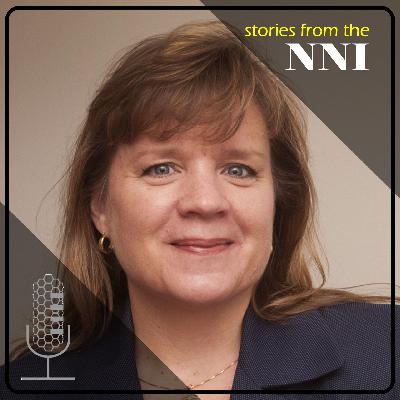
In this episode of the “Stories from the NNI” podcast, Lisa Friedersdorf, Director of the National Nanotechnology Coordination Office, speaks with Beth Stadler, Professor and Associate Head of Electrical and Computer Engineering at the University of Minnesota, about her work using magnetic nanowires to label cells, with potential applications in cancer treatment. If you would like to learn more about nanotechnology, go to nano.gov or email us at info@nnco.nano.gov. Closed captioning is provided on our YouTube channel. For this episode, go to: https://youtu.be/fiuAikVsumY CREDITS Special thanks to: Beth StadlerUniversity of Minnesota Produced by:Andrew Pomeroy Music: Inspirational Outlook by Scott Holmes https://freemusicarchive.org/music/Sc...https://creativecommons.org/licenses/... Any opinions, findings, conclusions, or recommendations expressed in this podcast are those of the guest and do not necessarily reflect the views of the National Nanotechnology Coordination Office or United States Government. Additionally, mention of trade names or commercial products does not constitute endorsement or recommendation by any of the aforementioned parties. Any mention of commercial products, processes, or services cannot be construed as an endorsement or recommendation.

In this episode of the “Stories from the NNI” podcast, Delia Milliron, the T. Brockett Hudson Professor of Chemical Engineering and the Bill L. Stanley Endowed Leadership Chair of the Department of Chemical Engineering at the University of Texas at Austin, discusses her work using nanocrystals to make smart window materials that could help reduce the energy needed to heat and cool buildings. If you would like to learn more about nanotechnology, go to nano.gov or email us at info@nnco.nano.gov. Closed captioning is provided on our YouTube channel. For this episode, go to: https://youtu.be/2wCUEqJ78mU CREDITS Special thanks to: Delia MillironUniversity of Texas at Austin Produced by:Andrew Pomeroy Music: Inspirational Outlook by Scott Holmes https://freemusicarchive.org/music/Sc...https://creativecommons.org/licenses/... Any opinions, findings, conclusions, or recommendations expressed in this podcast are those of the guest and do not necessarily reflect the views of the National Nanotechnology Coordination Office or United States Government. Additionally, mention of trade names or commercial products does not constitute endorsement or recommendation by any of the aforementioned parties. Any mention of commercial products, processes, or services cannot be construed as an endorsement or recommendation.

In this episode of the “Stories from the NNI” podcast, Jen Dionne, Senior Associate Vice Provost of Research Platforms and Shared Facilities and Associate Professor of Materials Science and Engineering at Stanford University, discusses her research on catalytic nanoparticles, and the importance of interdisciplinarity and diversity in problem solving. If you would like to learn more about nanotechnology, go to nano.gov or email us at info@nnco.nano.gov. Closed captioning is provided on our YouTube Channel. For this episode, go to: https://youtu.be/DIGQHXY58QI CREDITS Special thanks to: Jen DionneStanford University Produced by:Andrew Pomeroy Music: Inspirational Outlook by Scott Holmes https://freemusicarchive.org/music/Sc...https://creativecommons.org/licenses/... Any opinions, findings, conclusions, or recommendations expressed in this podcast are those of the guest and do not necessarily reflect the views of the National Nanotechnology Coordination Office or United States Government. Additionally, mention of trade names or commercial products does not constitute endorsement or recommendation by any of the aforementioned parties. Any mention of commercial products, processes, or services cannot be construed as an endorsement or recommendation.

Comments

Download from Google Play

Download from App Store
 United States