


 Claim Ownership
Audio Antiques
Subscribed: 16Played: 498
Subscribe

© Classic radio shows from the K-Rob Collection
Description
Welcome to amazing podcasts from Hall of Fame broadcaster and journalist Ken Robinson in this series of classic programs from the 1920s through the 1990s.
The collection is not your usual "cops & comedians" old time radio podcast. Special attention given to the contributions of African-Americans and other minorities, who were largely excluded from the broadcasting industry, but still managed to make their mark in history. You will hear notable news events, and social issues in revealed great detail along with big budget entertainment.
For details visit www.krobcollection.com
The collection is not your usual "cops & comedians" old time radio podcast. Special attention given to the contributions of African-Americans and other minorities, who were largely excluded from the broadcasting industry, but still managed to make their mark in history. You will hear notable news events, and social issues in revealed great detail along with big budget entertainment.
For details visit www.krobcollection.com
294 Episodes
Reverse
This podcast explores the life of African-American actor & comedian Butterfly McQueen. She was born in Tampa, Florida in 1911, and showed an aptitude for entertaining at an early age. McQueen had planned to be a nurse, but a teacher was so impressed by her unique voice, and photographic memory, that she suggested McQueen try acting. McQueen will forever be remembered as the maid Prissy, in the classic 1939 movie Gone With The Wind. In the 1950s, McQueen became one of the stars on the popular TV situation comedy Beulah. However, Butterfly McQueen left Hollywood for good after appearing in 12 movies, and on numerous network radio shows. In a 1980's interview McQueen explained she was frustrated with being typecast as stereotypical maids and servants.She kept busy by getting involved in the civil rights, animal rights, and free thought movements. Returning to school at the age of 64, she attained a degree in Political Science. McQueen continued to act on the stage, and in 1980 won an Emmy Award for her work on an ABC television special. You will hear Butterfly McQueen on the Jack Benny Show in 1943, the Dinah Shore Show in 1944, and the Jubilee Armed Forces Radio variety program in 1944. More at KRobCollection.com
During World War Two there were several efforts to stem the tide of rising racial violence, as African-Americans became more vocal about bias and discrimination at home while Black soldiers were fighting against fascism overseas. The federal government was concerned that white attacks against African-Americans would affect morale, and provide propaganda for Germany, Japan, and Italy. So they worked with the radio networks to create anti-stereotypical programs to boost the image of Blacks. One was an 8 part series called Freedom's People which aired on NBC in 1941. You'll hear the opening installment. Another show was An Open Letter on Race Hatred aired by CBS in 1943. It featured a personal appeal by Republican presidential candidate Wendell Willkie. Once the war was over, the networks basically returned to the usual stereotypical shows common during the latter years of the Jim Crow area.
More at http://krobcollection.com
He was Martin Luther King, Muhammed Ali, Harry Bellafonte, and Malcolm X rolled into one. Paul Robeson was an extraordinary American singer, actor, and civil rights activist. The son of a slave, Robeson was Born in Princeton, New Jersey, and excelled academically. He became a star athlete earning a scholarship to Rutgers University, and a law degree from Columbia University. Robeson became a global sensation, using his recordings, films, and live performances, to fight racism in America and around the world. However, the more popular Robeson became, the more the U.S. government tried to silence him, with harassment, surveillance, congressional investigations, and finally confiscating his passport so he couldn't travel. But in 1957, Robeson used new technology to appear at a rally and concert supporting union coal miners in the U.K., without leaving New York City. We'll learn how Paul Robeson did it, from the BBC World Service program "Witness History", followed by this amazing rally in its entirety.More at http://krobcollection.com
The stories of two very deserving, but seldom celebrated heroes. Dr. Carter G. Woodson, the influential African American historian, author, and journalist, who is the "Father of Black History." His parents had been slaves, but Woodson became one of the first Blacks to earn a Ph.D. from Harvard University. Woodson was a follower of Marcus Garvey, and established Negro History Week in 1926, which later evolved into Black History Month. His work emphasized the importance of African American contributions to history and culture, and he founded the Association for the Study of African American Life and History.Then, we have the story of Dr. J. Ernest Wilkins Jr. the prominent African American mathematician, nuclear engineer, and civil rights advocate. He earned his first degree in mathematics from the University of Chicago at just 19 years old, and was nicknamed The Negro Genius. Wilkins worked on the Manhattan Project, which produced the atomic bomb. He taught at Tuskegee Institute, and later became President of the American Nuclear Society. Wilkins career spanned 7 decades, and tirelessly worked to get young African Americans into the STEM trades. The biographies of Woodson and Wilkins are told on the classic radio series, Destination Freedom. More at KRobCollection.com
Portia May White was a operatic contralto, known for becoming the first Black Canadian concert singer to achieve international fame. Born in 1911, White's formative years were spent performing in her father's church choir in Halifax, Nova Scotia. She competed in local singing competitions as a teenager and later trained at the Halifax Conservatory of Music. One of her most popular recordings was of the African-American spiritual "Think of Me". She also had a hit with the song "4 & 20 Elders".
In 1944, Portia White made her international debut auditioning for the Metropolitan Opera. White became the first Canadian to sing at New York's Town Hall performance space. The New York Times reported her singing was "remarkable." White later completed tours throughout Europe, the Caribbean, Central and South America.
When vocal difficulties and cancer eventually contributed to her retirement in 1952, White settled in Toronto and trained other Canadian musicians such as Lorne Greene of Bonanza TV fame, and famous pop singer Robert Goulet. Portia White was interviewed by CBC Television in 1958.
One of White's final major public appearances was a special command performance for Queen Elizabeth II and Prince Philip in 1964. Portia White occasionally performed on American radio during the medium's golden age. We found one appearance on the show New World A'Comin in 1945, celebrating the Allied Victory in Europe during World War Two, and it's meaning to African-Americans.
More at KRobCollection.com
We are examining women's fight for democracy in the United States. In 1939, NBC and the federal government teamed up to produce a series of programs called Gallant American Women. These shows outlined their struggle for equality beginning with the nation's founding. We're going to hear two episodes. The first entitled These Freedoms, about women's fight for freedom of speech, worship, and expression, as well as their fight to end slavery. The second episode is called Women Are People, and detailed their work to win the right to vote.
More at KRobCollection.com
Sidney Poitier was a trailblazing actor, film director, and diplomat who achieved numerous significant accomplishments throughout his career. As the first African-American to win the Academy Award for Best Actor, he made history with his powerful performances in films such as "Lilies of the Field" and the 1967 classic, "Guess Who's Coming to Dinner." Poitier's impact extended beyond the silver screen, as he used his influence to challenge racial stereotypes and advocate for civil rights. In 2009, he was awarded the Presidential Medal of Freedom for his contributions to American culture, and his legacy continues to inspire future generations of actors and activists. We're going to hear Sidney Poitier being interviewed by Bill Parkhurst on the radio show Between the Lines in 1981.
More at KRobCollection.com
In this edition, we learn about the woman who was named one of the most important people of the 20th Century. Helen Keller was an American author, disability rights advocate, feminist, political activist and humanitarian. The Alabama native, lost her sight and her hearing due to illness when she was just 19 months old. However, Keller later learned to speak and write with the help of her first teacher and life-long companion Anne Sullivan. Keller was the first deaf-blind person in the United States to earn a Bachelor of Arts degree. She became a global superstar, and a long time supporter of the NAACP and the ACLU. We will hear Helen Keller in her own words on the CBS Radio Show, This I Believe with Edward R. Murrow in the early 1950s. And on the Rudy Vallee variety show on NBC Radio in 1936.
More at KRobCollection.com
This podcast focuses on the contributions made during the times of Jim Crow segregation, to promote racial harmony during World War Two, in two episodes of the show New World A-Comin', both aired during the war on New York Radio Station WMCA. First, we'll hear a 1944 play about one of the 125,000 African Americans who fought in World War Two, all in segregated units. Then we'll hear a 1945 presentation about a white union worker in Detroit who kept his weapons plant from shutting down by fighting racial bias and discrimination.
More at KRobCollection.com
On this podcast we take examine of two historic and legendary African-American educators. First, there's the story of philanthropist, humanitarian, and civil rights activist Mary McLeod Bethune who was an advisor to President Franklin Roosevelt. She was the founder of what would become Bethune-Cookman University in Florida. Bethune will also speak to us in her own words. Then, the story of Booker T. Washington, the founder of Tuskegee University in Alabama. Washington was born a slave, but became an advisor to several U.S. presidents. Both biographies are from the radio series Destination Freedom and first aired in the late 1940s.
More at KrobCollection.com
It seems the United States always been a divided nation in many respects. Since its founding, proponents of the right and left have battled for influence and control. It was no different during the Great Depression of the 1930s, as the struggle played out on the new medium of radio. Father Charles Coughlin was a Catholic priest who's radio shows reached millions. He promoted right wing conspiracies, Christian Nationalism, and antisemitism on the air. Louisiana senator and former governor Huey Long was a progressive populist who on the radio called for wealth re-distribution, government involvement and expanded social programs. In Coughlin you hear Rush Limbaugh, in Long you hear Bernie Sanders. We have two presentations, Coughlin in 1939, and Long in 1935. Both were early supporters of President Franklin Roosevelt, but went their separate ways after he was elected.
More at KRobCollection.com
From it's early days in the 1920's news was an important part of radio. The first newscasts were little more than announcers reading press releases and police reports. In the 1930s and 40s, network newscasts evolved into audio versions of newspaper columns. During the World War Two and into the 1950s there was the arrival of the radio news anchor, who presented reporters on the scene, with commentary confined to the people actually making the news. You're hear this transition develop over decades of radio news coverage.
Elmer Davis on CBS Radio in 1939
HV Kaltenborn on NBC Radio in 1940
Walter Winchell in 1941, American Radio's most popular newsman at the time, and was heard on the Blue Network, which later became ABC.
Fulton Lewis Jr on the Mutual Radio Network in 1942.
Raymond Gram Swing on ABC Radio in 1945
Mutual Newsreel Digest in 1950
Taylor Grant suffers the news anchor's nightmare on ABC in 1953.
The legendary Edward R. Murrow on CBS Radio in 1957.
Frank Bourgholtzer on NBC Radio in 1961.
Charles Osgood before he became famous in 1966 on ABC Radio
Bill Maher Jr, father of the famous comedian on Mutual Radio in 1969.
Mike Stanley on CBS in 1969.
James Limbach on Associated Press Radio in 1977.
Al Williams on the Mutual Black Radio Network in 1978.
David Leslie on ABC in 1978.
Pat Prescott on the National Black Network in 1981.
Becky Bailey on Mutual in 1988.
Jim Lounsbury on the United Press International radio network in 1989.
Sheri Preston on ABC radio in 2004.
More at KRobCollection.com
William Warfield was a famous opera singer, born in the U.S state of Arkansas in 1920. Known for his rich baritone voice and commanding stage presence, the African-American rose to prominence in the mid-20th century, captivating audiences worldwide, and gracing the stages of prestigious opera houses and concert halls. Warfield served in the Army during World War Two, working in military intelligence. After the war, he earned a masters degree at the Eastman School of Music, and was quickly invited to tour Australia where he gave 35 concerts. Warfield then made 6 separate tours of Europe taking the continent by storm. He became a regular guest on radio and television shows.
Warfield later became a University of Illinois music professor at Urbana-Champaign, and was later promoted to Chairman of the Voice Department. In 1984 he received a Grammy Award. You will hear William Warfield just as his operatic career was starting to skyrocket, on NBC Radio's popular Edgar Bergen-Charlie McCarthy Show in 1952. One of only a handful of African-Americans to appear on the show during its more than 20 year history.
More at KRobCollection.com
It's one of only a few classic radio shows by African-Americas. Destination Freedom was a weekly radio program produced by NBC radio station WMAQ in Chicago from 1948 to 1950. It presented biographical histories of prominent African-Americans as written by the program's producer Richard Durham. You are going to hear a 1950 episode about the creation of the National Urban League, the nonpartisan historic civil rights organization that advocates on behalf of economic and social justice for African Americans, and against racial discrimination in the United States. Plus a 1949 episode about the founder of the city of Chicago. Jean Baptiste Point du Sable was an African-American trader who established the settlement of Chicago in the 1780s. Get ready for living history, right after this break. More at http://krobcollection.com
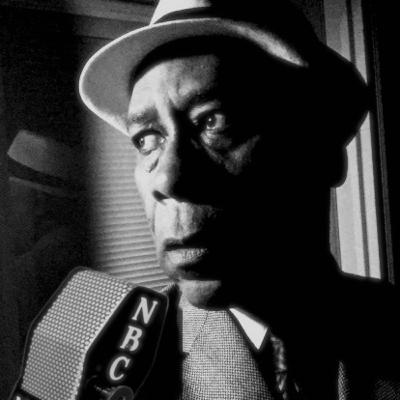
The Golden Age of radio began just after World War One. Recordings of broadcasts from that era are extremely rare, and so were appearances by celebrities. However, President Calvin Coolidge made a speech on NBC in 1928, reminiscing about the end of his administration. In this podcast you will hear other sounds from the dawn of radio's classic era. We'll begin with one of the first soap operas. The Cecil & Sally Show began in 1928 on KYA Radio in San Francisco, and in a few months went national on NBC. It starred just two characters Johnny Patrick and Helen Troy, with no sound effects or music. Then you'll hear a 1928 broadcast from WAAM Radio in Newark, New Jersey. It's quite different from what we listen to today, but keep in mind, broadcasting was less than a decade old, and the experts were still trying to figure things out. So settle back, close your eyes, and imagine you are listening to radio in the 1920's. More at http://krobcollection.com
During radio's classic age, few women had starring roles on dramatic programs outside of soap operas. One such woman was Mercedes McCambridge, who Orson Welles called the world's greatest living radio actress. She starred in the early 1950s crime show Defense Attorney, also known at The Defense Rests. McCambridge was so convincing that she receiving an honorary membership in the Los Angeles Women's Bar Association. McCambridge began her career as a radio actor during the 1930s while also performing on Broadway. She went on to appear in movies and numerous TV shows, winning an Academy Award for Best Supporting Actress for her screen debut in All the King's Men in 1949. You will hear Defense Attorney from 1951, and The Defense Rests from 1952 with Mercedes McCambridge in the title character of Martha Ellis Bryant, a respected attorney who champions the underdog and the unjustly accused. Then Bill Swisher interviews McCambridge on the American Forces Radio Network in 1975.More at http://krobcollection.com
This podcast features the 1963 Major League Baseball All-Star Game. It was held on July 9th at Cleveland Municipal Stadium in Ohio USA. The contest was won by the National League, which defeated the American League 5-to-3. The Most Valuable Player of the game was Willie Mays, who hit a homer and scored two runs. This was the first baseball all-star game to be played at night, and featured 21 future hall of famers, including Mickey Mantle, Sandy Koufax, Don Drysdale, and Hank Aaron.More at KRobCollection.com
Born in Joplin, Missouri in 1901, James Mercer Langston Hughes was an African-American poet, social activist, novelist, and playwright. Hughes took New York's literary scene by storm in the mid 20th century winning numerous awards, and honorary doctorates. He is best known as leader of the Harlem Renaissance, and was celebrated as the Shakespeare of Harlem. Langston Hughes also created short stories, operas, essays, and works for children. You're going to hear about the early life of Hughes in a 1948 presentation of the classic radio show Destination Freedom. Followed with a story created by Langston Hughes on the radio series New World A-Comin' in 1945. Then, Hughes himself talks about his life and his writings in a speech on the campus of UCLA in 1967.More at http://krobcollection.com
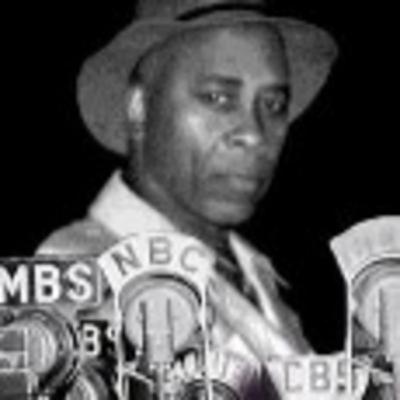
The Big Show was a variety program created by NBC Radio in hopes of keeping the medium competitive with television. In 1950, listeners were deserting radio and becoming TV viewers. NBC's answer was to produce a lavish, expensive, star studded program that would stop the exodus. The Big Show was 90 minutes long, featuring the greatest comedians, stage, screen and music talent of the day, hosted by actress Tallulah Bankhead. It premiered on November 5, 1950. But the Big Show could not turn the tide, the golden age of radio was rapidly ending. NBC cancelled the show after two seasons and a reported loss of $1 million, which was a lot of money in the 1950s. You're going to hear Big Show #5, broadcast on December 3rd, 1950, featuring comedians Fred Allen, Joan Davis, Phil Silvers, and President Harry Truman's daughter Margaret.More at http://krobcollection.com
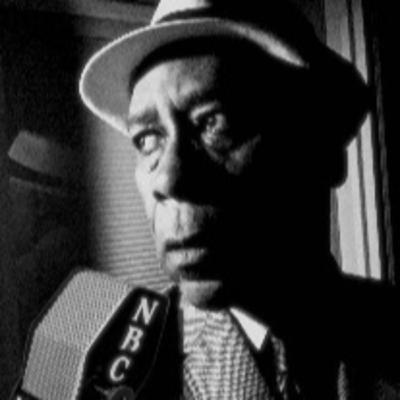
Radio's classic era wasn't just about singing, joke telling, and dramatic acting. There were serious, intellectual, thought provoking programs on the air as well. One such program was the University of Chicago Roundtable on NBC Radio. We have two shows from 1949. In the first one, there's a discussion regarding the need for government civil rights programs. On the second program, there's an examination of whether human beings are inherently violent, and what might be done to curb violence and prevent war. Each week, the University of Chicago Roundtable brought together a host of panelists in the fields of journalism, science, philosophy, politics, literature, business, and others, in order to answer the big questions of the day. More at http://krobcollection.com

Comments

Download from Google Play

Download from App Store
 United States