


 Claim Ownership
listening SUPERPOWER podcast
Subscribed: 13Played: 124
Subscribe

Description
Your Listening SUPERPOWER podcast will help become a more impactful communicator by listening effectively and in surprising ways.
Join your host and listening catalyst Raquel Ark to be inspired by listening researchers and professionals as we share tips and stories on how to work smarter and feel better by growing our listening superpower together.
Your listening SUPERPOWER podcast is much more than listening. It's practical knowledge and inspiration that you can use right away. If you're the kind of person who wants to have a positive impact, have less communication challenges, get things done and make our world a better place, listen and follow the listening SUPERPOWER podcast.
Build your toolbox for your everyday interactions. Learning how to listen more effectively will help others listen to you better.
Improve work productivity and time management. Less misunderstandings. Break bad communication habits. Communicate effectively. Have more voice. Engage your team and influence stakeholders. Facilitate difficult conversations better. Enhance relationships. Discover needs and interests. Feel more belonging. Build trust and connection. Take meaningful action. Increase your success and wellbeing.
Join your host and listening catalyst Raquel Ark to be inspired by listening researchers and professionals as we share tips and stories on how to work smarter and feel better by growing our listening superpower together.
Your listening SUPERPOWER podcast is much more than listening. It's practical knowledge and inspiration that you can use right away. If you're the kind of person who wants to have a positive impact, have less communication challenges, get things done and make our world a better place, listen and follow the listening SUPERPOWER podcast.
Build your toolbox for your everyday interactions. Learning how to listen more effectively will help others listen to you better.
Improve work productivity and time management. Less misunderstandings. Break bad communication habits. Communicate effectively. Have more voice. Engage your team and influence stakeholders. Facilitate difficult conversations better. Enhance relationships. Discover needs and interests. Feel more belonging. Build trust and connection. Take meaningful action. Increase your success and wellbeing.
98 Episodes
Reverse
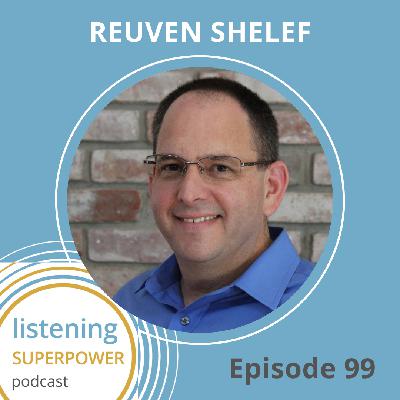
Do you ever feel overwhelmed with all of the challenges that show up at work and at home? And then you feel stuck. This episode of the listening SUPERPOWER podcast will give you a way to get clear and unstuck, and listening plays a key role. Reuven Shelef is the Founder and CEO of OUT OF THE BOX Consulting and creator of the Untangling Complex Challenges® methodology. With over 30 years of experience in engineering, technology, business transformation, and human dynamics, he helps Fortune 500 companies, startups, and executives solve complex problems by combining sharp logic with deep understanding of human behavior. His method was developed from his own life experiences, blending business, engineering, management consulting, and personal growth. As a Certified Salesforce Consulting Partner with 30+ years of Management Consulting experience, Reuven's precise approach and authentic leadership have made him a trusted advisor who drives meaningful change. In this episode, Reuven clarifies what a complex challenge is and how to map out what seems overwhelming to a clear picture that can lead to clearly defining next steps. He shares his journey from engineering to personal development, highlighting the importance of listening to oneself and others. He explains how focusing on root causes instead of symptoms leads to better solutions and explores how relationships fuel personal and professional growth. This episode offers valuable insights on empathy, self-awareness, and navigating life's complexities. On listening: "Part of my listening is to listen to their listening. Are they actually listening? And what are they listening to?" - Reuven Shelef SUPERPOWER Notes: 01:03 - The Power of Listening: Reuven recalls learning to listen consciously during his Air Force tests. 05:35 - Complex vs. Simple Challenges: He explains complex challenges involve feeling stuck without clear solutions. 10:30 - Listening to Their Listening: Reuven highlights reading others' non-verbal cues to improve communication. 12:57 - Personal Growth Journey: He shares transitioning from a technical mindset to exploring identity and purpose. 19:07 - Applying Business Tools Personally: Reuven used professional methods like mapping to navigate personal crises. 20:32 - Untangling Complex Challenges: He outlines his approach to identifying root causes over symptoms. 25:10 - Cross-Pollinating Problem-Solving: Reuven combines engineering logic with emotional perspectives. 29:21- Unique Consulting Role: He blends technical and personal insights for a distinct coaching style. 34:40 - Discovering Self and Connection: Understanding oneself is key to meaningful relationships. 36:06 - Relationships and Growth: Reuven notes interpersonal dynamics drive many personal growth challenges. 40:08 - Free Short Calls: Listeners can book free calls with Reuven to discuss and untangle challenges. Key Takeaways: on the power of listening: "Listening to silence... it's fascinating to be alone and listen to silence." - Reuven Shelef on listening and self-awareness: "Sometimes I'll stop and I say, 'I'm sorry, I wasn't listening.' It took me some time and training to get over the "looking bad" issue." - Reuven Shelef on relationships: "There is very little that can be accomplished alone. There are times to be alone. That's also part of being comfortable in your own skin." - Reuven Shelef Connect with Reuven Shelef: Website: www.reuvenshelef.com Book a call: MeetReuven.com Linkedin:https://www.linkedin.com/in/reuvenshelef/ Connect with Raquel Ark: www.listeningalchemy.com Mobile: + 491732340722 contact@listeningalchemy.com LinkedIn Substack listening ALCHEMY newsletter Podcast email: listeningsuperpower@gmail.com

Dr. Jade Singleton is a strategic consultant, educator, and entrepreneur dedicated to culture transformation and the well-being of Black women professionals. She is the founder of Johnson Squared Consulting and IKONI Collective, creator of the Sarah Jane Academy™, and producer of the documentary Ninety-Two: The Rest Rebellion No One Saw Coming. With experience as a senior consultant at NASA and advisor to major organizations like Amazon and Uber, she brings deep expertise in strategic DEI work, workplace wellness, and the radical practice of rest as resistance. On this episode of the listening SUPERPOWER podcast, Jade and host Raquel Ark explore the transformative power of listening. Jade emphasizes what it means to "listen to believe." She shares how vulnerability can dissolve barriers in the business context, how common ground can shift conflicts into collaboration, and how organizations carry a "corporate soul" that shapes behavior and culture. Jade also highlights listening to self care and the emerging rest rebellion among Black women and the healing power of community care and storytelling. This episode is a powerful reflection on empathy, resilience, and creating spaces where truth and connection can thrive. Enjoy listening to this episode of the listening SUPERPOWER podcast and let us know your thoughts. Subscribe and share the listening SUPERPOWER podcast so that we can reach more people to be part of the listening movement. On taking action: "Listening to believe means coming in with the understanding that the person talking to you is telling the truth about their experience." — Jade Singleton SUPERPOWER Notes: 00:01:37 – Active vs Passive Listening: Jade explains that active listening requires full engagement, focusing on understanding and responding thoughtfully, unlike passive listening, which is more about merely hearing words without deeper connection. 00:04:06 – Listening to Believe: The key to authentic empathy is suspending judgment and truly believing others' experiences as their truth, creating a grounded foundation for communication. 00:09:37 – Building Community through Vulnerability: Jade shares how vulnerability exercises create shared experiences that dissolve barriers and foster genuine connection in factions with opposing views. 00:12:14 – Common Ground in Conflict Resolution: Conflict can be transformed when teams find tangible shared goals or narratives, helping to shift perspectives from opposition to collaboration. 00:16:06 – Corporate Soul and Shared Identity: Organizations hold narratives that influence individual behavior; understanding this soul or identity helps navigate conflicts and build stronger teams. 00:19:23 – Rest Rebellion Among Black Women: An emerging quiet movement where Black women consent to prioritize rest, healing, and self-care as resistance against systemic exhaustion. 00:22:38 – Community Healing and Self-Focus: Emphasizes the importance of co-regulation and community care as collective coping mechanisms during sociopolitical and personal stress. 00:27:21 – Leaving for Mental Well-Being: Stories of women choosing to leave toxic environments or geographic locations to preserve identity and mental health. 00:30:16 – Encouragement Through Community Voice: How sharing stories within communities fosters empowerment, encouragement, and collective strength. Key Takeaways: On the power of listening: "Listening is not just about hearing words; it's about understanding the truth behind them." — Jade Singleton On community building: "When we listen deeply, we create spaces for healing and connection." — Jade Singleton On self-care: "It's okay to prioritize your well-being; it's essential for personal and collective growth." — Jade Singleton Notes/Mentions: Documentary: "92: The Rest Rebellion No One Saw Coming" focusing on the experiences of Black women reclaiming their time and energy. Connect with Jade Singleton: Website: www.ikoni.org LinkedIn: https://www.linkedin.com/in/dr-jade-singleton-8b2830110 Connect with Raquel Ark: www.listeningalchemy.com Mobile: + 491732340722 contact@listeningalchemy.com LinkedIn Substack listening ALCHEMY newsletter Podcast email: listeningsuperpower@gmail.com
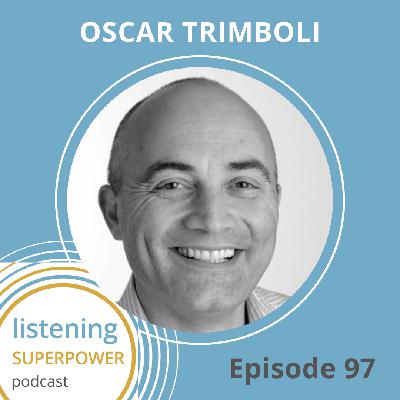
Oscar Trimboli, renowned listening expert and author, returns with transformative insights from his unique journey of coding listening behaviors into software. Inspired by personal experiences with his father's stroke recovery and extensive research within organizational teams, Oscar reveals how technology and conscious facilitation can dramatically improve listening dynamics, reduce meeting time, and foster authentic participation. In this episode of the listening SUPERPOWER podcast with host Raquel Ark and discover how simple shifts—like asking shorter, clarifying questions and enabling everyone's voice to be heard—can overhaul team communication and unlock untapped commercial and human potential. Learn why "the hardest listening role is the speaker," how pre-meeting listening can boost confidence, and how vivid metaphors can make your message unforgettable. Whether you lead meetings, manage teams, or want to deepen your listening practice, Oscar provides practical tools and data-driven strategies to elevate your communication for lasting impact. On taking action: "The difference between hearing and listening is action." -- Oscar Trimboli SUPERPOWER Notes: 02:00 — Stroke recovery communication breakthrough—Oscar's father's stroke taught him "you can communicate very effectively with somebody who can't speak" using hand squeezes and positioning techniques that forced medical staff to engage the patient directly 04:42 — Taking responsibility through direct engagement: Moving close to his father's face so medical professionals had to "look at him when they ask a question" helped his father "take responsibility for his recovery" 08:30 – From Microsoft vision to reality: Fifteen years after his boss said "if you could code how you listen, you could change the world," Oscar now uses AI to analyze meeting dynamics and participation patterns 12:15 –The 80% share of voice problem: Data revealed few participants dominated 80% of speaking time until a different facilitator in week six dramatically increased participation and meeting effectiveness 18:20 – Halving meeting time through inclusion: Better facilitation that included everyone reduced meetings from "90 minutes weekly" to "45 minutes fortnightly" because "people feel heard and get buy-in" 22:45 – Eight words or less rule: Questions of "eight words or less had higher impact" and create "collective understanding" rather than individual comprehension 25:30 –The three-question test: Before asking: "write it down, count words, then ask: is this for me, them, or the group?" Group questions have highest impact 28:15 – Clarifying questions transform meetings:Only "one or two participants" ask clarifying questions consistently, but their presence helps "questions get better and meetings get shorter" 35:45 – Listen before the meeting: Contact executive assistants beforehand to understand question patterns and presentation preferences for high-stakes meetings 42:20 – Metaphors beat numbers:Use compelling metaphors like "budget as jazz band" because "they remember the metaphor before the numbers" 50:30 – The quiet CFO's transformation: A shy CFO's single word "snake" (about shedding old systems) helped transform company growth from 32% to 170% when leadership finally listened Key Takeaways: On the universal listening gap: "We are not good listeners just because we need to be." -- Oscar Trimboli On the speaker's challenge: "The hardest listening role is the person currently speaking." -- Oscar Trimboli On meeting effectiveness: "If you want fewer meetings and shorter ones, when you do have them, focus on inclusive facilitation that ensures everyone is heard." -- Oscar Trimboli On organizational potential: "My question to you listening is who are you ignoring in your organization that is holding you back from massive untapped potential commercially and human potential as well?" -- Oscar Trimboli On taking action: "The difference between hearing and listening is action." -- Oscar Trimboli Notes/Mentions: Listening Quiz: listeningquiz.com - Discover what gets in your way of listening effectively (35,000+ people have taken it) Tools mentioned: TalkTime and EqualTime (meeting analytics add-ons) Google Meets, Zoom, Microsoft Teams listening add-ons Equal Time (Munich-based company for gender and participation analytics) Books referenced: "What Doctors Say and What Patients Hear" by Dr. Danielle Offrey Oscar's third book on listening (influenced by his father's stroke experience) Listening measurement tools: Talk-to-listen ratios, question analysis, clarifying question tracking, curiosity index Connect with Oscar Trimboli www.oscartrimboli.com LinkedIn Deep Listening: Impact Beyond Words Connect with Raquel Ark: www.listeningalchemy.com Mobile: + 491732340722 contact@listeningalchemy.com LinkedIn Substack listening ALCHEMY newsletter Podcast email: listeningsuperpower@gmail.com
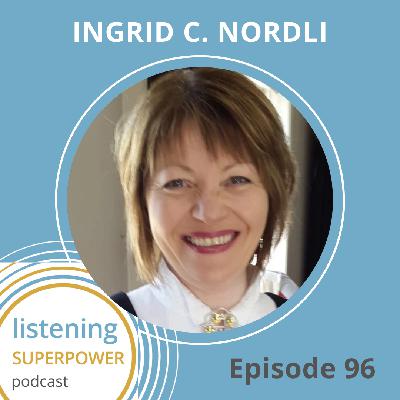
Ingrid Nordli, Associate Professor in Linguistics at the UiT, the Arctic University of Norway in Tromsø. Ingrid has been putting a lot of time into understanding how we develop listening skills. She talks about how young children in kindergarten can be trained to become great listeners using the listening circle. Besides dedicating time to focus on children's listening development, she teaches university students language development, and academic writing. She was on the board of the International Listening Association and continues to be an active member. In this episode, we dive deep into the often-overlooked power of listening with Ingrid, a phonetics expert from Norway. Through her experiences in education and research, Ingrid reveals how listening is a fundamental yet underappreciated aspect of communication. Ingrid shares insights from her work with children and the importance of teaching listening skills from a young age, emphasizing that effective listening can transform interactions and relationships. Join us as we explore the nuances of listening, the impact of listening circles, and the journey of writing a book aimed at enhancing listening skills in early childhood education. On the kindergarten transformation: "When you teach the children about this listening circle procedure, they get more relaxed, more attentive to each other. They straighten their back and they feel heard, they feel seen, and get much more friendly with each other."– Ingrid Nordli SUPERPOWER Notes: 02:00 – Nuanced listening knowledge: The phonetics revelation—how studying speech transcription exposed that listening has "so little room and no room of itself" in phonetics education, despite transcription accuracy depending entirely on listening abilities 04:42 – Definition of listening process: International Listening Association's framework—"Listening is the process of receiving, constructing meaning from and responding to spoken and or nonverbal messages"—discovered through deep research after realizing listening was the "necessary glue" in kindergarten language and music projects 07:57 – Listening circles for children: Simple but powerful tool that helps kids ages 3-6 become more relaxed, attentive, and respectful—they "straighten their back and feel heard, seen, and get much more friendly with each other" because everyone gets the chance to talk and are respected while speaking 14:33 – Listening in the Kindergarten: The book written with Christian Skog—a practical and theoretical guide combining listening with typical developmental activities, featuring eight different kindergarten activities 18:58 – Engaging in children's listening development: The importance of being humble and engaging with children's listening development because "we can learn so much about our own listening"—children naturally develop language rules but don't develop conscious listening awareness without guidance 19:50 – Importance of listening skills: The fundamental gap—"we are not good listeners just because we need to be. 25:11 – Children's book on listening: Collaboration with Ebele Chukwujama in Nigeria creating books for ages 4-6 about a child learning listening through conversations with mom, plus "Listening in Circles" for ages 6-9, all translated into Yoruba, Hausa, and Igbo 27:14 – The importance of listening skills: Final thoughts on self-reflection Key Takeaways: On children as teachers: "We can learn so much about our own listening"– Ingrid Nordli On the fundamental gap in child development: "When children are listening, but not taught how to listen, they miss out."– Ingrid Nordli On the difference between natural and conscious learning: "Children naturally develop language rules but don't develop conscious listening awareness without guidance."– Ingrid Nordli On the kindergarten transformation: "When you teach the children about this listening circle procedure, they get more relaxed, more attentive to each other. They straighten their back and they feel heard, they feel seen, and get much more friendly with each other."– Ingrid Nordli Notes/Mentions: "Listening in the Kindergarten" by Ingrid and Christian Skog: A resource for educators focusing on listening skills. https://uit.no/ansatte/ingrid.c.nordli (Norwegian) https://en.uit.no/ansatte/person?p_document_id=153137&p_dimension_id=88155 (English) Listening in the Kindergarten (Norwegian title: Lytting i Barnehagen) - a book by Ingrid CNordli and Christian Skog A professional book written as a children's book for children between four and six, authored by Ingrid C. Nordli and Ebele Chukwujama Listening in Circles - a planned book for children between six and nine, authored by Ingrid C. Nordli and Ebele Chukwujama Past Episode Referenced: Ebele Chukwujama interview - https://listeningalchemy.com/allgemein/the-listening-school-impacting-relationships-and-society-one-listening-ear-at-a-time-with-ebele-chukwujama/ Resources Mentioned: Listening Circles Documentation: https://munin.uit.no/bitstream/handle/10037/33278/article.pdf?sequence=4 "Lytting i barnehagen" (Listening in the kindergarten) from the publishers website; Fagbokforlaget: https://fagbokforlaget.no/produkt/9788245050981-lytting-i-barnehagen Connect with Ingrid Nordli: Website: https://en.uit.no/ansatte/person?p_document_id=153137 LinkedIn: https://www.linkedin.com/in/ingrid-c-nordli-a1702523?originalSubdomain=no Connect with Raquel Ark: www.listeningalchemy.com Mobile: + 491732340722 contact@listeningalchemy.com LinkedIn Substack listening ALCHEMY newsletter Podcast email: listeningsuperpower@gmail.com
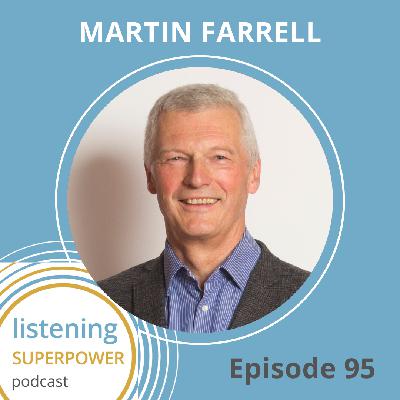
Too many leaders miss the opportunity to have impact when it truly matters: the transformation that takes place when someone feels genuinely heard. This is especially important during turbulent times. It's not just about reacting to a crisis, it's about pausing for a moment to listen deeply. Without it, leaders risk isolation, poor decisions, and missed opportunities. Martin Farrell, crisis coach and bestselling author of "Good Leaders in Turbulent Times: How to Navigate Wild Waters at Work," reveals how listening becomes a lifejacket for leaders navigating chaos. Drawing on decades of global experience with organizations like the British Red Cross and UN Climate Change Secretariat, Martin shares the pivotal moments and practical strategies that help leaders spot early warning signs, create safe spaces for tough conversations, and transform crisis into connection and growth. In this episode, discover the story behind the 'penny drop' moment, when someone knows they're truly understood. Martin gives insight on subtle warning signs before a crisis occurs and also shares excerpts from 138 pieces of his advice in his book. Learn how mastering listening in turbulent times can turn wild waters into opportunities for lasting impact. "Do we want to react and retaliate, or do you reflect and respond?" – Martin Farrell SUPERPOWER Notes: 02:45 – What he realized the time he first noticed the power of listening: Working with coach Nancy Klein for 14 years, where she would listen for an hour and a half with complete presence, even during his silent moments and times of distress 06:30 – The transformative experience of being truly heard: How Nancy Klein's listening created a space where he felt special and important in that moment, demonstrating the profound impact of dedicated attention 08:15 – Supporting leaders in crisis: His work with UK charity chief executives who were at risk of losing their jobs, providing support "until the end of the chapter" through primarily listening rather than advice-giving 11:20 – The power of being present in wild waters: Using the metaphor of someone in wild waters with crocodiles around, and how having someone experienced nearby who won't drown provides crucial support 14:30 – From crisis support to storytelling: How his current work involves interviewing people who've processed their experiences to create anonymous advice for others still in crisis 17:45 – The journey of writing "Good Leaders in Turbulent Times": How the book took eight years to complete with six different manuscripts, and the importance of authentic vulnerability in helping others 22:10 – Career background in civil society: Six decades of working in charitable organizations, from teenage years through international work with UN agencies and climate change initiatives 26:40 – The book's unique structure: Five chapters featuring nine characters over seven years, showing the progression from missing warning signs to integration and wisdom 29:15 – Chapter one – missing the signs: How all the warning signs were present but the characters weren't listening to or acting upon them, using the powerful question "What do you know now that you will discover in a year's time?" 32:50 – Listening to weak signals: The importance of becoming adept at noticing and paying attention to early warning signs before they become crises 35:20 – The 138 pieces of advice: Four categories throughout the book – watch out (red flags), remember this (truths to hold onto), consider this (suggestions for action), and secret sauce (personal stories) 38:45 – Theory U and letting go/letting come: How silence and stillness are essential for touching the source of inner knowledge and emerging possibilities 42:30 – Practical advice for listening to inner signals: Go sit by a river or in a quiet place, use scrap paper for uncensored writing, and allow the process to unfold over 8-9 pages until clarity emerges 46:15 – The "no mud, no lotus" principle: How working with distress and discomfort can produce beautiful outcomes when you know how to process them effectively 48:20 – Developing your support network: The importance of having trusted people around you before crisis hits, and Martin's participation in seven different support groups 51:30 – Live Well, Die Wise grief circles: Creating ceremonial safe spaces with candles, poems, and intentional grounding to allow deep sharing and discovery 53:45 – How to connect with Martin Farrell Key Takeaways: "My ultimate freedom is to respond to whatever you do to me." – Martin Farrell "Here is someone who had no agenda other than being with them and listening. And that was powerful." – Martin Farrell "Even if you're not naturally interested in other people, you can fake it till you make it. Start being interested, and then you get more interested." – Martin Farrell "Particularly with those who are in distress, that is an enormous gift… I noticed the power of being there. I was going to say just being there, but it's not just, it's being there and being present." – Martin Farrell Notes/Mentions: Nancy Klein (Martin's coach for 14 years)- https://www.timetothink.com/ Theory U and Otto Scharmer's Presencing Institute https://www.presencing.org/theoryu Live Well, Die Wise grief circles Deep Adaptation Forum Steven Appleby (illustrator of 41 drawings in the book) "Good Leaders in Turbulent Times: How to Navigate Wild Waters at Work" by Martin Farrell: https://mybook.to/GoodLeaders and https://practicalinspiration.com/book/good-leaders-in-turbulent-times Connect with Martin Farrell: Website: https://www.martinfarrell.org/ Substack: https://martin228.substack.com/ LinkedIn: https://www.linkedin.com/in/martingfarrell Connect with Raquel Ark: www.listeningalchemy.com Mobile: + 491732340722 contact@listeningalchemy.com LinkedIn Substack listening ALCHEMY newsletter Podcast email: listeningsuperpower@gmail.com
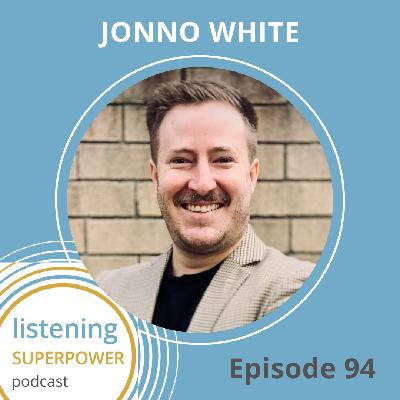
We often believe that great leadership comes from being an exceptional speaker, someone who can command a room and deliver compelling presentations. But what if the real superpower lies in the opposite skill? In this episode of the Listening Superpower podcast, join me in conversation with Jonno White, an Australian leadership coach, podcast host, and author with over four years of podcasting experience and 236 episodes under his belt. Jonno shares his fascinating journey from believing speaking was his greatest strength to discovering that listening is the ultimate leadership tool. Jonno shares his perspective on today's leadership challenges, from retaining younger talent to adapting leadership styles for different generations, and why understanding individual strengths might be more powerful than traditional role-based management. Whether you're a seasoned leader looking to enhance your people skills or someone just beginning to explore the power of listening, this episode will challenge your assumptions about what makes great communication. "The number one skill that comes up again and again is the power of listening. I had to unlearn what I learned when I was eight, because speaking was nowhere near as powerful as great listening." -- Jonno White SUPERPOWER Notes: 01:15 -- From Fear to Overconfidence: Jonno recounts his grade three experience giving a speech about ants, where faking confidence led to success and shaped his belief that speaking was his superpower. 05:30 -- The Coaching Revelation: Jonno shares how he discovered that clients weren't transformed by his advice, but by having space to think through their own thoughts and reach their own conclusions. 10:45 -- The Sherlock Holmes Approach: Jonno's technique of being a detective while listening, paying attention to body language, sighs of relief, and moments of weight in conversations. 12:30 -- Understanding vs. Being Understood: The crucial distinction between listening to understand someone and ensuring they know you understand them—and why paraphrasing is so powerful. 15:20 -- The 15-Second Rule: Jonno's disciplined approach to coaching, counting to 15 seconds before responding and how this technique transforms conversations. 18:45 -- The Valentine's Day Disaster: A humorous story about trying out scripted listening techniques on a romantic date and the importance of genuine connection over mechanical methods. 24:15 -- Modern Leadership Challenges: Jonno identifies three key issues leaders face today: adapting to new revenue generation needs, wellbeing challenges, and retaining staff across generations. 28:00 -- Generational Workplace Dynamics: A breakdown of how different generations respond to workplace demands and why leaders need to understand varying motivations. 31:45 -- Learning from Gen Z Boundaries: How younger generations' approach to boundaries might actually be healthier and what leaders can learn from this perspective. 34:30 -- From Arranger to Individualization: The shift from seeing what needs to be done and finding people to do it, versus seeing people and finding what they could do. Key Takeaways "People don't feel heard when the person across from them understands them. They feel heard the moment that they understand that the person across from them understands them." -- Jonno White "I spend most of my time counting in my head because I try to pause for 15 seconds... letting the silence do the heavy lifting." -- Jonno White "How can we get alongside them and say, I'm here. I'm present. What's going on? You're more important than the deadline." -- Jonno White "After all these years, I just keep getting reminded more and more that there really is no more important skill for a leader than to listen well." -- Jonno White Connect with Jonno White: Podcast: Leadership Conversations with Jonno White Podcast https://podcasts.apple.com/us/podcast/leadership-conversations-with-jonno-white-podcast/id1593825558 Book: "Step Up or Step Out" https://www.amazon.com/Step-Up-Out-Difficult-Conflict/dp/B097X7B5LD https://www.consultclarity.org/ Email: Jonno@consultclarity.org Connect with Raquel Ark: https://listeningalchemy.com/ Mobile: + 491732340722 listeningsuperpower@gmail.com contact@listeningalchemy.com LinkedIn: Raquel Ark
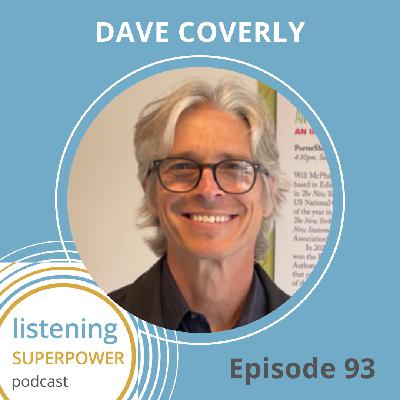
Imagine a cartoon opening a door to transform a challenging conversation into a productive and meaningful conversation in your team. In this episode, we explore how listening and observation can engage humor which can shift our mindset and enhance our ability to engage with others meaningfully. Dave Coverly is the award-winning creator of the internationally syndicated cartoon Speed Bump, featured in hundreds of publications including The Washington Post, The New Yorker, and The Globe & Mail. A four-time winner of the National Cartoonists Society's "Best Newspaper Panel" award, he received their highest honor, the Reuben Award for "Outstanding Cartoonist of the Year," in 2009. His work appears on greeting cards, in books, and across major media outlets, and he serves as the principal cartoonist for BarkBox. Dave Coverly has authored several cartoon collections and children's books published by Macmillan namely Speed Bump: A Collection of Cartoon Skidmarks (Andrews McMeel), Cartoons for Idea People (ECW), Just One %$#@ Speed Bump After Another (ECW), Dogs Are People, Too, and its sequel, Cats Are People, Too. And his children's picture books include Sue MacDonald Had a Book (with Jim Tobin, Macmillan), The Very Inappropriate Word (with Jim Tobin, Macmillan), and How To Care For Your T-Rex (with Ken Baker, Macmillan). His chapter book trilogy began with Night of the Living Worms, and continued with Night of the Living Shadows, and Night of the Living Zombie Bugs. With a career spanning over 30 years, Dave has mastered the art of observational humor, using his cartoons to reflect on the human experience and the nuances of everyday life. In this conversation, Dave shares personal stories and insights that have shaped his career as a cartoonist with listening playing a core role. Not just as a skill, but as a vital part understanding human patterns and through this tapping into human connection. \We explore how humor can serve as a bridge to deeper conversations and how the act of listening can inform and inspire creativity. Listen to the end, where David also shares how humor can help navigate serious conversations and lighten the mood. Enjoy listening in! "Listening is about connecting with people and understanding their experiences." – Dave Coverly SUPERPOWER Notes: 00:08 – The Power of Humor. Dave discusses how humor can provide a different perspective on serious topics and enhance communication. 02:50 – Early Influences. Reflecting on his childhood experiences with his uncle and teacher that sparked his interest in listening and humor. 10:15 – The Role of Observation. Dave explains how being an observant listener informs his cartooning process and helps him create relatable content. 15:30 – The Importance of Context. Understanding how context shapes humor and the need to stay relevant in a changing world. 22:00 – Listening as a Creative Tool. How deep listening can lead to new ideas and insights in both cartooning and everyday interactions. 30:00 – The Impact of Silence. Exploring how silence can enhance the listening experience and foster deeper connections. 35:00 – Humor in Serious Situations. Dave shares how humor can help navigate serious conversations and lighten the mood. 42:00 – The Evolution of Humor. A discussion on how humor adapts to cultural changes and the importance of authenticity in comedic expression. Key Takeaways: "Doing humor is kind of that right brain, left brain thing." – Dave Coverly "Humor is a way to connect with people and share experiences." – Dave Coverly "Listening is not just about hearing words; it's about understanding the context and emotions behind them." – Dave Coverly "I love the idea of having a cartoon as a pause for, to take a breath or pause to reset or a pause to allow another perspective or pause to give permission to another perspective."– Dave Coverly People Mentioned: Mike Peters - A cartoonist who provided Dave with valuable advice about humor and authenticity in cartooning. Christy Ottaviano - Dave's children's book editor, described as a legend in the industry. Connect with Dave Coverly: https://www.speedbump.com/ https://www.instagram.com/speedbumpcomic/
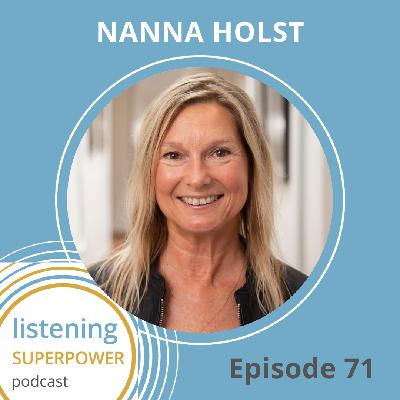
In this episode of the Listening Superpower Podcast, we're joined by Nanna Holst to delve into how the media landscape's evolution, driven by new platforms, shifting consumption, and AI advancements, is swamping audiences with more information, but not necessarily more insight. We discuss how traditional media must transform, using active listening and engagement to stay pertinent as a bridge between the public and those in authority, as outlined in her insightful report. (Link below) Nanna Holst is an experienced journalist, editor and project manager with a demonstrated history of working in the media production industry. Skilled in Making People Reach Their Potential, Co-creation, Public Outreach, News Writing, Breaking News, Video Journalism, Journalism, Editing and Television. She is into teaching and coaching of young journalists, a strong program and project management professional based on constructive, solution based journalism and a strong sense of public service and democratic values. She is a graduate from the Danish National School of Journalism and Aarhus Business School. Also a Fellow from Constructive Institute at Aarhus University, developer of The Better Listening Method and helping news organizations listen better to their audiences. Also she is a keynote speaker. In this episode, Nanna explores the power of collective intelligence listening. She shares stories and examples of a new initiative called Better Listening for Journalists which engages the community into their journalistic process. By actively listening to and asking for thought-provoking questions, this approach not only strengthens relationships but also promotes better collaboration and a more harmonious society. "If we want to stay relevant in a world where everybody can be their own media, we have to know what is expected of us and what we can help them with to make everybody wiser and everybody happier and have this unity." - Nanna Holst SUPERPOWER Notes: 01:33 - That moment she noticed the power of listening: I was forced to train my listening skills at a very early age because I'm the little sister in a very talkative family. I had to listen very carefully to know where I can dive into the conversation and get heard. 04:12 - How has her view of listening changed through the years 05:18 - A journalistic way of listening versus listening to understand 06:11 - Establishing a concept program called Better Listening: We want to listen more actively and systematically 08:04 - Finding out the 'why of listening' for 'Better listening' 09:02 - What the whole 'Ask Us' method encapsulates 12:04 - The idea of collective intelligence in listening: It starts with the questions, but when we publish an answer, people chip in with their knowledge. 13:07 - Questions that fosters better communication, cooperation, and understanding 17:26 - Transparency involved in the answers written: If we can't get a perfect answer, we say, this is as far as we get, but does anybody out there know anything? 18:40 - 4 points that helps Better Listening listen better: Listen first, showing everyday humility, trust in the population, listen up 22:25 - Why listen. Not just for the checklist, but to really understand: You have to find out why you are listening, what do you want to get out of it, and what are your resources. 25:07 - What leaders should know about sustained listening in their organizations 28:11 - The inspiration behind the articles written: We could see that our engagement grew when we found a way to put a question formula and a ballot in each and every article. 30:08 - What has changed in her now doing Better Listening: I have known a little about a lot. 32:35 - Distinguishing between hearing and listening 33:29 - The dream she has for her legacy media in the next five years 35:36 - How she makes listening sustainable for her: I like to have markers everywhere that reminds me of this huge 'Why'. Key Takeaways: "...You can listen in a thousand ways. It's like a car that has movable parts. You can just adjust them in many different ways." - Nanna Holst "Listen first, show everyday humility, trust in the population, and listen up." - Nanna Holst "...the missing link between wanting to listen and actually listening is some sort of method that keeps us on track, and make us work smart and not do the things that do not work."- Nanna Holst "Listening is a skill. It's something that can be trained and we can learn it. "- Nanna Holst "Listen first. Keep focus on the audience. Trust in the population. Constantly learn and improve. These are the keys to better listening." - Nanna Holst Notes/Mentions: Better Listening Report: https://constructiveinstitute.org/app/uploads/2023/07/Nanna-Holst.pdf KQED Media: https://www.kqed.org Connect with Nanna Holst: Website: Website: https://www.nannaholst.dk/english-version/ LinkedIn: https://www.linkedin.com/in/nanna-holst Connect with Raquel Ark: www.listeningalchemy.com Mobile: + 491732340722 contact@listeningalchemy.com LinkedIn Podcast email: listeningsuperpower@gmail.com

What if our effort to listen well actually interfered with the power of listening itself? What happens when we let go and allow listening to be about presence, depth, and genuine human connection? In this episode, we're joined by James Cook, a learning and development specialist in coaching and team development at a large global organization. With 28 years of experience in fast-moving consumer goods—spanning process development, supply chain, business optimization, and leadership—James has spent his career fostering growth and transformation. An ICF- and EMCC-accredited coach, he's deeply committed to the power of listening, not just in leadership and team development, but also in life's most critical moments. As a volunteer listener for Samaritans UK, he brings a unique perspective on the profound impact of listening in times of crisis. In this conversation, James shares personal stories and insights that have reshaped his understanding of what listening truly is—and how he applies these lessons in his daily work. We explore how deep listening builds stronger teams, fosters real connection, and even transforms lives. Enjoy listening in! "Listening is something that we shouldn't interrupt. It's there between the two of you." - James Cook SUPERPOWER Notes: 02:01 – The Journey to Listening Awareness. James Cook reflects on his personal and professional experiences that led him to recognize the power of listening. 05:00 – The Birth of a New Understanding. How the arrival of his daughter with a rare skin condition opened his eyes to the need for deeper listening. 15:30 – The Impact of Crisis on Listening. Exploring how moments of personal loss drove James to volunteer as a listener for the Samaritans. 21:00 – The Power of Presence. James discusses the importance of being fully present in conversations and the impact it has on connection. 28:00 – The Role of Silence in Listening. Understanding how silence can enhance the listening experience and create deeper connections. 31:00 – Listening as a Leadership Skill. Why developing deep listening skills is essential for leaders to drive meaningful change. 38:00 – Practical Tips for Enhancing Listening Skills. James shares actionable strategies for improving listening in everyday interactions. 44:00 – The Future of Listening in Leadership. A discussion on the evolving role of listening in effective leadership and team dynamics. Key Takeaways: "Sometimes it's not about what you can do for the other person or how good you are at listening. It's actually the offer you make to people in crisis which is your presence and just being there." - James Cook "...sometimes we see it in business meetings that we're almost going in there with an agenda... waiting to have our turn, to have our say." - James Cook "...space will allow the listening to happen, the listening will happen without me doing anything."- James Cook Recommended podcast episode: Oscar Trimboli Full Interview: Getting Personal and Down to Business with Listening: https://listeningalchemy.com/listen-in/oscar-trimboli-full-interview-getting-personal-and-down-to-business-with-listening/ Oscar Trimboli on Listening in Organizations and to Customers: https://listeningalchemy.com/listen-in/oscar-trimboli-on-listening-in-organizations-and-to-customers/ Resources and People Mentioned: Samaritans - A charity organization in the UK that provides a listening service for people in crisis or feeling suicidal. Oscar Trimboli - Author and speaker known for his model of the five levels of listening. Nancy Klein - Creator of the "Time to Think" methodology, which focuses on creating thinking environments for effective listening and conversation. Connect with James Cook Linkedin:https://www.linkedin.com/in/james-cook-a62633/ Connect with Raquel Ark www.listeningalchemy.com Mobile: + 491732340722 contact@listeningalchemy.com LinkedIn
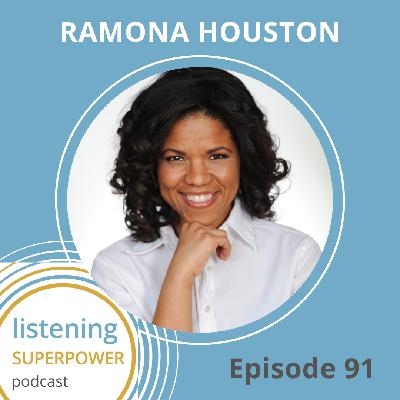
Have you ever felt unheard in a conversation? Or wondered why society seems more divided than ever? Historian and podcast host Ramona Houston joins us to reveal how radical listening can bridge cultural divides, resolve conflicts, and reshape history. Ramona Houston is a U.S. historian specializing in African American and Mexican American history. As we celebrate Black History Month, Ramona shares her insights on the power of listening and its impact on understanding history and resolving conflicts. In this episode, she highlights the significance of radical listening—truly hearing what others say and what remains unspoken. Ramona discusses how listening can transform relationships, whether personal or professional, and how it plays a crucial role in addressing societal challenges. Through her experiences, Ramona emphasizes the importance of recognizing often-overlooked contributions to history, particularly from women and marginalized communities. By listening to diverse voices, we can reshape our understanding of history and foster a more inclusive narrative. Whether you're a history enthusiast, a leader seeking to improve communication, or someone passionate about social change, this conversation will inspire you to embrace the art of listening and its potential to create positive change. "In the U.S., we have Black History Month, Women's History Month, AAPI Heritage Month, and Hispanic Heritage Month—times dedicated to recognizing how different groups have contributed to American history. This is important because if you read American history books, you'll see how many groups have been marginalized. As historians, we work toward a future where these histories are included in all books and in all ways—not just separated out. History changes when we start adding different groups of people."- Ramona Houston SUPERPOWER Notes: 00:01 – The Importance of Inclusive History. Ramona Houston explains how recognizing diverse contributions in American history helps reshape historical narratives. 02:30 – How Listening Shapes Leadership and Communication. Host Raquel Ark introduces the episode, emphasizing how deep listening transforms conversations and leadership effectiveness. 05:00 – Radical Listening: Hearing What's Unspoken. Ramona shares how her husband, jazz musician Terreon Gully taught her the value of listening beyond words. 12:00 – The Impact of Social Media on Polarization. Analyzing how digital platforms reinforce ideological silos and disrupt constructive dialogue. 15:30 – Historical Silence: What's Left Out of the Story?. Why historical omissions contribute to social inequality and how embracing all perspectives can shift narratives. 21:00 – Representation in History: Who Gets Remembered? Ramona discusses the need for historical inclusion beyond white, male-centric narratives. 24:30 – Hidden Figures: The Legacy of Ralph Bunche & Kofi Annan Exploring the underrepresented global impact of Black leaders in diplomacy and human rights. 28:00 – The Ripple Effect of Untold Stories How uncovering marginalized histories can reshape our present and future. 31:00 – Books as Intellectual Property: Expanding Knowledge Horizons Ramona emphasizes the power of reading to challenge biases and broaden perspectives. 34:30 – The "Cuba" Book Example: Understanding Global Influence Raquel shares how reading historical accounts of Cuba changed her understanding of American and Puerto Rican history. 38:00 – How to Create a Culture of Listening Practical strategies for fostering an environment where different perspectives can be voiced safely. 44:00 – Radical Listening as a Leadership Tool.Why leaders must develop deep listening skills to drive meaningful, sustainable change. Key Takeaways "Listening is a powerful tool for resolving conflict and understanding one another." – Ramona Houston "Radical listening is about hearing both what people say—and what they don't say." - Ramona Houston "Conflict arises when we're too focused on speaking instead of truly listening."- Ramona Houston "Social media has connected us, but it has also divided us—because we only listen to those who think like us."- Ramona Houston "You can't resolve conflict if you're not willing to listen first."- Ramona Houston "If you're truly listening, you're changing."- Ramona Houston Resources and People Mentioned Carter G. Woodson - Founder of Black History Month. Ralph Bunch - Influential in creating the United Nations and a significant figure in human rights. Kofi Annan - First person of African descent to lead the United Nations and initiated the Global Compact. Dr. Juan Andrade - Founder of the United States Hispanic Leadership Institute. Recommended Listening Superpower Podcast Episodes Empowering Voices for Social Impact and Connecting Communities with Ramona Houston Starting from Zero: The Impact of Listening to What is Not Being Said with Grammy Winning Musician Terreon Gully Definition of Listening Based on Science with Dr. Avi Kluger Connect with Ramona Houston Website: https://ramonahouston.com/ Linkedin: https://www.linkedin.com/in/ramonahouston/ Facebook: https://www.facebook.com/Dr.RamonaHouston#
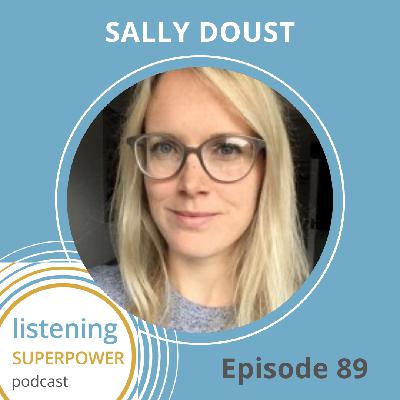
We all appreciate the dedication of healthcare providers. Yet, with only 10-minute appointments and research historically centered on men, the quality of care is impacted. Every day, countless women leave doctor's offices feeling unheard, dismissed, or worse—misdiagnosed. Their symptoms are downplayed, their concerns minimized—especially with conditions like menopause and endometriosis, which often take years to diagnose. This doesn't just affect women; it impacts their families and the men who support them. But what if there were a better way? In this episode of the listening SUPERPOWER podcast, join me in an insightful conversation with Dr. Sally Doust, a UK family physician with 12 years of experience. She reveals how the simple act of truly listening has transformed her patients' lives. Through real patient stories and practical insights, discover how empathetic communication and more research can bridge the critical gaps in women's healthcare and lead to better outcomes In this episode, she highlights the importance of addressing often-overlooked health issues like menopause and PMDD (premenstrual dysphoric disorder). By listening to her patients, Sally not only provides them with the right information and treatment options but also empowers them to reclaim their health and well-being. Learn how you can apply these insights to foster better communication and understanding in your own life or practice. Whether you're a healthcare provider seeking to enhance your practice, a woman navigating your own health journey, or an advocate for change – this conversation will open your mind to consider and pioneer actionable strategies to make a difference. Connect with Dr. Sally Doust on LinkedIn to join a growing community of professionals and patients working together to revolutionize women's healthcare. Don't just witness the change – be part of it. "Using the power of science to hold women in higher regard than they have been given so far and to champion their stories." – Sally Doust SUPERPOWER Notes: 00:01:15 – The Journey of a Doctor: Sally shares her experience as a general practitioner in the UK, highlighting the challenges of working within the NHS and the emotional toll of decision fatigue. 00:03:15 – The Impact of Listening: Sally discusses how listening to women's stories in her practice revealed significant gaps in their healthcare experiences, particularly around menopause and other women's health issues. 00:04:45 – The Importance of HRT: Sally emphasizes the life-changing effects of hormone replacement therapy (HRT) for women suffering from menopause symptoms and the misinformation surrounding it. 00:07:28 – Addressing Shame and Silence: The conversation explores how societal stigma and lack of open dialogue contribute to feelings of shame among women regarding their health issues. 00:10:02 – Healing Through Listening: Sally reflects on the cathartic experience for patients when they feel heard and validated during consultations, transforming their shame into relief and hope. 00:13:06 – Facilitating Communication: Sally shares techniques for helping patients articulate their health concerns, emphasizing the importance of asking guiding questions. 00:15:15 – The Role of Social Media: Discussion on how social media has empowered women to share their health experiences, creating a collective voice that challenges the silence around women's health issues. 00:17:06 – Gender Equality in Healthcare: Sally highlights the broader implications of addressing women's health, noting that improving women's participation in the workforce benefits society as a whole. 00:21:19 – Empowering Patients with Knowledge: Sally underscores the significance of educating patients about their health conditions, which can be more impactful than medication alone. 00:24:06 – Pioneering Change: Sally recounts a moment with a patient suffering from PMDD, illustrating the importance of recognizing and discussing under-researched conditions in women's health. 00:31:00 – The Concept of Bikini Medicine: Sally explains how women's healthcare has historically focused too narrowly on reproductive health, neglecting other critical aspects of women's health. 00:34:09 – Personal and Professional Goals: Sally expresses her desire to integrate data science into her work to better understand and advocate for women's health issues on a larger scale. Key Takeaways "Listening is the most healing thing I can do in clinic." – Sally Doust "Women often feel dismissed and unheard in healthcare settings." – Sally Doust "Empowering patients with knowledge is a powerful therapeutic tool." – Sally Doust "Collective voices can challenge the silence around women's health issues." – Sally Doust Connect with Dr. Sally Doust Linkedin: https://www.linkedin.com/in/sally-doust-7b0419aa/?originalSubdomain=uk Connect with Raquel Ark: https://listeningalchemy.com/ Mobile: + 491732340722 listeningsuperpower@gmail.com contact@listeningalchemy.com LinkedIn: Raquel Ark
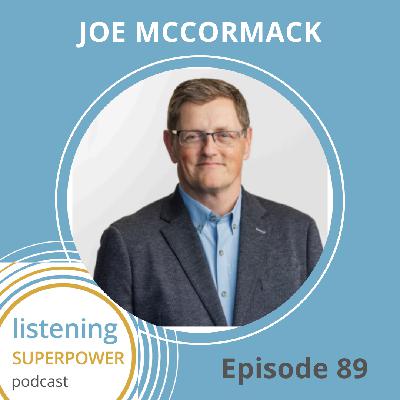
What if too much collaboration can hinder productivity? Our guest, author Joe McCormack, a communication expert who helps professionals navigate information overload, shares practical tips on how to balance collaboration with the essential quiet time needed for deep thinking. Joe McCormack is a communication expert who helps professionals navigate information overload. As an entrepreneur, he founded Sheffield Company and The BRIEF Lab, specializing in concise communication and leadership development. He's the author of "Brief," "Noise," and "Quiet Works," which address the challenges of focus and distraction. His work includes a podcast, "Just Saying," and the development of "Quiet Workplaces," dedicated spaces for focused work. Previously, he was a senior executive at Ketchum. Joe McCormack holds a BA in English Literature from Loyola University of Chicago. In this episode, Joe discusses the release of his new book, Quiet Works, which is part of a trilogy focused on achieving clarity and intentionality at work. Building on his previous works, Brief and Noise, Joe emphasizes the importance of making it easier for others to listen to us. He shares insights on how individuals can take responsibility for their communication and listening practices. The conversation highlights the value of quiet time before engaging in discussions, underscoring its role in preparation and centeredness. "Quiet is not a technique. It's an appointment." - Joe McCormack SUPERPOWER Notes: 00:02:17 – The Challenge of Embracing Quiet: Joe discusses his initial resistance to quiet and the insights he gained while writing Noise, highlighting the internal noise that often distracts us. 00:06:48 – The Power of Scheduling Quiet: Joe explains how scheduling quiet time can lead to better preparation and improved performance in professional settings. 00:12:07 – Defining Quiet: Joe offers a practical definition of quiet in a professional context, emphasizing the need for dedicated time alone to think and reflect. 00:14:35 – The Importance of Preparation: The conversation highlights how preparation through quiet can enhance listening skills and overall communication effectiveness. 00:28:08 – Collaboration vs. personal time: Discussion on the balance between collaboration and the need for personal quiet time to think and reflect. 00:34:11 – Avoiding quiet and self-reflection: Exploration of why people often avoid quiet moments and the fear of confronting their own thoughts. 00:36:19 – The power of pausing decisions: Emphasizing the value of taking a moment to pause before making decisions to ensure they are well thought out. 00:41:29 – QCO: A Practical Tool for Meetings: Joe introduces the QCO (Question, Comment, Observation) technique to encourage thoughtful participation in meetings. 00:48:58 – The value of quiet moments: Discussing how quiet moments can enhance clarity and improve overall work performance. 00:54:25 – Quiet workplace: Ideas on designing workspaces that promote quiet and reduce distractions for improved employee well-being and productivity. Key Takeaways "Quiet is not a technique. It's an appointment."- Joe McCormack "Anything that's worth doing in life is worth doing poorly."- Joe McCormack "Quiet allows me to slow down for a minute... it literally changed me as a person."- Joe McCormack "The quality of a person's listening being present in the moment makes a person.It changes everything."- Joe McCormack "You need more time alone, not seven hours a day, but you need 10 minutes."- Joe McCormack Resources Mentioned: Podcast Episode:Elite Communications Skills as a Competitive Advantage, Think Clearly and Communicate Concisely with Joe McCormack Connect with Joe McCormack: https://josephmccormack.com/ https://josephmccormack.com/my-books/ https://josephmccormack.com/my-podcasts/ Connect with Raquel Ark: https://listeningalchemy.com/ Mobile: + 491732340722 listeningsuperpower@gmail.com contact@listeningalchemy.com LinkedIn: Raquel Ark
Curious about the art of asking questions? Mike discusses the importance of crafting the right questions and how they can lead to deeper connections. Dr. Michael W. Purdy (PhD Ohio University) is co–editor with Deborah Borisoff (NYU) of Listening in Everyday Life: A Personal and Professional Approach (2nd ed). He has authored articles for the International Journal of Listening, (including two articles in 2015). His publications include: Listening and Qualitative Research, in Listening and Human Communication in the 21st Century; Listening and the Non–Technologized Self in Cultura De Guatemala This last year he also posted an article (Listening Ecology: Tuning into the Environment, Saving the Planet) for the Global Listening Centre (http://www.globallisteningcentre.org). and Listening Nudges: Empowerment (Not Power) draft on academia.edu. In this episode of the Listening Superpower podcast, Mike shares his extensive journey in the world of listening, revealing the pivotal moments that shaped his understanding of its power. He reflects on his early experiences, including training at a phone health care call center, which introduced him to the fundamentals of listening. Mike also discusses his doctoral work on philosopher Merleau-Ponty, emphasizing the importance of receptivity and the role of the speaker in the listening process. Additionally, he shares insights from teaching an introductory interpersonal communication class and highlights the influence of early listening scholars at Ohio University. Join us for an enlightening conversation that explores the nuances of listening and its impact on communication. Enjoy listening in. "People do want to come together. They want to connect. They want to build relationships. They want to be seen. They want to be valued." - Michael W. Purdy SUPERPOWER Notes: 00:02:10 - Foundations of Community: The Transformative Power of Listening Listening emerges as a critical catalyst in community building, revealing how genuine attention can create meaningful connections and foster a sense of belonging. 00:05:32 - Navigating Listening Dynamics: Understanding the Subtle Art of Connection delves deep into the intricate landscape of listening, exploring how conscious awareness of our communication patterns can fundamentally transform interpersonal interactions. 00:17:12 - Conscious Listening: Decoding a Three-Dimensional Communication Skill. Mike unpacks "conscious listening" as a sophisticated skill comprising observation, strategic conversation management, and the ability to seamlessly flow within dialogue, challenging traditional notions of passive hearing. 00:20:22 - The Alchemy of Questions: Unlocking Deeper Conversations Practical strategies are shared for elevating communication, with a focus on crafting open-ended questions that act as keys to unlocking more profound, meaningful exchanges. 00:28:12 - Empathy in Action: Beyond Sympathy to Genuine Understanding The discussion explores the nuanced difference between sympathy and empathy, highlighting how truly listening can create more authentic and supportive connections. Key Takeaways. "If we don't listen, we don't know how to respond." - Michael W. Purdy "Democracy dies if people won't or can't or don't know how to listen." - Michael W. Purdy "Conscious listening is the process of working at being a listener."- Michael W. Purdy "It takes a long time. People think (listening) is a very complicated thing."- Michael W. Purdy "Relax and listen."- Michael W. Purdy Poeple and Resources mentioned Yaval Harari Brene Brown Dick Halley Heidegger Merleau-Ponty ILA (International Listening Association) Connect with Michael W. Purdy https://www.globallisteningcentre.org/member/michael-w-purdy/ https://www.globallisteningcentre.org/
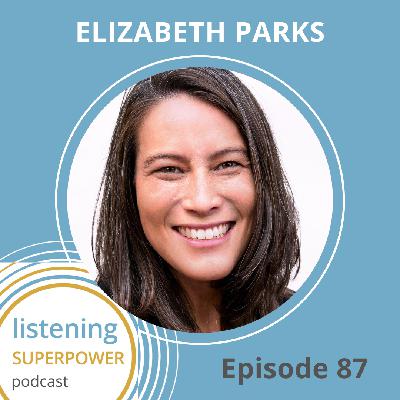
In this episode, we have the pleasure of speaking with Liz, a respected voice in the realm of listening and cultural dynamics. Liz brings a unique perspective on how listening varies across different cultures and the importance of adapting our listening styles to foster deeper connections. Dr. Elizabeth S. Parks is an instructor at the University of Nevada Las Vegas. An affiliate faculty with the Colorado School of Public Health. Dr. Parks' work is at the intersection of social science and the humanities and explores how we can improve listening across diversity and difference. Today, she has over 50 peer reviewed publications and two acclaimed books, including the recently published book that we'll talk about in the podcast, Listening the Key Concepts, which explores 177 different ways to listen. Her books bring deep insight into ethics and the power of listening. Liz shares her journey of growing up in a bicultural home, where she learned early on that listening is not a one-size-fits-all approach. She discusses the contrasting ways she showed respect and honor to her family members from different cultural backgrounds, highlighting the significance of adapting her listening style. "The way that we show up as listeners is really the first act of communication, not the second."– Elizabeth S. Parks SUPERPOWER Notes: 05:08 – Liz reflects on her childhood experiences in a bicultural home and how they shaped her understanding of listening. 07:57 – The conversation shifts to Liz's adult experiences and the challenges of adapting her listening style when interacting with her partner's family. 10:22 – Liz emphasizes the importance of checking in with others to align expectations and ensure effective communication. 11:20 – The concept of code-switching is introduced, explaining how individuals navigate different cultural contexts through their listening behaviors. 20:05 – Liz discusses the importance of listening to oneself and maintaining authenticity while adapting to various cultural environments. 18:04 – The conversation delves into the research behind listening, with Liz sharing her motivations for studying the topic and the ethical implications of listening. 23:11 – Liz outlines three critical questions regarding listening: When do we listen? What kind of listening do we engage in? When do we stop listening? 34:07 – The discussion highlights the various types of listening, including horizontal and vertical listening, and their relevance in organizational contexts. 45:28 – Liz shares her insights on dialogic listening and the importance of creating meaning together in conversations. Key Takeaways "The way that I listen really, really matters for the ways that those relationships played out." – Elizabeth S. Parks "Listening is work in these different cultures, but listening to ourselves and being really true to ourselves is also extremely important." – Elizabeth S. Parks "In order to be the kind of listeners we want to be, we need to be a bit more strategic about our own energy flows." – Elizabeth S. Parks Connect with ELizabeth Parks https://www.elizabethsparks.org/ Latest book: https://www.jdoqocy.com/click-101234333-14076226?url=https%3A%2F%2Fwww.routledge.com%2FListening-The-Key-Concepts%2FParks-Faw-Lane%2Fp%2Fbook%2F9781032531847 Connect with Raquel Ark: www.listeningalchemy.com Mobile: + 491732340722 contact@listeningalchemy.com LinkedIn Podcast email: listeningsuperpower@gmail.com
Are you tired of being just another leader? Want to inspire your team, drive innovation, and build lasting relationships? The secret lies in a skill you may have overlooked: listening. Effective leadership often hinges on a surprising skill that can go unnoticed: listening. Raquel Ark shares that listening isn't just a soft skill; it's a powerful skill that can shape how you lead and influence. Imagine leading a team that's motivated, engaged, and full of ideas. Effective listening fosters trust, respect, and a positive work culture. It's can play an important role in increasing productivity and wellbeing for you and your team. What if you could make better decisions, prevent explosive conflicts or manage tensions with more ease. Listening helps you connect with your team's needs, concerns, and aspirations, as well as your own. It's not just a skill; it's a superpower. Join Raquel as she explores the different types of power that listening can bring to leadership and everyday interactions, providing practical strategies to grow your listening superpower. "Listening is not just a soft skill. It's a power skill. It's a transformative force that shapes the way leaders like you, like me, connect, inspire, and lead." - Raquel Ark Listening SUPERPOWER NOTES 00:10: Emphasizing the importance of listening as a transformative leadership skill. 01:28: The different types of power that listening can bring to leadership. 4:20: Discussion on the common undervaluation of listening in the business world compared to speaking, highlighting the impact of listening on effective leadership. 07:04: Presentation of research findings indicating a shift towards prestige-based leadership, which emphasizes listening and collaboration over autocratic dominance. 11:08: Conclusion on the significance of listening as a power skill that can transform organizations and drive sustained success, encouraging leaders to embrace listening in their practices. Key Takeaways: "The true power of effective leadership lies in listening, which is often an overlooked skill or capacity that we have, or that's important to develop."- Raquel Ark "When listening is brought into teams, those leaders are able to affect their teams in ways where they have more success and they feel better." - Raquel Ark "Listening is not just a tool. It's actually really cool. It's this high value currency that can transform organizations and really drive this sustained success."- Raquel Ark "The leaders who listen are the ones who are going to lead us into the future."- Raquel Ark Resources Mentioned: Kluger, Avraham & Itzchakov, Guy. (2022). The Power of Listening at Work. Annual Review of Organizational Psychology and Organizational Behavior. 9. 10.1146/annurev-orgpsych-012420-091013 https://www.merriam-webster.com/dictionary/prestige https://action.deloitte.com/insight/2358/prestige-leadership-is-no-magic-trick-its-a-key-to-effective-teams Recommended Episodes about Leadership in tech Navigating Digital Change by Leaning Into Tech and Expanding a Human Touch with Agathe Daae-Qvale Listening to the Pulse in Leadership: Nourishing Realistic Expectations and Intentionally Catalyzing Employee and Team Growth with Clint Calleja #Listening to Create #Customer and #Business Value with Teresa Torres Dynamic Reteaming: Mastering Team Change for Excellence Using Your Listening Muscle with Heidi Helfand Connect with Raquel Ark: https://listeningalchemy.com/ Mobile: + 491732340722 contact@listeningalchemy.com LinkedIn: Raquel Ark https://www.linkedin.com/in/raquel-ark-b2067613/
How can the power of empathy create deeper connections with others? And what are work hacks that create a safe space in teams? Sebastian Kremser is the host of Empathie Schenker, a podcast where he listens to guests with empathy and no judgment. Sebastian is a process facilitator who helps clients navigate dynamic and complex environments, addressing both current and future challenges. Known for his empathetic and needs-oriented approach, he creates space for individual and organizational needs while fostering awareness of personal responsibility and potential through structured process guidance. After 12 years in the military, Sebastian transitioned in 2013 to become a consultant and coach, focusing on supporting organizations ranging from hierarchical public institutions to agile, collaborative structures. He is an Associate Certified Coach (ACC) with the International Coach Federation (ICF) and a licensed mediator with the German Mediation Association. His work has taken him to China and Kenya, and he is also an authorized process consultant for the "unternehmensWert: Mensch" program of the German Federal Ministry of Labor and Social Affairs. In this episode, Sebastian shares his journey with empathy and listening, highlighting the power of self-empathy and creating space for others to shine. We dive deep into the importance of non-judgmental listening and how it can transform team dynamics and relationships. Sebastian's insights on self-awareness, shared leadership, and the magic of letting your light shine are truly inspiring. His perspective on creating a safe space for authentic communication and appreciation is a game-changer for building strong connections within teams and organizations. If you're looking to enhance your listening skills, gain a new perspective on empathy, or simply enjoy a thoughtful conversation, this episode is a must-listen. "...there's a difference between listening and being a listener." - Sebastian Kremser SUPERPOWER Notes: 01:19 - From complexity to clarity: Sebastian discusses the journey from complexity to clarity in communication and the importance of listening to create understanding and connection. 08:43 - The power of nonviolent communication: Sebastian shares insights on the power of nonviolent communication in resolving conflicts and fostering understanding in teams and organizations. 11:33 - The alchemy of listening: Sebastian delves into the transformative power of listening, creating a space for empathy, understanding, and trust to flourish in interactions. 20:47 - The conversation highlights the impact of a lack of motivation in teams and the importance of addressing underlying issues to foster engagement and productivity. 23:31 - Flip-flopping topics in meetings: Sebastian discusses the strategy of addressing various topics in team meetings to ensure all voices are heard and to maintain focus and productivity. 40301 - The discussion centers on the transformative power of opening up and sharing vulnerabilities, leading to deeper connections, trust, and personal growth within teams and organizations. 42:43 - Embracing Each Other's Light: Sebastian shares insights on embracing and celebrating each other's unique strengths and qualities, creating a supportive and inclusive environment where individuals can shine and contribute authentically. 46:42 - Just be you in the moment: The conversation concludes with a reminder to embrace authenticity and self-expression, encouraging individuals to be true to themselves and explore their unique contributions in every moment. Key Takeaways: "If we listen to each other, we help the other person to get more clarity." - Sebastian Kremser "Being non-judgmental in listening is like opening a gate to deeper connections. It's the alchemy of empathy." - Sebastian Kremser People Mentioned: Vera F. Birkenbihl - Famous German communication scientist and trainer Connect with Sebastian Kremser: Linkedin: https://www.linkedin.com/in/sebastian-kremser Podcast: Empathie Schenker on Apple Podcast https://podcasts.apple.com/us/podcast/empathieschenker/id1598578900 https://in-teams.de/ueber-mich/ Connect with Raquel Ark: www.listeningalchemy.com Mobile: + 491732340722 contact@listeningalchemy.com LinkedIn Podcast email: listeningsuperpower@gmail.com
Many organizations struggle to balance technical project demands with the human elements essential for successful change. This gap often leads to inefficiencies, low morale, and failed initiatives, despite thorough planning and structured processes. Ignoring the emotional aspects of teams prevents companies from unlocking their workforce's full potential. Integrating both technical and human sides of work, with a focus on consistent communication and emotional awareness, is crucial. Enabling this holistic approach helps organizations achieve dynamic processes that meet goals and foster a joyful, productive work environment. Agathe Daae-Qvale is an Integral Master Coach™ working in leadership development that focuses on both the human and tech sides of digital transformation. She works as a special advisor in the Norwegian public health care sector on new software technologies and their successful applications. In 2017, she founded TinkerBlue AS and later co-founded DoubleYou AS in an effort to unleash underused tech potential and skill sets among internationals in Norway. Agathe is proficient in industrial IT and process modeling and improvement, IT governance, IT strategy, IT operations, and product management. Her experience includes working with management consulting companies like EY, KPMG, and Sopra Steria. She has worked as a consulting director in the exhilarating growth phase of the industrial IT unicorn Cognite, which primarily focuses on industrial data and digitized product management. She has also served as Chief Development Officer for Cenium, responsible for product development and global distribution during the shift from local based to cloud based platform technology. In this episode Agathe shares insightful discussions on balancing the technical and human aspects of business, especially during times of change. She talks about her experiences and practical strategies for integrating emotional awareness into structured, technical environments. You'll also learn about the importance of consistent communication, the role of personal growth in effective change management, and how to motivate teams by recognizing and expanding their perceptions of possibilities. "For change to happen, raise the awareness of possibilities --- that space of possibilities is crucial." - Agathe Daae-Qvale SUPERPOWER Notes: 01:21 - What she realized the time she first noticed the power of listening: It was not only about the words but very much about the sentiment and the capacity of both of us to open up for in that very moment 04:08 - What it means to be in a shared space: That moment when you are in a conversation; you're just completely paying attention to what's going on there 08:00 - The distinction between merely getting the work done and creating a meaningful, emotionally resonant shared space 17:10 - The crucial integration of human change management with technical change 21:21 - How creating a shared understanding and clear purpose within the organization is crucial for the successful adoption and implementation of new technologies and changes 25:16 - Here's how to achieve a shared understanding: The organization needs to be well aligned both vertically and horizontally. 29:07 - Achieve vertical and horizontal alignment in an organization: Important to give everyone a shared direction and the why as to what they're doing. 32:54 - What does effective change management require: In addition to communication, skill sets and competence in the company among coworkers and staff is super important. 37:56 - Making that lasting change and effect happen: Value, moral and a sense of entrepreneurship are also needed to make that lasting effect happen. 42:54 - Helpful tools for navigating change effectively: It's about listening to, first, myself and then start listening to others around me. 45:33 - Moving past the resistance in others: Have the respect for self and others and have them to focus on an outcome. 52:40 - Agathe's inspiring words: Keep opening up that space to keep expanding that shared space. Key Takeaways: "When we make change happen in technology, you can never go beyond what people actually perceive and what the masses perceive." - Agathe Daae-Qvale "I do think that the human side of change is not only a success factor, but it's a floor on which technical change stands most of the time." - Agathe Daae-Qvale "I do believe that the leadership is where to start [to get to that shared understanding] and then create an infrastructure and a team that can have the capacity and ability to make that happen, to follow up, to follow through with it." - Agathe Daae-Qvale "I realize that we all catch what we can according to our own skill sets, but if you want an organization to change the way they work or to change the products and services, it's super important to start with that education of people." - Agathe Daae-Qvale "The self is very often considered individual. If we are in a team, that sense of self, we can share that in a group. Then it becomes so much more powerful." - Agathe Daae-Qvale Notes/Mentions: Terri O'Fallon: https://www.terriofallon.com Robert Kegan:https://en.wikipedia.org/wiki/Robert_Kegan Connect with Agathe Daae-Qvale: Website: https://www.digitizedproductmanagement.com/about Connect with Raquel Ark: www.listeningalchemy.com Mobile: + 491732340722 contact@listeningalchemy.com LinkedIn Podcast email: listeningsuperpower@gmail.com
Do you find yourself struggling to navigate through the storms of life, both personally and professionally? It's easy to get lost amidst the distractions and challenges, leaving us feeling disconnected and unfulfilled. But there is a way to find clarity amidst the chaos: by listening to the voice of our own intuition and harnessing our inner strength to overcome any obstacle. Dubbed "the da Vinci of Visionary Leadership" by many leading authorities of our time, Oleg Konovalov is the author of *The Fisherman's Path to Leadership*, *The Vision Code*, *LEADEROLOGY*, *CORPORATE SUPERPOWER*, *ORGANISATIONAL ANATOMY*, and *HIDDEN RUSSIA*. Oleg sees every organization as unique and strongly believes that most leadership problems can be solved by shifting patterned paradigms and applying tailor-made solutions. He is on the Thinkers50 Radar, was shortlisted for the Leadership Award at Thinkers50 2021, is among the Global Gurus Top 30 in Leadership, and is the #1 Global Leading Coach (Marshall Goldsmith Thinkers50). In this episode, we explore the importance of creating value in business and how energy management often trumps time management. Oleg shares deep insights from his listening experiences and discusses the difference between inspiration and motivation. We also touch on 'cognitive distance' listening within parent-child dynamics, the concept of 'becoming the storm' to face challenges, and the distinction between wisdom and smartness. Join us as we journey through Oleg's wisdom, drawn from his book *The Fisherman's Path to Leadership*, and learn to celebrate moments of understanding and empowerment. "You must listen to yourself first, not to your worries, but listen to your desires. Listen to what you can do. Listen to what you could reveal within your strengths, your superpower. Then you become stronger than this storm that you are facing now." - Oleg Konovalov SUPERPOWER Notes: 00:44 - That moment he first noticed the power of listening: When you're trying to understand who you are, you are listening to yourself. 04:25 - How valuable is feedback: It's not about what they will get, it's about what they will hear; how they will listen. 09:02 - A simple approach in life and business that always works for Oleg: Business is about creating value, not solving problems. 11:14 - Deep insights from Oleg's listening experiences 15:48 - Why it is all about energy management and not time management 19:31 - Differentiating inspiration from motivation and getting people to listen to you 23:06 - Understanding 'cognitive distance' listening and tying it to a parent-child relationship 29:59 - What it means to be 'becoming the storm' and not just facing the storm: You are stronger than the challenges that you are facing. 34:37 - What differentiates being wise from being smart: Smartness is definitely not a superpower; wisdom is. 35:38 - Valuable nuggets from his book: The Fisherman's Path to Leadership 37:48 - Important questions to ask yourself and the cost of not listening well to yourself 43:10 - Celebrating significant moments of understanding and empowerment in life, regardless of specific dates or occasions. 45:23 - How we see each other's role means how we listen to each other 48:00 - Relevant question to ask of oneself: How to understand that you are really listening 50:20 - Deep thoughts on the idea of growth Key Takeaways: "If you are setting up a startup…the best way to find your best niche is to sit and listen to a market." - Oleg Konovalov "You're learning to listen when you understand you know nothing." - Oleg Konovalov "People that don't know where to go, they're not asking for feedback, they're already lost. But people who are clear where they want to be, they're asking for feedback and listening to it because it's very valuable for them." - Oleg Konovalov "It's not a matter of how many things I could do, it's about how good I could do one or two things and putting all my effort, all my energy into it." - Oleg Konovalov "If you are a source of energy, you're creating something tremendous, like a great vision, for business or personal life. And that vision inspires you in return and you inspire others." - Oleg Konovalov "If a leader is a pretender, people feel that and they don't listen to him or their message." - Oleg Konovalov "Don't listen to the threats; listen to your strengths." - Oleg Konovalov "You are looking into what you can do, but the majority of people, unfortunately, are thinking about storms as an excuse not to do something." - Oleg Konovalov "If I would love to be better as a personality, I must listen."- Oleg Konovalov "Noise attracts attention, quiet voices open hearts. But you must be prepared for that quiet voice to listen to it." - Oleg Konovalov Notes/Mentions: The Fisherman's Path to Leadership by Oleg Konovalov: https://www.olegkonovalov.com/author/ Connect with Oleg Konovalov: LinkedIn: https://www.linkedin.com/in/dr-oleg-konovalov/ Website: http://olegkonovalov.com/ Connect with Raquel Ark: www.listeningalchemy.com Mobile: + 491732340722 contact@listeningalchemy.com LinkedIn Podcast email: listeningsuperpower@gmail.com
In the workplace, we encounter various personalities, some more challenging than others. Traits like narcissism, Machiavellianism, and psychopathy among colleagues or leaders can significantly impact workplace dynamics, leading to conflicts, manipulation, and toxicity within teams. Recognizing and understanding these traits can help you navigate such environments more effectively. Meet our guest, Jon Gruda, a Professor in Organizational Behavior who specializes in anxiety, leadership, and personality research. He discusses how to identify characteristics of the Dark Triad and shares strategies on how to manage interactions with these individuals. Jon Gruda is a lifelong learner with impressive credentials. He holds a PhD in Management from emlyon business school, a Doctorate in Psychology from Goethe University, and an MSc in Affective Neuroscience from Maastricht University, alongside several business and management degrees. Throughout his academic career, Jon has consulted organizational leaders and CEOs, and has taught over 10,000 students and early career executives across Europe. Jon's mission is to advance the understanding of human behavior in organizations, helping individuals and teams achieve their potential and well-being. He has published over 20 papers in peer-reviewed journals and frequently contributes to various media outlets, sharing his expertise with a wider audience. In this episode, we delve into the concept of the Dark Triad. Jon provides valuable insights into recognizing and navigating challenging personality traits such as narcissism, Machiavellianism, and psychopathy in the workplace. By shedding light on these traits and their potential impact on organizational dynamics, Jon offers strategies to identify such behaviors and build support networks within your workplace. He also emphasizes the importance of self-awareness and proactive approaches to managing interactions with individuals exhibiting these traits, helping you thrive in complex work environments "Don't become the person that you don't want to be." - Jon Gruda SUPERPOWER Notes: 00:32 - That moment he noticed the power of listening: Talking to students and not just teaching, but having conversations. 01:42 - How listening impacts not just the mind but one's whole being 04:52 - One significant moment where a student shared a personal experience which became a driving force to do his work. 11:58 - Understanding the 'Dark Triad': Narcissism, Machiavellianism, Psychopathy 21:50 - How to recognize narcissistic traits in the workplace and get them to listen: Structure team meetings to have a lot more prep time upfront 33:55 - Spotting manipulation and deceit and what you should do: Approach them with clear, logical arguments and past evidence 47:00 - Recognizing a psychopath and how to effectively deal with them 56:25 - Crucial points of concern for organization with individuals having 'dark traits' 59:00 - Helpful strategies you can employ across all these 'dark traits' 01:05:50 - The idea that everyone exhibits 'dark traits' and understanding that some score higher on these traits than others. 01:09:50 - What characterizes a machiavellian 01:12 :30 - How to get in touch with Jon Key Takeaways: "The only way to listen is to create an environment where people are actually willing to share." - Jon Gruda "If you want them to go with the decision that you want to make, that you know is the best decision for the team, then you need to highlight how this decision that you want the leader to take is mutually beneficial." - Jon Gruda "Choosing the right moment when to approach them [psychopath leader]. Look for moments when the leader is particularly receptive to your input, directly following a public success." - Jon Gruda "I don't necessarily agree with the phrasing, but it does resonate well when you're dealing with psychopaths: Be Machiavellian."- Jon Gruda "Listen to yourself. " - Jon Gruda "Pretty good advice that I've learned from clients and from executives that I had to deal with: build a support network." - Jon Gruda "Knowing why people do what they do in any given situation is really, really powerful because it makes you a better person." - Jon Gruda Notes/Mentions: Dark Triad by Jon Gruda: https://docs.google.com/document/d/1IFRqJon-bEhynUMhSBowdC78HA_gNHpw-7nKRKTwJ1g/edit Connect with Jon Gruda: LinkedIn: https://www.linkedin.com/in/jongruda/ Connect with Raquel Ark: www.listeningalchemy.com Mobile: + 491732340722 contact@listeningalchemy.com LinkedIn Podcast email: listeningsuperpower@gmail.com

It's easy to feel drowned out, overlooked, or even silenced amidst the clamor of opinions and power plays. But what if, amid this chaos, we dared to pause and embrace a far reaching act—the profound power of listening? Imagine a world where instead of engaging in heated debates, we develop genuine, attentive listening. Not merely hearing words, but understanding the deeper nuances of human interaction and connection, even when on the surface, it seems to be only about the money. My guest on your SUPERPOWER listening podcast, Peter Yaholkovsky, has an extensive background in the linguistic foundations of trust and communication, having studied and worked with Dr. Fernando Flores since the 1980's and being certified by the Strozzi Institute as a Master Somatic Coach. Over the past three decades, Peter has coached families and executive teams in building and restoring trust. Prior to his consulting career, Peter practiced Internal Medicine as a Board Certified Internist after graduating from Stanford University and UC Davis Medical School. His recently published book, Listening for Candor, illuminates a path for trust conversations by building a shared sense of what matters. Looking back, he sees the through-line is communication -- wrapping around trust as trust wraps around 'what really matters' -- which comes down to commitment and responsibility. He shares examples about how to deal with what matters to you, me, and us together. The question is: how do we build a 'we' with substance? In this episode, Peter shares how to pause and truly listen, recognizing what truly matters so that "we" can move forward and work together towards shared goals. . "Possibilities start taking shape, all built from what matters and what's important to pay attention to." - Peter Yaholkovsky SUPERPOWER Notes: 02:25 - That moment he noticed the power of listening: In the early eighties when I became engaged with what communication is and the various commitments we make in speaking. 11:38 - What he would tell his younger self now as a medical practitioner back then. 17:18 - How listening interplays with power: Always listen for what matters. 26:16 - Consciously designing conversations: It is helpful to understand the difference between a statement of facts and an interpretation. 28:32 - How to argue with opinions: Find a way to move together into the future. 33:57 - Getting your voice heard amidst power plays: Get everybody lined up with what matters. 37:57 - Big difference between operational versus personal relationship 44:09 - Peter's inspiration to write his book, Listening for Candor 52:21 - Where you can get a copy of 'Listening for Candor' Key Takeaways: "Listening is not like an algorithm. It is a discovery of information that then makes a decision going this way or that." - Peter Yaholkovsky "Listening is connecting with the world,…the aspirations, the possibilities, the constraints of the other, and moving together to orient them for going forward." - Peter Yaholkovsky "When listening, I'm looking at the interplay of relationships, concerns, engagement, commitment, and what's the underlying overlying big deal, hardly ever spoken -- trust." - Peter Yaholkovsky "If you're listening for what matters and what matters is I protect myself, or what matters is I'm right. That's not headed for building trust." - Peter Yaholkovsky "Listening is not just receiving information. Listening is an engagement with the intention of another." - Peter Yaholkovsky Notes/Mentions: Listening for Candor: Building Trust in Relationships that Matter by Peter Yaholkovsky: https://www.amazon.com/Listening-Candor-Building-Relationships-Matter-ebook/ Connect with Peter Yaholkovsky: LinkedIn: https://www.linkedin.com/in/peter-yaholkovsky/ Website: https://www.peter-yaholkovsky.com/ Connect with Raquel Ark: www.listeningalchemy.com Mobile: + 491732340722 contact@listeningalchemy.com LinkedIn Podcast email: listeningsuperpower@gmail.com

Comments

Download from Google Play

Download from App Store
 United States