


 Claim Ownership
Community Christian Church
Subscribed: 4Played: 58
Subscribe

© Copyright 2026 - Community Christian Church
Description
You weren’t made to drift. You were made to move forward. At Community Christian Church, we exist to help you grow in faith, walk in freedom, discover your purpose, and make an eternal impact. This weekly podcast features practical teaching from our Sunday gatherings designed to equip you to become a fully devoted follower of Jesus who integrates the reality of God’s Kingdom into every part of your life. Whether you're just starting your journey or ready to go deeper, these messages will challenge, inspire, and activate you to live fully alive in Christ.
395 Episodes
Reverse
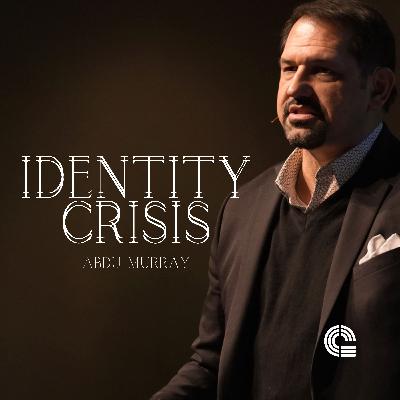
In a world overwhelmed by self-definition and shifting truths, this message with Abdu Murray exposes the deep identity confusion plaguing our culture, and how the gospel answers it. Drawing from his background in law and apologetics, Abdu reveals how today’s identity crisis stems not from a lack of options, but from too many counterfeit paths that fail to satisfy our longing to belong. Whether it’s gender, race, political affiliation, or past wounds, we often construct identities that are fragile, temporary, and ultimately self-defeating. But the gospel invites us into a stable, unchanging identity rooted not in what we feel or what we’ve done, but in who Jesus is and what He’s done for us. This conversation invites listeners to trade the exhausting pursuit of self-made significance for the liberating truth of being known, loved, and named by God.
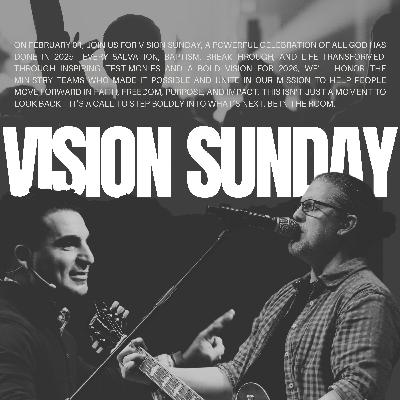
Throughout Scripture, God’s people marked moments of divine provision with physical reminders so that future generations would remember God's faithfulness. In Joshua 4, after crossing the Jordan, Israel was told to set up stones as a permanent testimony. Not to celebrate themselves, but to declare, “The Lord did this.” Vision Sunday is our version of that moment. This message celebrated what God did in and through CCC last year—lives changed, communities impacted, the Gospel proclaimed—and cast a vision for where we’re headed in 2026. But this was more than a financial report. It was a declaration of gratitude and a call to continued faithfulness. Because every dollar given is a seed sown into eternity. Every ministry launched, every child discipled, every person baptized, every meal served, and every soul reached is part of the story God is writing through us. As we look ahead, we aren’t just building a church. We’re building a memorial of faith that future generations will point to and say, “That’s where God moved.”

This message challenged the myth that spiritual maturity is measured solely by knowledge. Drawing from Paul’s letters to the Corinthians, we were reminded that love, not gifting, eloquence, or Bible literacy, is the true evidence of Christlikeness. Jesus didn’t just know Scripture; He embodied it, proclaiming good news to the poor and freedom to the oppressed. That same Word must move beyond our eyes and into our hearts if we are to reflect Him. When the Word goes through us, not just around us, it reshapes our character and deepens our love. Maturity isn’t information; it’s transformation. So this week, we’re invited to do more than read Scripture. We’re invited to let Scripture read us.
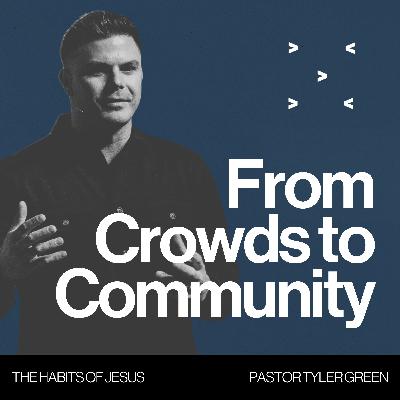
Following Jesus isn’t formed in crowds alone. It’s shaped through proximity, vulnerability, and life lived together in community. This message invited our church to reconsider where and how true spiritual growth happens. While large gatherings and sermons are essential, Scripture reveals that the deepest transformation has always taken place in smaller, personal spaces, around tables, in homes, and through shared lives. Jesus chose twelve disciples not just to hear Him preach, but to walk with Him, learn from Him, and be changed by being in His presence. The early church devoted itself not only to teaching but to prayer, meals, and mutual sacrifice. In the same way, we’re called beyond attendance and into discipleship. Because the win is not just a bigger crowd, it’s a deeper church. One where people are no longer content to be around Christianity but are being formed by Christ, together.
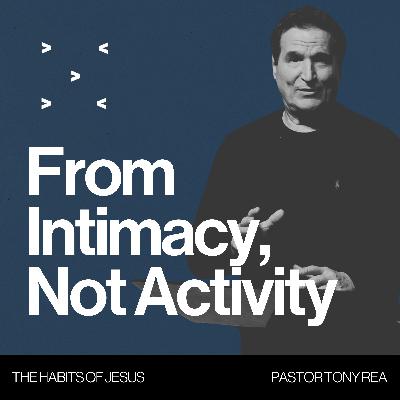
Jesus didn’t pray to perform. He prayed to align Himself with the Father’s will. Over and over, we see Him slip away from crowds, chaos, and even His closest friends to talk with the Father. Prayer wasn’t a discipline He sprinkled into His life; it was the foundation of His life. From the desert to the mountaintop, from the garden to the cross, Jesus showed us what it means to live from intimacy, not activity. This message invited us to see how prayer shapes identity, surrenders control, and trains us to walk in step with the Spirit. Transformation doesn’t happen through pressure or performance. It happens through presence. Because the more we talk to God, the more we learn to walk like Jesus.
While 63% of Americans identify as Christian, only 4% actually live as disciples whose faith shapes their daily decisions. That means many are calling Jesus Savior, but few are following Him as Lord. This week marks the beginning of a series designed to reintroduce us to the habits of Jesus, not as religious tasks, but as the pathway to genuine transformation. When a rabbi said “follow me,” it meant something tangible: come be with me, watch how I live, learn how I pray, rest, love, and obey. Jesus didn’t just forgive us; He formed us. And spiritual formation isn’t about trying harder. It’s about learning to live differently. We fail not because we don’t want to grow, but because we often rely on willpower, more information, or one spiritual high to carry us. That’s not how Jesus formed people. He taught truth, lived in community, modeled practices, and gave us His Spirit. The call of discipleship is to be with Him, become like Him, and do what He did. And that starts right here.
Some conversations don’t end in a breakthrough. But that doesn’t mean they’re wasted. In Acts 25–26, Paul finds himself standing before King Agrippa. Surrounded by power, politics, and skepticism, Paul doesn’t flinch. He doesn’t pull back. He shares the gospel with clarity and compassion, even though Agrippa walks away unmoved. Why? Because Paul understood that the outcome is God’s job. Ours is to speak, invite, and obey. This message reminds us of the power of a persistent invitation. Whether you're sharing your faith, inviting someone to church, or planting a seed of hope in someone’s heart, you never know what God is setting up on the other side of your ask. Don't take someone's first “no” as final. God writes long stories, and sometimes your faithfulness is the chapter that sets up their breakthrough.
For centuries, God was silent. The world groaned under fear, emptiness, and disappointment. Herod ruled with paranoia. Rome ruled with power, and hope felt like fiction. But then, joy broke through. Matthew 2 tells us the story of the Magi, seekers from the east, whose joy began not with arrival but with longing. When they finally encountered Jesus face to face, joy exploded. And that joy didn’t just comfort; it changed them. They worshiped. They gave. And they took a different road home. That’s the power of joy—not happiness based on what’s happening, but the unshakable presence of Christ Himself. Joy threatens every false king. Joy grows as Jesus becomes clearer. And joy changes everything. Especially us.
When the angel announced Jesus’ birth to the shepherds, the world was anything but peaceful. Rome was ruled by violence. God had been silent for 400 years. And the people of Israel were weary with waiting. Yet into that very darkness came a declaration: “Do not be afraid. I bring you good news of great joy.” But notice that Jesus didn’t come to bring peace to the world as a condition. He came as peace in the world as a Person. The same is true today. Peace doesn’t mean everything around you is calm. Peace means Jesus has stepped into your chaos. And when you let Him take the center, your heart can rest even when the world doesn’t.
Simeon waited, not for days or months, but likely for decades. Rome occupied his homeland. God's voice felt distant. Yet Simeon clung to a promise: he would see the Messiah before he died. And then, one day, Jesus was placed in his arms. His waiting wasn’t wasted. God’s silence was not His absence. It never is. In seasons when heaven feels quiet and prayers go unanswered, the temptation is to give up. But silence is often the space where trust is tested, and hope is refined. Just because God isn’t speaking doesn’t mean He’s not working. Just because you don’t see movement doesn’t mean He’s forgotten you. Simeon waited in the silence, but never strayed from the promise. And because of that, he didn’t miss the moment of fulfillment. So today, in your silence, remember that God’s silence is not God’s absence, sufficient grace is still present grace, and hope still overflows through the Holy Spirit, even when the answer hasn’t come yet.
This week, we didn’t preach a sermon; we hosted a conversation. Apologist and author Abdu Murray joined us live to tackle some of the most pressing, complex, and emotionally charged questions facing followers of Jesus today. From gender ideology to unanswered prayer, from Islamic extremism to spiritual deception, Abdu brought biblical clarity, cultural wisdom, and a posture of grace. He reminded us that truth and compassion are not enemies, that the gospel still speaks powerfully to modern questions, and that our faith must be both intellectually credible and deeply personal. Whether we’re responding to injustice, explaining suffering, or wrestling with spiritual questions ourselves, this conversation helped us think more critically, love more courageously, and stand more confidently in a confused world.
Few topics create more confusion and division in the Church than this one. Why does one church celebrate women leading and preaching, while another says it’s forbidden? And more importantly, what does Scripture actually say? This week, we’re leaning into both the tension and the truth. From Genesis to Revelation, God never designed hierarchy; He designed harmony. Yes, there are difficult verses. But when we read the Bible responsibly, within context, culture, and covenant, we see a clearer picture: Jesus empowered women, the Spirit equipped them, and the early Church released them. God’s design doesn’t erase distinction; it restores it. And when men and women lead together under the lordship of Christ, the Church reflects His image more fully.

Let’s be honest, when it comes to giving, most people wrestle with the same tension: “Why should I give part of my income to the church when I already feel stretched thin?” Between debt, bills, hobbies, and the pull to upgrade our lives, generosity can feel impossible or even optional. But Scripture paints a different picture. From the tithe of Abraham to the generosity of the early church, giving has never been about what God wants from you. It’s always been about what He wants for you. Giving isn’t loss, it’s sowing. And when we give, God multiplies, not just to meet needs, but to grow our hearts in trust, obedience, and freedom. The point isn't pressure. The point is partnership. Because when the people of God give faithfully, the Kingdom of God advances powerfully.
Brokenness isn’t the end of your story; it’s where God begins. In 1 Kings 17, Elijah finds himself in a famine, a widow faces starvation, and a boy dies unexpectedly. But in every moment of desperation, God moves. He provides when the jar is empty. He heals when hope seems gone. And He speaks, not through fire or thunder, but in a whisper. Over and over, we see the thread: when life falls apart, God steps in. Not to shame your weakness, but to rebuild you with greater glory. Like Kintsugi—the Japanese art of repairing broken pottery with gold—God doesn’t hide your cracks. He fills them with grace. Because every miracle starts with a moment that feels like the end. But in Jesus’ name, brokenness becomes breakthrough.
You’re building your life on something. The question is, will it hold when the storm hits? Jesus said those who build on His words are like wise builders who dig deep and anchor their lives to the Rock. Everything else? Sand. This message is a call back to the foundation: Christ alone. We build our lives on His love, not our performance. On His Word, not our emotions. On His trustworthiness, not our understanding. It’s not hype or inspiration. Instead, it’s surrender. True discipleship is built on three pillars: love, foundation, and trust. And when those are in place, you will not be shaken.
Peace doesn’t come from the absence of storms; it comes from the presence of Jesus. In Mark 4, the disciples found themselves overwhelmed by chaos, drowning in fear, and questioning whether God even cared. But while the storm raged, Jesus was sleeping, not because He was distant, but because He was in control. And when they cried out, He spoke one word: “Peace.” The wind died down. The waves grew still. And the disciples saw something they had never seen before: power, authority, and presence all wrapped in a Person. That same voice still silences fear today. In every storm you face, He’s not absent. He’s right there in the boat with you. So call on His name. Pray through the fear. Worship in the wind. Because even the wind and the waves still know His name.
Every one of us is thirsty for something. We chase success, people, and possessions—hoping they’ll fill the ache in our soul. But no matter how much we drink, it’s never enough. That’s because our souls weren’t designed for substitutes. They were designed for Jesus. Psalm 63 says, “I thirst for You… my whole being longs for You.” And in John 4, Jesus tells us that only His living water can truly satisfy. Everything else—our achievements, relationships, even good things—are broken cisterns that can’t hold what we’re desperate for. So what do we do? We seek Him before anything else. We name the empty wells we’ve been running to. And we make space for His voice. Because the truth is simple: Jesus satisfies what success, stuff, and people never will.
The Kingdom of God doesn’t advance by consumers—it advances by co-laborers. You weren’t created just to show up—you were designed to make an impact. Every person has a unique role to play in the mission of God, and when we step into that role, the Church becomes more than a building—it becomes a movement. From serving on a team to leading a group to using your gifts to build up others, impact isn’t just about what you do—it’s about who you’re becoming. As 1 Corinthians 3 reminds us, we plant, we water, but God makes it grow. So the question is: are you planting? Are you watering? Or are you just watching? The harvest is ready. The workers are few. And now is the time to say yes to the calling on your life.
Freedom isn’t just a personal breakthrough; it’s a shared journey. In Hebrews 10, we’re reminded that spiritual growth was never meant to happen in isolation. Freedom grows when we move forward together. That’s why groups matter. That’s why relationships matter. And that’s why so many people at CCC have found real healing, accountability, and breakthrough the moment they stopped walking alone. Whether it’s through Life Groups, mentoring relationships, or just showing up to the table, lives are being changed because people are choosing to belong. You weren’t meant to carry the weight of life by yourself. There is freedom on the other side of connection, and the next step is simple: join a group.
In a culture steeped in outrage, vengeance, and blame, the way of Jesus is radically different. Romans 12:21 calls us to overcome evil, not by returning it, but by confronting it with goodness. Jesus didn’t respond to betrayal with bitterness. He didn’t meet violence with retaliation. He loved His enemies, prayed for His persecutors, and forgave those who didn’t even ask. That’s not weakness. It’s power under control. So how do we live that way in a broken world? We grieve with hope instead of fear. We repent and realign when our hearts drift. And we choose to meet hatred with compassion, injustice with mercy, and sin with truth and grace. Because if we’re going to reflect Jesus, we have to see lives, not labels. And we have to stop mirroring the culture and start revealing the Kingdom.

Comments

Download from Google Play

Download from App Store
 United States