


Disruptors for GOOD | Social Entrepreneurs and Social Enterprises
Subscribed: 101Played: 4,368
Subscribe

© 2025 Causeartist
Description
Disruptors for GOOD is a podcast that showcases global social entrepreneurship and social enterprises committed to ethical fashion, impact investing, climate mitigation, sustainable travel, and businesses generating positive global impact. Through in-depth interviews, Grant Trahant, the founder of Causeartist, engages with innovative and impactful startups and brands worldwide.
340 Episodes
Reverse
What if one of the simplest daily activities could become a platform for better health, charitable giving, and lower-carbon transportation?In this episode we spotlight WeWard, the rewards app that turns daily steps into points users can redeem for cash, gifts, discounts, or donations to nonprofit organizations.Founded in France in 2019 by Yves Benchimol and Tanguy de La Villegeorges, WeWard combines behavioral science, gamification, brand partnerships, and commerce to encourage people to walk more. The company reports reaching 30 million walkers across 29 countries, transferring more than $50 million to users, and donating $1.5 million to charitable organizations.The episode examines how WeWard’s reward system works, the commercial engine funding those rewards, and why the company is more than a traditional step-tracking app. It also explores WeWard’s reported health and environmental impact, its Walking Mode feature, and the questions the company must navigate around privacy, accessibility, and long-term behavior change.In this episode, you’ll learnHow WeWard converts steps into its digital reward points, called WardsWhy immediate rewards can make healthy behavior easier to sustainHow users can redeem Wards for cash, gifts, discounts, and charitable donationsHow brand partnerships, affiliate commerce, advertising, and sponsored challenges support the business modelWhy WeWard’s model creates value for users, brands, charities, and communitiesHow an independent mobility study measured changes in walking and transportation behaviorWhy WeWard describes walking as both a public-health tool and a form of lower-carbon mobilityHow Walking Mode uses access to distracting apps as an incentive to reach a daily step goalThe privacy, accessibility, and retention challenges the company must manage as it growsKey figures discussed30 million walkers across 29 countriesMore than $50 million transferred to users$1.5 million donated to charitiesMore than 70 nonprofit organizations supportedA reported 24% average increase in users’ walking activityMore than 2,000 participating brand partnersApproximately 4.3 million monthly visits to WeWard’s in-app ecommerce sectionAn estimated 750,000 tons of carbon dioxide emissions avertedThe bigger takeawayWeWard’s most interesting innovation is not simply paying people to walk. The company is building an economic system around a positive daily behavior. User activity creates value for commercial partners, partner revenue helps fund rewards and charitable projects, and those rewards motivate people to continue moving.For founders working across health, climate, consumer technology, and social impact, the lesson is clear: information alone rarely changes behavior. Better products make the desired action visible, social, rewarding, and easy to repeat.
----------------------------------------Disruptors for GOOD is powered by Causeartist, a nonprofit media company dedicated to bridging the gap between capital and culture by spotlighting founders, investors, and organizations reimagining how business can serve people and the planet.Through storytelling, events, and open-access education, Causeartist helps create a shared language of impact, inspiring more founders to build with purpose and more funders to invest with intention.By amplifying ideas and innovations across industries, Causeartist transforms awareness into action and cultivates a community where paying it forward is part of the foundation for growth.
Soothe Note is a free consumer app for cancer patients and the people who support them. It is meant for the days between oncology visits: daily check-ins (mood, energy, medications, hydration, meals, rest, movement, one small win), symptom logs with intensity and body location, medication schedules, appointment questions, post-visit notes, and a private journal that caregivers cannot see.Teddy Aaron (caregiver side) and Brynn Forlizzi (two-time teen cancer survivor) founded the product in Greenwich, Connecticut in 2026 while still in high school. Patients can link trusted caregivers with a sharing code and revoke access; linked caregivers get read-only updates, support pings, and their own burnout check-ins. Before a visit, Health Hub can turn those logs into printable reports and AI-assisted drafts that the patient is told to review, because they are not medical advice.The app is local-first: signed-out data stays on device; an optional account syncs through Supabase. Soothe note has iPhone availability, Android under Google Play review, 15 languages, an advisory group of seven oncology/palliative/advocacy professionals, and coverage in 25+ outlets. Core patient and caregiver features are free; Soothe Note Plus is an optional paid layer. The company does not sell health data or run ads.
----------------------------------------Disruptors for GOOD is powered by Causeartist, a nonprofit media company dedicated to bridging the gap between capital and culture by spotlighting founders, investors, and organizations reimagining how business can serve people and the planet.Through storytelling, events, and open-access education, Causeartist helps create a shared language of impact, inspiring more founders to build with purpose and more funders to invest with intention.By amplifying ideas and innovations across industries, Causeartist transforms awareness into action and cultivates a community where paying it forward is part of the foundation for growth.
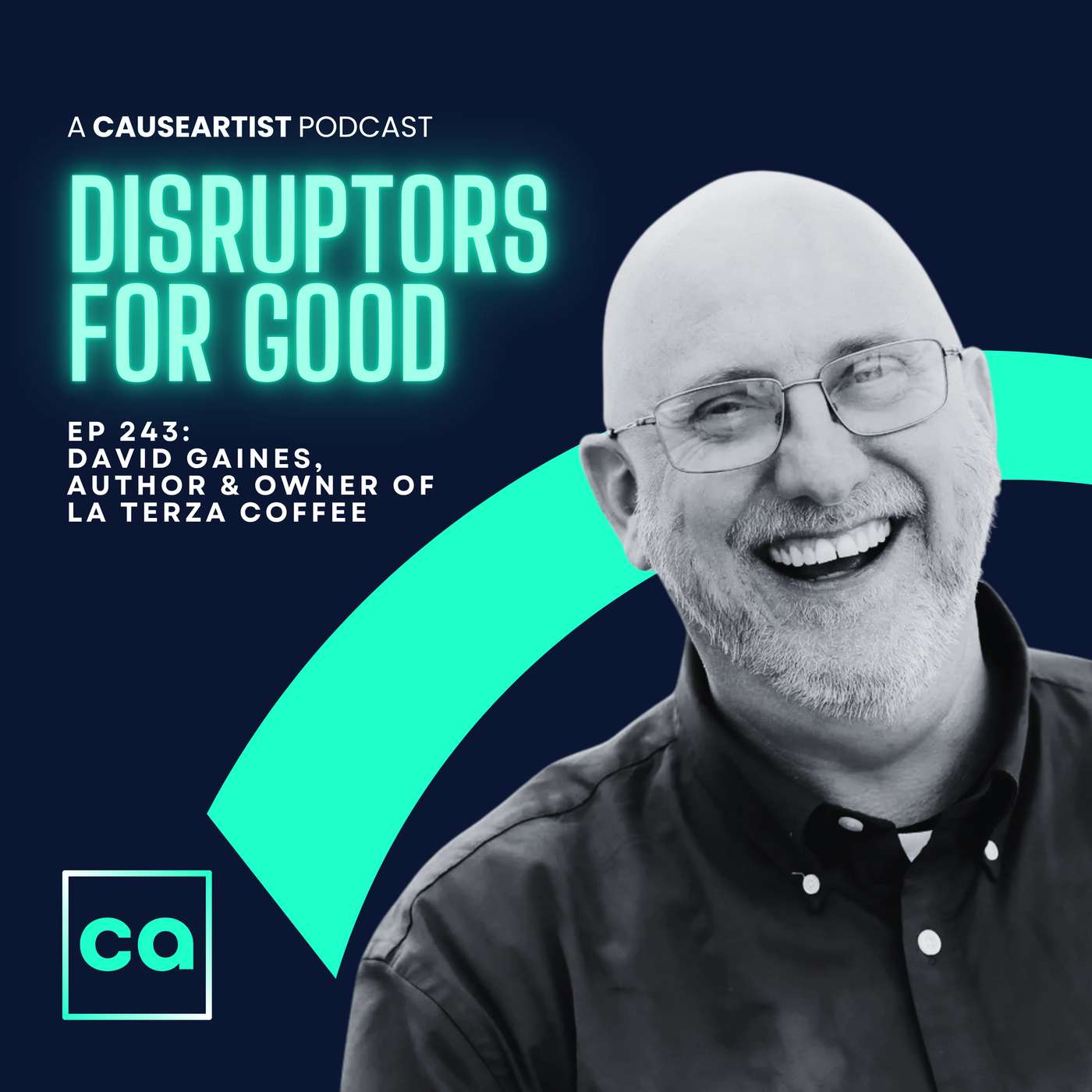
In this episode of Disruptors for Good, I speak with entrepreneur, author, and La Terza Coffee owner David Gaines about ethical supply chains, direct trade coffee, conscious consumerism, and the responsibility businesses have to the people they affect.David shares how his career evolved from operating a small business alongside nonprofit work to acquiring La Terza Coffee and building a business where commercial growth and social impact reinforce one another.The conversation explores the realities of the global coffee industry, including exploitative labor practices, generational poverty, and the role direct trade relationships can play in creating a more equitable system.David also discusses the ideas behind his books, Radical Business and Why We Buy, Why It Matters, and offers a practical framework for treating employees, suppliers, customers, competitors, communities, and the environment with dignity.In This EpisodeDavid and Grant discuss:David’s early career working simultaneously in business and the nonprofit sectorWhy he acquired La Terza CoffeeHow social impact became embedded in La Terza’s business modelThe labor and economic challenges within the global coffee supply chainWhat direct trade means and how it differs from traditional commodity sourcingLa Terza’s long term relationship with coffee producer Katia Duke in HondurasHow improving coffee quality can increase income for producersWhy Katia used increased revenue to build a school in her communityThe limitations of certifications such as fair trade and organic labelsWhy direct relationships can sometimes provide more transparency than certificationHow businesses can measure their impact across multiple stakeholder groupsWhy profitability is necessary for a sustainable social enterpriseThe role of healthy competition in improving an entire industryHow consumers can use everyday purchases to support better business practicesThe difference between healthy consumption and overconsumptionWhy David believes consumerism reflects humanity’s interconnectednessHow anger can reveal the problems people are called to addressDavid’s vision for strengthening coffee shops and other community gathering spacesAbout David GainesDavid Gaines is an entrepreneur, author, and the owner of La Terza Coffee.Before joining La Terza, David spent approximately 15 years operating a small business while also working within the nonprofit sector.He initially created the business to provide financial independence while pursuing mission driven work, but eventually realized that dividing his time between two organizations limited both his income and his potential impact.David later acquired La Terza Coffee from a college friend who had founded the company in the early 2000s. The opportunity allowed David to combine his interest in business strategy with a company that already had social responsibility embedded in its sourcing model.His work with La Terza led him deeper into conscious capitalism and social enterprise. He became involved with the Social Enterprise Alliance, serving as a local chapter leader and later as a national chairperson.Through his books and business leadership, David explores how companies and consumers can create meaningful change by recognizing the humanity of every person involved in an economic transaction.
----------------------------------------Disruptors for GOOD is powered by Causeartist, a nonprofit media company dedicated to bridging the gap between capital and culture by spotlighting founders, investors, and organizations reimagining how business can serve people and the planet.Through storytelling, events, and open-access education, Causeartist helps create a shared language of impact, inspiring more founders to build with purpose and more funders to invest with intention.By amplifying ideas and innovations across industries, Causeartist transforms awareness into action and cultivates a community where paying it forward is part of the foundation for growth.
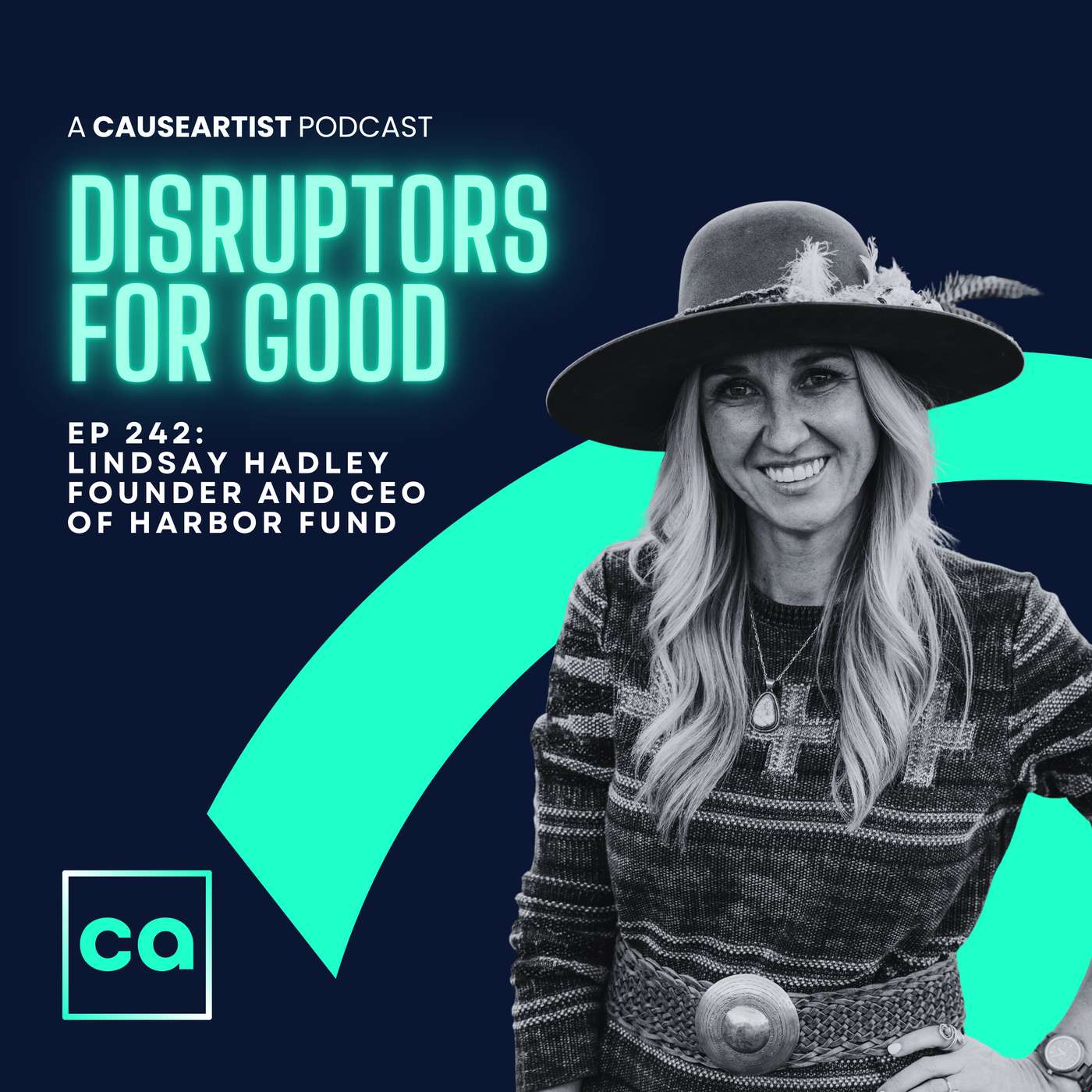
In this episode of Disruptors for Good, Grant Trahant speaks with Lindsay Hadley, founder and CEO of Harbor Fund, about building a new financing model for films designed to influence culture and create social impact.Harbor Fund is a 501(c)(3) nonprofit that uses philanthropic donations to invest in socially meaningful films. Rather than funding a single project through a traditional grant, Harbor Fund takes an equity position in selected productions. When a film generates a financial return, that capital flows back into the fund and can be invested in future projects.The result is an evergreen model that combines philanthropy, impact investing, and independent film financing.Lindsay shares how her 20-year career in nonprofit fundraising led her into filmmaking, why scripted narratives can sometimes create more cultural influence than documentaries, and what Harbor Fund looks for when evaluating hundreds of film submissions.She also discusses the difficult state of the entertainment industry, the importance of established talent and strong intellectual property, and why commercial viability is a critical part of Harbor Fund’s impact thesis.
----------------------------------------Disruptors for GOOD is powered by Causeartist, a nonprofit media company dedicated to bridging the gap between capital and culture by spotlighting founders, investors, and organizations reimagining how business can serve people and the planet.Through storytelling, events, and open-access education, Causeartist helps create a shared language of impact, inspiring more founders to build with purpose and more funders to invest with intention.By amplifying ideas and innovations across industries, Causeartist transforms awareness into action and cultivates a community where paying it forward is part of the foundation for growth.
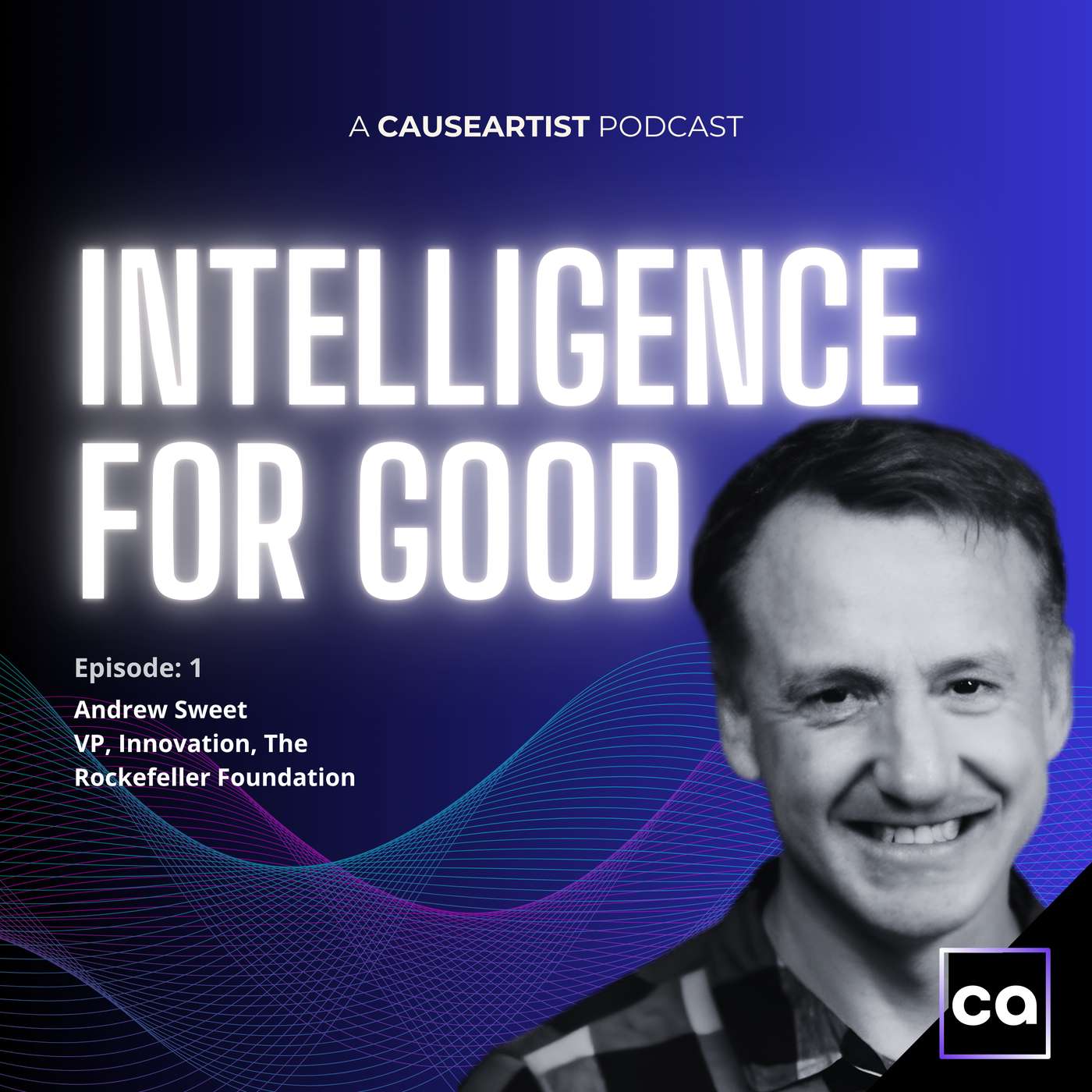
This is the first episode of our new show Intelligence for GOOD. Subscribe here on Apple Podcasts and Spotify.In the inaugural episode of Intelligence for GOOD, I sit down with Andrew Sweet, Vice President of Innovation at The Rockefeller Foundation, to explore how AI is already being used to solve real-world challenges in agriculture, education, healthcare, workforce development, and public services.Andrew brings a unique perspective to the conversation. From serving as a Peace Corps volunteer in Togo and a presidential appointee at USAID, to leading global COVID-19 initiatives at The Rockefeller Foundation, his career has focused on tackling complex challenges at scale.The discussion also explores Rockefeller's remarkable connection to the origins of artificial intelligence. In 1955, the Foundation funded the Dartmouth Summer Research Project on Artificial Intelligence, the gathering where the term "artificial intelligence" was first coined and the modern AI field was born.Today, nearly seventy years later, Rockefeller is helping shape how AI can be deployed for public benefit around the world.In This EpisodeThe untold history of The Rockefeller Foundation's role in the birth of artificial intelligenceHow AI is helping millions of smallholder farmers improve crop yields and livelihoodsWhy developing countries often have a more optimistic view of AI than the United StatesThe growing importance of AI sovereignty and locally owned AI infrastructureHow AI can expand access to public benefits and government servicesWhy AI literacy should become a core part of educationThe rise of solo entrepreneurs building businesses with AI toolsHow states like Maryland and West Virginia are preparing citizens for an AI-driven economyThe role philanthropy can play in ensuring AI benefits everyone, not just a small group of technology companiesWhy Andrew believes AI can help reduce inequality rather than increase itKey TakeawaysAI is already creating measurable social impact.From Digital Green's Farmer.Chat platform reaching millions of farmers across multiple countries to new AI-powered health and education tools, practical applications are delivering results today.The biggest opportunity may be where talent is scarce.Rather than replacing workers, AI can fill critical gaps in sectors such as agriculture, healthcare, and education where there simply are not enough professionals available to meet demand.AI literacy is becoming essential.Just as previous generations needed proficiency in Microsoft Office and internet tools, future workers will need a working understanding of AI systems and how to collaborate with them effectively.Public services are ripe for transformation.AI has the potential to make government services more accessible, responsive, and human-centered by reducing complexity and improving citizen experiences.Optimism matters.While risks deserve serious attention, Andrew argues that society needs more conversations about the opportunities AI creates, especially for entrepreneurship, workforce development, and global problem solving.About Andrew SweetAndrew Sweet is Vice President of Innovation at The Rockefeller Foundation, where he leads AI partnerships and strategy initiatives.Before joining Rockefeller, Andrew served as a presidential appointee at USAID, worked with Dalberg Advisors in Africa and the United States, and began his career as a Peace Corps volunteer in Togo, West Africa.His work today focuses on helping governments, nonprofits, and communities leverage emerging technologies to improve lives and create economic opportunity.
----------------------------------------Disruptors for GOOD is powered by Causeartist, a nonprofit media company dedicated to bridging the gap between capital and culture by spotlighting founders, investors, and organizations reimagining how business can serve people and the planet.Through storytelling, events, and open-access education, Causeartist helps create a shared language of impact, inspiring more founders to build with purpose and more funders to invest with intention.By amplifying ideas and innovations across industries, Causeartist transforms awareness into action and cultivates a community where paying it forward is part of the foundation for growth.

Comments

Download from Google Play

Download from App Store
 United States