


The Agency Profit Podcast
Subscribed: 43Played: 1,478
Subscribe

© Parakeeto 2023
Description
Welcome to the Agency Profit Podcast hosted by Marcel Petitpas, CEO and Co-Founder of Parakeeto.
Finally, an agency podcast that isn't JUST about getting more clients.
On the show, we bring in experts, agency owners and consultants to share their actionable tips for improving profitability and operational efficiency.
Here, you'll learn what systems to implement in your business, what kind of KPI's to track, and benchmarks to aim for. How to manage things like capacity, utilization, billing rates, processes and procedures, what tools to use, mistakes to avoid and so, so much more.
If you're tired of putting out fires, working long hours, and growing revenue but not profits, you're in the right place.
Finally, an agency podcast that isn't JUST about getting more clients.
On the show, we bring in experts, agency owners and consultants to share their actionable tips for improving profitability and operational efficiency.
Here, you'll learn what systems to implement in your business, what kind of KPI's to track, and benchmarks to aim for. How to manage things like capacity, utilization, billing rates, processes and procedures, what tools to use, mistakes to avoid and so, so much more.
If you're tired of putting out fires, working long hours, and growing revenue but not profits, you're in the right place.
221 Episodes
Reverse
Points of Interest
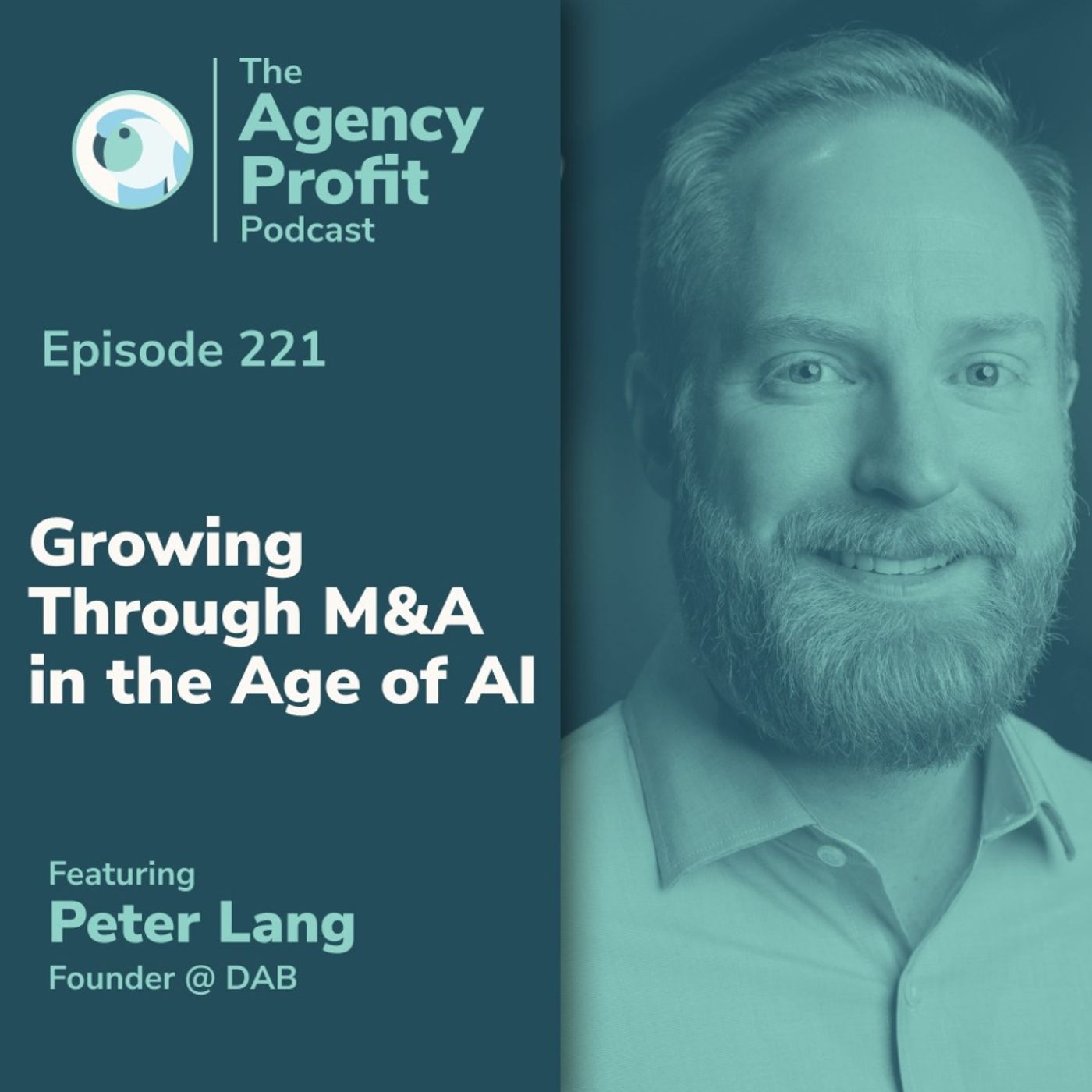
00:01 – 00:38 – Introduction: Marcel opens the episode by introducing Peter Lang as an entrepreneur, investor, and operator deeply focused on mergers and acquisitions.
01:00 – 02:13 – From Holding Company to Teaching M&A: Peter explains that he now runs a holding company, invests in assets including agencies, and is focused on teaching other founders how to acquire and grow businesses.
02:41 – 06:09 – How an Agency Owner Became Obsessed with Acquisitions: Peter shares how an early interest in corporate finance, investing, and business ownership evolved alongside accidentally building a digital agency.
06:34 – 09:23 – The First Deal and the Power of a Motivated Seller: Peter recounts the unusual acquisition that pulled him into M&A, showing how urgency, creative deal structure, and downside protection shaped his first major transaction.
09:44 – 12:25 – Why Buying Can Be Faster Than Building: Peter reflects on completing 21 transactions and argues that acquiring existing cash flow is often easier than spending years building the same result organically.
12:34 – 15:13 – Why More Founders Still Do Not Pursue Acquisitions: Marcel and Peter discuss the real barriers to M&A, including fear, lack of information, false beliefs, and the failure to consistently make time for acquisition work.
15:20 – 18:28 – Risk Versus Risky Behavior in M&A: Peter explains the difference between unavoidable business risk and reckless decision-making, emphasizing that preparation, education, and structure are what reduce exposure.
19:07 – 23:19 – Diligence, Integration, and What Buyers Are Really Acquiring: The conversation shifts to best practices in deals, with Peter stressing that due diligence and post-close integration matter more than the excitement of signing the deal itself.
23:19 – 28:12 – How to Evaluate Culture Before an Acquisition: Peter outlines why cultural fit must be measured, not guessed, using tools like NPS, eNPS, personality frameworks, and manager-role alignment to avoid poor integrations.
28:12 – 32:00 – The Great Wealth Transfer Creates a Major Opportunity: Marcel and Peter discuss how retiring owners and succession gaps are creating a historic supply of businesses that need buyers over the next two decades.
32:00 – 36:21 – How AI Is Changing Seller Behavior and Buyer Strategy: Peter explains that AI is accelerating uncertainty for agency owners, which may push more founders to sell while also reshaping what makes a business attractive to buyers.
36:38 – 45:45 – Why AI-Forward Agencies and Programmatic Buyers Will Win: Marcel and Peter close by exploring why service businesses remain resilient, why agencies still have a future, and why buyers who combine acquisitions with AI adaptation will likely outperform.
Show Notes
Connect with Peter via LinkedIn
Website: Scale your agency with Mergers & Acquisitions
Love the Podcast
Leave us a review here Hosted by Simplecast, an AdsWizz company. See pcm.adswizz.com for information about our collection and use of personal data for advertising.
Points of Interest
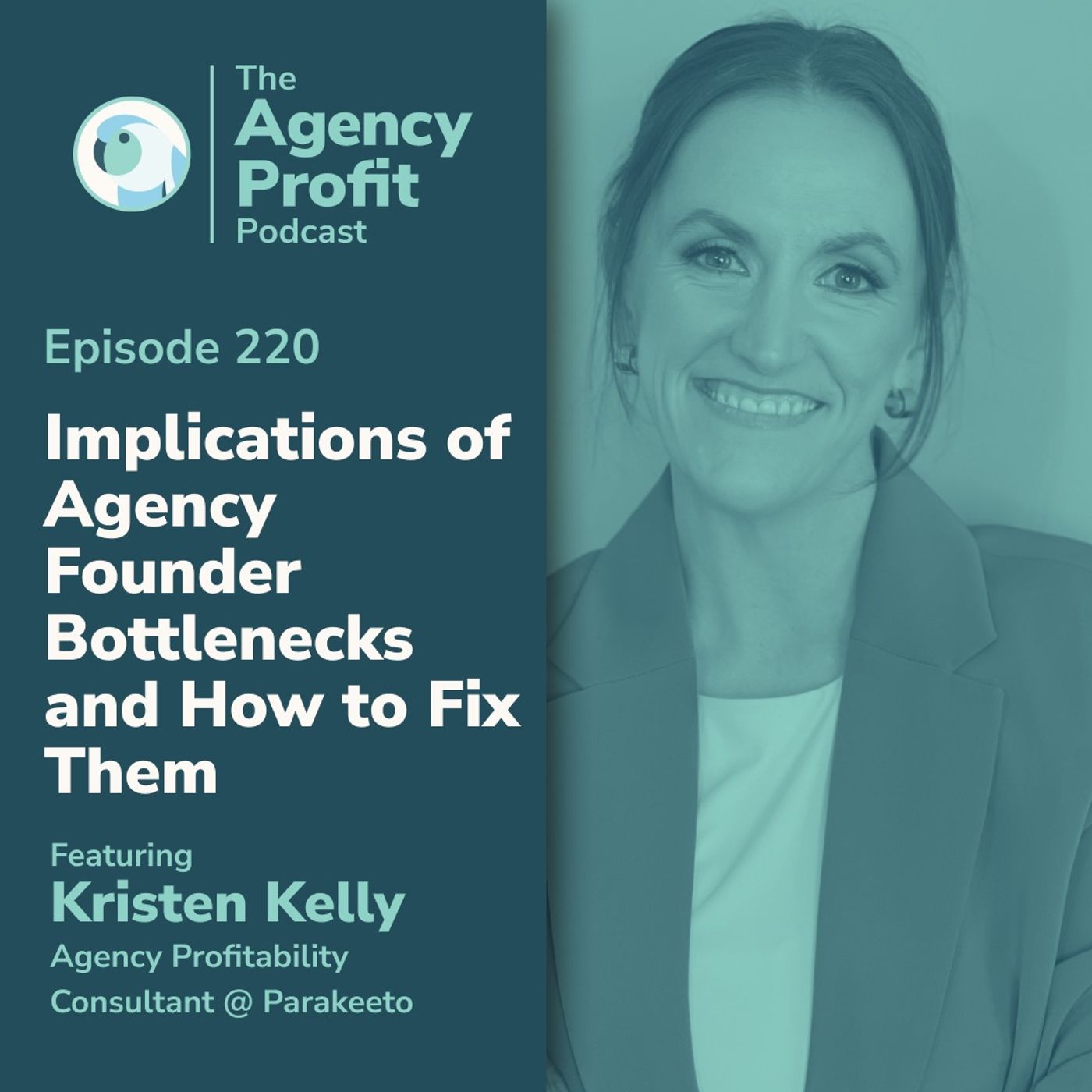
00:01 – 00:37 – Introduction: Marcel and Kristen open the episode by introducing a more philosophical discussion about why Parakeeto’s work matters beyond the surface-level goal of improving profitability.
00:37 – 02:01 – The provocative reframe: Kristen references Marcel’s recent message, “you don’t actually care about profitability,” and frames the conversation around why that idea sits at the center of a broader positioning shift.
02:01 – 03:59 – Profit is not the full story: Marcel explains that Parakeeto has become very good at talking about profitability tactically, but has not spent enough time explaining why profitability matters in the first place.
04:17 – 07:05 – The ‘Dig’ process and brand clarity: Marcel shares how a day spent with his friend Rich, using a branding exercise called the Dig, helped reveal that Parakeeto’s messaging had been missing the emotional and philosophical “why.”
07:17 – 10:13 – Business as a vehicle for social change: Marcel outlines his belief that well-run, for-profit businesses are one of the most powerful tools for creating positive change because they solve problems, create jobs, and enable founders to do more good.
10:13 – 11:31 – Profitability as the ‘so that’: The conversation reframes profitability as an enabling condition rather than the end goal, since most agency owners ultimately want freedom, creative fulfillment, stability, and a healthy team.
11:31 – 14:43 – Escaping agency trauma: Marcel explains that many agency founders are not chasing profit obsessively, but are trying to avoid repeating the burnout-driven, exploitative culture they experienced in traditional agency environments.
15:19 – 19:08 – Why profitability is hard to own: Marcel breaks down the structural challenge that profitability touches finance, operations, sales, and leadership, yet rarely belongs clearly to any one role inside the agency.
19:11 – 21:38 – Empowered, fearless, and abundant: Marcel shares that the word he landed on for how he wants clients to feel is “empowered,” along with “fearless” and “abundant,” reflecting the confidence that comes from financial clarity.
22:44 – 26:13 – A more complete solution for the money side: Marcel describes how this reframe is pushing Parakeeto toward a more holistic offering, including the possibility of integrating accounting and bookkeeping more directly.
26:31 – 28:09 – Removing title confusion for clients: The discussion highlights how confusing the financial services landscape can be for founders, who are often left trying to decode titles like CFO, accountant, consultant, and ops lead just to solve one problem.
28:41 – 30:11 – The closing takeaway: Marcel closes by reinforcing that the goal is not money for money’s sake, but getting money out of the way so agency owners can build the business, team, and impact they originally set out to create.
Show Notes
Connect with Kristen via LinkedIn
Free Agency Toolkit
Parakeeto Foundations Course
Free access to our Model Platform
Love the Podcast
Leave us a review here Hosted by Simplecast, an AdsWizz company. See pcm.adswizz.com for information about our collection and use of personal data for advertising.

Points of Interest
00:00 – 03:21 – From UGURUS to E2M: Brent Weaver shares how he went from coaching thousands of agencies at UGURUS to becoming CEO of E2M Solutions after the DigitalOcean chapter ended.
03:35 – 04:51 – What makes E2M different: Marcel frames E2M as a standout white-label partner, and Brent explains why serving only agencies creates sharper focus on partner success.
04:51 – 08:16 – Process flexibility as a moat: Brent contrasts “one standardized process” versus adapting to each agency partner’s SOPs and tools and why fitting into the partner’s workflow improves outcomes.
08:27 – 10:08 – Why anti-fragility matters right now: Marcel connects E2M’s adaptability to the broader need for agencies to stay resilient through another major disruption cycle.
10:08 – 12:01 – Defining anti-fragility in business terms: Brent explains anti-fragility as building a business that can withstand shocks by avoiding fragility drivers like thin margins and operational vulnerabilities.
12:01 – 15:53 – Practical fragility reducers: Brent outlines concrete levers, higher margins as a buffer, less debt, fewer single points of failure, and building teams and systems that scale.
13:29 – 15:53 – Perennial value drivers: Brent argues agencies should anchor decisions to what clients always want, faster delivery, lower cost, and higher quality and certainty, regardless of the economy.
15:53 – 18:01 – Investing under uncertainty: Marcel reframes strategy as betting on what will not change and asks how agencies can choose investments that will keep paying dividends.
18:01 – 22:44 – AI audits, not shiny tools: Brent describes E2M’s AI assessment approach as constraint-hunting, then using automation and process optimization to reduce friction and accelerate results.
23:08 – 25:02 – High-impact AI use cases: Brent lists repeatable agency wins, lead research and sales prep, proposal and scope automation, and workflow-friendly tooling like Slack-based automations.
25:02 – 26:45 – Client reporting as a force multiplier: Brent highlights AI-driven reporting and analysis, using chat interfaces connected to analytics data to produce consistent client insights faster.
39:51 – 41:13 – Where to learn more: Brent shares where to find E2M Solutions and the Vistara AI event, including the May 11–13 Austin dates and the waitlist link.
Show Notes
List Agentic workflows - AI workflows E2M actively run for 50+ agencies - ready to plug into your delivery, sales, and operations
E2Msolutions.com
Vistara AI Event @ Austin, Texas on May 11-13, 2026
Brent’s LinkedIn
Love the Podcast
Leave us a review here. Hosted by Simplecast, an AdsWizz company. See pcm.adswizz.com for information about our collection and use of personal data for advertising.
Points of Interest
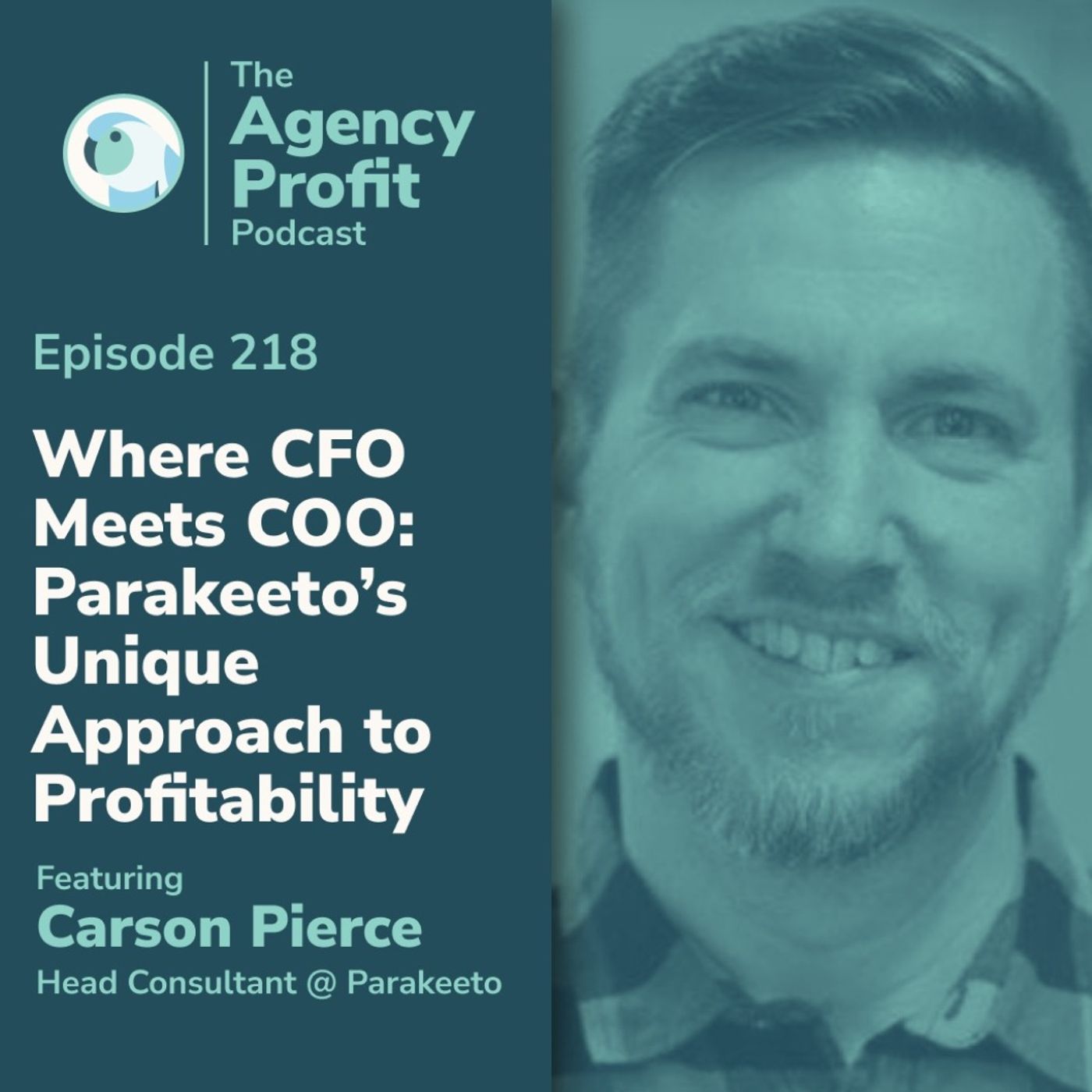
00:01 – 01:36 – Introduction: Marcel introduces the episode as a public reflection on Parakeeto’s positioning, prompted by feedback from LinkedIn and client conversations.
01:36 – 02:43 – The Identity Problem: Carson shares the internal confusion many consultants feel when their role spans finance, operations, delivery, and strategy.
02:43 – 04:52 – Clear Problem, Fuzzy Solution: Marcel explains that while Parakeeto has always been clear about solving profitability, clients still struggle to understand how that actually happens.
04:52 – 05:44 – Profitability Touches Everything: The discussion highlights why profitability work inevitably spans finance, delivery, ops, leadership, and new business.
05:44 – 08:12 – Category Creation vs. Familiar Labels: Marcel reflects on the challenge of inventing “profit management” as a category versus borrowing understanding from CFO and COO roles.
08:12 – 10:17 – Why Titles Don’t Really Help: Carson points out that many agencies don’t think in executive titles at all—they just need someone to make the whole system work.
10:17 – 14:18 – The Real Founder Frustration: Marcel describes the pain of having too many specialists, unclear ownership, and no one quarterbacking profitability end-to-end.
14:18 – 18:05 – Agency Context as a Force Multiplier: Carson explains why Parakeeto’s deep agency experience eliminates the long ramp-up most external hires require.
18:05 – 22:23 – CFO vs. COO (and Why Both Fall Short): Marcel breaks down the limitations of finance-only or ops-only approaches and why profitability lives at their intersection.
22:23 – 26:49 – The Assessment Explained: Marcel walks through Parakeeto’s assessment process—modeling, interviews, and workshops that create clarity and a focused roadmap.
26:49 – 30:44 – Ongoing Profit Management in Practice: The conversation details how recurring reporting, forecasting, and advisory support keep teams focused on the right levers.
30:44 – 40:56 – What Actually Creates ROI: Marcel and Carson emphasize that alignment, confidence, and decisive action—supported by numbers—are the true outcomes clients pay for.
Show Notes
Connect with Carson via LinkedIn
Free Agency Toolkit
Parakeeto Foundations Course
Free access to our Model Platform
Love the Podcast
Leave us a review here. Hosted by Simplecast, an AdsWizz company. See pcm.adswizz.com for information about our collection and use of personal data for advertising.
Points of Interest
00:00 – 02:00 – Why Agencies Avoid Talking About Money: Drew reflects on why financial transparency was rare in agencies historically and why that silence created widespread confusion about profitability.
02:00 – 05:00 – The Myth of “Impossible” Profitability: Drew explains why claims that an agency “can’t be profitable” usually stem from avoided decisions, misunderstood agency math, or intentional lifestyle choices.
05:00 – 07:30 – Agency Growth Breaking Points: Drew outlines common headcount thresholds where systems, processes, and structure begin to break down as agencies grow.
07:30 – 10:00 – Challenges of Very Small Agencies: The conversation explores why sub-10-person agencies struggle with inefficiency, tribal knowledge, and inconsistent delivery.
10:00 – 13:00 – Generalists vs. Specialists: Drew explains why early-stage generalists often struggle as agencies scale and why specialization becomes essential for profitability.
13:00 – 15:30 – Management Layers and Cost Pressure: Marcel and Drew discuss how introducing management roles adds financial strain and operational complexity.
15:30 – 17:30 – The Most Profitable Agency Size Range: Drew shares data showing agencies with 15–40 employees consistently outperform others on profitability.
17:30 – 19:30 – Why Growing Up Improves Margins: The episode breaks down how systems, niching, and client selection drive efficiency and longer tenure at mid-size agencies.
19:30 – 22:00 – Bigger Agencies, Bigger Expectations: Drew explains how larger clients demand higher sophistication, better talent, and increased operational investment.
22:00 – 25:00 – Lifestyle Businesses vs. Scalable Agencies: The conversation reframes success, validating highly profitable small agencies that are never intended to be sold.
25:00 – 28:00 – Running the Business by the Numbers: Drew and Marcel align on first principles like AGI and the 55-25-20 model as the foundation for healthy decision-making.
28:00 – 37:00 – AI, Commoditization, and the Future of Agencies: Drew connects decades of industry evolution to today’s AI shift, arguing that strategy, thinking, and leadership—not production—are the true sources of agency value.
Show Notes
Connect with Drew via LinkedIn
AMI
Website
Newsletter
Podcast
Love the Podcast
Leave us a review here. Hosted by Simplecast, an AdsWizz company. See pcm.adswizz.com for information about our collection and use of personal data for advertising.
Points of Interest00:01 – 01:04 – Framing the PM/AM Pricing Question: Marcel welcomes listeners, introduces Carson Pierce, and frames the central question agencies face around whether and how to charge for account and project management time.01:04 – 02:14 – Why This Issue Persists: Carson explains why underpricing project and account management work continues to surface across agencies despite increased industry maturity.02:14 – 03:28 – The Myth That Clients Won’t Pay: Carson challenges the belief that clients resist paying for PM and AM work and reframes these roles as valuable parts of delivery.03:30 – 04:32 – Why PM and AM Time Is Hard to Track: Carson outlines how fragmented tasks, short work intervals, and multi-client meetings make accurate time tracking impractical.04:33 – 06:20 – Pricing Model Confusion as the Root Cause: Marcel connects PM/AM underpricing to weak separation between price, scope, and cost, especially in time-based billing models.06:21 – 07:25 – The ABR Distortion Effect: Carson explains how excluding PM time inflates average billable rate and hides true delivery economics.07:25 – 08:24 – Two Ways to Price PM and AM Work: Marcel introduces the two viable approaches—pricing PM/AM directly in scope or absorbing the cost through margin targets.08:24 – 09:50 – When Client Pushback Actually Appears: Carson explains why most clients accept reasonable PM allocations and why resistance typically signals excessive or poorly designed PM effort.09:51 – 14:02 – Why Time-Tracking Fixes Often Fail: Carson reviews common PM tracking approaches and explains why they frequently add overhead without producing actionable insight.14:03 – 19:59 – Building PM Costs Into Margin Targets: Marcel explains how agencies can model PM and AM costs directly or indirectly based on tracking feasibility and role structure.20:00 – 29:00 – Structuring Account and Project Management Roles: Marcel and Carson discuss when to separate AM and PM roles, referencing Brett Harned’s perspective and tying structure to work complexity.29:01 – 36:13 – Sales Allocation, Overhead Clarity, and Wrap-Up: The episode concludes with guidance on allocating AM time to sales only when explicit, avoiding circumstantial overhead, and reinforcing intentional PM pricing.Show NotesBrett Harned - Agency consultant and advocate for separating account and project management roles.Related Episode: Casey Brown on pricing increases and margin correction.Love the PodcastLeave us a review here. Hosted by Simplecast, an AdsWizz company. See pcm.adswizz.com for information about our collection and use of personal data for advertising.
Points of Interest00:01 – Introduction: Marcel introduces Skye Waterson and frames the conversation around SOPs, documentation, and building operational “rails” that teams can actually use.01:07 – Skye’s background and motivation: Skye shares her journey from academic burnout to discovering adult ADHD and building a business focused on helping founders work with their brains, not against them.03:04 – Why ADHD frameworks help everyone: Skye explains how ADHD-friendly systems emphasize flexibility and challenge outdated assumptions about productivity and work structure.05:05 – First principles for ADHD productivity: The discussion covers practical strategies like rewarding task initiation and reducing reliance on working memory through better capture systems.06:56 – The core problem with traditional SOPs: Skye and Marcel outline why most SOPs go stale—delegated, filed away, and only referenced during onboarding or emergencies.09:18 – SOP neglect as a hidden operational risk: The conversation highlights how disconnected SOPs undermine dashboards, metrics, and leadership visibility.11:32 – Visualizing the business as a flow: Skye introduces her core framework: mapping the business end-to-end (acquisition through expansion) using a visual tool like Miro.14:02 – Why digital visual tools matter: Skye explains why paper-based process mapping fails and why digital tools enable iteration, ownership, and follow-through.15:52 – Assigning a single DRI per process: Each node in the business flow is assigned a Directly Responsible Individual to eliminate ambiguity and improve accountability.16:40 – Red, orange, green process health: Processes are color-coded to show whether they are broken, manual and CEO-dependent, or documented and team-run.18:09 – Tying SOPs to weekly cadence and metrics: Skye explains how reviewing SOP health alongside performance metrics turns documentation into an operational diagnostic tool.24:41 – AI and living SOPs: The episode closes with best practices for using AI to bootstrap SOPs, delegate ownership, and treat documentation as a living draft rather than a finished artifact.Show NotesConnect with Skye via LinkedInUnconventional OrganizationSkye’s Podcast ADHD Skills LabAI Chatbot: Message Skye on Instagram with the word “Marcel” and she’ll send you the chatbotSoftware as a Science BookMatt VerlaqueLove the PodcastLeave us a review here. Hosted by Simplecast, an AdsWizz company. See pcm.adswizz.com for information about our collection and use of personal data for advertising.
Points of Interest00:00 – 01:31 – Introduction: Marcel and Kristen open with a relatable riff on Notion and AI features before framing the core issue of the episode: messy handoffs between sales, account management, and delivery in service businesses.01:31 – 03:14 – Why Handoffs Are a Universal Agency Problem: Kristen explains why sales-to-delivery handoff issues show up in agencies of every size and maturity and highlights their downstream impact on profitability and operational sanity.03:14 – 05:34 – Common Symptoms of Broken Handoffs: Kristen outlines key symptoms such as work starting in a vacuum after the contract is signed, deliverable-only briefs, and delivery teams missing the strategic goals and context from sales conversations.05:34 – 07:28 – Client Game of Telephone and Disjointed Data: Marcel describes how clients end up repeating themselves to every new team member and how poor internal communication leads to scattered information, inconsistent naming, and misaligned expectations across tools.07:28 – 10:34 – Incentive Misalignment Between Sales and Delivery: Kristen breaks down how quota driven sales teams and risk conscious project managers operate with different goals, creating tension when there is no shared understanding of scope, clarity, or repeatability.10:34 – 13:35 – Consequences for Client Trust and Profitability: They explore how early missteps fuel buyer’s remorse, create invisible client scorecards on trust, and generate internal gaps between what was promised, what is being delivered, and how profitable work actually is.13:35 – 17:29 – Ingredients of a Strong Handoff: Kristen shares practical tactics such as transferring rich context, sharing sales call recordings with the full delivery team, and having the future account lead sit in on the final sales call to align expectations before the handoff.17:29 – 20:20 – Separating Scope From Price and Avoiding Bad Math: Marcel goes on a rant about the dangerous habit of turning project price into hours by dividing it by an arbitrary rate and explains why scope, time, cost, and margin must be defined separately from the client facing price.20:20 – 24:40 – Structural Alignment Across CRM, PM, and Accounting: Marcel highlights the need for a consistent schema for how projects are represented across contracts, invoicing, project management, and time tracking so that reporting can tie expectations back to actual performance.24:40 – 27:16 – Kickoffs, Assets, and Tools That Improve Handoffs: Kristen covers how internal kickoffs, sales call recordings, and structured client intake tools can give creative and delivery teams the context they need while keeping meetings focused and efficient.27:16 – 31:18 – Using Reporting as a Forcing Function for Alignment: They introduce the idea of expectations versus actuals reporting and the agency profitability flywheel as a way to expose process gaps, bring sales and delivery into the same conversations, and drive better decision making.31:18 – 36:24 – Q4 Planning, Cross Team Empathy, and Next Steps: Kristen and Marcel close with advice to use annual planning cycles to realign services, pricing, and scope and encourage leaders to create empathy between sales and delivery by having teams observe each other’s work and “watch game tape” together.Show NotesConnect with Kristen via LinkedInFree Agency ToolkitParakeeto Foundations CourseFree access to our Model PlatformLove the PodcastLeave us a review here. Hosted by Simplecast, an AdsWizz company. See pcm.adswizz.com for information about our collection and use of personal data for advertising.
Points of Interest00:00 – 01:38 – Introduction: Marcel welcomes agency legal specialist Sharon Toerek, highlighting her long track record in the industry and setting the stage with a discussion about how quickly the agency world is changing.01:38 – 02:45 – Framing the AI Legal Conversation for Agencies: They position the core topic of the episode as the legal implications of AI adoption inside agencies, especially when serving enterprise clients with sensitive data and heightened risk concerns.02:45 – 05:03 – The Two Biggest AI Risk Buckets: IP and Data Privacy: Sharon identifies intellectual property and data privacy as the top two legal risk areas agencies must consider when using generative AI in strategy, creation, and data manipulation.05:03 – 08:11 – IP Infringement, Ownership, and Contract Clarity: She explains how generative AI can inadvertently infringe on others’ IP, complicate ownership of deliverables, and increase the need for explicit AI usage and ownership language in MSAs and SOWs.08:11 – 10:23 – Agency-Created IP and Contractor Use of AI: Sharon explores the risks of building agency-owned IP with AI when ownership is uncertain, and stresses the importance of knowing how contractors use AI so their work aligns with promises made to clients.10:23 – 15:11 – The State of Case Law and Fair Use Signals: They discuss how little case law exists around AI, what early decisions suggest about training data and fair use, and why we still do not know how much human contribution is needed to secure protectable IP.15:11 – 18:26 – Blurring Lines Between Human and Machine-Created Work: Marcel and Sharon reflect on how modern creative tools embed AI in everyday workflows, making it harder to distinguish human-made from machine-generated content for legal and practical purposes.18:26 – 22:40 – A Practical Playbook for Reducing AI Legal Risk: Sharon outlines concrete steps agencies can take now: have AI conversations with clients, update contracts, understand tool terms, set internal and external AI policies, and right-size risk based on audience scale.22:40 – 26:05 – Where Insurance Fits in the AI Risk Equation: They examine how general liability, E&O, and cyber policies currently treat AI-related issues, and why insurers are likely to carve out or slowly add AI-specific coverage as risks and profits emerge.26:05 – 30:31 – Market Volatility, AI Shock, and Rising Agency M&A: Sharon connects AI disruption, economic uncertainty, and geopolitical tension to a surge in small and mid-size agency deals, noting many founders are simply tired of reinventing their businesses again.30:31 – 35:40 – IP as a Lever in Exits and Next Career Moves: She makes the case that agencies who develop and package their own IP create more options in M&A, whether selling IP separately, splitting the business, or using it to launch the next chapter of their careers.Show NotesInnovative Agency PodcastWebsite: legalandcreative.comLinkedIn - Sharon ToerekM&A Webinar Replay with SharonLove the PodcastLeave us a review here. Hosted by Simplecast, an AdsWizz company. See pcm.adswizz.com for information about our collection and use of personal data for advertising.
Points of Interest00:02 – 01:49 – Introduction: Marcel welcomes Kristen back to the show and sets up another practical client case study focused on a real agency engagement.01:50 – 04:00 – The flex-labor, video production agency profile: Kristen outlines the agency’s model: a small FTE core, 10–20 contractors, just under $2M in revenue, and constant cash flow stress tied to contractor payments.04:01 – 06:21 – Why video production and events are so punishing for cash flow: Marcel explains how big production days and lumpy project work make earned revenue, contractor management, and cash flow especially tricky for this type of agency.05:05 – 07:16 – Growth, service-line complexity, and early unprofitability signals: Kristen describes how larger clients, new service lines with tight price ceilings, shifting deadlines, and creeping unprofitability pushed the founders to hit pause and seek help.06:22 – 07:25 – Becoming “exit curious” changes the stakes: Marcel notes that the owners had started thinking about selling, and viewing the business through an enterprise value lens made their efficiency and profitability issues feel more urgent.07:26 – 11:05 – Spreadsheets, PM tools, and the stalled silver-bullet implementation: Kristen walks through the spreadsheets they built, the expensive all-in-one PM platform they bought, and how personnel changes left the implementation half-done and overwhelming.09:06 – 13:58 – Why PM tools fail without a profitability framework: Marcel unpacks the gap between the tool’s promises and reality, highlighting how unclear definitions of cost rates, pass-through expenses, margins, and scope make it impossible to configure a PM system effectively.14:52 – 18:52 – The client’s original thesis vs. the real problem: Kristen shares that the client blamed headcount, tools, and “project management issues,” while Marcel points out their weak time-tracking culture and the failure to treat producers as true delivery costs.19:05 – 22:12 – Diagnosis: a business model and unit economics problem: Kristen explains how reviewing the cash-basis P&L, time data, spreadsheets, and contracts revealed that the core issue was delivery margin and pricing, not execution quality or PM discipline.24:52 – 27:42 – Fixing the data: contractor classification and cash-basis adjustments: Kristen describes using Parakeeto’s decision tree to classify contractors as delivery expenses, annualizing their cost and hours, and reverse-engineering hours from invoices, while Marcel adds tips for reducing noise in cash-based books.28:18 – 35:57 – Rebuilding the model: estimator tool, 70% margin, and hire-vs-contractor math: Kristen shows how the estimator tool exposed project-level unit economics and ABR targets, then explains how they improved time tracking, pricing strategy, contracts, and PM tool setup, plus modeled when it actually made sense to hire FTEs instead of using contractors.36:43 – 39:01 – Key lessons and reassurance for nuanced agency models: Kristen closes by emphasizing that every agency has quirks, but a clear framework can still make it profitable, while Marcel underscores the value of external support in untangling model vs. execution problems.Show NotesAgency Fee CalculatorLove the PodcastLeave us a review here. Hosted by Simplecast, an AdsWizz company. See pcm.adswizz.com for information about our collection and use of personal data for advertising.

Points of Interest00:00 – 01:30 – Introduction: Marcel welcomes M&A advisor Todd Taskey, who specializes in investment banking transactions for digital marketing agencies doing $1–5M in EBITDA.01:30 – 02:40 – What Investment Banking Actually Means for Agencies: Todd explains what “investment banking transactions” are in plain language, covering how his team guides owners from first conversations through closing and integration.02:40 – 06:30 – The “Second Bite” Thesis and Evolutionary Transactions: Todd introduces his “second bite” concept using real client stories, showing how selling part of an agency can be a strategic leap forward rather than the end of an owner’s journey.06:30 – 09:20 – Private Equity as Growth Partner, Not Villain: Marcel raises common fears about private equity, and Todd contrasts horror stories of big corporate deals with growth-focused PE in the $2M EBITDA range that needs more good people, not fewer.09:20 – 12:30 – How Earn-Outs Go Right (or Wrong): Todd shares how unrealistic projections in a pitch deck can make earn-out targets impossible, and explains his playbook for setting conservative growth assumptions that founders can actually beat.12:30 – 16:30 – Inside the Private Equity Business Model: Todd breaks down how PE funds are structured, how they earn management fees and returns, and why growing EBITDA and achieving multiple expansion is central to their strategy.16:30 – 19:30 – Case Studies of PE-Backed Agency Growth: Using examples like Power Digital and other PE-backed platforms, Todd illustrates how tucking in specialized agencies (CRO, Amazon, etc.) can generate outsized returns for both founders and investors.19:30 – 24:30 – Why Private Equity Wins: Data, Rigor, and Talent: Todd describes the level of analysis PE brings to the table—cohort analysis, retention metrics, financial rigor—and how this “art and science” combination helps them repeatedly grow and sell agencies.24:30 – 28:40 – The Experience Imbalance and Need for a Real Process: Marcel highlights the experience gap between founders and professional acquirers, and Todd explains why running a structured process with multiple buyers is essential for true price discovery.28:40 – 33:10 – Free Consulting: What the Market Really Values in Your Agency: Todd outlines how conversations with 20–30 serious buyers surface recurring themes—“this, that, and the other thing”—that tell you exactly what to fix to increase valuation, even if you do not sell.33:10 – 38:30 – AI, Efficiency, and the Future of Agency Valuations: Todd shares his view that AI will most directly impact valuations through efficiency gains and margin expansion, allowing agencies to stack more clients on the same headcount and drive higher EBITDA.Show NotesConnect with Todd:LinkedInTower PartnersEmail: todd@towerpartners.com Hosted by Simplecast, an AdsWizz company. See pcm.adswizz.com for information about our collection and use of personal data for advertising.
Points of Interest00:01 – 01:28 – Introduction: Marcel and Carson set up the focus of the episode on why cash flow deserves as much attention as profitability in agency businesses.01:28 – 03:31 – Two Extreme Cash Flow Scenarios: Carson shares real client examples of agencies with tight cash despite solid operations and others with healthy bank balances masking eroding profitability, highlighting why cash and profit are easy to confuse.03:31 – 07:35 – Cash Flow vs Profitability and the Accrual Lens: Marcel explains that cash flow and profitability are correlated but distinct, outlining how agencies can be profitable with poor cash flow or unprofitable with strong cash, and introduces the importance of having both cash and accrual views.07:35 – 11:01 – Debt, Leverage, and the Cost of Poor Cash Flow: The conversation turns to agency debt, debt service ratios, and how borrowing is often used to cover weak unit economics, with Marcel warning how costly debt and “poor person pricing” can wipe out thin margins.11:17 – 18:03 – Lever One: Speeding Up Cash Collection: Marcel walks through practical ways to accelerate cash in the door, including stronger payment terms, bigger deposits, earlier invoicing, incentives for early payment, AR processes, auto-pay, and invoice factoring, while stressing how faster cash can create a dangerous illusion of higher profitability.18:03 – 21:28 – Lever Two: Delaying or Spreading Expenditures: The discussion shifts to reducing or smoothing cash outflows via flexible labor, aligning contractor terms with client terms, shortening the “cash down payment” needed to serve large projects, and avoiding unprofitable work chosen only for easier cash flow.21:28 – 26:34 – Variable Cost Models, Leasing, and Refinancing: Marcel outlines options like moving from upfront to usage-based models, leasing instead of buying, using tax planning, and refinancing expensive lines of credit into longer-term, lower-interest loans to ease monthly cash burden.26:34 – 29:04 – The Trap of Short-Term Cash Fixes: They highlight how tactics that conserve cash now—high-interest credit, invoice factoring, short-term debt—often make the business more expensive to run later, and stress the importance of applying for credit while the business is still healthy.29:04 – 33:12 – Lever Three: Building Cash Reserves and Planning for Seasonality: Marcel explains how to build three to six months of operating expenses plus two to four payrolls in cash, manage owner distributions, plan for slow periods like holidays, and use shareholder loans and credit strategically.33:12 – 36:21 – When Big Cash Reserves Hide Problems: The hosts discuss how large cash balances can mask emerging profitability or cash flow issues, arguing for a disciplined cadence of reviewing both cash and accrual metrics so owners see problems before they become crises.36:21 – 40:25 – Key Profitability Benchmarks Agencies Should Track: Marcel summarizes the core accrual benchmarks—delivery margin, direct delivery margin, overhead as a percentage of AGI, operating margin, average billable rate, utilization, and average cost per hour—as the foundation of sound unit economics.40:25 – 43:11 – Cash Flow Metrics and Parakeeto’s Evolving Role: The episode closes with a rundown of cash-specific metrics—cash reserves, operating cash flow vs EBITDA, AR/AP days, CAC payback, debt service coverage, and line-of-credit usage—and a look at how Parakeeto is expanding its services to help agencies manage profitability and cash flow holistically.Show NotesPodcast Episode on Revenue Recognition with Marcel & CarsonLink to Notes File For Cash Flow ImprovementLove the PodcastLeave us a review here. Hosted by Simplecast, an AdsWizz company. See pcm.adswizz.com for information about our collection and use of personal data for advertising.
Points of Interest0:01 – 01:27 – Introduction: Marcel welcomes returning guest Vito Peleg, CEO of Atarim, and frames the conversation around how agencies can streamline creative collaboration and leverage AI to improve delivery efficiency and profitability.01:28 – 03:27 – From Touring Musician to Collaboration Software Founder: Vito shares his backstory as a touring musician building websites from a van, then running a web agency, and how constant friction getting clients to give timely, clear feedback led to the first version of Atarim as a WordPress plugin.03:27 – 06:46 – The True Cost of Collaboration on Delivery Timelines: Marcel highlights how reducing delivery time by 50–70% transforms profit and cash flow, and Vito reframes the issue by showing that collaboration with clients and stakeholders routinely increases project timelines by 500–700%.06:46 – 10:06 – Why Text-Based Feedback Breaks Creative Work: Vito explains that human feedback is naturally three to five words and visual, but agencies force clients into long, text-heavy descriptions via email, docs, and tickets, creating procrastination, dead time, and constant misalignment.08:39 – 10:06 – Vague Feedback and Week-Long Clarification Cycles: Citing Atarim’s data, Vito notes that 68% of creative comments written in text are too vague to action on first pass, leading to clarification cycles that typically add a full week to even simple tasks like updating a slide.10:12 – 15:07 – Building Momentum and “Two Days and a Weekend”: In response to Marcel’s question about where agencies lose the most efficiency, Vito argues the biggest gap is at project start and introduces the “two days and a weekend” framing plus fast, simple deliverables (like a sitemap) to create momentum and urgency.15:15 – 17:28 – Getting Imperfect Work in Front of Clients Early: Marcel and Vito discuss reframing early deliverables explicitly as rough first passes so clients expect to react rather than receive perfection, reducing sunk-cost risk and speeding up alignment on direction.17:28 – 24:49 – How AI Is Compressing Build Time and Changing UI: Vito describes the evolution from hand-coded sites to drag-and-drop builders and now prompt-driven interfaces, arguing that AI will shrink creation time so dramatically that collaboration will become an even larger relative drag on projects.22:29 – 25:56 – The Future of Figma, Builders, and Dynamic Interfaces: Vito predicts that the traditional Figma-to-dev pipeline will erode as tools let teams go from prompt to production UI, while Marcel adds a Google perspective on a future where AI dynamically renders interfaces tailored to each user.30:37 – 37:42 – Agencies as Orchestrators of AI Agents, Not Just Humans: Vito outlines a future where agency owners orchestrate a team of AI agents instead of being the “talent,” potentially pricing work by tokens instead of dev hours, and using agents to automate follow-ups, support, and clarification cycles like Atarim’s Claro.39:14 – 45:19 – Atarim’s Agentic Creative Team Vision and Next Steps: Vito explains how Atarim is building a multi-human, multi-agent collaboration environment where specialized AI teammates (design, accessibility, performance, PM) work together in threads, and invites listeners to explore the early-access experience at Atarim.io.Show NotesConnect with Vito via LinkedInWebsite: Atarim.ioLove the PodcastLeave us a review here. Hosted by Simplecast, an AdsWizz company. See pcm.adswizz.com for information about our collection and use of personal data for advertising.
Points of Interest00:01 – 02:30 – Introduction: Marcel and Kristen introduce the episode’s focus on productized services versus custom work and set the expectation for a nuanced, non-dogmatic discussion for agencies.02:31 – 07:25 – Defining Productized Services & Common Misconceptions: Marcel defines productization as selling a clear outcome for a fixed price, explains that backend processes do not need to be identical every time, and debunks the idea that productized services must be rigid or factory-like.07:26 – 11:31 – Benefits of Productized Services for Sales and Operations: The hosts outline how productized services can shorten sales cycles, simplify proposals and contracts, standardize onboarding and delivery, and support more scalable, profitable operations when paired with strong process and pricing.11:32 – 15:43 – Hidden Costs and Rigidity of Productization: Marcel explains how process investments create product and operational debt that are expensive to maintain and slow to change, highlighting the risk of misfit productized offers in complex or iterative work like web and software development.15:44 – 19:00 – Pricing Model Quadrant and Scope–Contract Alignment: The conversation explores the value–risk pricing quadrant and shows how flat-fee or fixed-scope productized offers can clash with agile, fluid scopes when every backlog change forces contract renegotiation and erodes margin.19:01 – 22:33 – Abstracted Time & Materials as a “Productized” Offer: Marcel introduces abstracted time and materials models such as leasing a cross-functional team per sprint, arguing that agencies can sell clear “products” without fixed deliverables while using pricing structures that better share risk with clients.22:34 – 27:10 – Strategic Upsides of Custom Work for Complex Problems: The hosts outline how custom work suits complex, high-value, or enterprise-level problems, enables larger deal sizes and higher absolute profit, and lets agencies operate in less crowded, harder-to-solve problem spaces.27:11 – 29:40 – Staffing Strategy for Custom Agencies: Marcel describes a staffing model built around a small core of senior experts and a flexible bench of freelancers or contractors, enabling agencies to absorb project volume swings without constant hiring and layoffs.29:41 – 33:44 – Pricing, Delivery Margin, and Contractor Economics: The discussion dives into calculating delivery margin targets for internal staff versus contractors, marking up units of time appropriately, and deciding when to treat outside experts as pass-through costs while still protecting project profitability.35:07 – 37:48 – Debunking the Myth That Custom Work Cannot Scale: Marcel challenges the claim that custom work is inherently unscalable or unprofitable by pointing to large professional services firms, while acknowledging the real challenges around utilization, staffing, and pricing on time and materials.37:49 – 42:32 – Market Context, Price Ceilings, and Competitive Pressure: The hosts explain how custom approaches can price agencies out of mid-market segments where clients do not value extensive process, and emphasize matching the business model to what the market needs and is willing to pay for.42:33 – 48:53 – Choosing the Right Model and Recommended Resources: The episode closes with a call to map services against value and risk, design pricing and delivery models accordingly, avoid chasing productization as a silver bullet, and check out suggested experts and resources on productized services and pricing.Show NotesPricing Model QuadrantChris DuboisAnthony GindinBrian KessmanGreg Hickman Hosted by Simplecast, an AdsWizz company. See pcm.adswizz.com for information about our collection and use of personal data for advertising.
Points of Interest00:00 – Introduction: Marcel introduces Dr. Matthew Jones and frames the co-founder relationship as a critical driver of business health and day-to-day well-being.01:14 – Origin Story: Matt explains how mediating friends’ founder conflict revealed a gap between business coaching and psychological expertise for co-founders.02:20 – Why It’s Hard: The relationship requires a dual lens—operational structure and psychological dynamics—or teams get shortchanged.05:40 – Red Flag to Watch: Recurring disagreements usually mask unspoken emotional issues around power, recognition, or closeness that stall decisions.08:19 – Two Kinds of Trust: Matt distinguishes operational trust (competence) from personal trust (availability and attunement) as separate failure points.09:34 – Tools & Frameworks: Introduction to the Co-Founder Satisfaction Index and the three-phase Conflict Navigation System (prep, conversation, accountability).10:33 – Cadence That Works: “Syncs” for operations and “dates” for meta-communication humanize partners and prevent ad hoc, disruptive alignment.13:51 – Containment in Practice: Schedule conflict conversations instead of reacting in the moment; example reframes an all-hands interruption into a debrief.15:49 – Written Feedback Protocol: Parakeeto’s situation–behavior–impact flow with consent sets clear context and reduces emotional reactivity.18:54 – Running the Conversation: Use “I-messages” for low-intensity talks; switch to reflective dialogue (speaker/receiver, paraphrase, validate) when emotions run high.22:08 – Commitments & Follow-ups: Translate insights into concrete commitments with a timeline to “close open loops” and reinforce accountability.25:34 – When Splits Happen: Matt’s “Stabilizer Split” month helps decide path; negotiate together before lawyers, expect grief and manage emotional debt.Show NotesBook: The Cofounder EffectCofounder Satisfaction IndexWebsite: Cofounder ClarityConnect with Matt via LinkedInEmail: matt@cofounderclarity.comLove the PodcastLeave us a review here. Hosted by Simplecast, an AdsWizz company. See pcm.adswizz.com for information about our collection and use of personal data for advertising.
Points of Interest00:00 – Introduction: Marcel welcomes recurring guest Carson Pierce to the Agency Profit Podcast and introduces a new format—walking through a real, anonymized client assessment to show how Parakeeto diagnoses and solves profitability challenges.02:00 – Every Agency’s Problems Are Unique but Familiar: Carson explains that while every agency’s situation feels unique, most share a few core underlying problems that manifest differently based on team structure, services, and culture.03:40 – Client Background: The featured firm had around 12 staff, close to $1M in revenue, but was losing roughly $80K per year. Despite solid demand, they couldn’t pinpoint the source of their declining profit.05:00 – Early Misdiagnoses and Attempts: The leadership team suspected overhead costs like health insurance and software were to blame and tried tightening internal processes, but those adjustments didn’t solve the deeper financial issues.06:30 – Leadership Misalignment: With multiple co-founders holding different perspectives, the agency struggled to align on the root cause of its issues, each assuming the problem lay outside their area of expertise.10:00 – Starting the Assessment: Carson outlines Parakeeto’s assessment process—benchmarking against a healthy “agency model,” ingesting financial and time data, and identifying gaps between planned and actual performance.11:50 – Payroll Red Flag: Analysis revealed that 98% of all revenue was going directly to payroll, leaving no margin for overhead or profit—a clear signal of structural imbalance.13:30 – Data Gaps and Adjustments: The team had poor time-tracking compliance and a prepaid revenue entry on the P&L that skewed results. Parakeeto corrected these to reveal a more accurate financial picture.16:30 – Root Causes Identified: The agency was top-heavy with overhead roles, under-utilized due to a bottlenecked design team, and priced below the level their delivery costs required.20:30 – Building the Roadmap: Quick wins included improving time-tracking compliance and reclassifying project management and account management as billable delivery hours. Longer-term actions included hiring a designer, raising prices 10–15%, and training PMs in scope management.25:50 – Strategic Choice: Grow, Don’t Cut: Instead of downsizing, the founders chose to grow out of the constraint—adding delivery capacity to balance the team and improve utilization since demand existed.28:40 – Coaching and Next Steps: Carson explains the ongoing coaching plan—educating on data hygiene, improving utilization, then progressing to deeper ABR and project-level analysis—focusing first on leading indicators before tracking lagging outcomes.Show NotesConnect with Carson via LinkedInFree Agency ToolkitParakeeto Foundations CourseFree access to our Model PlatformLove the PodcastLeave us a review here. Hosted by Simplecast, an AdsWizz company. See pcm.adswizz.com for information about our collection and use of personal data for advertising.
Points of Interest00:00 – 00:39 – Introduction: Marcel introduces Simo Lemhandez, founder of Folk CRM, one of Europe’s fastest-growing SaaS startups recognized by Product Hunt.00:42 – 02:18 – Defining Folk CRM: Simo explains Folk’s mission to redefine CRM as an AI-native platform that centralizes all client touchpoints and automates busywork.02:21 – 04:20 – Origin Story: Simo shares how freelancing revealed the shortcomings of traditional CRMs and inspired him to build one that truly works for its users.04:31 – 07:26 – Product Philosophy: Folk deliberately focuses on small and mid-sized businesses (1–100 people) with a simple interface and complex backend automation.07:26 – 10:23 – Evolution of Go-to-Market: Simo outlines emerging trends: multichannel social selling, account-based marketing, and deeper personalization powered by AI.10:23 – 12:00 – Centralizing Context with AI: Marcel highlights how AI can synthesize client interactions across platforms, reducing manual data entry and complexity.13:16 – 16:13 – Human-in-the-Loop Design: Simo shares his framework for balancing automation and human oversight using a “workflow criticality × automation difficulty” matrix.16:13 – 19:54 – Platformization & SaaS Rationalization: Discussion on SaaS consolidation, where AI accelerates integration and reduces the need for fragmented tool stacks.20:03 – 23:10 – Building Flexible Architecture: Marcel and Simo explore how AI allows software to handle complex workflows while keeping user experiences simple.23:10 – 28:34 – The Future of Expertise: Both reflect on how AI lowers the barrier to competence but raises the premium on originality, strategy, and creativity.28:46 – 30:57 – Closing Thoughts: Simo encourages experts to embrace AI change cycles, stay curious, and focus on high-value creative work while AI handles repetition.Show NotesFOLK FREE TRIAL - use promo code PARAKEETO for 30% OFF your first 3 monthsConnect with SimoLove the PodcastLeave us a review here. Hosted by Simplecast, an AdsWizz company. See pcm.adswizz.com for information about our collection and use of personal data for advertising.
Points of Interest00:01 – 00:55 – Introduction: Marcel welcomes Kristen Kelly and frames Q4 as prime season for annual and quarterly planning, noting the high cost of leadership offsites demands clear outcomes.01:18 – 03:10 – Why Planning Feels Hard: Kristen cites common hurdles—turning history into forward plans, aligning stakeholders, and building forecasts that can flex with scenarios.01:55 – 03:47 – Frameworks Without Dogma: Marcel references EOS and Scaling Up, extracting shared essentials: look back, look forward, set a few priorities, and install a cadence.03:48 – 05:16 – From Ideas to Execution: Teams stall when models are rigid or fragmented and when revenue targets are arbitrary rather than grounded in capacity, pricing, and cost.05:17 – 08:43 – Static Models Create Drag: Rigid spreadsheets bias decisions toward the status quo, force opinion-driven debates, and delay choices into the quarter, shrinking execution time.08:44 – 11:48 – Prep That Actually Works: Start with mission and quantifiable goals, anchor to a simple, accurate, flexible model, and compare forecast to actuals to keep scope tight.11:49 – 14:32 – Surface Misalignment Early: A pre-offsite FUD survey (fear, uncertainty, doubt) creates psychological safety, reveals blind spots, and primes productive discussion.14:33 – 17:16 – Make the Look-Back Lightweight: Ongoing scorecards make recaps brief; focus on AGI, delivery margin, overhead/AGI, operating profit, and levers like utilization, ABR, and average cost per hour.17:17 – 20:56 – Prioritize by the Numbers: Identify which metrics must move, set a small set of OKR-style priorities, and tie initiatives directly to measurable outcomes and weekly execution.20:56 – 23:47 – Objectives Stay Stable; Communicate Often: Big objectives change slowly; raise the bar via evolving key results and over-communicate the plan so decisions map back to it.25:23 – 27:58 – Commit, Then Figure It Out: Install scorecards and targets even if imperfect; the commitment becomes the forcing function to solve data structure, forecasting, and tracking.28:27 – 36:56 – Model-Backed Decisions & Facilitation: Use a living model to handle cyclical topics (price raises, comp), budgeting, and tradeoffs; third-party facilitation drives objectivity, buy-in, and offers ABR-improving options beyond price increases.36:56 – 39:29 – Unified Budgeting & Final Advice: A connected model aligns payroll, pricing, overhead, and delivery targets, preventing unrealistic constraints; the closing takeaway is numbers-first planning that builds alignment and speeds execution.Show NotesConnect with Kristen via LinkedInFree Agency ToolkitParakeeto Foundations CourseFree access to our Model PlatformLove this Episode?Leave us a review here. Hosted by Simplecast, an AdsWizz company. See pcm.adswizz.com for information about our collection and use of personal data for advertising.
Points of Interest00:00–01:02 – Introduction: Marcel welcomes Stephen, a veteran agency operator, author, and CEO of Predictive ROI focused on helping agencies sell more by adding value.01:02–03:09 – Who Predictive ROI Serves: Stephen explains their exclusive focus on agencies and their expertise in business development through authority positioning and structured nurture.03:09–05:18 – Systems Mindset Origin Story: From Air Force missile silos to agency life, Stephen shares how life-or-death procedures taught him the power of process in selling.06:21–07:30 – Why Go-to-Market Matters Now: With AI as a new disruption, positioning and trust creation become mission-critical as channels get noisier.07:30–11:30 – Trust Starts Below Zero: Referencing market skepticism, Stephen argues prospects begin in “distrust,” so sellers must over-prove capability through repeated value.11:30–15:43 – Expertise vs. Empty Positioning: Marcel critiques “lipstick positioning” and argues public demonstrations of expertise are required to restore credibility.17:06–20:30 – Power of Long-Form Content: Both highlight unscripted, long-form conversations as a stress test that builds trust better than polished sound bites.20:49–23:55 – Step 1: Choose a Narrow Who: The framework begins by declaring a niche, rejecting generic messaging, and embracing focus as the path to demand.23:55–28:27 – Step 2: Name the Methodology: Codify problems, pillars, and levers; document common mistakes and strategic moves so teaching and delivery match.30:18–33:51 – Trust Architecture: Help Me Understand: First sales meeting is a five-question diagnostic about the prospect’s priorities, obstacles, and market—no pitching.34:08–39:53 – Align & Prescribe → Meet & Greet: Use a self-scoring “Focus Finder,” then have strategists teach the system, add proof and ROI, and gain conceptual agreement.40:24–48:00 – Content Blueprint & Consistency: Turn the methodology into pillars (Grow, Nurture, Sell), create cornerstone content, repurpose across channels, and show up weekly.Show NotesEdelman Trust Barometer reportPredictiveroi.com/resourcesStephen’s LinkedInLove this Episode?Leave us a review here. Hosted by Simplecast, an AdsWizz company. See pcm.adswizz.com for information about our collection and use of personal data for advertising.
 1
1Points of Interest00:00 – 01:30 – Introduction: Marcel welcomes Parakeeto’s Kristen Kelly back to discuss a recurring misconception in agency operations—the belief that a better project management or PSA tool can solve profit management challenges.01:30 – 03:25 – The PM Tool “Silver Bullet” Myth: Kristen explains how leaders and PMs often adopt new tools to tame chaos, believing marketing promises that they’ll also solve utilization, capacity, and profitability issues.03:25 – 06:00 – Why Agencies Fall for It: Marcel and Kristen note that while PM tools are valuable, they’re often oversold as full profit-management systems. Agencies end up frustrated by missing fields, tool quirks, and data limitations.06:00 – 08:45 – Hitting the Wall: Many teams find themselves with tools that improve delivery workflows but still leave them unable to make key financial or operational decisions because the data remains fragmented across systems.08:45 – 11:43 – Introducing the Framework → Data → Process Model: Marcel outlines Parakeeto’s three-part sequence for solving profit management: define the framework (metrics and formulas), structure the data, and establish ongoing processes for hygiene and cadence.11:43 – 12:46 – Why Sequencing Matters: Without first defining what needs to be measured, agencies make poor configuration choices in PM tools—creating rework, confusion, and endless tool migrations.12:46 – 15:19 – Defining the Framework: Agencies must precisely define how metrics like utilization, delivery margin, and project profitability are calculated, and understand the relationships between those measures before configuring tools.15:19 – 19:54 – The Role of Process and Data Hygiene: Marcel explains that real-time reporting fails if data quality is poor. Clean, reliable reporting requires an ETL (Extract, Transform, Load) process, not direct reporting from source data.19:54 – 22:55 – The Precision Trap: Kristen and Marcel explore the conflict between PMs needing granular precision and executives needing simple, high-level rollups. Forcing perfect data consistency across teams destroys usability and compliance.22:55 – 26:28 – Practical Limits of In-Tool Reporting: Marcel describes how building detailed profitability reporting directly in PM tools creates unsustainable complexity, unrealistic data maintenance, and unreliable results.26:28 – 34:38 – Building a Sustainable Data Architecture: They outline how Parakeeto’s ETL pipeline works—extracting time data (person, project, hours), joining it with payroll and project grids, normalizing fields, and applying ongoing QA to ensure accuracy.34:38 – 42:37 – The Big Takeaway: Kristen and Marcel conclude that PM tools are essential for delivery but not the whole profit solution. Agencies should use them for managing work while relying on a clear framework and data pipeline for accurate reporting.Show NotesConnect with Kristen via LinkedInFree Agency ToolkitParakeeto Foundations CourseFree access to our Model PlatformLove this Episode?Leave us a review here. Hosted by Simplecast, an AdsWizz company. See pcm.adswizz.com for information about our collection and use of personal data for advertising.


Download from Google Play

Download from App Store
 United States
Extremely valuable content! Thanks so much for this.
5 stars for the Agency Profit Podcast. I have literally listened to every episode and the advice given by Marcel and his guests has helped me transform my business. This is well worth your time if you want to grow, scale, and hack your way to a more profitable (and fun to own) agency.