


 Claim Ownership
The Engineers Collective
Subscribed: 428Played: 8,998
Subscribe

© Copyright 2020 All rights reserved.
Description
Engineering affects everyone's lives. From roads and railways we travel on, to the water we drink and the electricity we use, engineers are the providers. But the job is getting harder; resources are getting scarce; cities are filling up. Roads are congested. Railways are at capacity. New and innovative solutions are going to be needed.
The Engineers Collective is the podcast for those who are curious about the future and how engineers will keep our towns and cities running.
In each episode members of the New Civil Engineer editorial team are joined by industry guests to discuss key topics impacting our industry.
The Engineers Collective is sponsored by Bentley Systems. Around the world, engineers and architects, constructors and owner-operators are using Bentley’s software solutions to accelerate project delivery and improve asset performance for the infrastructure that sustains our economy and our environment. Together, we are advancing infrastructure. Find out more, at www.bentley.com.
Music by Mark Robson
The Engineers Collective is the podcast for those who are curious about the future and how engineers will keep our towns and cities running.
In each episode members of the New Civil Engineer editorial team are joined by industry guests to discuss key topics impacting our industry.
The Engineers Collective is sponsored by Bentley Systems. Around the world, engineers and architects, constructors and owner-operators are using Bentley’s software solutions to accelerate project delivery and improve asset performance for the infrastructure that sustains our economy and our environment. Together, we are advancing infrastructure. Find out more, at www.bentley.com.
Music by Mark Robson
108 Episodes
Reverse

This month’s guest is Steve Denton, managing director, civils at WSP. He is vice president of the Royal Academy of Engineering and a fellow of the Institution of Civil Engineers and the Institution of Structural Engineers.
He told New Civil Engineer news editor Lee Kenny about the challenges facing the UK’s ageing infrastructure, the impact of climate change on existing assets and why the way the country maintains its infrastructure needs to change.
Denton chaired the National Engineering Policy Centre working group that produced Reviving our Ageing Infrastructure.
The report concluded that the UK's ageing infrastructure is at a tipping point and Denton identified three factors: the age profile of the UK’s infrastructure, the effects of climate change and the level of reliance placed on infrastructure systems.
“The ageing infrastructure that we have in the UK is at a tipping point,” he said.
“We have got an increasing proportion of our asset base which is getting towards the end of its life.”
He also explained that climate change was placing greater demands on existing infrastructure while also accelerating deterioration.
The interview also examined the consequences of infrastructure disruption. Denton argued that incidents where infrastructure is restricted or closed should be seen as an indication of wider risks rather than simply isolated failures.
The conversation also covered the role of government, regulators and engineers in addressing the challenge. Denton said the National Engineering Policy Centre report contains 15 recommendations across seven areas where change is needed, with action required from multiple parties.
He said he was optimistic about the prospects for implementing the recommendations, pointing to the level of engagement from government and across the infrastructure sector since the report was published.
Finally, he highlighted the skills challenge facing infrastructure management and said the sector needed to “celebrate and raise the prestige” of those responsible for managing existing infrastructure.

The latest episode of the Engineers Collective is out now: listen on Spotify, Apple Podcasts, your usual platform or via the player below.
This month’s guest is Cliff Smith, executive director of the Get It Right Initiative (Giri).
He told New Civil Engineer news editor Lee Kenny about Giri’s work to reduce avoidable error across the construction industry and why he believes changing culture, improving planning and focusing on value rather than cost are essential.
Smith said Giri’s research found around 21% of project costs are attributable to avoidable error, a figure that equated to around £25bn a year across the UK construction industry.
He said Giri has focused on addressing the root causes of error since it was established following an Institution of Civil Engineers (ICE) discussion in 2015.
He said planning is the most significant of Giri’s top causes of error, ranging from strategic planning of projects through to ensuring teams have the right materials, equipment and resources for day-to-day tasks.
“It’s a built-in issue for us to go at,” he said.
“And even if you don’t get the 21%, you get 5%, it’s doubled your margin.”
Smith also discussed the importance of ensuring designs have reached the appropriate level of maturity before construction begins and warned that uncontrolled design changes can lead to avoidable errors.
He said technology should be used to solve clearly identified problems rather than adopted for its own sake.
“It’s a question of getting the right technology to address your particular challenges,” he said.
Looking at the wider industry, he believes creating an environment where workers feel able to raise concerns is vital. And his key message to the sector was to place greater emphasis on value when procuring projects.
“We need to have a different attitude when it comes to cost versus value,” he said.
“The sector needs to be moving towards value procurement.”

The latest episode of the Engineers Collective is out now: listen on Spotify, Apple Podcasts, your usual platform or via the player below.
This month’s guest is Ben Brittain, director of public affairs at the Association for Consultancy and Engineering (ACE).
He told NCE news editor Lee Kenny about his role and how, when he was transportation adviser to Andy Street, the former Mayor of the West Midlands, he spent many years making the case for HS2 and advising on the Midlands Rail Hub and capital programme spending across the West Midlands.
He shared his personal experience of congestion on the West Coast Main Line, which creates timetabling issues between Birmingham and Manchester.
The poor connectivity between the two cities is symptomatic of the “chronic lack of investment” in Britain’s railway.
He also expressed concern that sequencing the Birmingham–Manchester rail line behind both HS2 Phase 1 and Northern Powerhouse Rail could delay the route into the 2040s.
If that happens, he is concerned it may not happen at all and describes it as a “slow-motion cancellation”.
He compared the domestic rail network with services in Europe, particularly the lack of high-speed trains in the UK.
“If you do travel in Europe as well, you can see how a high-speed rail network is the norm,” he said.
“There are options for high-speed rail and regional or intercity connectivity on conventional rail as well, whereas Britain is hobbled by its Victorian rail infrastructure.”
He said HS2 has been an “embarrassment” and a “blemish” on the UK’s international reputation.
He has concerns that the increasing cost of HS2 may deter governments from embarking on other large-scale infrastructure projects in the future, but that should not be the case.
“I think as a result of HS2 and its problems, we’ve begun to talk ourselves down as a country on our capability of delivering infrastructure,” he said.
“And I don’t buy that story. We deliver world-class infrastructure in this country, and we at times deliver it well.”

This month’s guest is Billy Thursfield, Bam sub-agent for the British Antarctic Survey (BAS), who joined us from Rothera Research Station in Antarctica.
He has spent seven seasons living and working on infrastructure projects on the southernmost continent.
He told NCE news editor Lee Kenny about the aims of the wider Antarctic Infrastructure Modernisation Programme (AIMP), the partnerships involved in delivering it and the role of British Antarctic Survey (Bas) as a client.
His early seasons were focused on the wharf works, dealing with the many engineering and logistical challenges of operating in Antarctica. More recently, he has worked alongside teams in Scotland and Cambridge, supporting delivery alongside Hugh Broughton Architects, Ramboll, Sweco and the Bas team.
He discussed his work at Rothera and detailed the Discovery Building project to replace a number of ageing buildings with one centralised modern facility.
He talked about how the building has evolved over the different construction seasons, from enabling works and earthworks, through to steel erection, fit-out and commissioning, as well as off-site manufacture and sustainability.
He discussed the pre-mobilisation process and the amount of preparation involved before engineers are deployed to Antarctica, especially around health, wellbeing and the practical and psychological challenges of being away from home for extended periods.
Lastly, he described how he spends his time outside of work and the experience of living in one of the world’s most extreme environments.
The latest episode of the Engineers Collective is out now: listen in on Spotify, Apple Podcasts, your usual platform or the player below.
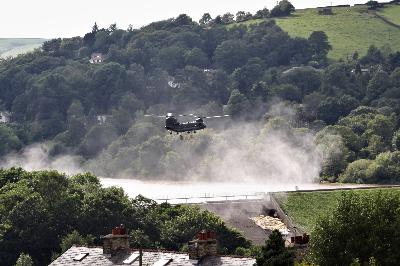
This month’s guests are WTW head of flood and water risk research Neil Gunn and WTW climate practice associate director Dulce Perez Romero.
They join rob to discuss where they sit in the civil engineering ecosystem when it comes to dam maintenance; working with asset owners on the risk of their dam fails and the liability should this happen.
The discussion touches on the history of dams, the status of dams in the world today, the increasing hazard of dam failure caused by climate change and some recent high profile failures.
They then get into the nitty gritty about how WTW assesses the risk of dam failure, how to prevent it – and how worried we should be about it.
Prior to the interview portion, host Rob Hakimian is joined by NCE senior reporter Thomas Johnson to discuss recent proposals for a £130bn high-speed Rail Loop around the UK and the political wrangling over the Hudson Tunnel in America.

Comments

Download from Google Play

Download from App Store
 United States