


 Claim Ownership
Problem Solved: The IISE Podcast
Subscribed: 84Played: 1,544
Subscribe

© 2025 IISE
Description
Conversations with industrial and systems engineers about their work, ideas and solutions. This podcast will feature both IISE members and non-members who come from diverse backgrounds in both academia and industry to discuss a wide range of topics as it relates to their work as well as some off-beat topics that we think you, our audience, will find fascinating.
256 Episodes
Reverse
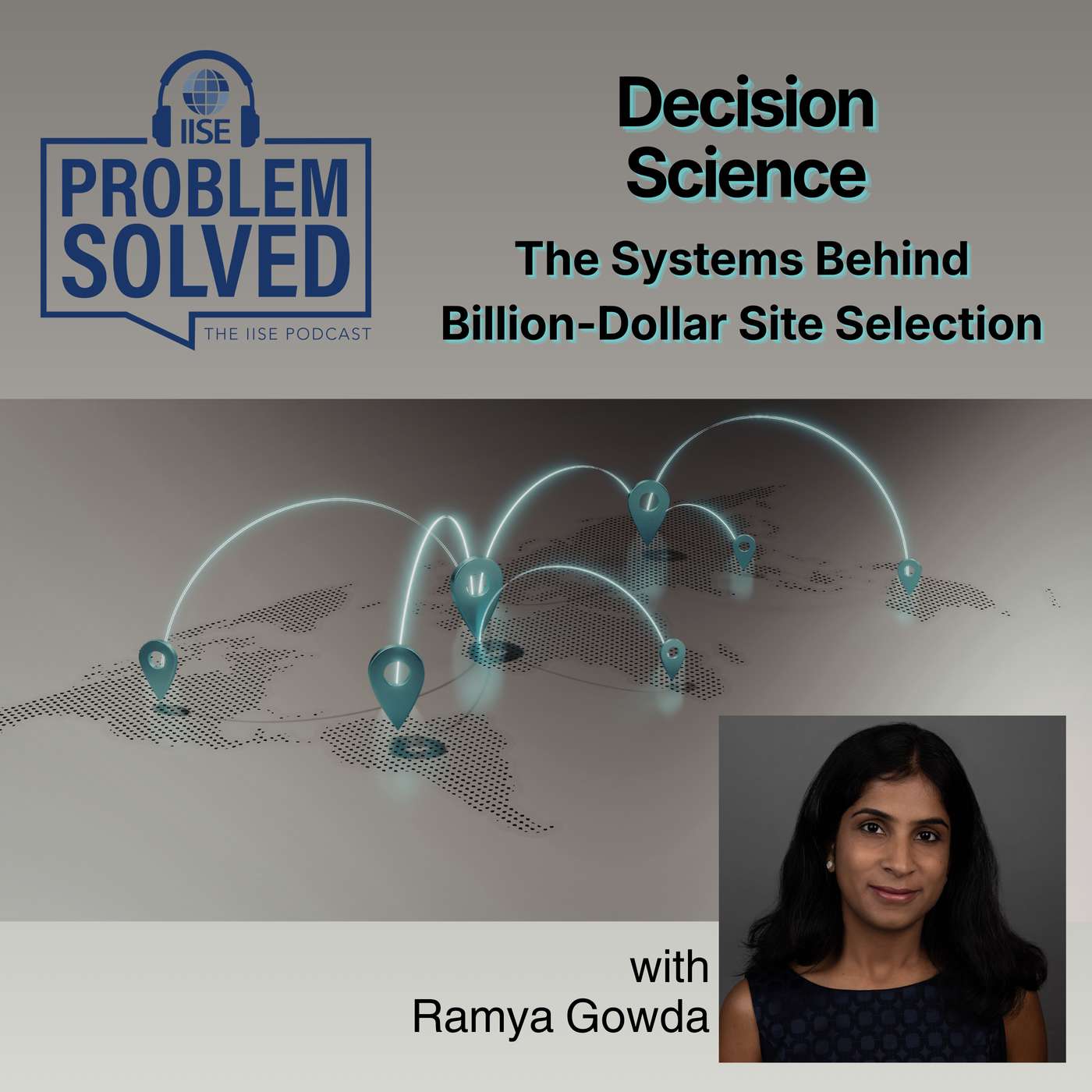
Decision Science: The Systems Behind Billion-Dollar Site Selection with Ramya GowdaWhen companies decide where to build, expand, or relocate, that single decision shapes everything that follows - hiring, productivity, supply chains, cost, and long-term risk.But how do organizations actually make those decisions?In this episode of Problem Solved, we sit down with Ramya Gowda, Managing Director at Newmark, where she leads strategic consulting in site selection, location strategy, and labor analytics. Ramya helps global corporations evaluate potential locations and make some of the most consequential decisions in their organizations.Using industrial and systems engineering principles, Ramya and her team apply decision science, data modeling, and systems thinking to compare locations across hundreds of factors, from workforce availability and infrastructure to logistics networks, environments, and long-term resilience.In this conversation, you’ll learn:• How companies evaluate potential locations for manufacturing plants, offices, and data centers • Why site selection is really an upstream systems decision that affects everything downstream • How decision models translate complex data into board-ready recommendations • Why relationships with communities and economic development organizations matter • The skills industrial engineers need to work in location strategy and consultingRamya also shares how industrial and systems engineering prepares professionals to solve complex problems across industries—not just in manufacturing.Read some of Ramay's articles:https://www.areadevelopment.com/corporate-site-selection-factors/q1-2026/the-geography-of-packaging-why-location-strategy-matters-more-than-ever.shtml https://www.areadevelopment.com/corporate-site-selection-factors/q3-2025/the-site-selection-corporate-checklist.shtml https://www.areadevelopment.com/manufacturing-industrial/q2-2025/get-your-mega-site-project-ready.shtmlLearn more about The Institute of Industrial and Systems Engineers (IISE)Problem Solved on LinkedInProblem Solved on YouTubeProblem Solved on InstagramProblem Solved on TikTokProblem Solved Executive Producer: Elizabeth GrimesInterested in contributing to the podcast or sponsoring an episode? Email egrimes@iise.org
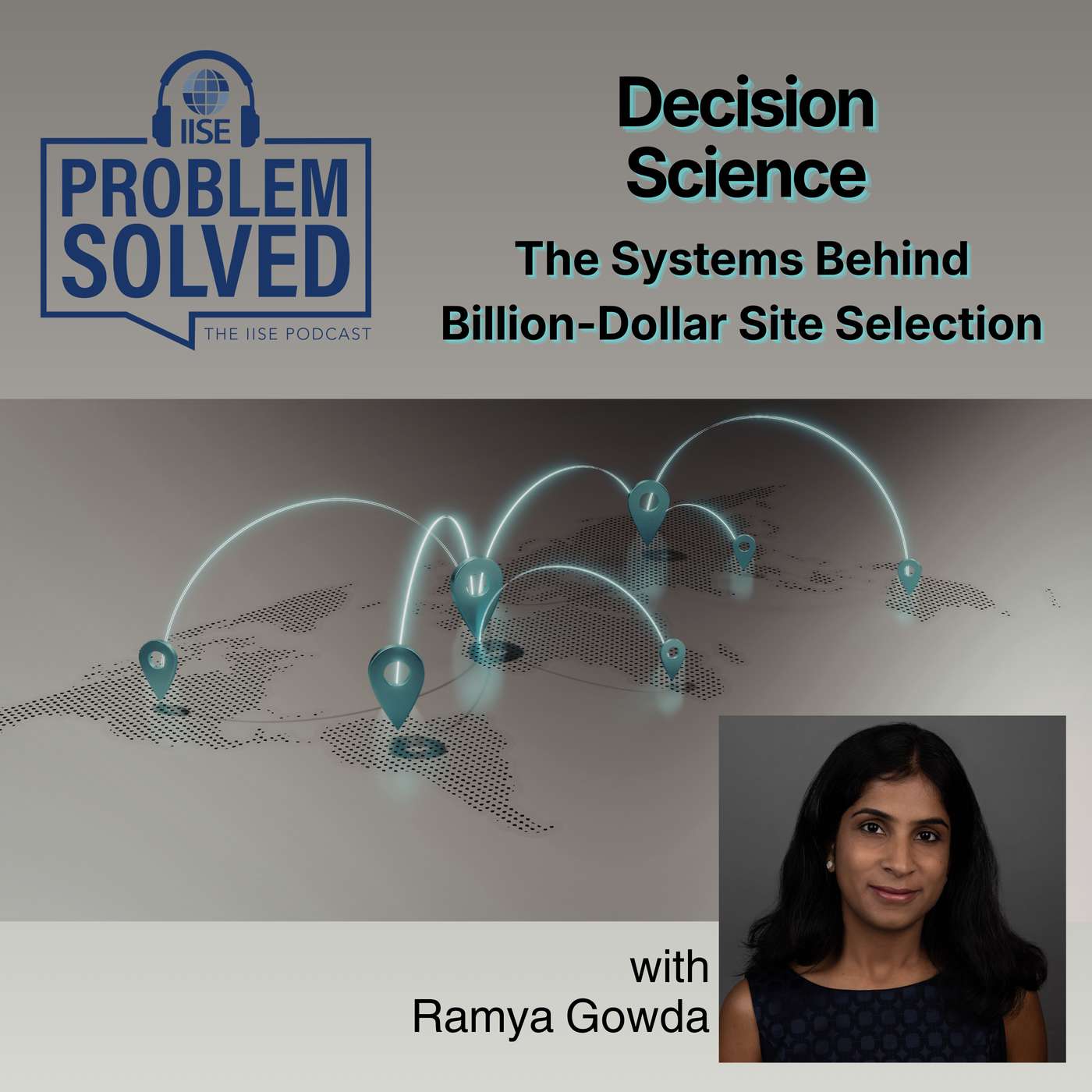
Decision Science: The Systems Behind Billion-Dollar Site Selection with Ramya GowdaWhen companies decide where to build, expand, or relocate, that single decision shapes everything that follows - hiring, productivity, supply chains, cost, and long-term risk.But how do organizations actually make those decisions?In this upcomiong episode of Problem Solved, we sit down with Ramya Gowda, Managing Director at Newmark, where she leads strategic consulting in site selection, location strategy, and labor analytics. Ramya helps global corporations evaluate potential locations and make some of the most consequential decisions in their organizations.Using industrial and systems engineering principles, Ramya and her team apply decision science, data modeling, and systems thinking to compare locations across hundreds of factors, from workforce availability and infrastructure to logistics networks, environments, and long-term resilience.Read some of Ramay's articles:https://www.areadevelopment.com/corporate-site-selection-factors/q1-2026/the-geography-of-packaging-why-location-strategy-matters-more-than-ever.shtml https://www.areadevelopment.com/corporate-site-selection-factors/q3-2025/the-site-selection-corporate-checklist.shtml https://www.areadevelopment.com/manufacturing-industrial/q2-2025/get-your-mega-site-project-ready.shtmlLearn more about The Institute of Industrial and Systems Engineers (IISE)Problem Solved on LinkedInProblem Solved on YouTubeProblem Solved on InstagramProblem Solved on TikTokProblem Solved Executive Producer: Elizabeth GrimesInterested in contributing to the podcast or sponsoring an episode? Email egrimes@iise.org
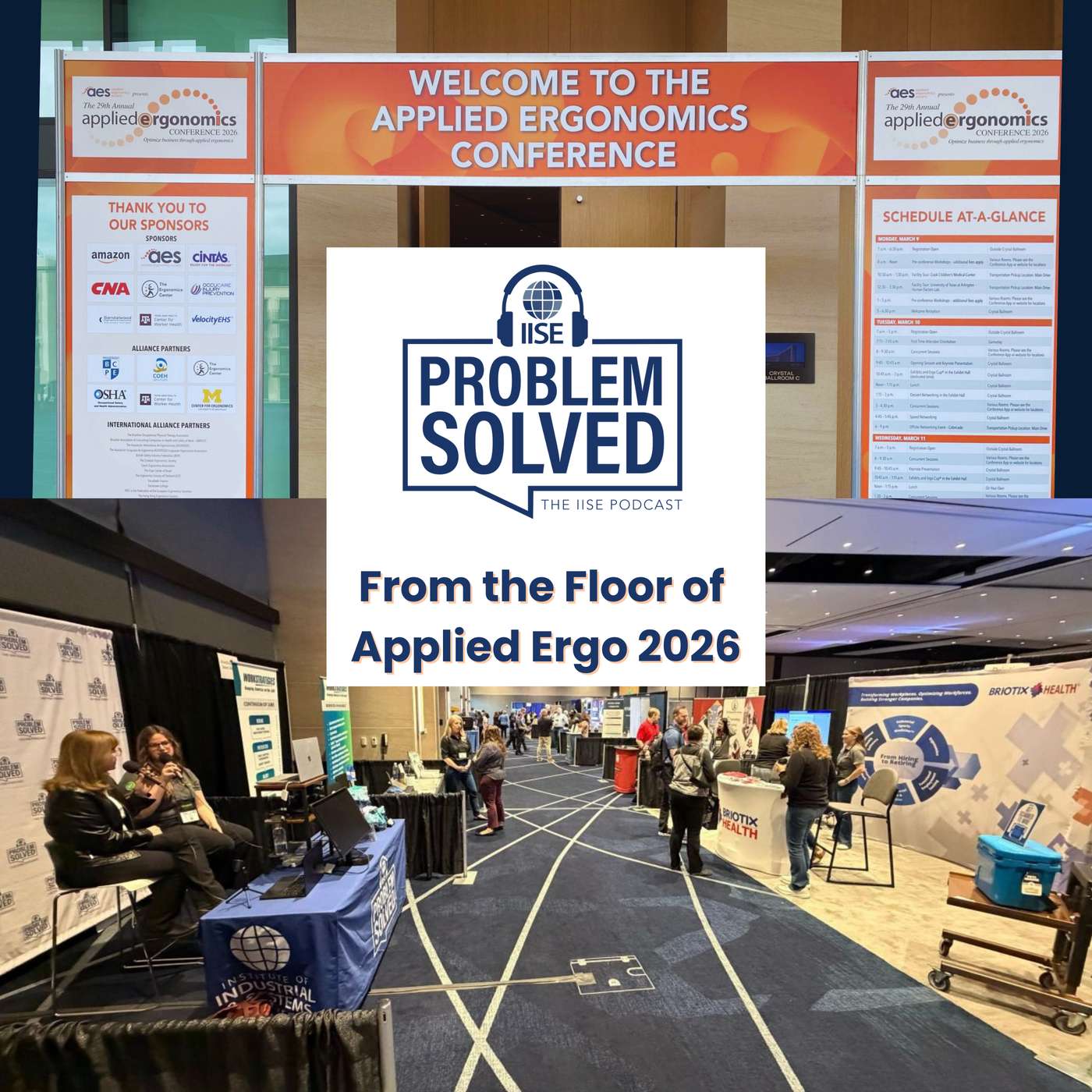
From the Floor of Applied Ergo 2026At the Applied Ergonomics Conference 2026, engineers, safety professionals, students, and leaders from across industries came together around one shared goal: improving the way people work.In this special episode of Problem Solved, we take you onto the floor of the conference through conversations with attendees, exhibitors, sponsors, volunteers, and Ergo Cup teams. Along the way, you’ll hear why ergonomics matters, what this community looks like, what people are learning, and how the field is evolving through new tools, AI, wearables, and worker-centered design.Great solutions don’t just come from data or technology. They come from listening to the people doing the work.And that leads us to the Ergo Cup, where real-world problems meet practical and inspiring solutions.And if you were at Applied Ergo, you might just hear yourself!Thank you to those who contributed on this episode, in order: Justin Kimel, Joe Michels, Abby McCoy, Nolan Audette, Maya Peleg, Madeline Shoot, Jena Peterson, Kristine Dungo, Julia Abate, Rachel Zoky, Kristianne Egbert, Lisa Brooks, Virgil Watson, David Clardy, Rose FigueroaApplied Ergonomics Conference sponsored by Applied Ergonomics SocietyLearn more about The Institute of Industrial and Systems Engineers (IISE)Problem Solved on LinkedInProblem Solved on YouTubeProblem Solved on InstagramProblem Solved on TikTokProblem Solved Executive Producer: Elizabeth GrimesInterested in contributing to the podcast or sponsoring an episode? Email egrimes@iise.org
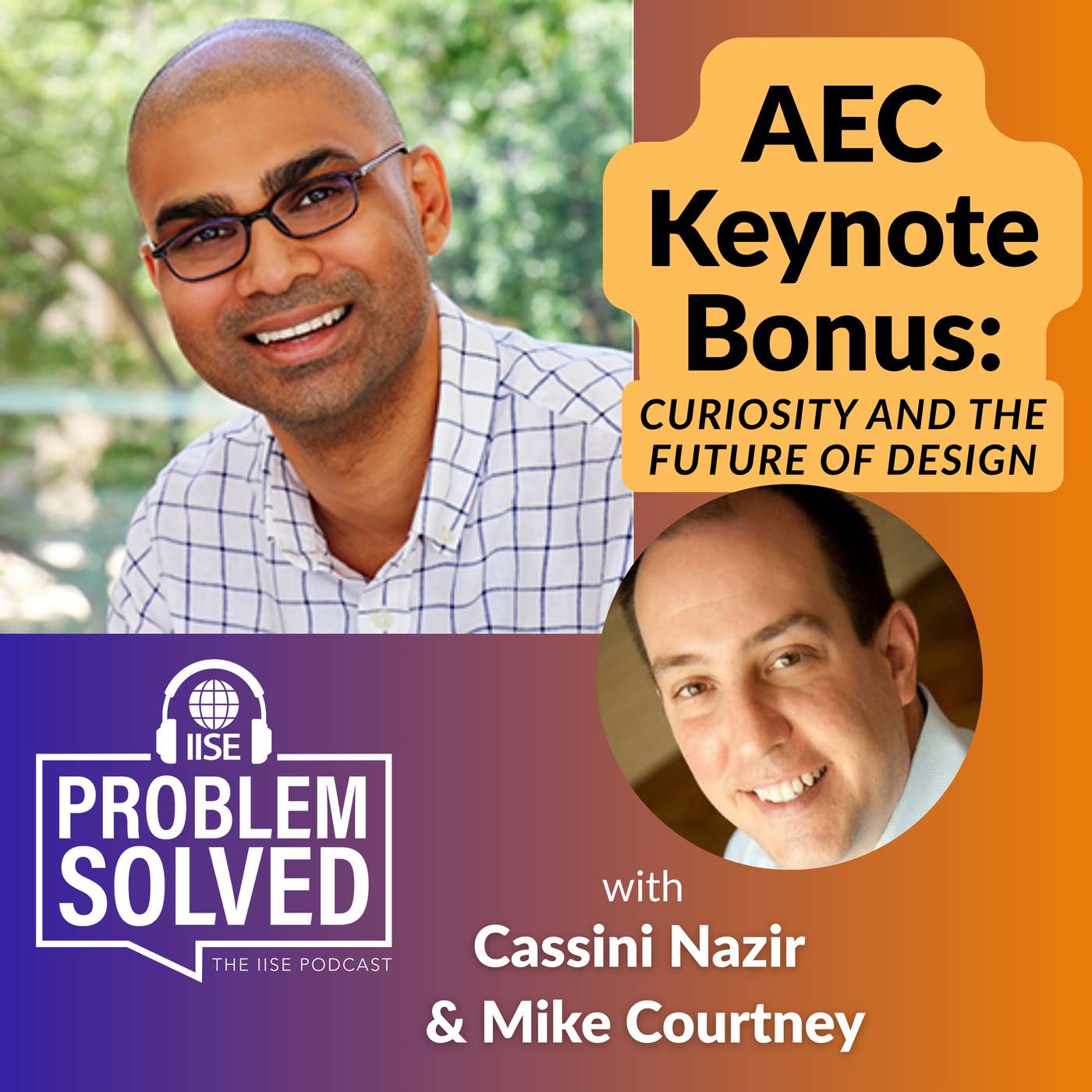
Right after his keynote at the Applied Ergonomics Conference, we had a chance to sit down with Cassini Nazir, an interaction designer and professor at the University of North Texas. In his talk, Cassini encouraged ergonomics professionals to think more intentionally about curiosity and how asking better questions and designing with empathy can improve the systems and experiences people rely on every day.And as it happened, his friend Mike Courtney was there too. Mike is a futurist who actually delivered the keynote at last year’s conference, so we talked with him about something many professionals are dealing with right now - the rapid pace of technological change and how to make decisions when things are evolving so quickly.Two quick conversations, both recorded at the Applied Ergonomics Conference, about curiosity, design, and navigating a changing world.This bonus episode was recorded live at the Applied Ergonomics Conference as part of Problem Solved LIVE.Every great solution is a story worth telling.Applied Ergonomics Conference sponsored by Applied Ergonomics SocietyLearn more about The Institute of Industrial and Systems Engineers (IISE)Problem Solved on LinkedInProblem Solved on YouTubeProblem Solved on InstagramProblem Solved on TikTokProblem Solved Executive Producer: Elizabeth GrimesInterested in contributing to the podcast or sponsoring an episode? Email egrimes@iise.org

Have you streamed this episode yet?In this special keynote spotlight episode of Problem Solved, IISE’s Frank Reddy sits down with Dr. Mark Benden, researcher, inventor of nearly 30 patents, and longtime leader in ergonomics innovation. With more than four decades of experience across military service, industry, and academia, Dr. Benden has helped generate over $2.5 billion in economic impact through human-centered design and workplace innovation.In this conversation, he shares:Join us for this inside look at one of AEC’s keynote voices. And don’t miss Problem Solved LIVE on-site at AEC, where we’ll be capturing insights from innovators shaping the future of ergonomics.Applied Ergonomics Conference sponsored by Applied Ergonomics SocietyLearn more about The Institute of Industrial and Systems Engineers (IISE)Problem Solved on LinkedInProblem Solved on YouTubeProblem Solved on InstagramProblem Solved on TikTokProblem Solved Executive Producer: Elizabeth GrimesInterested in contributing to the podcast or sponsoring an episode? Email egrimes@iise.org

In this special keynote spotlight episode of Problem Solved, IISE’s Frank Reddy sits down with Dr. Mark Benden, researcher, inventor of nearly 30 patents, and longtime leader in ergonomics innovation. With more than four decades of experience across military service, industry, and academia, Dr. Benden has helped generate over $2.5 billion in economic impact through human-centered design and workplace innovation.In this conversation, he shares:How everyday frustration becomes inventionWhy “nuisance is the father of invention”How AI, motion capture, and wearables are transforming worker healthThe shift from injury response to real-time preventionAnd how to take ergonomic improvements from idea, to protection, to commercializationJoin us for this inside look at one of AEC’s keynote voices. And don’t miss Problem Solved LIVE on-site at AEC, where we’ll be capturing insights from innovators shaping the future of ergonomics.Applied Ergonomics Conference sponsored by Applied Ergonomics SocietyLearn more about The Institute of Industrial and Systems Engineers (IISE)Problem Solved on LinkedInProblem Solved on YouTubeProblem Solved on InstagramProblem Solved on TikTokProblem Solved Executive Producer: Elizabeth GrimesInterested in contributing to the podcast or sponsoring an episode? Email egrimes@iise.org
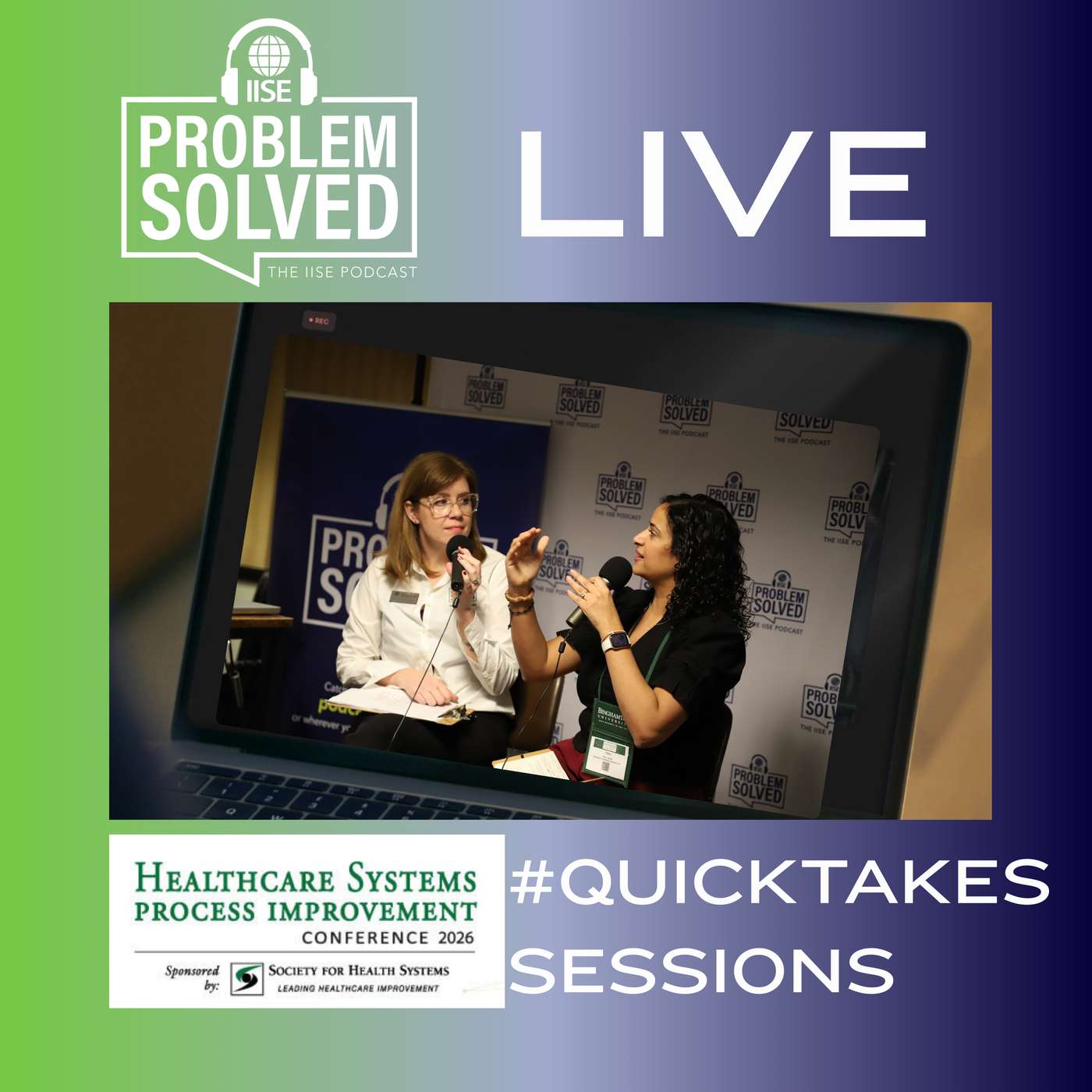
HSPI QuickTakes SessionsThis episode of Problem Solved was recorded live at the Healthcare Systems Process Improvement (HSPI) Conference, straight from the Problem Solved LIVE booth!Throughout the week, we spoke with healthcare engineers, executives, students, researchers, exhibitors, and improvement leaders about what’s shaping the future of healthcare systems.You’ll hear:· Why AI dominated this year’s conversations· How improvement professionals are bridging technology and human factors· Why mentorship and student engagement matter more than ever· How cross-industry thinking (manufacturing, energy, data science) is influencing healthcare· What attendees are taking back to their organizations immediately· And what’s already in motion for HSPI next yearOne theme was clear: Technology is accelerating. But people - leadership, trust, change management, human-centered design - remain at the core.If you couldn’t attend HSPI this year, this episode brings the conference floor to you. If you were there, you might just hear your own voice!Subscribe so you never miss what’s next.Every great solution is a story worth telling. HSPI Conference sponsored by Society for Health SystemsLearn more about The Institute of Industrial and Systems Engineers (IISE)Problem Solved on LinkedInProblem Solved on YouTubeProblem Solved on InstagramProblem Solved on TikTokProblem Solved Executive Producer: Elizabeth GrimesInterested in contributing to the podcast or sponsoring an episode? Email egrimes@iise.org
If you haven't streamed the full episode yet, make sure you don't miss it.Optimizing for Meaning: What Industrial Engineering Teaches Us About Balance and BurnoutIn this thoughtful and refreshingly honest conversation, Aly Kamel, an industrial and management engineering student at the Arab Academy for Science and Technology, explores how core industrial engineering principles like input-process-output, value-added analysis, and constraint management can be applied to something far more personal: balance, burnout, and sustainable ambition.Aly challenges the idea that success means maximizing output at all costs. Instead, he reframes burnout not as a personal failure, but as a predictable system outcome, and one that can be redesigned.Industrial engineering isn’t just about factories and supply chains. It’s a mindset for designing systems that last.And the most important system you’ll ever design… might be yourself.Learn more about The Institute of Industrial and Systems Engineers (IISE)Problem Solved on LinkedInProblem Solved on YouTubeProblem Solved on Instagram
Optimizing for Meaning: What Industrial Engineering Teaches Us About Balance and BurnoutWe talk a lot on Problem Solved about optimizing systems, improving processes, and designing better organizations.But what happens when the system you’re trying to design… is your own life?In this thoughtful and refreshingly honest conversation, Aly Kamel, an industrial and management engineering student at the Arab Academy for Science and Technology, explores how core industrial engineering principles like input-process-output, value-added analysis, and constraint management can be applied to something far more personal: balance, burnout, and sustainable ambition.Aly challenges the idea that success means maximizing output at all costs. Instead, he reframes burnout not as a personal failure, but as a predictable system outcome, and one that can be redesigned.Together, we discuss:Why high achievers are especially prone to burnoutHow “value-added” thinking applies to your daily lifeThe difference between intensity and sustainabilityWhy constraints should be treated as design inputs, not weaknessesAnd how to optimize for meaning — not just productivityIndustrial engineering isn’t just about factories and supply chains. It’s a mindset for designing systems that last.And the most important system you’ll ever design… might be yourself.Learn more about The Institute of Industrial and Systems Engineers (IISE)Problem Solved on LinkedInProblem Solved on YouTubeProblem Solved on InstagramProblem Solved on TikTokProblem Solved Executive Producer: Elizabeth GrimesInterested in contributing to the podcast or sponsoring an episode? Email egrimes@iise.org
This week’s episode is a special bonus preview of what’s coming next on Problem Solved.We’re heading to the Healthcare Systems Process Improvement Conference with Problem Solved LIVE, where we'll have an onsite booth. We'll be capturing real-time insights from attendees, speakers, and leaders across healthcare systems engineering.Hear what’s coming up at HSPI, how you can get involved, and details about our live interviews and social media giveaway.If you’re attending HSPI, stop by the Problem Solved LIVE booth and be part of the conversation. If you’re not, follow along as we bring the conference experience directly to you. Follow Problem Solved on Instagram and YouTube now!📍 Feb 11–13 | Atlanta, GA 🎙️ Problem Solved LIVELearn more about The Institute of Industrial and Systems Engineers (IISE)Problem Solved on LinkedInProblem Solved on YouTubeProblem Solved on InstagramProblem Solved on TikTok
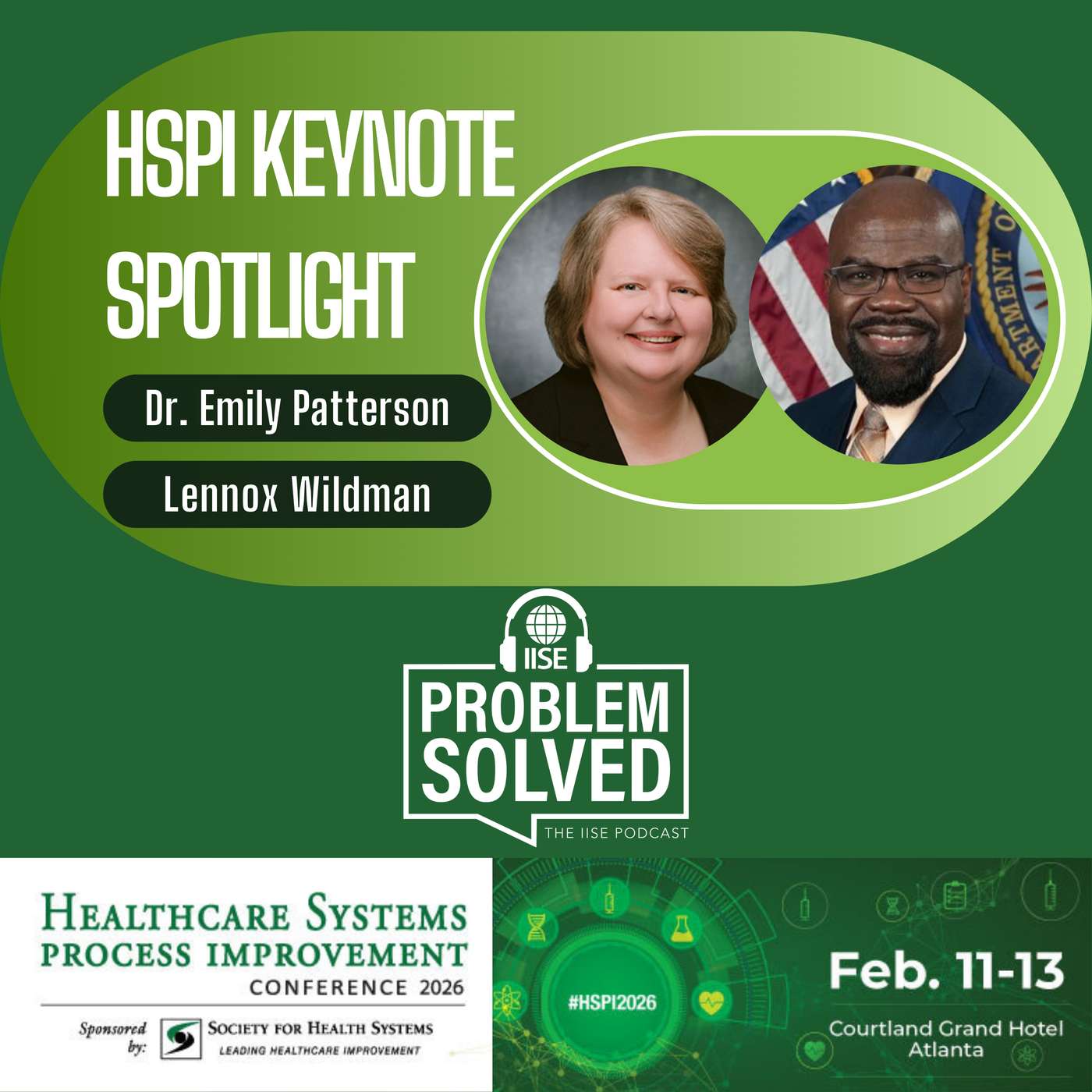
HSPI Keynote Spotlight: Inside conversations with Dr. Patterson and Lennox Wildman"In this special HSPI Keynote Spotlight episode of Problem Solved, listeners are invited inside conversations with Dr. Emily Patterson and Lennox Wildman, two leaders shaping the future of healthcare systems improvement. The episode explores how technology, workflows, and people come together to drive safer, more effective care. Through practical insights and real-world examples, these thoughtful conversations highlight how industrial and systems engineering principles are being applied to strengthen healthcare delivery and support the professionals who make it possible. Don't miss the full keynotes talks from these professionals at the HSPI Conference sponsored by Society for Health Systems!Learn more about The Institute of Industrial and Systems Engineers (IISE)Problem Solved on LinkedInProblem Solved on YouTubeProblem Solved on InstagramProblem Solved on TikTokProblem Solved Executive Producer: Elizabeth GrimesInterested in contributing to the podcast or sponsoring an episode? Email egrimes@iise.org
Elections are one of the most complex systems we rely on. They're decentralized, human-driven, time-critical, and under constant scrutiny. And while hundreds of decisions are made under the surface, most of us only see the final result.In this episode of Problem Solved, IISE’s Keith Albertson sits down with Dr. Natalie Scala of Towson University to explore the systems behind the ballot and how industrial and systems engineers are strengthening elections.From polling places to poll worker support, supply chains and trust in outcomes, Dr. Scala explains how classic ISE tools are being applied to one of the most consequential systems in society all while remaining nonpartisan.This conversation goes beyond politics and into process, people, and design.https://www.drnataliescala.com/Natalie M. Scala, Ph.D., is a professor and professor and cyber fellow in the College of Business and Economics at Towson University and co-director of the Empowering Secure Elections research lab. She is a faculty affiliate at the University of Maryland Applied Research Lab for Intelligence and Security, and has shared her expertise, research and work regarding elections security in conference presentations, articles for ISE Magazine and a Season 1 episode of Problem Solved in 2020.Learn more about The Institute of Industrial and Systems Engineers (IISE)Problem Solved on LinkedInProblem Solved on YouTubeProblem Solved on InstagramProblem Solved on TikTokProblem Solved Executive Producer: Elizabeth GrimesInterested in contributing to the podcast or sponsoring an episode? Email egrimes@iise.org
Elections are one of the most complex systems we rely on. They're decentralized, human-driven, time-critical, and under constant scrutiny. And while hundreds of decisions are made under the surface, most of us only see the final result.In this upcoming episode of Problem Solved, IISE’s Keith Albertson sits down with Dr. Natalie Scala of Towson University to explore the systems behind the ballot and how industrial and systems engineers are strengthening elections.From polling places to poll worker support, supply chains and trust in outcomes, Dr. Scala explains how classic ISE tools are being applied to one of the most consequential systems in society all while remaining nonpartisan.This conversation goes beyond politics and into process, people, and design.https://www.drnataliescala.com/Natalie M. Scala, Ph.D., is a professor and professor and cyber fellow in the College of Business and Economics at Towson University and co-director of the Empowering Secure Elections research lab. She is a faculty affiliate at the University of Maryland Applied Research Lab for Intelligence and Security, and has shared her expertise, research and work regarding elections security in conference presentations, articles for ISE Magazine and a Season 1 episode of Problem Solved in 2020.Learn more about The Institute of Industrial and Systems Engineers (IISE)Problem Solved on LinkedInProblem Solved on YouTubeProblem Solved on InstagramProblem Solved on TikTokProblem Solved Executive Producer: Elizabeth GrimesInterested in contributing to the podcast or sponsoring an episode? Email egrimes@iise.org
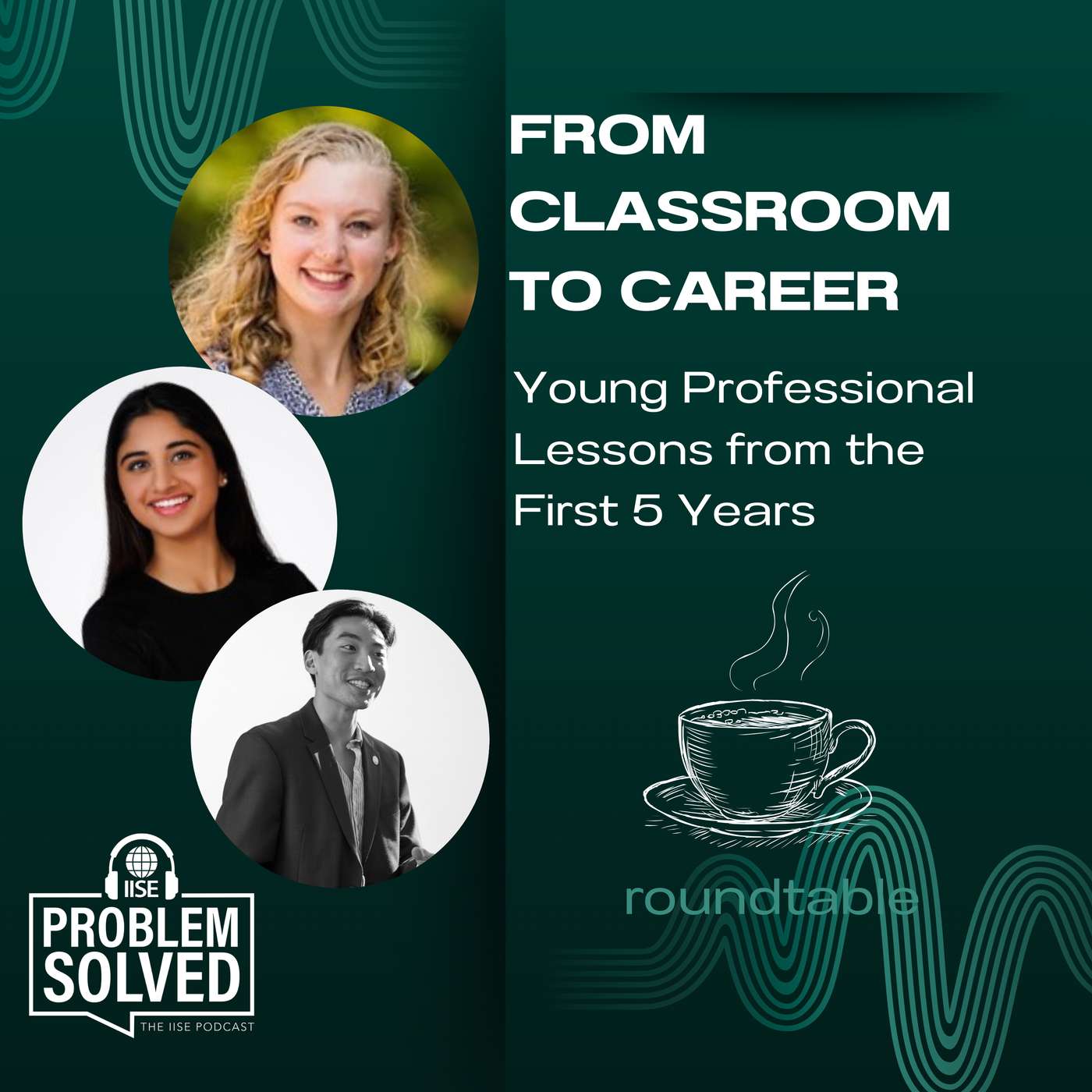
From Classroom to Career: Young Professional Lessons from the First Five YearsThe first five years of your career can feel like a crash course in the real world. One moment you’re confident in your coursework, and the next you’re navigating ambiguity, imposter syndrome, and expectations no syllabus ever prepared you for.In this episode of Problem Solved, we sit down with three IISE Young Professionals — Helen Siegrist, President of IISE Young Professionals, Jessica Aujla, and Gordon Quach — for an honest, roundtable conversation about what it actually looks like to transition from the classroom to the workforce.Together, they reflect on:The transition and shock of the first year out of schoolFinding your footing and earning trust in years two and threeGrowing confidence, leadership, and career direction in years four and fiveNavigating imposter syndrome, mentorship, and professional identityHow IISE and the Young Professionals community can support growth along the wayThis episode isn’t about having all the answers — it’s about learning through experience, community, and reflection. Whether you’re a student, a recent graduate, or early in your professional journey, this conversation offers perspective, reassurance, and practical insight from those who’ve been there.🎙️ Problem Solved — real conversations about industrial & systems engineering in practice.Learn more about IISE Young Professionals here and on LinkedIn.Learn more about The Institute of Industrial and Systems Engineers (IISE)Problem Solved on LinkedInProblem Solved on YouTubeProblem Solved on InstagramProblem Solved on TikTokProblem Solved Executive Producer: Elizabeth GrimesInterested in contributing to the podcast or sponsoring an episode? Email egrimes@iise.org
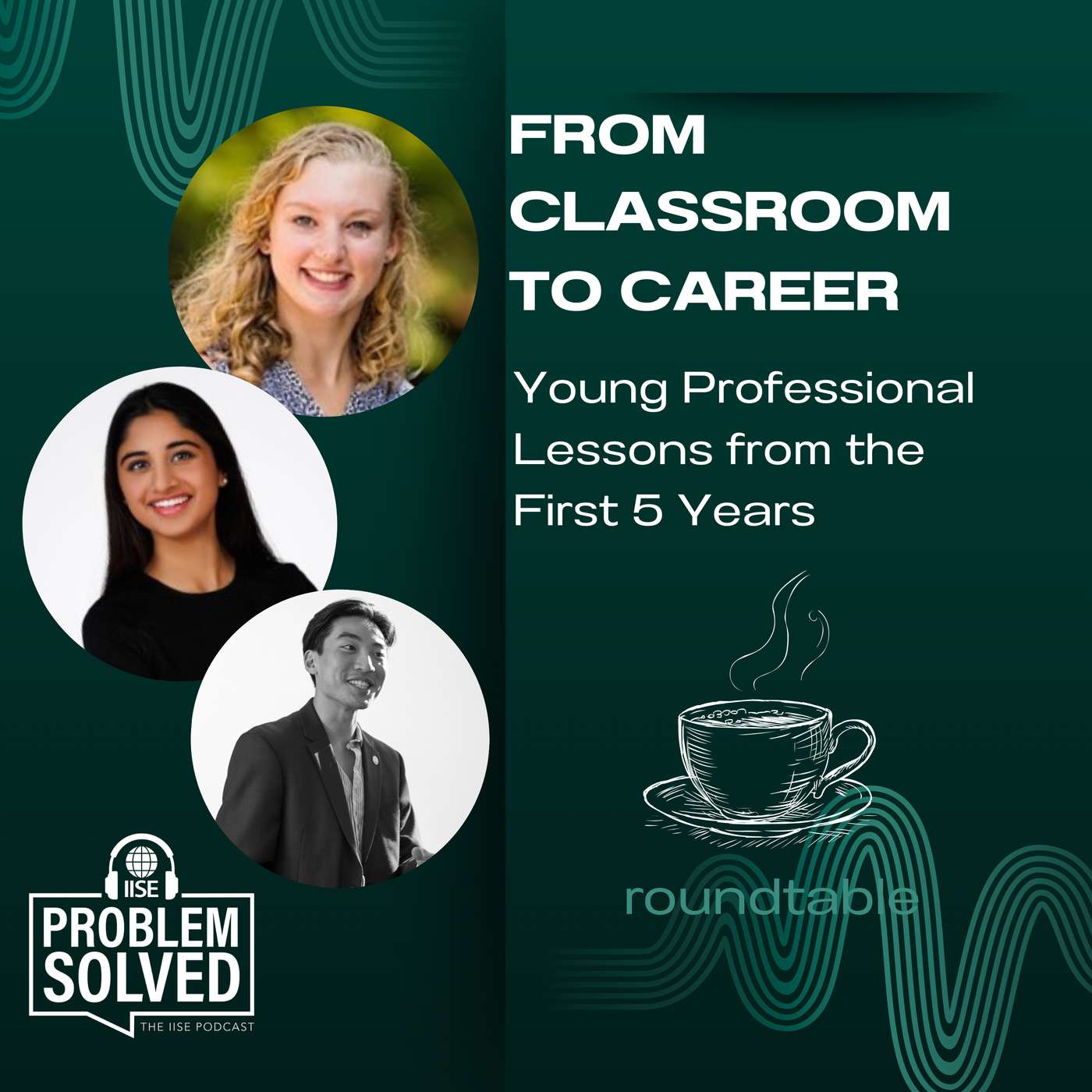
The first five years of your career can feel confusing, unstructured, and overwhelming — even for high-performing industrial and systems engineers.In this trailer for an upcoming episode of Problem Solved, IISE Young Professionals Jess Aujla, Helen Siegrist, and Gordon Quach share candid reflections on what it really feels like to move from the classroom into the workforce — from losing the structure of school, to finding confidence, setting boundaries, and learning how to grow without burning out.If you’re early in your career — or mentoring someone who is — this conversation will feel familiar.🎙️ Full episode drops next week. Subscribe now so you don’t miss it.Learn more about IISE Young Professionals here and on LinkedIn.Learn more about The Institute of Industrial and Systems Engineers (IISE)Problem Solved on LinkedInProblem Solved on YouTubeProblem Solved on InstagramProblem Solved on TikTokProblem Solved Executive Producer: Elizabeth GrimesInterested in contributing to the podcast or sponsoring an episode? Email egrimes@iise.org

🎅✨ Here’s the problem: Santa’s operation defies all logic. One night. Billions of deliveries. Zero defects. A global supply chain that never misses a deadline.So…what if Santa is an industrial and systems engineer?In this festive special of Problem Solved, IISE members and volunteers share short, creative voice memos imagining how Santa’s North Pole operation uses IE/ISE tools—from logistics optimization to quality management, ergonomics, capacity planning, predictive analytics, Just-In-Time systems, continuous improvement, facility layout, human factors, and more.You’ll hear six fun, clever, and surprisingly insightful takes on Santa’s world-class system—including: 🎁 Why Santa’s naughty-or-nice list is really a data governance process 🎁 How his workshop rivals Amazon 🎁 How ergonomics keeps the elves injury-free for 500+ years 🎁 Why Santa’s sleigh route is the ultimate Traveling Salesman Problem 🎁 Lean Six Sigma at the North Pole 🎁 And—what the Grinch, Jack Skellington, and Santa can teach us about operationsThen we wrap it all up with a special story from IISE CEO Don Greene, who shares the tale of the Christmas Eve when Santa called IISE for help…and how industrial engineers saved the holiday.Whether you’re an ISE, a student, a Santa enthusiast, or someone who loves a good systems-thinking twist, this episode is full of joy, clever insights, and holiday magic—the ISE way.🎄 Happy Holidays from all of us at IISE and Problem Solved!Thank you to our guests who shared their creativity with us! Ali Anderson, Gordon Quach, Kristine Dungo, Madeline Shoot, Laura Albert, Ashley Benedict, and Don Greene! 🎧 Listen now, share with a colleague, and spread some IE cheer.Learn more about The Institute of Industrial and Systems Engineers (IISE)Problem Solved on LinkedInProblem Solved on YouTubeProblem Solved on InstagramProblem Solved on TikTokProblem Solved Executive Producer: Elizabeth GrimesInterested in contributing to the podcast or sponsoring an episode? Email egrimes@iise.org
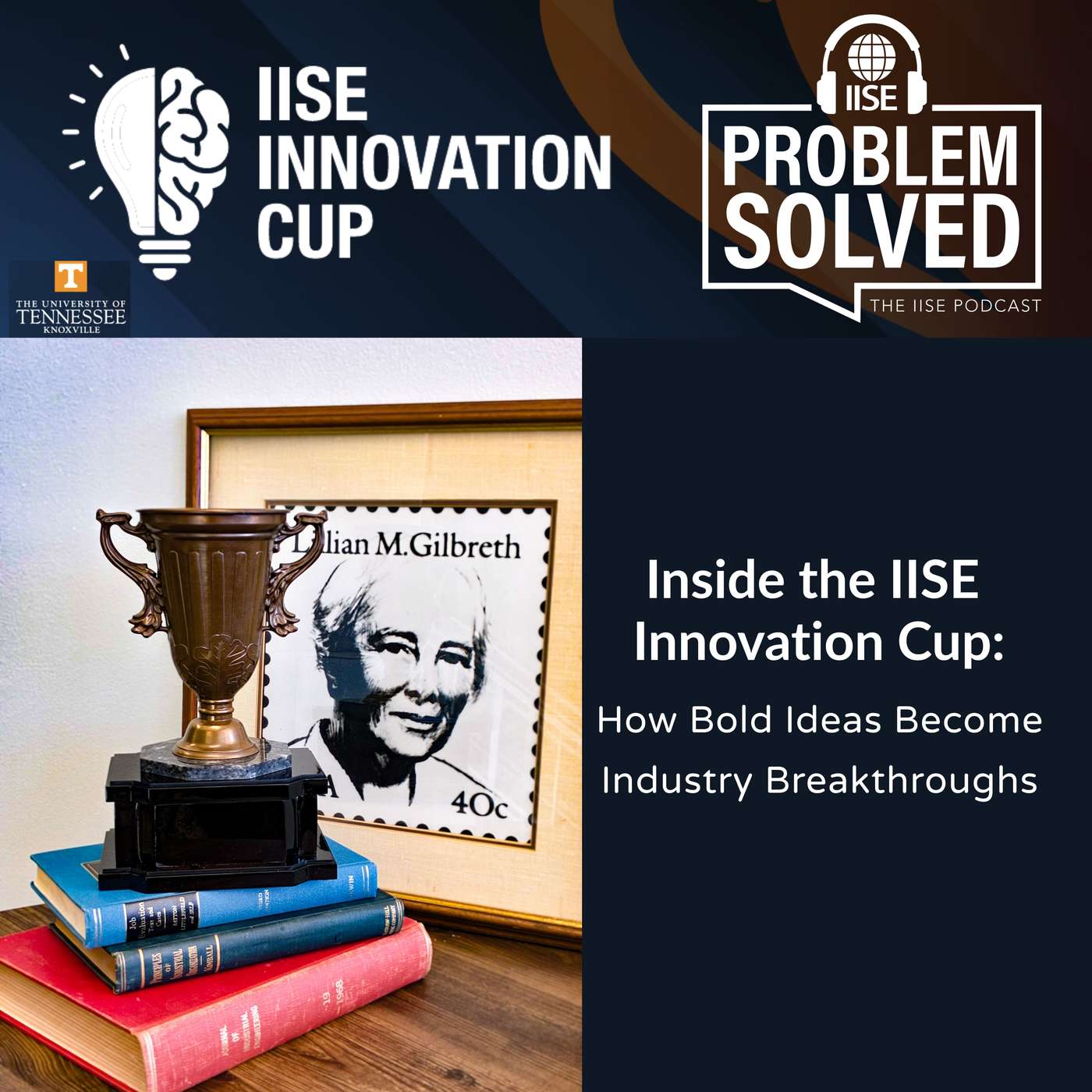
Across industries, teams are solving massive, complex challenges — but too often, those breakthroughs stay hidden inside their organizations. The IISE Innovation Cup, sponsored by the University of Tennessee Knoxville, changes that. It gives teams a global stage to showcase measurable results, real-world impact, and the power of industrial and systems engineering in action.In this episode of Problem Solved, we take you inside the Innovation Cup- what it is, why it matters, and what great innovation truly looks like.You’ll hear from: • Tom Mazzone, Innovation Cup committee member, on why the Cup exists and how it elevates ISE work • Aniket Ramekar (Mayo Clinic), on the digital door-sign project that transformed clinical workflows • Rishabh Bhandawat (Smurfit WestRock), on optimizing spare-parts inventory • Bill Harrington, Innovation Cup committee member, on the criteria that separate a good project from a great oneWhether you work in healthcare, manufacturing, supply chain, aerospace, or continuous improvement, this episode will inspire you to look at your systems in a new way — and maybe even submit your own project.Submissions for the IISE Innovation Cup are now open.Learn more about the IISE Innovation Cup.Bill Harrington's unedited interview on IISE Innovation Cup judging criteria:https://youtu.be/fHlwnq74HqwMake sure you subscribe to Problem Solved so you never miss an episode!Learn more about The Institute of Industrial and Systems Engineers (IISE)Problem Solved on LinkedInProblem Solved on YouTubeProblem Solved on InstagramProblem Solved on TikTokProblem Solved Executive Producer: Elizabeth GrimesInterested in contributing to the podcast or sponsoring an episode? Email egrimes@iise.org
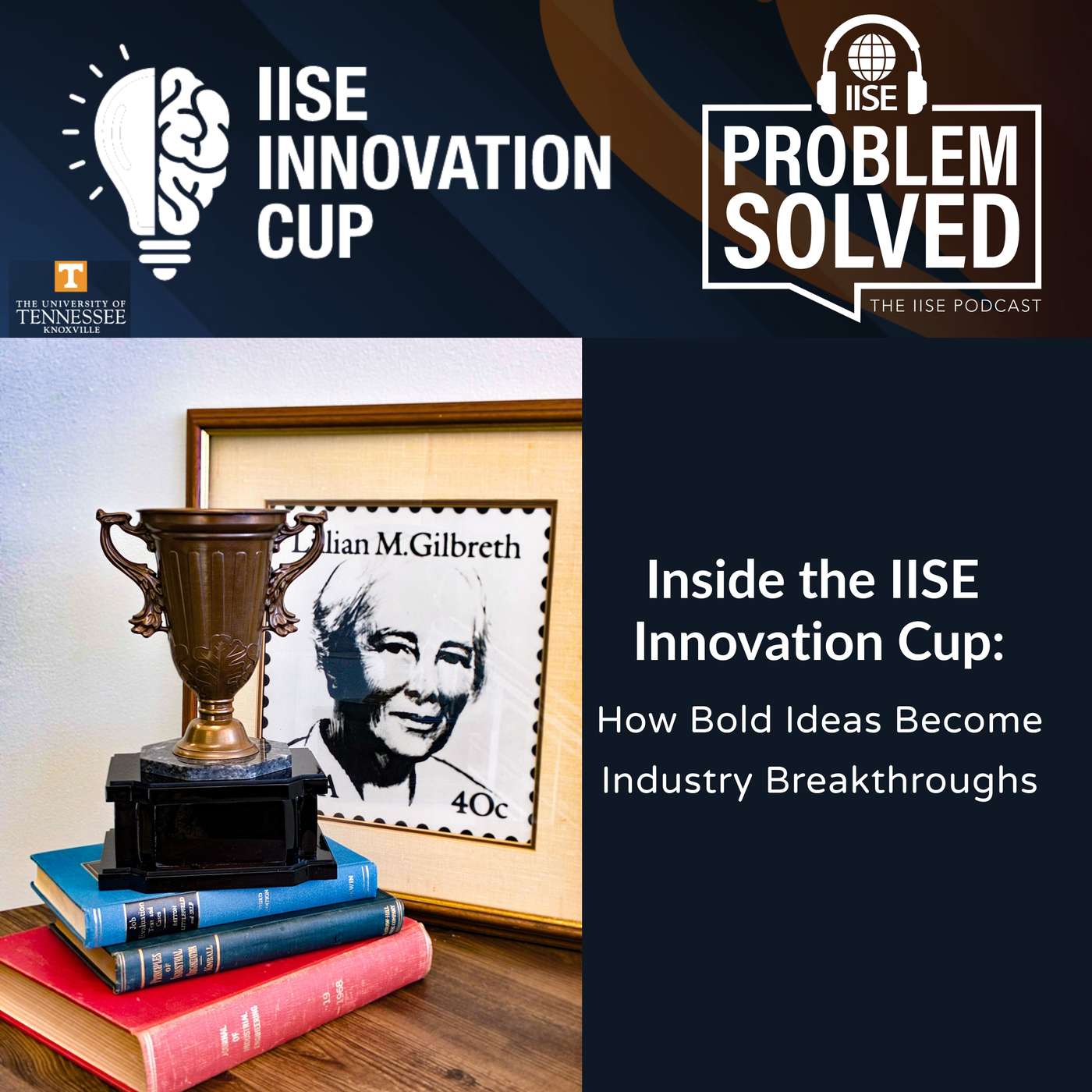
Go behind the scenes of the IISE Innovation Cup, one of the most impactful showcases of industrial and systems engineering innovation. Hear from: • Tom Mazzone – Why the Cup exists • Aniket Ramekar – Gold Award winner • Rishabh Bhandawat – Silver Award winner • Bill Harrington – What judges look forDiscover how teams across industries are solving complex challenges — and what it takes to stand out.Make sure you subscribe to Problem Solved so you never miss an episode!Learn more about the IISE Innovation Cup.Learn more about The Institute of Industrial and Systems Engineers (IISE)Problem Solved on LinkedInProblem Solved on YouTubeProblem Solved on InstagramProblem Solved on TikTokProblem Solved Executive Producer: Elizabeth GrimesInterested in contributing to the podcast or sponsoring an episode? Email egrimes@iise.org
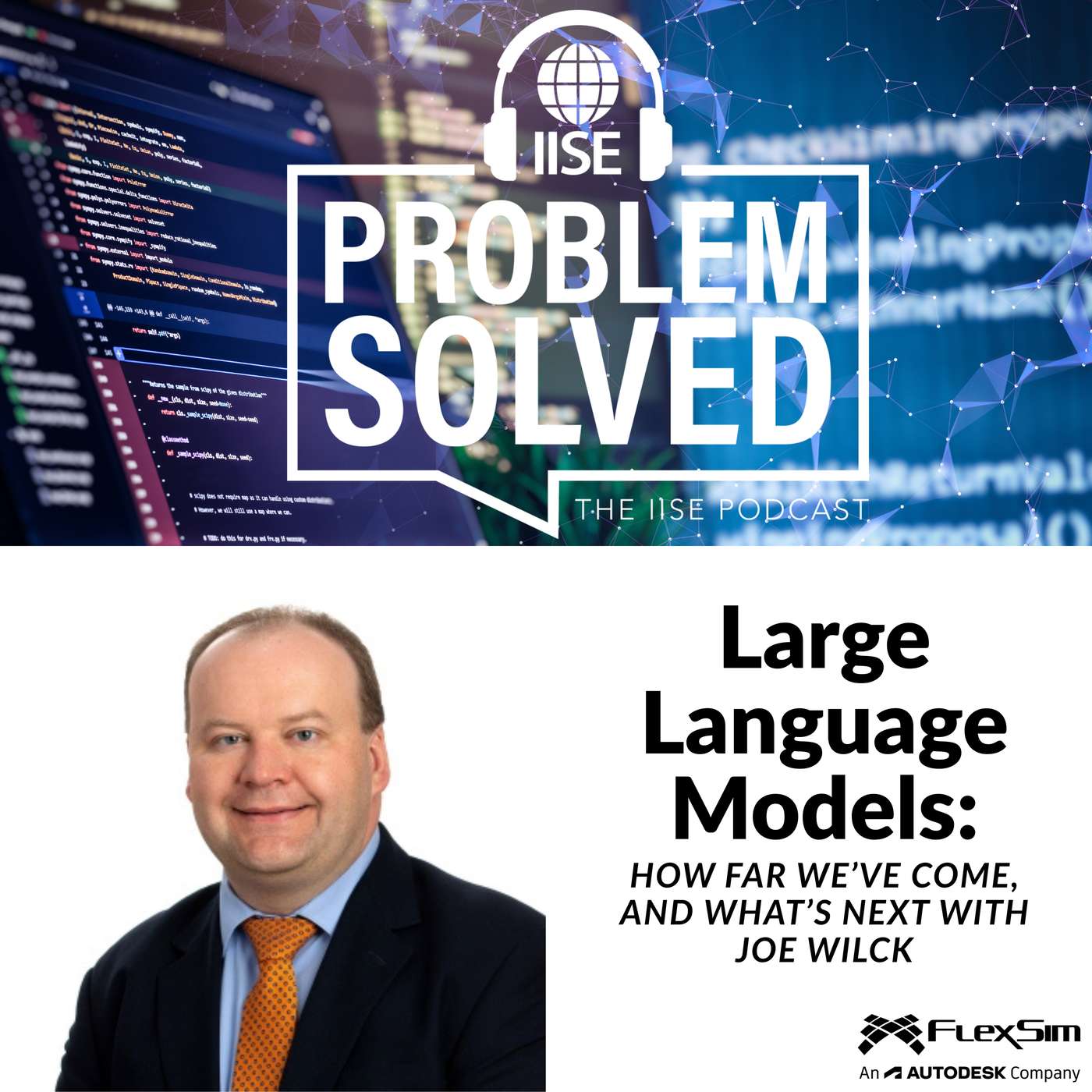
Large language models aren’t just improving — they’re transforming how we work, learn, and make decisions. In this upcoming episode of Problem Solved, IISE’s David Brandt talks with Bucknell University’s Dr. Joe Wilck about the true state of LLMs after the first 1,000 days: what’s gotten better, what’s still broken, and why critical thinking matters more than ever.Thank you to this episode's sponsor, Autodesk FlexSimhttps://www.autodesk.com/https://www.flexsim.com/Learn more about The Institute of Industrial and Systems Engineers (IISE)Problem Solved on LinkedInProblem Solved on YouTubeProblem Solved on InstagramProblem Solved on TikTokProblem Solved Executive Producer: Elizabeth GrimesInterested in contributing to the podcast or sponsoring an episode? Email egrimes@iise.org
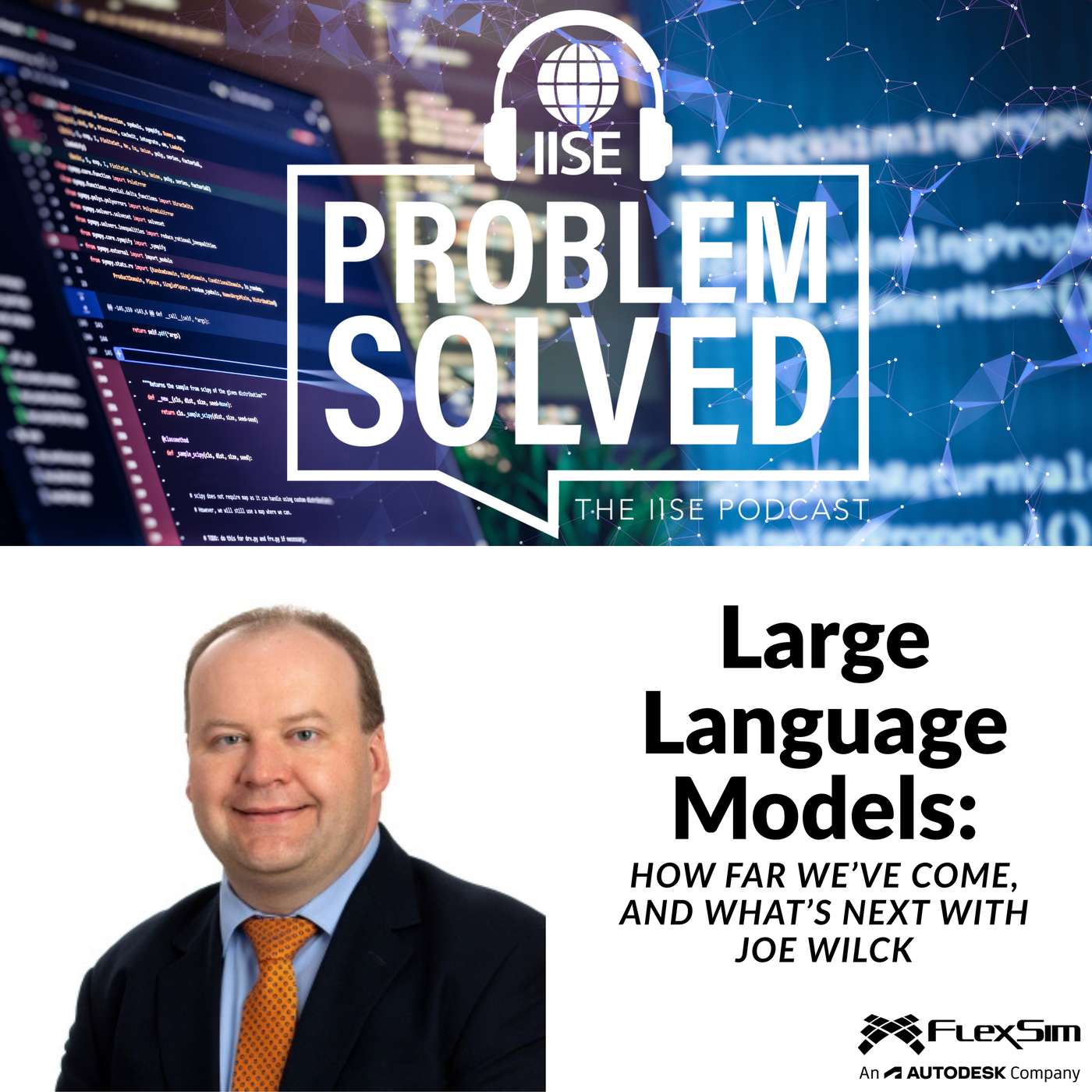
Large language models aren’t just improving — they’re transforming how we work, learn, and make decisions. In this upcoming episode of Problem Solved, IISE’s David Brandt talks with Bucknell University’s Dr. Joe Wilck about the true state of LLMs after the first 1,000 days: what’s gotten better, what’s still broken, and why critical thinking matters more than ever.Sponsored by Autodesk FlexSimLearn more about The Institute of Industrial and Systems Engineers (IISE)Problem Solved on LinkedInProblem Solved on YouTubeProblem Solved on InstagramProblem Solved on TikTokProblem Solved Executive Producer: Elizabeth GrimesInterested in contributing to the podcast or sponsoring an episode? Email egrimes@iise.org


Download from Google Play

Download from App Store
 United States
I may be in the minority, but I think the Chick-FIL-A drive thru is a cluster. The wrap around line, iPad ordering and outside cashier seem to be bottlenecks at my local store. When I heard that they actually have IEs, I was in shock. I tell my wife everytime we go that they should've consulted with some IEs
really interesting conversation!!