


 Claim Ownership
Diabetics Doing Things Podcast
Subscribed: 188Played: 3,539
Subscribe

Description
Hosted by T1D Rob Howe, Diabetics Doing Things tells amazing stories of people with diabetes from across the globe, digging deep into everything it takes to Live Well with Diabetes and sharing exciting adventures along the way.
387 Episodes
Reverse

At 19, Justin Gregory was a cadet at the Air Force Academy. He was flying gliders, teaching other cadets to fly and training to become a fighter pilot. Then he was diagnosed with type 1 diabetes. In 2001, that meant his Air Force career was over. Today Dr. Gregory is a board-certified pediatric endocrinologist and the field medical director for autoimmune type 1 diabetes at Sanofi. Before that, he spent about 15 years as a physician scientist at Vanderbilt University. Rob and Justin talk about the depression that followed his diagnosis, the 12-year-old who told him it would get easier, and the endocrinologist who showed him what a good doctor can do. Justin shares how he times exercise around his insulin and admits he still forgets to pre-bolus sometimes. They also talk about screening for type 1 autoantibodies. Justin explains why he wants patients to get a "soft landing" instead of a diagnosis in the ICU with DKA. He says more adults than kids are diagnosed with type 1 each year in the US, and he shares how families can bring up screening over the holidays. In this episode: - Losing a fighter pilot dream to a T1D diagnosis at the Air Force Academy - The advice a 12-year-old with T1D sent him through his mom - His first JDRF (now Breakthrough T1D) walk in Kingsport, Tennessee - Timing exercise for when insulin levels are low - Why adults should think about screening too - How Justin says screening can lower the chance of a DKA diagnosis - Starting the screening talk with family at Thanksgiving or Christmas This episode is for information only and is not medical advice. Talk to your doctor about type 1 diabetes screening.
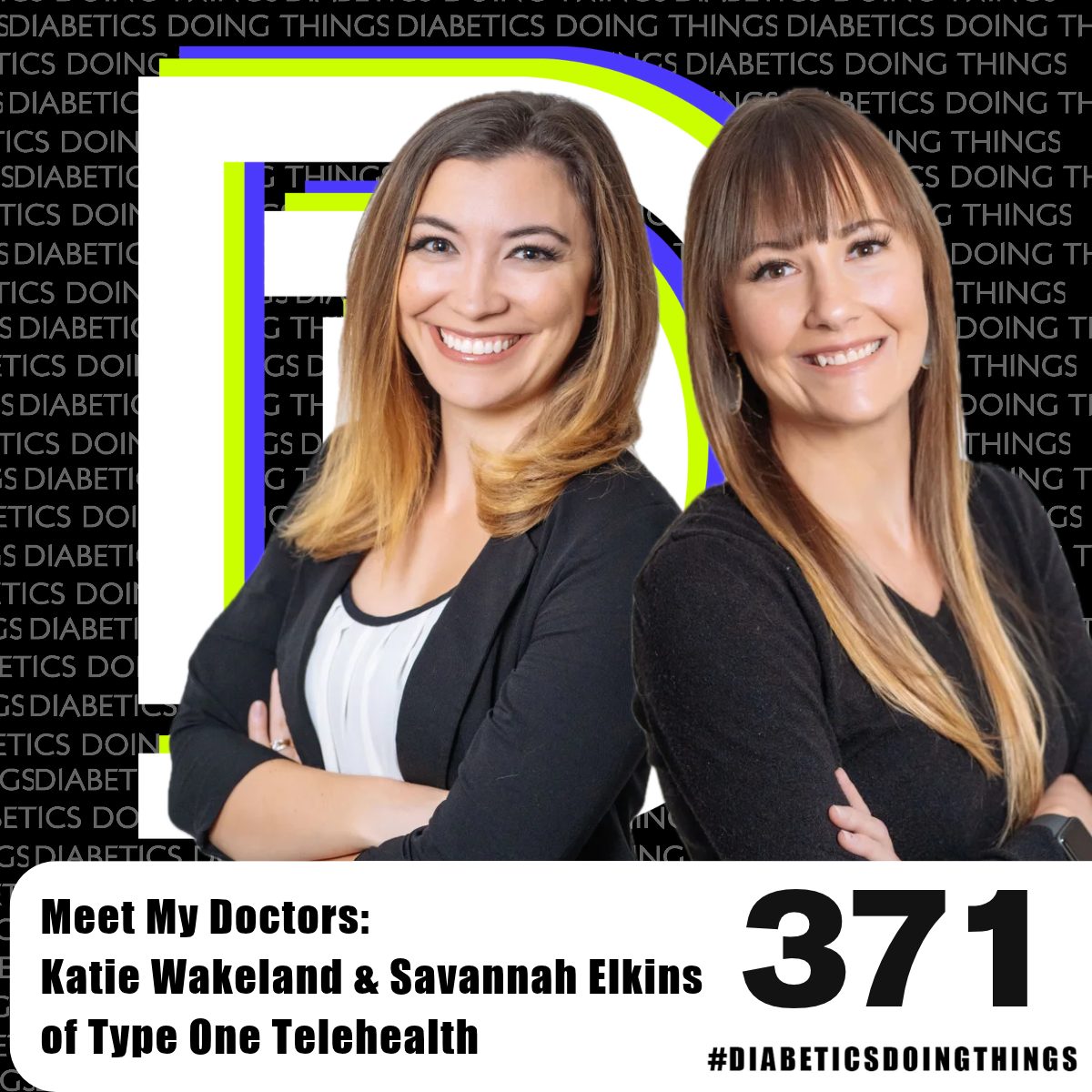
If you’ve ever left an endo appointment feeling rushed, talked down to, or told “you can’t,” this episode is for you. Rob sits down with Savannah Elkins, MPAS, PA-C, and Katie Wakeland, MSN, APRN, AG-ACNP, co-founders of Type One Telehealth, a virtual endocrinology practice in Texas. Both live with type 1 diabetes. Savannah was diagnosed at nine after her dad remembered the symptoms from a fifth grade video. Katie was diagnosed at 11, with a blood sugar of 556, right after a family trip to Universal Studios. Rob met them at Camp Bluebonnet this summer and became their patient this fall. That makes this his first interview with his own care team. Savannah and Katie explain why they left traditional endocrinology. They talk about 15-minute visits that leave no time to teach a newly diagnosed 32-year-old, insurance companies that shape how care is delivered, and why they chose a membership model instead. Savannah also shares what it was like to move to adult care at 22 while pregnant, and to hear over and over that she was having a “big diabetic baby.” They share some early wins too. Katie worked with a patient who had been told she couldn’t get pregnant, and that patient is now pregnant and doing well. Savannah has seen patients go from 20% to 70% time in range in a month, and others cut $150 a month off their supplies. Whether you’re a college student moving into adult care or someone who’s unhappy with your current endo, you’ll come away with practical ideas. Savannah gives three tips: endo visits don’t have to fit around the holiday schedule, have an honest talk about alcohol before you figure it out alone, and make sure someone nearby knows you have type 1. The episode ends with a reminder that you’re never stuck with care that isn’t working. Resources: Type One Telehealth: https://www.type1telehealth.com/ The views expressed are not medical advice. Please consult with your care team about the best treatment for you.
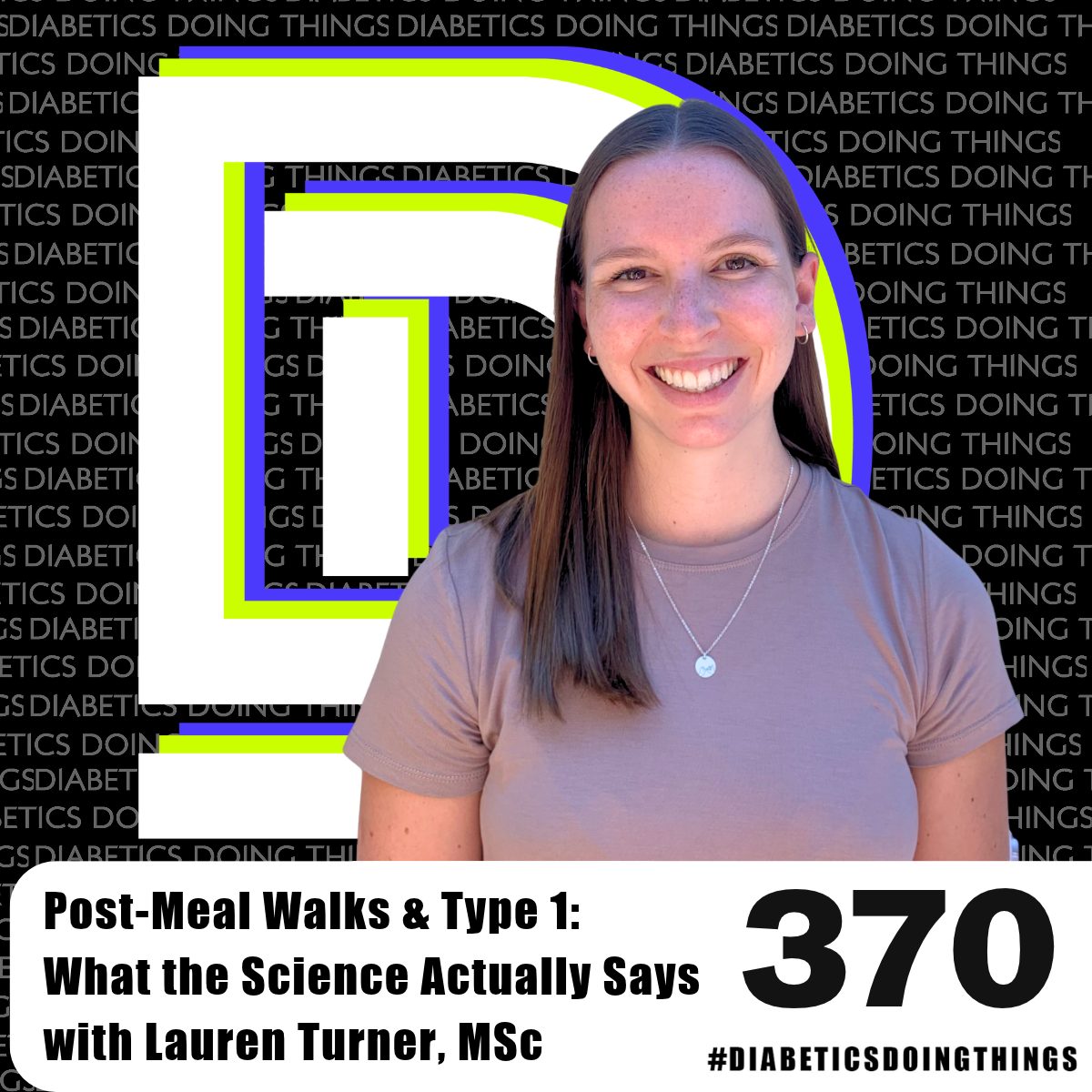
If you’ve ever eaten a carb-heavy lunch and watched your glucose climb for the rest of the afternoon, this episode is for you. Rob sits down with Lauren Turner, a PhD candidate in Dr. Michael Riddell’s lab at York University in Toronto. She has lived with type 1 diabetes for seven years and has her name on 36 research publications on T1D and exercise. Her research on post-prandial walking started with a simple habit: 20-minute walks around the block after dinner with her dad and their dog. Lauren explains the science of why moving your body brings glucose down, even without extra insulin. She covers muscle acting as a “glucose sink,” why just three minutes of movement every 30 minutes can improve time in range by 14%, and why walking after a meal can cut post-meal spikes without causing lows. She also explains why that afternoon walk can still affect your numbers 24 to 48 hours later. Rob and Lauren also question some older advice. They talk about the outdated rule against exercising above 250 mg/dL and why the insulin on board shown on your pump is only an estimate. They share their personal thresholds for when to start moving, and a study finding that 10 to 30 minutes of activity gives an 83% chance of getting back in range in under an hour. Whether you’re a hybrid athlete or someone who finds 150 minutes a week overwhelming, you’ll come away with practical options: exercise snacks, stair climbing, the talk test for intensity, and a reminder that any movement counts. Resources: Lauren Turner’s thesis, The Timing of Walking and Post-Meal Blood Sugar Levels in Adults with Type 1 Diabetes (YorkSpace): https://yorkspace.library.yorku.ca/items/45a24ad2-b616-4d16-a1f8-c8cc7bbf79f3
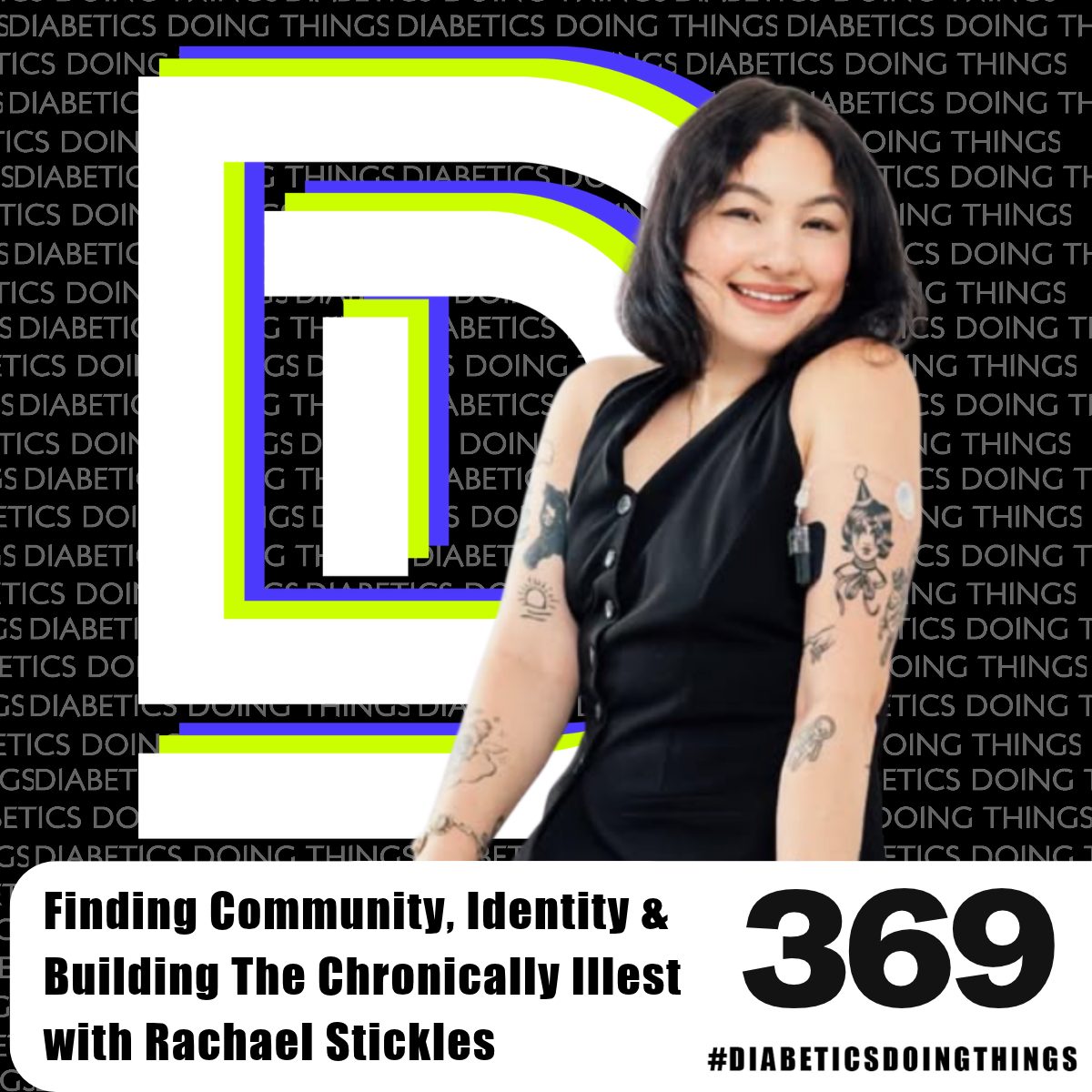
Rachael Stickles started The Chronically Illest because, as Rob puts it,
diabetes had absolutely no swag. People with diabetes get beige meter cases
and T-shirts that don’t inspire daily wear. Rachael wanted to change that.
So she and her partner turned their studio apartment into a workshop and
taught themselves how to make stickers, screen printing, and web design,
all while working full-time jobs. Her partner asked "So what have you done
on the business this week?" every single Sunday until it became a reality.
Now, this year it's Rachael's full-time work.
Getting there wasn't the glossy quit-your-job story. Diagnosed with type 1
at twelve, Rachael spent her teens and college years sneaking food,
skipping doses, and taking just enough insulin to get by. She thought she
was the only one, until she posted about it and hundreds of people replied:
me too. As an adult she always held at least one job just for the
insurance, and in this episode she's honest about what finally let her
leave her corporate role.
Rob and Rachael also push back on the "you can do anything with diabetes"
message. You can, Rachael says, but often with extra steps, and being
honest about those steps matters. They get into finding community when you
don't see yourself in the room. Rachael started posting online because she
wanted to find people that looked like her and had similar experiences.
Rachael is half-asian, half-white, and queer. She wanted to find the other
T1D’s that were bolusing for rice! In this episode, we are redefining
success away from A1Cs and follower counts, and explaining why a meetup
with two people is still a meetup.
If you've ever felt like the diabetes community was a room you couldn't
quite fit into, this one's for you.
Chapters
00:00 Rob introduces Rachael and The Chronically Illest
02:01 Twenty years with T1D, diagnosed at twelve
04:35 Skipped doses, DKA, and a secret shame
07:12 Why the teenage years hit hardest
09:40 Finding community online before the DOC existed
12:55 Why one connection is worth it
17:25 The Chronically Illest starts with zero swag
19:44 A studio apartment becomes a sticker workshop
21:44 Learning to say no as an entrepreneur
22:28 The myth of "diabetes can't stop you"
23:31 Insurance, partnership, and quitting the nine-to-five
31:34 How to keep your heart open in hell
34:46 Redefining success: A1C, followers, and money
39:15 Giving back through copay giveaways and picnics
42:08 Advice for anyone who doesn't fit the mold
Resources:
The Chronically Illest shop
Instagram: @thechronicallyillest
Instagram: @thechronicallyrachael

Peter Simpson has been at Dexcom for over 24 years, back when it was a
small startup, and he says he's more excited about the technology now than
at any point in that run. In this bonus tech episode, Dexcom's CTO walks us
through the upcoming G8 sensor: about 50% smaller, plus a new in-use
calibration system that checks itself every five minutes to account for the
fact that every body is a little different. The goal isn't just a better
average accuracy number. It's fewer of those nights where your sensor and
your fingerstick seem to be describing two different people.
We also dig into the landmark CONNECT study, just published in The New
England Journal of Medicine, which found CGM use lowered A1C by 0.9% more
than routine care for people with type 2 diabetes not on insulin. Peter
shares a surprising finding about people already on GLP-1s, and what
Dexcom's new State of Type 2 report says is really standing between people
and better care: awareness, education, and access.
Near the end, I ask Peter about the recent G7 app terms and conditions
update that briefly kept some users from seeing their glucose data. He
shares how future updates will roll out and answers questions about
metadata and AI. There's more I wish I'd had time to ask, and if I get
another conversation with Dexcom, you'll hear it here first.
Chapters
01:22 Meet Dexcom CTO Peter Simpson
02:01 Why innovation is speeding up after 24 years
03:21 G8 preview: 50% smaller, more accurate
04:15 How factory calibration actually works
05:05 Real-time calibration that adapts to your body
06:03 MARD explained: fewer bad sensor outliers
07:15 Type 2 barriers: health and tech literacy
07:48 Inside Dexcom's State of Type 2 report
09:08 CONNECT study: CGM results without insulin
10:25 GLP-1s plus CGM: the biggest impact
11:38 Addressing the G7 terms and conditions
12:12 "We made an error": what changes now
13:15 Metadata, pump partners, and AI explained*
15:07 What's next for type 1 and type 2
Resources:
The CONNECT Study published in The New England Journal of Medicine
Dexcom

Comments

Download from Google Play

Download from App Store
 United States