DiscoverHanselminutes with Scott Hanselman
Hanselminutes with Scott Hanselman

Hanselminutes with Scott Hanselman

Author: Scott Hanselman

Subscribed: 16,415Played: 184,631
Share

Description

Hanselminutes is Fresh Air for Developers. A weekly commute-time podcast that promotes fresh technology and fresh voices. Talk and Tech for Developers, Life-long Learners, and Technologists.
1023 Episodes
Reverse
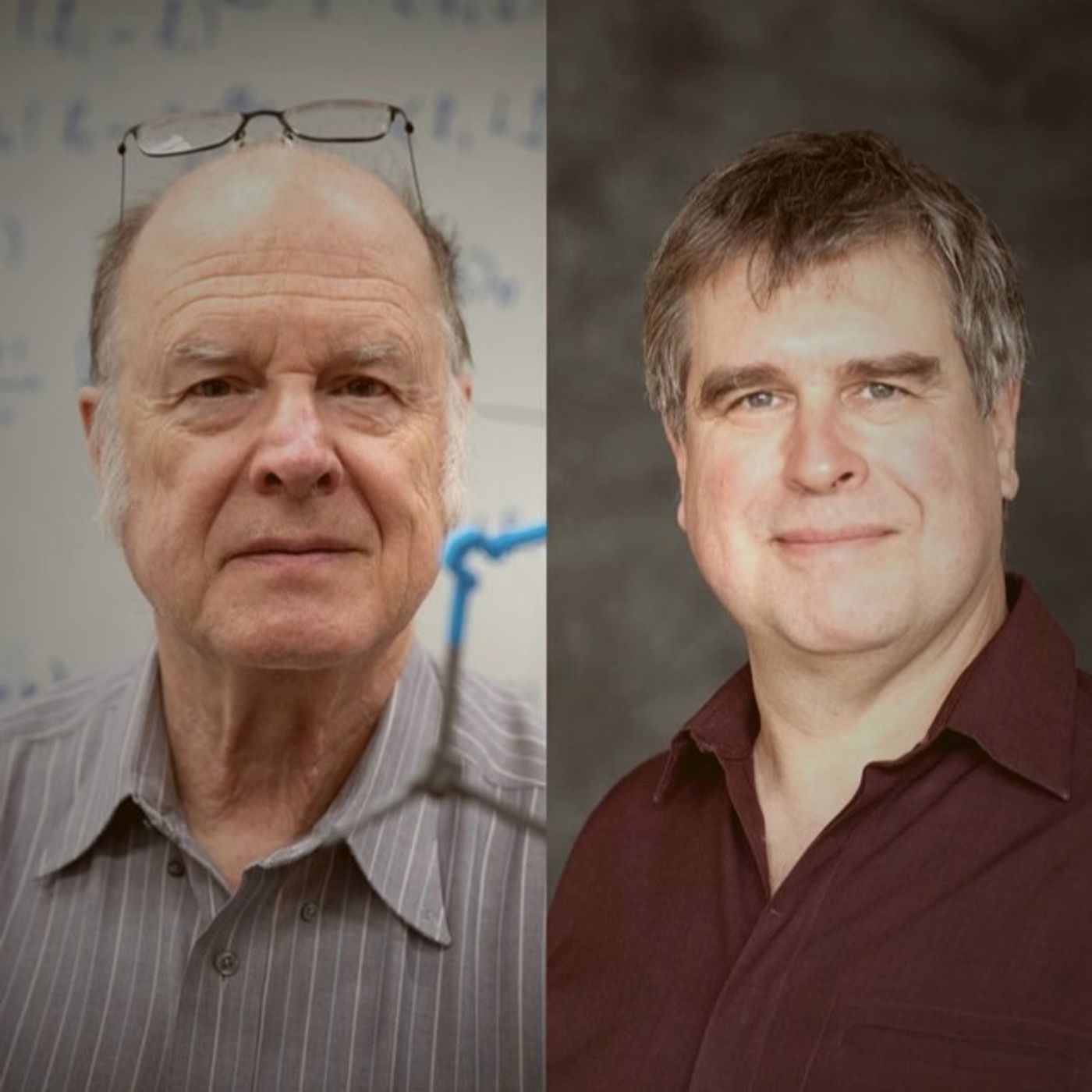
Marcus Fontoura has led engineering teams at IBM, Yahoo, Google, and Microsoft...building the very systems that power our digital lives. Now, as the author of Human Agency in a Digital World, he’s asking a more profound question: how do we stay in charge of the technology we create? Scott and Marcus explore what it means to move from being passengers to pilots in an age of automation — through ethics, education, and intentional design.https://fontoura.org
What happens when code stops being useful and starts being art? Scott talks with artist and programmer Daniel Temkin about his new book Forty-Four Esolangs, a deep dive into the world of esoteric programming languages...systems designed not to ship software, but to provoke thought. They explore how absurdity, constraint, and humor reveal something profound about how we think in code.https://danieltemkin.com
Scott sits down with Camille Tomlin, Head of IT at Philadelphia International Airport, to explore the intersection of aviation, technology, and leadership. They discuss how airports are transforming digitally — with IoT, data analytics, and smart infrastructure — and how Camille leads a team that bridges city government, airlines, and millions of passengers every year.
In a world of Rust, Go, and Python, why does C++ still matter? Dr. Gabriel Dos Reis joins Scott to explain how C++ continues to shape everything from GPUs and browsers to AI infrastructure. They talk about performance, predictability, and the art of balancing power with safety...and how the language’s constant evolution keeps it relevant four decades in.
Postgres has quietly become the world’s favorite database...running startups, governments, and global clouds alike. Scott talks with Claire Giordano, long-time Postgres advocate and technologist, about the database’s unlikely rise from academic roots to modern dominance. They explore its design philosophy, the open-source community that fuels it, and why Postgres keeps winning even in the age of AI and hyperscale data."Talking Postgres" podcast: https://talkingpostgres.comhttps://www.postgresql.org/
Scott talks with Stephen Jones of the new Interim Computing Museum, about the craft of bringing old computers back to life. From wire-wrapped boards to tape drives and terminals, this episode dives into why running the old systems — not just displaying them — matters for understanding how modern computing came to be.Support, Visit, and Donate to the ICM at http://icm.museum 
This week Scott talks to Kat who shares her tactical wisdom from her blog Katexcellence.io, where she decodes the early-career engineering experience with clarity and wit. From learning to build without motivation, to balancing depth and velocity, to navigating layoffs and early‑career uncertainty, Kat distills lessons from her own journey through Big Tech and beyond. She offers practical strategies for making an impact early, staying resilient, and turning challenging experiences into growth opportunities.https://katexcellence.io/
On this episode of Hanselminutes, Scott Hanselman talks with cloud migration and app modernization expert Mike Rousos about the challenges and opportunities of bringing decades-old applications into the modern era. They discuss practical strategies for app modernization, how AI and GitHub Copilot are reshaping developer workflows, and what it takes to transform legacy software into systems ready for the future.
On this episode of Hanselminutes, Scott talks with Bobby Lockhart, game designer and coauthor of The Game Designer’s Workbook. They explore the craft of game design, from turning ideas into playable experiences to balancing creativity with structure, and discuss how the principles in the workbook can help both aspiring and seasoned designers build better, more engaging games.https://www.gamedesignersworkbook.com
On this special episode of Hanselminutes, Scott reunites with .NET Principal Engineer Safia Abdalla, nearly 500 episodes and a decade after her first appearance on the show. They reflect on the arc of her career and the evolution of the developer landscape, discussing how building competence fuels confidence, how anxieties can compound in high-pressure environments, and what strategies help engineers sustain both technical excellence and personal growth over time.
On this episode of Hanselminutes, Scott Hanselman sits down with Netlify CEO Mathias Biilmann, who coined the term Jamstack, to talk about the future of web development in the age of AI. Recorded shortly before the announcement at Netlify Deploy, the conversation explores Netlify’s new AI Workflow, how it connects to the Jamstack philosophy, what it means for developers building modern applications, and how AI-powered automation can streamline shipping dynamic, performant sites at scale.https://www.netlify.com/deploy
In this episode of Hanselminutes, Scott Hanselman talks with Tuple engineer Johnny Marler about the craft and culture of pair programming. They explore how intentional collaboration can sharpen problem-solving, reduce context switching, and build trust between teammates—especially in remote environments. Johnny shares lessons from developing Tuple, developing with native code on Windows, insights from the Zig community, and why pairing remains one of the most underrated tools in a developer’s toolkit.https://tuple.app/hanselminutes
In this episode of Hanselminutes, Scott Hanselman sits down with Adam Jacob, co-founder of SystemInit and creator of Chef, to explore the provocative question: Can AI save DevOps? Together, they unpack the growing complexity of modern infrastructure, the limits of human-scale operations, and how AI-driven systems might reshape the way we build, deploy, and maintain software. From declarative intent to autonomous remediation, Adam shares his vision for a future where DevOps isn't just automated—it’s intelligent.https://systeminit.com
In this episode of Hanselminutes, Scott sits down with Noel Berry, co-creator of Celeste, to explore his philosophy and process for making games in 2025, without relying on big commercial engines. Noel shares why he prefers building lightweight, custom tools over heavyweight platforms like Unity or Unreal, how modern C#, SDL3, and open‑source libraries empower small teams, and the creative freedom that comes from owning every layer of the stack. From crafting bespoke level editors to ensuring long‑term portability, Noel offers a candid look at the technical choices and personal values shaping his latest projects, including City of None.https://noelberry.ca/posts/making_games_in_2025/
This week Scott welcomes Tyler Bushnell, founder of Polycade, to talk about reimagining the arcade experience for modern homes. Drawing on his family's Atari legacy, Tyler shares how Polycade blends retro charm with sleek design and modern game libraries—all while encouraging face-to-face connection. From Kickstarter roots to Techstars growth, we explore how Polycade became a favorite among creators and why the future of gaming might look more social than ever!https://www.polycade.com
Today we chat with Dr. Morgan Depenbusch and dive into the mindset shift that can transform your career and relationships at work. Instead of pushing harder to be heard or constantly proving yourself, what if the key is simply leading with value? Dr. Depenbusch and Scott unpack what “value” really looks like in practice—whether it’s helping teammates cut through noise, reframing presentations for executives, or positioning yourself in interviews. You’ll hear why this approach earns trust, reduces stress, and creates more opportunities than self-promotion ever couldhttps://www.morgandepenbusch.com/
In this episode, Scott sits down with Bria Sullivan, developer and founder of Honey B Games, to unpack the viral success of Focus Friend—the cozy productivity app that dethroned ChatGPT at the top of the App Store. Co-created with Hank Green, Focus Friend gamifies focus with a sock-knitting bean companion, offering users a whimsical yet effective way to reclaim their attention. Bria shares the app’s origin story, the design philosophy behind its ADHD-friendly features, and how iteration and storytelling shaped its meteoric rise. It’s a conversation about building with empathy, designing for delight, and what it means to make tech that gives people their time back.https://www.yourfocusfriend.com/
From wrist‑mounted CD launchers to rope‑driven quadrupeds, Purdue engineering student and YouTuber Aaed Musa turns wild ideas into precision‑crafted reality. On Hanselminutes, he joins Scott Hanselman to share the art, grit, and storytelling behind his most ambitious projects — and why iteration is his superpower.https://www.aaedmusa.com/
Steve Klabnik wasn't a fan of AI. He knows how to code at high and low levels...but then he tried again. Now he's making more, shipping more, coding more, and having more fun. Is this a moral choice or a techincal one or both? 
In this episode, Scott Hanselman sits down with benny Vasquez, Chair of the AlmaLinux OS Foundation, to explore the project's journey since the shift away from CentOS. benny shares insights into how AlmaLinux stays community-driven, transparent, and enterprise-ready—all while navigating the evolving world of open-source licensing. It's a candid and thoughtful conversation about trust, sustainability, and what it takes to build an OS that listens to its users.https://www.almalinux.orgKey TopicsIntroduction to benny Vasquez and AlmaLinux (00:07.87)The Evolution of CentOS and Birth of AlmaLinux (01:00.03)The Role of CentOS Stream and Enterprise Linux Ecosystem (03:27.08)Why AlmaLinux Stepped In and the Red Hat Source Code Shift (05:19.77)Differences Between AlmaLinux and Red Hat (08:33.74)Open Source Governance and Neutrality in AlmaLinux (14:05.99)Sustainability and Longevity of the AlmaLinux Project (24:07.31)Adopting AlmaLinux for VFX and Desktop Use (26:37.99)The Importance of Hardware Support and Adaptability (28:14.02)Upcoming Events: AlmaLinux Day Vancouver (33:48.05) Main TakeawaysCommunity-Driven Replacement for CentOS: AlmaLinux emerged as a community-driven distro to fill the gap left by CentOS after Red Hat's change in focus, ensuring enterprise-grade Linux remains accessible.Open and Neutral Governance: AlmaLinux prioritizes a meritocratic and community-focused governance structure to maintain independence and serve diverse user needs.Adaptability and Innovation: By addressing omitted features and bugs faster than traditional vendors, AlmaLinux thrives as a flexible solution for enterprises and personal use, offering extended hardware support.Commitment to Longevity and Sustainability: The AlmaLinux OS Foundation is focused on creating a project that outlasts its current contributors by setting up governance for long-term stability.Embracing Enterprise and Desktop Markets: Though AlmaLinux is enterprise-focused, it demonstrates significant adoption in both server and desktop environments, especially in industries like VFX. Notable Quotes"AlmaLinux emerged to fill a void, ensuring enterprise-grade Linux users didn’t lose their stability and compatibility." – benny Vasquez"The key for us is not just building compatibility with Red Hat but allowing for innovation and hardware support that suits the community’s needs." – benny Vasquez"We have to maintain neutrality in our governance so that no one organization can unduly influence AlmaLinux." – benny Vasquez"Making it independent in a way that it will outlast me and all of the current contributors is the ultimate success for me." – benny Vasquez"Linux is known for not leaving folks behind, and that’s an ethos we adhere to with AlmaLinux." – benny VasquezResources MentionedAlmaLinux.org: https://almalinux.org (Download and contribute to the project)AlmaLinux Day Vancouver (August 9th): https://almalinux.org/blog/SIGGRAPH Conference: https://s2023.siggraph.org/Additional MentionsFedora ProjectWSL (Windows Subsystem for Linux)Azure and AWS sponsorshipsThinkPads and Linux Distros for older hardwareThese show notes were automatically generated from the podcast transcript.
loading
Comments (6)

Matt

A fascinating and insightful episode for anyone interested in #HomeAssistant

Feb 21st
Reply

Paja Storec

💚WATCH>>ᗪOᗯᑎᒪOᗩᗪ>>👉https://co.fastmovies.org

Jan 16th
Reply

Frank Boucher (FBoucheros)

Very interesting conversation around games and C#. I thought most big games were done in C++... Nice discovery.

Jul 22nd
Reply

Frank Boucher (FBoucheros)

nice show. I'll definitely check that book.

Dec 1st
Reply

GreatBahram

It's very interesting, I like your effort to teach Arabic kids programming

May 25th
Reply

Christian Meyer

Ich folge Scott Hanselmann seit Jahren, sein Podcast ist brilliant. Breite Themenauswahl, interessante Gesprächspartner aus allen Bereichen der IT. Empfehlenswert!

Jan 3rd
Reply
loading