


 Zombified: Your Source for Fresh Brains
Zombified: Your Source for Fresh BrainsSubscribed: 66Played: 652
Subscribe

© 2025 Athena Aktipis
Description
Is something taking over your brain? Zombified is a podcast about how we are vulnerable to being hijacked by things that are not us. From microbes hijacking behavior, to humans influencing each other, to our brains being taken over by social media, we talk about why zombification happens, why we are susceptible to it, and what we can do about it. Hosted by Dr. Athena Aktipis, a Psychology Professor at Arizona State University and the founder of the Zombie Apocalypse Medicine Alliance, and co-hosted by zombie enthusiast Dave Lundberg-Kenrick, “Zombified” takes a radically interdisciplinary approach to the science of zombification. If you enjoy fresh brains, this podcast is for you!
57 Episodes
Reverse
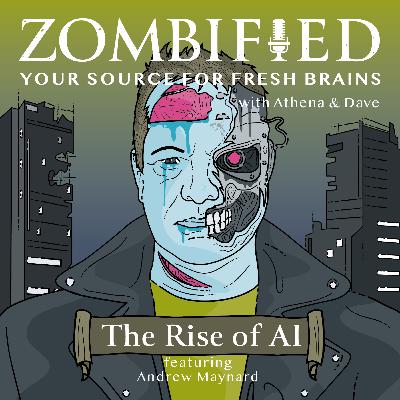
The Dawn of AI is here! But where does that leave us? Will it improve our lives, zombify us, or completely replace us? We talk to tech expert, thought leader and futurist Andrew Maynard about whether or not we can peacefully coexist with the advancing algorithms or whether we are at the beginning of the robot apocalypse.
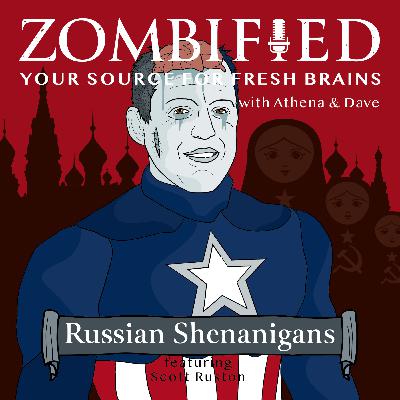
Who is that person saying awful things to you on-line? A Russian agent? A zombified member of the opposite political party? Or just your own crazy relatives? We talk to Research Professor and strategic communications expert Scott Ruston about ways enemies of the state may actually be turning us against each other.
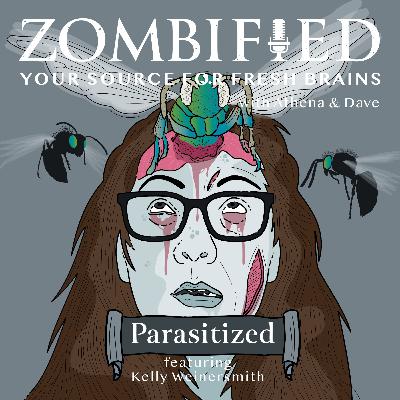
Do you like the idea that bugs could crawl right out of your eyes, and that fungus could control your brain? That's weird, but this episode is for you! Join us for a rollicking fun conversation with parasitologist and science communicator extraordinaire, Kelly Weinersmith, about the weird and wonderful world of parasites!
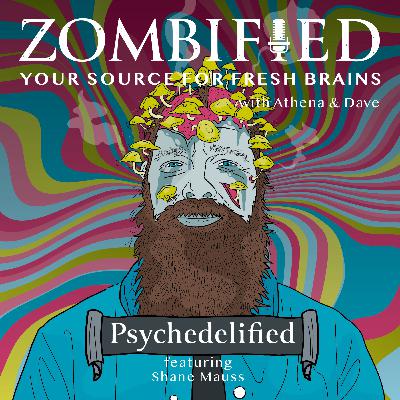
Behold the twisted paths of the mind, where laughter and shrooms dance a cosmic Macarena. Delve with us into the mind-bending musings of comic and psychonaut Shane Mauss, to awaken our inner selves from the slumber of the undead, and to discuss how psychedelic tourism may create it's own zombie society. Prepare for a mind-expanding mix of science and comedy!
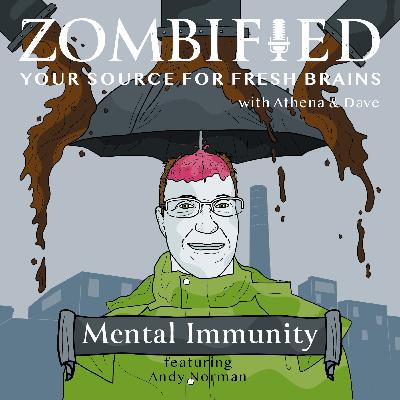
Bad ideas are attempting to take root inside your brain! Listen to this episode with Andy Norman (author of Mental Immunity) to learn how to protect your brain without having to quarantine your mind!
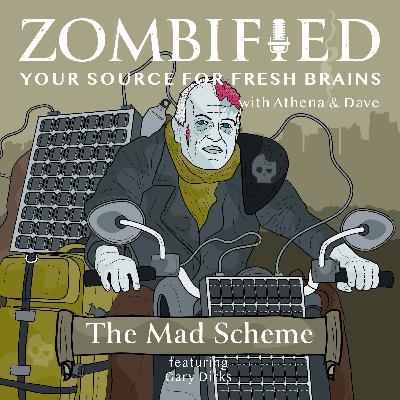
Can we harness the sun and reach the Green place, or has the world become too addicted to guzzaline? Witness our discussion with Gary Dirks - Senior Director of ASU's Global Futures Laboratory - as he guides us beyond the mad scheme to a better tomorrow.
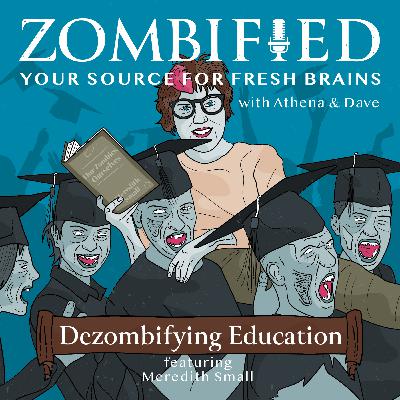
Constant testing. Unhealthy lunches. Underpaid teachers. Are our schools in an apocalypse? Or is everything actually fine? We talk to life-changing author Meredith Small about how we can help all kids survive and thrive in our often-zombifiying educational system.
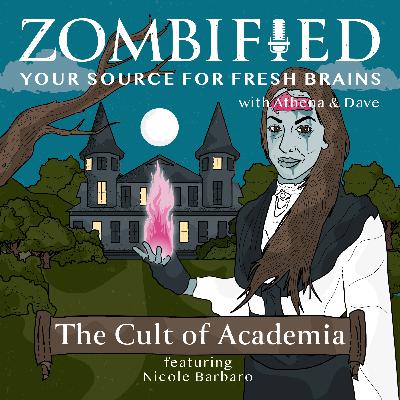
Are you looking for a way to expand your mind and learn ancient secrets for the low price of only $70,000 a year? Then join the Cult of Academia - where after only eleven or so years, you can compete for the job of cult leader! We talk with recovering academic Nicole Barbaro about her daring escape from academia and attempt to deprogram others - through her work at the Heterodox Academy and her Bookmarked Reads Substack.
Are you tired of being zombified by indoctrination, incarceration, and educational institutionalization? Join the resistance with this week's guest Political Science Professor Mzilikazi Koné and spread the wonderfully contagious dream of freedom and resistance!
Is Twitter heralding the end of society as we know it? We have an apocalyptically great time talking to award-winning author (and passionate tweeter) Steven Beschloss about the good, the bad and zombifying aspects of social media, including his personal successes and struggles trying to use Twitter to build a virtual space for true dialogue. In the aftermath of the Twitterpocalypse, can we build a new social media world that is a public good that makes all of our lives better? Tune in to find out!
Whose voices get to carry on after death, and whose stories get buried with time? In this suprisingly optimistic episode, we talk with Liz Grumbach about the future of the human-tech interface and the way that technology can be used as a tool for understanding ourselves and our place in the world. We also chat with her about the social factors that decide who gets silenced, and how the field of Digital Humanities is giving a new voice to the silent dead.
Has your brain been turned into a fertile ground for the planting of other people's ideas, goals and influence? In this episode, we talk to best-selling author Bob Cialdini about 'pre-suasion,' the idea that you can make people more receptive to persuasion by setting up the context and situation in certain ways. Learn about your own susceptibilities to influence, how to tell if you're being zombified, and how we can use these techniques to zombify ourselves for good!
Are you barely alive or feeling a little undead? Well, it's time to crawl out of the ground and re-embrace this messy, wonderful thing called livin', with our new season of Zombified! Join hosts Athena Aktipis and David Lundberg-Kenrick as they talk with Liz Grumbach, Mzilikazi Koné, Tamas David-Barret and Baba Brinkman about the many ways that we can be resilient in times of crisis and embrace the joy and insanity of life.
Do you feel like your neurons are getting taken over by your smartphone, tablet, computer or TV? Then the infopocalypse has probably already infiltrated your brain. In this episode, journalist and media literacy expert, Kristy Roschke, explains how we get hijacked by the constant stream of information we consume from our devices. She also shares tips for keeping your brain safe from manipulative information that could compromise you, hurt those you love, or destroy civilization all together. Listen now to protect your brains—and the world!
What would your kids do if they were stuck in the zombie apocalypse and you were nowhere to be found? That’s the premise of Shabam!, a podcast where the story of the zombie apocalypse is a vehicle for explaining science and infrastructure to audiences of all ages. We talk to creators, Josh Kurz and Wendy Roderweiss, about the challenges of communicating scientific ideas and how to use engaging storytelling and silly voices to create a compelling narrative that is both interesting and informative. Listen with your kids, so they learn how to survive if you get eaten by a zombie!
Does politics turn us into zombies? We talk with law professor, Mary Ziegler, about the politics around the abortion debate and how a personal, medical issue can get hijacked for political ends. We also chat about the ways that politics can make us see others—specifically those who don’t agree with us—as zombies. If you think you or somebody you don’t agree with might be a zombie, you’ll definitely want to listen to this episode.
What happens to humans when they are not just hungry, but truly famished? In this episode we talk with anthropologist Cathryn Townsend about the ways that starvation can change who we are and how we relate to one another. She completed fieldwork with the Ik people of Uganda who were vilified as selfish and nasty by Colin Turnbull 50 years ago when he observed their society mid-famine. Cathryn explains how the Ik are just as generous as the rest of us—and why it’s problematic to blame culture for human selfishness. This is the episode you’ve been hungering for.
Do you ever have the feeling that your friends are talking about you behind your back? In this episode we talk with interdisciplinary social scientist Tamas David-Barrett about why we might actually want our friends to talk about us behind our backs. We also talk about how smaller family size has caused a fundamental shift in the structure of the social networks that we inhabit, and chat about giving unusual gifts to strangers at Burning Man. Listen to this episode and get caught in Tamas’s web of intriguing ideas, fascinating findings and sensational stories!
If all the cool kids jumped off a bridge, would you jump, too? Should you? Many of us grew up with parents, guidance counselors, and school assembly lecturers teaching us to resist peer pressure, go our own way, and ignore the zombie crowd. And people online will quickly call you out for “virtue signaling” and “humble bragging” if you so much as mention how you rescued that eagle that got hit by your yacht. But are peer pressure and virtue signalling all bad? In today’s episode, we talk with brilliant (and popular!) economist and author Robert H. Frank about when you should go along with the crowd, and when you should get the crowd to go along with you. Listen to it, and then brag about it to your friends!
What do you do when the shit hits the fan, and the government isn’t there to help? When need overwhelms infrastructure, we all need to work together to survive, but figuring out how to actually help each other isn’t so easy. This episode’s guest, Clyde Cain, leads the Louisiana Cajun Navy, which is a group of volunteers that help people during floods, storms and other emergencies. Clyde talks about how to stay calm during a disaster and what drew him to this unconventional life of service.


Download from Google Play

Download from App Store
 United States
I listened to Curiosity Kills with Barbara Natterson-Horowitz. I found the portion about Pandora, the chimpanzee really fascinating. The fact that a working with a chimpanzee sparked her interest in evolutionary biology and opened her eyes to human exceptionalism, forcing her to form hypothesis that were unheard of earlier. Animal adolescence and human adolescence may have more of an overlap than we previously believed. Because the question of human adolescence has different criteria, it might be harder to really differentiate. Therefore, there are overlaps between human and animal adolescence. With the similar idea, the fact that adolescents are attracted to risks (such as “watching zombie movies” as discussed in the podcast), might actually be a good thing. The risk of dying increases significantly with age, can be due to increased levels of impulsivity, and peer-based risk factors. However, Barbara Natterson-Horowitz argues that it is not the risk taking that increases the dying rat
Curiosity Kills: This episode focused on alternative or causal explanations for the seemingly taxa-wide phenoma of adolescent “wildhood”. By looking at other species that exhibit the same behaviors seen in human adolescents, Dr. Natterson-Horowitz formed a theory that it isn’t an undeveloped brain that makes human adolescents act out in high-risk behavior, but instead it stems from a dominant/subordinate relationship between adults and adolescents that is the root cause. A side-effect/benefit of this relationship is that by exhibiting this increased risk behavior, the long-run outcome makes for a safer and more fit population.
This video discusses potential reasons behind the evolution of laughter as well as the scenarios that we are most likely to laugh in. It highlights the theory that laughter evolved as a physical sign that we are not a threat or a danger in various situations. This is interesting to me because it reminds me of all the viral videos that I have seen of monkeys messing with tourists and laughing in response. Typically, those viewing and experiencing the taunting take this laughter as a sign of the animal's evil motives; however, maybe based off the theory discussed in this podcast, the animals are actually just telling the humans that they are just playing and are not trying to be threatening with their behaviors. It may be less of a conniving laughter and more of a harmless yet informative one. Additionally, this podcast addresses why the heart of comedian’s jokes tend to be based off their own failures or failures of people they know. Jokes about relationships, embarrassing stories, o