


 Claim Ownership
The Business of Alignment - Powered by The E1B2 Collective
Subscribed: 8Played: 178
Subscribe

© The E1B2 Collective
Description
This podcast reveals how clarity and ownership at every level turn employee experience into accelerated execution, reducing friction, speeding decisions, and delivering strategy faster than the competition. When people feel valued, informed, and trusted, alignment becomes natural and performance scales. Hosted by Anthony “AJ” Vaughan, creator of The E1B2 Collective Podcast (900+ episodes, 75,000+ HR and C-Suite listeners), the show uncovers how CHROs, COOs, and CROs design accountability, eliminate drag, and build execution systems that drive enterprise value https://e1b2collective.lovable.app
998 Episodes
Reverse
In today’s episode I have Nancy John founder of Seed Leadership joining the show! Let me first start out by saying she brings it with the passion, depth and practical insights. In today’s episode we cover (Feedback “in deep detail” that can be applicable to both employees and leaders. We also dive into her struggles , wins and personal development journey as she navigates the world of entrepreneurship. We dive into strategic empathy and how leaders can use this to build internal relationships that can help drive change and long term success. Finally we dive into networking, speaking , employee experience and my new big idea on how I plan to collide the world of Angel/VC Funding with the world of HR/Employee Experience. I hope you all enjoy today’s episode!
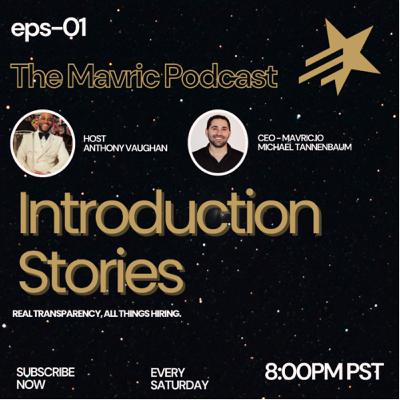
Today’s episode is a very special one, we are introducing to you “The Mavric Podcast” - brought to you by The E1B2 Collective. Aj and Michael discuss all things Mavric.io, the world of recruiting, personal backgrounds and life perspectives, DEI, Recruitment Strategy and so much more! This is the first of many great episodes that will be coming out on this new and exciting series of podcast segments. Hope you enjoy!
In this episode I break down my view points on flexible work environments and why they are beneficial!
In this episode of Culture Into Quota, AJ Vaughan tackles one of the most uncomfortable truths in HR technology and enterprise sales: most deals fail not because the product is weak, but because the organization isn’t actually ready for it.AJ breaks down the dangerous gap between revenue expectations and market reality, explaining why founders, CROs, AEs, and even HR leaders often operate without the real operational data needed to make sound technology decisions. The result? Forced narratives, misaligned forecasts, and conversations happening with leaders who may hold titles—but not true decision gravity.This episode challenges HR tech revenue teams to rethink how they approach discovery, forecasting, and stakeholder alignment. It also calls on HR leaders to get closer to the real business problems inside product, marketing, and revenue teams before evaluating new technology.Key themes in this episode include:Why doesn't every C-suite title actually carry decision powerThe dangerous disconnect between board-level projections and real buying cyclesHow HR leaders can better align with revenue, product, and financeWhy authentic discovery matters more than product pitchingThe concept of decision gravity and how it shapes enterprise dealsIf you're selling into HR or leading HR inside a scaling organization, this episode offers a powerful reminder: before discussing tools, features, or demos, you must first understand where real business problems actually live inside the organization. This is Culture Into Quota - where leadership, culture, and revenue strategy finally meet in the same conversation.
Hiring is still built on a tool invented nearly 70 years ago — the resume.But what if the way we evaluate talent is fundamentally broken?In this episode, AJ Vaughan sits down with Charlotte, co-founder of Equalture, a behavioral intelligence platform using game-based assessments to help organizations identify the competencies that actually predict job success.Charlotte shares how her experience running a recruiting agency exposed the deep bias and inefficiency embedded in traditional hiring processes. Too often, candidates with strong potential are overlooked simply because their resumes don’t check the right boxes.The conversation explores:• Why resumes remain one of the least predictive hiring tools• How behavioral science and data can transform recruitment decisions• The power of game-based assessments to reveal natural behavior and cognitive ability• Why hiring managers often resist new hiring technologies• The growing need for organizations to rethink hiring from the ground up• How high-volume employers are using data to dramatically improve retention and performanceAJ and Charlotte also discuss the broader future of HR technology, the disconnect between HR leaders and executive teams when evaluating talent solutions, and why companies must move beyond simply improving hiring processes and instead disrupt them entirely.If you care about the future of hiring, behavioral intelligence, and building organizations that truly evaluate potential rather than pedigree, this conversation is for you.
In this quick, honest episode of The Business of Alignment, AJ unpacks a simple truth: mistakes do not get better with time. Bad decisions made with partial data, limited visibility, and fragmented team insight only grow more expensive when organizations fail to confront them head-on.This episode explores why accountability alone is not enough. Once a mistake is identified, the real work begins: bringing together the right people, uncovering the full data story, and building the alignment needed to solve what is actually broken. From revenue and margin to operations, internal comms, product, and marketing, AJ makes the case that most organizational “messiness” is not random. It is often the exact place where the next unlock is hiding.This is a reflection on what happens when companies choose to diagnose instead of defend, align instead of avoid, and turn mistakes into better systems, better behaviors, and better outcomes.
Most leadership teams believe revenue problems are strategy problems.They’re not.They’re capability visibility problems.In this episode of Culture Over Quota, AJ Vaughan breaks down one of the most overlooked drivers of revenue growth: leadership trust built through deep understanding of human capability inside the organization.When revenue stalls, executives often debate strategy, pipeline, product roadmap, or marketing spend. CFOs analyze numbers. CROs question sales execution. CMOs debate messaging. The board weighs in with perspective.But almost no one asks the most important question:Do we actually understand the full capabilities of the people we already have?AJ challenges revenue leaders, product leaders, operations executives, and middle management to rethink how they diagnose organizational problems. Most companies only understand employees through job descriptions and performance metrics—while ignoring the enormous layer of hidden skills, experiences, side projects, relationships, and learning happening outside of the role.That missing visibility creates dysfunction at the leadership level. Because when leaders don’t know the real capabilities inside their organization, they can’t properly diagnose problems, deploy talent, or trust the solutions being proposed.In this episode, AJ explores:Why leadership trust is directly tied to capability visibilityThe dangerous gap between job descriptions and real human potentialHow hidden skills inside revenue teams can unlock marketing, product, and growth breakthroughsWhy organizations must build living capability maps of their workforceHow documenting skills, learning, and expertise across teams changes how companies solve problemsWhy understanding who your people actually are is the first step to generating more revenueThe core idea is simple:Before leadership teams try to solve a revenue problem, they need to understand the full palette of human capability sitting inside their company.Because the answer to the next breakthrough may already be sitting inside the building.This episode is a call for leaders to rethink how they see their teams, how they measure talent, and how they build trust at the executive level.Culture drives capability.Capability drives execution.Execution drives revenue.Welcome to Culture Over Quota.
In this episode, we break down the real tension between revenue teams and marketing teams, not at the strategic planning level, but in the messy middle where trust starts to erode.This conversation goes beyond campaign metrics and quota attainment. We unpack how misaligned assumptions about the buyer, funnel expectations, and content intent create friction between AEs, SDRs, sales enablement, and marketing leaders. The issue isn’t effort. It’s perspective.You’ll hear a direct discussion on:Why alignment feels strong at the beginning of the year but fractures quicklyHow different interpretations of the buyer create pipeline frictionThe hidden cost of avoiding hard conversations between teamsWhy psychological safety is an operational advantage, not a soft HR conceptPractical ways to create shared truth, faster feedback loops, and cleaner handoffsIf you lead revenue, marketing, product, or enablement, this episode challenges you to examine whether your teams are truly aligned or just coexisting.When culture is aligned around shared truth and honest feedback, quota becomes a byproduct, not a battleground.
Resilience is useful. Strategy is what wins.Shreya Kothari represented Team India for 20 years in inline hockey, then moved to the U.S. and navigated the full pathway: F-1, OPT/CPT, H-1B uncertainty, and ultimately the EB-1A. What makes her story valuable isn’t just the outcome, it’s the method: how she translated an elite-performance background into a credible, evidence-based “extraordinary ability” narrative.This isn’t a legal breakdown. It’s a strategic operating conversation for foreign nationals and the leaders who manage them.In this episode, we unpack:• How to treat your career like a portfolio (impact, proof, visibility, third-party validation)• What actually builds an EB-1A/O-1-ready profile over 3–10 years without gimmicks• Why most immigration journeys fail in the workplace: misalignment between HR, attorneys, managers, and the employee• The manager’s role in psychological safety: simple behaviors that reduce risk, churn, and distraction• Shreya’s next chapter: applying performance psychology and leadership research to global mobility supportIf you’re an ambitious immigrant professional, a global mobility leader, or a manager with foreign national talent on your team, this episode gives you a cleaner strategy and a sharper lens on what matters.
In this episode, Alexandra Prassas joins the show to unpack what she calls Trust Velocity — the speed at which leadership teams convert tension into decisions and decisions into execution.This isn’t a soft conversation about values. It’s a hard look at operating mechanics.Alexandra breaks down:How to tell if trust is truly present inside executive meetings or just being talked aboutThe subtle signals that show up in decision latency, side conversations, and unspoken hesitationWhat actually slows trust down: misaligned incentives, ego protection, unclear ownership, and political ambiguityThe difference between productive conflict that sharpens strategy and conflict that fractures teamsWhy cultural intelligence isn’t about being nice, it’s about reducing friction, so teams ship fasterThe line between psychological safety and performance accountability, and why you need both to avoid comfort or chaosWhat the first 30 days of trust repair look like when leadership alignment breaksWhere cross-functional misalignment most commonly starts — and the early warning signs most CEOs ignoreIf a CEO says, “I want us moving 30% faster,” Alexandra makes it clear: speed isn’t a motivation problem. It’s a trust architecture problem.This conversation goes beyond buzzwords and into how leadership teams actually operate, where influence, clarity, and execution either compound… or stall.For leaders who care about real alignment, measurable execution speed, and building teams that don’t just preach trust but operationalize it, this one goes deep.
In the first official episode of Culture Over Quota, AJ Vaughan introduces a concept that sits right in the uncomfortable gap most high-growth organizations refuse to measure: People Profit.Every leadership team can tell you their CAC, EBITDA, unit economics, and revenue per employee. Those numbers are discussed, defended, and forecasted like gospel. But the most important operating system behind all of them — the lived reality of the workforce — often goes unmeasured until it breaks.This episode is a direct conversation to CHROs, CFOs, CROs, and private equity operators who are chasing scale without pretending the human layer will “figure itself out.”AJ breaks down the hidden margin crisis that shows up when companies optimize for short-term output while ignoring human capacity alignment: the quiet disengagement, the innovation drag, the internal hesitation, the missed handoffs, the cancelled collaboration meetings, the increase in “heroics,” and the fear-based grind that turns high performers into flight risks.You’ll hear why a company can look “fine” on paper while internally bleeding speed — and why leaders often feel the month was “off,” even when dashboards don’t explain it.AJ uses a simple but sharp sports analogy: teams that sprint too hard early burn out late. Businesses do the same thing — pushing intensity without building sustainable alignment — then act surprised when Q2 momentum fades, Q3 gets weird, and Q4 becomes a recovery plan.People Profit is AJ’s push to change what we track:Not just financial outcomes, but the human signals that predict them alignment, psychological safety, workload strain, collaboration quality, and the invisible behaviors that either compound performance or quietly tax it.Because culture isn’t a vibe.It’s a performance system.And when you measure it honestly, it becomes a margin.This is Part One of a multi-part breakdown of the People Profit framework and the start of Culture Over Quota as a movement for leaders who want growth without burnout, speed without chaos, and profit without losing the people who create it.
Organizations are moving fast on AI. New tools are being piloted. Hackathons are being hosted. Dashboards are lighting up with sentiment data, productivity metrics, collaboration trends, and predictive signals.But most companies are missing the harder question: who owns the output?AI can surface cultural risk, burnout signals, innovation pockets, communication breakdowns, pipeline friction, and brand perception shifts. That part is getting easier by the day. What remains rare is structured accountability for turning those signals into operational change.This conversation challenges HR and executive leaders to rethink AI adoption beyond installation. It explores why many AI initiatives lose momentum after the demo, why insight without ownership becomes noise, and why every meaningful AI deployment requires a defined six-month execution layer tied to measurable outcomes.The future of AI in large organizations won’t be defined by model sophistication. It will be defined by whether leaders build the infrastructure, roles, and decision authority required to translate intelligence into behavior change.The tool is not the transformation. The operational discipline behind it is.
Alignment is one of the most overused words in business and one of the least defined. In this episode, AJ reframes alignment as an enterprise discipline: the measurable ability of an organization to deliver a consistent promise across brand, sales, onboarding, delivery, and customer experience.This is not a culture-only conversation. It’s a performance conversation. Because when the promise at the “front door” doesn’t match the operational reality behind it, the failure shows up at scale: missed revenue, churn, stalled execution, employee distrust, and leaders spending cycles reconciling confusion instead of building momentum.AJ breaks alignment into the core enterprise systems that determine whether a global organization can move as one: shared language, clean handoffs, consistent standards, unified decision infrastructure, and mechanisms that convert data into coordinated action. This includes, but is not limited to, the emotional layer. Psychological safety matters, but alignment is ultimately proven through work product: dashboards, definitions, communication rhythms, and operational clarity that hold under pressure.The takeaway is simple: alignment isn’t a feeling. It’s a built system. And when it’s done well, it protects trust and protects revenue at the same time, enabling teams to scale without creating hidden friction, leadership drags, or customer-facing inconsistency.
In this episode, AJ reframes meeting recordings as a serious leadership asset for modern People organizations, not surveillance, not compliance theater, and not a “gotcha” mechanism. When used with integrity, recording becomes institutional memory: a durable system that protects context, accelerates decision-making, and reduces the costly churn of re-litigating the same priorities quarter after quarter.For global HR leaders navigating scale, complexity, and constant change, the real risk isn’t transparency; it’s lost intelligence. AJ explores how teams quietly forfeit compounding insight when strategic conversations aren’t captured and analyzed: the patterns behind misalignment, the early signals of resistance, the recurring operational blockers, and the “small idea behind the big idea” that can unlock faster execution and measurable business lift.This conversation goes beyond note-taking. It’s about using transcripts as structured data, then applying AI to synthesize trends across critical meetings (executive decisions, workforce strategy, revenue reviews, product shifts, cross-functional handoffs) so leaders can see what’s emerging, what’s repeating, and what needs action. The outcome: fewer blind spots, stronger alignment, and a more resilient operating rhythm for the enterprise.If you’re leading People at scale and want a sharper way to capture truth, protect momentum, and convert conversations into progress, this episode is for you.
This is not a conversation about the future of HR. It’s a conversation about what is already happening inside executive teams, inside HR organizations, and inside companies being reshaped by AI faster than most leaders are willing to admit.In this episode, I sit down with Keith Ferrazzi for a raw, unscripted conversation about power, voice, and transformation at the highest levels of leadership.Keith shares what he’s seeing right now: HR organizations being cut dramatically as “people ops” gets automated, and the CHRO role being forced into a new standard, less compliance and consensus, more disruption, and enterprise leadership.We dig into why HR doesn’t earn influence — it has to take it. We unpack why the real transformation center is shifting to the CHRO–CIO partnership, and why many companies are still treating that relationship like an afterthought.Keith also breaks down the next operating model he’s studying: human–agent pairs. Not teams in the traditional sense but humans working alongside AI agents across procurement, supply chain, and core functions, and what HR must become to support that reality.This episode isn’t theoretical. It’s observational, direct, and grounded in the rooms where decisions are being made right now.If you’re responsible for people, systems, culture, or scale — this conversation will meet you where you are.1) People Ops is getting automated - What Keith is seeing inside organizations as AI absorbs work that HR has historically owned.2) HR doesn’t get a voice; it commands one - A real conversation about influence, disruption, and how CHROs are perceived at the executive table.3) The CHRO–CIO axis is the new center - Why transformation is being decided through the partnership between HR and technology leadership.4) Human–agent pairs are the next work model - What happens when collaboration, accountability, and decision-making include AI agents as working partners?5) Collaboration vs. consensus - How teams capture broader input without getting trapped in endless iteration, and why “landing the plane” matters.6) What high-impact leaders are doing differently - The behaviors and operating rhythm Keith is engineering inside executive teams right now.Keith referenced his work through Ferrazzi Greenlight, focused on building high-performing teams and leader-driven communities that accelerate transformation.Learn more here:https://www.ferrazzigreenlight.com- If you’re serious about leading through disruption, not managing around it, this work is worth a look.
For more than a decade, AJ has heard the same truth repeated by Keith Ferrazzi: you don’t think your way into change — you act your way into it.In this episode, AJ reframes behavior as the real infrastructure of business.Not culture decks.Not strategy docs.Not alignment workshops.Behavior.Hiring decisions. Product bets. Pricing conversations. Leadership energy. How teams move. How decisions get made. These micro-behaviors compound into revenue, morale, momentum — or stagnation.AJ breaks down why most organizations stay stuck despite smart people and strong intentions: they keep analyzing outcomes instead of replacing the behaviors producing them.This is a direct conversation about:– Why alignment is operational, not emotional– How daily actions quietly dictate bottom-line results– What it actually takes to unlock growth beyond $10M, $20M, $50M– Why change must start immediately — not after another planning cycleIf your business feels heavy, disconnected, or slower than it should be, this episode explains why — and where real transformation begins.
Most hiring teams don’t have an interviewing problem—they have a design problem. When leaders run interviews like interrogations, they preserve employer control… and lose the data that actually predicts fit.In this episode, AJ breaks down interview design as a power system: how to shift the dynamic toward the candidate so you uncover real signals—financial reality, day-to-day motivation, “0-to-1” appetite, and the behaviors needed right now (not in a polished future state). The result is better alignment, fewer mis-hires, and a candidate experience that puts the employee first without sacrificing business outcomes.If you want fewer surprises at month three, start here.
Employer branding is one of the most misunderstood strategic levers inside modern organizations.Done well, it mirrors great marketing, sharp copywriting, thoughtful design, and aligned talent strategy. It shapes recruiting outcomes. It influences pipeline quality. It changes who raises their hand.But here’s the part leaders rarely talk about.Strong employer branding can accidentally attract the wrong stage of talent.In this episode, Anthony Vaughan breaks down a pattern he’s seeing everywhere: companies launching brand-new motions — partnerships, ecosystems, community, content — while simultaneously pulling in deeply seasoned operators who are wired to scale, not build.Starting a new segment isn’t a role.It’s a startup inside your business.That requires emotional stamina. Long hours. Undefined playbooks. Constant iteration. And a willingness to live inside ambiguity.For many senior leaders, that season has already passed.The result? Misalignment. Frustration. Unrealized potential on both sides.This conversation explores:• Why employer branding often over-indexes on excitement instead of reality• How great branding can create hiring mismatches• The difference between building and scaling energy• Why timing matters more than title• What leaders and candidates alike need to ask before saying yesA grounded reflection on alignment, career seasonality, and the real work behind “building something from scratch.”
Leadership today is no longer about commanding the ship. It is about setting the right outcomes, assembling the right teams, and trusting decision-making where the work actually happens.In this episode, we unpack a fundamental shift in how high-performing organizations should operate in a world that changes every ninety days. The leader’s job is not to make sixty percent of the decisions. The leader’s job is to define the outcome, create psychological safety, and architect teams that can execute with speed, ownership, and accountability.We explore why command-and-control leadership breaks under modern complexity, how ninety-day outcome-based pods create clarity and momentum, and why dynamic shared ownership allows organizations to move faster without sacrificing trust or alignment.Drawing inspiration from leaders like Jason Fried, this conversation reframes leadership as orchestration, not domination—outcomes over hierarchy. Trust over control. Teams that draft around capability, not title.This is not about soft leadership. It is about disciplined clarity, radical transparency, and building systems that enable people to make the right decisions at the right time.This is the Business of Alignment.
In this episode, AJ confronts the quiet contradiction inside many scaling organizations: leaders demand acceleration, while CFOs are told to tighten the purse strings to the point of paralysis. That tension isn’t a market problem; it’s a problem of alignment. AJ argues that culture doesn’t break because numbers are tight; it breaks when incentives reward “me” while leaders preach “we.” He makes a sharp case that the real path to confident, offense-minded CFOs runs through leadership quality, talent placement, and team-first incentives — not another budget gate. If your finance team feels stuck between fear and growth, this conversation is a necessary gut check on what actually needs to change.

Comments

Download from Google Play

Download from App Store
 United States