Discover
Leap Takers
Leap Takers
Author: Remo Kyburz
Subscribed: 4Played: 48Subscribe
Share
© 2026 Remo Kyburz
Description
The Leap Takers podcast features up-and-coming European entrepreneurs, investors, and thought leaders. Every episode retraces the journey of a featured guest, with the goal to uncover the origin story of their projects, and to extract advice , resources & tips for (aspiring) entrepreneurs, makers, and anyone that wants to "take the leap" in their life.
27 Episodes
Reverse

Dr. Anjali Raja Beharelle is the CSO (Chief Science Officer) and one of the founders of collabree.com. Collabree is a Swiss eHealth / digital adherence start-up focusing on improving therapy compliance of chronically ill patients by applying behavioural economics principles. Collabree is helping patients to make lasting behavioral changes and stick to their therapy regimen by combining human engagement with scalable algorithms and using the most relevant gamification factors: fun, friends and feedback.Anjali is responsible for the clinical track and integrating insights from behavioral economics and neuroscience into the app. Before founding Collabree, Anjali worked as a neuroscientist. Her research focused on the neuro(chemical) and behavioral components of decision making between short-term and long-term rewards (e.g. should I have a candy bar or some broccoli) and how to optimize these decisions.We discuss:How behavioral economics can help us to make long-lasting positive habit changesTaking the leap from Academia into the world of startupsWhy medication adherence is so importantCollabree’s mission and future plansTips for forming habitsShow notes:03:41 -- Intro of Anjali04:19 -- Why Anjali decided to leave academia and to join a startup05:38 -- Anjali’s academic research focus and how it links to her role at Collabree08:55 -- How Anjali joined Collabree / found her co-founders10:45 -- What is Collabree’s mission and what problem is the startup trying to solve15:52 -- Development status of Collabree17:18 -- More info about the Collabree app17:36 -- Deep dive into scientific results from behavioral economics and how it can help us to form healthier habits22:15 -- Pricing model of Collabree24:26 -- Broader focus of Collabree - healthy habits25:19 -- Deep dive into what habits are and habit formation from a scientific perspective31:11 -- Practical & actionable tips for forming positive habits34:49 -- Future plans for Collabree and status of fundraising37:04 -- Learnings from switching from academia to the world of startups40:43 -- Anjali’s favorite book42:43 -- Role model of Anjali43:35 -- Advice to your younger self44:28 -- What courage means to Anjali45:09 -- How to find out more about CollabreePlease follow me on Instagram, Twitter, and my Website, where I post new episodes and share resources & tips for anyone interested in entrepreneurship in Europe. If you're enjoying the podcast, the best way to support the show is by leaving a review on Apple Podcast or in your favorite podcast app.

Hugo Amsellem [@HugoAmsellem] is a thought leader covering the world of the creator economy and writes the blog “Arm the Creators”. The Creator Economy enables an entire generation to bypass traditional gatekeepers for the 1st time in history. Anyone can learn anything online, build something new and distribute it all over the world—without asking anyone's permissionIn 2013 he jumped the fence and joined The Family as part of the founding team. The Family is one of the world’s leading fellowship programs for founders. Twice a year, The Family selects 50 startups from around the world. In exchange for 5% equity, they provide everything you need to build a scalable business: advice, mindset, network & a world-class investor demo day.With the Family he backed hundreds of founders across Europe.Previously, he co-founded oocto, a decentralized music label to help artists bypass the record labels and keep ownership of their projects.Hugo recently joined Jellysmack, a “creator accelerator” to educate & empower the next generation of ambitious creators.We discuss:Why the Creator economy will change everythingLessons from startup failureThe origin story of The FamilyDevelopments in the European startup ecosystemInvesting in creators and creator acceleratorsShow notes:03:09 -- Intro of Hugo05:31 -- Hugo Amsellem’s path into entrepreneurship / disrupting the music business08:32 -- Learnings and reflections from startup failure13:00 -- Unit economics - Customer Acquisition Cost (CAC) and Customer LifeTime Value (CLTV)15:30 -- Does risk mitigation in startups work? Should you start a startup?19:30 -- Ideas are worthless - true or not?20:39 -- The origin story of The Family and the startup ecosystem in Europe in the early 2010’s27:51 -- Structure of The Family fellowship program31:52 -- Who should apply to The Family program33:26 -- Intro to the Creator Economy and why it matters38:43 -- Jellysmack - the accelerator for creators43:09 -- Investing in creators47:43 -- Hugo Amsellem’s favorite book50:25 -- What courage means for Hugo53:32 -- Hugo Amsellem’s contact details and outroPlease follow me on Instagram, Twitter, and my Website, where I post new episodes and share resources & tips for anyone interested in entrepreneurship in Europe. If you're enjoying the podcast, the best way to support the show is by leaving a review on Apple Podcast or in your favorite podcast app.

Patrick Gobonya is one of the co-founders of Ovation eSports. Ovation was founded in Zurich / Switzerland in February 2020, and is the first sustainable eSports organization. Ovation is "a lit, young & dynamic pioneer which combines professionalism and fun in one team. A network platform of champs and eSports enthusiasts."Ovation accompanies and develops athletes on their journey to become leading eSports players. The company is committed to provide their athletes with support to protect their mental and physical well-being and offers an environment to master a successful future following a career in eSports. Ovation eSports AG is a Swiss team consisting of players from the DACH region and with partnerships all over Europe. Ovation is one of the fastest growing and up-and-coming esports teams in Europe and currently competes in the games of Fortnite and Valorant.In March 2021, Ovation announced that it has raised a seed round investment from billionaire twin brothers Maurice and Kyril Louis-Dreyfus.We discuss:The origin story of OvationTips for starting an eSports team & scouting talentSustainability in eSports and gaming as a career trackFundraising adviceShow notes:02:23 -- Intro of Patrick Gobonya03:12 -- What is eSports and why is it relevant05:54 -- Ovation’s fundraise from Maurice und Kyril Louis-Dreyfus06:56 -- How the investment from the Dreyfus twins in Ovation came to be11:06 -- How Patrick for the first time got the idea to start his own company and the origin story of Ovation15:52 -- How Ovation came up with the name for its team17:16 -- How to start an eSports team, recruiting players, getting into the community19:50 -- How to scout talent in eSports22:18 -- Progress of ovation in 202024:55 -- Stats and further info about Ovation28:15 -- Revenue streams of Ovation and eSports teams - how the sponsorship model works31:48 -- What sustainability means in the context of eSports34:01 -- Patrick’s learnings from building an eSports brand35:22 -- Trends in the eSports space36:58 -- Patrick’s favorite game37:42 -- Patrick Gobonya’s advice to younger self38:22 -- Open browser tabs39:20 -- What courage means to PatrickPlease follow me on Instagram, Twitter, and my Website, where I post new episodes and share resources & tips for anyone interested in entrepreneurship in Europe. If you're enjoying the podcast, the best way to support the show is by leaving a review on Apple Podcast or in your favorite podcast app.
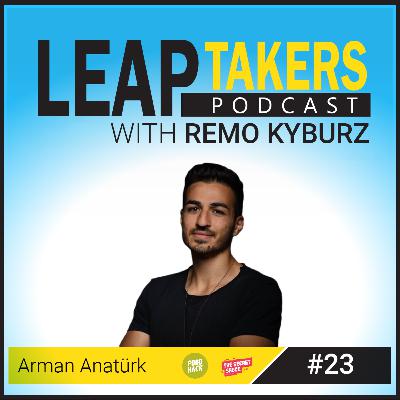
Arman Anatürk [@ArmanAnaturk] is the founder and CEO of FoodHack. FoodHack is a community-driven platform that inspires, highlights and connects food entrepreneurs and innovators. With FoodHack Arman is is building the 21st century media / events company for the foodtech industry. The platform's offering includes a weekly food & food tech newsletter, ambassador run meet-ups, an annual FoodHack Summit, as well as a newly launched Food Discovery board (think of the “Product Hunt of Food”) where innovative food tech startups are featured.Arman’s goal with FoodHack is to make it easier for impact driven food founders to access the resources, network and knowledge they need to successfully launch and grow their Food (tech) business. The FoodHack newsletter has over 100+ editions sent and over 5k+ happy readers.Arman also hosts "The Secret Sauce" Podcast, where he provides insights from food industry leaders.We discuss:How Arman founded and grew a 21st century media company focused on food & technologyCold outreach tipsNewest trends in the FoodTech spaceTools to run an emerging startup / platformThe origin story of FoodHackShow notes:02:33 -- Intro of Arman03:20 -- How Arman Anatürk got interested in startups and food tech07:04 -- Next steps after working for a coding school08:16 -- Cold outreach tips13:17 -- How Arman got his first client14:50 -- Description of FoodHack and its mission17:50 -- Sources of revenue for FoodHack / a 21st century media business20:13 -- The story of FoodHack and its different products23:51 -- Stats of FoodHack25:33 -- Arman’s favorite tools to run FoodHack / a media startup28:05 -- Tips to grow your newsletter30:31 -- Latest trends happening in the FoodTech space37:30 -- Book with the biggest impact for Arman37:54 -- Area in FoodTech that Arman is most excited about38:27 -- Lessons for other (aspiring) entrepreneurs40:44 -- What courage means for ArmanPlease follow me on Instagram, Twitter, and my Website, where I post new episodes and share resources & tips for anyone interested in entrepreneurship in Europe. If you're enjoying the podcast, the best way to support the show is by leaving a review on Apple Podcast or in your favorite podcast app.
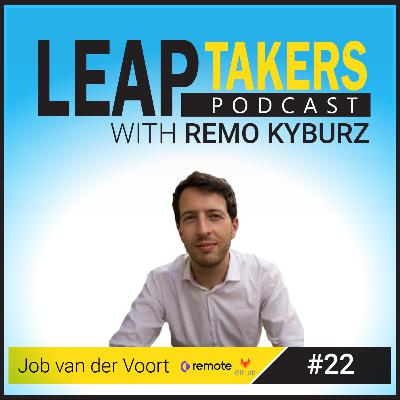
Job van der Voort (@Jobvo) is the CEO and one of the founders of Remote.com.Remote makes it possible to employ anyone, anywhere in the world. Their mission is to simplify how companies employ the best talent globally and to help remote organizations do their best work. They offer services such as international payroll, benefits, taxes, and compliance for businesses big and small - so that they can hire anyone in the world - while outsourcing all the admin & legal work to Remote. Remote's vision is to become the "stripe for (remote) work".Remote is also among the fastest growing startups globally and is backed by some of the best venture capital investors in the world, such as Index Ventures, Sequoia, General Catalyst, Two Sigma, and many more very accomplished angel investors. Before founding Remote, Job worked as neuroscientist, and he was one of the first engineers that joined GitLab. In his role as VP of product, Job was responsible for GitLab's product development and he helped grow the company from 5 to 450+ employees. Today GitLab is one of the largest distributed companies in the world.We discuss:The advantages of remote workBest practices for working from homeThe origin story of Remote.comTips for aspiring entrepreneurs and much moreShow notes:00:50 -- Intro03:49 -- Personal intro from Job van der Voort06:59 -- How Job started as one of the first engineers at Gitlab07:37 -- Background to Gitlab - What is Gitlab?08:05 -- Job’s first touchpoints with working for a fully distributed / remote company10:07 -- Insights into Job’s role at Gitlab as VP of product11:37 -- Gitlab’s growth and scaling up12:40 -- Collaboration tools14:06 -- Advantages of remote work16:33 - The shift to remote-first from employers perspective17:56 -- Second order effects of shifting to remote work20:30 -- Best practices for remote work24:59 -- The origin story of Remote.com - How remote.com was started27:45 -- Introduction to what remote.com does30:35 -- Remote.com’s venture capital fundraise32:00 -- Customers of Remote.com33:23 -- Remote.com as stripe for remote work36:09 -- Job’s vision for remote.com in 5 years37:19 -- Job van der Voort’s advice for aspiring entrepreneurs and leaptakers40:39 -- Labor market and demand for remote roles42:36 -- Book that had biggest personal impact43:08 -- Job’s favorite remote collaboration tool44:42 -- Advice to younger self45:03 -- What courage means to Job
Merry Christmas everyone! 🎄This episode is going to be a small experiment. In this Christmas special, I'm introducing you to 5 of my personal and my podcast guests favorite business & startup books. Hence, I give you a crowd-sourced reading list from some of Europe's top up-and-coming entrepreneurs and VCs. I'm convinced that these books can help you to bring your business / startup to the next level, or to get motivated to "take the leap" yourself! It's also the perfect activity to read on a cold wintery day at home.Since it’s Christmas, I'm also doing a little giveaway and will send to some lucky winner a book of his or her choice from this list. All you got to do is to review the Leap Takers Podcast on Apple Podcast (or your favorite podcast app), give it a 5 star rating, and send me proof (screenshot / link) to remo.kyburz1[at]gmail.com. I'll then randomly draw a lucky winner. Deadline is January 1st 2021.This is just a little thank you & Christmas gift from me to the listeners of the Leap Takers Podcast. 🎁 Thank you for your continued support and I hope you get some benefit and motivation from listening to this podcast.I'm wishing you and your loved ones a Merry Christmas and all the best for 2021!RemoPlease follow me on Instagram, Twitter, and my Website, where I post new episodes and share resources & tips for anyone interested in entrepreneurship in Europe.If you're enjoying the podcast, the best way to support the show is by leaving a review on Apple Podcast or in your favorite podcast app.
Alina Bassi (@alinabassi1) is the founder and CEO of Kleiderly. Originally from London, she founded Kleiderly in 2019 in Berlin with the goal of solving the problem of fashion industry waste. She has developed a patent-pending technology to recycle waste clothing into a new and sustainable material, diverting clothing waste away from landfills and incinerators. Her mission is to lower the carbon footprint of fashion and eliminate tons of CO2 emissions.Alina is a Google for Startups Female Founder alumna and a member of the Forbes 30 under 30 class of 2020.In this episode you will learn about:Kleiderly and how they are trying to solve the problem of fashion industry wasteThe Berlin startup scene and acceleratorsHow to build up confidence as a founderSupporting minority foundersAnd much more…!Show notes:01:45 -- Intro of Alina Bassi02:04 -- Alina’s background before she launched her own startup03:13 -- Gaining first startup experience at bio-bean04:28 -- How Alina found a startup to work for and gather relevant experience05:07 -- The origin story of Kleiderly08:04 -- Kleiderly’s value proposition09:48 -- The first steps of entrepreneurship. How do you start your own company13:19 -- Alina’s experience with Accelerator programs16:42 -- Current stage and facts about Kleiderly19:10 -- Lessons learnt from an early-stage startup23:27 -- Mistakes to avoid as a founder24:38 -- Tips and insights into the Berlin startup scene26:33 -- Initiatives that Alina is involved in to support minority founders30:17 -- Alina’s favorite book she would recommend to fellow startup founders30:50 -- Alina’s best personal investment31:25 -- Alina’s favorite SaaS tool to help her as a founder32:29 -- Advice to your younger self33:32 -- How to build up confidence as a founder34:45 -- What courage means to AlinaPlease follow me on Instagram, Twitter, and my Website, where I post new episodes and share resources & tips for anyone interested in entrepreneurship in Europe. If you're enjoying the podcast, the best way to support the show is by leaving a review on Apple Podcast or in your favorite podcast app.
Tobias Gunzenhauser (@TobGunzenhauser) is the CEO and one of the three co-founders of yamo.yamo is Europe's first digital native vertical brand that produces fresh organic baby and children food. The company launched in 2017 in Switzerland with their first product of baby purees. In the meantime, yamo is also sold in "Coop", one of Switzerland's largest retailers.All of yamo’s products are 100% organic, natural and free from additives. They developed every recipe together with dozens of helpful moms, dads, their little ones, nutritionists and pediatricians.In the summer of 2020, yamo raised a €10M Series A.You will hear the fascinating origin story of yamo, tips around production & manufacturing, how to find a good production partner, advice on online stores, and much more!Show notes:02:15 -- Introduction of Tobias02:43 -- The origin story of yamo. How the founders came up with the idea for a baby food company07:45 -- Starting a company on the side vs. quitting and going all in11:53 -- How yamo started producing their first product15:39 -- The benefits of a production partner vs. producing yourself16:55 -- How to find a good production partner19:42 -- How yamo solved the problem of high minimum orders combined with limited capital to manufacture their product20:57 -- yamo’s approach to distribution and setting up their online store24:41 -- The state of the eCommerce infrastructure & online store integrations in Switzerland26:15 -- Overview of yamo’s product offering and their newest innovative product30:36 -- Tobias’ key learnings from starting yamo33:09 -- How to test your D2C business idea35:01 -- Tobias’ favorite book35:37 -- Another favorite D2C product of Tobias36:01 -- Advice to your younger self36:58 -- What courage means to Tobias38:01 -- Info about yamoPlease follow me on Instagram, Twitter, and my Website, where I post new episodes and share resources & tips for anyone interested in entrepreneurship in Europe. If you're enjoying the podcast, the best way to support the show is by leaving a review on Apple Podcast or in your favorite podcast app.
Heidi Lindvall (@HeidiLindvall) is one of the founders and a general partner at Pale Blue Dot. Pale Blue Dot is a seed stage ClimateTech VC investing in reducing and reversing the effects of climate change and preparing for a new world. They invest tickets of €200k - €2M, in pre-seed and seed-stage companies based in Europe and US.Heidi Lindvall previously co-founded Storygami, an online video company that increases viewers engagement & helped monetize content. She also founded CODOC, an award winning video production company. She has a background in Media and Human Rights and has studied for two degrees in the field in London.In this episode you hear how Heidi made her way from being a documentary filmmaker into the world of Venture Capital (VC). We also discuss her learnings from being an entrepreneur and what areas in ClimateTech she is most excited about to help save the planet. I hope you enjoy this episode as much as I did.Show notes:01:48 -- Introduction of Heidi Lindvall02:21 -- Description of Pale Blue Dot and the goal of the VC fund04:26 -- How Heidi got in touch with the world of startups & tech07:16 -- Documentary movies created by Heidi Lindvall07:54 -- How Storygami - a online video SaaS product - was born10:20 -- What is the right moment for a startup to start looking for investors11:33 -- From Storygami to joining accelerators, becoming an investor, and the origin story of Pale Blue Dot VC19:15 -- What is ClimateTech and in what areas does Pale Blue Dot invest in22:35 -- Investment target & fund characteristics of Pale Blue Dot23:50 -- Public investments of Pale Blue Dot VC24:41 -- The role of regulation in the ClimateTech sector26:27 -- Learnings from raising a VC fund in Europe29:35 -- Heidi’s advice and tips for (aspiring) entrepreneurs32:03 -- Book that had a big personal impact on Heidi’s life33:07 -- Resources for people interested in the climate & tech space34:17 -- Heidi’s most worthwhile investment35:24 -- Advice to your younger self36:10 -- What courage means to HeidiPlease follow me on Instagram, Twitter, and my Website, where I post new episodes and share resources & tips for anyone interested in entrepreneurship in Europe. If you're enjoying the podcast, the best way to support the show is by leaving a review on Apple Podcast or in your favorite podcast app.
Anne-Laure Le Cunff (@anthilemoon) is the Founder of Ness Labs, an award-winning productivity & learning community and venture studio building products that focus on mindful productivity, wellness, creativity, and culture. She is an ex-Googler, MSc of Applied Neuroscience candidate at King's College, member of the Society for Neuroscience, and certified Mental Health First Aider accredited by the Royal Society for Public Health.Her work has been featured in WIRED, Forbes, FT, Rolling Stone, and more. Every week, she sends a newsletter to thousands of mindful makers with practical content at the intersection of neuroscience and entrepreneurship.She is half-French, half-Algerian. Anne-Laure was born in Paris, sold French wine in New York, studied in Tokyo, worked at Google in San Francisco, and started her company Ness Labs in London.In this episode you will hear the origin story of Ness Labs, we discuss fascinating topics such as the concept of time anxiety, and you hear Anne-Laure’s advice for anyone that wants to start & grow a content community. I found this episode incredibly interesting and I hope you enjoy it as well.Show notes:01:54 -- Intro of Anne-Laure Le Cunff02:42 -- Anne-Laure’s personal background and travels04:49: -- How Anne-Laure became interested in the human mind and neuroscience07:12 -- Ness Labs: What is it and who is it for11:18 -- The origin story of Ness Labs. How Anne-Laure Le Cunff built a learning platform for mindful productivity14:34 -- Lessons learned from a previous startup failure18:41 -- Tips on growing your audience and community20:43 -- Working with the garage door open22:03 -- Positive highlight of Ness Lab’s journey so far23:28 -- Ness Labs as a remote-first company26:13 -- Time Anxiety. What is it and how do we best counteract it?31:22 -- Top recommended articles on Ness Labs32:12 -- Key learnings from starting an online learning community34:19 -- Ness Lab’s newest product35:37 -- Anne-Laure Le Cunff’s favorite book35:55 -- Anne-Laure's best personal investment37:08 -- Anne-Laure’s advice to her younger self38:17 -- What courage means to Anne-LaurePlease follow me on Instagram, Twitter, and my Website, where I post new episodes, share interesting articles I found, and blog occasionally about cool startups!If you're enjoying the podcast, the best way to support the show is by leaving a review on Apple Podcast or in your favorite podcast app.
Ville Vesterinen (@vesterinen) is a serial entrepreneur from Finland. He is one of the original founders of Slush - one of the world’s leading startup & tech conferences, that attracts around 25'000 attendees every year to Helsinki. He also founded Grey Area - a gaming company that was backed by Index Ventures, LVP, Lifeline Ventures. Ville also serves as the chairman of Swappie, an ambitious young company selling refurbished mobile phones, which just raised $40M in June 2020. He is also on the boards of Maria 01, a 70 000 m² campus for tech companies in the heart of Helsinki as well as on the board of Startup Foundation, the organization that owns various initiatives supporting the Nordic startup ecosystem, among them Slush.Most recently Ville joined Atomico, one of Europe's leading venture capital investors, as an angel investor to support new aspiring entrepreneurs. Ville also just started his own podcast - The Long Map, where he explores how to live an interesting life.In this episode, we talk about the origin story of Slush, Grey Area, and Swappie. We cover Ville's learnings from being a serial founder and investor, as well as his tips for other aspiring entrepreneurs in Europe.Show notes:02:07 -- Intro - Who is Ville Vesterinen03:11 -- How Ville became interested in entrepreneurship & tech04:59 -- Retelling the experience of becoming an entrepreneur in the 2000’s07:08 -- The origin story of Slush, Europe’s leading tech conference10:24 -- Ville’s learnings from starting Slush and tips for founding a conference13:27 -- Major milestones and projects that Ville worked on so far15:38 -- Location-based games & Shadow Cities17:57 -- Swappie, refurbishing and selling second hand iPhones20:04 -- Learnings and advice for future startup founders24:46 -- Atomico Angel programme and Ville’s investing focus28:48 -- Ville Vesterinen’s new podcast - The Long Map30:32 -- Ville Vesterinen’s favorite book31:38 -- Ville Vesterinen’s best personal investment33:06 -- Advice to your 25 year old self34:13 -- What courage means for VillePlease follow me on Instagram andTwitter.If you're enjoying the podcast, the best way to support the show is by leaving a review on Apple Podcast or in your favorite podcast app.
Gonzalo (@gonsanchezs) runs and writes Seedtable, one of the leading newsletters focused on European tech. Seedtable is read by tens of thousands every week, and his work has been featured in Wired and Sifted. Gonzalo's writing always provides unique perspectives of developments in technology in Europe and its impact on society. Seedtable is one of my all-time favorite newsletters and I'm super excited that Gonzalo decided to come on the LeapTakers Podcast.In addition to Seedtable, Gonzalo is Head of Growth at Jobbatical, an Estonian Relocation Service for Tech companies, and he is mentoring startups. His previous experience includes having founded two startups, being a Content Specialist at Piktochart, growing EVELO from $1.2m to $4m as Director of Marketing, and helping to bring The Martec from 2,000 to 50,000 monthly visitors. Gonz likes to read and to fly. He speaks 4 languages and lifts heavy things, plus he seems to be into the occasional burger or ramen.In today’s episode we talk about practical tips for remote work and working from home, how Gonzalo started Seedtable, what makes a successful newsletter & advice on how to grow your own content, the impact of Covid-19 on various startup sectors, and more.Please follow me on Instagram, Twitter, and my Website, where I post new episodes, share interesting articles I found, and blog occasionally about cool startups! Sign-up for the mailing list to stay in the loop!Show notes:01:53: Who is Gonzalo & introduction04:52: Is a certain personality type required to be able to work remotely?06:25: Tips & tricks for remote work10:08: Gonzalo's favorite city to work from remotely12:22: How did Gonzalo become interested in technology and entrepreneurship?15:40: How does website flipping work16:53: Learnings from his experience as a founder & failed startups19:11: How to pick and find your co-founder22:21: The beginnings of Seedtable24:09: How Seedtable got traction27:18: Tips to produce good content and to grow your audience30:19: How to separate a job and a side project33:30: Key facts about Seedtable36:32: Gonzalo's predictions for 2020 and the impact of COVID-1939:18: Discussion of startup sectors that are positively or negatively affected by COVID-1944:20: Gonzalo's understanding of courage45:14: Wrap-upRemo's Favorite Quote of the Month:“Discipline equals freedom”Jocko Willink
Christian (@chrjantzen) is the founder of Futuristic.vc, a micro-fund investing in Nordic pre-seed companies. He made his first investment at age fourteen when he bought shares in his favorite football club. He later started his first company, a real estate company, in 2011, which he grew while studying at university. Following his masters degree in Finance from Aarhus University , he co-founded another startup “Reunited Esports", which was a player-owned Esports organisation with teams competing in Overwatch and Rocket League.In 2017 he founded Futuristic VC, an early-stage VC fund investing initial capital into the next generation of Nordic founders. He has invested in +20 companies across the entire region and helped founders secure follow-on funding from some of the strongest investors in Europe.If you’re interested in starting your own company while studying / after graduating, or if you’re interested in the world of Micro VC’s, I’m sure you will find this episode very interesting and valuable. We talk about Christian’s path to starting Futuristic VC, his experience from starting an eSports company, fundraising advice, his best investment, and more!Please follow me on Instagram, Twitter, and my Website, where I post new episodes, share interesting articles I found, and blog occasionally about cool startups! Sign-up for the mailing list to stay in the loop!Quote:“He who jumps into the void owes no explanation to those who stand and watch.”Jean-Luc GodardShow notes:02:43: Who is Christian & Intro03:46: How Christian became fascinated with company and startup investing06:40: Christians favorite football club07:18: How Christian got into startups10:01: Christians first experience as a founder12:20: Christians startup company “REUNITED e-sports”15:23: Christians approach to find an e-sports team and collaborate with them16:42: Business model of an e-sports company17:56: Christians decision to start a VC fund and the origin story of Futuristic21:13: Fundraising and LP base of Futuristic VC24:46: Overview of Futuristic VC28:05: How Futuristic VC built up its deal flow and identifies startups to invest in32:44: Learnings for startup investors34:59: Learnings for startup founders37:34: Best Investment of Christian Jantzen38:52: What does courage mean to Christian39:58: Wrap-upIf you're enjoying the podcast, the best way to support the show is by leaving a review on Apple Podcast or in your favorite podcast app.
Mathias (@ockenrock) eats and breathes marketplaces. He is a partner at Speedinvest, one of Europe’s leading Venture Capital funds. The fund has it’s headquarters in Vienna, Austria and just recently raised its latest fund of €190m. Mathias runs Speedinvest x, a focus fund investing into network effects and marketplaces.Previously he was a General Manager for the German market at Uniplaces, an international marketplace for student accommodation. Before that, Mathias built out the marketplace-practice at Berlin-based Point Nine Capital, an early stage fund focusing on SaaS and marketplaces, where he was a Principal for 4 years. Previously, Mathias led the M&A-department of Ricardo Group, then a subsidiary of South African Naspers, that operates several online marketplace, classifieds and auction businesses across Europe. Earlier, he started his career as an Investment Manager at Mountain Partners in Zurich where he lead early stage investments in companies such as Lieferando or reBuy.Mathias holds a German-French double-diploma from European School of Business Reutlingen and Neoma Business School Reims. Knowing Germany’s capital city like the back of his hand, Mathias now leads Speedinvest's Berlin office as a Partner at Speedinvest x.Please follow me on Instagram, Twitter, and my Website, where I post new episodes, share interesting articles I found, and blog occasionally about cool startups! Sign-up for the mailing list to stay in the loop!Show notes:03:08 -- Who is Mathias Ockenfels04:40 -- How Mathias got interested in the Venture Capital industry and how he landed his first job in VC08:44 -- Tips for getting a job in Venture Capital13:56 -- What are the most important skills and abilities to work in VC16:30 -- Mathias’ path from Analyst to Partner at a VC firm22:27 -- Intro to Speedinvest and what kind of companies Mathias is interested in and is investing in25:51 -- Key investment criteria to get an investment from Mathias / Speedinvest28:48 -- Books and Resources for (aspiring) entrepreneurs and VCs31:55 -- Mathias’ best financial and personal investment33:28 -- Advice to younger self / someone starting out their career35:23 -- Mathias’ favorite books and movies37:23 -- What does courage mean to MathiasIf you're enjoying the podcast, the best way to support the show is by leaving a review on Apple Podcast or in your favorite podcast app.
Vedika Jain (@vedikaja_in) is an investor and Chief of staff at Weekend Fund, an early stage venture capital fund that is backing your next favorite thing. Previously she worked for high profile startups like Stripe and True Layer.Weekend Fund was started in 2017 by Ryan Hoover, the founder of Product Hunt (an amazing site to discover new products. Product Hunt was acquired in 2016 by AngelList). While Ryan and Vedika invest broadly, they are particularly excited about distributed/remote working, audio/voice technology, and tools for creators/makers. The fund invests in early stage startups with check sizes ranging from $75K to $200K. Limited partners of the fund include high profile venture capitalists Marc Andreessen, Chris Dixon, Ben Rubin, Chris Sacca, Hunter Walk, Kevin Rose, Garry Tan, and others.Vedika has a really interesting background story and approach how she made her way into "the wonderful world of venture capital". In this episode you will hear about her tactics how she got into VC and general career advice for picking the right companies & startups to work for. In addition, you will learn more about Weekend Fund, Vedika’s favorite books & blogs, and much more!Please follow me on Instagram, Twitter, and my Website, where I post new episodes, share interesting articles I found, and blog occasionally about cool startups! Sign-up for the mailing list to stay in the loop!Show notes:03:48 -- Who is Vedika & Intro04:55 -- How Vedika became fascinated with technology and startup investing07:08 -- How Vedika joined two fast growing tech startups - Stripe and True Layer09:45 -- Vedika’s lessons learnt for picking your first jobs / companies13:00 -- Writing personal investment memos and how to "hustle" your way into Venture Capital18:05 -- Vedika’s investment areas and future trends20:57 -- How Vedika met Ryan Hoover and joined Weekend Fund22:35 -- Starting your own fund vs. joining an existing VC25:16 -- Introduction to Weekend Fund28:16 -- Favorite books and resources for aspiring VCs30:41 -- Vedika’s favorite non-entrepreneurship related books32:07 -- Most worthwhile investment of VedikaIf you're enjoying the podcast, the best way to support the show is by leaving a review on Apple Podcast or in your favorite podcast app.
Sebastian Wahl and Carl-Philipp von Polheim are the founders of mybacs. Mybacs is a direct-to-consumer (D2C), research driven, biotechnology company for gut-health products based in Zug (Switzerland) and Munich (Germany). Their goal is to revolutionize the healthcare market around the human microbiome and thus make a decisive contribution to the health and daily well-being of everyday customers. Mybacs is specialized on the development of innovative and high-dose synbiotic dietary supplements They have two types of products - a Travel and Daily well-being probiotic product.Sebastian holds a Master's degree with distinction in Pharmacy from ETH Zurich. Carl-Philipp studied business administration and holds a Master of Science in Management from ESCP Europe.In this episode we talk about the origin story of mybacs, how to start manufacturing a physical product, the emerging direct-to-consumer industry, tools and resources to start your own D2C company, VC fundraising tips, the benefits of probiotics, their key learnings for other aspiring founders, and more.Please follow me on Instagram, Twitter, and my Website, where I post new episodes, share cool stuff & interesting articles I found, and blog occasionally! Sign-up for the mailing list to stay in the loop!Show notes: 02:54 -- Introduction of Sebastian, Carl-Philipp, and mybacs 04:02 -- Exploring the origin story of mybacs 06:12 -- Previous work experience before founding mybacs 07:23 -- Thoughts and considerations before taking the leap 08:53 -- Awareness of probiotics and the effect of the human microbiome on well-being in Europe vs. US 10:08 -- Geographies that mybacs operates in 10:22 -- How to manufacture a physical product as a startup 11:53 -- Tips for planning your supply chain 12:34 -- Timing from idea to shipping the first product 13:15 -- Thoughts about assembling the right team in the D2C space 14:40 -- How to incentivize experienced people & experts to join your startup? 15:17 -- Raising outside capital and thoughts about raising money from VCs 16:56 -- How to find a great Venture Capital investor 18:37 -- The advantages of the D2C market and business model 21:45 -- How to ship a product? 23:24 -- Helpful resources, tools, and books to start your own company 24:36 -- The future vision of mybacs 27:28 -- Understanding the mybacs travelers product 27:51 -- Favorite knowledge resources 29:32 -- Hobbies to take your mind off the startup life 30:12 -- Key learnings from starting a company. What would you do differently? 31:07 -- Career advice for ambitious future “leap takers” 32:16 -- What does courage mean to you?If you're enjoying the podcast, the best way to support the show is by leaving a review on Apple Podcast or in your favorite podcast app.
Holger Seim (@hlgrsm) is the founder and CEO of Blinkist. Blinkist is a book summary app that lets you get the key insights from 3'000+ bestselling non-fiction books that cover leadership, history, psychology and more in 15 minute summaries in text or audio format. Blinkist has over 11million users globally and the book-summarising startup has won positive reviews from the likes of Forbes (“This may be the greatest app you download in 2018”) and The New York Times.In this episode we talk about how Holger and his co-founders came up with the idea for Blinkist, how they took the leap and started the company, his advice for aspiring entrepreneurs on how to find your perfect co-founder / first employees, the most important marketing channels for startups, as well as the importance of designing a unique corporate culture.Show notes: 03:13 -- Who is Holger 04:40 -- Startup idea generation and how the concept of Blinkist was born 09:01 -- How Holger and his co-founders took the leap and started Blinkist 09:50 -- Pursuing a startup idea full time vs. side hustle 10:59 -- Initial financing choices at Blinkist 12:36 -- Characteristics of a great startup founding team 18:12 -- How to find your perfect co-founder outside of your personal network (e.g. technical co-founder) 20:30 -- Blinkist’s company culture and why Holger places immense value on culture 24:42 -- The Blinkist operating system 27:07 -- Tips on maintaining a corporate culture while you grow as a startup 29:16 -- How Blinkist grew to the first 1000 clients and discussion of marketing strategies 32:46 -- Alternative marketing channels leveraged by Blinkist 34:41 -- Holger’s book recommendations for new startup founders 37:31 -- General book recommendations of the Blinkist founder 39:14 -- Holger’s best investment 40:42 -- Hobbies and habits to decompress from the startup life 41:40 -- Favorite travel location 43:09 -- Advice for university graduates about to start their career 46:23 -- What does courage mean to HolgerResources mentioned:BlinkistWunderlistHolacracyOutbrainThe Hard Thing About Hard Things: Building a Business When There Are No Easy Answers - Ben HorowitzThe Coaching Habit: Say Less, Ask More & Change the Way You Lead Forever - Michael Bungay StanierTrillion Dollar Coach: The Leadership Playbook of Silicon Valley's Bill Campbell - Eric SchmidtWho - The A-Method of Hiring - Geoff SmartSapiens: A Brief History of Humankind - Yuval Noah HarariReady Player One: A Novel - Ernest ClineDune - Frank Herbert
Alisée (@aliseedt) is one of the founders of Seedstars, a global group of companies with a mission to impact people's lives in emerging markets through technology and entrepreneurship. The groups' activities cover over 85 cities with emerging startup ecosystems through a variety of activities, such as hosting one of the world’s largest startup competition “Seedstars World”, organizing training and acceleration programs, offering physical hubs called Seedspace, and doing venture capital investments & company building activities.Alisée is a board member of the School of Management of Fribourg and a member of the Swiss National Innovation Council. She was nominated Social Entrepreneur Forbes 30 under 30, Innovation Fellow of Wired UK, 50: Europe’s most influential women in the startup and venture capital space and the 29 Powerful Women by Refinery29.Born in France, she has spent most of her life abroad, from growing up in Singapore, California, and France to studying and working in Italy and Switzerland and finally accomplishing humanitarian missions in Brazil and Cambodia. As of today, she has traveled in 50+ countries.Show notes: 02:15 -- Introduction "Who is Alisée" 03:50 -- How and why Alisée joined Seedstars / helped to start the company 06:42 -- The early days of Seedstars - Traveling the world and setting up Startup competitions globally 07:40 -- How Alisée approached the decision to take the leap and quit her job at L’oreal to start Seedstars 09:41 -- How to make a decision between corporate job or startup life 13:46 -- How to overcome the chicken & egg problem in entrepreneurship 15:55 -- Alisée’s favorite moments along Seedstars journey and within her time as an entrepreneur 18:01 -- Seedstars today: How the business look like. Raising Series A VC funds for specific regions - e.g. Africa 20:19 -- How startups can become part of Seedstars and general advice for fellow entrepreneurs 23:47 -- Favorite books 25:48 -- Advice to younger self 26:07 -- Routine / Hobby of Alisée to get her mind off work 27:01 -- What does courage mean to AliséeResources mentioned:Principles: Life and Work - Ray DalioThe Human Network: How Your Social Position Determines Your Power, Beliefs, and Behaviors - Matthew O. JacksonSeedstarsSeedstars World - Startup CompetitionAdvice to younger self: "Just chill"Tip for aspiring entrepreneurs:"Surround yourself with people that support you and give you honest advice & feedback (informal mentors)""Figure out what life you don’t want and be sure what specific value-add you can bring."If you're enjoying the podcast, the best way to support the show is by leaving a review on Apple Podcast or in your favorite podcast app.
Andri Silberschmidt (@andrisilbi) is a 25 years old rising star here in Switzerland. He is a food entrepreneur, equity investor, and politician. At the age of fifteen, he began his banking education and is now responsible at Swisscanto Invest for the management of all quantitative equity funds investing in developing countries. In the summer of 2017, Andri and some of his friends founded kaisin. , a Poké Bowl restaurant and catering chain. He has been politically active since 2011 and became president of the "Jungfreisinnige Partei" of Switzerland in 2016. Recently he was elected to the Parliament of the City of Zurich for the FDP and is now on the list of the FDP Canton of Zurich for the National Council elections in October 2019.Please follow me on Instagram, Twitter, and my Website, where I post new episodes, share cool stuff & interesting articles I found, and blog occasionally!Show notes: 02:14 -- Who is Andri Silberschmidt 03:14 -- How Andri started his career and got into entrepreneurship by starting a Poké Bowl restaurant 05:40 -- Opening a restaurant business without outside capital 06:53 -- How Andri started kaisin. & pitched his idea 10:10 -- Andri’s note taking app 10:34 -- Recommended resources & books for starting a business 11:44 -- Expansion plans of kaisin. 13:26 -- How kaisin. launched and promoted their store with little resources 16:04 -- How Andri balances his time and energy between all the different commitments. Why sleep is so important. 20:12 -- Andri’s involvement with “TeamStartup” to foster entrepreneurship in Switzerland 23:23 -- Challenges of entrepreneurship in Switzerland 28:02 -- Andri’s learnings from his startup experience 31:54 -- Book recommendations 35:11 -- Andri’s best investment 37:29 -- Andri’s “hobby” 39:03 -- Andri’s personal advisory board 41:37 -- Andri’s message to the world - "Respect, Create, Enjoy" 44:24 -- What does courage mean to Andri?Resources mentioned:Getting Things Done: The Art of Stress-Free Productivity - David AllenAndri’s high productivity habits: 1. Getting enough sleep (7.5h), 2. No alcohol during the week, 3. Working out regularlyWhy We Sleep: Unlocking the Power of Sleep and Dreams - Walker PhD, MatthewSkin in the Game: Hidden Asymmetries in Daily Life - Nassim Nicholas TalebTeamStartupLean In: Women, Work, and the Will to Lead - Sheryl SandbergThe Constitution of Liberty - F. A. HayekKaisin.FDPGrünliberale
Andreas Schwarzinger (@a_schwarzinger) is the founder and managing partner of uniboard AG, one of Switzerland’s largest student platforms with over 72k users. Andreas is one of the most down-to-earth people I know and with his work at Uniboard helped thousands of students to successfully pass their degrees. His motto is "Studying together is better"! In our conversation we talk about how Andreas and his co-founder Malte grew uniboard to its current size, community building, winning customers, favorite movies, smelling car waxes and other fun stuff.Please follow me on Instagram, Twitter, and my Website, where I post new episodes, share cool stuff & interesting articles I found, and blog occasionally!Show notes: 02:59 -- Who is Andreas 04:13 -- How the uniboard.ch got started 06:53 -- How Andreas made the decision to run uniboard full-time 09:06 -- Growth of Uniboard in Switzerland 10:38 -- Startup vs. Traditional career in Management consulting 15:22 -- Lessons from community building and marketing 19:05 -- Thoughts about monetization of a platform 22:25 -- Challenges and learnings from switching from a student organization to a startup 24:23 -- General challenges of the startup world and how to overcome them (focus on product & focus on sales) 29:08 -- Tips for Selling, building trust, and winning customers 34:04 -- Future goals of Uniboard 35:58 -- Andreas’ favorite book or story 38:20 -- Unique interesting hobbies of Andreas 40:44 -- Personal advisory board 43:45 -- Advice to younger self / listeners in their early 20s/30s 46:35 -- Unjustified fears of entrepreneurship 48:05 -- What does courage mean for AndreasResources mentioned:Uniboard.chAvengers EndgameWaxfinder.comTop Gun (Viper)Will SmithKevin FeigeIf you're enjoying the podcast, the best way to support the show is by leaving a review on iTunes or in your favorite podcast app.


