


 Claim Ownership
Theology on Tap Chattanooga
Subscribed: 46Played: 256
Subscribe

Description
Welcome to the Theology on Tap Chattanooga podcast. In each episode, we feature a lecture given by a different writer, scholar, or public intellectual. Each of these talks explores the intersection between theology and culture and how theology can help better guide us towards the common good of society. These talks are given live at our monthly Theology on Tap events at The Camp House in Chattanooga, Tennessee.
46 Episodes
Reverse
 1
1At the heart of Christian faith is a shocking claim: God became human and died. It is the story of a man who bore profound humiliation, exposure, and shame, placing God not in sanitized spirituality but in the raw realities of birth, desire, touch, and harm. This evening will explore how Christ's embodied life and death confront our cultural stigmas toward bodily trauma and reveal a salvation that reaches into our most fragile places, resurrecting and blessing scars rather than erasing them.Dr. Hill serves as Assistant Professor of Integrative Theology at Richmont and the Director of the Doctor of Ministry Program. ln 2021 he completed a Ph.D. in Theology at St Mary’s College, University of St Andrews, having previously completed an MLitt degree in Analytic and Exegetical Theology from the Logos Institute at St Andrews. He has released his first coauthored book with Scott Harrower and Joshua Cockayne entitled Dawn of Sunday: The Trinity and Trauma-Safe Church (Cascade) and is releasing his first edited volume entitled Christ and Trauma: Theology East of Eden (Pickwick Publications). Dr. Hill is also ordained in the Anglican tradition and is a pre-licensed clinical pastoral therapist.
In today's landscape of digital interactions, many people long for deeper connections. We have a desire to move from being lonely and disconnected in our relationships to be seen, known, and wholly loved. From friendships to romantic relationships, meaningful and genuine personal connections remain our heart's desire.College chaplain Rev. Erin Moniz is deeply attuned to the questions and concerns of today's emerging adults. In Knowing and Being Known, she explores the essential elements of healthy relationships, addresses the complexities of intimacy, and shines a light on the barriers that can impede genuine connection. With her compelling storytelling and expert insights from her research with emerging adults, she emphasizes the significant role of identity and self-worth in fostering meaningful relationships. This comprehensive resource goes beyond the subject of sex, providing a holistic perspective on intimacy that resonates with single emerging adults and married couples alike.Begin to experience healthy relationships and transform your relational world as you ask better questions to get better answers. To know that we are loved by God is to know our identity in Christ. And this knowing provides us the tools and the path to a healthy, sustainable intimacy that allows us to be at home in our fullness in the gospel and with each other.——Rev. Erin F. Moniz (DMin, Trinity School for Ministry) is a deacon in the Anglican Church in North America and associate chaplain and director for chapel at Baylor University, where she disciples emerging adults and journeys with them toward healthy, gospel-centered relationships. She is a trained conciliator, mediator, and conflict coach. She enjoys content creation, playing music, being outdoors, and narrating the inner monologue of her two cats. She lives in Waco, Texas, with her husband, Michael.
“The Subversive Prophetic Imagination: How the Arts (and Brueggemann) Can Help Us Navigate the Rise of Christian Nationalism” with Dr. Mary McCampbellDoors 6:30pm, Lecture 7:00pmIn these painful, divisive times, it is helpful to trace the reality of prophetic truth from the God-spoken messages of the Old Testament prophets to the subversive works of artists resisting the “empire.” Dr. McCampbell will use the framework provided in Walter Brueggemann’s The Prophetic Imagination and examples from the arts to illustrate the power of the age-old fight against cultural Christianity. Artists discussed include Frederick Douglass, Charlotte Brontë, Margaret Atwood, Banksy, Yaa Gyasi, Flannery O’Connor, Sho Baraka, and others.Dr. Mary McCampbell is a literary scholar, cultural critic, professor, and author of Imagining Our Neighbors as Ourselves: How Art Shapes Empathy (Fortress Press, 2022). She is co-editor of the forthcoming Douglas Coupland’s Literature & Art (Bloomsbury 2026). Holding a Ph.D. from the University of Newcastle-upon-Tyne, she has taught courses on postmodern theory, popular culture, and the intersection of theology and the arts. Her academic publications include chapters and articles on Jesmyn Ward, Chuck Palahniuk, Sufjan Stevens, Douglas Coupland, C.S. Lewis, and Sho Baraka, among others. Her public-facing writing has appeared in publications such as Image Journal, Christianity Today, The Other Journal, Relevant Magazine, and The Curator. She was the 2014 Writer-in-Residence at the UK branch of L’Abri Fellowship and a 2018 Scholar-in-Residence at Regent Theological College in Vancouver, Canada. She writes weekly at https://marymccampbell.substack.com/.
Single Christians often encounter the church as a place where marriage and family are lifted up as the main ways to follow Christ faithfully. But there are Bible passages and historical moments that suggest otherwise. In this talk, we'll think through several different ways that Christians in the past have lived out singleness, including being "never married," "dating but not committed," and what happens when a person becomes "suddenly single" because of a spouse's death.----Jana Bennett serves as the chair of Department of Religious Studies Department at the University of Dayton. She is a moral theologian with a wide range of research interests and well-regarded publications, including a book on marriage and singleness (Water is Thicker than Blood: An Augustinian Theology of Marriage and Singleness, Oxford University Press 2008) and a book on technology use and theology (Aquinas on the Web? Doing Theology in an Internet Age, Bloomsbury, 2012). She also gives public lectures on marriage and sexuality, Christian asceticism, technology use, war and peace, and environmental care.
Do you ever feel like you're alone in your struggles to live out the Christian faith? Do you ever read the Bible yet still wonder what it looks like to follow Jesus in the complexity and difficulty of our time? The stories of great men and women throughout the history of the church can help us form a bridge between the teaching of Scripture and our embodied lives. Come and learn about how the saints, from every continent and century of church history, demonstrate the historic church's relevance for Christians today and reveal God's faithfulness in all times and circumstances.Rev. D.J. Marotta is the founding priest of Redeemer Anglican Church in Richmond, Virginia. He is the author of “Liturgy in the Wilderness: How the Lord's Prayer Shapes the Imagination of the Church in a Secular Age,” “Our Church Speaks: An Illustrated Devotional of Saints From Every Era & Place,” and co-host of the Our Church Speaks Podcast. His wife is gracious and his children are clever.
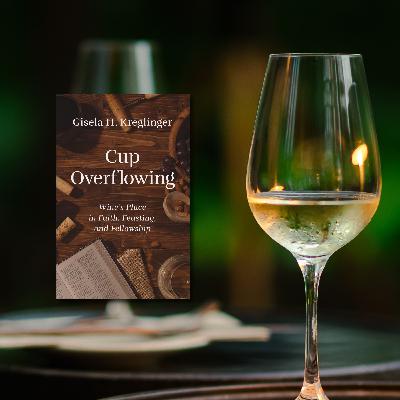
Have you ever wondered what Jesus would drink? Was his family perhaps involved in growing vines and making wine? What would their family celebrations have been like? And what might this tell us about God and how he wants us to live today? Food and wine have become such hot topics in our culture, and yet there is so much confusion and ambivalence around it as well. We are so far removed from the world of the Bible and the agrarian life that it represents. It is hard to envision the farms and fruit orchards, the village wells and sheep herds, the olive groves and vineyards that Jesus would have walked by every day.Drawing on her upbringing in a long-standing family tradition of winemakers and her degrees in biblical studies and spiritual theology, Gisela Kreglinger introduces readers in a light-hearted way to the theme of wine in the Bible, throughout the history of the church, and in the church's feasting and fellowship today. She also addresses how many Christians are fearful or concerned about wine because of the challenges of alcohol abuse, how to nurture a culture of healing from such disorders, and how we are called to celebrate God's gift of wine to grow into a fuller understanding of the gospel as we await the return of the Bridegroom, Jesus Christ. In this book, Gisela shows Christians that wine is a gift from God that we are to receive with gratitude and enjoy in wholesome, communal, and redemptive ways.------Dr. Gisela Kreglinger grew up on a family-owned winery in Franconia, Germany where her family has been crafting wine for many generations. This unique experience has inspired her to write two books about the spirituality of wine with a third one on the way.She holds a PhD in historical theology from the University of St. Andrews and in this book Gisela has woven together her passions for Christian spirituality and the wonderful and mysterious world of wine.------Special thank you to Signal Mountain Presbyterian Church and Imbibe for their partnership on this event.
"Mystic Faith in Mary Oliver's Poetics & Personal Practices"Mary Oliver once wrote, "Maybe the desire to make something beautiful / is the piece of God that is inside each of us." Though never espousing a Christian faith, Mary Oliver presents nature, the spirit, the body, and the divine in her simple but elegant poetry in terms that evoke the Christian mystic tradition. In our personal experiences with beauty and creativity, can we, along with Oliver, enter into a fuller appreciation of what the mystics called union with God?--Dr. Daniel Gleason grew up in the Philippines living in an environment that fostered his imagination, creativity, and his love for writing. Currently an English professor at Bryan College, Dr. Gleason has previously worked as a cemetery laborer, as a public educator, and as a soccer coach. Dr. Gleason’s scholarly interests include 20th-century American Literature, contemporary poetry, and trauma theory. In the field of creative writing, he writes primarily poetry and has been published in more than a dozen literary journals and magazines across the country. Daniel and his wife, Kathleen, have two young sons, and they live in Dayton, Tennessee.
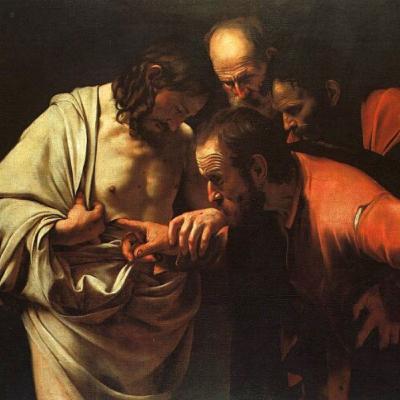
Our journeys of faith often involve the navigation of doubt. In this lecture, Dr. Luke Irwin explores this dynamic through the Gospel of John. There, Jesus famously says to “Doubting Thomas:” “Have you believed because you have seen? Blessed are those who have not seen and yet have believed” (John 20:29). This statement from Jesus may make us question whether the “eyes of faith” should rely on visible evidence. After all, doesn't the Apostle Paul himself say that “faith comes through hearing” (Romans 10:17)? Nevertheless, study of the Jewish scriptural tradition can inform our exploration, suggesting that God makes himself visible in the human flesh of Jesus Christ for a reason. Join us as Dr. Luke Irwin argues that seeing God in Jesus Christ represents the culmination of Johannine belief as well as the eschatological hope of all believers. Dr. Luke Irwin is the Assistant Professor of Biblical Studies at Covenant College. He has received his MDiv from Covenant Seminary and his PhD from Durham University.
The evening will feature poetry from Nikki Lake, a lecture from Rev. Dr. Zac Settle, and then a conversation between the two moderated by CALEB Faith Caucus leader Christopher Heintz.00:01 - Opening Intro & Announcements 07:26 - Poetry by Nikki Lake08:53 - Lecture from Rev. Dr. Zac Settle46:19 - Poetry by Nikki Lake47:21 - Conversation between Christopher Heintz, Nikki Lake, & Zac SettleLecture abstract: In this short lecture, Fr. Zac will sketch a theology of economy by drawing on the work for a fifth-century, North-African Bishop: St. Augustine of Hippo. He will talk a little about who Augustine was and then sketch a kind of rubric with which we can think about economics on a theological level. The goal is make use of Augustine's idea of "use" and "enjoyment" in order to facilitate our understanding of faithful economic action. Doing so will help us talk about how we ought to engage with the economic issues of our own time and place as Christians. If we want to follow Augustine's example, faithful action requires that we use our wealth, resources, and selves for the sake of facilitating people's enjoyment of God.Rev. Dr. Zac Settle serves as curate at Grace Episcopal Church in Chattanooga, TN. He was ordained to the priesthood in 2023. Prior to joining Grace he earned an Anglican Studies diploma at Sewanee’s School of Theology and completed an internship at Erlanger Hospital, where he was a chaplain for the cancer and diabetes units. Before that he earned a PhD in theology from Vanderbilt’s Graduate Department of Religion. His first book, "On the Nature, Limits, Meaning, and End of Work", was published in Bloomsbury Academic’s “Reading Augustine” series in 2023.
Through Berry’s fiction, poetry, and essays, we see a vision of how the transcendent beauty of creation is known in particularity. For this venerable Kentucky writer, human flourishing is a loving stewardship of people and place, appreciating the spiritual fruit of our embodied existence.Dr. Thomas Pope joined Lee University's political science faculty in 2010, where he teaches courses in political theory and constitutional law.
"God and Architecture: How the Built Environment Influences Our Formation"Similar to how a fish is unaware of the influence of water, architecture shapes our lives. Through the grandeur of cathedrals and the brutality of concentration camps remind us of the profound power of the built world, most of our lives unfold in less dramatic settings, where built environments subtly but meaningfully influence us. In this lecture, Jon Jon will explore the role of how the influence of physical spaces can be used to make us more like Christ in character and conduct.---Jon Jon Wesolowski is an armchair urbanist, TEDx speaker, and content creator. He is a devoted advocate for pedestrian rights, passionately connecting diverse groups to drive positive change.All the socials - follow Jon Jon on Instagram and TikTok.Sign up for his new Substack.
Our annual partnership with Richmont Graduate University & the Spiritual First Responders Project on the intersection of theology & psychology. The event was titled "An Evening on Trauma, Faith, & Reconstruction" and featured lectures by Dr. Hillary McBride & Dr. Preston Hill."The Psychology of Faith Reconstruction After Spiritual Trauma" by Dr. Preston Hill Many people experiencing faith deconstruction feel spiritually homeless but also continue to search for spiritual meaning in life, though it is unclear how they can flourish as desired. This talk will review a current large scale research project that facilitates mentally-healthy spiritual meaning-making for this population. This talk will discuss the challenges and possibilities for "remixed" spiritual experience among this population by setting faith deconstruction and reconstruction in psychological and theological context and drawing implications for mental health care among this group.Preston Hill (PhD, MLitt, University of St Andrews) is Assistant Professor of Integrative Theology at Richmont Graduate University, where he serves as the Chair of Integration and Director of the Doctor of Ministry Program. His doctoral research offers the first book-length study of Christ’s descent into hell in the theology of John Calvin. His current research focuses on reformation theology, science, mental health, and trauma theology. His latest publications include Dawn of Sunday: The Trinity and Trauma-Safe Church (Cascade, 2021), and a forthcoming volume entitled Christ and Trauma: Theology East of Eden (Cascade). Preston is a clinical pastoral therapist under supervision and ordinand in the Anglican tradition.
Our annual partnership with Richmont Graduate University & the Spiritual First Responders Project on the intersection of theology & psychology. The event was titled "An Evening on Trauma, Faith, & Reconstruction" and featured lectures by Dr. Hillary McBride & Dr. Preston Hill."Growing Ourselves Up: Understanding the Long Term Impact of Spirituality Traumatic Contexts on the Development of Self" by Dr. Hillary McBride Foundational psychological theories of development and attachment have identified what people need in order to become more of themselves, including the steps necessary for a person to arrive at adulthood with the skills, capacity, and ego strength to face the demands and pleasures of living in a psychically rooted and interconnected way. Models of family systems can be used to understand how the interpersonal context around us supports us to, or inhibits us from, meeting these developmental steps in light of our desire for connectedness and relational safety. Informed by these theories, this talk will explore how extended time in a spiritually abusive and traumatic context (often called a family) can challenge and complicate typical psychosocial development and contribute to distress in adulthood. Ways to support the healthy development of self and organize the disorganized development will be discussed.Dr. Hillary McBride is a registered psychologist, a researcher, author and podcaster, with expertise that includes working with trauma and trauma therapies, embodiment, and the intersection of spirituality and mental health. Her first book, Mothers, Daughters, and Body Image: Learning to Love Ourselves as We Are, was published in 2017; she was the senior editor of the textbook Embodiment and Eating Disorders: Theory, Research, Prevention, and Treatment, which was published in 2018. Her most recent bestselling book The Wisdom of Your Body: Finding wholeness, healing and connection through embodied living came out in the fall of 2021. She has been recognized by the American Psychological Association, and the Canadian Psychological Association for her research and clinical work. In addition to being a teaching faculty at the University of British Columbia, she is an ambassador for Sanctuary Mental Health, and the host of CBC's award winning podcast Other People's Problems. Hillary makes her home in the pacific northwest in British Columbia, Canada.
Women Who Do: What We Can Learn from Female Disciples in the GospelsWhen we think of disciples, we often picture the Twelve – the small group of men who followed Jesus throughout his ministry. But Jesus had many disciples, and the gospels are clear that we, as Christians, can learn from all of the people who followed Jesus. In her lecture, Dr. Carey will highlight the importance of female disciples in Jesus’s ministry and in the shaping of our understanding of what it means to follow Jesus faithfully, courageously, and sacrificially.Dr. Holly Carey holds a PhD in New Testament and Early Christian Origins from the University of Edinburgh and serves as the Professor of Biblical Studies at Point University.
"Evangelical Worship: An American Mosaic" with Dr. Melanie Ross6:30 - Lecture Begins1:04:30 - Q & AIn partnership with UTC - Department of Philosophy & ReligionEvangelicalism has undergone seismic and controversial shifts in worship over the last forty years, particularly in the areas of preaching and music. In this talk, liturgical scholar Melanie Ross shares stories from her ethnographic research of congregations, discusses trends and shifts she has observed, and offers insights about what churches can learn from each other across lines of differences. She suggests that evangelical worship is more than a manipulative effort to arouse devotional exhilaration. It is a vibrant site of identity formation: the place where evangelicals’ ideas, beliefs, and commitments interact with larger religious traditions in an ongoing, mutually-constituting process.Professor Melanie Ross works at the intersection of ecumenical liturgical theology, North American evangelicalism, and the worship practices of contemporary congregations. Her first book, Evangelical vs. Liturgical? Defying a Dichotomy (2014) brings together historical analysis, systematic theology, and congregational fieldwork to argue that the common ground shared by evangelical and liturgical churches is much more important than the differences than divide them. Her second book, Evangelical Worship: An American Mosaic (2021) draws on extensive fieldwork in seven congregations to show how evangelical identity is formed through corporate worship practices.
In partnership with Faith Co-Op5:40 - Lecture • 57:00 - Q&ALearn more about Reformed Theological Seminary - Orlando's Faith, Work, & Culture Graduate Certificate Program"The Trinity & Work: How God's Work Informs Our Work" - How does the work of the triune God inform our work? In 1 Corinthians 12:4-6, Paul provides an illuminating framework for addressing this question. In our various fields of labor, we are called to cooperate with God the Father in service to the Lord Jesus Christ by the gifts of the Holy Spirit. Under God’s blessing, such work holds the promise of glorifying God and serving the common good.---Dr. Scott R. Swain is President and James Woodrow Hassell Professor of Systematic Theology at Reformed Theological Seminary in Orlando, Florida. Dr. Swain has served on the RTS faculty since 2006, having previously taught at Southwestern Baptist Theological Seminary in Fort Worth, Texas.His main research interests include the doctrine of God, theological interpretation of Scripture, and modern Protestant theology, and he has published a number of books and essays on these topics. With Dr. Michael Allen, he serves as general editor of two series: Zondervan Academic’s New Studies in Dogmatics and T & T Clark’s International Theological Commentary.
Lecture at 5:45Q & A begins at 42:00Our spiritual lives are deeply connected to bread―the bread we break with family and friends and the Bread that is Christ’s Body, given and broken for us. Kendall Vanderslice, a professional baker and practical theologian who spends her days elbow-deep in dough, believes that there is no food more spiritually significant than bread―whether eating, baking, sharing, or breaking. She will share how God uses bread throughout the Bible to teach us about his character and provision for us, as well as how the chemistry of breadmaking itself reveals the beauty of our Creator.Kendall Vanderslice is a baker, writer, and the founder of the Edible Theology Project. A graduate of Duke Divinity School (Master of Theological Studies), Boston University (MLA Gastronomy), and Wheaton College (BA Anthropology), she has committed her life to the study of food and community formation. Kendall is a professionally trained baker, having learned from several top American pastry chefs. In 2018, she was named a James Beard Foundation national scholar for her work bridging food and religion. She is the author of "We Will Feast: Rethinking Dinner, Worship, and the Community of God" and "By Bread Alone: A Baker’s Reflections on Hunger, Longing, and the Goodness of God."Get the book on our Bookshop.orgLearn more about Kendall and her work at edibletheology.com
We are living in a world that is sick. Both literally sick, with 60 percent of adults in the US living with a chronic illness and rising rates of autoimmune diseases in particular, including long COVID, and figuratively sick, facing ever increasing rates of burnout, anxiety, and disconnection. As a writer, activist, and theology student, Lyndsey Medford, draws on her experiences with a rare autoimmune disease to illuminate the broader lessons we need to learn, in order to heal what ails us individually and communally. Whether our burnout stems from illness, systemic racism, poverty, or simply sin's separation, we're all in need of hope, and we are called to heal together.Lyndsey Medford is a writer, activist, and sometimes disabled person with a rare, chronic autoimmune disease. Her writing has been featured in The Deconstructionist's Playbook, Sojourners, 100 Days in Appalachia, The Wakening, and Our Bible App. She holds a master of theological studies degree from Boston University School of Theology. She and her husband live in Chattanooga, Tennessee.
"The Trinity & Trauma-Safe Churches" with Dr. Preston HillWhether we realize it or not, our churches are full of those who have experienced and are living with the aftereffects of horror and trauma, whether as survivors, carers, or perpetrators. The central question of this book is simple: How can our churches become open to the Trinity such that they are trauma-safe environments for everyone? How can we join the triune God to become trauma-safe churches? While the reality is bleak, the church can dare to hope for healing because of the reality of God and the body of Christ. Using the metaphor of the dawn of Sunday, the authors propose a double witness to trauma that straddles the boundary between the deadly silence of Holy Saturday and the joy of Easter Sunday. While witnessing loss and lament we can also be open to the possibility of new life through God’s trinitarian works of safety and recovery in the church. This involves adopting some basic principles and practices of trauma safety that every pastor, congregation, and layperson can begin using today. Creating trauma-safe churches is possible through God the Trinity.Preston Hill (PhD, MLitt, University of St Andrews) is Assistant Professor of Integrative Theology at Richmont Graduate University, where he serves as the Co-Chair of Integration and the Director of the Doctor of Ministry Program. His doctoral research offers the first book-length study of Christ’s descent into hell in the theology of John Calvin. His current research focuses on reformation theology, science, and mental health. His latest publications include Dawn of Sunday: The Trinity and Trauma-Safe Church (Cascade, 2021), and a forthcoming volume entitled Trauma Theology: Perspectives on Christ and the Wounds That Remain (Fortress Academic).
The social and political life of the church is in upheaval, as the currents of our polarized culture invade the Christian witness from both within and without. We desperately need a re-centering on the radical work of Jesus, even if this means ceding our securities and curating a holy suspicion of the world's power structures. In this lecture and in his new book, Making Christ Real, Dr. Sam Youngs argues that the ascension of Christ is an untapped resource in this regard, with invigorating implications for both spiritual formation and cultural engagement. Come and hear a new and powerful theological rendering on the meaning of the ascension for our everyday experience in difficult times.Samuel J. Youngs serves as an associate professor of Christian studies at Bryan College, adjunct professor of theology and church history at Richmont Graduate University, and the Dean of the Mission School of Ministry. He completed his PhD under Paul Janz and Oliver Davies at King’s College London. His first book, The Way of the Kenotic Christ, was a major English monograph on the Christology of Jürgen Moltmann, and he has published on interreligious topics, theology and psychology, the thought of Martin Luther, the Old Saxon Heliand, natural theology, narrative pedagogy, kenosis, and staurology.Lecture begins at 2:54Q&A begins at 49:10


Download from Google Play

Download from App Store
 United States
woooo!!!!